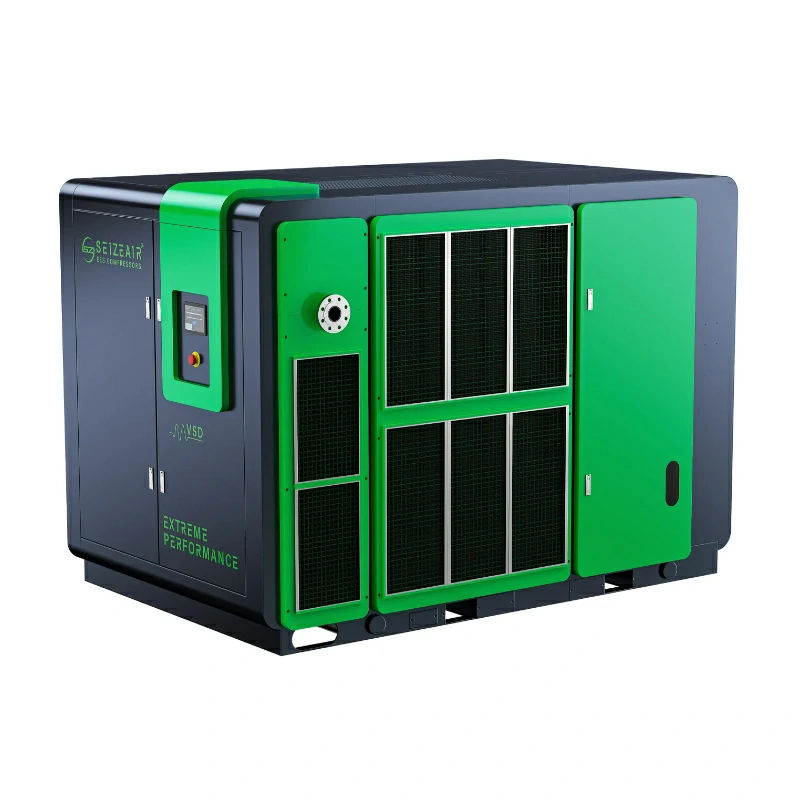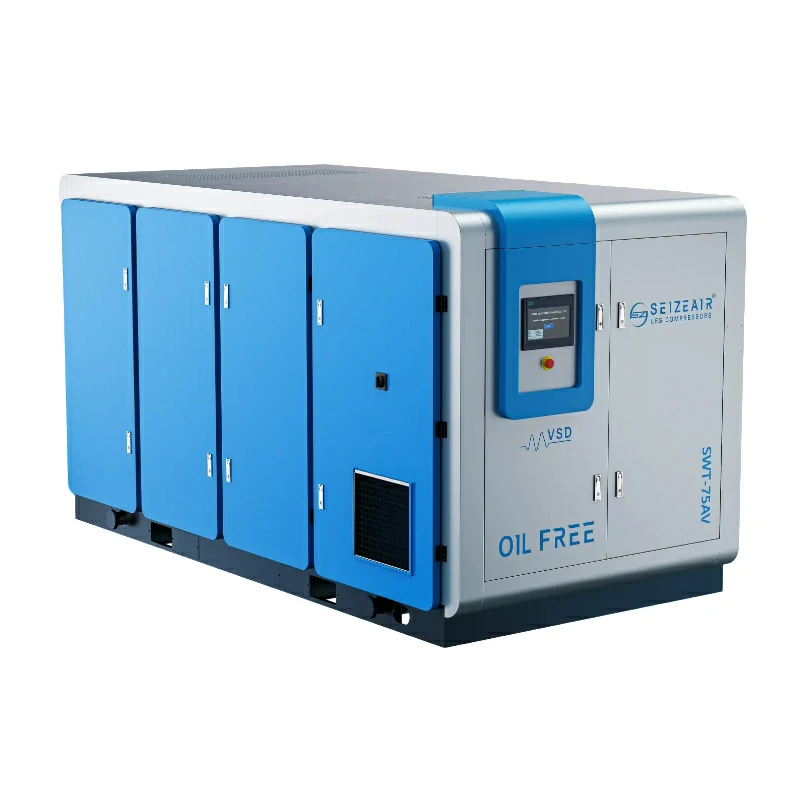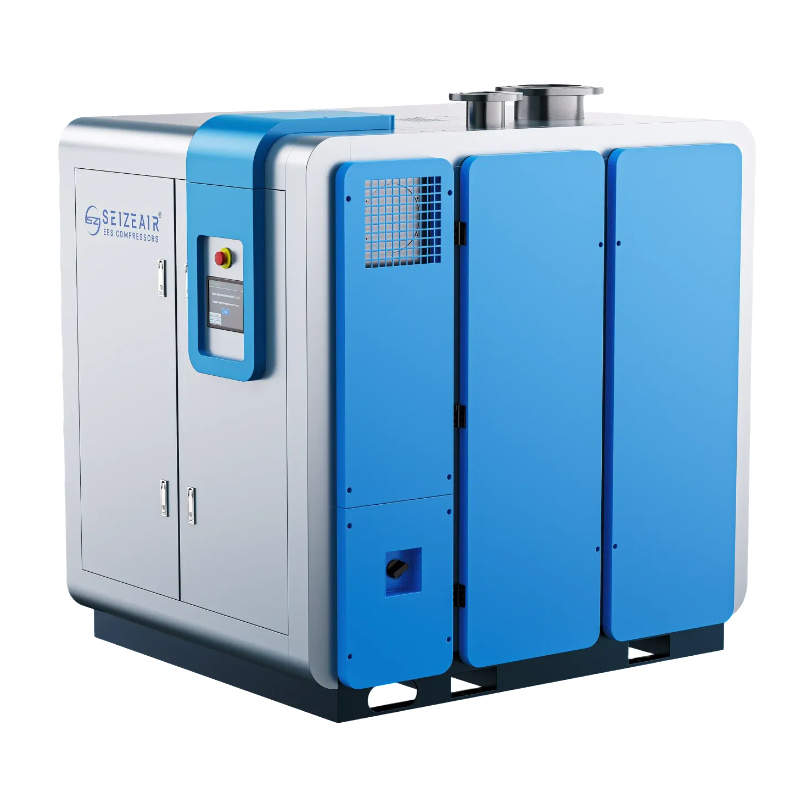


Introduction
For operations that rely on uninterrupted compressed air, a maintenance-free air compressor is not a convenience but a necessity. In continuous-operation environments, reducing maintenance intervention directly improves uptime, efficiency, and long-term reliability.
What Does “Maintenance-Free” Really Mean in Air Compressors?
The term maintenance-free air compressor is often misunderstood. No industrial machine is completely free from maintenance, but in compressor engineering, “maintenance-free” refers to systems designed to minimize routine service tasks and wear-related failures.
In practical terms, a maintenance-free air compressor typically means:
- No frequent oil changes
- Fewer consumable components
- Reduced bearing and seal wear
- Longer service intervals
- Lower risk of contamination
This concept is especially critical in continuous operation, where stopping a compressor often means stopping production.
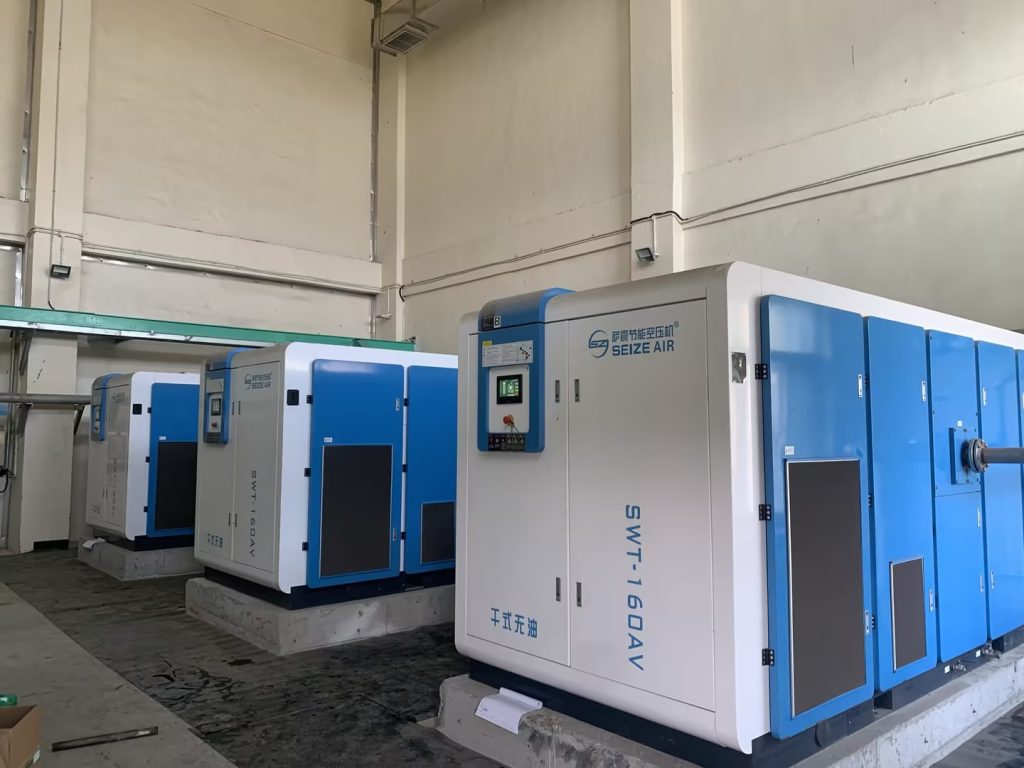
Why Maintenance-Free Design Matters in Continuous Operation
A continuous-duty compressor does not fail suddenly—it degrades gradually. Maintenance-heavy designs accelerate this degradation.
In industries such as manufacturing, mining, laboratories, and food processing, downtime caused by maintenance can be more expensive than the compressor itself.
Maintenance-free air compressors are engineered to reduce:
- Human intervention
- Scheduled downtime
- Unexpected failures
- Operating variability
This is why many modern industrial facilities are shifting away from traditional oil-lubricated designs toward maintenance-free and oil-free air compressor systems.
Oil-Free vs Oil-Lubricated: The Foundation of Maintenance-Free Compressors
Why Oil-Free Air Compressors Reduce Maintenance
Oil-free air compressors eliminate one of the largest maintenance variables: lubrication oil.
By removing oil from the compression chamber, oil-free air compressors offer:
- No oil replacement schedules
- No oil separator elements
- No oil contamination risk
- Cleaner downstream equipment
This design significantly reduces both maintenance workload and failure points.
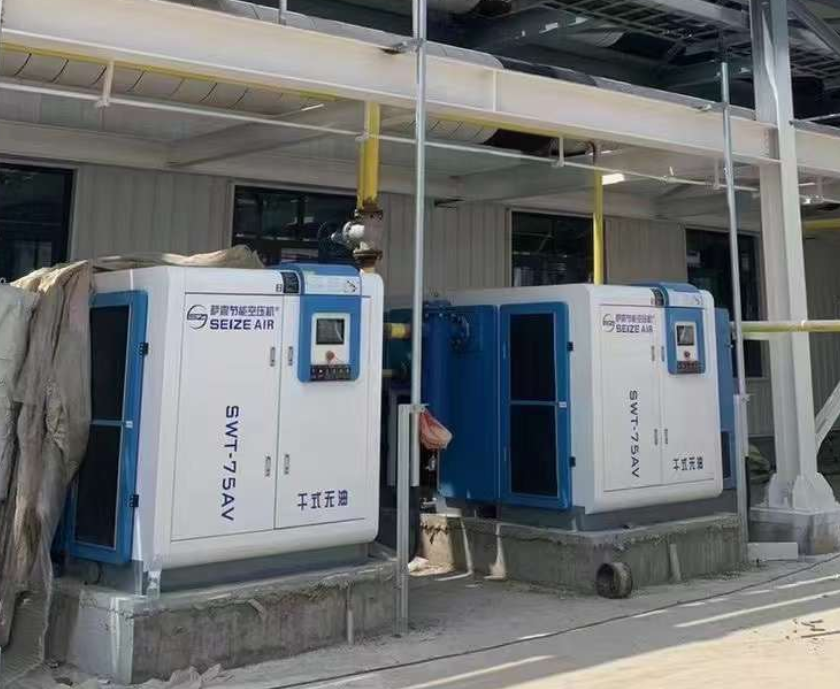
Manufacturers such as Seize increasingly use oil-free compression technology in compressors intended for continuous industrial operation, where maintenance access may be limited or costly.
When Oil-Lubricated Compressors Become a Maintenance Burden
Oil-lubricated compressors rely on multiple components that require regular service:
- Oil filters
- Oil separators
- Oil coolers
- Lubrication systems
In continuous operation, these components wear faster, increasing service frequency and downtime.
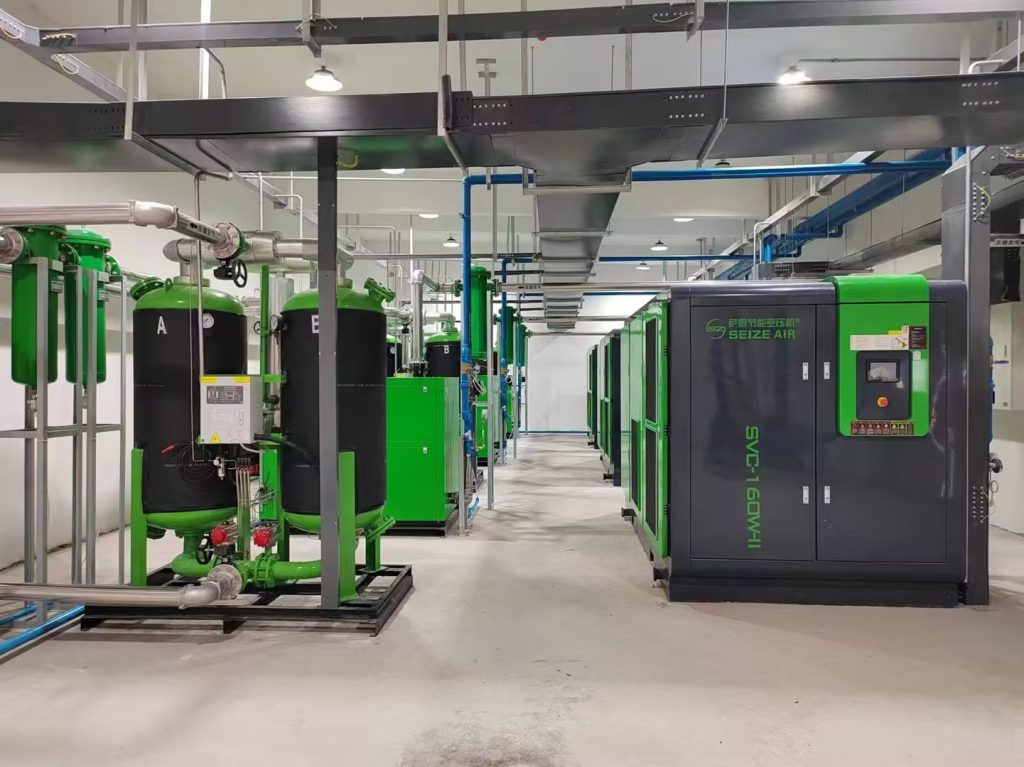
For facilities running compressors 8,000+ hours per year, the maintenance cost gap between oil-lubricated and oil-free air compressors becomes significant over time.
Key Technologies Behind Maintenance-Free Air Compressors
Advanced Bearing Systems
Bearings are among the most failure-prone components in compressors.
Maintenance-free air compressors often use:
- High-grade ceramic bearings
- Advanced mechanical bearing designs
- Magnetic bearing systems
Magnetic bearing compressors, in particular, eliminate mechanical contact entirely, dramatically reducing wear and maintenance requirements.
Some maintenance-free compressor designs—similar to those adopted by Seize in continuous-duty systems—combine oil-free compression with advanced bearing technology to maximize service life.
Intelligent Control and Monitoring Systems
Modern maintenance-free air compressors rely heavily on intelligent controls.
These systems enable:
- Predictive maintenance
- Early fault detection
- Load optimization
- Reduced stress on components
Instead of relying on fixed maintenance schedules, operators can act based on real operating data, further reducing unnecessary service.
Maintenance-Free Air Compressors for Different Continuous Applications
Manufacturing and Production Lines
In manufacturing, compressed air interruptions often halt entire production lines.
Maintenance-free air compressors are widely used in:
- Automotive assembly
- Electronics manufacturing
- Packaging lines
Oil-free air compressors ensure consistent air quality, while maintenance-free designs reduce downtime and labor costs.
Laboratories and Clean Environments
In labs, maintenance access is often restricted, and air purity is critical.
Maintenance-free oil-free air compressors offer:
- Stable, contamination-free air
- Low noise and vibration
- Minimal operator intervention
This combination makes them ideal for research facilities and precision testing environments.
Mining and Remote Operations
Remote and mining environments magnify maintenance challenges.
Maintenance-free air compressors reduce:
- Need for on-site technicians
- Spare parts inventory
- Downtime caused by service delays
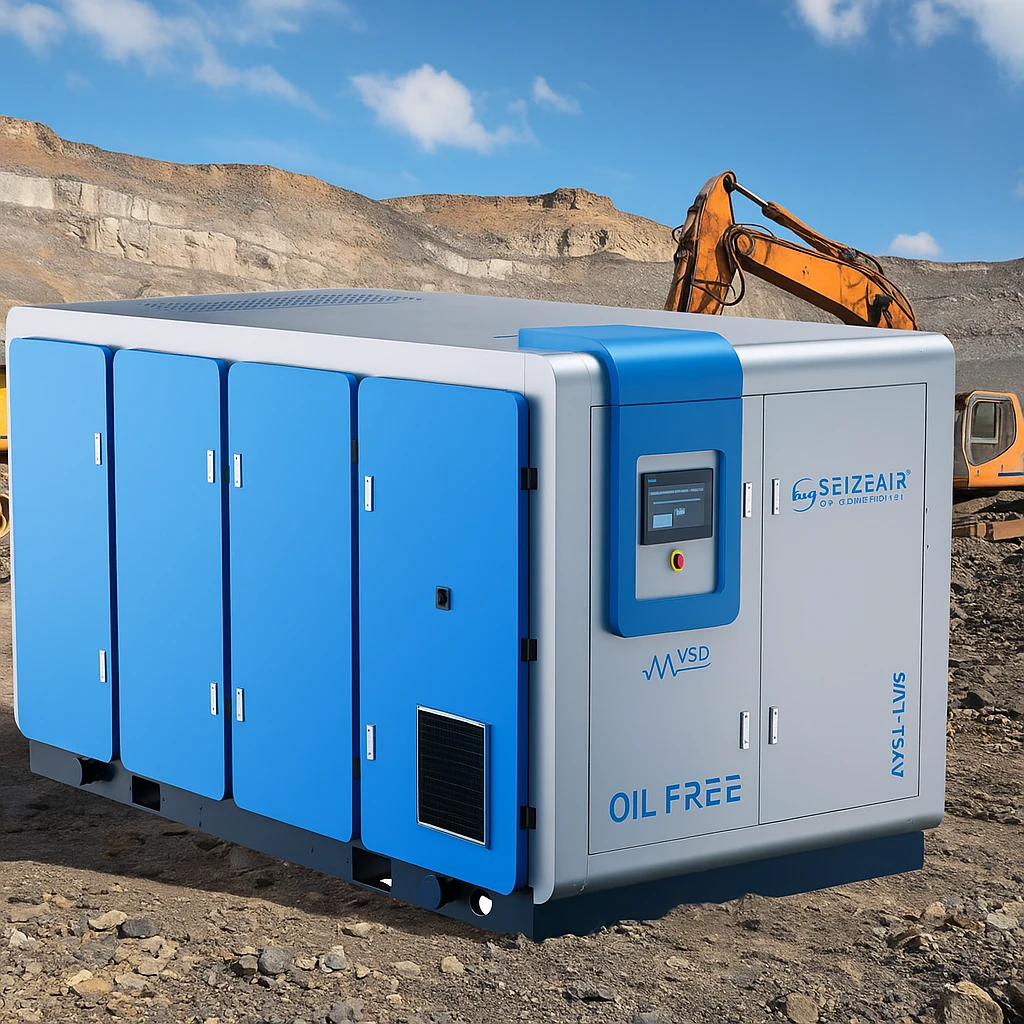
In heavy-duty applications, compressors designed for continuous operation—such as those developed by Seize for industrial and mining use—prioritize durability and simplified maintenance over short-term cost savings.
Real-World Application Case: 24/7 Manufacturing Facility
Case Overview
- Industry: Industrial manufacturing
- Operating Mode: 24/7 continuous production
- Challenge: Frequent oil-related maintenance downtime
Solution
The facility replaced oil-lubricated compressors with maintenance-free oil-free air compressors featuring:
- Advanced bearing systems
- Intelligent monitoring
- Reduced consumable components
Result
- Maintenance downtime reduced significantly
- Improved production continuity
- Lower total operating cost
This transition highlights why maintenance-free compressor design is increasingly viewed as a strategic investment rather than a cost upgrade.
Real-World Application Case: Laboratory Environment
Case Overview
- Environment: Research laboratory
- Challenge: Noise, vibration, and oil contamination risk
Solution
A compact maintenance-free oil-free air compressor was installed with:
- Low-noise operation
- Minimal vibration
- Extended service intervals
Result
- Improved working conditions
- Reduced maintenance disruption
- Stable air supply for sensitive instruments
This type of application strongly favors maintenance-free compressor technology.
Energy Efficiency and Maintenance-Free Operation
Maintenance-free air compressors often achieve higher energy efficiency due to:
- Reduced mechanical friction
- Optimized load control
- Stable operating conditions
Efficiency and maintenance are closely linked. A compressor that operates smoothly and efficiently places less stress on components, further extending service life.
Some manufacturers—including Seize—design maintenance-free air compressors with efficiency and durability as equally important objectives, rather than treating maintenance reduction as a secondary benefit.
Total Cost of Ownership: The Real Comparison Metric
When comparing compressors for continuous operation, purchase price alone is misleading.
Total cost of ownership includes:
- Energy consumption
- Maintenance labor
- Spare parts
- Downtime losses
- Equipment lifespan
Maintenance-free air compressors often show clear financial advantages over a 5–10 year operating period, especially in continuous-duty environments.
| Cost Factor | Magnetic Bearing | Conventional |
|---|---|---|
| Initial cost | Higher | Lower |
| Maintenance cost | Low | Medium–High |
| Energy cost | Low | Medium |
| Total cost (5–10 yrs) | Lower | Higher |
Common Misconceptions About Maintenance-Free Air Compressors
- “Maintenance-free means no maintenance at all”
- “Oil-free compressors are less durable”
- “Higher upfront cost means poor ROI”
- “Maintenance-free is only for clean industries”
In reality, maintenance-free compressor technology is often most valuable in harsh or high-load environments where maintenance is most disruptive.
How to Choose the Right Maintenance-Free Air Compressor
When selecting a maintenance-free air compressor for continuous operation, evaluate:
- Operating hours per year
- Air quality requirements
- Maintenance accessibility
- Energy cost sensitivity
- Long-term expansion plans
Choosing the right system ensures stable performance and long-term reliability.
Conclusion
Maintenance-free air compressors provide long-term reliability and operational stability in continuous-duty environments. Choosing the right design reduces downtime, maintenance burden, and total operating cost.