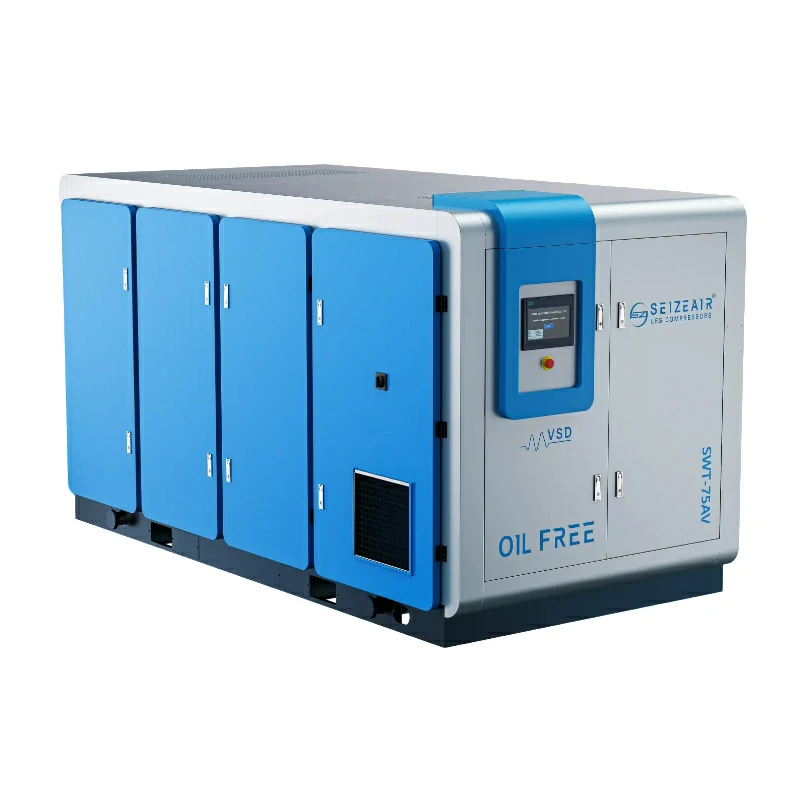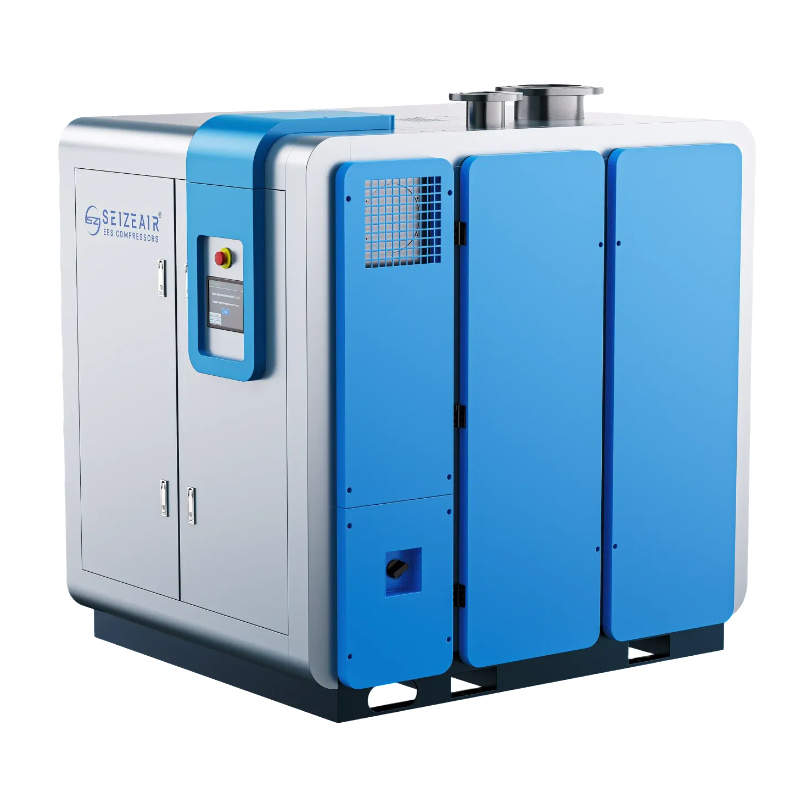


Choosing the right industrial air compressor is one of the most consequential capital investment decisions a facility manager will make. It is the “fourth utility”—as vital as electricity, water, and gas. An incorrectly sized system doesn’t just waste energy; it creates a ripple effect of mechanical strain, moisture contamination, and expensive downtime across your entire production floor.
To master the art of compressor sizing, you must look beyond the simple horsepower (HP) sticker on the tank. This guide delves deep into the engineering variables, environmental factors, and flow dynamics required to build a high-performance compressed air system.
1. Why PSI and CFM Are Not Negotiable
In the world of the industrial air compressor, flow (CFM) and pressure (PSI) exist in a delicate balance that directly impacts every pneumatic tool and process in your facility. If you increase one without accounting for the other, the system fails to perform as intended, leading to inefficiency, premature wear, and inconsistent output. Understanding these core metrics is essential for anyone responsible for selecting, installing, or maintaining an industrial air compressor.
The Myth of Horsepower (HP)
Many buyers make the mistake of shopping exclusively by Horsepower when evaluating an industrial air compressor. However, HP is simply the measurement of the motor’s work capacity, not the actual air output or efficiency of the unit. Two different 50 HP compressors can produce vastly different air volumes based on their pump design, internal compression technology, and cooling capacity. Focusing only on horsepower often leads to overinvesting in a motor that is too large or selecting a model that cannot meet real-world air demand.
Always size your system based on Actual Cubic Feet per Minute (ACFM) at your specific required pressure.
Standard Cubic Feet per Minute (SCFM) is measured under ideal lab conditions, while Actual Cubic Feet per Minute (ACFM) reflects real-world performance at your facility’s elevation, temperature, and pressure. For any industrial air compressor, ACFM is the only number that truly matters when matching equipment to production needs.
The Impact of Pressure Drop
Every elbow, tee, filter, dryer, and foot of piping in your facility creates friction that reduces air pressure. If your CNC machine requires 90 PSI to operate its tool changer, and your compressor is set to 90 PSI at the discharge, the machine will fail to function correctly. By the time the air travels through 200 feet of pipe, multiple valves, and a refrigerated dryer, the pressure may have dropped to 75 PSI or lower—leaving critical equipment underpowered.
Pro Tip: System engineers typically recommend a “10–15% Pressure Buffer.”
To maintain 90 PSI at the point of use, your industrial air compressor should be capable of delivering 110–125 PSI at the discharge valve. This buffer compensates for pressure loss throughout the distribution system and ensures consistent performance even as filters load up or piping conditions change over time.
2. Advanced Step-by-Step Calculation
To find your “Total Plant Load,” you cannot simply add up the CFM ratings on every tool’s nameplate. These ratings represent maximum theoretical use, not real-world operation. You must apply a realistic usage filter that accounts for how, when, and how often each piece of equipment actually runs. This audit is the foundation of properly sizing any industrial air compressor system.
Cumulative Tool CFM
Start by listing every pneumatic component, machine, and process in your facility that uses compressed air. Document each device’s published air consumption to create a clear baseline.
For example:
- Abrasive Blasting: 80 CFM
- Pneumatic Grinders (x3): 15 CFM each (45 total)
- Air Diaphragm Pump: 20 CFM
- Gross Total: 145 CFM
This gross total gives you a starting point, but it does not reflect real demand.
The Duty Cycle Adjustment
Industrial tools are rarely used continuously throughout a shift. Understanding duty cycles allows you to right-size your industrial air compressor without overbuilding capacity.
- Continuous Tools (1.0 Factor): Machines that run non-stop, such as aeration systems, primary cooling equipment, or constant-use conveyors.
- Intermittent Tools (0.5 Factor): Tools used roughly 30 seconds out of every minute, including many grinders, wrenches, and assembly tools.
- Occasional Tools (0.1 Factor): Tools used only for a few minutes per shift, such as specialty repair tools or infrequent testing equipment.
Applying these factors dramatically reduces your calculated real-time air demand.
Leakage Allowance
In an average industrial plant, 20% to 30% of compressed air is lost to leaks in hoses, fittings, valves, and piping. Leaks act as an invisible, constant load on your industrial air compressor. Unless you have a brand-new, ultrasonic-tested piping system with zero detectable leaks, you must add a “Leakage Factor” to your final calculation. If your net need is 100 CFM, you actually need a compressor capable of 125 CFM just to keep up with lost air. Over time, unrepaired leaks can increase energy costs by thousands of dollars annually.
The Growth & Safety Margin
An industrial air compressor is a 10-to-15-year capital investment. If you add a new production line, expand your facility, or introduce more automated equipment next year, you don’t want to replace your entire compressor room. Adding a 20–25% safety margin ensures the compressor operates within its efficient “sweet spot” rather than running at 100% capacity continuously, which leads to overheating, accelerated wear, and shorter service life.
3. Comprehensive Sizing Reference Table
This table breaks down air consumption for common industrial sectors to help you visualize your scale and select the appropriate type of industrial air compressor.
表格
| Industrial Sector | Common Tools | Avg. CFM Range | Recommended Technology |
|---|---|---|---|
| Precision Manufacturing | CNC, Actuators, Air Bearings | 20 – 100 CFM | Seize VSD Rotary Screw |
| Heavy Fabrication | Sandblasting, Plasma Cutting | 100 – 250+ CFM | Large Fixed-Speed Screw |
| Automotive Refinishing | Spray Booths, DA Sanders | 15 – 40 CFM | Rotary Screw w/ Dryer |
| Food & Beverage | Bottling, Packaging, Cleaning | 50 – 200 CFM | Oil-Free or Food-Grade Screw |
| Woodworking Shop | Dust Collection, Nailers | 10 – 25 CFM | High-Output Piston or Small Screw |
| Pharmaceuticals | Lab Air, Conveying | 20 – 60 CFM | Oil-Free VSD |
This sector-specific guidance helps narrow your choices when investing in a new industrial air compressor.
4. Rotary Screw vs. Reciprocating
Choosing the right size also means choosing the right duty cycle capability for your operation. The technology inside your industrial air compressor determines reliability, longevity, noise levels, and maintenance requirements.
Reciprocating (Piston) Technology
Best for: Small workshops, tire shops, maintenance bays, and low-demand DIY or light industrial use.
Limitation: They have a roughly 60/40 duty cycle. They need to “rest” to cool down between operating periods. If a piston compressor runs for more than 30–40 minutes straight, the valves can carbonize, overheat, and fail prematurely. Piston units are not designed for 24/7 industrial use.
Rotary Screw Technology
Best for: Industrial plants, 24/7 operations, high-precision manufacturing, and facilities with consistent air demand.
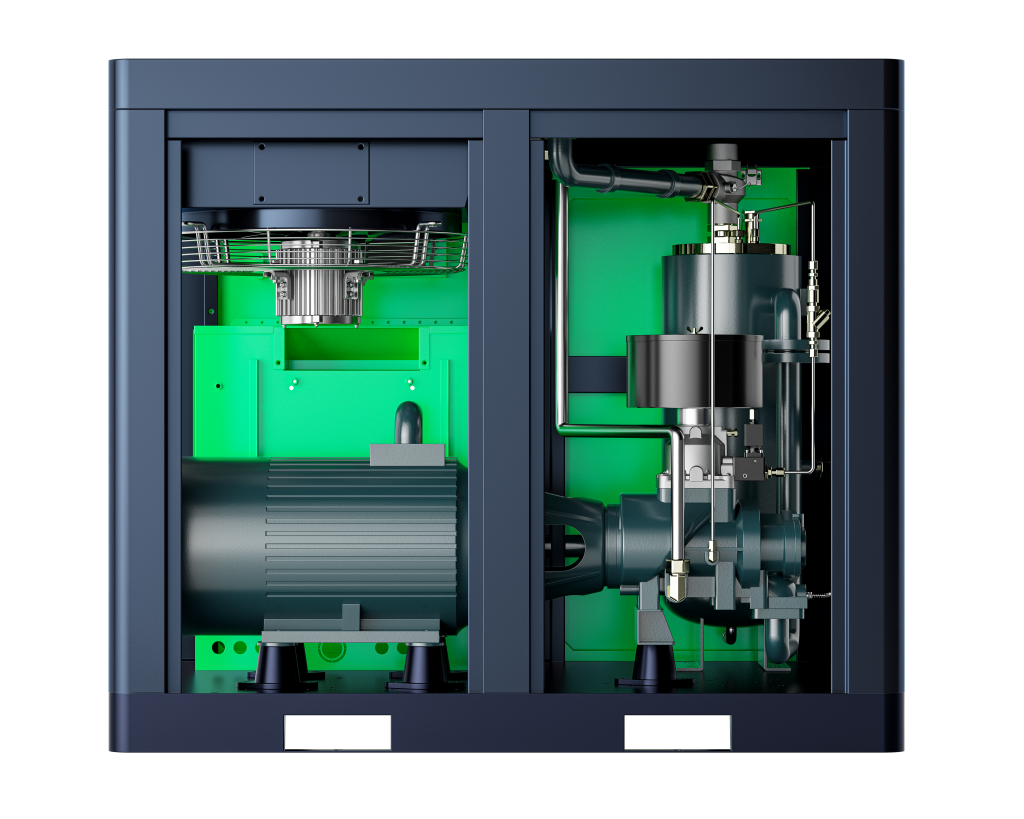
Advantage: These are 100% duty cycle machines. In fact, they run better when they stay hot and run continuously. The internal rotors are cooled by oil injection, reducing the mechanical wear common in piston units. For any heavy-use facility, a rotary screw industrial air compressor is the standard for reliability.
Performance: A Seize rotary screw compressor provides a pulse-free flow of air, which is essential for sensitive equipment like laser cutters, automated assembly systems, or high-end spray painting where pressure fluctuations can ruin product quality.
5. Why Size Isn’t Constant
In the past, an industrial air compressor ran at one speed: 100%. If you only needed 20% of the air, the compressor would “unload,” wasting massive amounts of electricity just to keep the motor spinning and ready. This inefficient operation drove up energy bills and increased mechanical stress.
Variable Speed Drive (VSD) technology changes the game entirely. A VSD compressor acts like a dimmer switch for a lightbulb, adjusting motor speed based on real-time air demand.
- If your production slows down, the motor slows down.
- This eliminates costly “idling” costs.
- It maintains a rock-steady pressure (within +/- 1 PSI), protecting your tools from damaging fluctuations.
For facilities with multiple shifts, fluctuating production schedules, or varying tool usage, a Seize VSD model can reduce total lifecycle costs by nearly 40%. When you size for VSD, you size for your peak load, knowing the machine will efficiently handle your minimum load without wasting power.
6. Storage Sizing
The air tank (receiver) is the “buffer” of your compressed air system. Proper tank sizing prevents the industrial air compressor from “short-cycling”—turning on and off too rapidly—which wears out motors, controls, and components.
Engineering Calculation for Tank Volume:
V=TC×(P1−P2)
(Where V is Volume, C is Air Demand, P is Pressure, and T is Time)
The Simplified Rule:
- For Fixed Speed: 4 Gallons per CFM.
- For VSD: 1–2 Gallons per CFM (since the motor adjusts speed rather than stopping and starting).
A larger tank allows moisture to drop out of the air before it reaches your dryer, significantly increasing the lifespan of your filtration system and improving overall air quality. Proper storage is a critical, often overlooked part of designing a complete industrial air compressor setup.
7. Environmental & Installation Factors
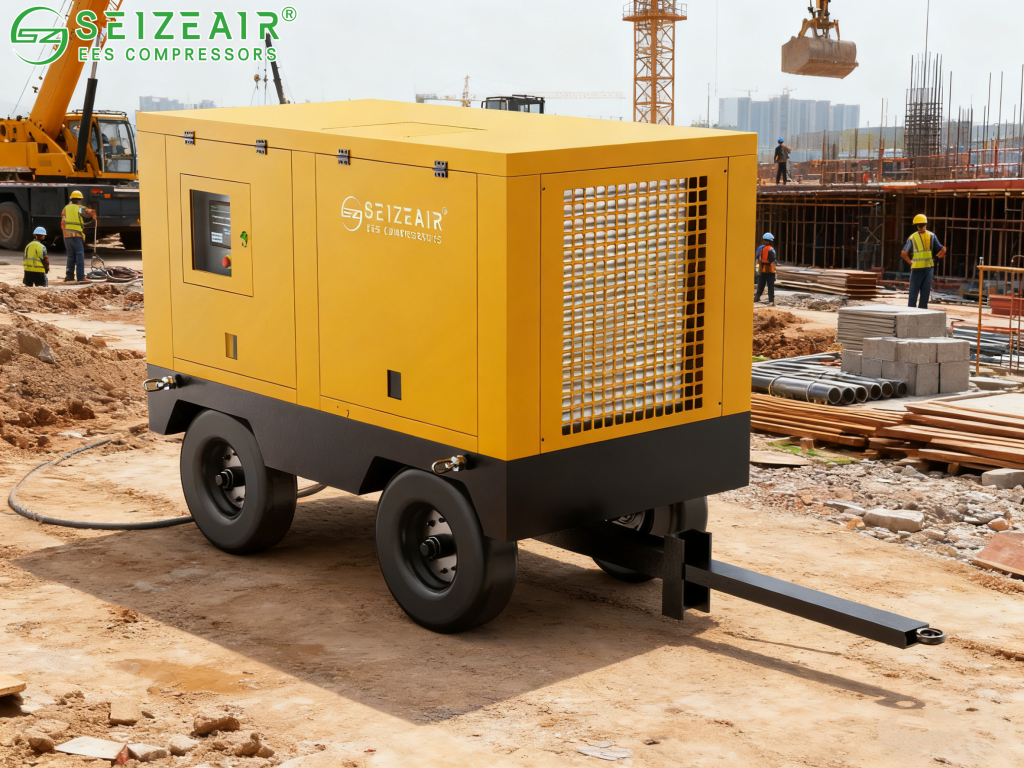
Your industrial air compressor’s performance is heavily dictated by its installation environment. If you don’t account for these real-world conditions, your “perfectly sized” compressor will consistently underperform, overheat, or require unexpected maintenance.
- Ambient Temperature: Air compressors generate heat equivalent to nearly 80% of their electrical input. Without massive ventilation, ducting, or cooling systems, the compressor will “re-breathe” its own hot air, reduce efficiency, and eventually shut down on thermal overload.
- Air Quality: If your environment is dusty, dirty, or contaminated (e.g., a woodworking shop, foundry, or construction area), your intake filters will clog quickly. This forces the compressor to work harder to produce the same CFM, effectively “shrinking” your compressor’s usable capacity.
- Condensate Management: Compressing air squeezes water vapor out of the atmosphere. A 50 HP industrial air compressor can produce gallons of water per shift. Proper sizing must include an automatic drain system and an oil-water separator to stay environmentally compliant and prevent moisture damage. Seize systems often integrate these components to simplify the installation footprint and reduce maintenance labor.
8. Common Pitfalls in Industrial Sizing
Even experienced engineers make mistakes when sizing an industrial air compressor. Avoid these costly errors:
- Underestimating Future Needs: Most plants grow by 10% in air demand every 3 years. Don’t size for today; size for five years from now to avoid premature replacement.
- Ignoring the Piping Material: Using PVC for compressed air is dangerous and creates high friction losses. Stick to aluminum or copper piping to ensure the CFM you produce actually reaches the tool.
- Neglecting the Dryer: A dryer creates a measurable pressure drop. If you add a high-efficiency desiccant dryer later, you might lose 5–7 PSI, which could drop your system below the required threshold for your most sensitive tools.
- Overlooking Maintenance Requirements: A poorly maintained industrial air compressor loses capacity over time. Filters, lubricants, and seals must be serviced to preserve rated CFM and pressure.
Conclusion
Sizing an industrial air compressor requires a holistic view of your facility’s current and future operations. By calculating your peak CFM, accounting for the duty cycle, factoring in a growth margin, addressing pressure drop, and choosing the right technology—like a high-efficiency Seize rotary screw—you ensure your plant remains productive, energy-efficient, and low-maintenance for years to come. A properly sized industrial air compressor isn’t just a piece of equipment; it’s a long-term investment in operational stability.
Would you like me to provide a specific piping diameter recommendation based on your calculated CFM and total pipe run length?