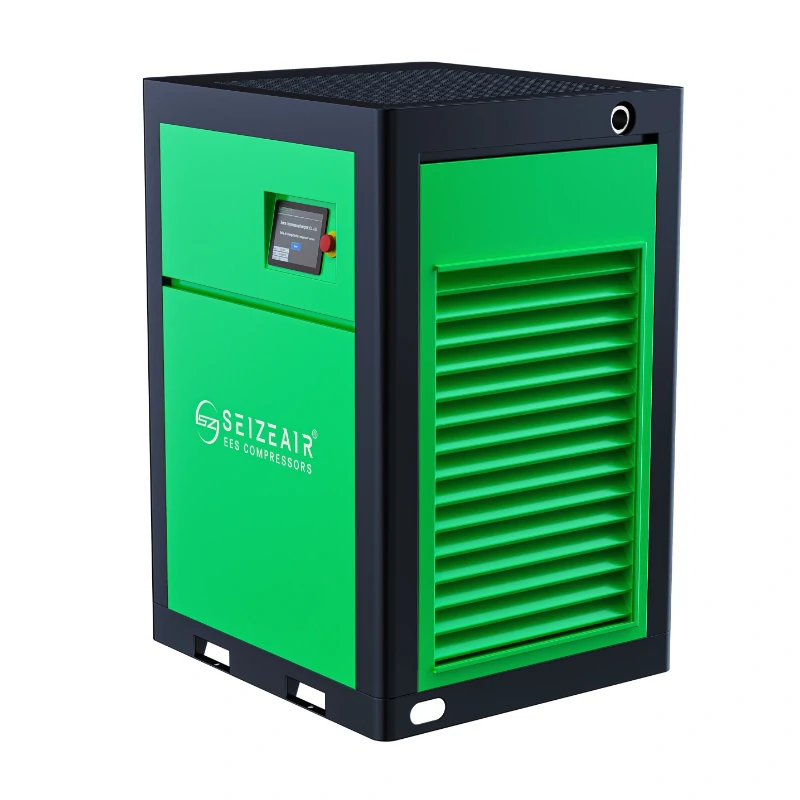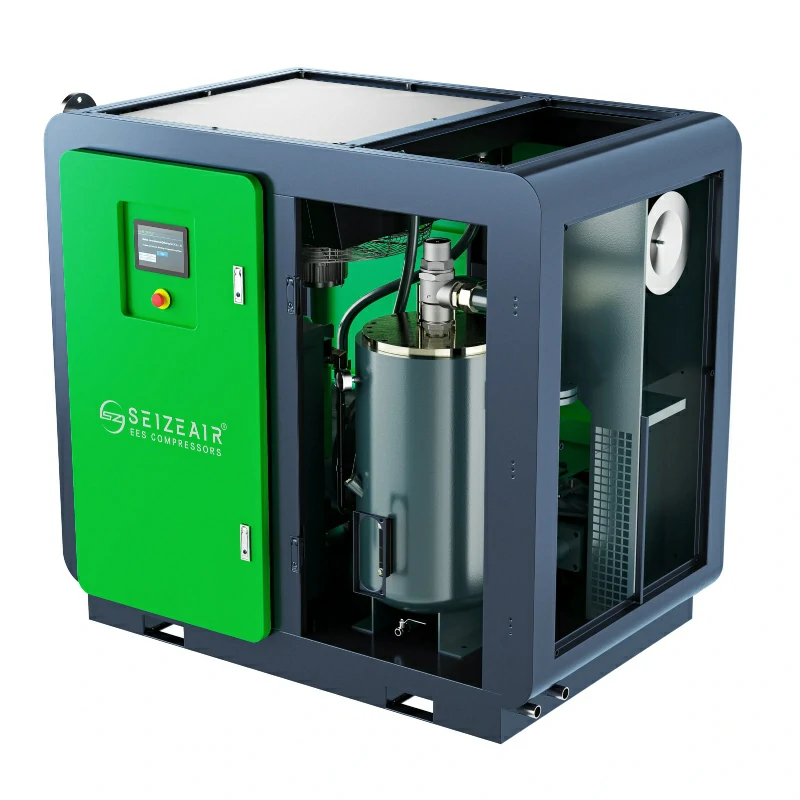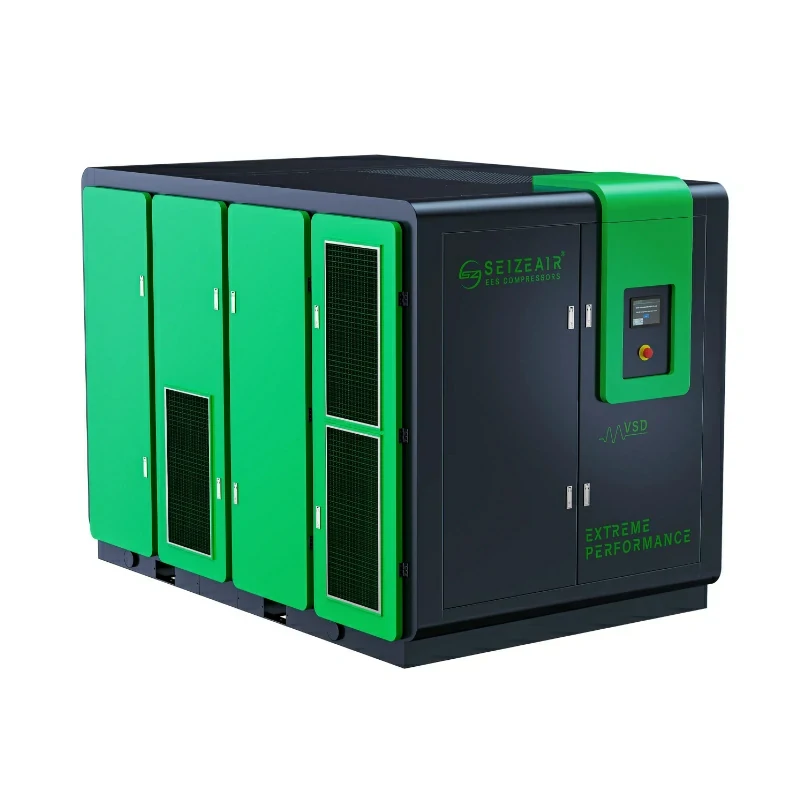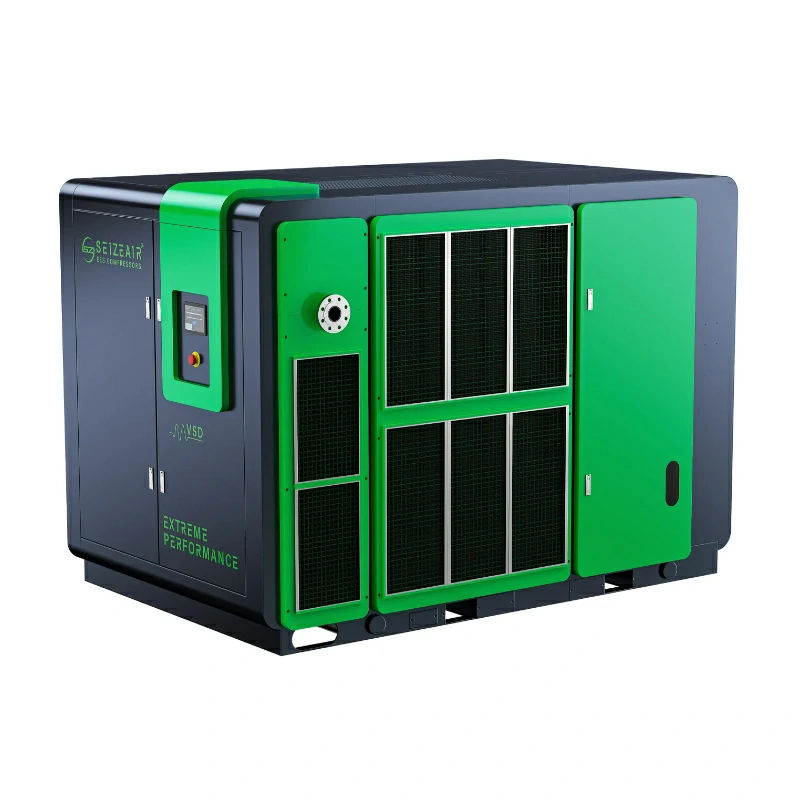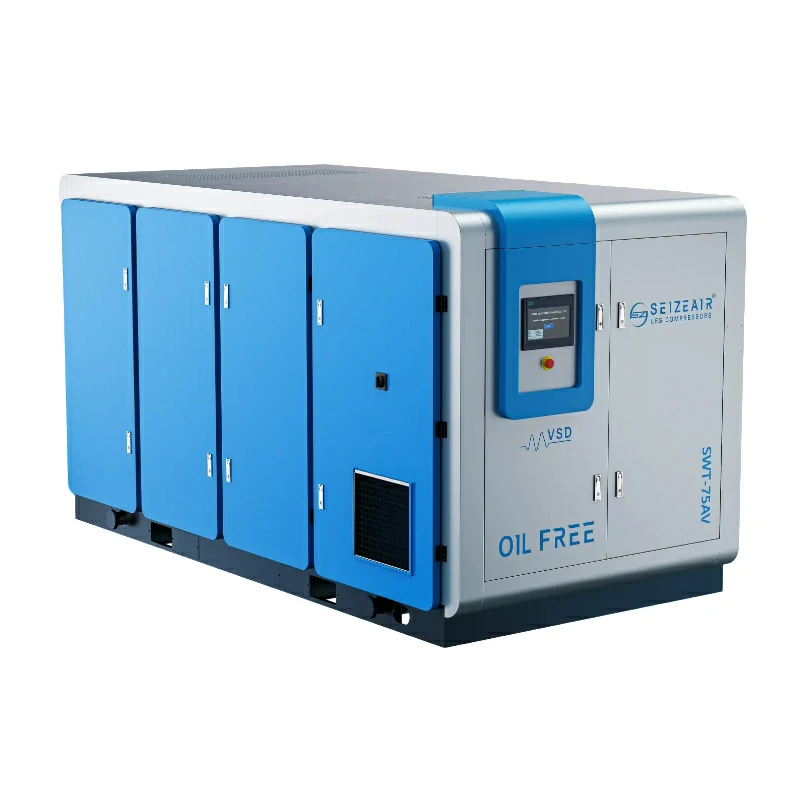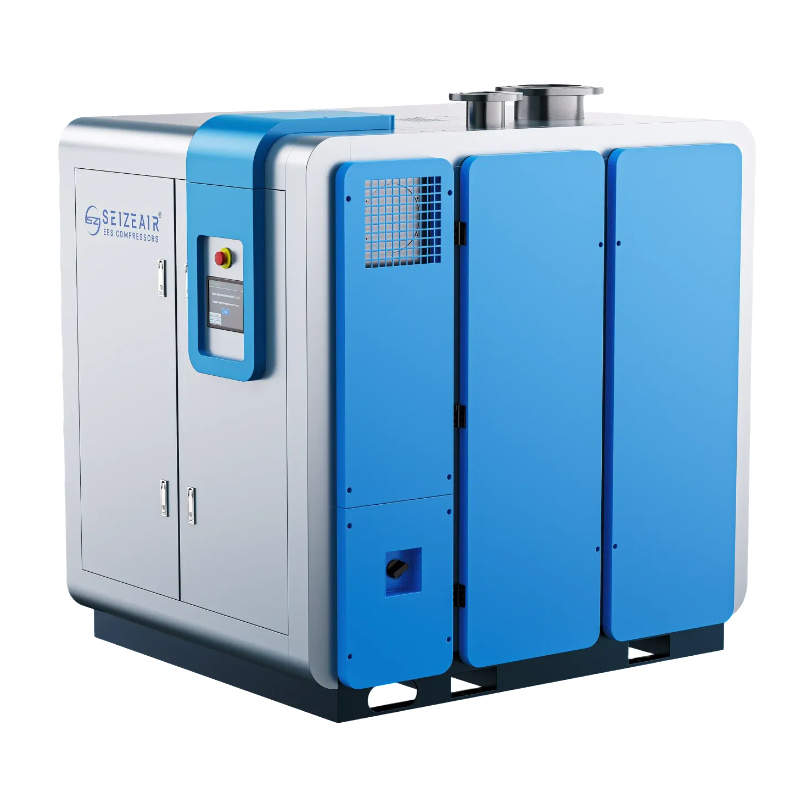


When you walk into a compressor room, every machine looks like a powerhouse of productivity. But as any experienced plant manager knows, the purchase price of an air compressor is just the tip of the iceberg. In fact, over a 10-year lifespan, the initial capital expenditure (CAPEX) usually accounts for less than 10% of the total cost of ownership. The rest? It’s almost entirely swallowed by electricity.
As global energy prices fluctuate and sustainability mandates tighten, the debate between high efficiency air compressors and standard models has shifted from a “green luxury” to a financial necessity. This guide breaks down the technical and fiscal reality of choosing between the two.
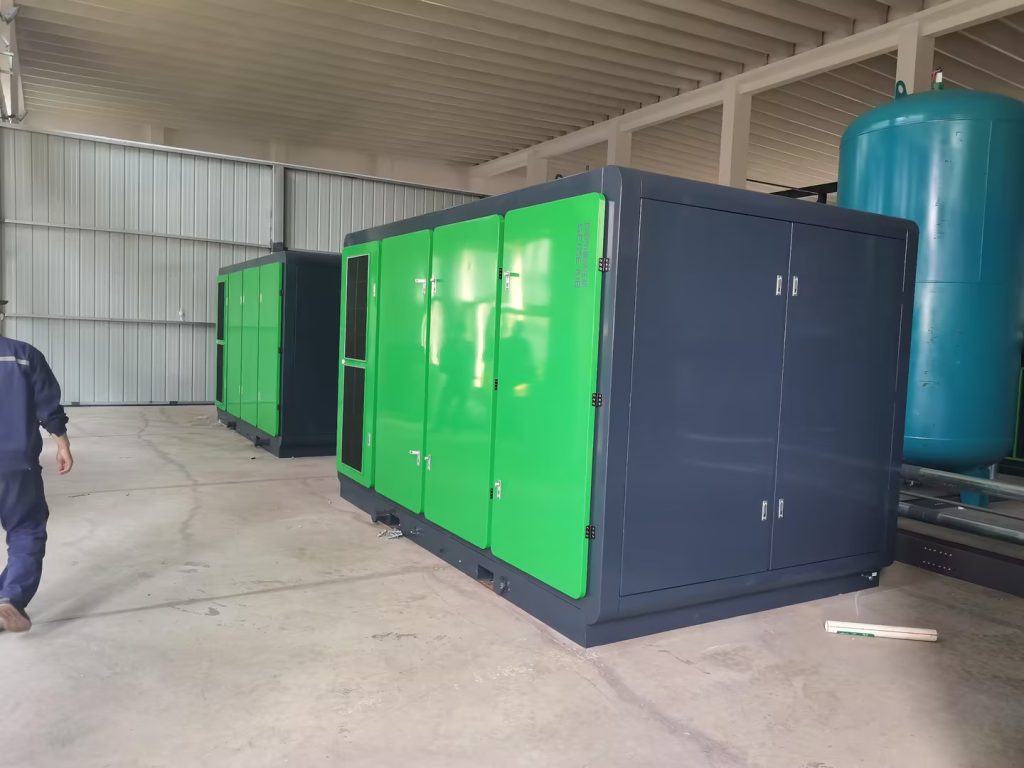
What features define a high efficiency air compressor?
From a field engineer’s perspective, a “standard” compressor is often a collection of compromises. They are designed to work reasonably well across a broad range of applications, but they excel at none. They typically utilize IE3 induction motors which, while reliable, suffer from significant efficiency drops as soon as the load fluctuates. These units are often “oversized” by installers to play it safe, leading to a lifetime of inefficient part-load operation.
In contrast, a high efficiency air compressor is a precision instrument. The magic happens in the Specific Power ($kW/m^3/min$), which is the “fuel economy” metric of the industrial world.
- The Motor Factor: Standard induction motors rely on “slip” to create torque, generating internal heat. High-efficiency models pivot to iPM (Interior Permanent Magnet) motors. These don’t have rotor copper losses; they stay cool and maintain 96-97% efficiency even when running at 25% speed. This is crucial because most factories rarely run at 100% capacity 24/7.
- The Volumetric Trap: Most standard units use a single-stage airend. Trying to squeeze air from 1 bar to 8 bar in one “gulp” generates massive heat. Physics dictates that the hotter the air, the harder it is to compress. Standard units simply fight against the laws of thermodynamics, while high-efficiency units work with them.
- Precision Control: While a standard machine uses a simple “load/unload” mechanical valve, a high-efficiency system uses high-speed sensors to communicate with the inverter, adjusting hertz in real-time to match the exact CFM demand of the production line.
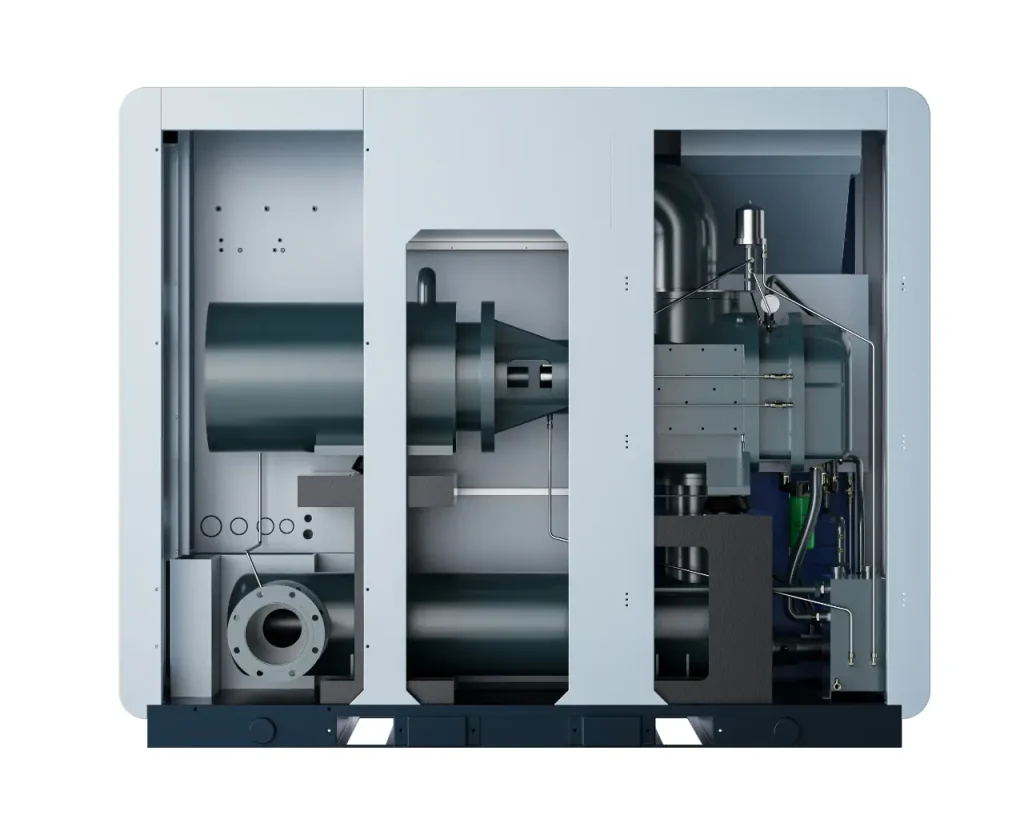
Seize Air engineers solve the volumetric problem by using oversized, low-speed airends. By increasing the rotor size and slowing down the RPM, you reduce internal “blow-by” leakage and mechanical friction. It’s the difference between a high-revving small engine and a massive, torquey diesel—one works hard, the other works smart.
Why is two-stage compression more efficient than single-stage?
If you are a system integrator, you know that the “Real Cost” is often found in the discharge temperature. This is where two-stage compression changes the game. By compressing air in two distinct steps with an intercooler in between, we move closer to isothermal compression.
- Stage One: Compresses air to an intermediate pressure (approx. 3 bar). At this lower ratio, internal leakage (gas slipping back past the rotors) is minimal.
- Intercooling: The air is passed through an oil-injected cooling curtain, increasing its density and reducing the work required for the next step.
- Stage Two: Compresses the dense, cool air to the final pressure. Because the compression ratio in each stage is low (approx. 3:1 vs. 8:1 in a standard unit), the mechanical stress on bearings is drastically reduced.
| Technical Parameter | Single-Stage Standard | Two-Stage High-Efficiency |
| Compression Ratio (per stage) | ~8:1 (High Stress) | ~3:1 (Low Stress) |
| Volumetric Efficiency | 75% – 82% | 92% – 95% |
| Discharge Temp | 80°C – 100°C | 60°C – 75°C |
| Bearing Lifespan | ~30,000 hours | ~50,000+ hours |
| Oil Carryover | Higher due to heat | Lower (Easier to separate) |
The math is simple: a two-stage system can be 10% to 15% more efficient than a single-stage unit of the same horsepower. For a 100kW machine, that’s 15kW of “ghost power” you stop paying for every single hour. Furthermore, cooler discharge air means your downstream dryers don’t have to work as hard, saving even more energy in the air treatment stage.
Does a VSD air compressor save money on electricity?
Many buyers think that simply adding a Variable Speed Drive (VSD) to a standard compressor makes it “high efficiency.” This is a dangerous half-truth that often leads to disappointing ROI. A standard motor cooled by a shaft-mounted fan will overheat if run too slowly. This forces the compressor to maintain a high minimum speed, wasting energy during low-demand periods.
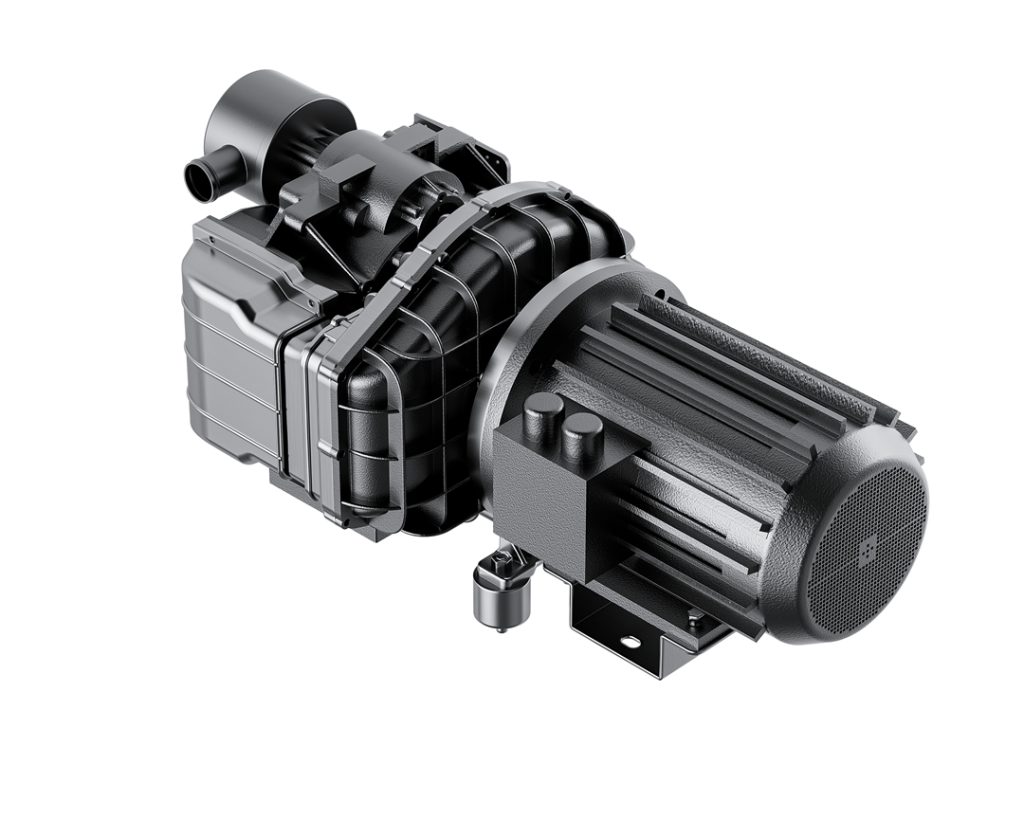
A true iPM VSD high efficiency air compressor uses independent cooling and a motor designed to stop and start instantly.
- The “Unloaded” Cost: In a standard setup, when the air tank is full, the motor keeps spinning (unloaded) to avoid frequent restarts. It consumes about 30-35% of its full-power electricity while doing zero work. If your compressor is unloaded for 2 hours a day, you are literally burning cash.
- Soft Starting: Standard units have a massive “Inrush Current” (up to 7x running amps) when they start. This leads to peak demand charges on your utility bill. VSD units start at 0 Amps and ramp up smoothly, protecting your electrical infrastructure and reducing your monthly bill “spikes.”
- Constant Pressure: A VSD maintains a rock-steady 7.0 bar. A standard unit fluctuates between 6.5 and 8.0 bar. Since every 1 bar of over-pressurization costs about 7% more energy, the “tight” pressure band of a VSD unit provides a hidden saving of 5-10% annually.
Field Note: I’ve seen plants where a “Standard VSD” was installed, but because the air leaks were so high, the machine never left its inefficient high-speed zone. A high-efficiency unit is a tool, but your system must be healthy to reap the rewards.
How to calculate air compressor energy savings and ROI?
Decision-makers care about the IRR (Internal Rate of Return). Let’s look at a 75kW (100HP) unit operating in a typical industrial environment (6,000 hrs/year, $0.12/kWh).
| Expense Category | Standard Fixed-Speed | High-Efficiency iPM VSD | The “Seize Air” Advantage |
| Purchase Price | $15,000 | $23,000 | Higher CAPEX, rapid ROI |
| Installation | $4,000 | $4,500 | Precision piping recommended |
| Annual Energy (Avg 70% Load) | $54,000 | $34,800 | $19,200 Annual Saving |
| Maintenance | $1,200/yr | $1,500/yr | VSDs need clean environments |
| 10-Year Total | $567,000 | $386,000 | $181,000 Net Profit |
The payback period on the price difference ($8,000) is roughly 5 months. After that, the machine generates nearly $20,000 in pure bottom-line profit every year. When you present these numbers, the conversation changes from “How much does it cost?” to “How soon can we install it?” The energy savings alone effectively pay for a brand-new Seize Air unit multiple times over its lifecycle.
What are the maintenance requirements for high efficiency compressors?
Common PAA (People Also Ask) queries often focus on whether “high tech” means “high maintenance.” The answer is nuanced. While the mechanical components are often more robust due to lower operating speeds, the electronics require respect.
- Air Quality: Because high-efficiency airends have tighter tolerances, you cannot skip oil filter or air filter changes. Dust is the enemy of efficiency.
- VSD Cooling: The inverter generates heat. If your compressor room is a 50°C “sauna,” the VSD will trip. High-efficiency units from Seize Air are designed with oversized cooling fans and dust-proof electrical cabinets to handle harsh industrial environments, but ventilation is still key.
- Oil Selection: You must use high-grade synthetic lubricants. Standard mineral oil will “varnish” at the high pressures found in single-stage units, but in two-stage high-efficiency units, the lower temperatures keep the oil stable for longer, often extending the service interval.
Can I retro-fit my standard compressor to be high-efficiency?
Technically, you can add a VSD, but you cannot change the airend profile or the motor’s native efficiency. It’s like putting a turbo on a 20-year-old truck; you get more power, but you’ll never get the fuel economy of a modern hybrid. Replacing the unit is almost always the more profitable move because a “frankenstein” VSD setup often fails to address the “unloaded” power consumption of the original motor.
How does air compressor efficiency impact ESG and carbon footprint?
We are entering an era where energy efficiency is a legal requirement, not a suggestion. Carbon taxes are no longer “theoretical.” If your plant is running three standard 100kW compressors, you are likely emitting 400+ tons of CO2 more than necessary every year.
- Heat Recovery: Roughly 90% of the energy used by a compressor is converted into heat. High-efficiency systems can be fitted with heat exchangers to provide free hot water for your facility.
- LEED & ISO 50001: Upgrading to an IE4/IE5 level high efficiency air compressor helps your facility meet international energy management standards.
By integrating a Seize Air energy-saving solution with a heat recovery system, some plants reach a “total thermal efficiency” that standard setups simply cannot touch. You effectively turn your compressor into a secondary boiler for your plant’s showers or process heating.
Summary
If your priority is the lowest possible “Day 1” invoice, a standard compressor will get the job done. However, if your priority is operational profitability, the high efficiency air compressor is the only logical choice.
Modern industrial giants are moving toward “smart” air stations. By choosing a partner like Seize Air, who specializes in two-stage and iPM technologies, you aren’t just buying a machine—you are securing a decade of lower utility bills and reliable, high-quality air.
Ready to see the data for your own plant? Conduct an air audit today and stop letting your profits leak out through your exhaust fan.