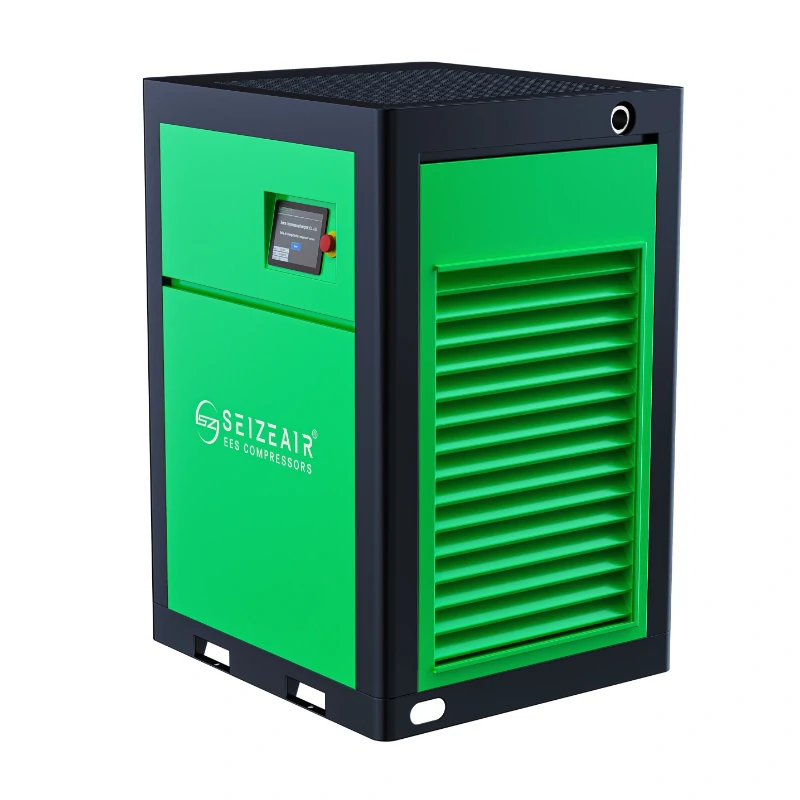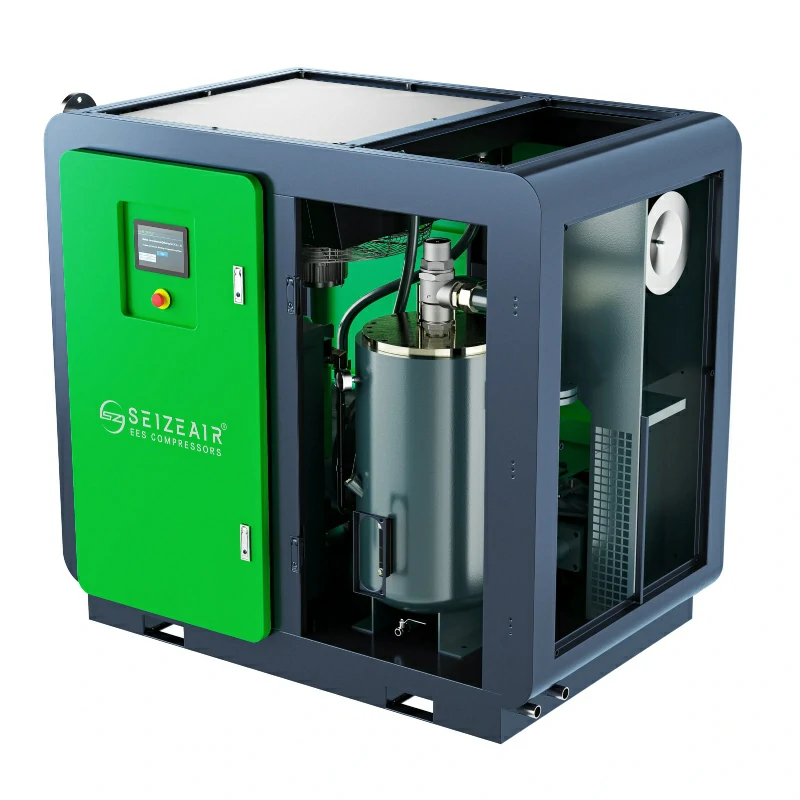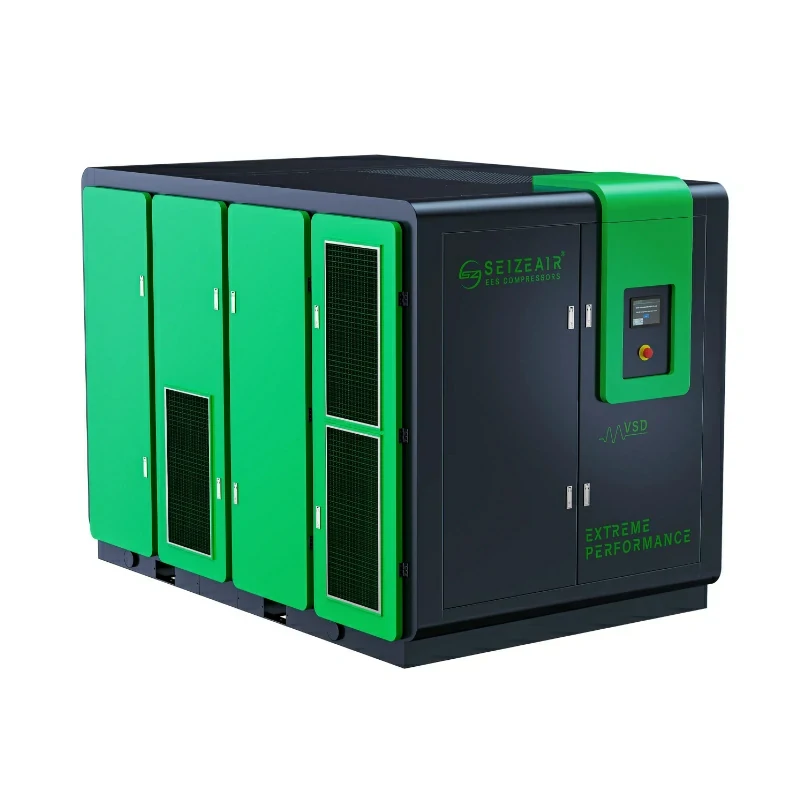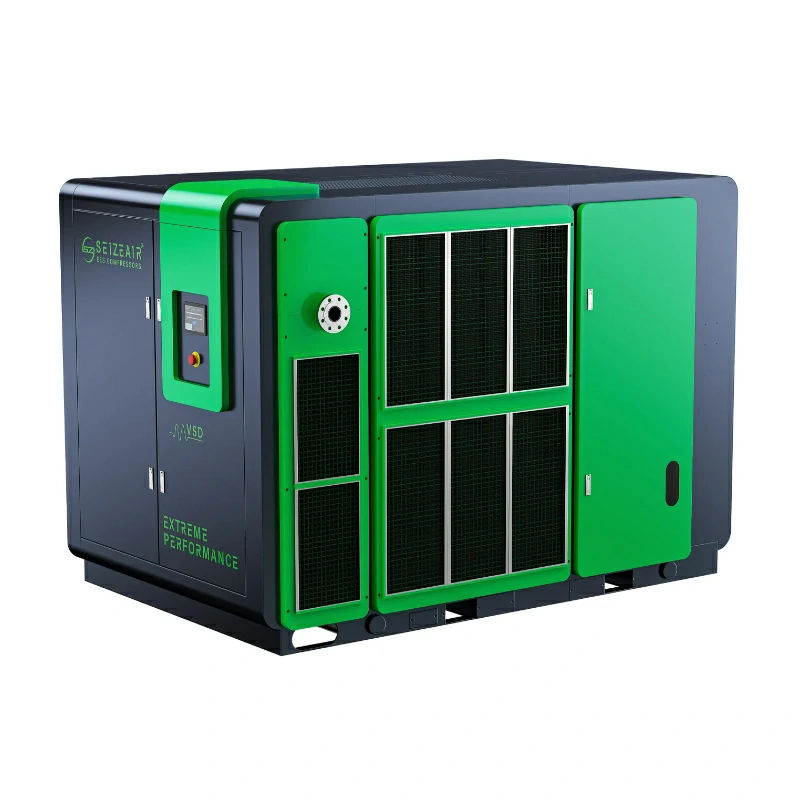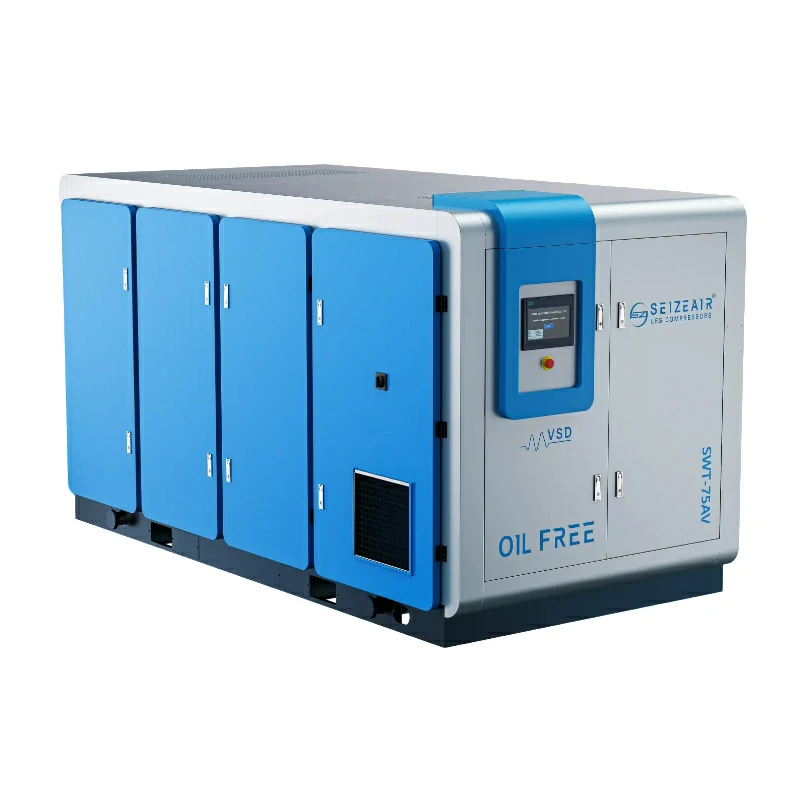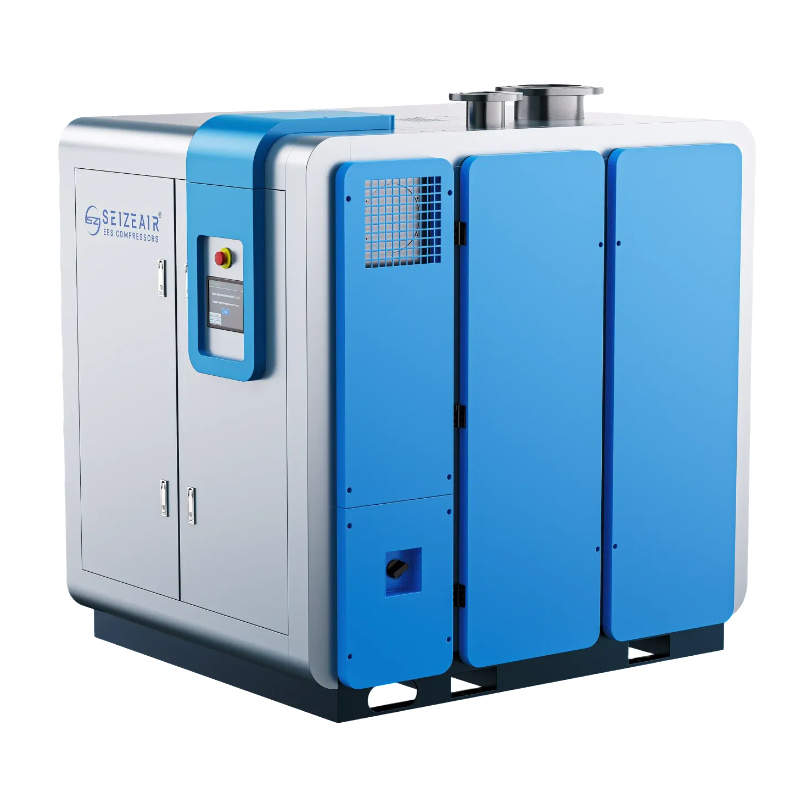


Choosing between a 30hp air compressor and a 50hp air compressor is more than just a matter of “bigger is better.” In a demanding industrial environment, this decision dictates your facility’s energy bills, maintenance schedules, and production uptime for the next decade.
While a 30hp unit might struggle to keep up with peak demand, an oversized 50hp unit can lead to “short-cycling,” which kills motor life and wastes electricity. This guide breaks down the technical nuances to help you pinpoint the exact horsepower required for your specific application.
Is a 30hp Air Compressor Enough for Industrial CNC and Sandblasting?
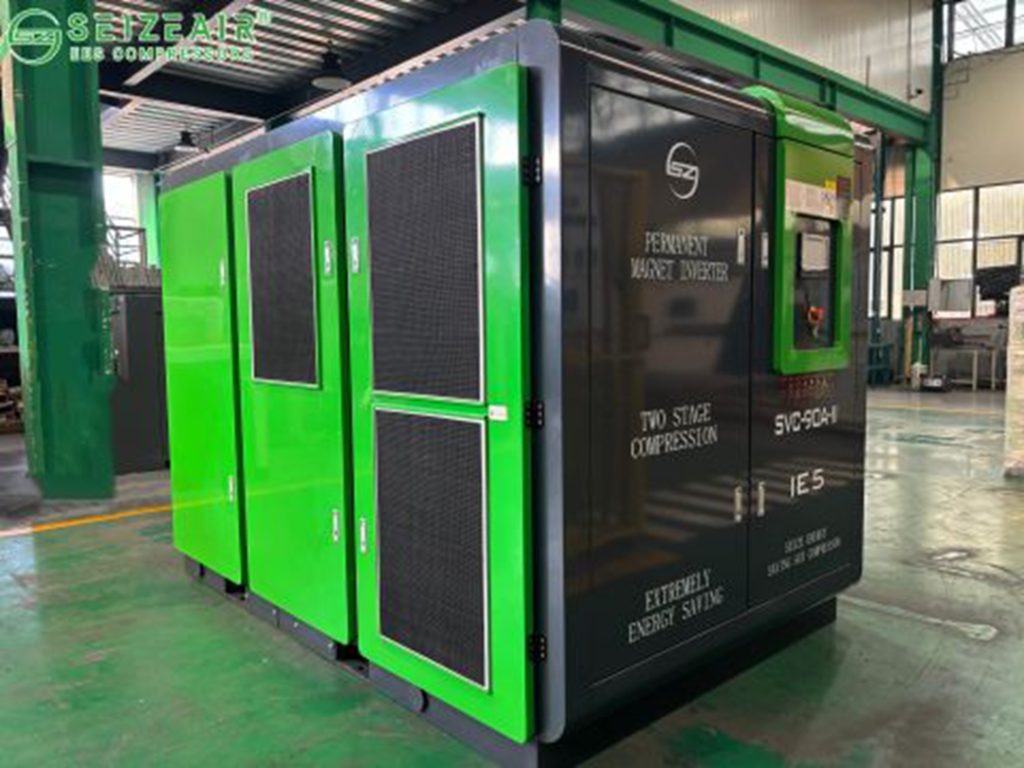
When we talk about a 30hp air compressor, we are looking at the standard “workhorse” of the medium-scale manufacturing sector. From a field engineer’s perspective, the common mistake is looking at the nameplate HP rather than the delivered CFM at 125 PSI.
A high-performance 30hp rotary screw unit typically yields between 110 and 125 CFM. In a real-world CNC shop, a single vertical machining center might pull 15-20 CFM during tool changes and spindle cooling. Theoretically, a 30hp unit can support five to six machines simultaneously. However, if you introduce a manual sandblasting cabinet into the mix—which can easily consume 40-80 CFM depending on the nozzle size—your 30hp system is suddenly redlined.
The specific power consumption (kW/100 CFM) is your true north. If your shop operates 8 hours a day with intermittent heavy loads, the 30hp unit offers a compact footprint and lower startup amperage. But if you find yourself constantly waiting for the “tank to catch up,” you aren’t just losing time; you’re killing your tool’s precision. For those pushing the limits of a 30hp system, Seize Air provides high-efficiency models that optimize the air-end profile, delivering more “usable air” per revolution than generic alternatives, which can be the difference between a system that survives and one that thrives.
How Many CFM Does a 50hp Air Compressor Produce in 24/7 Operations?
Stepping up to a 50hp air compressor isn’t just about more power; it’s about shifting into a different industrial class. A 50hp motor typically generates 190 to 215 CFM. This is a 70% increase in air volume over the 30hp counterpart.
For decision-makers, the 50hp unit is often a strategic hedge against “air starvation.” In high-volume production—think automotive parts coating or automated food packaging—the cost of a 10 PSI pressure drop is measured in thousands of dollars of scrapped product. A 50hp system provides the “buffer” needed to maintain a rock-solid 110 PSI across a 200-foot header pipe.
| Performance Metric | 30hp Air Compressor (Rotary) | 50hp Air Compressor (Rotary) |
| Typical Air Delivery (CFM) | 115 – 122 CFM | 200 – 215 CFM |
| Power Consumption (Full Load) | ~25.5 kW | ~42.5 kW |
| Cooling Air Requirement | 4,500 CFM | 8,200 CFM |
| Oil Sump Capacity | 15 – 20 Liters | 30 – 45 Liters |
| Acoustic Level (dB) | 68 – 72 dB | 72 – 76 dB |
However, the “field engineer’s warning” here is thermal management. A 50hp unit rejects nearly twice the heat of a 30hp unit. If your plant’s ventilation isn’t designed for an extra 130,000 BTU/hr, your “upgrade” will spend half the summer in “High Temperature Shutdown.” You have to treat the 50hp unit as an integrated system, not just a standalone box.
Will Upgrading to a 50hp Air Compressor Increase My Energy Bill?
This is the $50,000 question. If you replace a 30hp unit with a fixed-speed 50hp unit but your air demand stays at 100 CFM, your energy bill will actually increase.
Fixed-speed compressors are notoriously inefficient at “part-load.” When a 50hp unit is “unloaded” (meaning the motor is spinning but no air is being produced), it still consumes about 30% of its total power. That’s 12-15 kW of electricity wasted just to keep the machine ready.
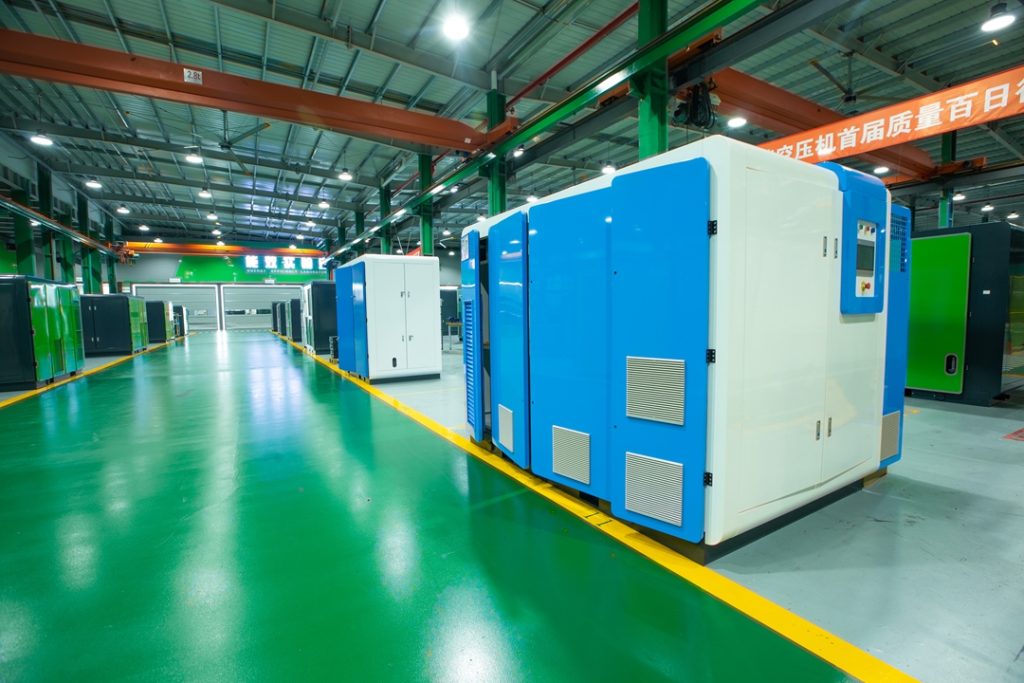
This is where Seize Air energy-saving technology changes the math. By utilizing a PM VSD (Permanent Magnet Variable Speed Drive), a 50hp unit can slow down its motor to match a 30hp load.
- The 30hp Load Scenario: A 50hp VSD unit running at 50% capacity is often more efficient than a 30hp fixed-speed unit running at 90% capacity, because the VSD avoids the constant “load/unload” spikes.
- The Decision Logic: If your average load is 90 CFM but you have “spikes” of 160 CFM, a fixed 30hp will fail. A fixed 50hp will waste energy. A Seize Air VSD 50hp is the only solution that handles the peak while saving money on the average.
What are the Installation Requirements for a 30hp vs. 50hp System?
As a system integrator, I look at the “hidden” infrastructure. The leap from 30hp to 50hp often requires a complete overhaul of your utility room.
Electrical Infrastructure: The Amperage Gap
A 30hp air compressor (at 460V/3-Phase) usually requires a 60-80 Amp circuit. Most standard industrial buildings can handle this without a sweat. A 50hp air compressor pushes that requirement to 100-125 Amps.
Pro Tip: Always check your “short circuit current rating” (SCCR). A 50hp motor has a much higher “inrush” current than a 30hp. If your breakers aren’t rated for industrial motor starts, you’ll face nuisance tripping every time the compressor kicks in.
Air Piping and Pressure Drop
Physics dictates that air speed through a pipe should stay under 20-30 fps (feet per second) to prevent massive pressure drops.
30hp Piping: Usually requires a 1.25″ or 1.5″ main header.
50hp Piping: Requires a 2″ or 2.5″ main header.If you try to “shove” 200 CFM from a 50hp unit through a 1-inch pipe designed for a 30hp unit, you will lose 10-15 PSI just in friction. You’ll end up running the compressor at 125 PSI just to get 110 PSI at the tool—a classic “energy thief.”
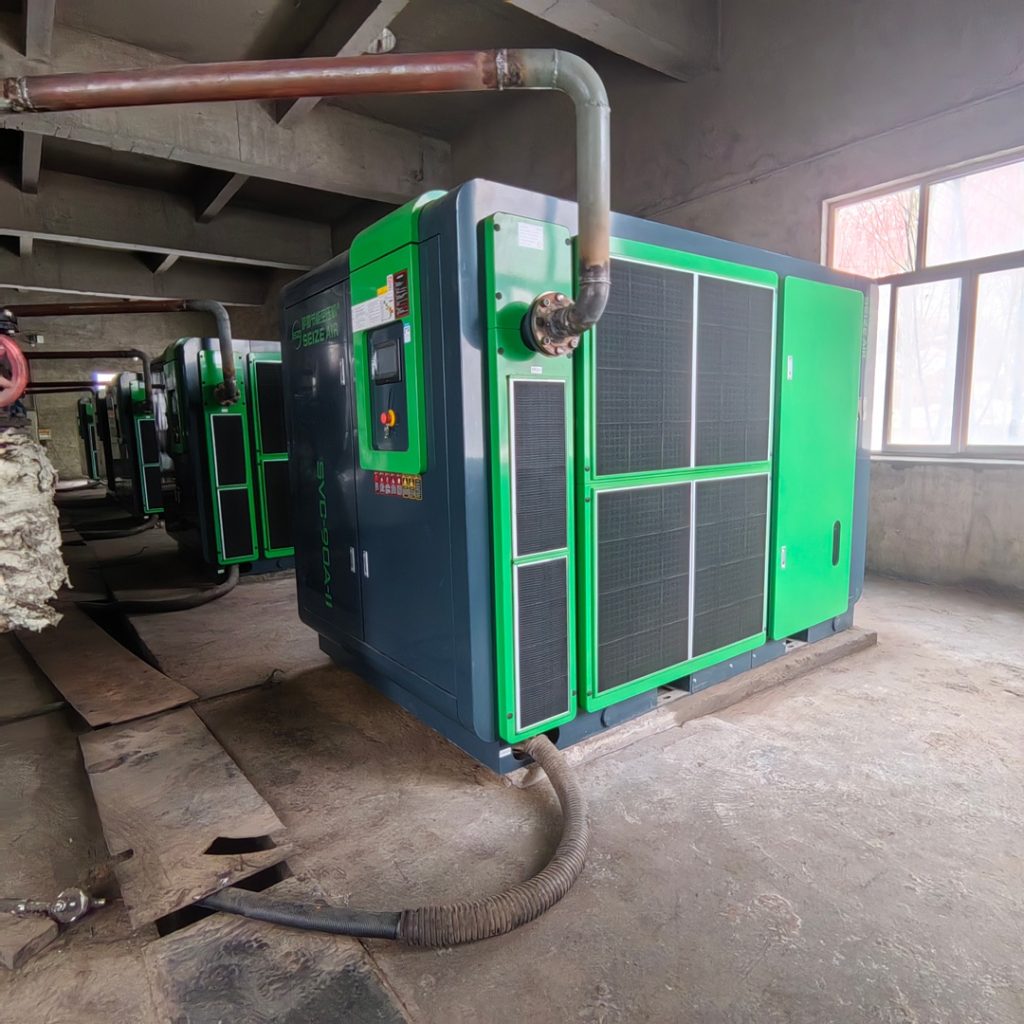
Condensate Management
A 50hp unit squeezes more moisture out of the air. You’ll need a larger refrigerated air dryer and a more robust oil-water separator. Neglecting this means your 50hp “upgrade” will eventually start spitting water into your expensive pneumatic tools.
How to Calculate the ROI of a 50hp VSD Compressor?
From a management perspective, we need to justify the higher CAPEX of a larger, more advanced machine. Let’s look at the “cost of air.”
If your plant runs 4,000 hours a year at an electricity cost of $0.12/kWh:
- 30hp Fixed Speed (Running 80% Load): Annual cost approx. $8,500.
- 50hp Fixed Speed (Running 50% Load): Annual cost approx. $14,000 (due to unloading losses).
- Seize Air 50hp PM VSD (Running 50% Load): Annual cost approx. $7,800.
Notice the irony? A 50hp VSD machine can actually be cheaper to run than a 30hp fixed-speed machine, even while providing the capacity to double your production tomorrow. This is why we focus on “Specific Energy Consumption.” When we design systems with Seize Air components, we aren’t just selling a motor; we are selling a reduction in your monthly overhead.
Which Air Compressor Maintenance is More Expensive: 30hp or 50hp?
The maintenance schedule is identical (usually every 2,000 to 4,000 hours), but the volume of consumables differs significantly.
- Lubricant Volume: A 50hp unit has a larger internal sump. You might be buying 10 gallons of high-grade synthetic oil instead of 5.
- Filtration Surface Area: To handle 200 CFM, the intake and oil separator filters are massive. A 50hp service kit can cost 40% more than a 30hp kit.
- Reliability Factors: A 30hp unit pushed to its limit 24/7 will require more frequent valve and bearing checks. A 50hp unit “cruising” at 70% capacity often has a longer MTBF (Mean Time Between Failures).
If you are a smaller shop without a dedicated maintenance team, the simplicity of a Seize Air 30hp unit is attractive. However, for 24/7 industrial plants, the 50hp unit’s heavy-duty air-end is built for a 100,000-hour life cycle, which often results in a lower “cost per hour of operation” over the long term.
Which One Fits Your Needs?
Choosing between these two comes down to Calculated Peak Demand.
- Go with 30hp if your peak demand never exceeds 110 CFM and your growth plan is conservative. It is an efficient, cost-effective solution for steady-state operations.
- Go with 50hp if you have heavy intermittent loads, plan to scale, or run 24/7 operations where a 30hp unit would be constantly “redlined.”
Investing in a high-quality system from a reputable manufacturer like Seize Air ensures that whichever horsepower you choose, you are getting the most air for every dollar spent on electricity. Always consult with a system integrator to calculate your total pressure drop and air quality requirements before signing the PO.