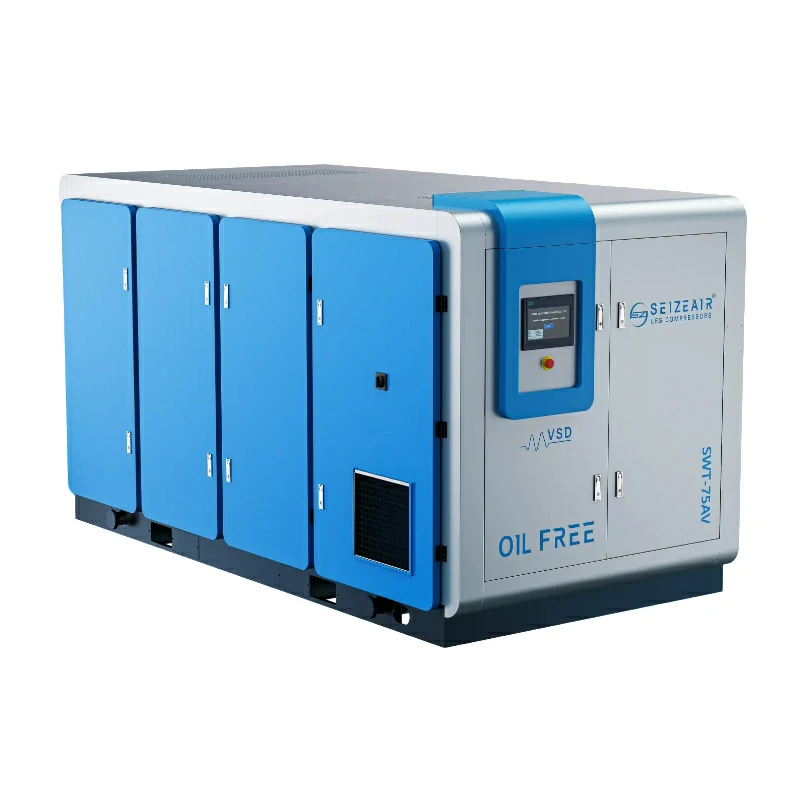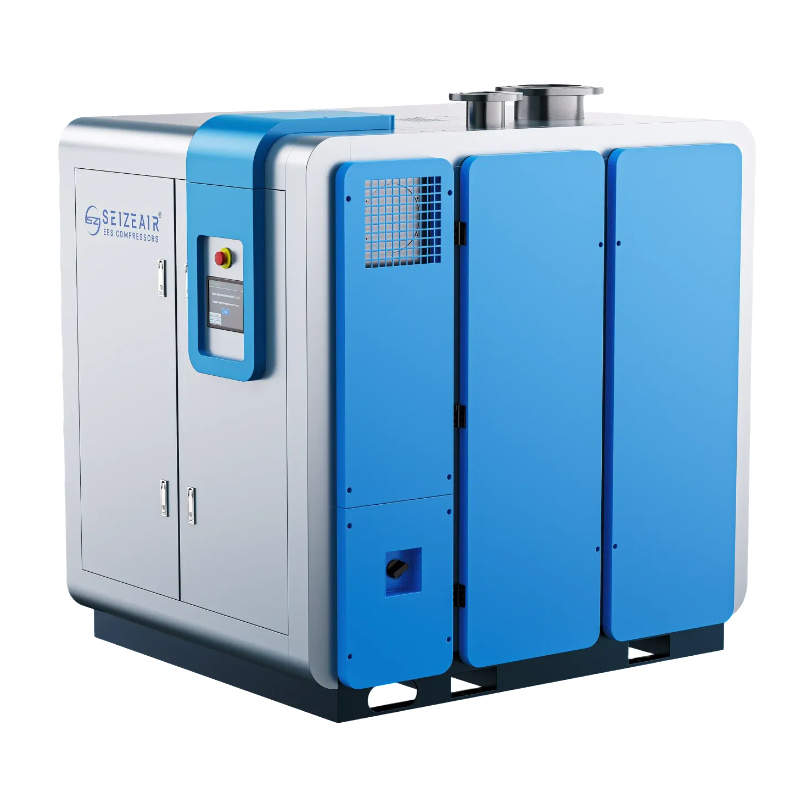


Choosing a high-capacity compressed air system is a defining moment for any industrial facility. It’s not just about “buying a machine”; it’s about investing in the heartbeat of your production line. Whether you are scaling a textile mill in South Asia or upgrading a manufacturing plant in Europe, the efficiency of your large air compressors dictates your operational overhead for the next decade.
In this guide, we’ll break down the technical nuances, energy-saving configurations, and the strategic selection criteria that separate market leaders from the rest.
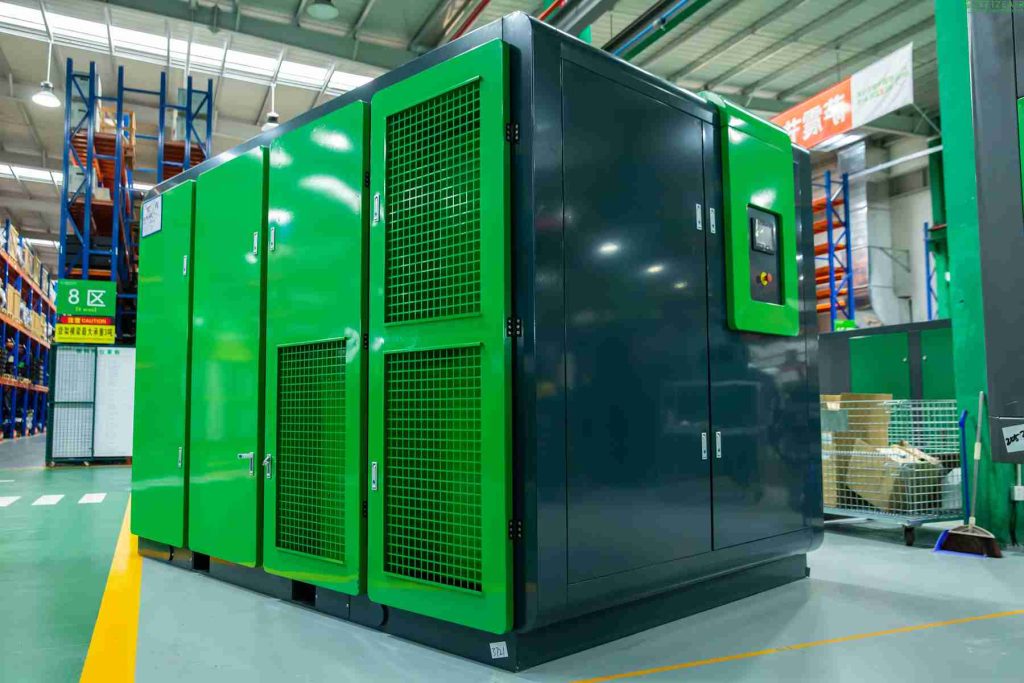
How Do You Calculate the Right Size for Large Air Compressors?
Most procurement officers look at the nameplate on a machine and see “1000 CFM at 100 PSI” and think they’ve found their match. But as a field engineer will tell you, a nameplate is a laboratory promise, not a factory floor reality. When searching for the best large air compressors for industrial plants, you have to look at the specific power consumption of 100hp air compressors or larger—the actual kilowatt consumption required to produce 1 m³/min of air.
If your plant is running at a high altitude or in a humid tropical climate, that 1000 CFM “on paper” might drop to 850 CFM in practice. This is where thermal management becomes the silent killer of efficiency. A compressor that runs hot isn’t just a fire hazard; it’s an energy sinkhole. Large-scale units require sophisticated cooling paths—often dual-stage cooling—to ensure that the air entering the second stage is as dense as possible.
We often see “scoping errors” where a buyer ignores the high-flow air compressor system requirements of downstream equipment like sandblasting cabinets or large-scale pneumatic conveyors. These tools don’t just need pressure; they need a massive volume of air instantly. If your piping is undersized or your compressor’s “kick-in” response is sluggish, you’ll see a pressure drop that triggers a plant-wide “brownout” of pneumatic power. This is why we advocate for heavy-duty rotary screw air compressors with oversized airends. An oversized airend running at a lower RPM (revolutions per minute) generates significantly less heat and friction than a small airend screaming at high speeds to keep up with demand.
Key Performance Metrics
| Feature | Importance Level | Engineering Reality |
| Isothermal Efficiency | Critical | How close the compression process comes to a constant temperature. |
| Turndown Ratio | High | The range over which a compressor can reduce capacity without “blowing off” air. |
| Oil Carryover | Critical | Measured in PPM; higher carryover ruins downstream desiccant dryers. |
| Airend Life (L10 Bearing Life) | Moderate | High-quality units like Seize Air use oversized bearings to hit 100k+ hours. |
| Specific Energy (kW/m³/min) | Extreme | The only metric that truly dictates your monthly electricity bill. |
What Is the Difference Between Centrifugal and Rotary Screw Large Air Compressors?
If you’re moving 500 to 3,000 CFM, you’re at the crossroads of technology. Rotary screw compressors are the “Swiss Army Knives” of the industry. They handle the grit of a cement plant and the precision of an automotive line with equal poise. Their magic lies in the “internal compression ratio.” Unlike a piston that hammers air, the twin screws weave it together, providing a pulse-free flow that protects your downstream sensitive valving.
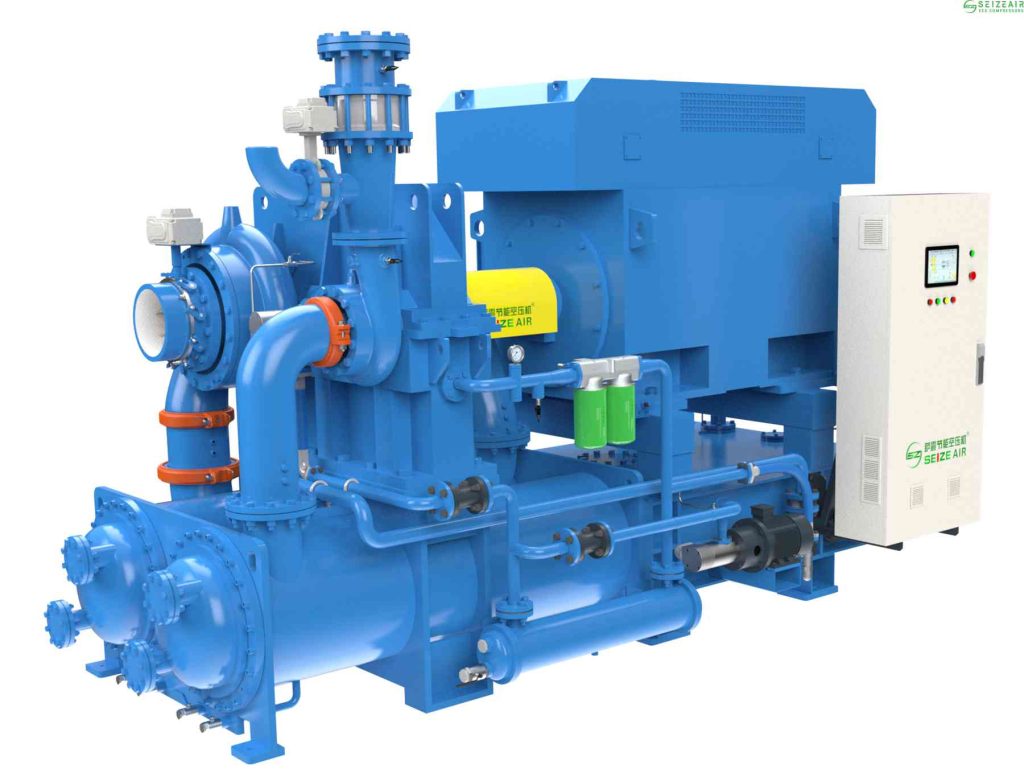
When discussing large air compressors for industrial manufacturing, the “Centrifugal vs. Screw” debate is often framed as “one or the other.” That’s a mistake. In massive plants, we often see a “Baseload + Trim” strategy. You run a massive centrifugal unit at 100% capacity because they hate being throttled—centrifugals are remarkably efficient at full tilt but become unstable (surging) when demand drops.
Then, you use a high-performance Seize Air VSD rotary screw compressor to “trim” the peaks and valleys of your daily demand. This hybrid approach prevents “surge”—the violent backflow of air in centrifugal units—and keeps the entire system in its “sweet spot” of efficiency. Furthermore, consider the industrial compressed air system design for multi-machine setups. A smart controller can sequence four or five large air compressors to run in harmony, ensuring that only the exact number of motors required are spinning at any given second. This eliminates the “ping-pong” effect where multiple machines cycle on and off simultaneously, causing massive electrical spikes.
How Much Can You Save with VSD Technology in Large Air Compressors?
Let’s talk money. If you buy a fixed-speed compressor for a plant with fluctuating shifts, you are essentially idling a truck engine at 3,000 RPM while waiting at a red light. It’s madness. Energy is 80% of your lifecycle cost. When evaluating the cost-effectiveness of VSD vs. fixed-speed air compressors, you have to look at your “load profile.”
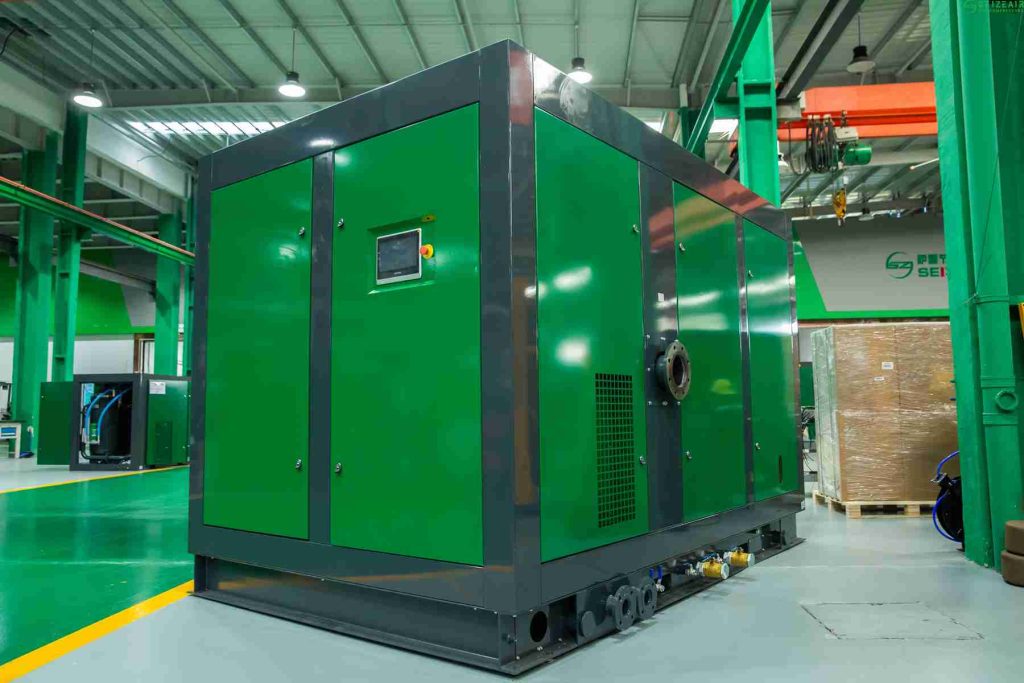
Variable Speed Drive (VSD) technology has matured. In the past, people worried about harmonic distortion or “dirty power” from inverters. In 2026, those issues are gone. Modern VSD units use permanent magnet motors (iPM) that maintain 95%+ efficiency even when running at 25% speed.
The Financial Impact of “Unloaded” Running
- The Unloaded Cost: A fixed-speed unit running “unloaded” (not making air but motor still spinning) still consumes about 25-30% of its full-load power. For a 250kW machine, that’s 75kW of power being paid for… to do nothing. If that machine idles for 2,000 hours a year, you are throwing away the price of a small car in electricity.
- The Leakage Factor: In a large plant, leaks are inevitable. A VSD unit won’t “cure” your leaks, but it won’t over-pressurize the system at night. Fixed speed units often “pump up” the system to its maximum pressure before unloading, which increases the leak rate (the higher the pressure, the faster air escapes through a hole).
- Soft Starting: Large air compressors without VSD draw a “starting current” that can be 6 to 10 times the running current. This can lead to penalties from your utility company for peak demand spikes. VSD units ramp up slowly, protecting your electrical infrastructure.
Field Note: I’ve seen plants save $40,000 a year just by switching one aging 200HP fixed-speed unit for a modern Seize Air VSD model. The ROI wasn’t measured in years; it was measured in months.
Why Is Air Quality and Moisture Control Critical for Large Scale Systems?
Many decision-makers buy a 300HP unit when they only need 200HP “just in case.” While growth is good, an oversized fixed-speed unit is an efficiency nightmare. If you must oversize, you must go VSD. Otherwise, the motor will “short cycle,” leading to moisture buildup in the oil and premature motor failure.
In the world of industrial grade air compressor maintenance, moisture is the ultimate enemy. A large air compressor pulling in humid air can produce gallons of water every hour. If your moisture separators aren’t industrial-grade, that water hits your plant’s main header. This leads to “water hammer,” where slugs of liquid travel at high speeds through your pipes, destroying expensive solenoid valves and pneumatic actuators.
High-end brands like Seize Air integrate advanced three-stage separation systems. By the time the air leaves the compressor cabinet, it’s already 99% free of liquid water. This takes the load off your refrigerated or desiccant dryers, allowing them to achieve a lower pressure dew point (PDP). For industries like electronics or food packaging, achieving a -40°C dew point is non-negotiable. If your large air compressor is inefficient at primary separation, your dryers will saturate and fail, leading to contaminated product batches.
What Are the Installation Requirements for 100+ HP Industrial Compressors?
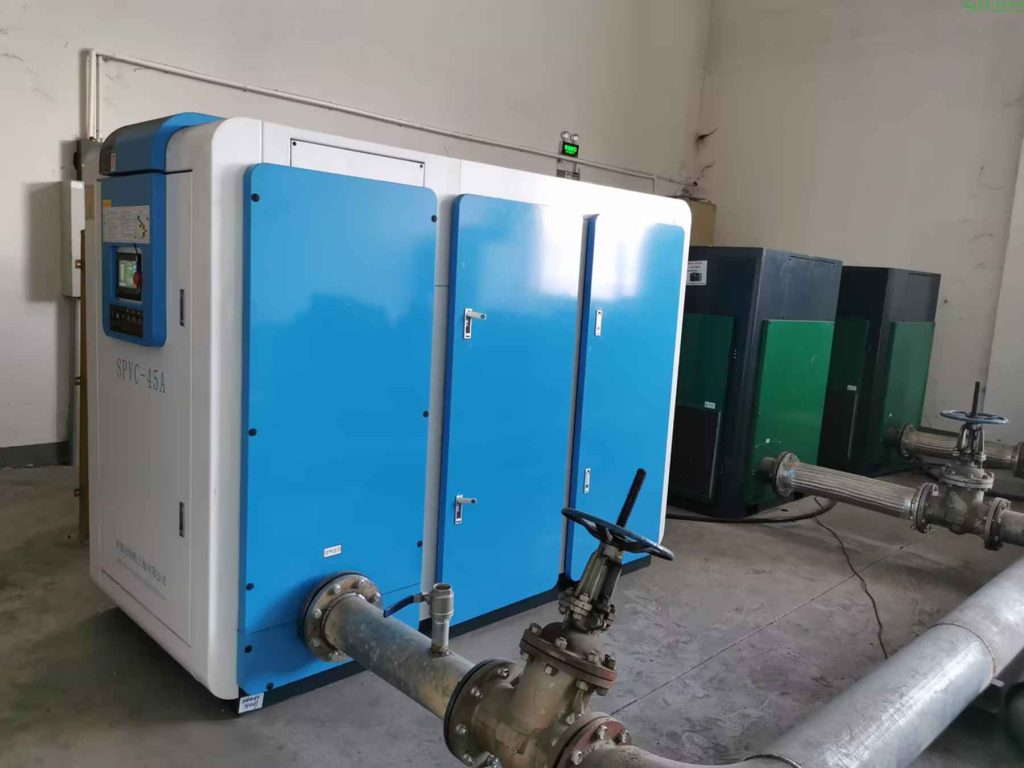
A compressor doesn’t live in a vacuum. It lives in a “system.” I’ve seen $200,000 compressors fail because the room was too small. A 400HP compressor is effectively a massive space heater. If that heat isn’t ducted out, the machine “re-breathes” its own hot exhaust, the oil thins out, and the airend seizes.
- Piping Geometry and “The Air Header”: Avoid 90-degree elbows right at the discharge. Use “long radius” bends. This reduces turbulence—which is essentially wasted pressure. We recommend a “Ring Main” piping layout for large factories. This allows air to reach a machine from two directions, halving the air velocity and drastically reducing pressure drop.
- The Receiver Tank Strategy: In large plants, the tank isn’t just for storage; it’s a “buffer” for the control system. It gives the VSD motor time to react without “hunting” for the right speed. A common rule of thumb is 1-3 gallons of storage for every CFM of capacity, but for high-volume air compressors, we often recommend 5 gallons per CFM to handle sudden “event” loads.
- Digital Twin Monitoring and Industry 4.0: We are seeing a shift toward predictive maintenance. Instead of changing oil every 4,000 hours, the system monitors the oil’s actual viscosity and temperature. Seize Air’s cloud-based monitoring can actually predict a bearing failure three weeks before it happens by analyzing vibration harmonics. This “connected” approach allows system integrators to troubleshoot your machine from halfway across the world, often fixing a setting error before your local team even notices a drop in performance.
How Do I Compare Industrial Air Compressor Manufacturers for Long-Term Reliability?
When you’re evaluating the best large air compressors for industrial plants, you’re really evaluating a partnership. In the middle of a Tuesday night shift, you don’t need a salesperson; you need a parts supply chain.
We look for “Maintenance-Friendly Architecture.” Can the inverter be swapped without pulling the whole motor? Is the oil separator accessible, or do you have to dismantle the cooling stack to reach it? If a technician has to spend four hours just “getting to” a filter, your maintenance labor costs will skyrocket.
Furthermore, look at the heavy-duty air compressor motor insulation class. For industrial plants in dusty or hot environments, you want a Class F or Class H insulation rating. Seize Air has gained traction in the global market—specifically in the challenging climates of South Asia and South America—precisely because their designs prioritize the “Service Tech” and “Environmental Resilience.” When a machine is easy to service and built with a high safety margin for heat, it actually gets serviced and lasts for 20 years.
Conclusion
Investing in the best large air compressor is a balance of immediate capacity and long-term sustainability. By prioritizing VSD technology, oversized airends, and robust moisture control, you ensure that your plant remains competitive in an era of rising energy costs. Don’t just buy air—buy efficiency.
By following the maintenance and selection protocols outlined above, your facility will enjoy a stable, low-cost air supply for decades to come.