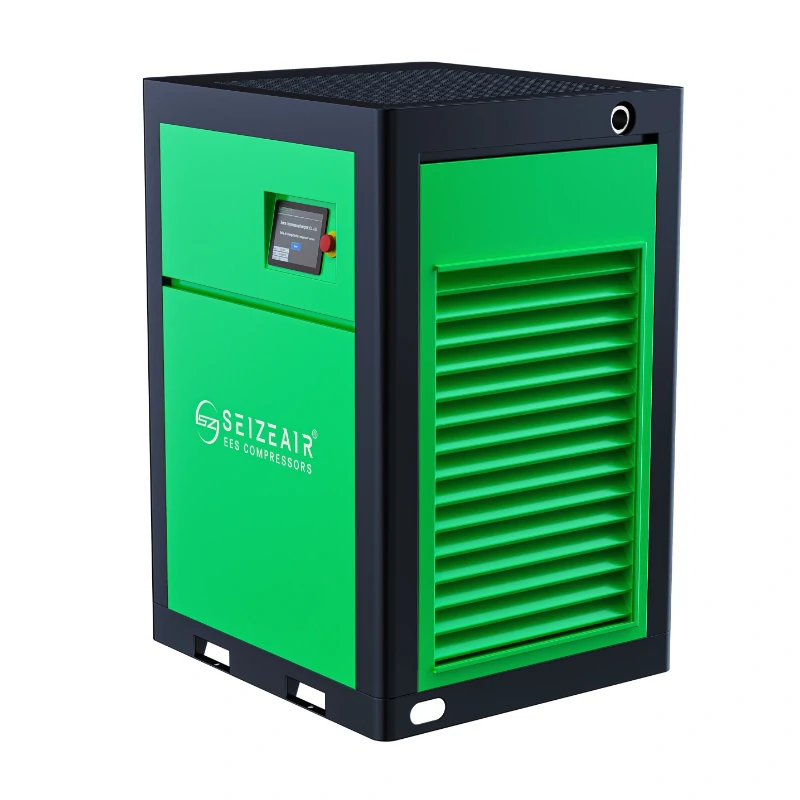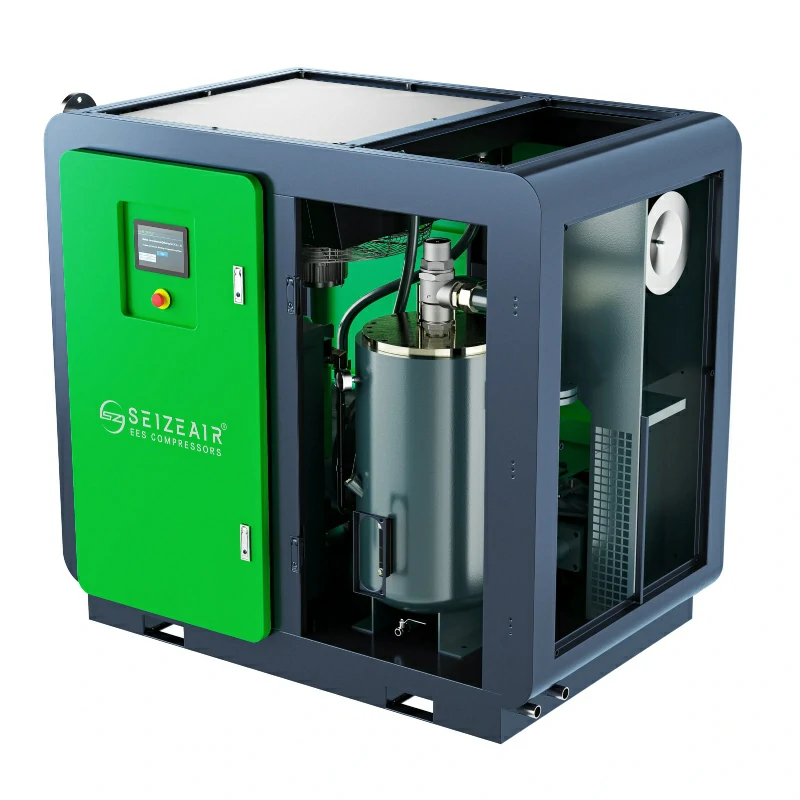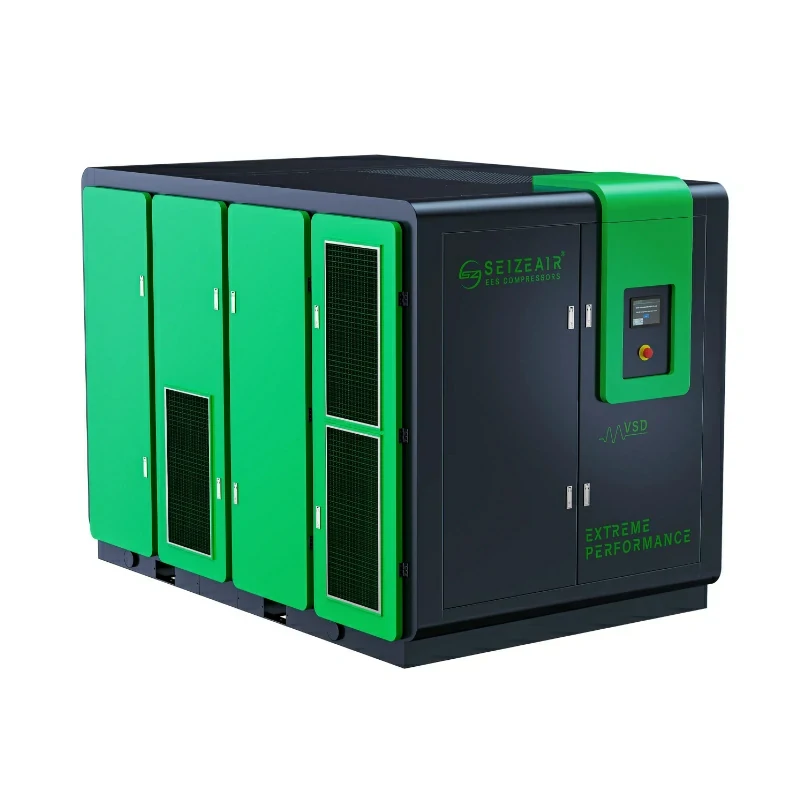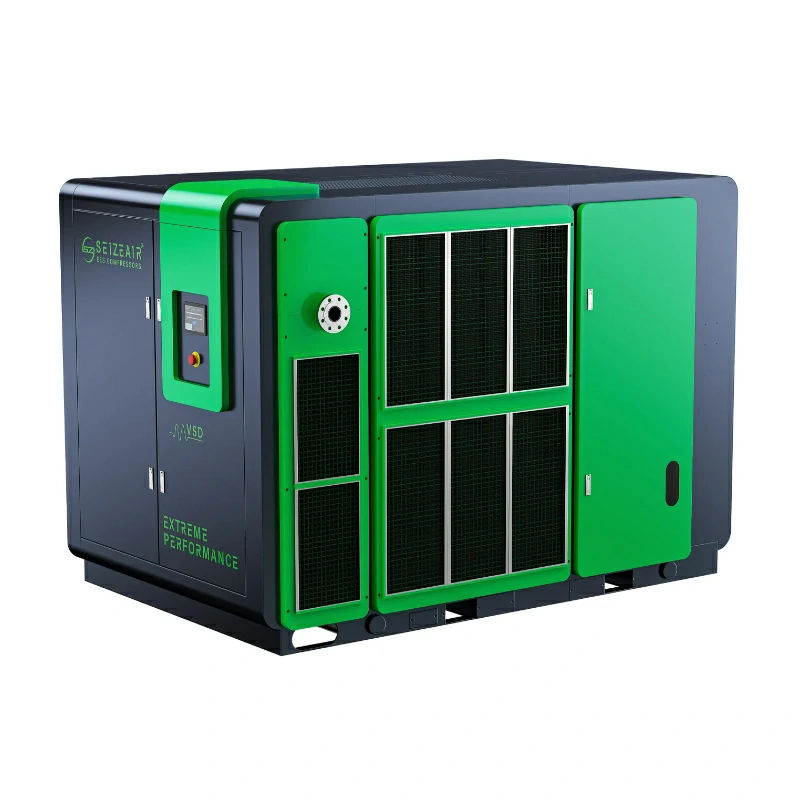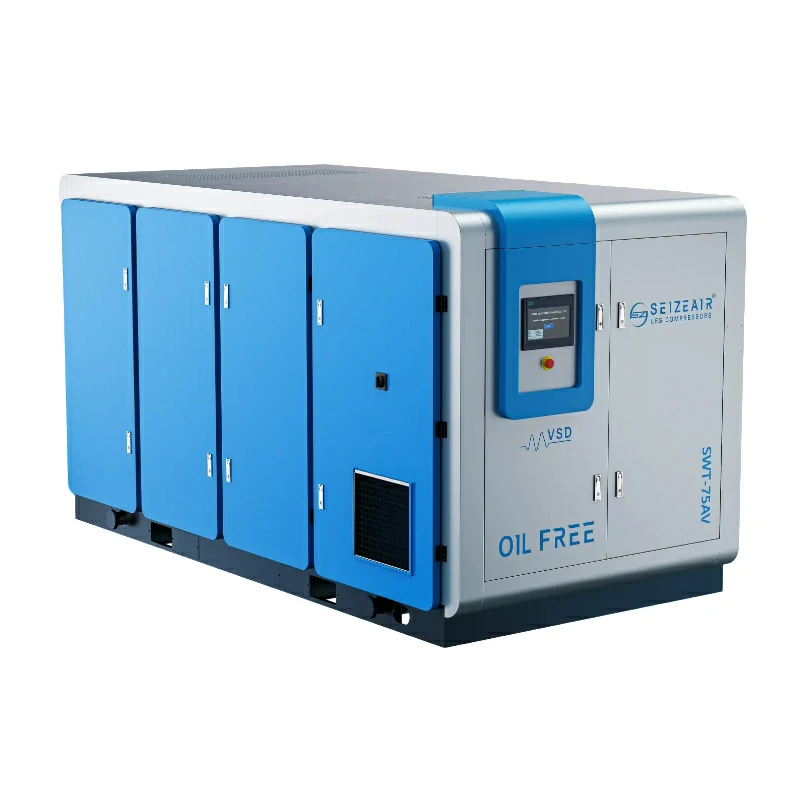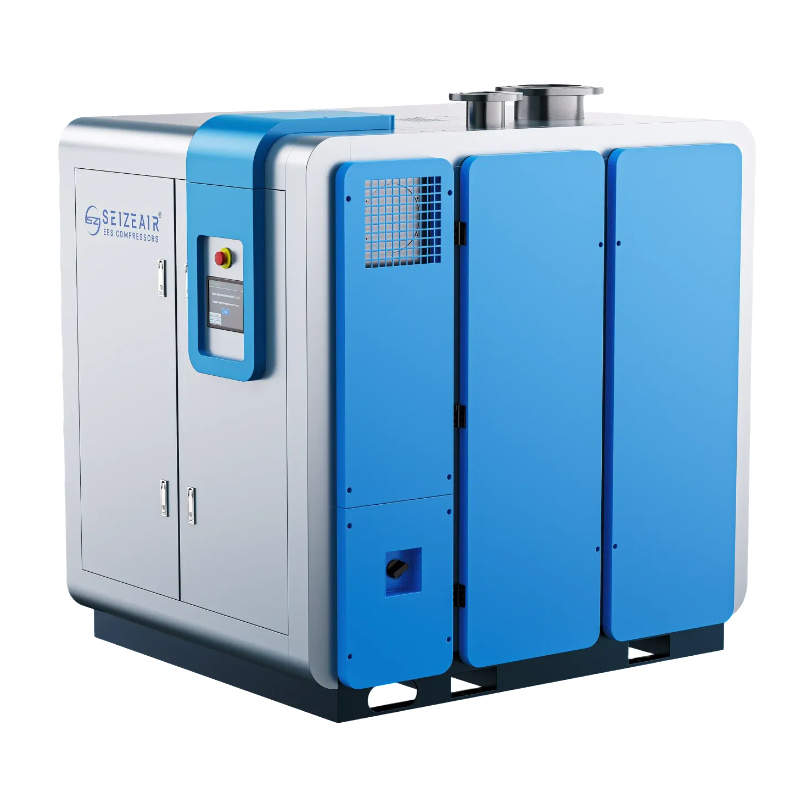


Industrial manufacturing eats up a massive chunk of global energy, and if you look closely at your plant’s utility bill, a staggering 10% to 40% of that electricity is likely consumed by just one system: your air compressors.
For decades, traditional fixed-speed compressors have been the industry standard, running at 100% capacity regardless of actual demand. It is the industrial equivalent of keeping your car’s gas pedal floored while navigating stop-and-go city traffic—pure waste.
Enter the vsd air compressor (Variable Speed Drive). By matching motor speed directly to your real-time air demand, VSD technology doesn’t just trim your power bill; it slashes it. If you are looking to optimize plant efficiency and protect your bottom line, here is exactly how variable speed technology transforms compressed air efficiency.
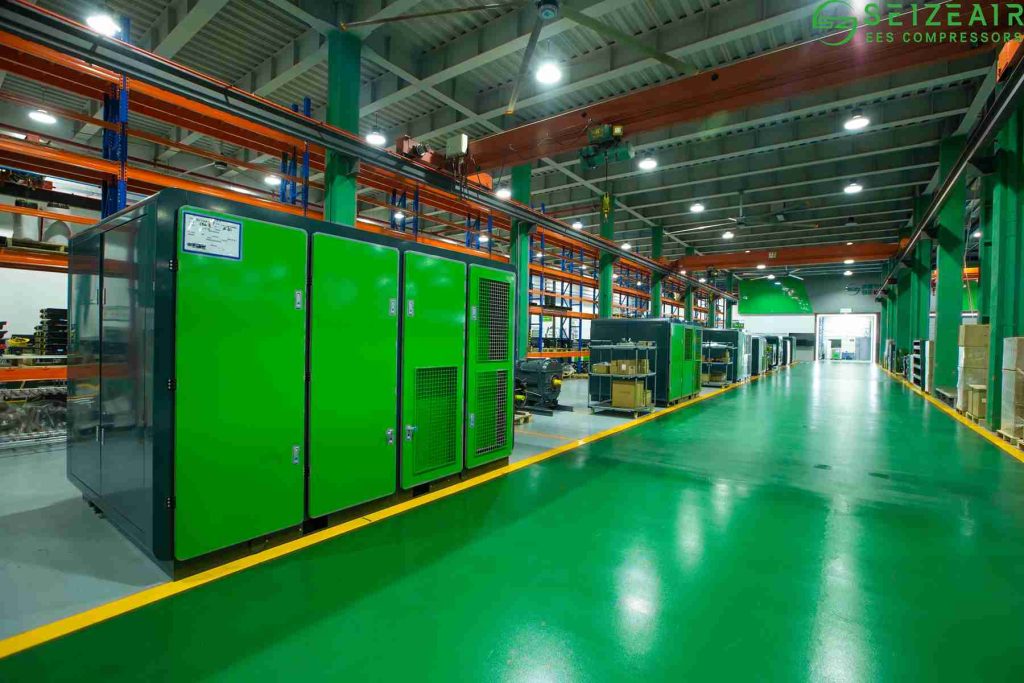
What is a VSD Air Compressor and How Does it Work?
To understand why a variable speed drive rotary screw compressor is such a game-changer, we first need to look at what happens inside a standard fixed-speed setup.
A traditional fixed-speed compressor operates on an “all-or-nothing” principle. When your plant needs air, the motor runs at full speed. When demand drops, the machine goes into an “unloaded” state—the motor keeps spinning at maximum RPM, consuming roughly 20% to 40% of full power, but produces zero usable compressed air. This is known as idling waste.
From a thermodynamic perspective, compressing air generates a tremendous amount of heat—nearly 90% of the electrical energy input is converted into thermal waste. In a fixed-speed system running unloaded, you are paying for that heat generation without getting a single cubic foot of air in return. It’s a massive thermal and financial sinkhole.
A vsd air compressor, on the other hand, utilizes an integrated variable frequency drive to continuously regulate the motor’s speed.
By adjusting the frequency and voltage supplied to the motor, the VSD system ensures that if your production line only requires 50% of the compressor’s rated output, the motor only spins at 50% speed, drawing proportional power.
The Physics of the Affinity Laws in Compression
Why does slowing down the motor save so much power? It comes down to fluid mechanics. While the affinity laws strictly dictate centrifugal applications, displacement technology (like rotary screw compressors) exhibits a near-linear relationship between speed and power, modified by internal efficiencies.
When you drop the speed of an energy saving variable speed compressor, you directly scale down the volume of air trapped between the meshing rotors. Less torque is required from the shaft, which translates directly to a reduction in kW drawn from your electrical substation.
Fixed-Speed vs. VSD Comparison
| Feature | Fixed-Speed Compressor | Standard VSD Air Compressor | Premium Two-Stage PM VSD |
| Motor Speed | Constant (100% RPM) | Variable (Matches demand dynamically) | Variable (Ultra-wide 15%-100% range) |
| Energy Consumption | High during low/fluctuating demand | Highly optimized; scales with demand | Absolute minimum; eliminates rotor losses |
| Starting Current | High spikes (up to 7x running current) | Soft start (no current spikes) | Soft start (near-zero grid impact) |
| Pressure Control | Wide band (typically 1–1.5 bar fluctuation) | Tight band (within ±0.1 bar) | Real-time isobaric stability (±0.05 bar) |
| Ideal Load Profile | Constant, 24/7 steady-state demand | Fluctuating, multi-shift air use | Complex, erratic, or highly dynamic plants |
| Part-Load Efficiency | Abysmal below 70% capacity | Good between 40% and 85% capacity | Exceptional across the entire curve |
How Much Energy Does a VSD Air Compressor Save Compared to Fixed-Speed?
The financial magic of variable speed drive technology boils down to eliminating the inefficiencies inherent in traditional compressed air systems. If you walk the plant floor on a weekend, you can hear the problem: fixed-speed units roaring along in unload mode, blowing money right into the atmosphere. Here is exactly where the power savings come from:
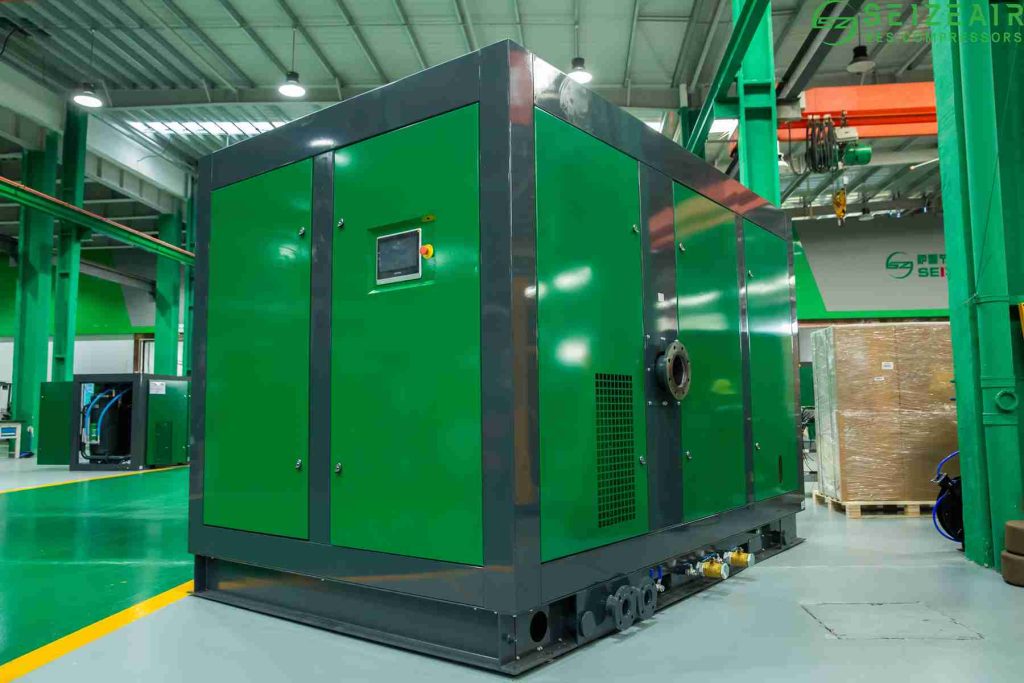
1. Elimination of Unloaded Running Hours
In most manufacturing plants, air demand is highly volatile. Machines cycle on and off, shifts change, and tools operate intermittently. A fixed-speed unit cannot shut down every time demand pauses because frequent motor starts cause overheating. Instead, it runs unloaded (idling). A vsd air compressor eliminates idling entirely; when demand drops, the motor slows down or stops smoothly, consuming near-zero power.
Let’s look at the actual physics of an unloading cycle. When a fixed-speed unit reaches its upper pressure limit, the inlet valve closes, and the internal sump pressure is vented. However, the motor continues to spin at full RPM against a vacuum. It takes significant energy just to overcome the mechanical friction of the bearings and the aerodynamic drag of the rotors spinning in that starved chamber. That is pure non-productive energy consumption. A VSD system avoids this entire cycle by riding the demand curve down smoothly.
2. Preventing Over-Pressurization
Because fixed-speed compressors rely on a wide pressure band (e.g., loading at 6.5 bar and unloading at 8 bar), they spend a lot of time compressing air to a higher pressure than the facility actually requires.
The Golden Rule of Compressed Air Efficiency: Every 1 bar (14.5 PSI) of excess pressure increases your overall energy consumption by approximately 7%.
Furthermore, higher system pressure accelerates your “artificial demand”—meaning any unregulated leaks in your piping network will hiss louder and bleed more air when the pressure peaks. A vsd air compressor maintains an incredibly tight pressure band—often within ±0.1 bar. By keeping the system pressure exactly at the required minimum, you prevent both the massive energy waste associated with over-pressurization and the hidden losses of accelerated leaks.
3. Eliminating Peak Amperage Spikes
Starting a massive fixed-speed industrial motor requires a massive surge of electricity—often 6 to 7 times the normal running current. This is the classic “Across-the-Line” or “Star-Delta” start. It creates localized voltage drops, stresses motor windings, and generates immense heat.
Power companies often penalize plants with “peak demand charges” based on these massive spikes. If your plant cycles a large fixed-speed compressor just a few times during peak utility pricing hours, your demand charges for the entire month can skyrocket. VSD compressors utilize a soft start mechanism. The frequency drive gradually ramps up the motor speed from zero, avoiding current spikes completely, protecting your local grid, and wiping demand penalties off your utility bill.
When is a VSD Compressor Not Recommended for Manufacturing?
While VSD technology is revolutionary, it is important to realize it isn’t a silver bullet for every single scenario. As an integrator, I tell clients that buying a VSD for the wrong application is just an expensive way to buy a complicated machine. Understanding your plant’s specific fluctuating compressed air load profile is crucial before making the investment.
Ideal Scenarios for VSD Implementation
- Multi-Shift Operations with Varying Demand: If your daytime shift runs at 90% capacity but your night shift drops to 30%, a VSD unit will deliver maximum ROI.
- Processes with Intermittent Equipment Use: Plants operating packaging lines, pneumatic tools, automated assembly cells, or batch processing where air usage peaks and valleys throughout the hour.
- Predictable Seasonal Swings: Facilities that scale production up or down based on agriculture, consumer cycles, or summer/winter operational modes.
- As a Trimming Compressor: In large multi-compressor stations, running one or two fixed-speed units to handle the base load while a premium vsd air compressor handles the fluctuating “top-up” demand is a highly efficient strategy. Manufacturers like Seize Air specialize in configuring these hybrid systems, ensuring plants don’t overspend on hardware while maximizing energy savings.
When Fixed-Speed Might Suffice
If your plant runs a continuous, 24/7 process where the air demand is perfectly flat and always at 90% to 100% capacity—such as a large glass manufacturing line or a dedicated chemical processing plant—a high-efficiency fixed-speed compressor can be highly economical. VSD drives introduce a minor internal power loss (around 2-3%) due to heat dissipation from the frequency inverter components when operating at absolute maximum capacity. If you never intend to turn the dial down, you shouldn’t pay for the dimmer switch.
What is the Payback Period for a VSD Compressor Investment?
When looking at the purchase price of an industrial air compressor, many procurement managers fall into the trap of focusing solely on the upfront capital expenditure (CAPEX). This is a fatal mistake for profitability. An air compressor is an energy-consuming machine that happens to produce air; the purchase price is a drop in the bucket.
Over a 10-year operational lifespan, the initial purchase price accounts for a mere 10% of the total cost of ownership. Maintenance accounts for another 10% to 15%. The remaining 75% to 80% is purely electricity. When you view procurement through this lens, a cheaper, less efficient machine becomes incredibly expensive by year three.
Payback Period Calculation Example
Let’s look at a typical real-world scenario for a mid-sized manufacturing facility running a 75 kW (100 HP) compressor for 4,000 hours per year, with an average electricity cost of $0.12 per kWh.
| Metric | Standard Fixed-Speed Unit | Premium VSD Compressor |
| Average Power Consumed (due to fluctuations) | 68 kW (Runs often unloaded) | 44 kW (Directly tracks demand) |
| Annual Energy Use (kWh) | 272,000 kWh | 176,000 kWh |
| Annual Electricity Cost | $32,640 | $21,120 |
| Annual Energy Savings | — | $11,520 |
| Estimated Premium Cost (Hardware Upgrade) | — | $18,000 |
| Estimated ROI / Payback Period | — | ~1.5 Years |
Note: This conservative estimate doesn’t account for localized utility rebates or government grants frequently awarded to plants upgrading to energy-saving equipment, which can often slash the payback period under a year.
The Hidden Financial Bonus
Many plant managers overlook the impact of compressed air systems on the facility’s overall power factor. Standard induction motors running at partial loads draw significant reactive power, degrading your power factor and triggering stiff utility penalties. A vsd air compressor system acts as a buffer. The DC bus inside the drive corrects the power factor at the compressor input to near unity (0.95–0.98), helping shield the entire plant from reactive power surcharges.
What is the Difference Between Standard VSD and Permanent Magnet PM VSD?
As energy-efficiency standards tighten globally, air compressor technology has evolved beyond the basic induction-motor VSD. If you are comparing quotes today, you need to understand that not all variable speed drives are created equal. The market has shifted toward far more sophisticated integrations like the permanent magnet variable frequency compressor.
1. Permanent Magnet (PM) Motors
Traditional VSD units use standard induction motors with added variable speed components. Newer, highly advanced models leverage Permanent Magnet (IE4/IE5) synchronous motors. These motors do not suffer from the rotor copper losses or excitation losses found in induction systems. Crucially, they maintain incredibly high efficiency even when running at exceptionally low speeds (under 20% capacity), whereas standard induction VSDs drop off sharply in efficiency when turned down low.
2. Two-Stage Compression Elements
Instead of forcing a single set of screw rotors to compress air from atmospheric pressure straight to your target working pressure (e.g., 8 bar), two-stage units split the work across two distinct rotary screw pairs. By cooling the air between stages (intercooling), the process approaches isothermal compression—saving an additional 10% to 15% in power over single-stage units.
Companies at the forefront of industrial engineering, such as Seize Air, have combined these two innovations into single packages: permanent magnet, two stage variable speed air compressor units. This hybrid setup represents the modern absolute pinnacle of energy conservation in heavy industry, keeping the specific power consumption flat across an incredibly wide operating spectrum.
Do Variable Speed Drive Compressors Require More Maintenance?
This is one of the most common questions plant teams bring up during system design. The electronic components (the frequency inverter drive) do require a clean, well-ventilated environment to prevent dust and oil mist buildup on heatsinks. However, from a mechanical standpoint, a premium vsd air compressor often experiences less wear and tear.
Because they soft-start smoothly and operate at lower average rotational speeds, internal components like bearings, couplings, and seals endure far fewer violent mechanical shocks compared to load/unload fixed-speed machines. You change filters on a standard schedule, but your overall mechanical asset life is extended.
Another crucial maintenance point is avoiding motor bearing current damage (fluting). High-quality manufacturers overcome this by utilizing insulated bearings or grounding rings to divert stray currents away from the motor internals, rendering the modern industrial drive incredibly robust.
How Do I Perform a Compressed Air Audit to Size a VSD?
While upgrading to a premium vsd air compressor is the single largest step you can take toward energy optimization, a holistic view of your compressed air system ensures those power savings aren’t lost downstream. The compressor room is just the engine; you still have to look at the wheels and the road.
The most reliable way to accurately size a machine is through a professional data logging air audit. A specialist connects non-invasive current transducers and pressure sensors to your existing system for a full production week to map your precise CFM demand curve against power consumption. This provides an undeniable, data-backed projection of exactly how much money a variable speed unit will save your specific facility before you spend a single dollar on new equipment.
Once the audit confirms your load profile, optimize the rest of your system:
- Fix Your Leaks Instantly: The average manufacturing plant loses 20% to 30% of its produced compressed air to downstream pipe leaks. Pair your VSD unit with an aggressive leak detection and repair program using ultrasonic leak detectors.
- Optimize Air Storage: Installing an adequately sized wet and dry air receiver tank dampens rapid pressure fluctuations. This buffer allows your VSD compressor to adjust its motor speed smoothly rather than chasing erratic demand spikes, preventing the system from over-correcting and hunting.
- Upgrade Filtration Wisely: Clogged, neglected line filters create massive pressure drops. A 0.5 bar drop across an old filter means your compressor has to work 0.5 bar harder, completely erasing a portion of your VSD energy savings. Implement differential pressure gauges to know exactly when to swap elements.
Conclusion
In today’s highly competitive industrial landscape, wasting energy is no longer just an environmental concern—it is a direct hit to your operating margins. Transitioning to a high-efficiency VSD system eliminates the costly idleness of older infrastructure, locking in predictable, long-term savings.
At Seize Air, we build world-class, energy-saving intelligent air solutions designed specifically to withstand demanding industrial environments while cutting energy overheads by up to 30% or more. Our team of engineering experts is ready to help you analyze your facility’s unique air demand profile and configure a system tailored for maximum efficiency.
Ready to stop paying for wasted power? [Contact our technical sales team today] to schedule a comprehensive system consultation or request a custom quote for your plant’s specific requirements.