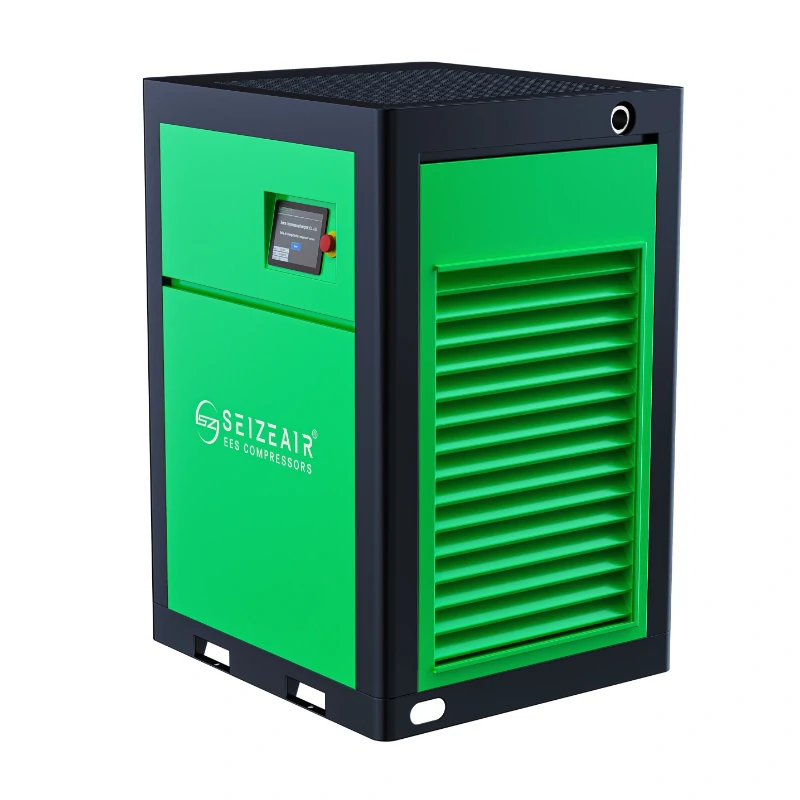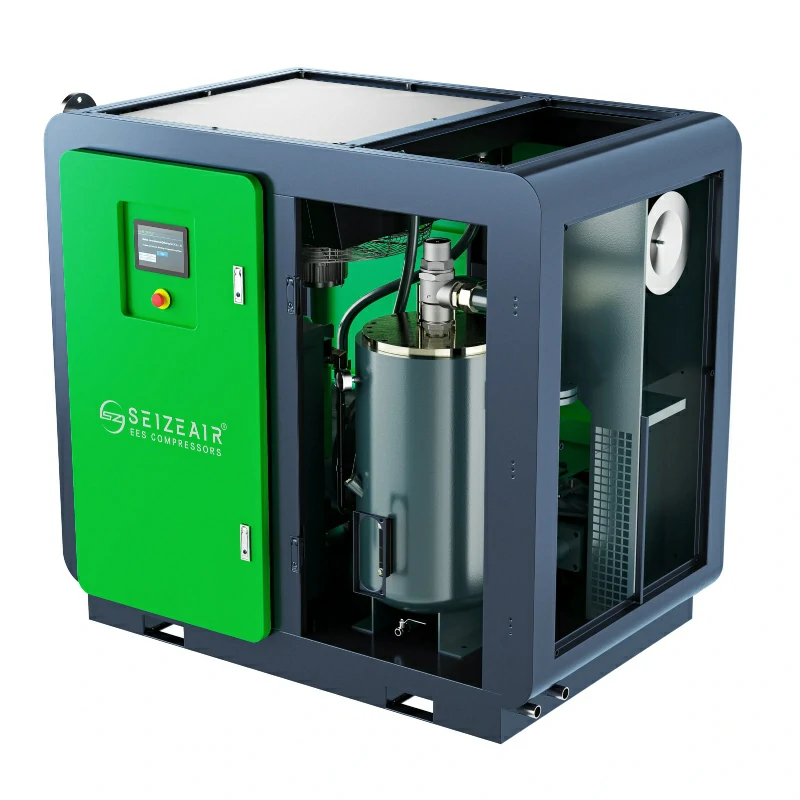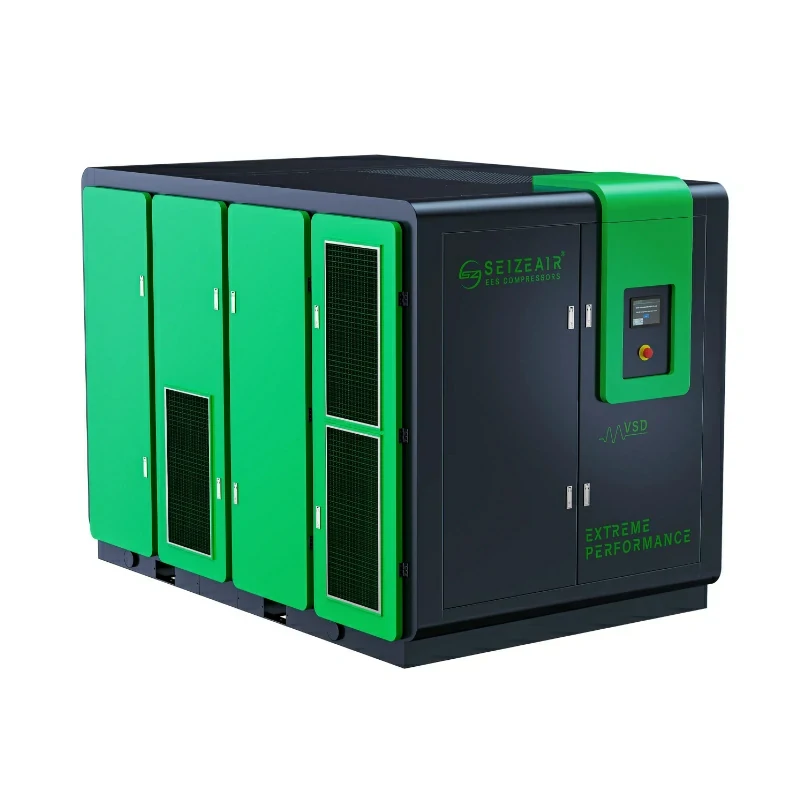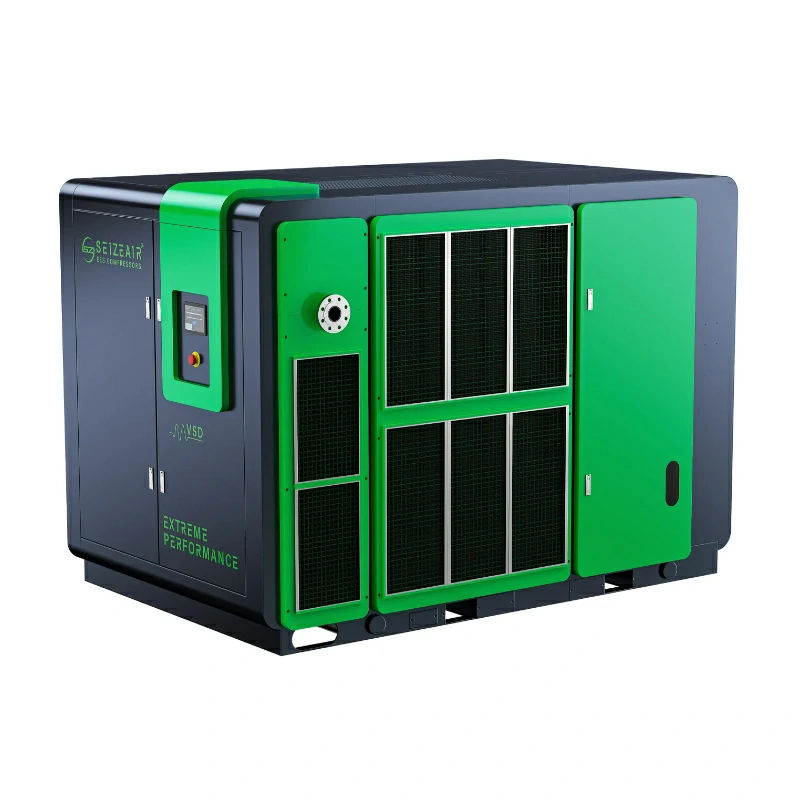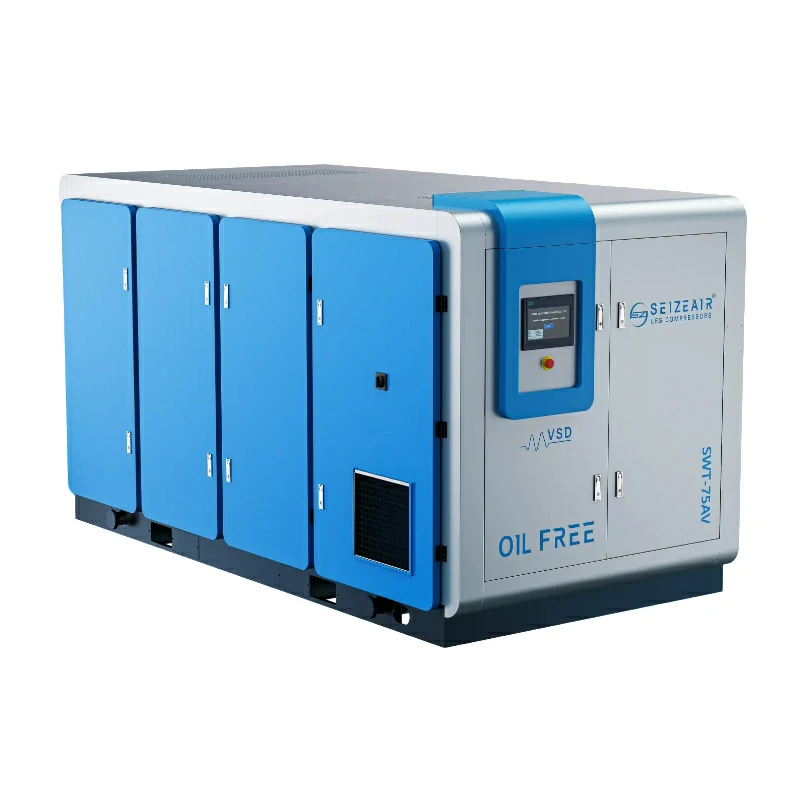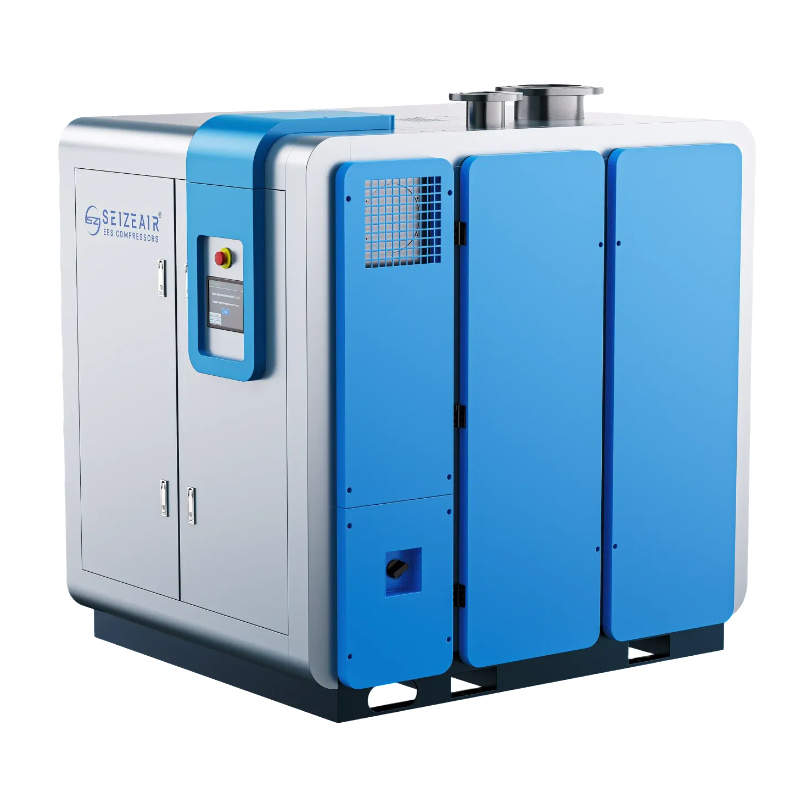


Buying a 100 hp air compressor is a major capital investment that determines your plant’s operational efficiency. A heavy-duty 100 horse power compressor delivers between 400 and 500 CFM of compressed air, serving as the central power source for critical automated assembly lines. This comprehensive technical guide breaks down the critical factors, configuration options, and financial realities of integrating an industrial 100 hp rotary screw air compressor into your facility.
What Are the Exact Technical Specifications of a 100 hp Compressor?
When sourcing industrial air systems, horsepower is simply the nominal power rating of the electric motor. The true indicators of performance are the volumetric flow rate, measured in Cubic Feet per Minute (CFM), and the operational pressure, measured in Pounds per Square Inch (PSI).
The Mathematical Balance Between Volume and Pressure
A common mistake in system design is assuming a 100 hp air compressor provides a fixed volume of air regardless of the plant’s pressure requirements. The physical volume delivered is inversely proportional to the operating pressure. For a standard fluid-flooded rotary screw air end, the mechanical baseline for efficiency is approximately 4.0 to 4.5 CFM per horsepower when operating at standard factory pressures.
If your machinery requires higher pressures, the air end must work harder against that backpressure, reducing the volume of air it can discharge per minute. Understanding this balance prevents unexpected pressure drops across your facility.
| Operating Pressure (PSI) | Average Flow Volume (CFM) | Common Industrial Applications | Typical Pipe Diameter Requirements |
| 80 – 100 PSI | 450 – 490 CFM | Semiconductor assembly, electronics, pneumatic tools | 2.5-inch to 3-inch |
| 115 – 125 PSI | 410 – 440 CFM | Automotive manufacturing, heavy stamping, textile mills | 2.5-inch |
| 150 – 175 PSI | 360 – 390 CFM | Laser cutting, heavy metal fabrication, pressure testing | 2.0-inch |
Real-World Total Cost of Ownership (TCO) Breakdown
The upfront cost to buy 100 hp air compressor units represents a small fraction of the machine’s full lifecycle cost. Over a standard ten-year operating window, electricity consumption alone accounts for 70% to 75% of the total cost of ownership. Routine maintenance, parts, and lubricants account for about 15%, while the original capital expenditure makes up the remaining 10%.
To calculate the exact financial impact, consider a industrial 100 hp air compressor running continuously for a three-shift manufacturing plant (8,760 hours per year) at an average industrial electricity cost of $0.10 per kilowatt-hour (kWh). With motor efficiency losses, a 100 hp motor draws roughly 85 kW of electrical power.
Annual Power Cost = 85 kW × 8,760 Hours × $0.10/kWh = $74,460
Over a decade, you will spend nearly three-quarters of a million dollars just to power a single machine. This is why investing in an energy-optimized system—such as the advanced two-stage permanent magnet variable frequency models engineered by Seize Air—can directly save tens of thousands of dollars in annual utility overheads, rapidly paying back the initial machine investment.
Is a VSD or Fixed Speed 100 hp Compressor Better for My Plant?
Selecting the drive system configuration is the most critical factor governing your monthly electrical costs and mechanical uptime. The choice comes down to how your factory consumes air throughout the day.
Fixed Speed Compressors
A fixed speed or constant-speed rotary screw air compressor operates at a fixed revolutions per minute (RPM). It is designed to run most efficiently when the factory’s air consumption closely matches the maximum output capacity of the machine. When your production tools stop consuming air, the compressor does not shut down immediately. Instead, it enters an “unloaded” state.
During unloading, an inlet valve closes to stop air compression, but the electric motor continues to spin at full speed. In this state, the machine consumes roughly 30% to 35% of its full-load electrical energy while producing absolutely zero compressed air. If your plant experiences frequent fluctuations in production, a fixed-speed unit will cycle between load and unload frequently, causing rapid temperature swings, accelerated oil degradation, and massive energy waste.
Variable Speed Drive (VSD) Compressors
A variable speed 100 hp air compressor utilizes an integrated frequency inverter to dynamically adjust the motor’s rotational speed to match your factory’s real-time air demand. If your production drops by half during a shift change or a weekend cleaning cycle, the VSD controller automatically slows the motor down, drawing only the exact amount of electrical power required to maintain a stable line pressure.
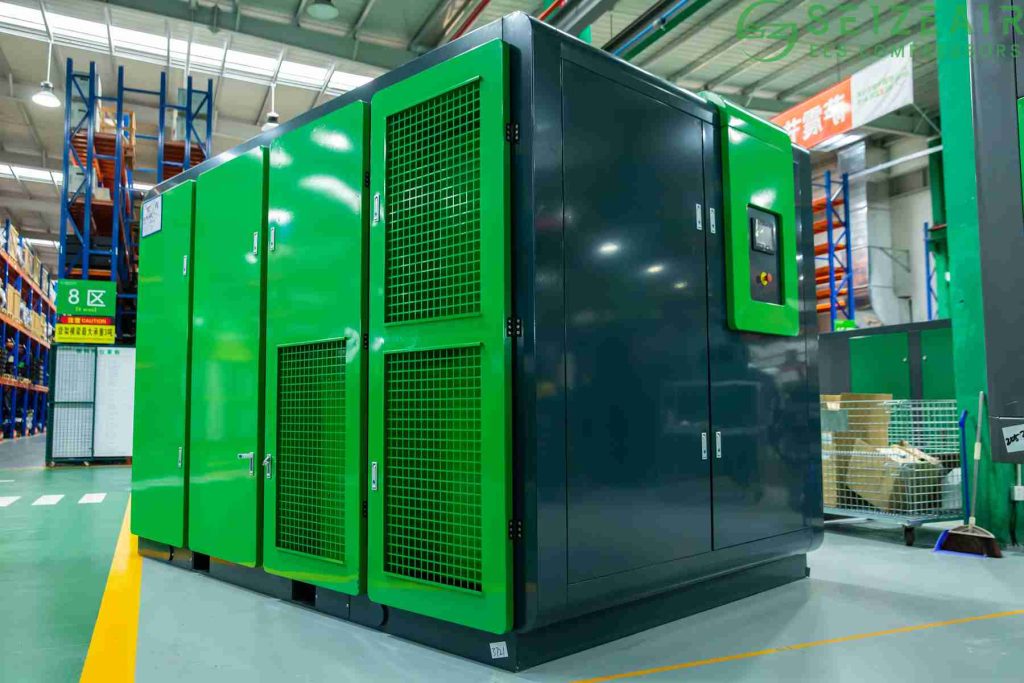
- Pressure Stability: VSD units maintain a highly precise system pressure within a tight window of plus or minus 1.5 PSI. Fixed-speed units typically require a wider pressure band of 10 to 15 PSI to operate safely, forcing the system to over-pressurize the lines and waste additional energy.
- Soft Starting Dynamics: A VSD unit accelerates smoothly from zero RPM to full speed, eliminating the massive inrush current spikes (which can reach up to 600% of full-load amps) typical of fixed-speed star-delta starters. This protects your plant’s electrical transformers and prevents peak-demand utility penalties.
Do I Need an Oil-Injected or Oil-Free 100 hp Air Compressor?
Air purity standards vary heavily depending on the type of goods your plant manufactures. Miscalculating this requirement can lead to contaminated production batches, ruined pneumatic components, or regulatory fines.
Oil-Injected (Fluid-Flooded) Systems
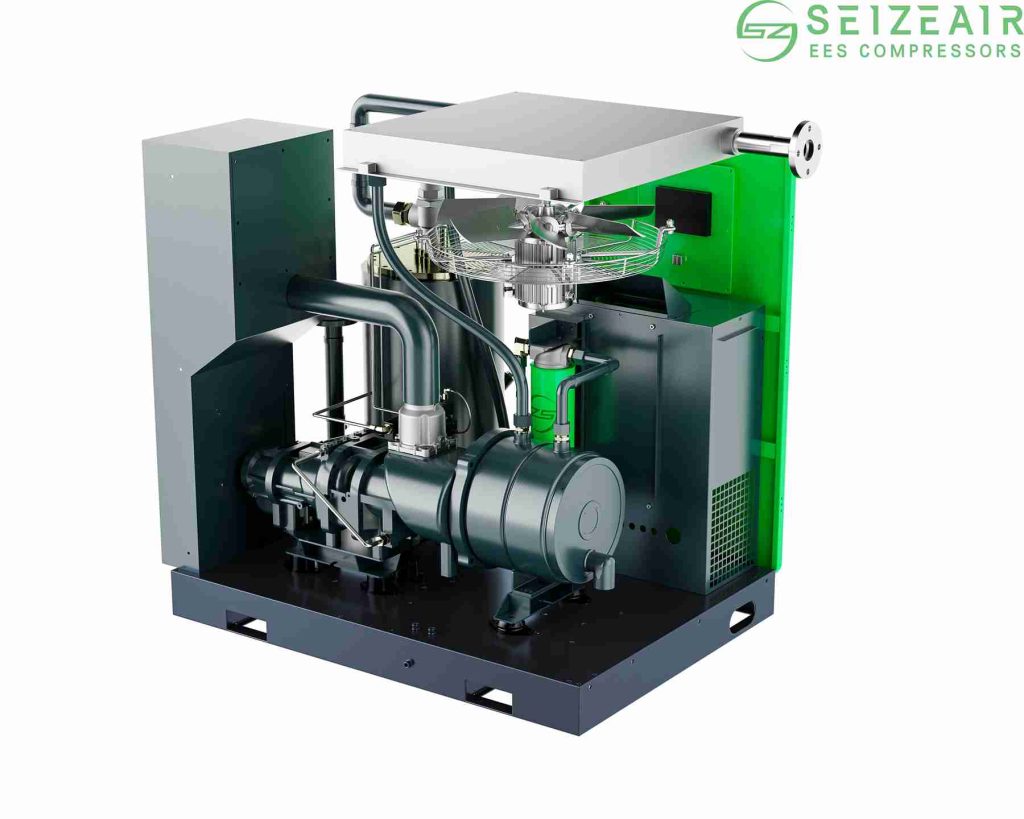
In an oil lubricated 100 hp compressor, high-quality synthetic fluid is injected directly into the compression chamber. This oil performs three vital functions: it lubricates the spinning male and female rotors, seals the microscopic internal clearances between the rotors to prevent air slippage, and absorbs the intense thermodynamic heat generated during the compression process.
Before this air exits the machine, it passes through a multi-stage mechanical and coalescing air/oil separator tank, reducing residual oil carryover to less than 3 parts per million (ppm). For general manufacturing applications like automotive assembly, heavy stamping, CNC machining, and plastic extrusion, an oil-injected machine paired with proper downstream inline filtration provides highly reliable, cost-effective air.
Oil-Free Systems for Ultra-Pure Applications
For industries with zero tolerance for oil contamination—such as pharmaceutical manufacturing, food and beverage packaging, medical device production, and semiconductor fabrication—even a microscopic trace of oil vapor can ruin an entire product run. An oil-free compressor features a specialized compression chamber that requires absolutely no oil for sealing or lubrication.
The rotors are engineered with extremely tight tolerances and coated with advanced materials like Teflon or ceramic to prevent metal-on-metal friction. Additionally, these machines require isolated, water-jacketed cooling circuits to manage heat without the cooling aid of injected oil.
| Evaluation Metric | Oil-Injected 100 hp Compressor | Oil-Free 100 hp Compressor |
| Initial Purchase Price | Baseline | 1.6x to 2.2x higher than oil-injected |
| Air Quality Classification | ISO 8573-1 Class 1 or 2 (with filtration) | ISO 8573-1 Class 0 (100% certified oil-free) |
| Maintenance Overhaul Interval | 40,000 to 60,000 hours (Bearing replacement) | 18,000 to 25,000 hours (Rotor recoating/swap) |
| Volumetric Efficiency | Higher (Fluid seals internal air clearances) | Lower (Higher internal air slippage past rotors) |
What Is the Difference Between Single-Stage and Two-Stage 100 hp Compressors?
The mechanical design of the air end directly dictates how much air volume your system produces for every kilowatt of power consumed. Comparing single-stage and two-stage designs reveals significant differences in long-term operational efficiency.
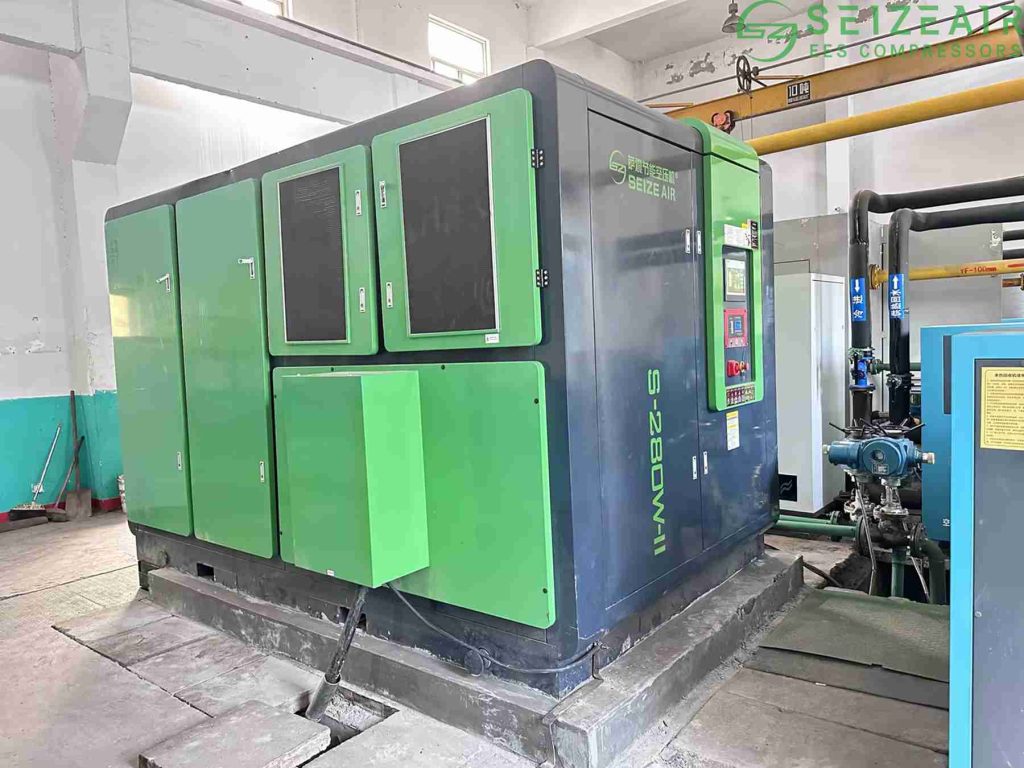
Single-Stage Rotary Screw Elements
In a single-stage machine, ambient air enters the inlet and is compressed from atmospheric pressure directly to its final target discharge pressure (e.g., 125 PSI) within a single set of male and female rotors. Because the air undergoes a massive pressure jump in a single step, the internal temperature rises sharply, often reaching up to 200 degrees Fahrenheit. As air heats up, it expands, making it much harder to compress and reducing the volumetric efficiency of the machine.
Two-Stage Rotary Screw Elements
A two-stage compressor splits this intense workload across two distinct pairs of rotors arranged in a series configuration within a single cast-iron housing.
- Low-Pressure Stage: Ambient air is drawn into the first stage and compressed to an intermediate pressure of roughly 30 to 45 PSI.
- Intercooling Zone: As the air travels from the first stage to the second stage, it passes through an optimized fluid-injection intercooling curtain. This drops the air temperature significantly, increasing its density and reducing its volume.
- High-Pressure Stage: The pre-cooled, dense air enters the second set of rotors, where it is efficiently compressed to the final discharge pressure of 125 PSI.
Because compressing cool, dense air requires less mechanical work, a two-stage 100 hp rotary screw air compressor delivers up to 11% to 15% more CFM of air volume than an identical single-stage machine while pulling the exact same amount of electrical power from the grid. Premium industrial brands like Seize Air specialize in building two-stage rotary screw configurations, allowing heavy-duty manufacturing plants to scale up their production capacity without upgrading their facility’s electrical infrastructure.
How Do You Properly Design a 100 hp Compressor Room Layout?
An industrial air compressor room must be engineered with careful attention to ventilation, spacing, and structural support. Placing a 100 hp unit in an unventilated closet will lead to frequent high-temperature shutdowns and premature component failure.
Air Receiver Tank Sizing and Placement Rules
An air receiver tank is critical for storing compressed air, dampening pressure pulsations from the air end, and dropping out bulk moisture before it reaches your factory floor. For a fixed-speed 100 hp system producing 450 CFM, you must use a large storage volume to prevent the compressor motor from short-cycling (loading and unloading too quickly, which burns out electrical contactors).
The standard industrial calculation for tank sizing requires 3 to 4 gallons of storage capacity for every 1 CFM of compressor output.
Minimum Tank Volume = 450 CFM × 3 Gallons/CFM = 1,350 Gallons
Therefore, a standard 1,500-gallon vertical pressure vessel rated for at least 150 PSI is the ideal match for a 100 hp system. If you are operating a VSD unit, the storage requirement can sometimes be scaled down to 2 gallons per CFM because the motor matches demand dynamically, but larger storage is always recommended to handle sudden, massive spikes in plant air usage.
Ventilation, Thermal Management, and Ducting
A 100 hp compressor is essentially a massive industrial heater. Roughly 90% of the electrical energy consumed by the motor is rejected directly out of the machine as heat. A 100 hp unit generates approximately 250,000 BTU per hour of waste heat. Without adequate ventilation, your compressor room will experience thermal runaway within minutes.
- Cooling Air Intake: Ensure the room has large louvers positioned low on an external wall to pull in fresh, cool ambient air.
- Exhaust Ducting: Install a dedicated exhaust duct hood directly over the compressor’s cooling fan discharge to channel the hot air straight out of the building.
- Heat Recovery Systems: In cold climates, you can install a manual or motorized bypass damper inside the exhaust ductwork. During winter months, this allows you to duct the clean, warm air back into your main warehouse or manufacturing floor, saving thousands of dollars in facility heating bills.
What Downstream Equipment Is Required for an Industrial 100 hp Air System?
Raw air leaving a compressor is hot, saturated with water vapor, and laden with atmospheric dust and vaporized oil. To prevent corrosion in your factory piping and protect expensive automated tools, you must build a complete downstream treatment system.
[100 hp Compressor]
       │
       ▼
[Wet Receiver Tank] (Drops out bulk liquid water and oil)
       │
       ▼
[Pre-Filter] (Removes solid particulates down to 1 micron)
       │
       ▼
[Refrigerated or Desiccant Dryer] (Lowers dew point to remove water vapor)
       │
       ▼
[After-Filter] (Removes remaining oil mists down to 0.01 micron)
       │
       ▼
[Dry Receiver Tank] (Acts as a clean, dry pressure buffer for production)
Choosing Between Refrigerated and Desiccant Air Dryers
- Refrigerated Air Dryers: These systems operate like a standard industrial air conditioner. They chill the incoming compressed air down to approximately 35 to 38 degrees Fahrenheit, causing the airborne water vapor to condense into liquid water droplets that are expelled via an automatic drain valve. This delivers a stable Pressure Dew Point (PDP) of around 38 degrees Fahrenheit, which is perfectly clean and dry enough for 85% of general industrial applications.
- Desiccant Air Dryers: These systems utilize twin towers packed with chemical desiccant beads (such as activated alumina or molecular sieves). While one tower dries the compressed air, the other tower regenerates using a small portion of dry purge air. This process drops the pressure dew point to an ultra-low -40 to -70 degrees Fahrenheit. This level of treatment is essential for outdoor piping exposed to freezing temperatures, pharmaceutical lines, paint booths, and high-precision laser-cutting systems.
What Maintenance Is Required for a 100 hp Rotary Screw Compressor?
A proactive preventative maintenance program is the only way to avoid catastrophic failures and maintain peak energy efficiency over the lifespan of your equipment. Skipping basic service intervals will cause internal components to wear prematurely and drive up your power consumption.
Daily and Weekly Operational Checklists
- Verify Fluid Level: Check the oil level sight glass while the compressor is running fully loaded. The fluid should always sit comfortably within the designated green zone.
- Inspect Automatic Condensate Drains: Physically test the electronic or zero-loss condensate drains on your receiver tanks, filters, and dryers to ensure moisture is being discharged instead of backing up into the air main.
- Monitor Operating Temperatures: Keep a daily log of the air end discharge temperature via the microprocessor controller. A healthy oil-injected system runs between 180 and 195 degrees Fahrenheit. Any sudden rise toward 210 degrees Fahrenheit indicates a fouled oil cooler, restricted airflow, or a failing thermal valve.
Semiannual and Annual Service Milestones
- Air Intake Filter Replacement (Every 2,000 Hours): A dirty air filter creates an internal vacuum, forcing the compressor to work harder to pull in air, which degrades energy efficiency. Replace the intake element regularly, or more frequently in dusty environments like woodworking, cement, or textile plants.
- Oil Filter and Fluid Analysis (Every 4,000 Hours): Change the spin-on oil filter to remove fine metal particulates. Always draw a fluid sample and send it to a laboratory for professional analysis to check for signs of internal bearing wear, chemical breakdown, or moisture contamination.
- Air/Oil Separator Replacement (Every 8,000 Hours): The internal separator element removes oil mist from the air stream. Over time, this element becomes loaded with microscopic contaminants, creating a costly differential pressure drop. Replacing this element annually restores original efficiency.
- Electric Motor Lubrication: Apply high-temperature polyurea grease to the main motor bearings according to the manufacturer’s exact weight and hour specifications to prevent winding failures.
Frequently Asked Questions Regarding 100 hp Air Systems
How many CFM does a 100 hp air compressor produce?
An industrial 100 hp rotary screw compressor typically produces between 400 and 490 CFM of volumetric air flow. The exact output depends on your specific system pressure settings. For instance, a 100 hp unit optimized to run at 100 PSI will provide higher CFM than a machine configured to output at 150 or 175 PSI.
What size electrical breaker do I need for a 100 hp air compressor?
On a standard 460-Volt, 3-phase, 60 Hz industrial electrical supply, a 100 hp compressor draws a full-load running current of approximately 120 to 135 Amps. According to the National Electrical Code (NEC), because an air compressor is classified as a continuous load, you must size the circuit breaker and supply wiring to 125% of the motor’s full-load amps. This requires a 175-Amp to 200-Amp circuit breaker paired with appropriately sized copper conductors.
Can a 100 hp rotary screw compressor run continuously?
Yes, industrial rotary screw compressors are specifically designed for a 100% continuous duty cycle. Unlike smaller piston (reciprocating) compressors that must cycle off frequently to prevent overheating, rotary screw machines use continuous fluid injection to maintain safe internal temperatures, allowing them to run 24 hours a day, 7 days a week without stopping.
What is the average lifespan of a 100 hp industrial air compressor?
With meticulous preventative maintenance and regular fluid testing, a high-quality 100 hp rotary screw compressor will easily last between 15 and 20 years of heavy industrial service. The critical milestone is the air end bearing lifespan, which typically ranges from 40,000 to 60,000 operational hours before requiring a professional rebuild or swap.
Optimize Your Manufacturing Plant’s Efficiency
Selecting the correct 100 hp air compressor configuration requires a clear understanding of your plant’s real-time air profile, required purity levels, and environmental constraints. Investing in highly efficient, intelligently designed equipment is the most reliable strategy to minimize lifetime operational costs and secure uninterrupted factory production.
If you need a tailormade compressed air system analysis or want to explore advanced, energy-saving configurations for your facility, contact our application engineering team today to receive a detailed system quote.