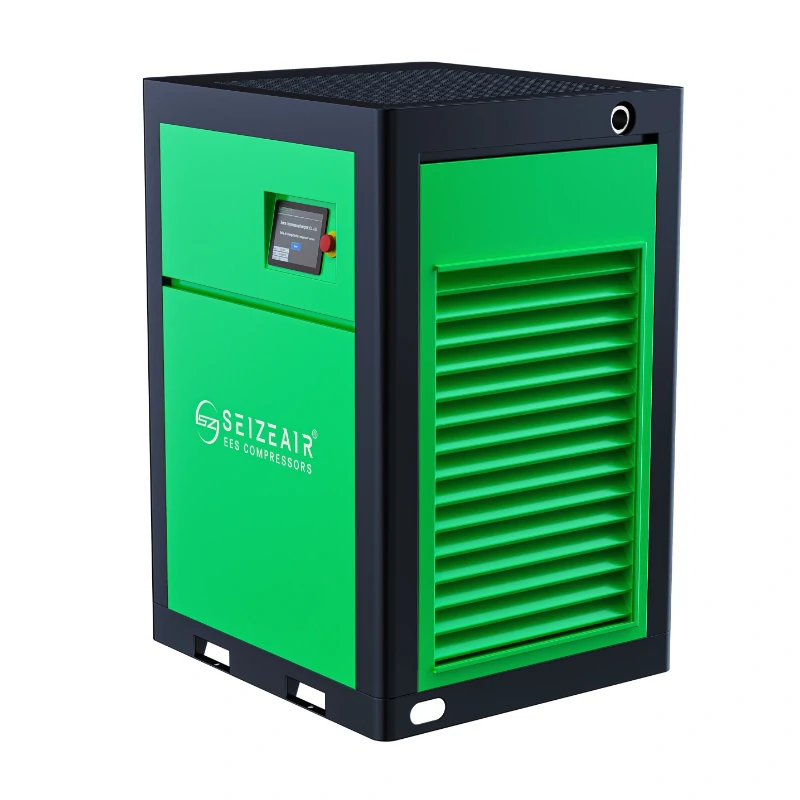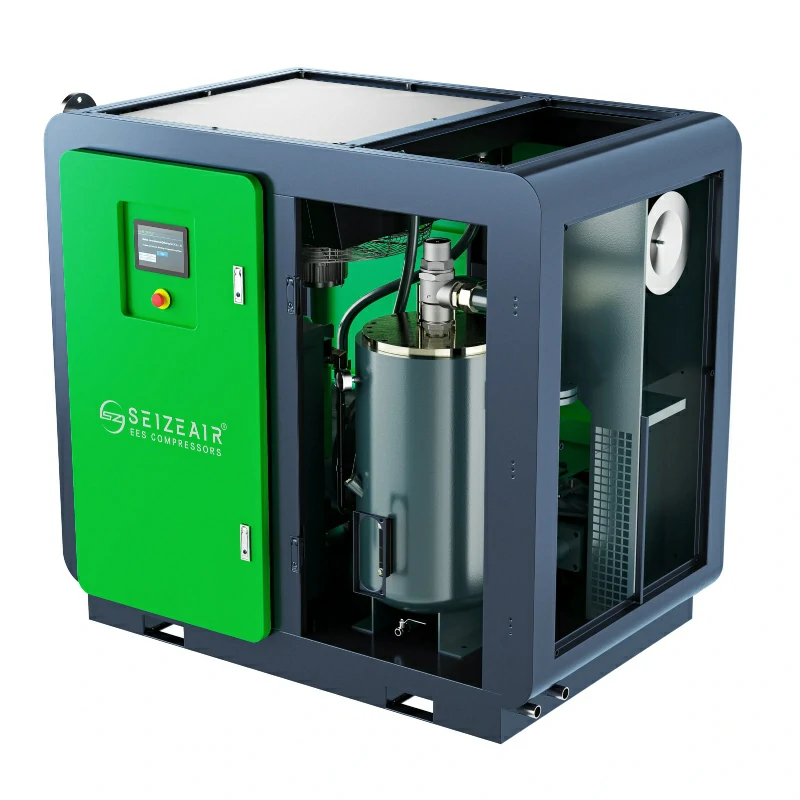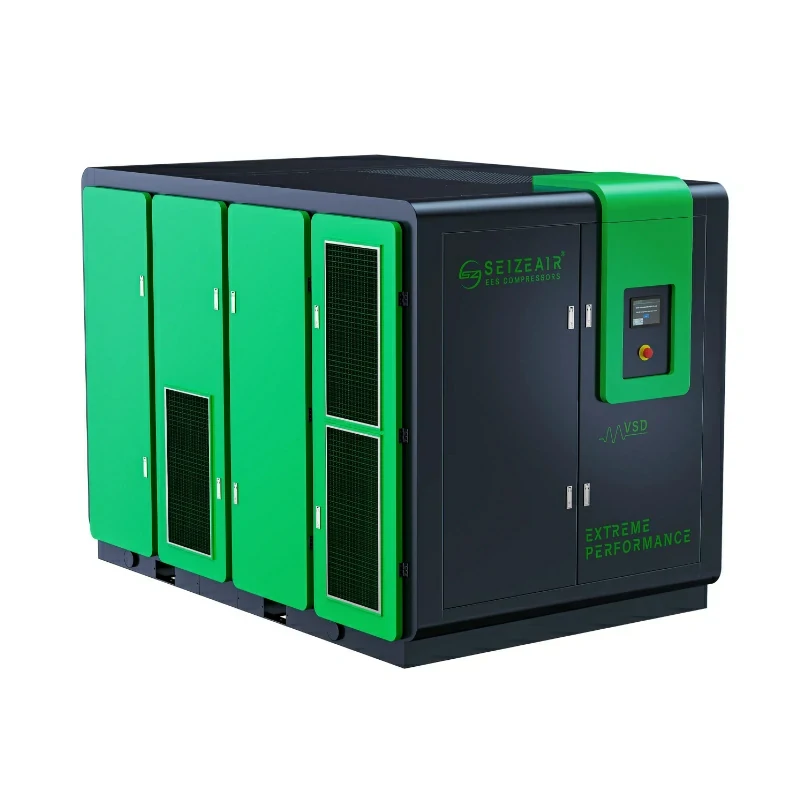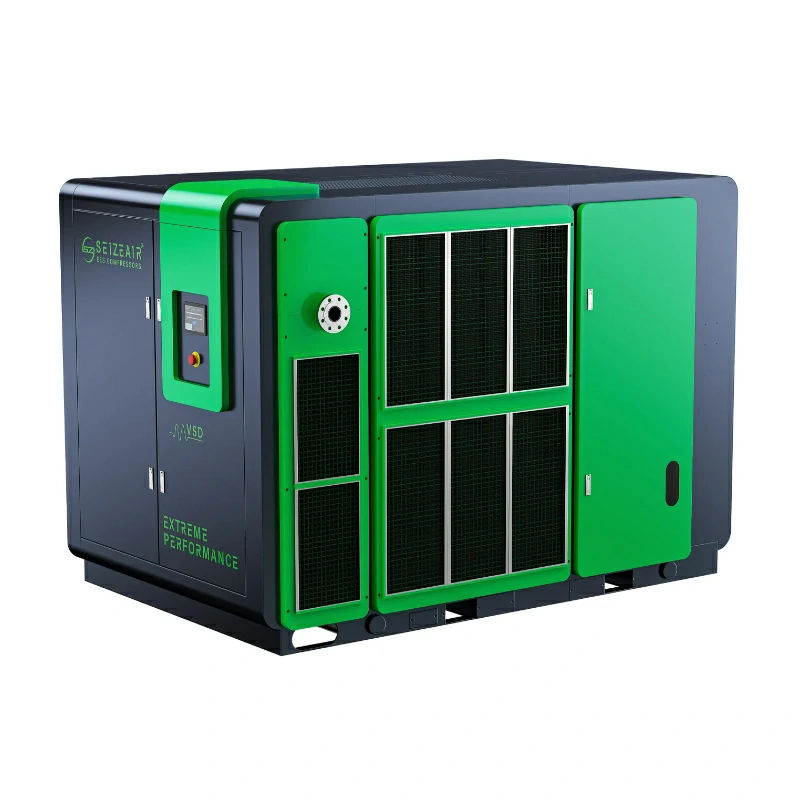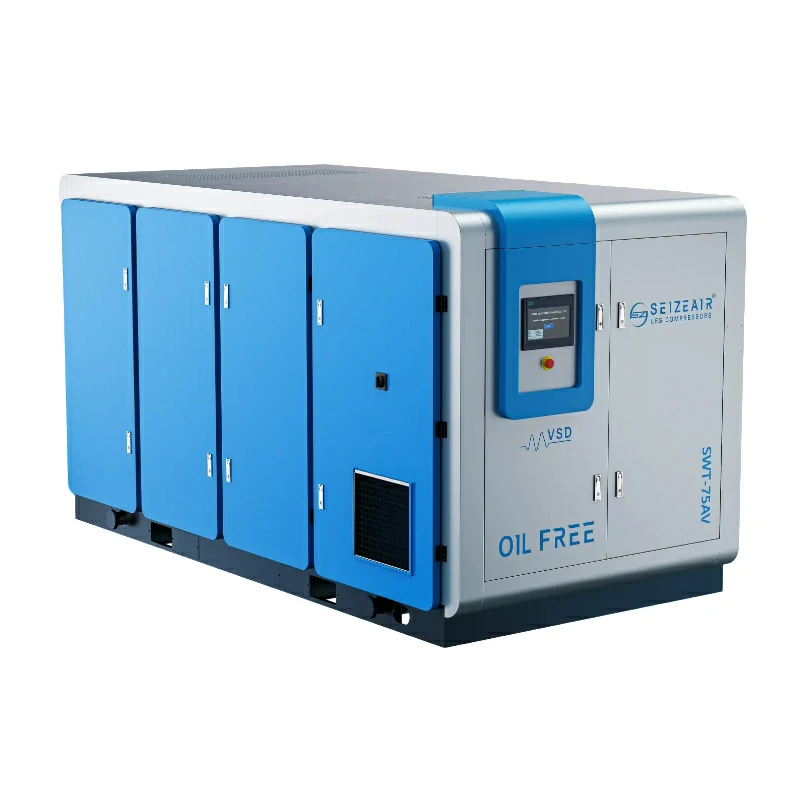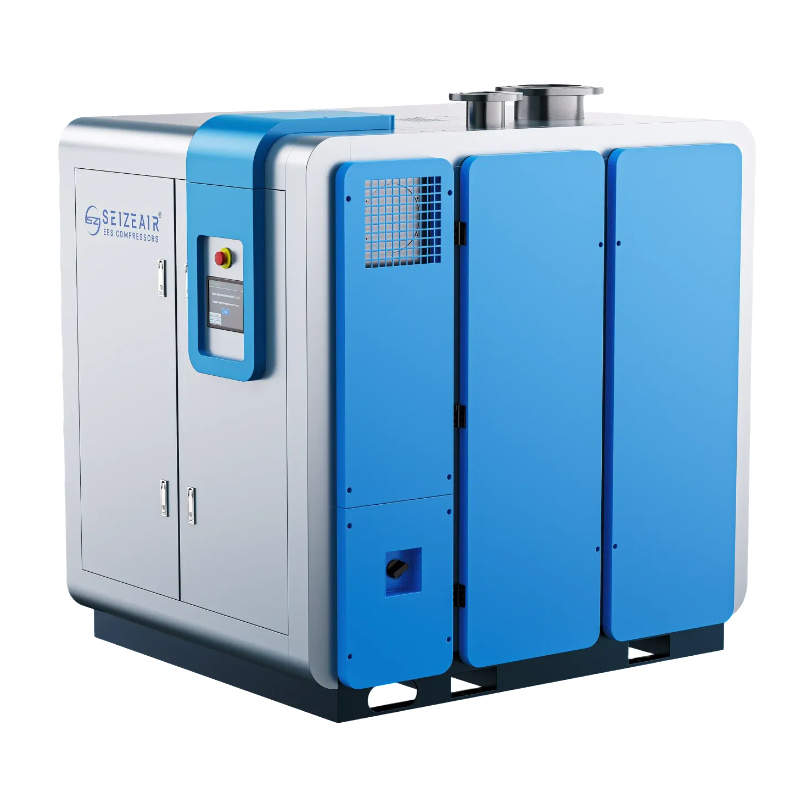


Upgrading to a 2 stage air compressor is one of the most effective ways for growing industrial plants, automotive shops, and manufacturing facilities to significantly boost operational efficiency, maximize tool power, and slash monthly energy bills. While a standard single stage unit compresses air to its final pressure in one single stroke or pass, a dual stage system divides the heavy lifting between two distinct, specialized pressure stages with an integrated cooling process in between. If your current equipment is constantly running hot, struggling to maintain steady cubic feet per minute (CFM) parameters under heavy continuous loads, or causing expensive production bottlenecks, transitioning to a high-efficiency dual stage model is the logical next step.
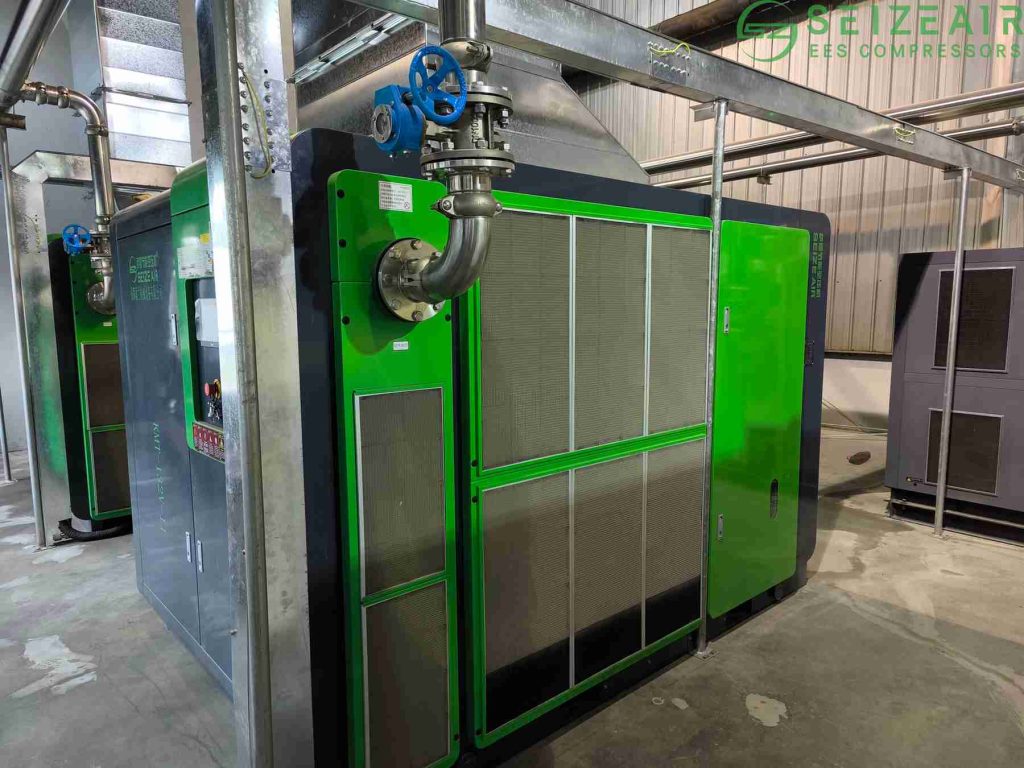
What is the main advantage of a two stage air compressor?
The absolute primary advantage of a 2 stage air compressor is its highly efficient mechanical design that delivers a significantly higher volume of air at elevated pressures (typically 150 to 175 PSI) while drawing substantially less electrical power than a single-stage equivalent. By splitting the total workload into two separate compression chambers, the equipment naturally operates at a much lower thermal profile, drastically reducing internal friction and heat-induced wear on critical mechanical components.
When you compress air, you generate a massive amount of thermodynamic heat. In a standard single-stage configuration, forcing atmospheric air straight up to high target pressures in one shot causes the air temperature to spike aggressively. This extreme thermal expansion makes the air less dense and far more difficult to compress further, wasting huge amounts of electrical energy.
A dual-stage system circumvents this thermodynamic bottleneck via a highly systematic process:
- The First Stage: Atmospheric air enters a large low-pressure element where it is pre-compressed to an intermediate state (around 30 to 50 PSI).
- The Intercooling Phase: This heated, semi-compressed air passes through an intercooler, which rapidly extracts the heat of compression, making the air much denser and cooler.
- The Second Stage: The cooled, dense air enters a smaller high-pressure element, where it is effortlessly brought up to its final working pressure (175 PSI) with optimal mechanical efficiency.
Is a 2 stage air compressor worth it for industrial applications?
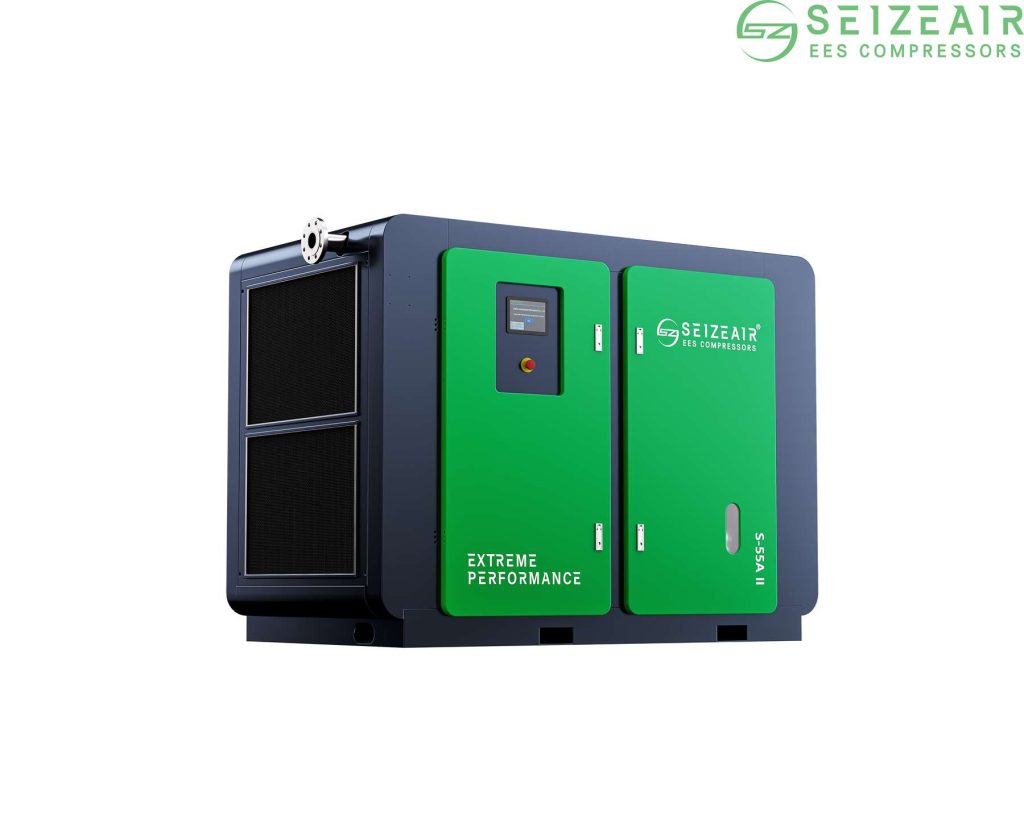
When evaluating long-term overhead, a heavy-duty industrial 2 stage air compressor is absolutely worth the investment for any facility running continuous shifts or high-demand pneumatic machinery. Energy costs represent roughly 70 to 80% of the total lifetime cost of ownership for any industrial air system. Upgrading to a modern dual-stage system acts as a direct structural defense against inflating utility bills because it operates remarkably close to an isothermal compression process.
Because the air is cooled down mid-way through the cycle, the high-pressure second stage doesn’t have to work nearly as hard to compress the dense air molecules. This mechanical shortcut reduces the overall brake horsepower (BHP) required from the electric motor. When you pair this dual-stage design with advanced variable speed drive (VSD) technology and premium IE5 high-efficiency motors—features standard in premium systems like Seize Air compressors—the energy savings become even more compounding.
| Operational Metric | Standard Single Stage Compressor | Premium 2 Stage Air Compressor |
| Typical Working Pressure Range | 90 – 125 PSI | 150 – 175 PSI |
| Duty Cycle Rating | 50% – 60% (Requires rest intervals) | 100% Continuous duty capabilities |
| Specific Power Consumption | High (More kW consumed per CFM) | Low (Up to 15% energy savings per CFM) |
| Moisture / Water Carryover | High due to elevated discharge temps | Low due to integrated intercooling |
| Component Lifespan | Shorter due to high thermal stress | Significantly longer due to cooler runs |
To look at the hard financial numbers, consider a mid-sized facility running a 50 HP compressor for 4,000 hours annually at an average electricity rate of $0.12 per kWh. Upgrading from a single-stage unit to a highly optimized dual stage model can easily net a conservative 15% reduction in specific power consumption.
Power Savings Calculation Formula:
Annual Savings = (Motor Horsepower x 0.746 kW/HP x Annual Running Hours x Electricity Rate x Efficiency Gain Percentage) / Motor Efficiency
Plugging in realistic baseline numbers for a standard 50 HP industrial setup:
Base Calculation: (50 HP x 0.746 x 4,000 hours x $0.12/kWh x 0.15) / 0.95 = 2,826.94
This straightforward mechanical upgrade slashes nearly $2,826 directly off your annual overhead costs, allowing the equipment to completely pay for its initial capital investment over its active operational lifecycle.
What is the difference between single stage and two stage compressors?
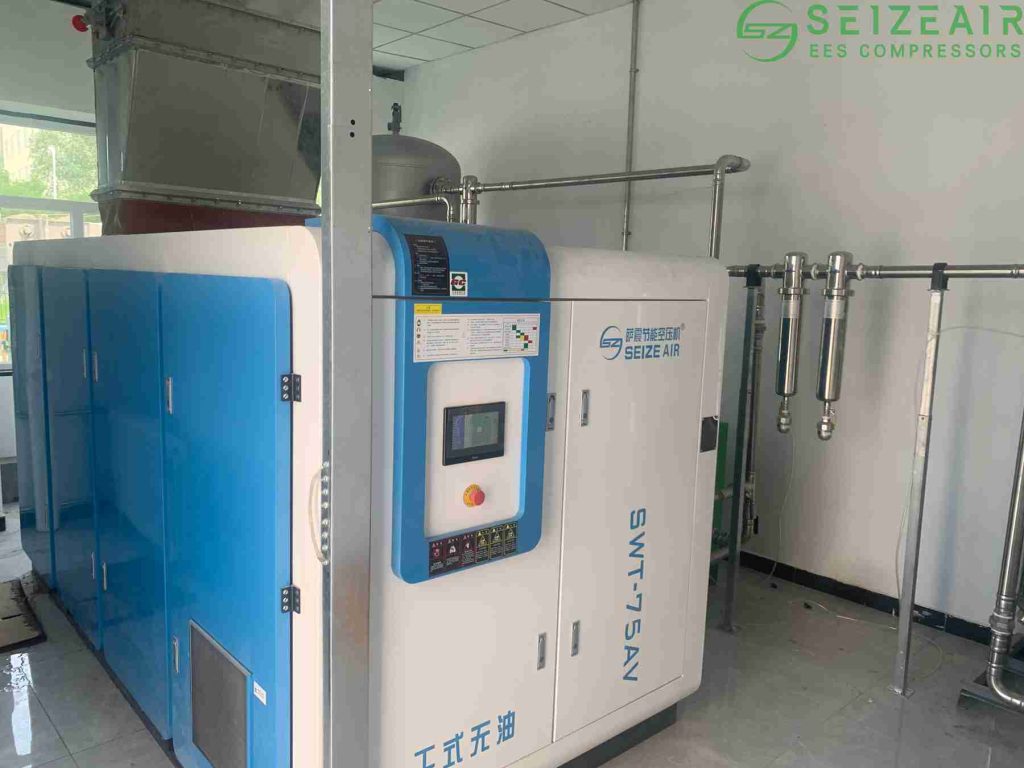
The definitive difference lies in how many times the air is physically compressed before it is sent downstream into your air storage receiver tank or production piping system. Many industrial buyers make the critical mistake of assuming that a compressor with two pistons or a larger motor is automatically a dual stage model. In reality, multiple pistons are frequently arranged in parallel within single-stage units simply to move a higher raw volume of low-pressure air.
To determine whether a unit is a true 2 stage air compressor, take a close look at the physical sizing and layout of the internal air-ends or pistons. On a dual-stage reciprocating unit, you will see one notably larger piston (the low-pressure first stage) and one smaller piston (the high-pressure second stage) connected by a series of finned copper or aluminum tubes.
In a heavy-duty rotary screw layout, a 2 stage rotary screw air compressor houses two distinct pairs of interlocking male and female rotors integrated sequentially within a single housing, allowing the continuous flow of air to step up in pressure seamlessly without sudden, turbulent energy spikes.
Why does a 2 stage compressor deliver better CFM at high PSI?
Industrial manufacturing machinery, heavy pneumatic impact wrenches, sandblasting bays, structural plasma cutters, and automated packaging lines all share one common operational dependency: they demand a high, completely uninterrupted volume of air at rock-solid pressures. If the air pressure constantly dips, tools stall out, product finishes degrade, and automated assembly sensors throw system errors.
A 2 stage air compressor easily handles these rigorous applications because it boasts a true 100% continuous duty cycle rating. Because the dual stages generate far less collective internal heat, the machine can run completely un微stopped for hours on end without needing to cycle off to cool down.
Furthermore, because air is compressed more efficiently, a dual-stage system delivers a much higher 2 stage compressor CFM output per horsepower. For instance, a standard single-stage 10 HP motor typically struggles to produce more than 30 CFM at 90 PSI. In sharp contrast, a specialized industrial dual-stage system can easily pump out a steady, reliable supply of high-pressure air that easily satisfies multiple heavy pneumatic tools simultaneously without dropping systemic pressure.
Does a dual stage air compressor reduce moisture in lines?
Moisture is the ultimate hidden enemy of any downstream pneumatic system. When air is rapidly compressed, the natural water vapor suspended in the ambient atmosphere concentrates into liquid water droplets. Because single-stage units run incredibly hot, this water vapor remains suspended in the superheated discharge air, traveling deep into your shop lines, rusting internal tool components, washing away vital pneumatic lubricants, and ruining sensitive paint finishes.
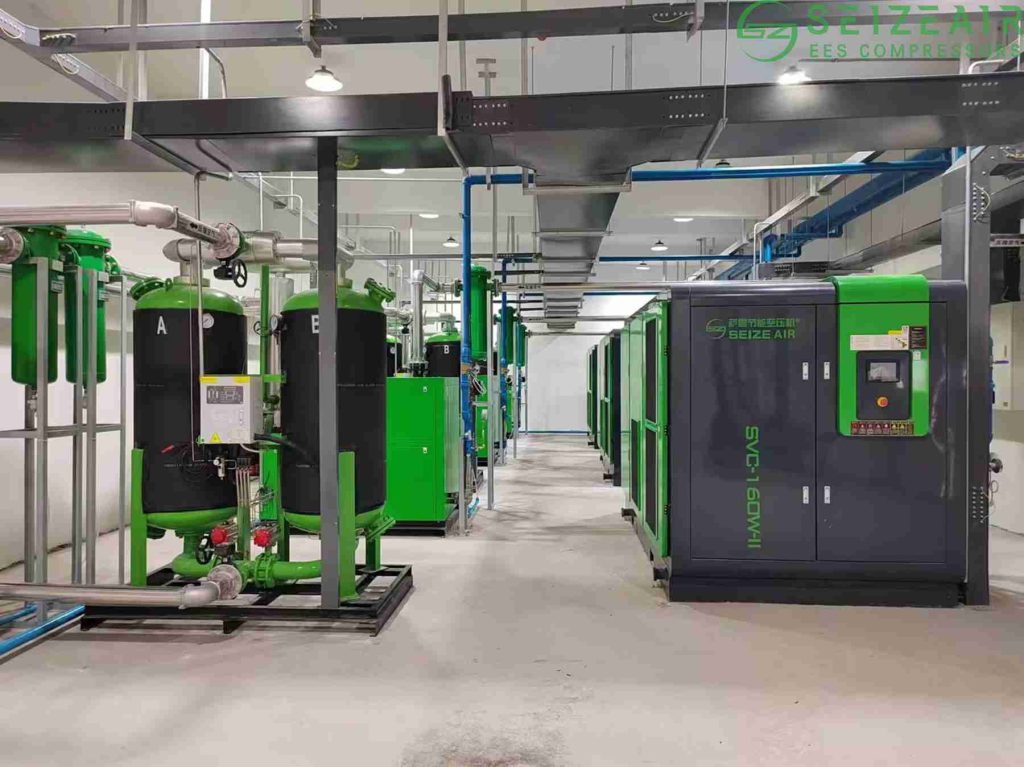
One of the secondary, often overlooked benefits of choosing a 2 stage air compressor with dryer setups or using the built-in intercooler properties is the significant improvement in downstream air quality:
- Thermal Drop Condensation: As hot air exits the first stage and travels through the intercooler, the ambient temperature drops sharply.
- Liquid Separation: This rapid cooling action causes a large percentage of suspended moisture to immediately condense into liquid form before it ever reaches the second stage, where it can be safely captured and purged via automatic electronic moisture drains.
- Reduced Dryer Load: The air exiting a two-stage air-end is far cooler than single-stage discharge air, meaning your downstream refrigerated or desiccant air dryers don’t have to work nearly as hard to achieve a pristine, moisture-free dew point.
For clean-critical processes like electronics assembly or precision pneumatic control lines, choosing a premium manufacturer like Seize Air ensures that the initial moisture drop is managed perfectly, resulting in ultra-dry, pure compressed air that protects your downstream equipment investments.
How to choose between single stage vs 2 stage air compressor models?
Investing in a premium air system requires aligning your actual workflow demands with the correct mechanical architecture. A commercial-grade 2 stage air compressor is an essential asset if your business matches any of the following operational scenarios:
- High Pressure Needs: Your machinery, cnc systems, or heavy tools explicitly require stable working pressures greater than 120 PSI.
- Continuous Operations: Your facility runs compressed air for multiple hours daily or over consecutive, uninterrupted shifts where downtime is not an option.
- Multiple Operators: You have a variety of pneumatic workstations drawing from a central air loop simultaneously, requiring rapid CFM recovery times.
- Harsh Environments: The compressor is located in an unconditioned, warm space where a single-stage unit would quickly overheat and trip thermal overloads.
Conversely, if your operations are limited to occasional, low-pressure tasks like intermittent tire inflation, light automotive detailing, or running small finish nailers for short intervals, a standard single stage unit will likely suffice.
What is the expected lifespan of a 2 stage air compressor?
Because a dual stage system distributes the pressure load across two distinct mechanical steps, the internal components experience far less physical stress. A properly maintained industrial unit can easily achieve an operational lifespan of 15 to 20 years or more in a commercial setting.
To maximize the longevity and performance of your system, focus on the following core preventative maintenance protocols:
- Regular Fluid Analysis: For oil-injected models, changing and analyzing the compressor fluid prevents premature bearing wear.
- Intake Filter Management: Cleaning or replacing air intake filters every 1,000 hours ensures the first-stage element doesn’t work under excessive vacuum restrictions.
- Intercooler Cleaning: Keeping the external cooling fins free of dust build-up ensures the temperature drop between stages remains optimal.
Utilizing high-efficiency smart control systems, like the intelligent monitoring arrays found on Seize Air industrial setups, allows you to track running temperatures, pressure drops, and maintenance schedules in real-time to avoid unexpected production disruptions.
Upgrade Your Operations with Industry-Leading Performance
Making the switch to a high-capacity, energy-saving system is a proven way to future-proof your production floor and insulate your business from rising energy expenses. If you are ready to eliminate pressure drops, reduce equipment wear, and lower your facility’s power footprint, an engineered dual stage setup is the ultimate solution.
As an established global brand with specialized production and engineering capabilities, Seize Air designs and builds ultra-efficient, highly durable compressed air solutions tailored specifically for demanding industrial applications. Our advanced engineering ensures you get maximum CFM output with minimal energy input.
Contact our technical sales team today to get a customized, free system analysis for your facility. Let us help you select the perfect, high-performance compressed air setup to take your business productivity to the next level.