

For field operators matching pneumatic tools with a 250 cfm air compressor, matching the total volume demand to your supply is critical. A standard 250 cfm air compressor can run between 2 and 4 jackhammers simultaneously, depending on the weight class of the breakers and their real-world air consumption. Understanding tool requirements prevents pressure drops and keeps your demolition crew working at peak hitting power without unexpected job site interruptions.
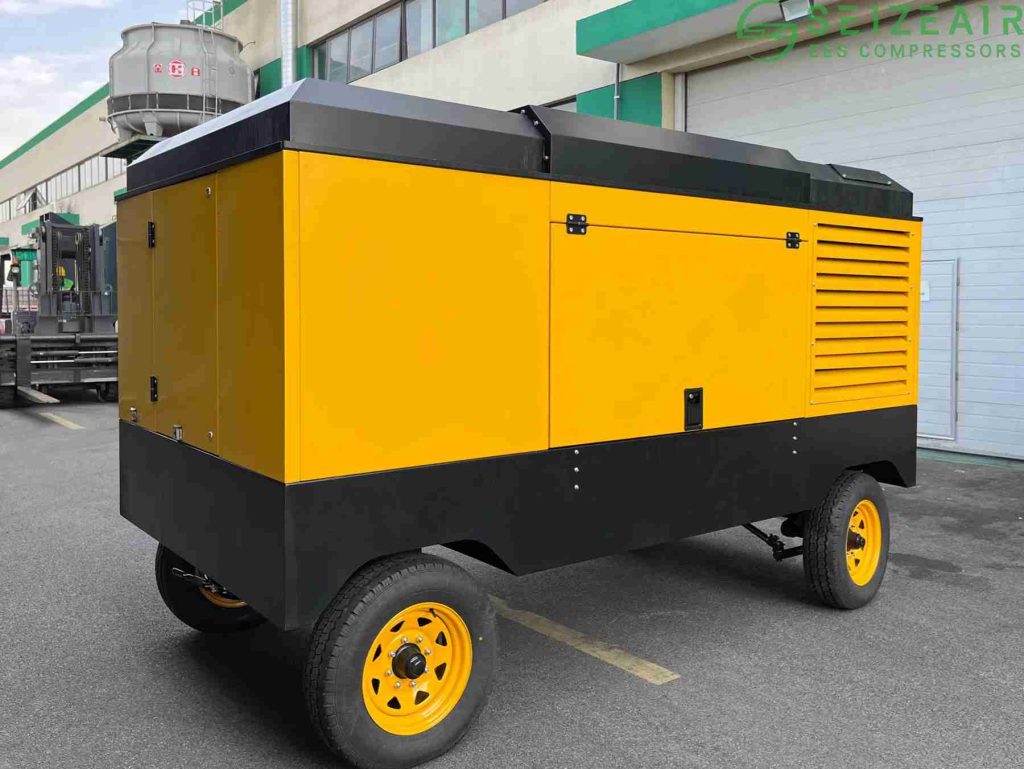
250 CFM Air Compressor Capacity vs. Jackhammer Requirements
To determine how many demolition tools your machine can support, you have to look at the volume of air delivered, measured in CFM (Cubic Feet per Minute), and the operating pressure, measured in PSI (Pounds per Square Inch).
Most heavy-duty pneumatic jackhammers operate efficiently at a standard 90 PSI. While pressure dictates the hitting force of the tool, volume dictates whether the tool can run continuously. If your compressor cannot supply the total required air volume, the pipeline pressure drops, and your jackhammers lose impact speed or stop functioning entirely.
Average CFM Consumption by Jackhammer Weight Class
Pneumatic jackhammers are categorized by weight. Heavier jackhammers feature larger pistons and require more air volume to operate effectively.
- 30-lb Class (Light Duty): Best for horizontal wall work, light concrete chipping, and brickwork.
- 60-lb Class (Medium Duty): The industry standard for breaking up standard sidewalks, driveway concrete, and pavement.
- 90-lb Class (Heavy Duty): Used for reinforced industrial concrete, deep foundations, and heavy highway construction.
How Many Breakers Can You Run on a 250 CFM Compressor?
A 250 cfm air compressor provides a substantial amount of air volume, making it a staple on medium-to-large construction sites. To find out how many tools it can run simultaneously, we use a simple formula:
Total Compressor CFM / Individual Tool CFM = Number of Tools
However, in real-world applications, experienced fleet managers apply a multi-tool efficiency factor (often called a load factor or diversity factor). Because workers rarely hold the trigger down at the exact same millisecond indefinitely, you can sometimes stretch the compressor’s capacity slightly. But for maximum safety and tool longevity, calculating for 100% continuous use is the gold standard.
Quick Reference Guide: Tool Capacity on a 250 CFM Unit
| Jackhammer Class | Average CFM Per Tool | Max Tools at 100% Duty Cycle | Recommended Number of Tools |
| 30-lb Breaker | 45 – 50 CFM | 5 Tools | 5 Tools |
| 60-lb Breaker | 60 – 65 CFM | 4 Tools | 3 to 4 Tools |
| 90-lb Breaker | 75 – 80 CFM | 3 Tools | 2 to 3 Tools |
Running 30-lb Jackhammers
A standard 30-lb chipping hammer or light breaker consumes roughly 45 to 50 CFM.
- The Calculation: 250 CFM / 50 CFM = 5
- Real-world outcome: You can comfortably run 5 light-duty jackhammers simultaneously without experiencing any drop in line pressure.
Running 60-lb Jackhammers
The 60-lb pavement breaker is the most common tool found on concrete demolition sites. These typically consume about 60 to 65 CFM at 90 PSI.
- The Calculation: 250 CFM / 60 CFM = 4.16
- Real-world outcome: A 250 CFM unit handles 4 standard 60-lb jackhammers perfectly. If your crew operates with zero breaks, running 3 tools leaves a highly efficient safety margin.
Running 90-lb Jackhammers
Heavy-duty 90-lb breakers are air hogs, pulling between 75 and 80 CFM each because they are designed to smash through high-strength, reinforced industrial concrete.
- The Calculation: 250 CFM / 80 CFM = 3.12
- Real-world outcome: You can run 3 heavy-duty jackhammers at the same time. Attempting to add a fourth will instantly drain the air receiver tank and cause the tools to stutter.
What Factors Cause a 250 CFM Air Compressor to Lose Pressure?
You cannot rely solely on the numbers stamped on the tool housing. On an actual construction site, several environmental and mechanical variables alter the actual air delivery.
1. Pressure Drops and Hose Length
Air loses pressure as it travels through hoses. The longer the hose and the smaller its diameter, the more friction it creates, resulting in a lower PSI reaching the tool.
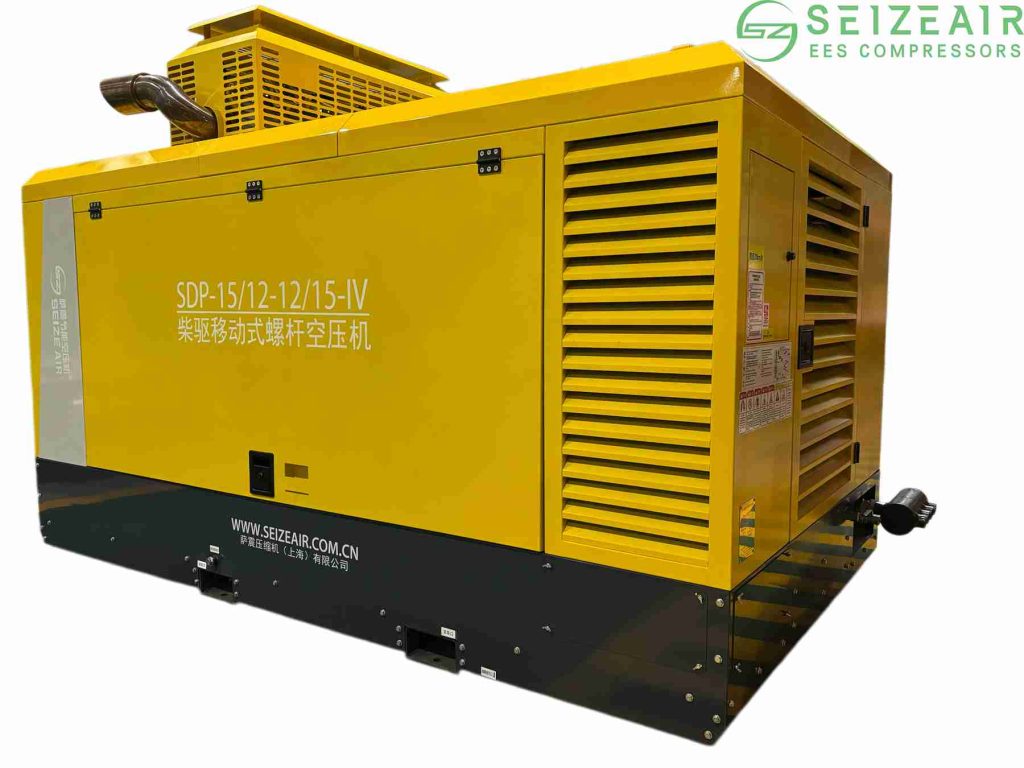
- If you are running multiple lines from a single 250 CFM portable compressor, using a proper whip check and a large-diameter manifold (at least 1.5 to 2 inches) before splitting into standard 3/4-inch tool hoses is crucial.
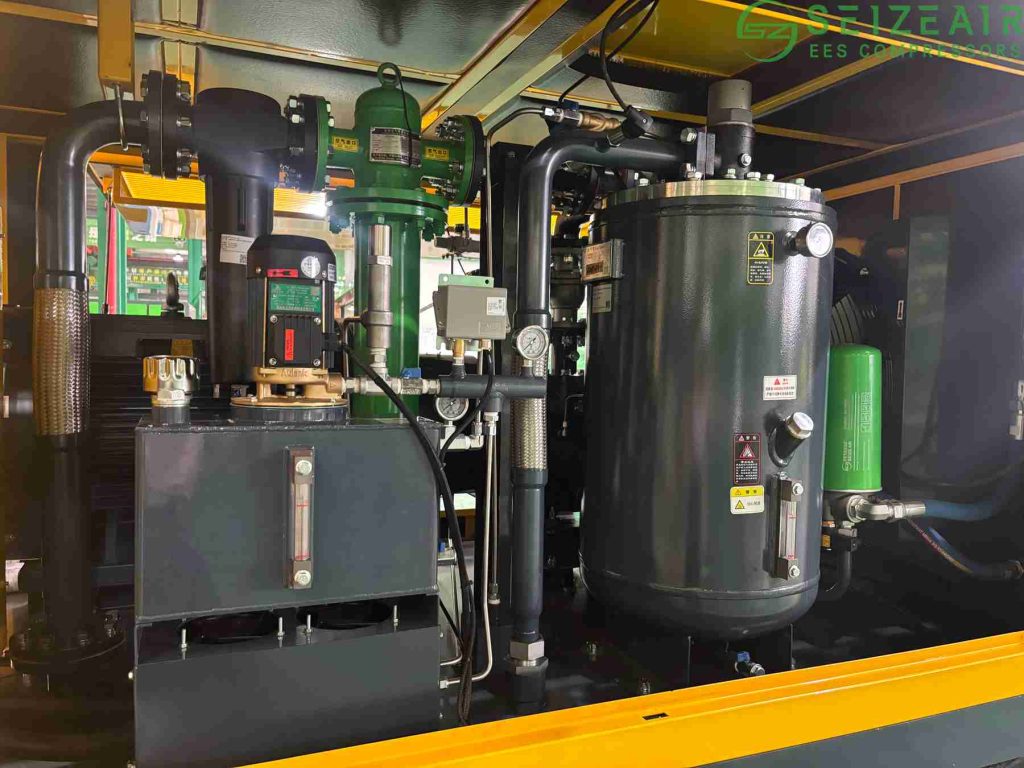
- For jobs requiring long hose runs (over 100 feet), your compressor needs excellent pressure retention. Premium brands like Seize Air engineer their portable rotary screw compressors with high-efficiency airends to minimize internal pressure losses, ensuring that the full 250 CFM actually makes it to the manifold.
2. Altitude and Ambient Temperature
Air compressors are rated at standard atmospheric conditions (sea level, 68 degrees Fahrenheit, and 36% relative humidity).
- High Altitudes: If your job site is located at a high elevation, the ambient air is less dense. A compressor operating at 5,000 feet above sea level will experience a capacity reduction of roughly 10% to 15%.
- Extreme Heat: High temperatures cause air to expand before entering the compressor, meaning fewer air molecules are compressed per cycle. In these environments, a 250 CFM machine might only deliver around 215 to 220 actual CFM (ACFM).
3. Tool Wear and Maintenance
An old, poorly lubricated jackhammer with worn-out internal seals can consume up to 20% more CFM than a brand-new tool. If your breakers are leaking air around the chuck or the inlet valve, a 60-lb hammer rating can easily jump from 60 CFM to 75 CFM, reducing the number of tools you can run on your 250 CFM air compressor.
Frequently Asked Questions
Can a 185 CFM compressor run a 90-lb jackhammer?
Yes, a 185 CFM compressor can easily run a single 90-lb jackhammer (which requires ~80 CFM). It can even run two 90-lb jackhammers simultaneously if the workers are not operating at a 100% continuous duty cycle. However, a 250 CFM unit is highly preferred if you need to run two heavy breakers continuously alongside other pneumatic tools like air blow guns or clay diggers.
What size air compressor do I need for 2 jackhammers?
To run two standard 60-lb jackhammers safely, you need a minimum of a 130 CFM compressor. However, if you plan to scale up your operation or switch to 90-lb breakers down the line, investing in a robust 250 CFM platform provides the ideal headroom for business growth and prevents equipment strain.
What happens if the CFM rating of the tool is higher than the compressor?
If the total CFM demand of your connected jackhammers exceeds the delivery output of your compressor, the system pressure (PSI) will rapidly decrease. The jackhammers will lose their impact velocity, strike much slower, and eventually fail to break through the concrete. It can also cause the compressor motor to run hot as it struggles to maintain pressure.
Can I couple two smaller compressors to get 250 CFM?
Yes, you can connect two smaller air compressors (for example, a 185 CFM and a 90 CFM unit) in parallel using a specialized check-valve manifold to feed a single large line. While this works in emergencies, utilizing a single, dedicated 250 CFM diesel or industrial electric compressor is significantly more fuel-efficient and easier to transport.
How to Maximize Air Delivery for a Towable 250 CFM Air Compressor Setup?
To get the absolute most out of your 250 CFM air compressor setup, implement these job site best practices:
- Use an Auxiliary Air Receiver Tank: Adding a 50 or 100-gallon air storage tank between the compressor and the jackhammers acts as a buffer. It stores compressed air energy, allowing you to handle sudden spikes in demand when all workers hit the triggers at the exact same time.
- Keep the Oiler Full: Pneumatic tools require constant lubrication. Use an in-line lubricator to inject a fine mist of oil into the air stream. This keeps the jackhammer pistons sealing perfectly, keeping their CFM consumption down to factory specifications.
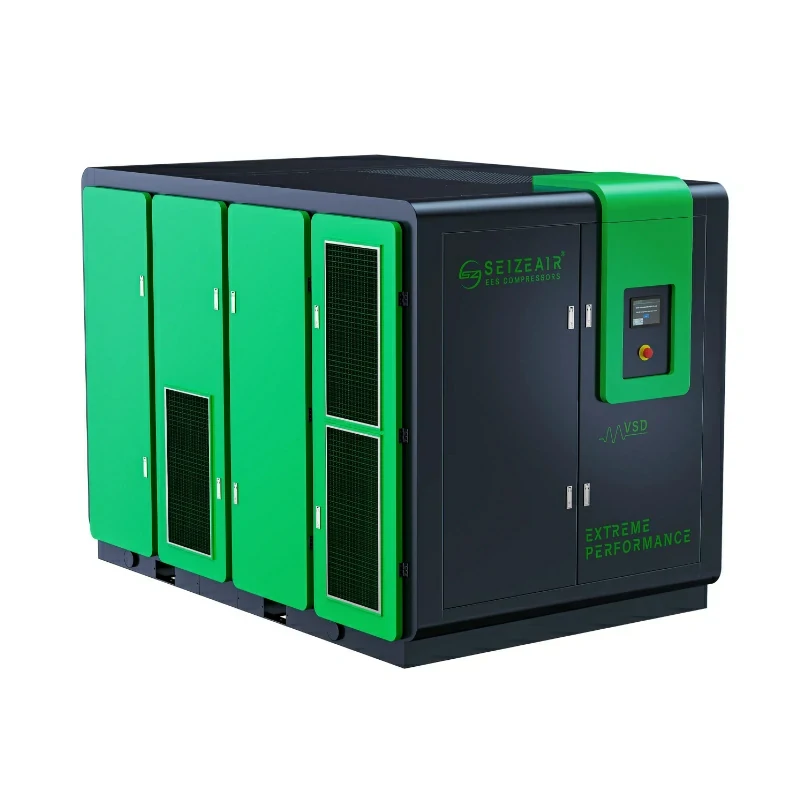
- Opt for VSD Technology for Mixed Workloads: If your crew switches between running four jackhammers and just one, standard fixed-speed compressors waste massive amounts of energy. Modern units equipped with Variable Speed Drive (VSD) motors adjust their output dynamically. Advanced industrial solutions, such as those designed by Seize Air, leverage IE5 permanent magnet motors and VSD control to match your exact CFM usage, slashing fuel or electricity costs by up to 35% when running partial tool loads.
Is a 250 CFM Commercial Air Compressor Worth the Investment for Construction Fleets?
When staging a heavy demolition project, you cannot afford equipment downtime. Balancing your air tool inventory against your compressor’s actual output guarantees a smooth workflow.
If you primarily run two or three 90-lb breakers or four 60-lb pavement breakers, a 250 CFM air compressor is the absolute sweet spot for your fleet. Selecting a machine built with premium components ensures long-term reliability and lower operating costs per cubic foot of air. Manufacturers like Seize Air focus heavily on high-performance engineering, ensuring that whether you are working in deep mining applications or urban road construction, your air delivery remains rock solid.
Need Expert Guidance on Industrial Air Systems?
Finding the perfect balance between tool power and compressor capacity can be complex. Whether you are setting up a portable diesel unit for a construction site or looking for a highly efficient stationary system for an industrial facility, our team is here to help.
[Contact Seize Air Today] to speak with a factory-trained application engineer. We can review your specific CFM requirements, optimize your air piping layout, and help you select the most energy-efficient compression technology for your business.