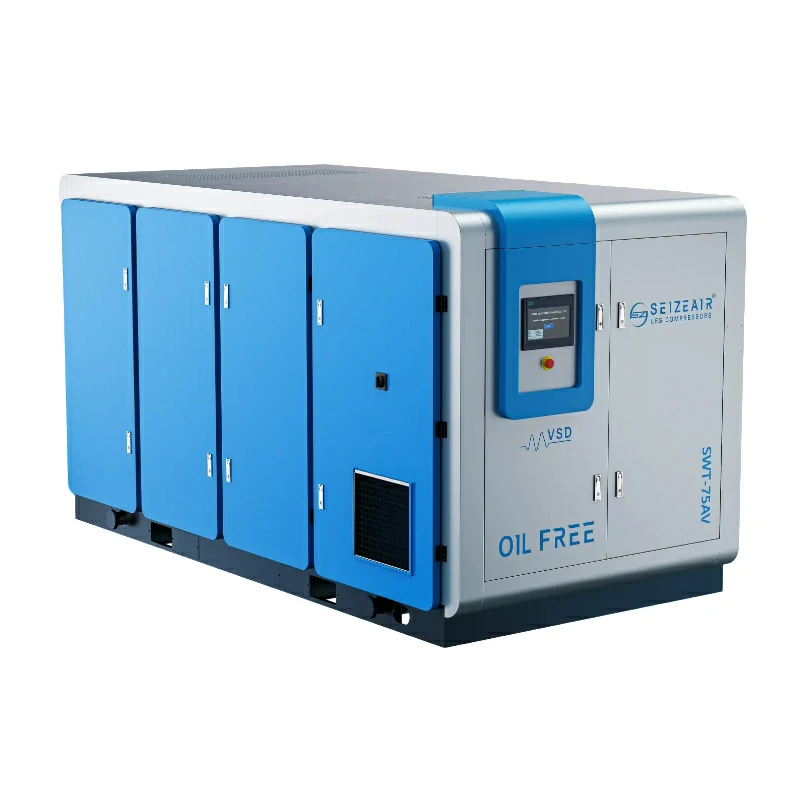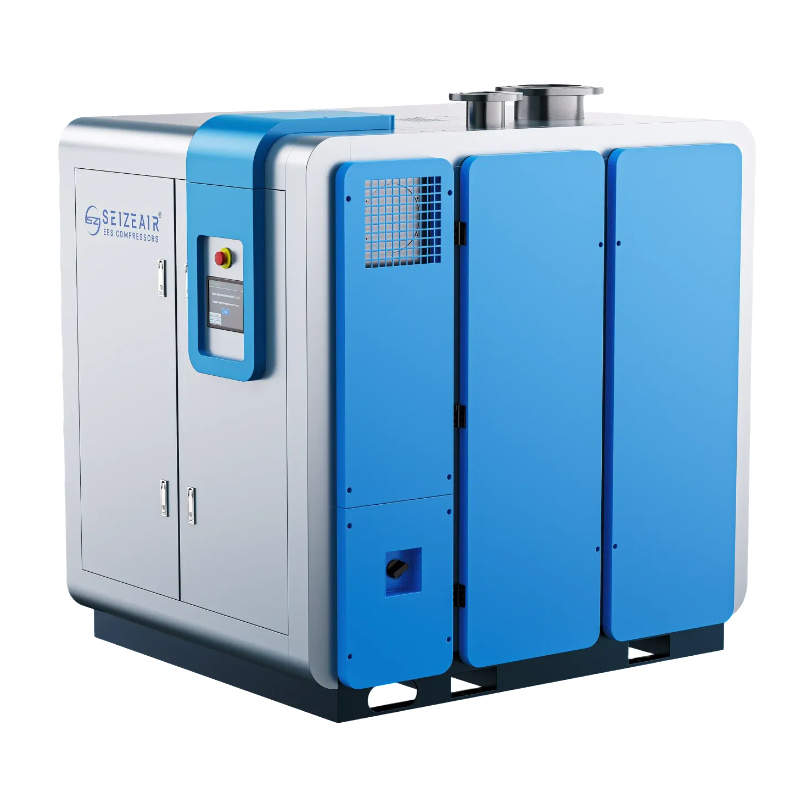


An air compressor air dryer is essential for protecting downstream equipment from moisture, rust, and costly production downtime. Untreated compressed air carries water vapor that condenses into liquid inside your piping, destroying pneumatic tools, fouling valves, and ruining product quality. To eliminate this risk, industrial facilities rely on either refrigerated or desiccant drying technologies. While both styles serve the same fundamental purpose, they use completely different operations to achieve vastly different pressure dew points.
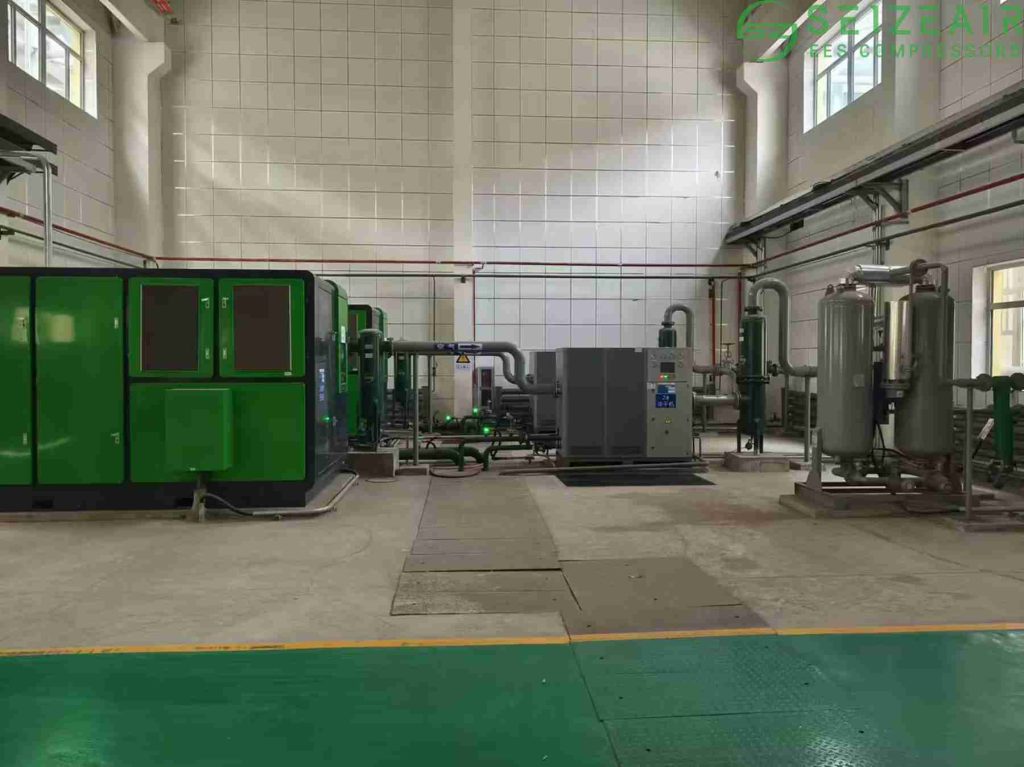
Why Is Moisture Removal Crucial in Compressed Air Systems?
When ambient air is compressed, its temperature rises significantly, allowing it to hold a large volume of water vapor. As this air moves downstream and cools, the vapor condenses into liquid water.
The standard metric used to measure this moisture is the pressure dew point (PDP). PDP refers to the exact temperature at which water vapor in compressed air under pressure begins to condense into liquid form. If your piping runs through an environment that drops to 45°F, your system must achieve a PDP lower than 45°F to keep the lines dry. Failing to control this leads to pipe corrosion, ruined pneumatic components, and product contamination.
What Is a Refrigerated Air Dryer and How Does It Work?
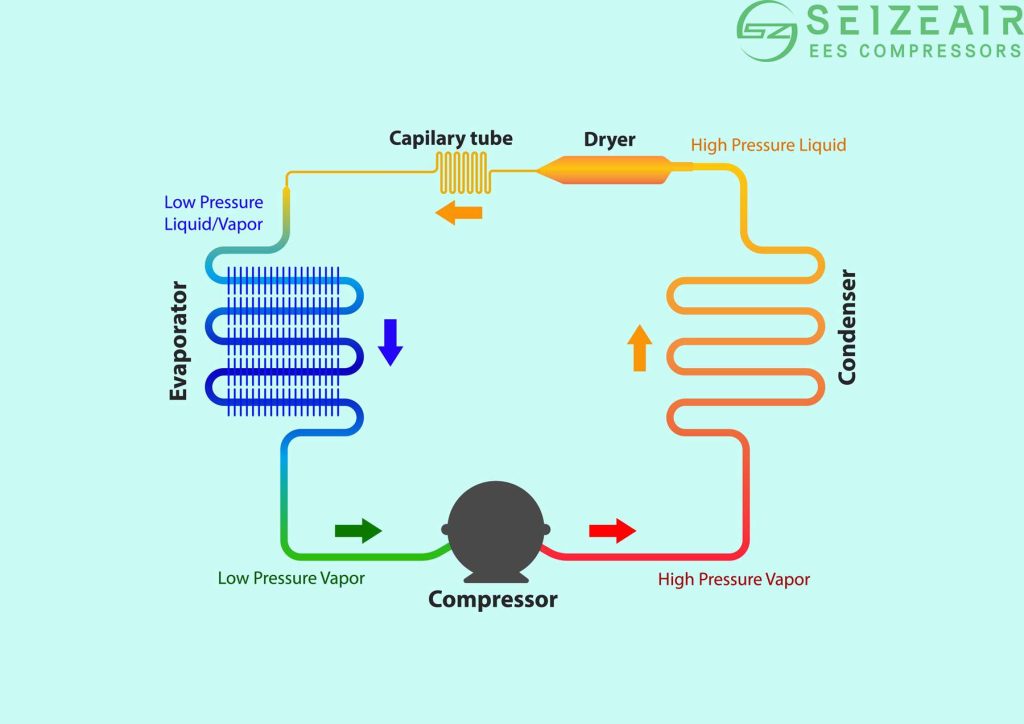
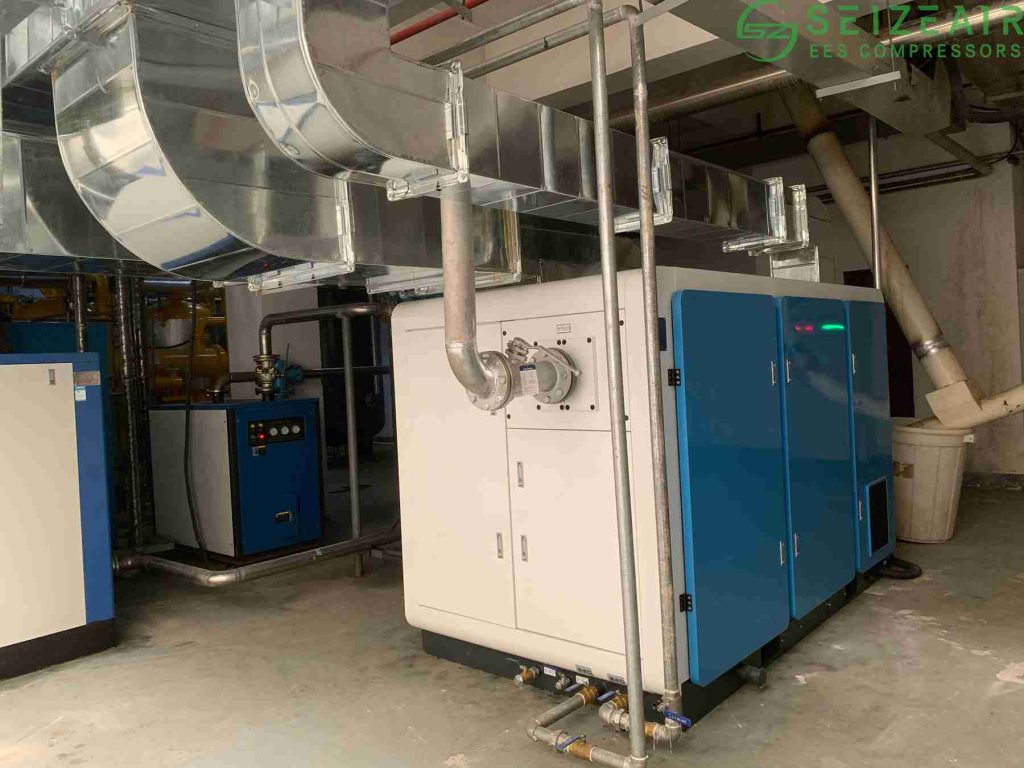
For standard industrial applications, a refrigerated air compressor air dryer is the most common solution. This system operates on the same basic principle as a home refrigerator or air conditioner: it cools the air to force water vapor to condense so it can be physically drained away.
The Mechanical Cooling Process
- Air-to-Air Heat Exchanger: Warm, saturated air from the compressor enters the dryer and is pre-cooled by the cold, dry air exiting the system. This increases thermal efficiency.
- Evaporator/Refrigerant Circuit: The pre-cooled air then enters the air-to-refrigerant heat exchanger. A mechanical refrigeration cycle chills the air down to approximately 35°F to 40°F (1.6°C to 4.4°C).
- Moisture Separator & Drain: As the air drops in temperature, water vapor turns into liquid droplets. A high-efficiency separator collects these droplets, and an automatic drain valve expels them from the system.
- Reheating: The cold, dry air passes back through the initial heat exchanger to be reheated by incoming hot air. Reheating prevents the external distribution piping from “sweating” in your factory.
Cycling vs. Non-Cycling Models
- Non-Cycling Dryers: The refrigeration compressor runs continuously at full capacity regardless of actual air demand, using a hot gas bypass valve to regulate temperature. These have a lower upfront cost but consume more energy over time.
- Cycling Dryers: These units utilize a thermal mass (like a glycol-water mixture) to store cooling energy. The refrigeration compressor shuts down once the thermal mass reaches the target temperature and restarts only when it warms up. High-efficiency cycling models, such as those engineered by Seize Air, provide substantial electricity savings for facilities with fluctuating air demands.
When Should You Use a Desiccant Air Dryer?
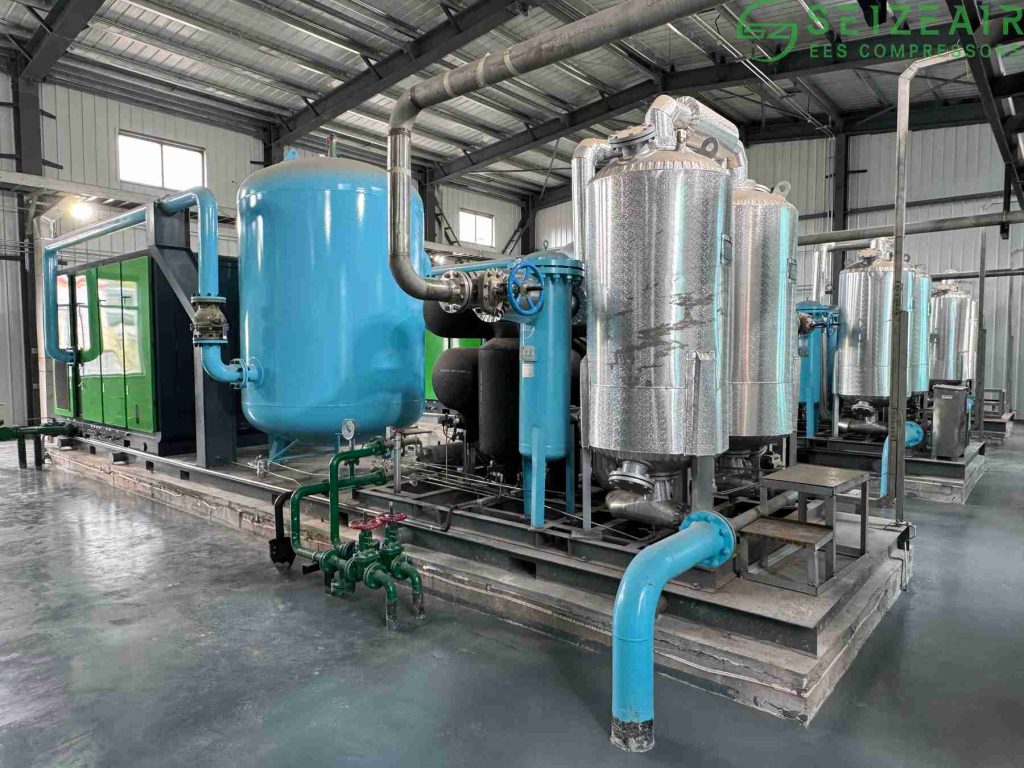
A refrigerated system cannot safely lower the pressure dew point below freezing without ice forming inside the heat exchanger. When an operation requires ultra-dry air, a desiccant air compressor air dryer is necessary. Instead of cooling the air, this system uses chemical adsorption to pull water molecules directly out of the airstream.
The Adsorption and Regeneration Cycle
Desiccant dryers typically feature a twin-tower design to ensure uninterrupted airflow:
- Drying Cycle (Tower A): Wet compressed air flows upward through Tower A, which is packed with porous desiccant beads (usually activated alumina, silica gel, or molecular sieve). The moisture adheres to the vast surface area of the beads.
- Regeneration Cycle (Tower B): While Tower A dries the active air, Tower B is offline. It undergoes regeneration to strip the accumulated moisture from its desiccant beads so they can dry air again during the next cycle.
- Switching: A programmable timer or a dew point demand controller automatically switches the internal valves, alternating the roles of the two towers.
Regeneration Technologies
The operational cost of a desiccant dryer depends heavily on how it regenerates the offline tower:
- Heatless Desiccant Dryers: These systems divert a portion of the clean, dry compressed air (typically 15% to 20%) from the online tower to sweep through and dry out the offline tower. This diverted air is exhausted into the atmosphere and is referred to as “purge air loss.”
- Heated Purge Dryers: An electric heater warms the purge air before it enters the regenerating tower. Because hot air holds more moisture, the system only needs about 5% to 7% of compressed air for the purge process.
- Blower Purge Dryers: These systems use an external electric blower to draw in ambient air, pass it through a heater, and regenerate the desiccant. This eliminates the need to waste expensive compressed air generated by your primary compressor.
Refrigerated vs Desiccant Air Compressor Air Dryer: Key Differences
To help your engineering team weigh the pros and cons of each technology, this table outlines the direct performance and financial tradeoffs.
| Operational Metric | Refrigerated Dryer | Desiccant Dryer |
| Achievable Pressure Dew Point | 35°F to 38°F (+1.6°C to +3.3°C) | -40°F to -100°F (-40°C to -73°C) |
| Moisture Removal Method | Mechanical cooling and condensation | Chemical adsorption via bead media |
| Initial Capital Cost (CAPEX) | Budget-friendly / Low upfront cost | Higher investment due to twin pressure vessels |
| Energy Consumption (OPEX) | Low (Only powers standard cooling circuits) | Higher (Due to purge air loss or heating elements) |
| Routine Maintenance | Minimal (Clean condenser coils, test drains) | Moderate (Replace desiccant media every 3-5 years) |
| Sub-Zero Environment Capability | Unsuitable (Internal condensate will freeze) | Ideal (Pipes will not freeze outdoors) |
| Common Industrial Uses | Light manufacturing, auto body, assembly | Pharmaceuticals, electronics, food & beverage |
How Do You Select the Right Dryer Size Based on Operating Conditions?
Sizing an air compressor air dryer requires looking beyond standard flow rates. Manufacturers rate dryers based on standard industry conditions: an inlet air temperature of 100°F, an inlet pressure of 100 psig, and an ambient temperature of 100°F.
If your actual working conditions deviate from these standards, you must apply correction factors. For instance, if your compressor room regularly reaches 110°F in the summer or your compressor discharges air at 120°F, the dryer must handle a much higher thermal load. Failing to oversize the dryer under these conditions will cause moisture to bypass the system and enter your main air lines.
Calculating Purge Air Loss in Heatless Systems
When calculating your net usable air volume with a heatless desiccant system, you must subtract the required purge air from your total compressor output using this straightforward formula:
Usable Air Volume = Total Compressor CFM – Purge Air CFM
If your air compressor produces 200 CFM and your heatless desiccant dryer requires a 15% purge rate:
- Purge Air Volume = 200 CFM * 0.15 = 30 CFM
- Usable Air Volume = 200 CFM – 30 CFM = 170 CFM
If your production machinery requires a continuous 180 CFM, this setup will cause a system-wide pressure drop. Partnering with a specialized manufacturer like Seize Air can help ensure your compressor capacity and dryer selections are engineered correctly to handle these demands without losing pressure.
People Also Ask: Common Operating and Troubleshooting Concerns
Can a refrigerated air dryer freeze?
Yes. If the internal hot gas bypass valve malfunctions or if the dryer is installed in an unheated room where ambient temperatures drop below 32°F (0°C), the moisture separated inside the heat exchanger will freeze. This blocks airflow completely and can permanently rupture the internal cooling lines. Always install refrigerated systems in climate-controlled spaces.
Why is my desiccant dryer losing pressure?
Excessive pressure drop across a desiccant system is usually caused by desiccant bead breakdown. Over years of cycling, the constant friction between the beads breaks them down into a fine powder (desiccant dust). This dust clogs the downstream after-filter. If the pressure drop across your dryer assembly exceeds 5 to 7 psi, inspect your filters and check the integrity of the desiccant media.
What is the pressure drop across a typical dryer system?
A standard refrigerated dryer introduces a minimal pressure drop, typically between 2 to 4 psi, due to its open heat exchanger design. A desiccant dryer introduces a higher resistance, usually between 3 to 8 psi, because the compressed air must force its way through thousands of tightly packed desiccant beads.
Which System Matches Your Specific Industrial Application?
Choose a Refrigerated Dryer If:
- Your compressed air piping remains entirely inside a heated facility where temperatures never drop below freezing.
- You operate standard pneumatic tools, impact wrenches, air lifts, or general automated assembly lines.
- Your primary goal is preventing liquid water in the lines at the lowest possible operating cost.
Choose a Desiccant Dryer If:
- Your air lines route outdoors through freezing winter environments or pass through cold storage facilities.
- You support sensitive processes like pharmaceutical packaging, semiconductor manufacturing, or high-end electronics fabrication where even trace vapor causes micro-corrosion.
- You must meet strict ISO 8573-1 air quality standards for food processing or medical-grade air.
If you have a complex manufacturing layout that demands an optimized balance between energy conservation and stringent dew point control, consulting with an experienced specialist team like Seize Air will help ensure you deploy the most reliable equipment configuration.
Summary Checklist for Fleet Selection
- Will any part of your distribution piping or pneumatic machinery experience temperatures below 35°F (1.6°C)?
- Yes: Select a Desiccant Dryer.
- No: Proceed to question 2.
- Does your final product or sensitive instrumentation require zero trace moisture vapor?
- Yes: Select a Desiccant Dryer.
- No: A Refrigerated Dryer is the most practical and economical choice.
Optimize Your Production Line Air Quality
Choosing the proper air compressor air dryer directly protects your machinery, preserves tool longevity, and maintains consistent product quality. Avoid costly equipment failures and unexpected moisture issues by selecting a system matched to your exact workflow demands.
Our technical engineering team is ready to help you analyze your pressure dew point requirements, calculate correction factors, and select the most energy-efficient drying setup for your facility. Contact Seize Air today to speak with a compressed air expert, request a detailed quote, or schedule a comprehensive system evaluation.