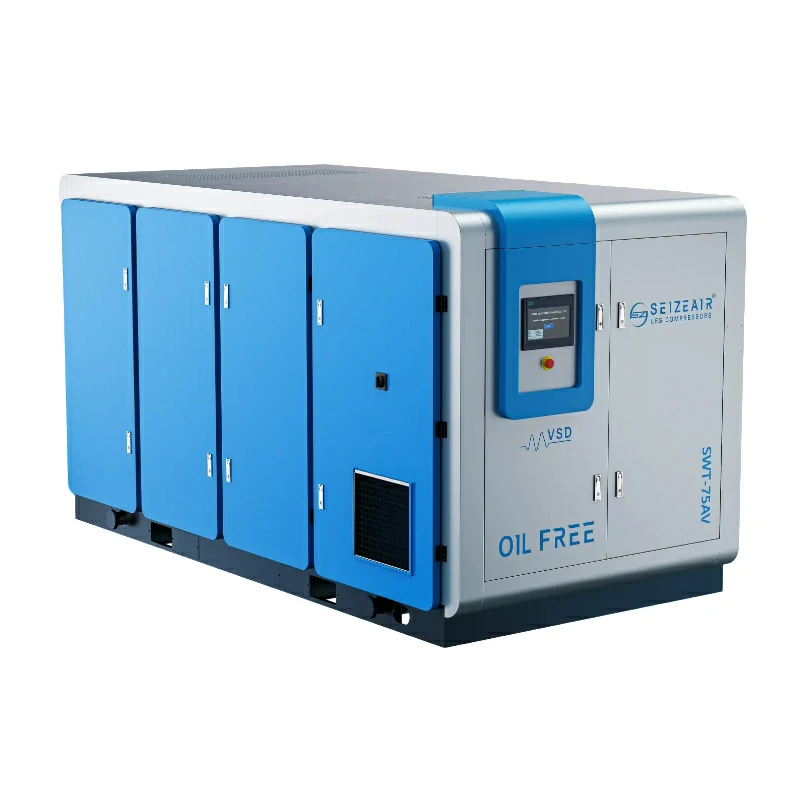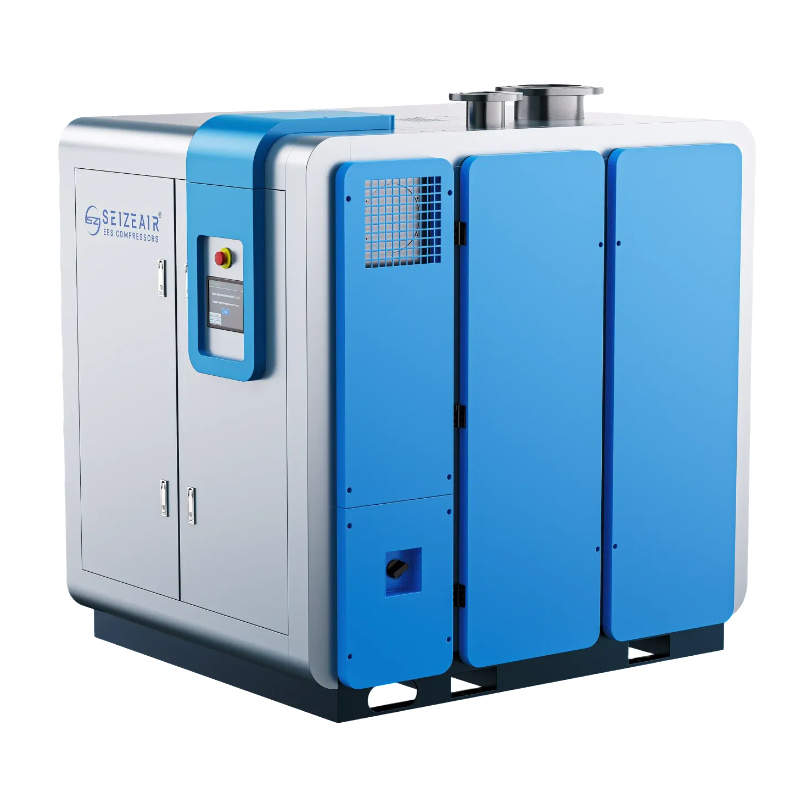


In contamination-sensitive environments, guaranteed oil-free air is a hard regulatory requirement, making a Class Zero air compressor indispensable for pharmaceutical manufacturing, biotechnology processes, and sensitive analytical laboratories.
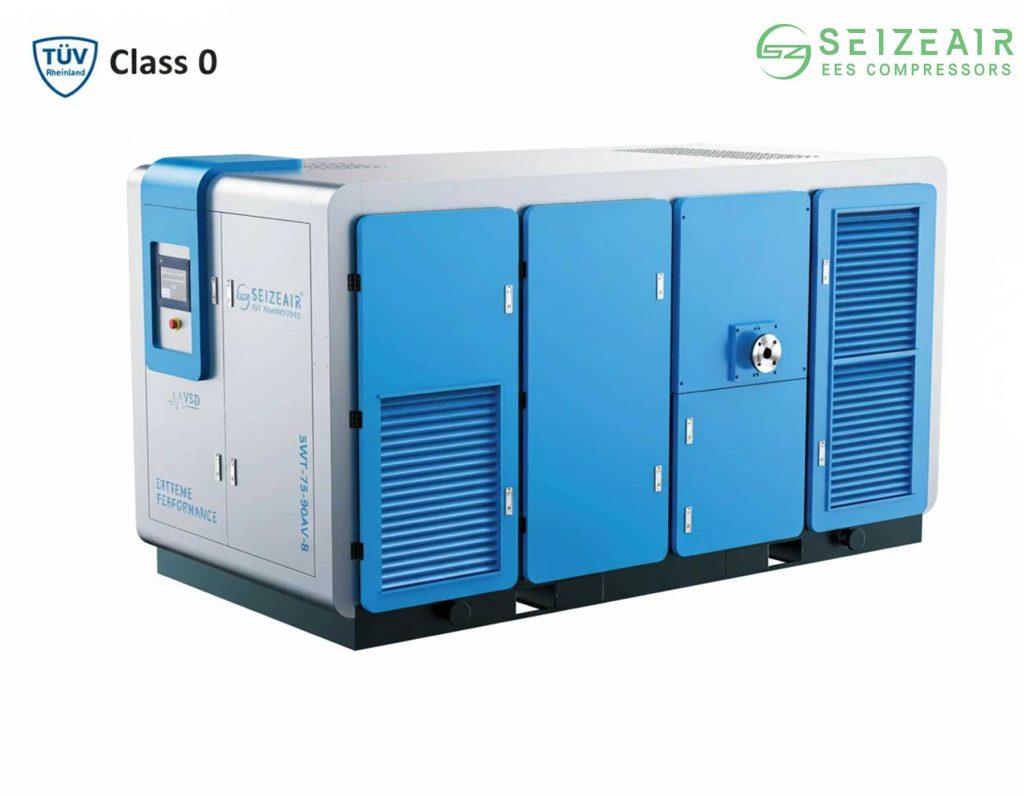
What Is a Class Zero Air Compressor and How Does It Prevent ISO 8573-1 Contamination?
A Class Zero air compressor is an independently certified compressed air system engineered to deliver 100% oil-free air under rigorous testing protocols. Conventional lubricated compressors rely on downstream coalescing filters and carbon towers to trap oil mist, which leaves an unpredictable margin of risk as filter elements age, warm up, or saturate. In contrast, a Class Zero system completely avoids injecting oil into the compression chamber, eliminating oil carryover directly at the source.
Deciphering ISO 8573-1
The International Organization for Standardization defines compressed air quality under ISO 8573-1:2010. Air purity is categorized across three major contaminant categories: solid particulate, water vapor, and total oil content (encompassing liquid, aerosol, and vapor states).
| ISO 8573-1:2010 Class | Particle Count per m³ (0.1–0.5 µm) | Pressure Dew Point (°C / °F) | Total Oil Concentration (mg/m³) | Typical Operating Environment |
| Class 0 | User Specified (Stricter than Class 1) | User Specified | < 0.01 (Non-Detectable Threshold) | Pharma, Biotech, ISO Cleanrooms |
| Class 1 | <= 20,000 | <= -70 °C / -94 °F | <= 0.01 | Semiconductors, Precision Optics |
| Class 2 | <= 400,000 | <= -40 °C / -40 °F | <= 0.10 | Food Packaging, Bottling Lines |
| Class 3 | Not Specified | <= -20 °C / -4 °F | <= 1.00 | Industrial Pneumatics, Automotive |
| Class 4 | Not Specified | <= +3 °C / +37.4 °F | <= 5.00 | Basic Workshop Air, Material Handling |
Class 0 does not mean absolute zero contaminants of every type; rather, it specifies that total oil concentration must be strictly below measurable limits under ISO 8573-2 (aerosol and liquid) and ISO 8573-5 (vapor) testing standards. This sets an uncompromising baseline that is significantly safer and more stable than Class 1.
Why Is Class 0 Certified Compressed Air Mandatory for Pharmaceutical Manufacturing and R&D Labs?
Pharmaceutical facilities treat compressed air as a direct-contact processing agent. Compressed air propels powdered ingredients through conveying lines, dries active coatings on tablets, purges glass vials prior to sterile filling, and drives precision valves inside cleanrooms.
When oil vapor or synthetic hydrocarbon mist breaches process lines, product stability is destroyed, active ingredients degrade, and plants face immediate batch rejections.
Operational and Regulatory Risks of Hydrocarbon Contamination
- Batch Scrapping & Financial Loss: A fraction of a milligram of oil can ruin an entire production run of APIs (Active Pharmaceutical Ingredients), resulting in financial losses that far exceed the purchase price of the air compressor itself.
- Microbial Proliferation in Distribution Lines: Oil aerosols deposit inside warm distribution piping, serving as a rich nutrient substrate for bacteria, yeast, and fungal biofilms.
- Analytical Instrument Drift: In testing laboratories, hydrocarbon carryover poisons detector filaments, shifts baseline drift on gas chromatographs (GC), and causes calibration errors on mass spectrometers (MS).
- cGMP and FDA Audit Non-Compliance: Regulations under FDA 21 CFR Part 211 and EU GMP Annex 1 mandate total control over environmental utilities. Oil leaks often trigger formal warning letters, mandatory site audits, or immediate production shutdowns.
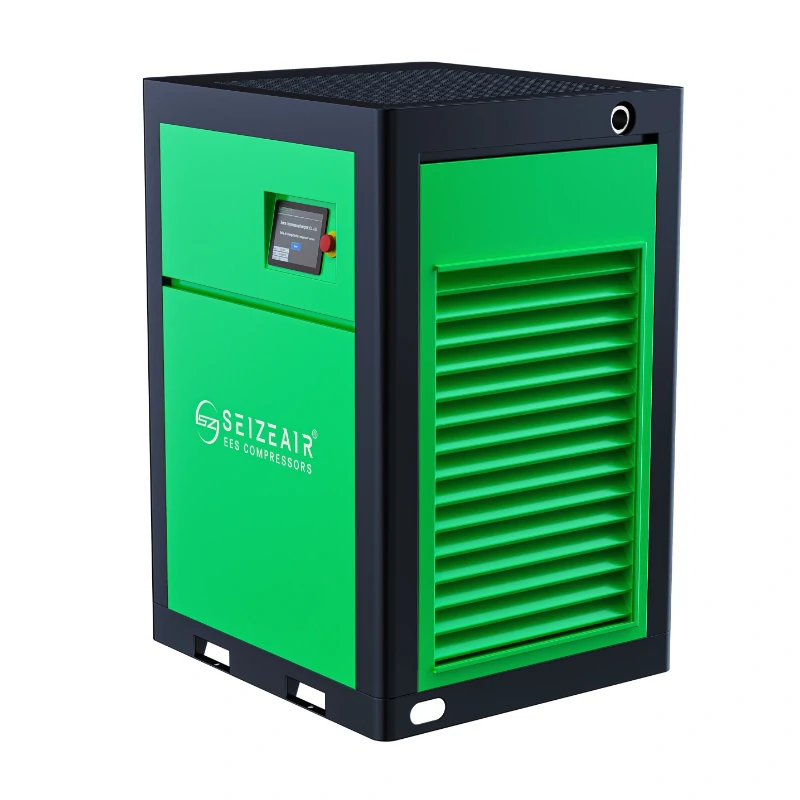
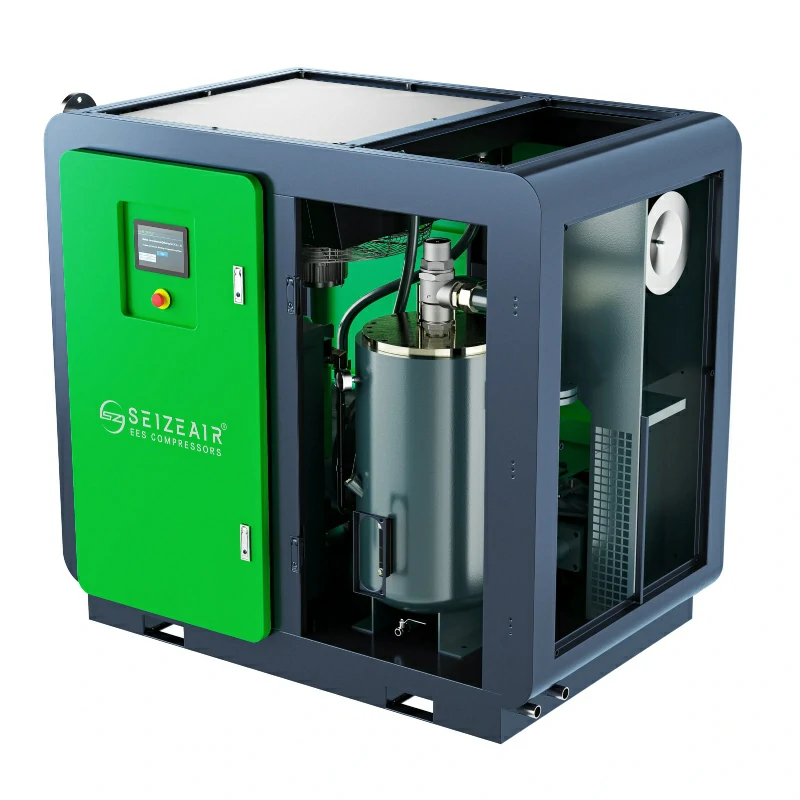
To protect production lines and streamline audit compliance, plants turn to specialized systems like Seize Air Class Zero oil-free screw compressors. These units deliver verified, continuous oil-free air to satisfy stringent cGMP mandates without operational drift.
What Is the Difference Between Class 0 Oil-Free Air and Technically Oil-Free Compressed Air?
A persistent debate among utility engineers centers on whether oil-injected compressors equipped with multi-stage filtration can match true Class Zero units. The term “technically oil-free” refers to an oil-lubricated machine paired with coalescing filters and activated carbon absorbers. However, this configuration introduces structural vulnerabilities that true oil-free designs avoid.
| Performance & Risk Metrics | True Class 0 Dry Screw / Scroll | “Technically Oil-Free” (Lubricated + Filters) |
| Primary Contamination Risk | Zero risk inside the compression chamber | High risk of catastrophic filter bypass or seal blowouts |
| Temperature Sensitivity | Consistent performance across temperature swings | Carbon filters suffer sharp efficiency drops above 30°C (86°F) |
| Differential Pressure Loss | Low (Minimal line resistance, ~0.1 bar) | High (0.5 to 1.5 bar drop across dense filter stacks) |
| Maintenance Burden | Standard intake filter and coolant service | Frequent replacement of coalescing elements and carbon beds |
| Waste Disposal Costs | Clean, non-hazardous condensate discharge | Oily condensate requiring specialized chemical disposal |
| Long-Term TCO | Low operating cost and zero recall exposure | High cumulative energy losses and elevated audit risk |
How Do Different Oil-Free Air Compressor Technologies Achieve ISO Class 0 Standards?
Compressing air without liquid oil in the compression chamber requires distinct mechanical approaches. Depending on flow requirements and duty cycles, manufacturers utilize four primary oil-free designs.
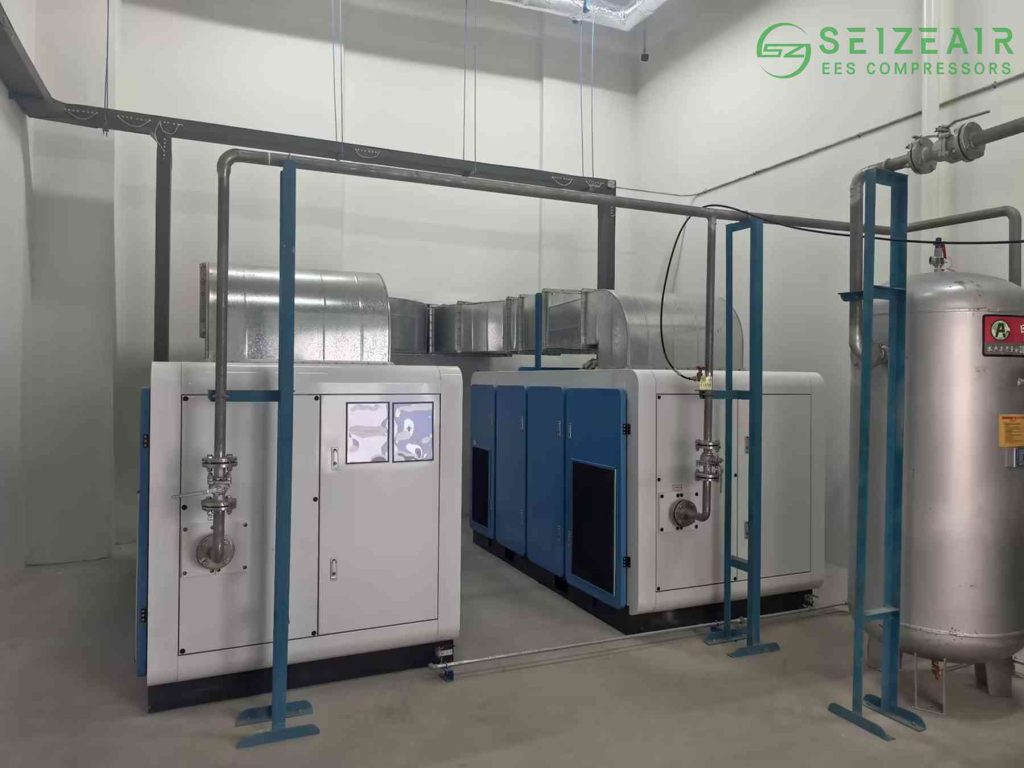
1. Dry Rotary Screw Compressors
Dry screw compressors utilize twin high-precision rotors engineered with extremely tight tolerances to avoid rotor-to-rotor contact. Timing gears synchronize the shafts, while specialized surface coatings—such as PTFE, ceramic, or polyimide—protect the metal surfaces from thermal wear and oxidation at temperatures up to 200°C.
- Target Application: Medium- to large-scale pharmaceutical facilities requiring continuous high-volume air delivery (30 kW to 315 kW+).
2. Water-Injected Rotary Screw Compressors
Water-injected systems inject purified reverse-osmosis (RO) water directly into the compression chamber. The water seals internal rotor gaps, lubricates moving components, and absorbs heat generated during compression, driving operation close to near-isothermal efficiency.
- Target Application: High-efficiency plants focused on low thermal stress, maximum energy savings, and moderate-to-high flow demands.
3. Oil-Free Scroll Compressors
Scroll technology uses one stationary scroll and one orbiting scroll to compress air into smaller pockets. Because the orbiting scroll never physically contacts the fixed scroll, no lubrication is needed in the air path.
- Target Application: Analytical laboratories, cleanrooms, and medical facilities requiring whisper-quiet operation (< 55 dB) and precise, low-to-medium airflow (1.5 kW to 22 kW).
4. Centrifugal Oil-Free Compressors
Dynamic centrifugal compressors use high-speed impellers to impart kinetic energy to incoming air, converting dynamic velocity into static pressure within a diffuser. Mechanical air-purge seals separate the central gearbox from the air chambers to prevent oil vapor migration.
- Target Application: Bulk API production sites, large biotech campuses, and central utility plants needing uninterrupted airflow exceeding 1,000 CFM.
How to Calculate Air Demand, Sizing, and System Pressure Drop for Class Zero Applications?
Accurately sizing a Class Zero system requires calculating peak air demand, system diversity, and friction losses across piping networks to avoid pressure drops.
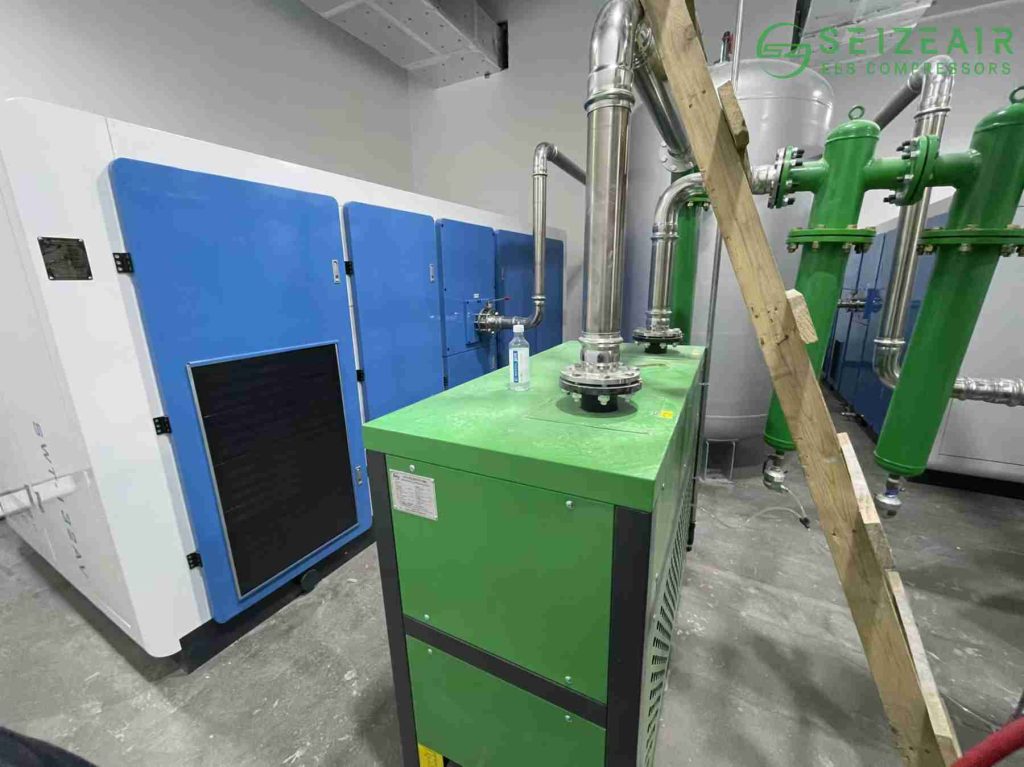
Essential Sizing and Engineering Calculations
1. Calculating Required Free Air Delivery (FAD)
To prevent undersizing during peak processing cycles, sum the consumption rates of all pneumatic equipment, then apply a operational diversity factor and a safety allowance:
Required Flow = Total Demand * Diversity Factor * (1 + Safety Margin)
- Example: A lab facility has instruments consuming 60 CFM total, operates at a 0.75 diversity factor, and requires a 20% expansion margin:
- Required Flow = 60 * 0.75 * 1.20 = 54 CFM
2. Determining System Pressure Drop Along Piping Networks
Air traveling through long pipe runs or restrictive fittings experiences frictional resistance. Calculate pressure loss in smooth distribution pipes using the following empirical relationship:
dp = (L * Q^1.85) / (c * d^5 * p)
Where:
- dp = Pressure loss along the line (bar)
- L = Total equivalent pipe length (meters)
- Q = Free air flow rate (liters per second)
- d = Internal pipe diameter (millimeters)
- p = Absolute inlet operating pressure (bar)
- c = Pipe material friction coefficient (e.g., 1.0 for smooth stainless steel)
3. Calculating Total Electrical Power Draw
Determining the real-time power draw of a compressor operating under varying plant loads helps establish baseline utility costs:
Power (kW) = Flow Rate (m3/min) * Specific Energy Requirement (kWh/m3/min)
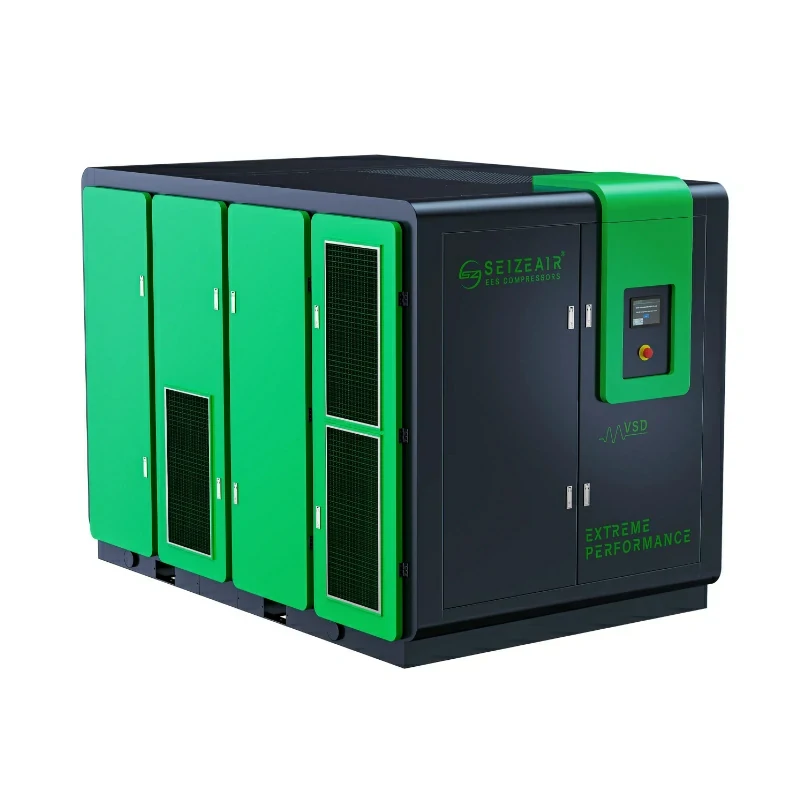
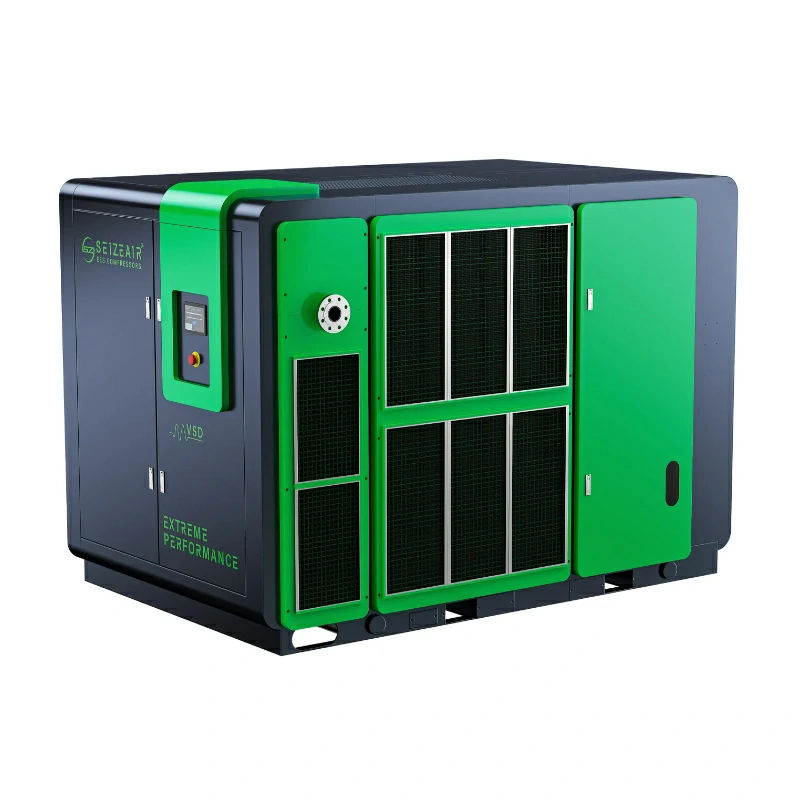
Modern systems, such as Seize Air Class Zero Variable Speed Drive (VSD) screw compressors, dynamically adjust motor speed to match real-time plant demand. This eliminates wasteful off-load running and cuts overall electricity consumption by up to 35-50%.
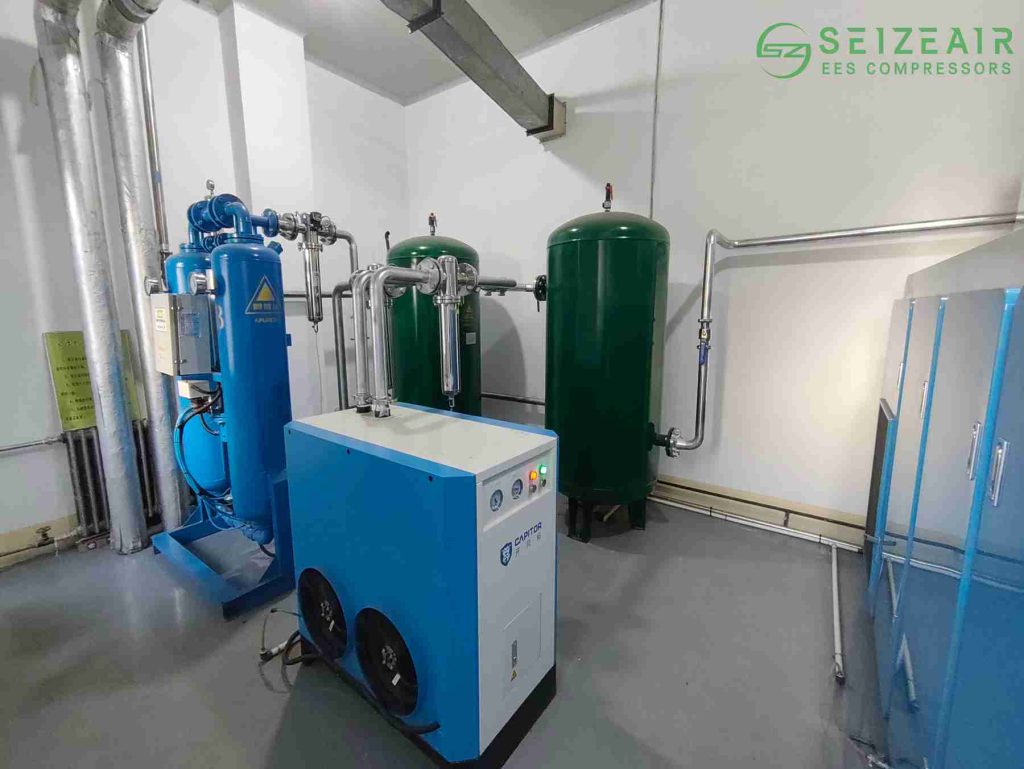
What Downstream Equipment Is Required to Maintain ISO 8573-1 Class 0 Air Quality?
While a Class Zero compressor guarantees that no oil is added during compression, downstream air treatment is required to eliminate ambient atmospheric moisture, airborne dust, and bio-burden before air reaches cleanrooms.
                 AIR TREATMENT PIPELINE
                 ──────────────────────

     [ Class 0 Compressor ]
               │
               ▼
   ┌───────────────────────┐
   │  Air-Cooled Aftercooler │ ──► Condenses bulk liquid water
   └───────────┬───────────┘
               │
               ▼
   ┌───────────────────────┐
   │ Desiccant Air Dryer   │ ──► Reaches -40°C to -70°C Dew Point
   └───────────┬───────────┘
               │
               ▼
   ┌───────────────────────┐
   │ High-Efficiency Filter│ ──► Captures fine particles (down to 0.01 µm)
   └───────────┬───────────┘
               │
               ▼
   ┌───────────────────────┐
   │ Sterile Membrane Filter│ ──► Traps micro-organisms (down to 0.2 µm)
   └───────────┬───────────┘
               │
               ▼
    [ Point-of-Use Air ]
Key Downstream Treatment Components
- Integrated Aftercoolers: Lower discharge air temperatures immediately after compression, forcing water vapor to condense into bulk liquid for automatic removal.
- Desiccant Air Dryers: Standard refrigerated dryers only reach a pressure dew point of +3°C (+37.4°F). Pharmaceutical applications require twin-tower desiccant dryers that deliver dew points between -40°C (-40°F) and -70°C (-94°F), starving biological contaminants of the moisture needed to survive.
- Particulate Dust Filters: Installed downstream of desiccant beds to capture fine desiccant dust carryover down to 0.01 microns.
- Point-of-Use Sterile Filters: Rated at 0.2 microns absolute, these stainless steel or PTFE membrane housings trap bacterial spores and micro-organisms right before air enters filling lines or analytical instruments.
How Do Capital Costs and Long-Term ROI Compare Between Class 0 and Oil-Injected Systems?
Although certified Class Zero compressors require a higher initial capital investment (CapEx) than lubricated models, they deliver lower operational expenditure (OpEx) and mitigate the risk of product loss over their operating lifespan.
| Investment & Operational Factors | Class 0 Oil-Free Technology | Oil-Injected Unit with Filtration |
| Upfront System CapEx | Higher (Requires precision rotor machining and specialized coatings) | Lower initial equipment acquisition cost |
| Filter Replacement Outlay | Low (Only standard intake air filters require regular swapping) | High (Requires frequent replacement of oil separators and carbon beds) |
| Energy Overhead (Pressure Drop) | Minimal (~0.1 bar drop across standard inline elements) | High (0.8 to 1.5 bar drop caused by dense oil-removal filters) |
| Condensate Handling Costs | Low (Oil-free condensate can be discharged directly per local codes) | High (Requires dedicated oil-water separators and chemical disposal) |
| Batch Contamination Risk | Zero risk of compressor-induced oil contamination | Ongoing risk of filter saturation or seal failure |
| 10-Year Total Cost of Ownership | Lower cumulative TCO and zero audit exposure | Higher TCO due to energy losses, service, and regulatory risk |
Facilities that upgrade to high-efficiency platforms like Seize Air Class Zero compressors shorten their CapEx payback window by reducing power consumption and eliminating the ongoing expense of multi-stage filter changes.
Frequently Asked Questions About Class Zero Air Compressors
How does TÜV testing verify ISO 8573-1 Class 0 compliance?
TÜV testing evaluates all three potential forms of oil contamination: liquid, aerosol, and vapor. Using the full-flow B1 test method (under ISO 8573-2 and ISO 8573-5), inspectors sample the entire discharge air stream—including oil wall flow—to confirm that total oil concentrations remain non-detectable under strict laboratory conditions.
Can an oil-lubricated compressor equipped with advanced filters achieve certified Class 0 air?
No. Downstream filters reduce oil levels under ideal conditions, but they do not eliminate the risk of oil entering the air path. A unexpected spike in ambient temperature, filter element rupture, or missed maintenance window can immediately pass oil downstream. True Class 0 certification requires that no oil be introduced inside the compression chamber.
What pressure dew point is required for cleanroom compressed air systems?
To prevent condensation inside piping networks and block bacterial growth, cleanroom standards typically require a pressure dew point of -40°C (-40°F) or lower. Sensitive pharmaceutical drying processes often specify -70°C (-94°F) using heatless or heated desiccant dryers.
Why is VSD technology valuable in Class Zero laboratory air systems?
Laboratory air demand fluctuates based on active testing schedules, hood operation, and production shifts. Variable Speed Drive (VSD) technology adjusts motor speed in real time to match exact system air consumption, preventing idle running and reducing energy costs during off-peak hours.
Engineer Your Cleanroom Infrastructure with Class Zero Air Solutions
Protecting sensitive pharmaceutical formulations and laboratory analytics requires clean compressed air. Seize Air supplies Class Zero compressed air systems engineered to deliver certified oil-free air, operational reliability, and compliance with global cGMP and ISO standards.
Whether you are designing a new facility or upgrading an existing compressed air system, our application specialists can help you size, configure, and install the right oil-free setup for your operational needs.
Contact our application engineers today to schedule a compressed air system audit, request technical specifications, or receive a customized quote for your facility.