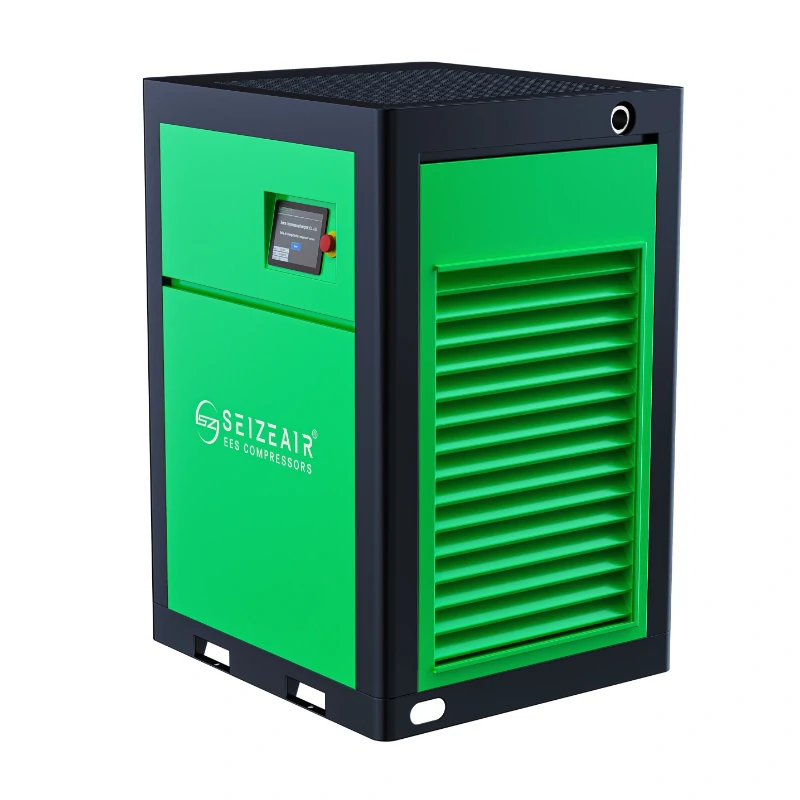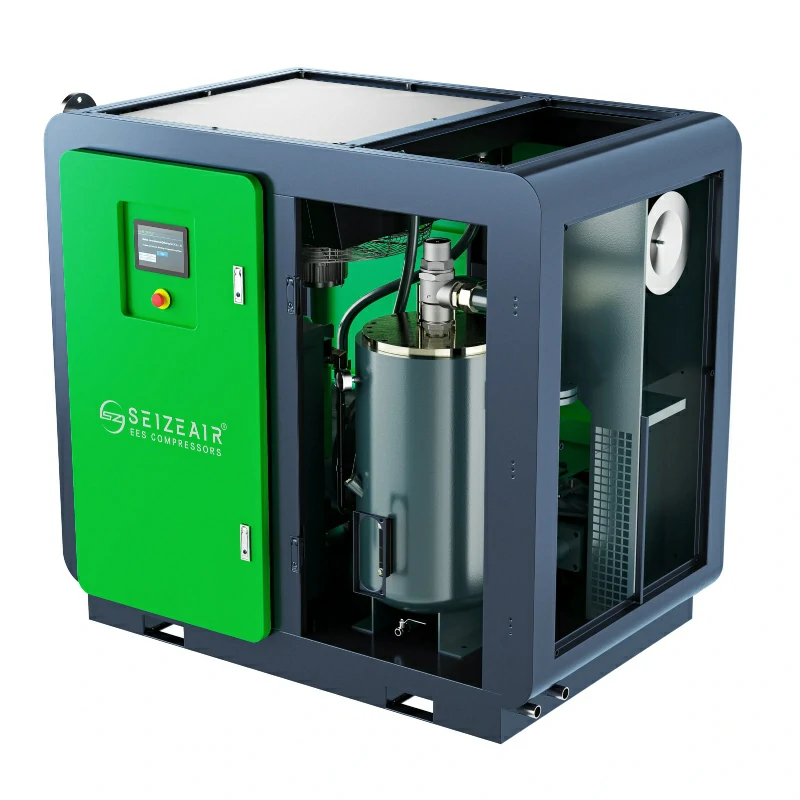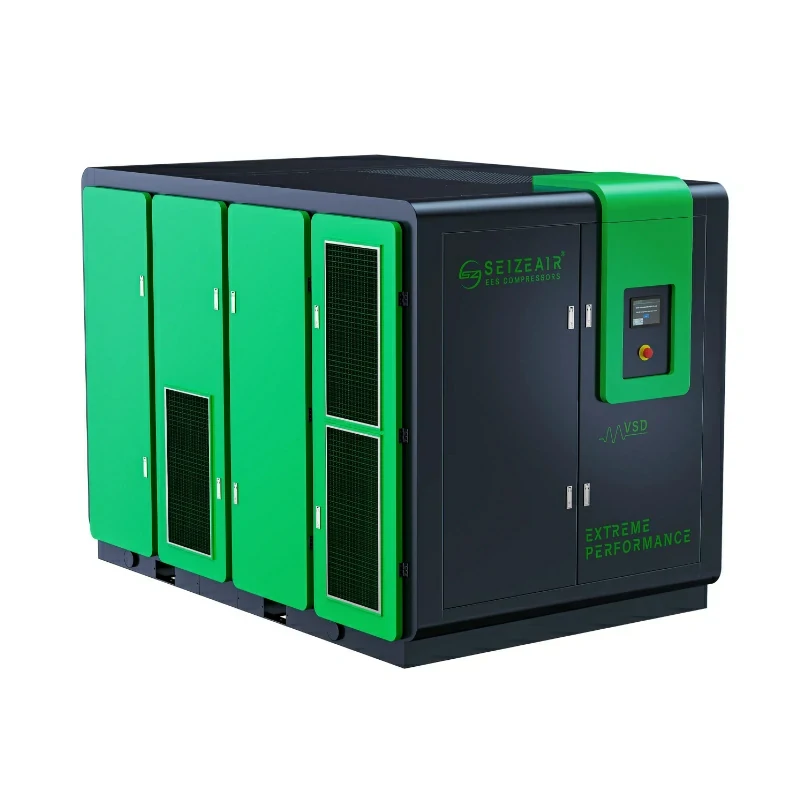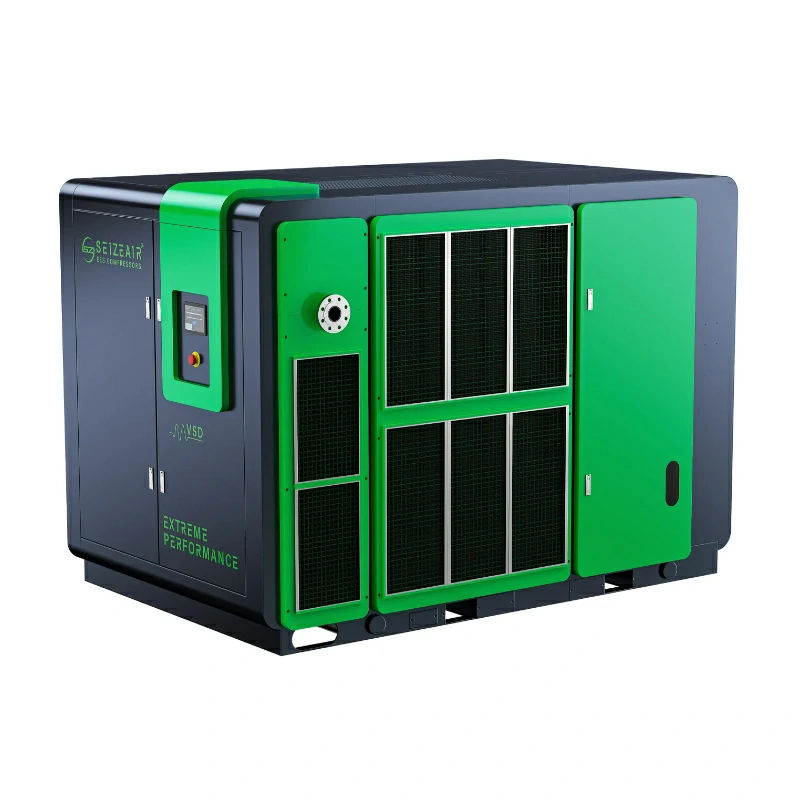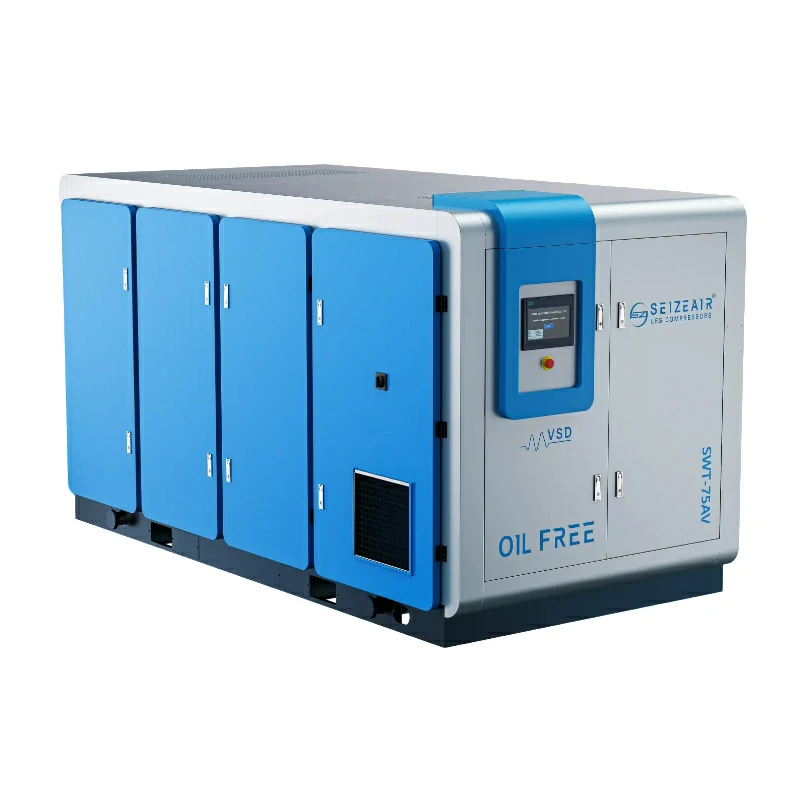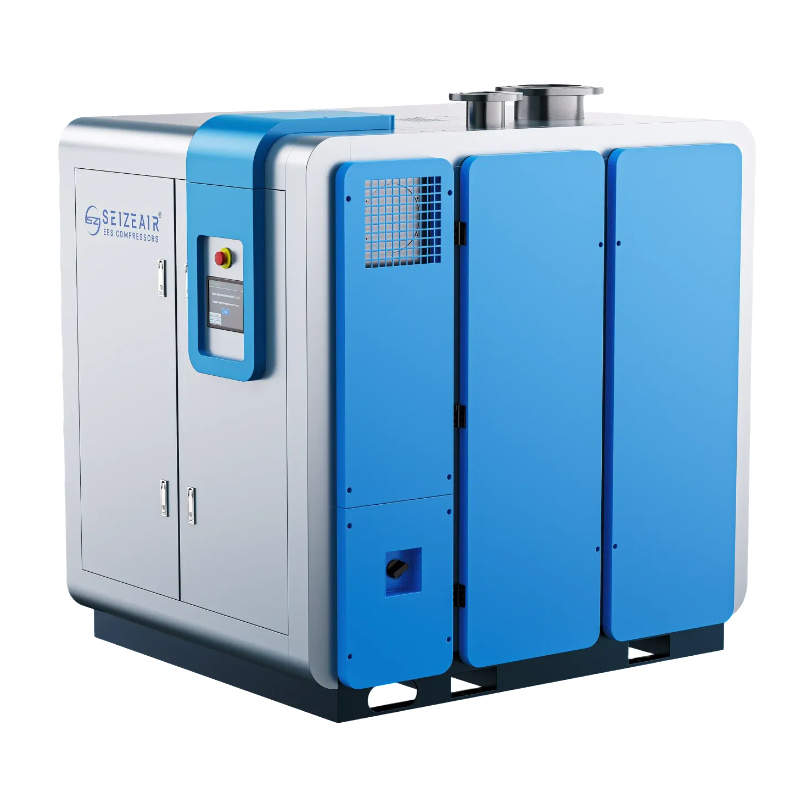


Choosing the best air compressor with dryer is the single most effective way to eliminate moisture, protect pneumatic tools from severe rust, and stop costly spray-painting failures in your facility. Moisture forms naturally during compression, condensed liquid travels down your air lines, damages precision equipment, and causes severe production downtime. By combining an industrial-grade air pump, an efficient cooling system, and an integrated drying module into a single footprint, an air compressor with dryer package delivers bone-dry compressed air straight out of the box. This detailed guide covers system sizing, technology comparisons, exact CFM calculations, and real-world installation requirements to help you choose the ideal system for your business.
1. Why Do You Need an Integrated Air Compressor with Dryer?
Every standard air compressor pulls in surrounding ambient air, which naturally holds invisible humidity. During the mechanical compression cycle, the pump crushes air into a tiny fraction of its original volume. This rapid compression generates intense friction and thermal energy, heating the air up to 180°F–350°F (82°C–176°C). Hot air acts like a sponge, holding a high volume of water vapor. However, as that compressed air travels down your cooler metal shop piping, its temperature plummets back toward ambient room levels.
This drop in temperature causes air to pass its liquid saturation point, known as the pressure dew point (PDP). Moisture immediately condenses into liquid water droplets, mixing with aerosol oils and intake dust to create a highly corrosive acidic sludge.
[ Ambient Moist Air ]
         │
         ▼
[ Heavy Compression Pump ] ─── (Heats Air to 250°F+ / Vapor Form)
         │
         ▼
[ Distribution Piping Loop ] ── (Cools Air Down to Ambient Temp)
         │
         ▼
[ Liquid Sludge Condensation in Piping, Valves & Air Tools ] ❌
If you operate your pneumatic equipment without an air compressor with built in dryer, wet air causes severe financial and operational damage across your shop floor:
- Pneumatic Tool Degradation: Liquid water actively strips chemical grease and lubricants from inside high-speed air grinders, impact guns, continuous sanders, and pneumatic cylinders. Metal-on-metal friction causes internal rusting, vane swelling, torque drop-off, and premature mechanical failure.
- Ruined Paint and Finishing Jobs: Even microscopic droplets of water passing through a paint spray gun cause immediate surface defects like blistering, cratering, orange peel, and fish-eyes. Retouching a ruined automotive finish or wood lacquer coating wastes labor, paint, and shop capacity.
- Pipe Network Corrosion: Free water residing in traditional black iron, steel, or mixed metal piping causes internal oxidation. Rust scale flake off over time, traveling downstream to clog expensive directional control valves, micro-orifices, and pneumatic actuators.
- Winter Line Freeze-ups: Unheated compressed air distribution pipes running near outdoor walls, overhead doors, or unheated bays will freeze solid in freezing weather, halting entire production lines.
Purchasing a dedicated rotary screw air compressor with dryer and tank prevents moisture from ever entering your distribution manifold, eliminating water-related line drop failures before they happen.
2. Types of Air Dryers: Refrigerated vs. Desiccant vs. Membrane
Not all drying systems operate under the same physical principles. Matching your shop’s required moisture limits with the right drying process requires an understanding of how refrigerated, desiccant, and membrane systems compare.
Refrigerated Air Dryers (The Standard Shop Choice)
A refrigerated air dryer for air compressor installations works much like a standard commercial air conditioner or refrigerator. Hot, saturated air enters a dual-pass heat exchanger. The dryer’s internal refrigeration compressor circulates a chemical refrigerant (such as R-134a or R-410A) to cool incoming compressed air down to a precise range of 33°F to 39°F (0.5°C to 4°C).
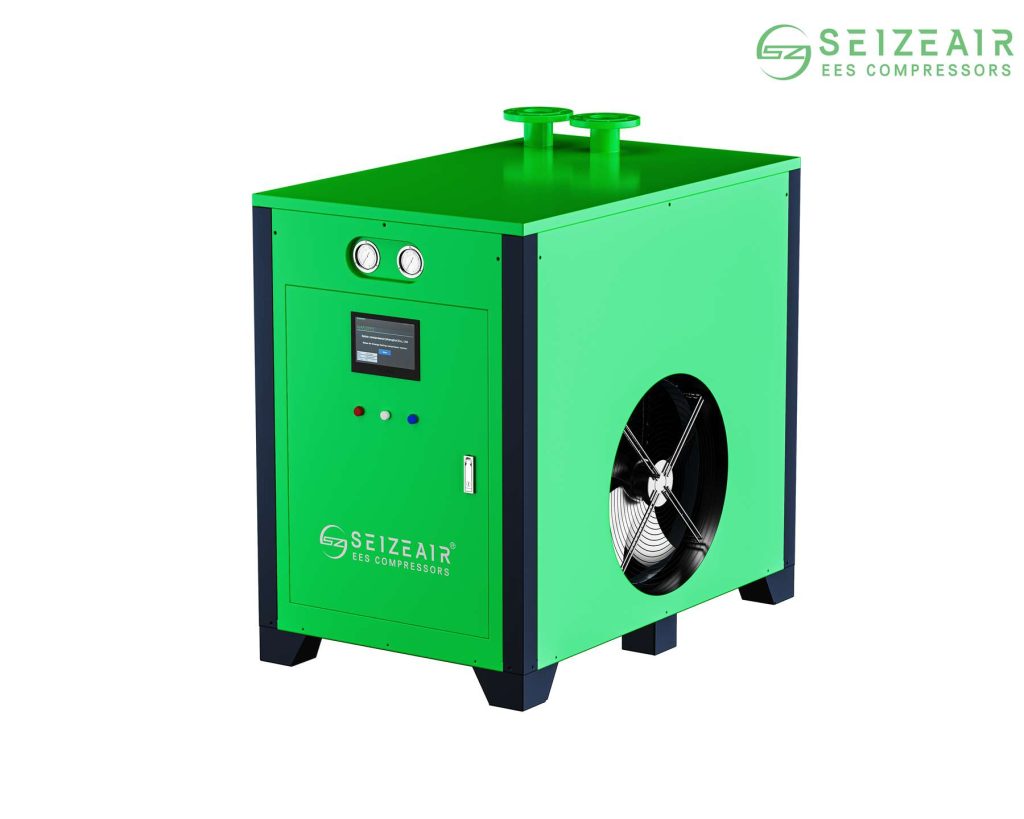
Because cold air cannot hold moisture vapor, the water condenses out into liquid droplets, collects in a bottom moisture trap, and gets blown out by an automated drain valve. The chilled, dry air then passes through a re-heater before exiting into the shop piping so pipes do not sweat on humid summer days.
- Target Pressure Dew Point (PDP): Approximately +37°F to +45°F (+3°C to +7°C).
- Primary Applications: Auto body repair, woodworking, CNC machine shops, general assembly, pneumatic clamping, and tire service stations.
- System Advantages: Low electrical power consumption, low purchase price, reliable continuous operation, and simple filter-clearing maintenance.
- Operational Limitations: Cannot lower dew points below freezing (32°F / 0°C), because condensed water would freeze solid inside the plate heat exchanger and block airflow.
Desiccant Air Dryers (Ultra-Dry Air Production)
A desiccant air dryer for compressor setups uses chemical adsorption rather than direct chilling. Air is directed through twin pressure vessels filled with solid drying beads, such as activated alumina, molecular sieve, or silica gel. The micro-porous structure of these beads traps water vapor molecules on a molecular level as the air passes through.
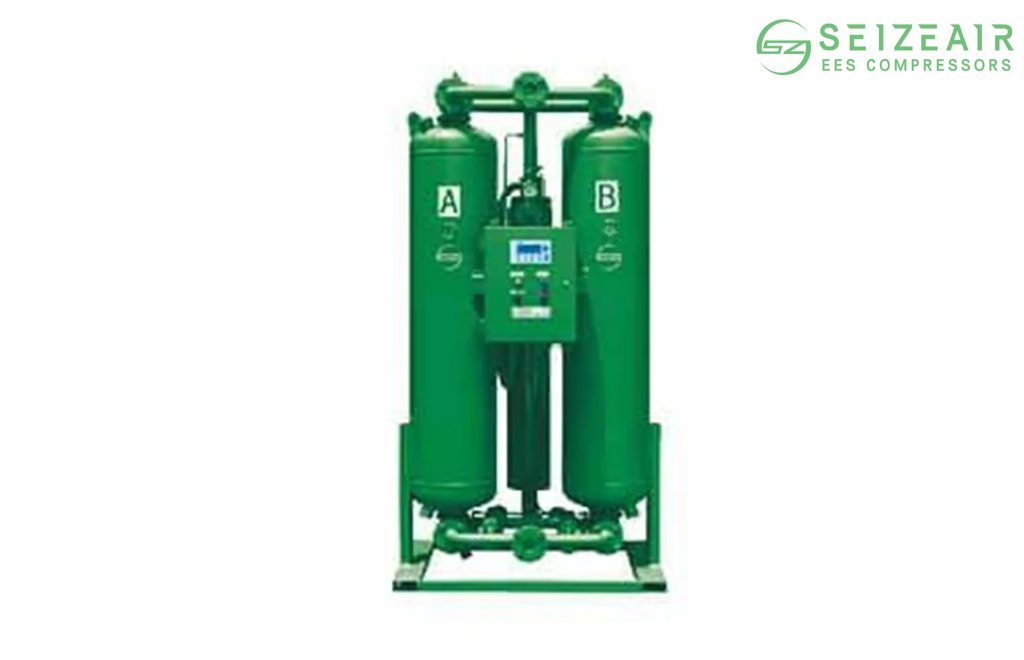
While Tower A actively dries the incoming airflow, Tower B undergoes regeneration. A small portion (10% to 15%) of the already dried air is depressurized and blown backward through Tower B to push captured moisture out into the room. Every few minutes, a smart timer valve switches the tower roles automatically.
- Target Pressure Dew Point (PDP): Extremely dry levels ranging from -40°F down to -100°F (-40°C to -70°C).
- Primary Applications: Sub-zero outdoor freezing pipes, high-purity pharmaceutical labs, automated electronics manufacturing, food packaging lines, and specialized powder coating processes.
- System Advantages: Provides bone-dry compressed air regardless of ambient temperatures or freeze risks.
- Operational Limitations: Higher purchase price, requires periodic media replacement every 2 to 5 years, and consumes 10% to 15% of your total air output just for tower purging.
Membrane Air Dryers (Point-of-Use Separation)
Membrane drying units use thousands of hollow semi-permeable polymer micro-fibers bundled inside a compact cylinder. As wet compressed air enters, water vapor permeates through the porous walls of the fibers and vents into the atmosphere, while dry air passes straight through to your tool connection.
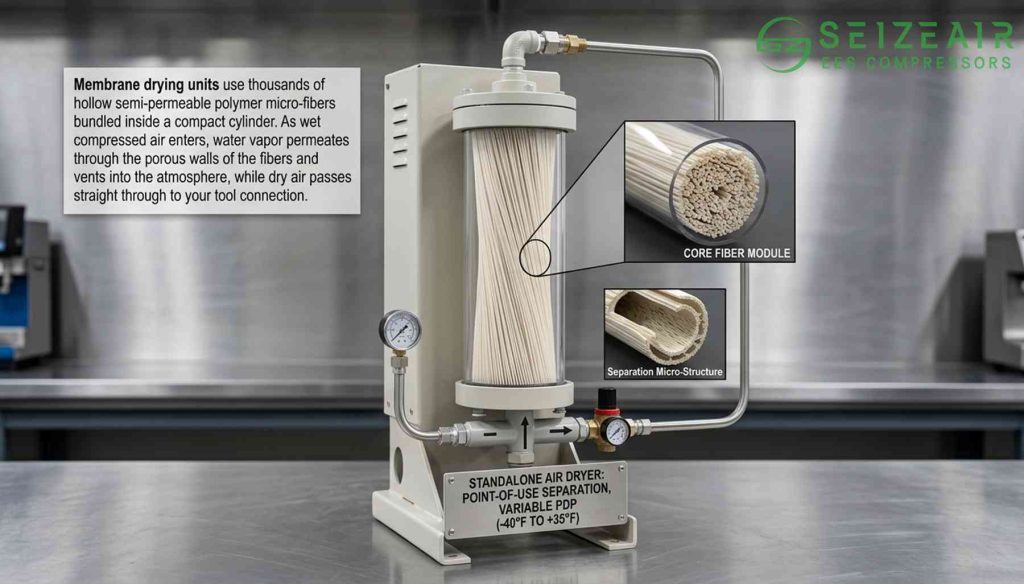
- Target Pressure Dew Point (PDP): Variable PDP drop (typically +35°F to -40°F depending on flow velocity).
- Primary Applications: Isolated point-of-use workstations, mobile service vehicles, explosion-proof environments, and low-CFM dedicated laser cutters.
- System Advantages: Zero moving parts, quiet operation, no electrical connections required, light and compact design.
- Operational Limitations: Limited air handling capacity, requires strict coalescing pre-filtration to prevent oil clogging, and continuously dumps purge air.
| Dryer Technology Type | Typical Pressure Dew Point | Energy / Air Purge Consumption | Primary Practical Shop Application | Ongoing Maintenance Effort |
| Non-Cycling Refrigerated | +37°F to +45°F (+3°C to +7°C) | Continuous low electric consumption | Automotive repair, general manufacturing, cabinet shops | Very Low (Blow dust off condenser coil) |
| Cycling Thermal Mass | +37°F to +45°F (+3°C to +7°C) | Scales power draw directly with air load | Variable-demand machine shops, multi-shift plants | Low-Medium (Inspect heat transfer fluid) |
| Heatless Twin-Tower Desiccant | -40°F to -100°F (-40°C to -70°C) | Consumes 10%–15% of dried air volume for purge | Outdoor cold-weather piping, cleanrooms, labs | Medium (Replace desiccant media periodically) |
| Hollow Fiber Membrane | Flexible (-40°F to +35°F drop) | Continuous 10%–20% air sweep loss | Mobile service trucks, single high-purity tools | Low (Replace pre-filter cartridges on schedule) |
3. How to Size an Air Compressor with Built-In Dryer for Your Shop
Properly sizing a small air compressor with dryer or an industrial system requires evaluating four core engineering metrics: CFM (Cubic Feet per Minute) demand, PSI (Pounds per Square Inch) pressure, Duty Cycle limitations, and environmental Correction Factors.
Step 1: Calculate Total Continuous CFM Demand
Make a comprehensive list of every pneumatic tool, machine, and blow gun that will run at the same time in your shop. Be sure to use real-world, continuous CFM ratings rather than average intermittent specs.
- 1/2″ Impact Wrench (Intermittent): 4 to 6 CFM @ 90 PSI
- Continuous Dual-Action Orbital Sander: 12 to 16 CFM @ 90 PSI
- Professional HVLP Paint Spray Gun: 12 to 20 CFM @ 40-50 PSI
- Handheld CNC / Plasma Cutting Torch: 8 to 12 CFM @ 90 PSI
- Pneumatic Grease Gun / Riveter: 2 to 4 CFM @ 90 PSI
- Continuous Blow Gun / Chip Cleaner: 10 to 18 CFM @ 90 PSI
Calculation Formula:
Total Required CFM = (Sum of simultaneously running tool CFMs) x 1.25
(The 1.25 multiplier adds a vital 25% buffer for air line friction, minor fitting leaks, and future business expansion).
Real Example: A workshop plans to run one continuous orbital sander (14 CFM) and one HVLP spray gun (16 CFM) simultaneously:
Base Demand = 14 + 16 = 30 CFM
Total Sized Requirement = 30 x 1.25 = 37.5 CFM
Step 2: Establish Minimum Operating Pressure (PSI)
Identify the tool or machine that requires the highest operating pressure. Most standard pneumatic air tools require 90 PSI at the tool inlet. However, line friction through pipes, elbows, quick-disconnect fittings, and internal dryer heat exchangers causes air pressure drops.
To compensate, select an air compressor and dryer package that operates at least 20 to 30 PSI above your highest tool rating. If your equipment requires 90 PSI, set your system cut-out pressure between 115 and 125 PSI.
Step 3: Factor in Compressor Duty Cycle Limits
- Reciprocating Piston Compressors: Piston pumps typically feature a 50% to 70% duty cycle rating. A piston unit rated for 30 CFM at a 50% duty cycle should only compress air for 30 minutes out of every hour. Running it continuously causes heat buildup, rapid oil breakdown, and pump damage.
- Rotary Screw Compressors: Rotary screw pumps are engineered for a 100% continuous duty cycle. They are designed to run non-stop all day without overheating, making them ideal for modern production facilities.
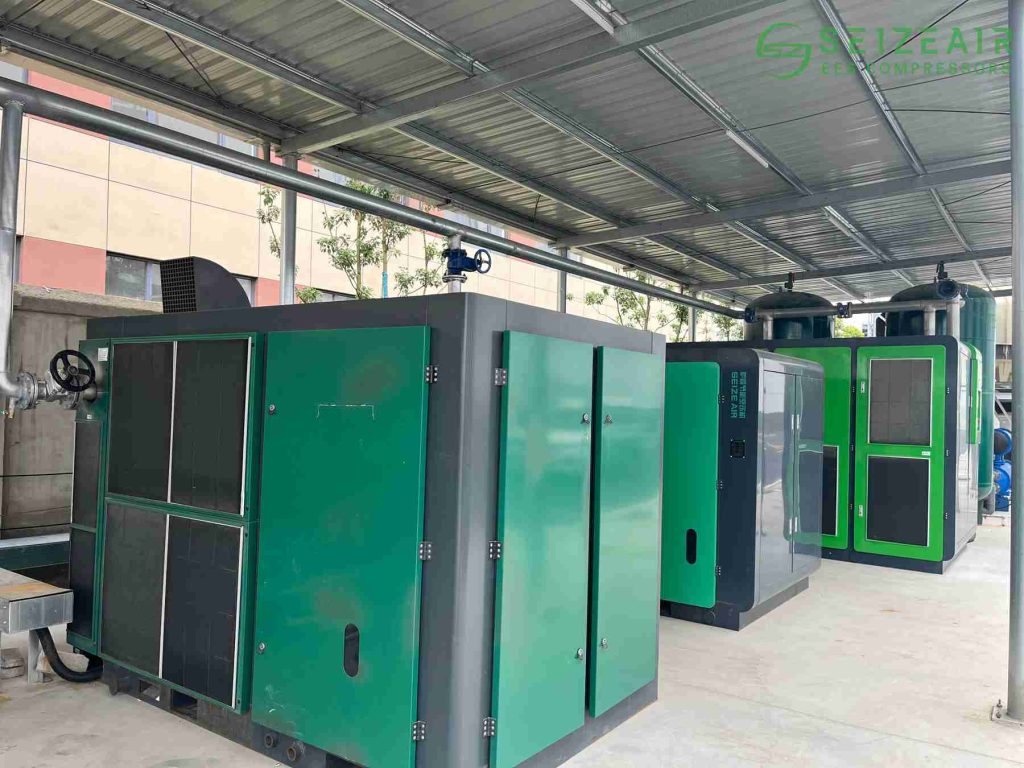
Choosing an integrated package engineered by reliable manufacturers like Seize Air ensures that the compressor pump, motor, and refrigerated air dryer are thermally matched for smooth, continuous output.
Step 4: Apply Temperature & Ambient Dryer Correction Factors
Refrigerated air dryers are rated based on standard test conditions: an inlet air temperature of 100°F (38°C), an ambient room temperature of 100°F (38°C), and an operating pressure of 100 PSI.
If your compressor room reaches 110°F during hot summer months, or if a high-heat piston pump pushes 140°F air into the dryer, the dryer’s moisture removal capacity drops significantly. In these conditions, you must size up the dryer using correction multipliers:
Corrected Dryer CFM Capacity = Target CFM / (Inlet Temp Factor x Ambient Temp Factor x Pressure Factor)
- Inlet Air Temp Multipliers: 90°F (1.16) | 100°F (1.00) | 110°F (0.82) | 120°F (0.68)
- Ambient Room Multipliers: 80°F (1.12) | 100°F (1.00) | 105°F (0.91) | 115°F (0.76)
- Line Pressure Multipliers: 80 PSI (0.87) | 100 PSI (1.00) | 125 PSI (1.06) | 150 PSI (1.11)
Pro Tip: If your facility is located in a hot or humid climate, choose an integrated dryer rated 25% to 35% higher than your pump’s baseline CFM output to maintain dry air year-round.
4. Rotary Screw vs. Reciprocating Air Compressor with Dryer
Should you stick with a traditional piston compressor setup, or upgrade to an all in one air compressor with dryer built around a rotary screw air end?
Piston (Reciprocating) Package          Rotary Screw Integrated Package
   ┌──────────┐                          ┌──────────────────────────────┐
   │  Motor   │                          │ Soundproof Cabinet Enclosure │
   └────┬─────┘                          │  ┌───────────┐ ┌───────────┐ │
        │ (Belts)                        │  │ Rotary    │ │ Integrated│ │
   ┌────▼─────┐                          │  │ Air End   │ │ Dryer     │ │
   │ Pump     │                          │  └─────┬─────┘ └─────┬─────┘ │
   └────┬─────┘                          │        └──────┬──────┘       │
   ┌────▼──────────────────────────┐     │  ┌────────────▼────────────┐ │
   │ Receiver Tank                 │     │  │ Receiver Tank Base      │ │
   └───────────────────────────────┘     │  └─────────────────────────┘ │
   └───────────────────────────────┘     └──────────────────────────────┘
  (Loud, Hot Air, High Vibration)         (Quiet, 100% Duty, Cool Air)
Reciprocating Piston Compressor Packages
Piston units use heavy metal pistons moving up and down inside cylinders to compress air in rapid pulses.
- Advantages: Lower initial purchase price; simple mechanics that are easy for basic maintenance.
- Disadvantages: Very loud operation (80 to 95+ dBA), high vibration, hot discharge temperatures (often exceeding 250°F / 121°C), higher oil carryover downstream, and a limited 50%–70% duty cycle.
- Impact on Drying: Severe discharge heat can overwhelm integrated dryers, requiring an additional air-to-air aftercooler or a larger receiver tank to cool the air before it enters the dryer.
Rotary Screw Compressor Packages
Rotary screw systems compress air smoothly using two counter-rotating helical screws bathed in synthetic coolant.
- Advantages: 100% continuous duty cycle, whisper-quiet operation (62 to 70 dBA), cool discharge temperatures, minimal oil carryover (< 3 PPM), and a long operating lifespan.
- Disadvantages: Higher initial capital investment.
- Impact on Drying: Lower air exit temperatures allow integrated refrigerated dryers to run at peak cooling efficiency.
Complete package systems from industry leaders like Seize Air consolidate the rotary screw air end, drive motor, oil separator, cold aftercooler, refrigerated dryer, micro-filters, and storage tank into a single pre-wired cabinet.
| Feature / Metric | Reciprocating (Piston) Combo | Rotary Screw Integrated System |
| Max Duty Cycle | Intermittent (50% to 70%) | Continuous (100% non-stop) |
| Noise Output | Extremely High (82 – 96 dB) | Low / Quiet (62 – 70 dB) |
| Air Discharge Temp | Very Hot (250°F – 350°F / 121°C – 176°C) | Cool (15°F – 25°F above room temp) |
| Downstream Oil Carryover | Moderate to High (15 – 25 PPM) | Very Low (Under 3 PPM) |
| Required Floor Space | Sprawling footprint with extra piping | Compact all-in-one cabinet design |
| Air End Design Life | 5,000 to 10,000 running hours | 40,000 to 80,000+ running hours |
5. Understanding Air Quality Standards (ISO 8573-1)
To choose the right air compressor and dryer package, you need to understand international air quality standards. The ISO 8573-1:2010 standard classifies air purity across three specific contaminant categories: Solid Particles, Water Content (Dew Point), and Total Oil Content.
Standard ISO Classification Format: ISO 8573-1: [ Particle Class : Water Class : Oil Class ]
- Class 1 Water: -94°F (-70°C) PDP —> Ultra-tech labs (Desiccant required)
- Class 2 Water: -40°F (-40°C) PDP —> Outdoor sub-zero lines (Desiccant required)
- Class 3 Water: -4°F (-20°C) PDP —> Specialized manufacturing
- Class 4 Water: +37.4°F (+3°C) PDP —> Standard Shop Air (Refrigerated Dryer Limit)
Target ISO Air Quality Classes by Application
| Shop Application & Process | Minimum ISO Class Target | Recommended System Equipment Setup |
| General Shop Tools & Assembly | ISO 8573-1 [ 4 : 4 : 3 ] | Standard Air Compressor + Refrigerated Dryer + 5-Micron Dust Pre-Filter |
| Automotive Body & Spray Painting | ISO 8573-1 [ 2 : 4 : 2 ] | Rotary Screw Unit + Refrigerated Dryer + Dual Coalescing Oil-Removal Filters |
| Precision CNC Machining & Plasma | ISO 8573-1 [ 2 : 4 : 1 ] | Screw Compressor + Refrigerated Dryer + High-Efficiency Particulate & Oil Filters |
| Food Packaging & Pharmaceuticals | ISO 8573-1 [ 1 : 2 : 1 ] or Class 0 | Oil-Free Compressor + Twin-Tower Desiccant Dryer + Activated Carbon Tower |
6. Key Features to Look For in a Shop Air Dryer Combo
When evaluating a quiet air compressor with dryer, look closely at these internal components and performance features:
[ Compressor Pump ]
       │
       ▼
[ Air Receiver Storage Tank ]
       │
       ▼
[ Pre-Filter (5 Micron Dust/Water Trap) ]
       │
       ▼
[ Integrated Refrigerated Air Dryer ] ─── (Cools Air & Drops Moisture Out)
       │
       ▼
[ Coalescing Post-Filter (0.01 Micron Oil Trap) ]
       │
       ▼
[ Clean, Bone-Dry Air to Shop Piping ]
1. Integrated Coalescing Air Filtration
An air dryer cools air to remove moisture, but it cannot remove fine dust particles or oil vapors on its own. Look for integrated dual filtration packages:
- Particulate Pre-Filter (5.0 to 1.0 Micron): Installed upstream of the dryer to trap rust scale, pipe debris, and dust, protecting the dryer heat exchanger.
- Coalescing Oil Post-Filter (0.01 to 0.001 Micron): Installed downstream of the dryer to catch fine oil vapors down to 0.01 PPM, protecting paint booths and air valves.
2. High-Efficiency Condensate Auto-Drain Valves
Condensed water must be discharged automatically without manual intervention.
- Timed Solenoid Drain Valves: Open on a preset timer (e.g., every 10 minutes for 5 seconds). While reliable, they waste valuable compressed air if no water is present.
- Zero-Loss Electronic Drains: Use internal liquid level sensors to open only when the collection reservoir is full of water. They waste no compressed air, saving hundreds of dollars in energy costs each year.
3. Smart PLC Microprocessor Controls
Modern compressor packages feature central microcontrollers that actively monitor operating parameters:
- Real-time pressure dew point readouts and freeze warnings
- Inlet air and ambient temperature tracking
- Service reminders for oil changes and filter replacements
- Automatic shutoff protection for fan failures or high pump heat
High-efficiency rotary screw systems built by manufacturers such as Seize Air feature advanced VFD (Variable Frequency Drive) smart controls. The system automatically adjusts motor speed to match your shop’s real-time air demand, eliminating wasted power during slow production hours.
4. Compact “Tank-Mounted” Footprint
If shop space is limited, choose a vertical tank-mounted system where the pump, motor, refrigerated dryer, micro-filters, and receiver tank are stacked on a single steel frame. This integrated layout reduces required floor space by up to 60% compared to installing separate components.
7. Total Cost of Ownership (TCO) & Energy Calculations
Focusing only on the initial purchase price is a common mistake when buying compressed air equipment. Over a 10-year operating lifecycle, electrical power costs typically account for 70% to 75% of a compressor’s total lifetime expense.
- Capital Purchase Price: 12%
- Maintenance & Servicing: 13%
- Electrical Power Consumption: 75%
How to Calculate Annual Electricity Costs
Use this formula to calculate annual power consumption for your shop setup:
Annual Cost = (HP x 0.746 x Load Factor x Annual Hours x Electricity Rate per kWh) / Motor Efficiency
Sample Calculation:
- Compressor Power: 15 HP
- Average Load Factor: 75%
- Annual Operating Time: 2,000 hours (Single shift, 40 hours/week)
- Local Electricity Rate: $0.14 per kWh
- Motor Efficiency Rating: 92% (0.92)
Annual Electricity Cost = (15 x 0.746 x 0.75 x 2,000 x 0.14) / 0.92
Annual Electricity Cost = $2,349.90 / 0.92 = $2,554.24 per year
Over a 10-year period, this 15 HP unit will consume $25,542.40 in electricity—far exceeding its original purchase price.
VFD Energy Savings Advantage
A fixed-speed compressor runs at full RPM even when your shop only needs a fraction of its total air capacity. A VFD (Variable Frequency Drive) compressor automatically speeds up or slows down to match your exact air demand.
- Fixed-Speed Wasted Energy: Up to 35% power loss from motor idling
- VFD Energy Savings: 20% to 35% lower electric bills annually
Pairing a VFD rotary screw compressor with an efficient refrigerated dryer delivers a fast return on investment (ROI), often recovering the initial price difference within 18 to 24 months.
8. Installation, Piping & Maintenance Best Practices
Following proper installation and maintenance procedures ensures clean, dry air and long equipment life.
Piping and Installation Recommendations
- Never Use PVC Piping: Standard PVC plastic pipes degrade when exposed to compressor oil and pressure, leading to dangerous pipe bursts. Use smooth-bore aluminum compressed air piping, stainless steel, or copper.
- Ensure Proper Room Clearance: Keep your compressor package at least 3 feet (1 meter) away from walls to allow hot cooling air to exhaust properly.
- Slope Drop Lines Upward: Branch lines off your main air loop should loop upward first before dropping down to work stations. This prevents any residual moisture in the main line from draining straight into your tools.
- Install a Dryer Bypass Loop: Install a 3-valve bypass loop around your air dryer. This allows air to flow to non-critical shop lines while the dryer is undergoing routine maintenance.
Maintenance Checklist
Daily
- Check the digital dew point temperature display (Target: 35°F to 45°F).
- Confirm auto-drain valves are discharging collected water properly.
- Check the pump oil level through the sight glass.
Weekly
- Clean accumulated dust off the air dryer radiator coils using compressed air.
- Inspect intake air filters for heavy dust buildup.
Every 2,000 Hours or 6 Months
- Replace inline particulate and coalescing air filter elements.
- Change synthetic rotary screw coolant and oil separator filters.
- Clean condensate drain lines and strainer screens.
Frequently Asked Questions
What size air compressor with dryer do I need for paint spraying?
For professional automotive painting, you need a minimum of 12 to 20 CFM per active spray gun at 40 to 50 PSI. You should use a system with an integrated refrigerated dryer and coalescing oil-removal filters (ISO 8573-1 Class 2:4:2). A 10 HP to 15 HP rotary screw compressor with integrated dryer is recommended for continuous spray painting operations.
Can I add a dryer to an existing air compressor?
Yes, you can install a standalone refrigerated or desiccant dryer downstream from your existing air tank. However, an all-in-one integrated compressor and dryer package saves floor space, simplifies electrical wiring, uses a single controller, and eliminates external piping connections.
Why is my air compressor dryer dropping water into my tools?
Water in your air lines usually points to one of four common issues:
- The room temperature or intake air temperature exceeds the dryer’s maximum cooling capacity.
- The automatic condensate drain valve is clogged with scale or oil and failed to open.
- Your air demand (CFM flow rate) exceeds the dryer’s rated capacity.
- The dryer condenser coil is covered in shop dust, causing the refrigeration circuit to overheat.
What is the difference between an aftercooler and an air dryer?
An aftercooler is a heat exchanger located right after the compressor pump that cools hot air down to within 15°F–20°F of room temperature, knocking out up to 70% of moisture. An air dryer sits downstream of the aftercooler to drop the pressure dew point much further (down to 37°F or lower), removing the remaining invisible water vapor.
Elevate Your Shop’s Air Purity Today
Choosing the best air compressor with dryer comes down to calculating your shop’s total CFM requirements, selecting the right drying technology, and investing in a system that keeps your operational costs low over time.
Whether you run an auto repair shop, a high-precision CNC machine facility, or an industrial manufacturing plant, dry compressed air is essential for protecting your equipment and output quality.
High-performance rotary screw compressor packages engineered by Seize Air deliver complete, energy-efficient compressed air solutions built to support your daily shop operations.
Ready to upgrade your shop’s air system?
Contact our technical engineering team today for a custom air demand audit, personalized system design, or a direct factory quote tailored specifically to your facility’s needs!