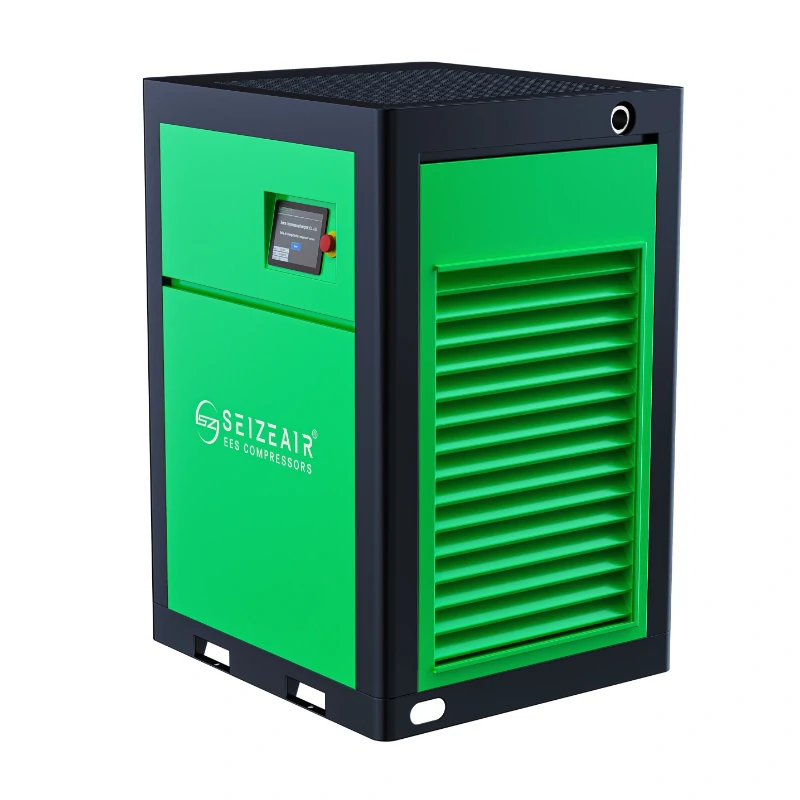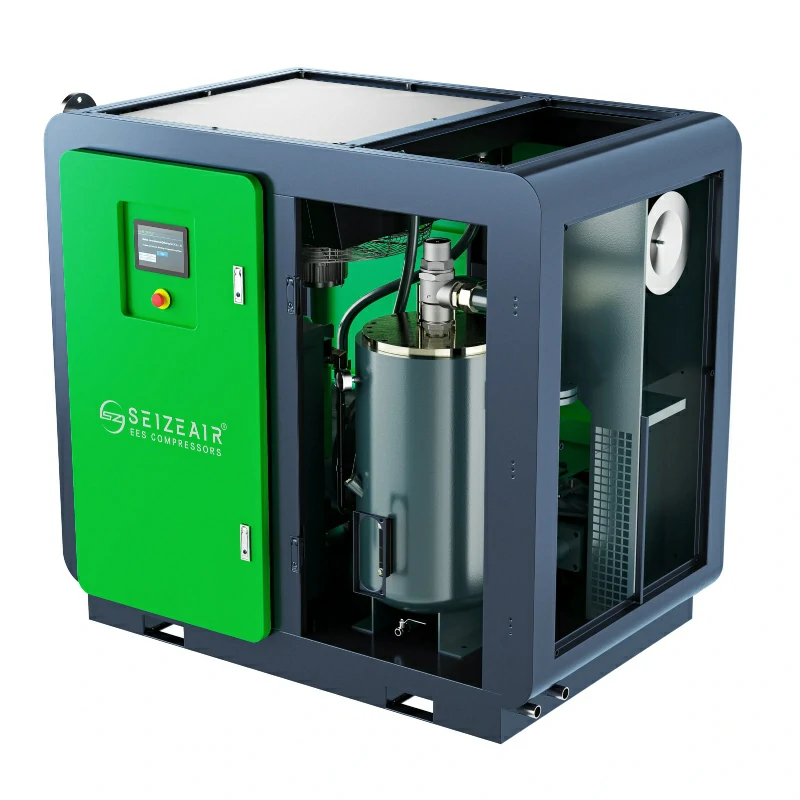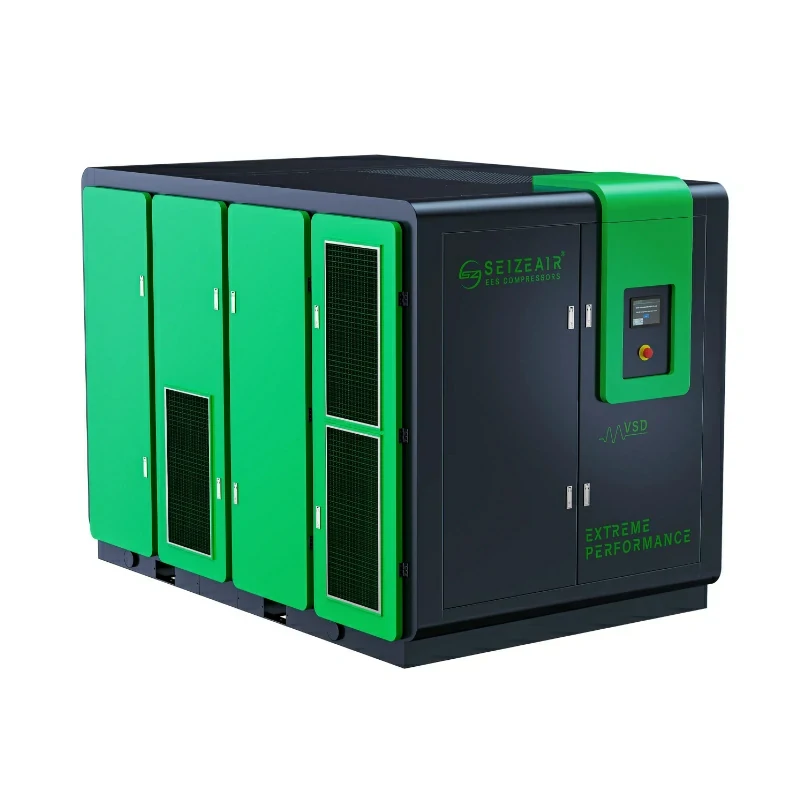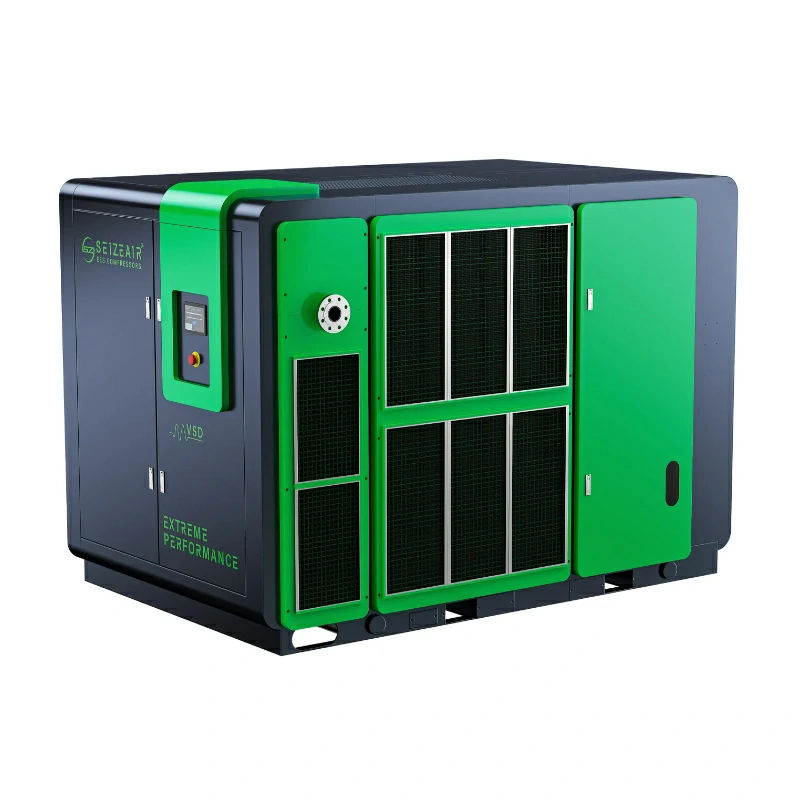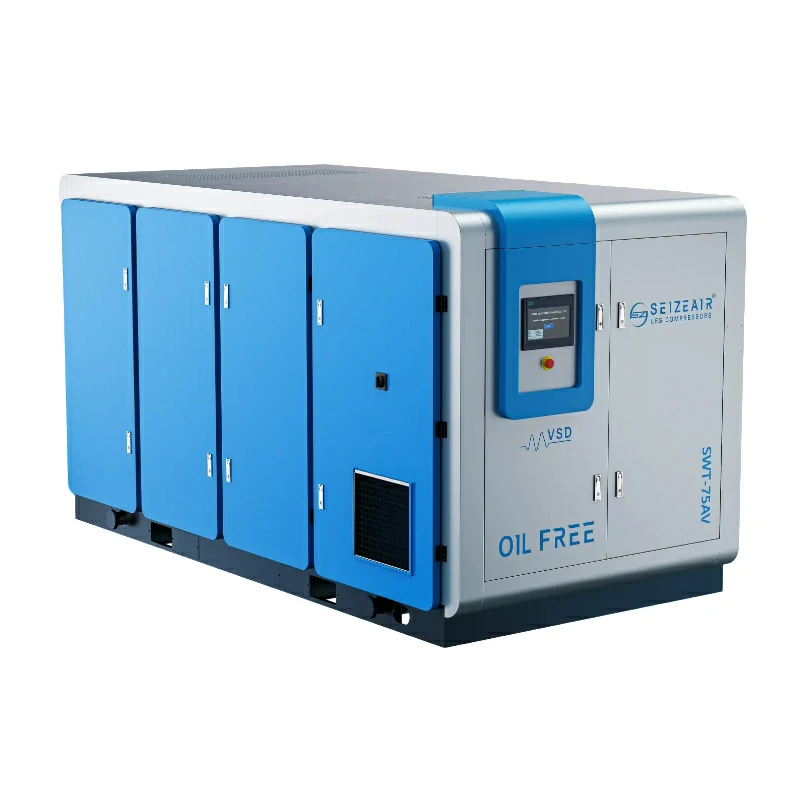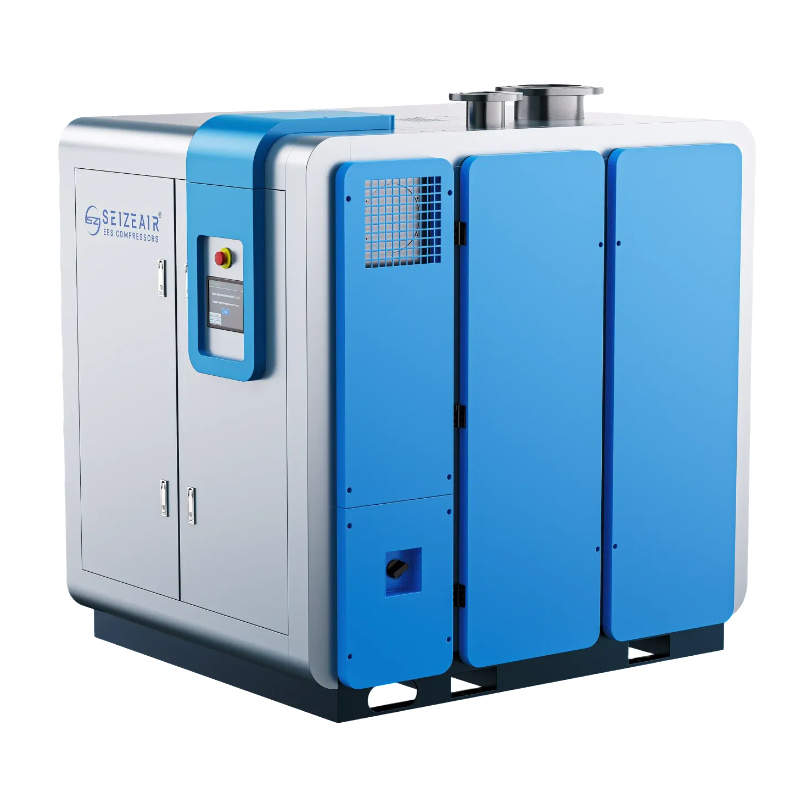


An air compressor for chemical industry has to do far more than move air from point A to point B. Inside a chemical plant, flammable vapors, combustible dust, and corrosive process gases are part of everyday life, so the machine that supplies your instrument air, process air, and pneumatic controls has to be built so it can never become the ignition source. This guide walks through the compressor types that actually survive in hazardous chemical environments, what ATEX and hazardous-area ratings really demand, how to size and spec a unit that stays compliant for years, and the small mistakes that quietly turn a “standard” compressor into a shutdown waiting to happen.
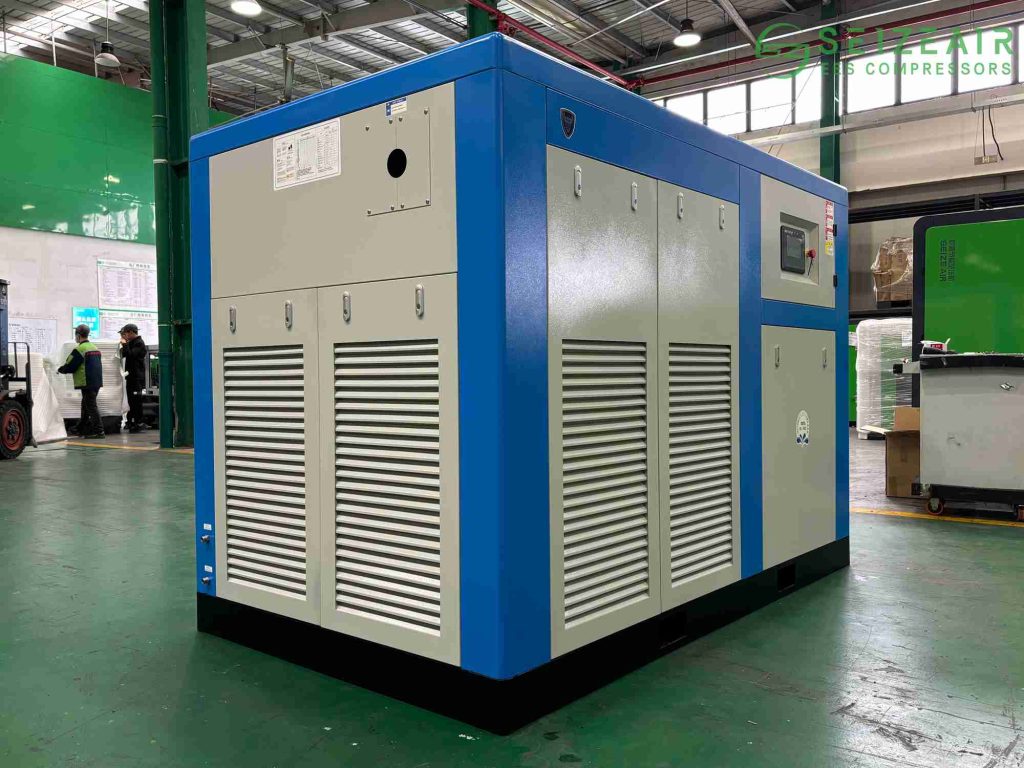
Why Does a Chemical Plant Need an Explosion-Proof Air Compressor?
A chemical plant concentrates exactly the three things an explosion needs at the same time: a fuel, an oxidizer, and an ignition source. The fuel is everywhere — solvent vapor from a tank farm, hydrogen off a electrolyzer, ethylene from a cracker, fine polymer or catalyst dust from a bagging line. The oxidizer is the air your compressor is literally built to move. The ignition source is the part most people forget, because a normal compressor makes them all day without anyone noticing: hot motor windings, a glowing aftercooler surface, the arc inside a contactor, static on a V-belt, a spark in the control panel.
An explosion-proof (more precisely, flameproof or “increased-safety”) machine is engineered so that none of those internal events can escape to ignite the surrounding atmosphere. The enclosure is built to contain an internal explosion and cool the escaping gases below the auto-ignition temperature of the local gas group. The external surfaces are limited so they never reach a temperature high enough to ignite the gas mixture on their own. That is the entire point, and it is the difference between a piece of rotating equipment and a piece of safety equipment.
This is not a nice-to-have or a paperwork exercise. Most chemical sites operate under a defined code — ATEX in the European Union, IECEx as the international standard, and the NEC/CEC Class and Division or Zone system in North America. The compressor, its motor, the starter, the local junction box, and often the purge system must all carry certification for the exact gas group and temperature class present in that part of the plant.
What Type of Air Compressor Is Used in the Chemical Industry?
If you walk the utility corridor of a typical chemical site, the overwhelming majority of the machines humming away are rotary screw compressors, and for good reason. They run continuous duty, they handle the flow ranges chemical plants actually need (from a few cubic meters per minute up to more than a hundred), and they are available in both oil-injected and oil-free builds with the right hazardous-area motors. They are the workhorse behind most of the air compressors for the chemical industry you will find specified today.
That said, the three families each have a real home in this sector:
| Compressor type | Where it actually fits in a chemical plant | Continuous duty? | Typical pressure range |
|---|---|---|---|
| Rotary screw (oil-injected) | General plant air, instrument air, pneumatic tools, blanketing assist | Yes | 7–13 bar |
| Rotary screw (oil-free) | Product-contact air, catalyst handling, breathing-air-adjacent purity | Yes | 7–10 bar |
| Reciprocating (piston) | High-pressure, low-flow instrument air; lab and sampling air | Intermittent | up to 40 bar+ |
| Centrifugal | Very large single-train plants, central utility air above ~100 m3/min | Yes | 3–10 bar |
Reciprocating units still show up where you need high pressure at modest flow — a nitrogen generator feed, an instrument-air buffer, a lab sampling point. Centrifugal machines earn their place only when a single plant needs a very large volume of central air and wants one efficient train rather than several screws running in parallel. For most chemical applications, though, the screw is the answer, and the real decision is oil-injected versus oil-free, not piston versus screw.
What Are the Hazardous Area Classifications (Zone 0, 1, 2)?
Before you can pick a compressor, you have to know what atmosphere it will sit in. Hazardous areas are graded by how often a flammable mixture is present. In the IEC/ATEX Zone system the ladder looks like this:
Hazardous area severity, most to least dangerous
Zone 0 -> explosive gas present continuously or for long periods (Ex ia / Ex p typically required)
Zone 1 -> explosive gas likely during normal operation (Ex d, Ex e, Ex p common)
Zone 2 -> explosive gas present only in abnormal fault conditions (Ex n, or standard with care)
North America uses a Class/Division language that maps loosely onto the same idea: Class I covers flammable gases and vapors, Division 1 is roughly Zone 1, and Division 2 is roughly Zone 2. The gas itself is then grouped — IIA, IIB, IIC under IEC — by how easily it ignites and how much energy an arc needs to set it off. Hydrogen and acetylene sit in the nasty IIC group; propane is the gentle IIA end. On top of that, every surface gets a temperature class from T1 (450 °C max surface) down to T6 (85 °C max surface), and your equipment’s T-rating must sit below the auto-ignition temperature of the specific gas in that area.
The practical takeaway: you do not spec “an explosion-proof compressor.” You spec a compressor certified for Zone 1, gas group IIC, temperature class T3, in the solvent tank farm — and a different rating may apply at the rail loading rack fifty meters away.
What Does ATEX Certification Mean for a Chemical Air Compressor?
ATEX certification is where a lot of buying decisions quietly go wrong, because people treat it as a single checkbox when it is really a stack of them. For a compressor in a chemical plant you are usually looking at Equipment Group II (everything except mining), with a category that matches the zone — 1G or 2G for gas atmospheres. The “G” tells you it is rated for gas, not dust; a paint or powder plant may also need the “D” equivalent.
Within that, the protection technique matters more than the logo on the nameplate:
| Protection concept | Marking | What it does | Common chemical use |
|---|---|---|---|
| Flameproof | Ex d | Contains internal explosion, cools escaping gas | Motors in Zone 1 |
| Increased safety | Ex e | Removes ignition sources by construction | Terminals, lighting |
| Pressurized | Ex p | Keeps positive pressure, no gas gets in | Control cabinets, large rooms |
| Intrinsic safety | Ex ia / ib | Energy too low to ignite | Instruments, sensors |
| Non-sparking | Ex n | No arcs in normal operation | Zone 2 equipment |
A chemical-grade package is rarely one technique. The motor may be Ex d, the starter Ex p, the field instruments Ex ia, and the local junction box Ex e. When you read a cert sheet, check four things and refuse anything vague: the zone and gas group it covers, the temperature class, the exact protection techniques listed, and whether the certificate was issued by a notified body whose mark your end client accepts. Copies of those certs belong in the equipment file from day one, and they are what your honors-certificates audit trail is really for.
Oil-Free or Oil-Lubricated: Which Is Safer for Chemical Processing?
“Safer” depends on what the air touches. If the compressed air ever contacts the product, a catalyst, or a breathing-air system, oil is a contaminant you cannot allow — a single drop can poison a batch or foul a sensitive reaction. That is why food, pharma, and a lot of fine-chemical lines spec oil-free. An oil-free air compressor here means the air path never sees lubricating oil: either a water-lubricated screw, a dry screw with precision timing gears, or a scroll/centrifugal design. Seize Air’s water-lubricated oil-free screw line, for example, is built exactly for this — the screw pair runs on water film, so there is no oil in the compression chamber at all and the discharge stays at ISO 8573-1 Class 0 for oil aerosol.
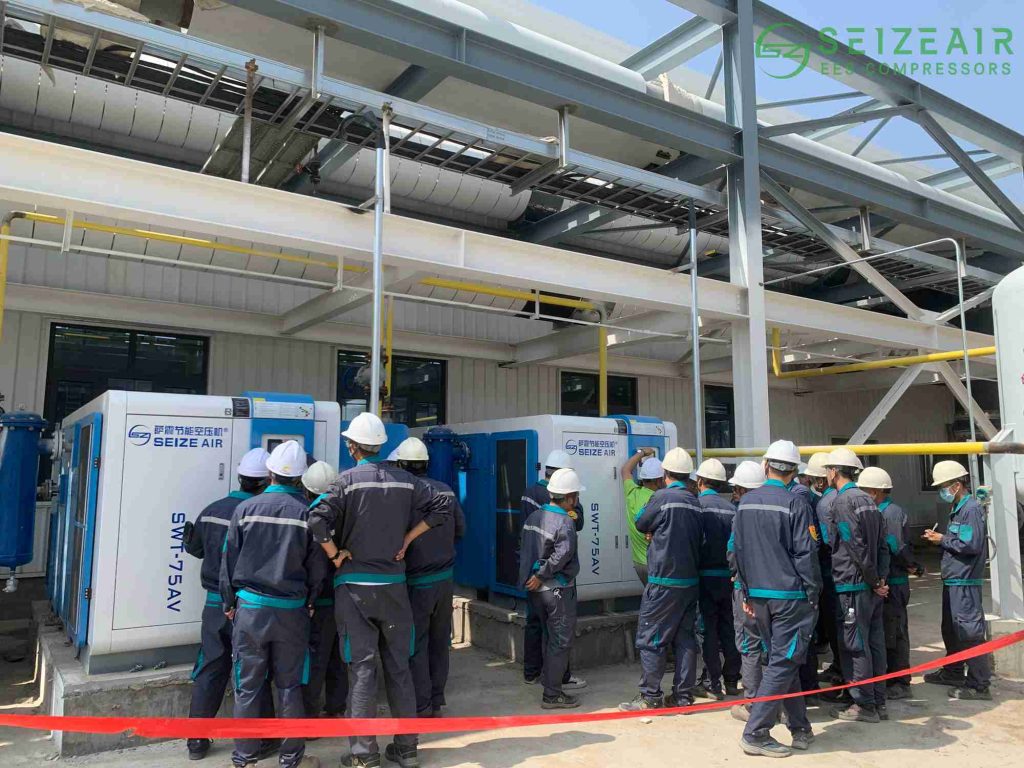
Oil-injected screws are not “unsafe,” they are just for a different job. For general plant air, instrument air, and pneumatic actuation where the air never meets the product, an oil-injected machine with a vapor-recovery and coalescing-filter train is cheaper to buy and often cheaper to run, and the small oil carryover is filtered out before the air is used. The trap is assuming one machine covers both jobs. It does not.
| Factor | Oil-free (water/dry screw) | Oil-injected screw |
|---|---|---|
| Oil in air path | None | Present, filtered downstream |
| Best for | Product contact, catalysts, pharma | Plant air, instruments, tools |
| Upfront cost | Higher | Lower |
| Maintenance focus | Water system / seals | Oil, separators, filters |
| Purity ceiling | Class 0 achievable | Class 1–2 typical |
How Do You Size an Air Compressor for a Chemical Plant?
Undersizing is the most expensive mistake in this business, because a chemical plant rarely runs at the nameplate flow you calculated on a calm Tuesday morning. You size from the actual air consumers, not from a single biggest tool.
The plain-text version of the capacity math is this. First list every air user — valves, actuators, conveyors, spargers, ejectors, sampling systems — and write its free-air consumption in cubic meters per minute. Multiply each by a usage factor (the share of time it is actually open, often 0.3 to 0.7) and add them up. Then add a leakage allowance, because a plant air network that is a few years old typically loses 10 to 30 percent through worn seals and uncapped drops. Finally add headroom for a future line. The working formula is:
Required compressor flow Q (m3/min) = sum of (each user flow x its usage factor) divided by (1 minus system leakage fraction), then multiplied by 1.15 to 1.25 for expansion.
Pressure is separate from flow and easy to get wrong. Most chemical plants run instrument air at 6 to 7 bar at the use point, which means the compressor must deliver closer to 8 bar to absorb line drop, dryer loss, and filter fouling. If part of the plant needs 10 or 12 bar, resist the urge to over-pressure the whole network — it wastes energy and stresses seals. Run a small dedicated booster instead.
| Air consumer | Typical free-air demand | Notes for chemical plants |
|---|---|---|
| Control valve actuator | 0.1–0.6 m3/min each | Hundreds on a big unit; size the total |
| Instrument air header | 1–5 m3/min | Keep quality high, never share with dirty air |
| Pneumatic conveyor | 3–20 m3/min | Spiky load, needs buffer tank |
| Tank blanketing | 0.2–2 m3/min | Low flow, safety-critical |
| Sparging / agitation | 2–15 m3/min | Process air, often oil-free |
A buffer or receiver tank is not optional here. It flattens the spikes from conveyors and batch dumps so the compressor does not short-cycle, and it carries the plant through a compressor trip. A common rule is one minute of flow of storage per compressor, sized to the pressure band you allow.
What Compressed Air Purity Class Does Chemical Production Require?
Purity is graded by ISO 8573-1, which scores three contaminants — solid particles, water (pressure dew point), and oil (aerosol plus vapor) — on a numbered scale where a lower number is cleaner. For product-contact and catalyst duties you are normally at Class 0, the “no detectable oil” grade, which is why so many fine-chemical and pharma lines run oil-free machines plus sterile-grade filtration rather than betting on an oil separator.
| ISO 8573-1 grade | Particles | Water (dew point) | Oil |
|---|---|---|---|
| Class 0 | None detectable | Per spec | None detectable |
| Class 1 | <= 0.1 micron | -70 °C pdp | <= 0.01 mg/m3 |
| Class 2 | <= 1 micron | -40 °C pdp | <= 0.1 mg/m3 |
| Class 3 | <= 5 micron | -20 °C pdp | <= 1 mg/m3 |
| Class 4 | <= 40 micron | +3 °C pdp | <= 5 mg/m3 |
Water matters as much as oil in a chemical plant. A dew point that is too high means free water in the line, which means corrosion, frozen valves in winter, and a line that grows bacteria or slips a slug of condensate into an instrument. Pick the dew point to the climate and the duty: -40 °C pressure dew point is the usual chemical standard, tighter if the air touches a moisture-sensitive process.
Can a Standard Workshop Compressor Be Used in a Chemical Facility?
Short answer: no, not in any classified area, and “standard” is doing a lot of work in that question. A general-purpose workshop compressor has an open vent, a non-certified motor, a control panel full of unprotected arcs, and surfaces that run hot enough to ignite half the gases on a chemical site. Put it in a Zone 1 solvent area and you have installed an ignition source on purpose.
The failures are not theoretical. A plant once lost a week of production because someone set a rented piston compressor next to a methanol sump for a “temporary” job; the motor fan Housing sparked, the area was within gas group, and the resulting incident took out a section of the unit. Another common one is the control panel: a standard starter box is full of contacts that arc every cycle, and in a hazardous area that box has to be pressurized or flameproof, not a gray metal box bolted to the skid.
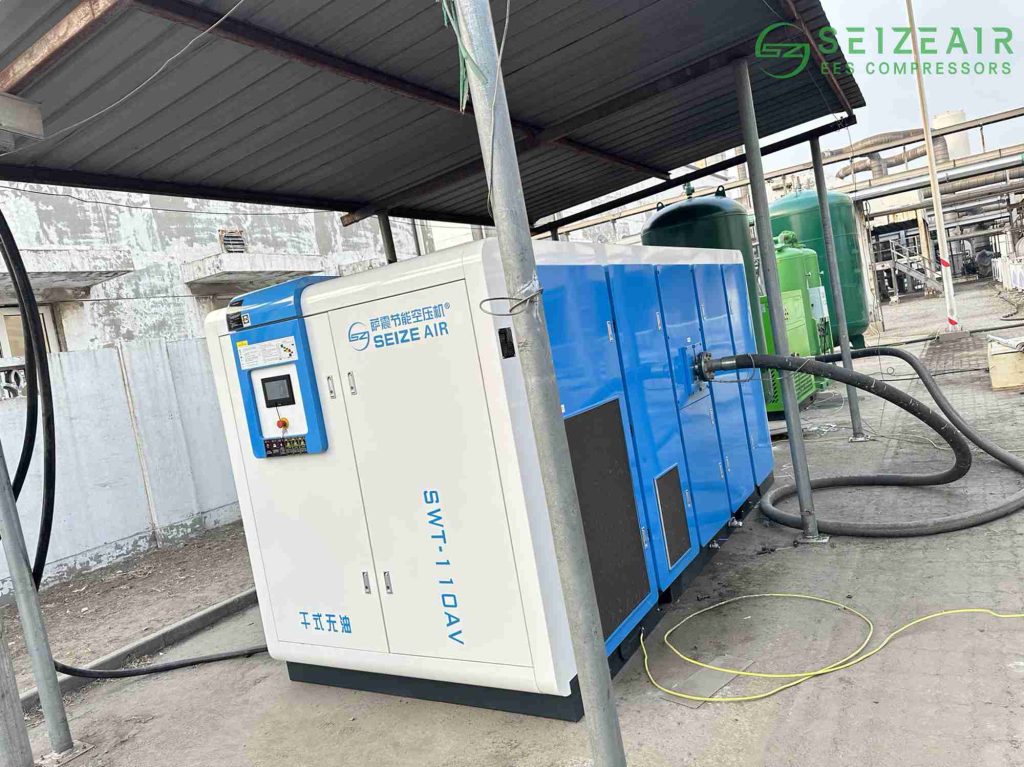
Even outside the classified zone, a chemical plant is hard on ordinary machines. The ambient air carries solvent vapor, acidic fumes, and fine dust that eat paint, seize bearings, and clog coolers. A unit that is merely “indoor rated” will not last. It needs coated coolers, corrosion-resistant enclosures, and intake filtering matched to the local air, not the catalog’s clean-room assumption.
What Pipework, Drying, and Filtration Should Back Up the Compressor?
The compressor is only the front of the system. Behind it sits the treatment train that decides whether your air is actually usable, and in a chemical plant that train is where most of the real engineering lives.
Right after the compressor comes the aftercooler and a drain, because hot discharge air carries the most moisture and you want it out early. Then the dryer. A refrigerated dryer is the cheap, common choice and gets you to about +3 °C pressure dew point — fine for general plant air but not for outdoor winter lines or moisture-sensitive process. For chemical duty you usually want a desiccant (adsorption) dryer pushing to -40 °C or lower, especially where the air leaves a heated building and meets freezing pipe.
Filtration is the quiet hero. A precision filter downstream of the dryer strips particles and coalesces any remaining oil mist; for product-contact lines you stack a sterile or activated-carbon stage after it. Size filters to the actual flow with margin, because a filter chosen for a smaller line becomes the bottleneck and quietly drops your pressure across the whole network.
| Stage | Purpose | Where it sits |
|---|---|---|
| Aftercooler + auto drain | Drop heat and bulk water | Compressor discharge |
| Dryer (refrigerated or desiccant) | Control dew point | After cooler |
| General filter | Particles + bulk oil mist | After dryer |
| Sterile / carbon filter | Final purity for contact air | At point of use |
Pipe it in stainless or coated carbon steel matched to the gas, slope the runs to drains, and never let a low point sit undrained. In a chemical plant a neglected low point becomes a corrosion spot and then a leak, and a leak in instrument air becomes a control problem at the worst possible moment.
How Do Petrochemical and Pharmaceutical Chemical Needs Differ?
“Chemical industry” covers two very different risk profiles, and the compressor spec follows the risk. In oil and gas and petrochemical duty the dominant hazard is a flammable gas atmosphere — hydrocarbon vapor, hydrogen, sour gas — so the rating conversation is all about Zone, gas group, and temperature class, and oil-injected plant air is usually acceptable because the air does not touch product. The machine has to be rugged, often outdoors, and rated for the specific gas group on that part of the site.
Pharmaceutical and fine-chemical duty flips the priority. The atmosphere may be less explosive, but the air purity is stricter because the air can touch the product or a sensitive reaction, so oil-free and Class 0 dominate, and validation paperwork matters as much as the hardware. Seize Air builds both ends of this range, from Ex-rated oil-injected screws for tank-farm and process air to water-lubricated oil-free units for GMP-sensitive lines, which is why the same supplier can spec a refinery utility room and a API plant without swapping playbooks.
| Dimension | Petrochemical / oil & gas | Pharmaceutical / fine chemical |
|---|---|---|
| Main hazard | Flammable gas atmosphere | Product contamination |
| Typical rating | Zone 1, gas group IIC, T-class | Often non-hazardous, but strict purity |
| Oil-free needed? | Usually no (plant air) | Usually yes (contact air) |
| Purity target | Class 2–4 typical | Class 0 |
| Paperwork focus | ATEX / IECEx certs | Validation, batch records |
How Often Should a Hazardous-Area Compressor Be Inspected?
A certified compressor stays safe only as long as its certification is maintained in the field, and that is an inspection discipline, not a one-time stamp. The interval depends on the zone and the duty, but a sensible chemical-plant baseline looks like this:
| Item | Typical interval | What you are checking |
|---|---|---|
| Visual enclosure integrity | Monthly | Cracks, conduit seals, missing bolts |
| Flame path / joint check | 6–12 months | Gaps, paint, corrosion on Ex d surfaces |
| Purge system (Ex p) | Continuous alarm + monthly test | Flow, pressure, interlock |
| Motor thermals and insulation | 6–12 months | Winding temp, insulation resistance |
| Filter and drain service | 3–6 months | Blockage, condensate, oil carryover |
| Full certified inspection | 1–3 years | By competent person, recertify file |
The single most neglected item is the flame path. On an Ex d motor the machined joint between halves is what stops an internal explosion from escaping, and a technician who paints over it, files it, or lets corrosion pit it has quietly defeated the certification. Treat those joints as safety-critical surfaces, log every opening, and use compressor service support that actually understands Ex equipment rather than a generic mechanical contractor.
What Does a Chemical-Grade Air Compressor Cost to Run?
The purchase price is the small number. Across its life a compressor spends roughly 70 to 80 percent of its total cost on electricity, so the spec that looks cheap on the quote is often the most expensive machine in the building. The levers that actually move the running cost are efficiency of the airend, whether you run variable speed, how tight your network is (leakage), and how hard the dryer works.
| Cost element | Share of lifecycle cost | What controls it |
|---|---|---|
| Energy | 70–80% | Airend efficiency, VSD, leakage |
| Maintenance | 10–15% | Service discipline, parts |
| Capital | 10–15% | Spec, not the place to cut |
| Downtime | Variable, high | Redundancy, monitoring |
A variable-speed drive pays for itself fast in a chemical plant because the load is spiky — conveyors, batch dumps, and valve actuation rarely sit at a flat 100 percent. Running a fixed-speed machine throttled or blown off to a silence valve is burning money every hour. Add continuous monitoring (vibration, temperature, power, dew point) and you catch a failing bearing or a clogging filter before it becomes a trip, which in a hazardous area is also a safety win, not just a cost win.
Where This Is Heading: Smarter, Cleaner, Quieter
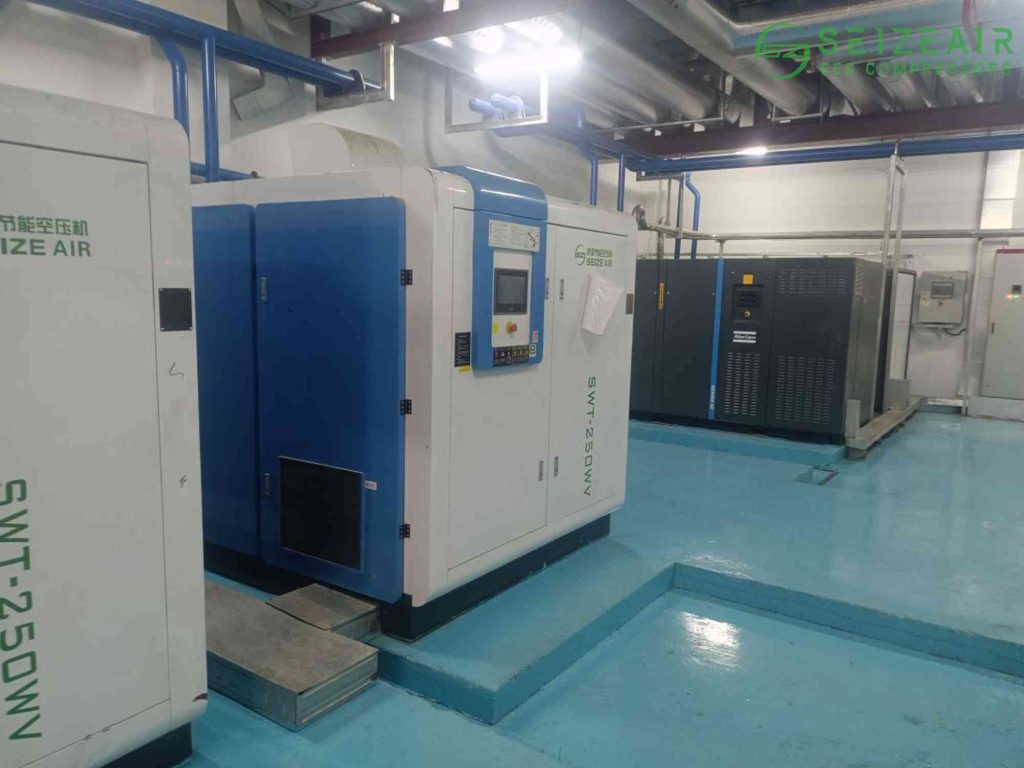
The direction of travel in chemical utility air is the same as everywhere else in the plant: less energy, more data, fewer surprises. Oil-free screw and magnetic-bearing centrifugal designs keep pushing the purity ceiling up while dropping the maintenance load. VSD is now the default for anything spiky. And remote monitoring means a compressor in a Zone 1 area can be watched from the control room, with alarms on vibration, temperature, and dew point, so the dangerous thing is inspected less often in person and understood more completely from a distance. None of that changes the basics — correct zone rating, correct protection technique, correct purity — but it makes a compliant machine a lot cheaper and safer to keep compliant.
Talk to Us Before You Spec
If you are specifying or replacing an air compressor for chemical industry duty, get the zone classification and the purity requirement pinned down first, then size from real consumers with leakage and expansion built in. The wrong rating is not a footnote on a purchase order — it is a hazard in the plant. The Seize Air team has shipped Ex-rated and oil-free chemical packages to refineries, fertilizer plants, and pharma lines, and we can walk your duty sheet with you, confirm the gas group and temperature class, and propose a treated-air train that meets both the code and the process. Contact us to send your flow, pressure, zone, and purity numbers, and we will come back with a spec that stays safe and stays efficient for the life of the machine.