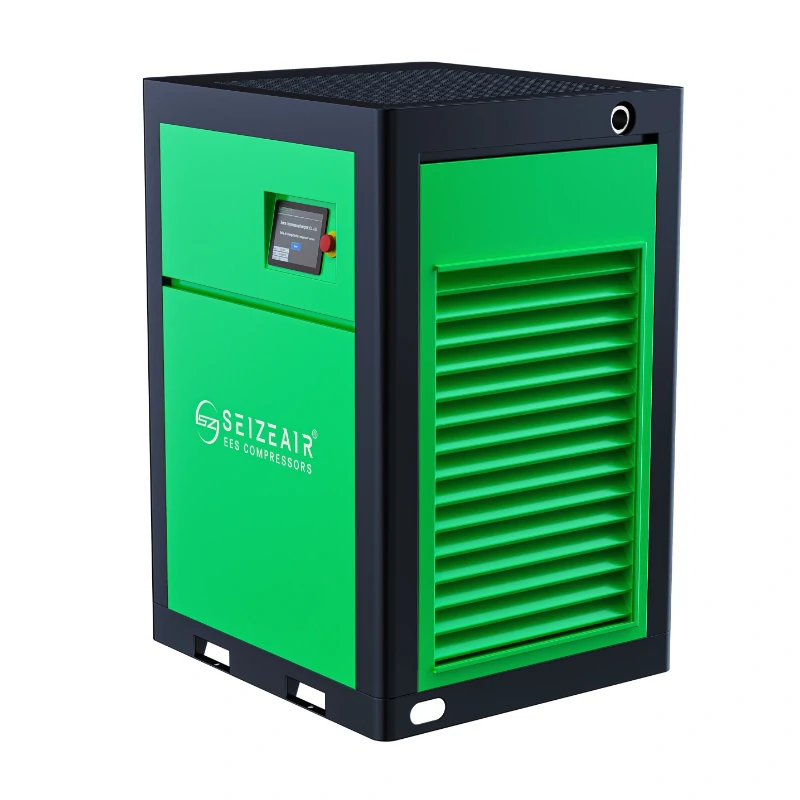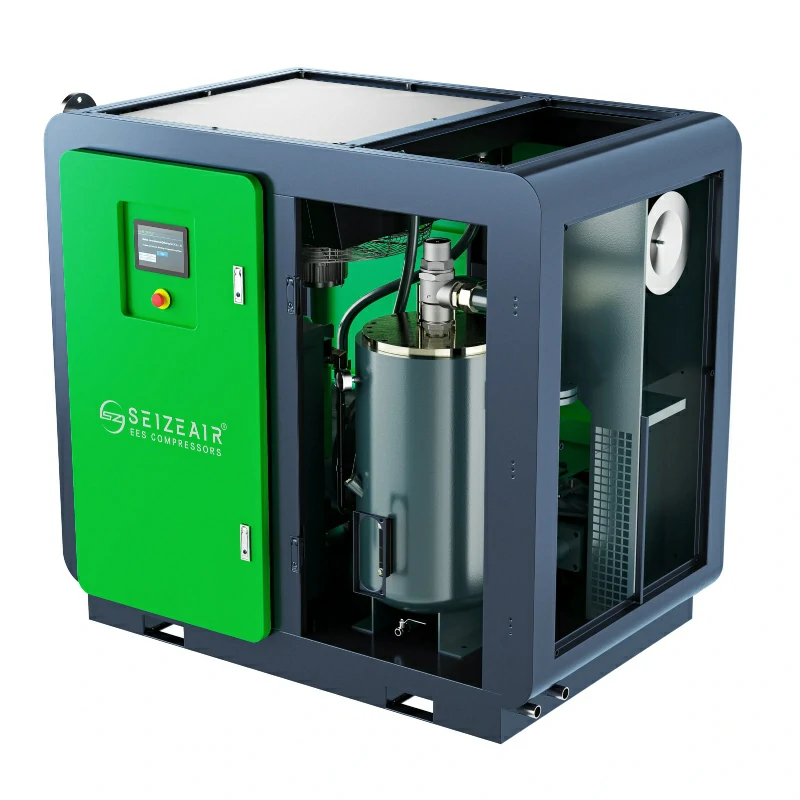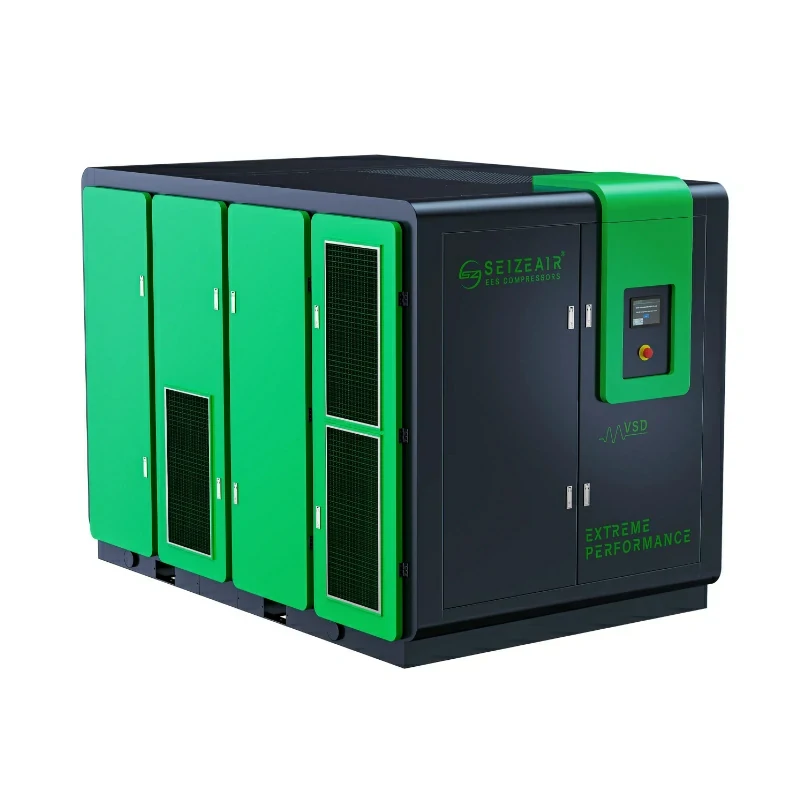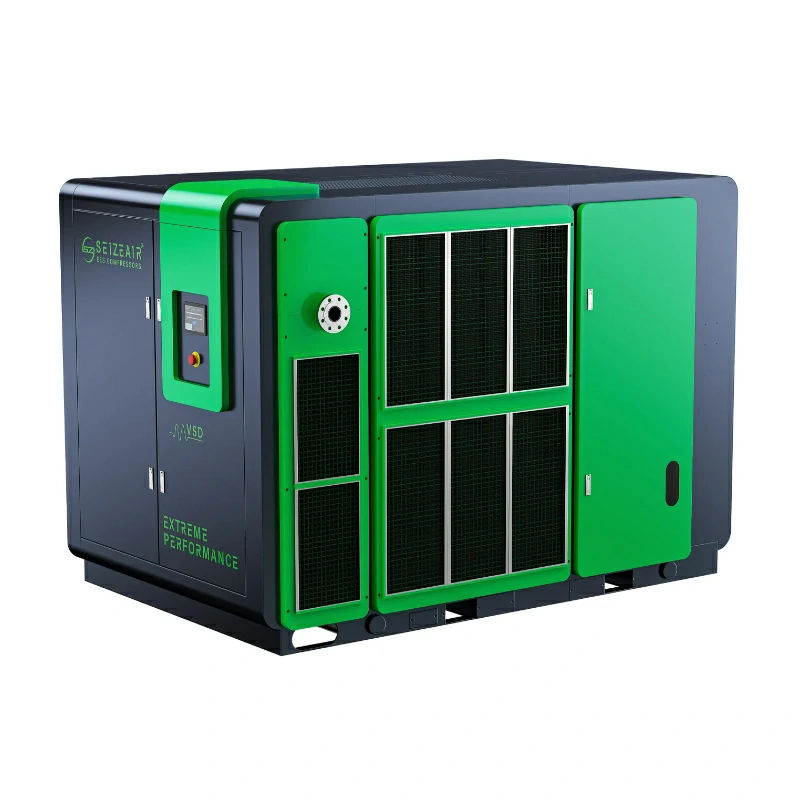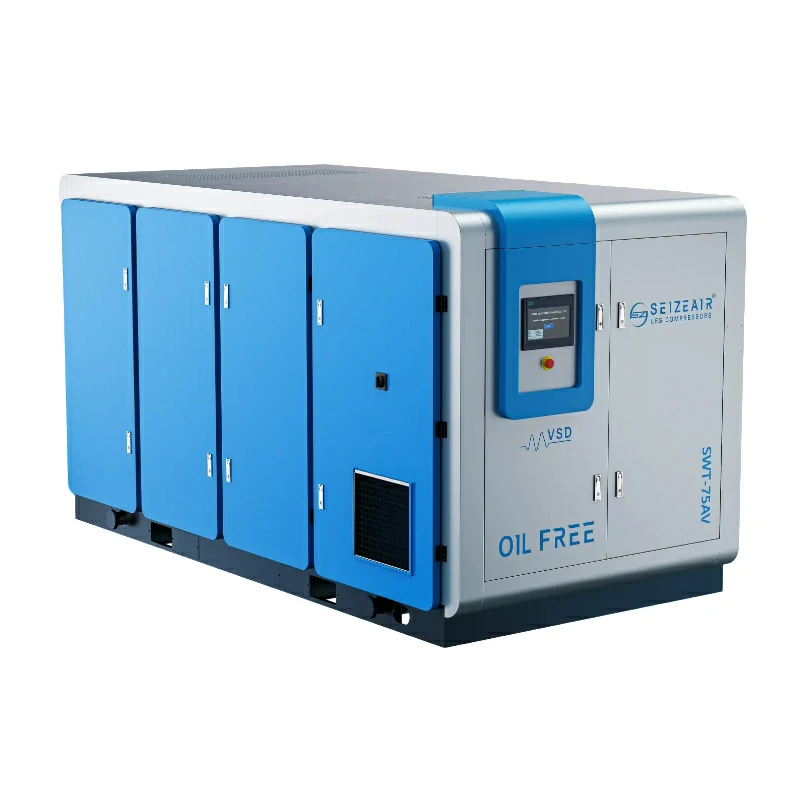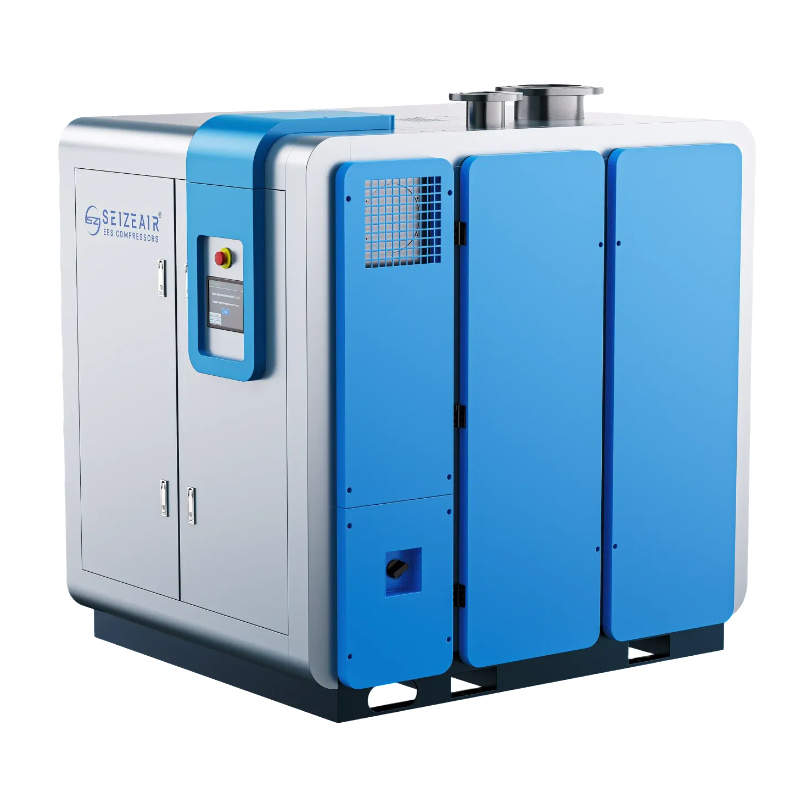


An integrated air compressor is a single, skid-mounted unit that houses the compressor, the air dryer, and the receiver tank together, so a workshop can start producing clean, dry, pressurized air the same day it arrives. Instead of designing a compressed air system from separate components and runs of piping, you get one package that is wired, pressure-tested, and ready to run. This guide walks through how these units actually work, where they beat a traditional modular setup, and exactly what to check before you buy one.
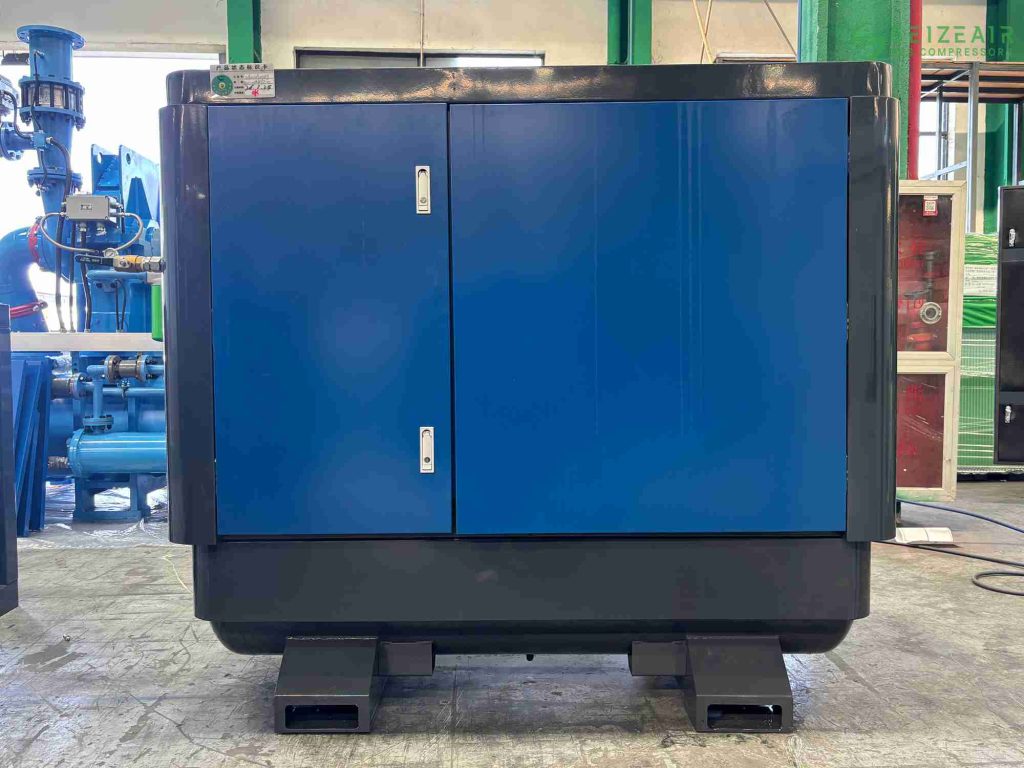
What Is an Integrated Air Compressor?
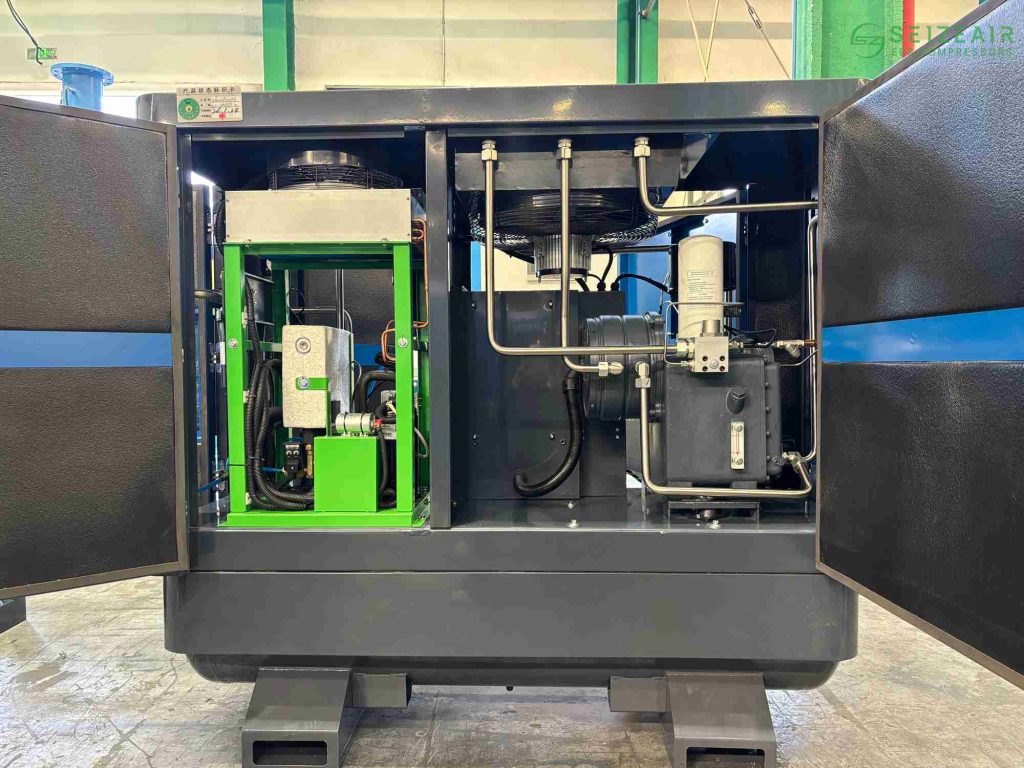
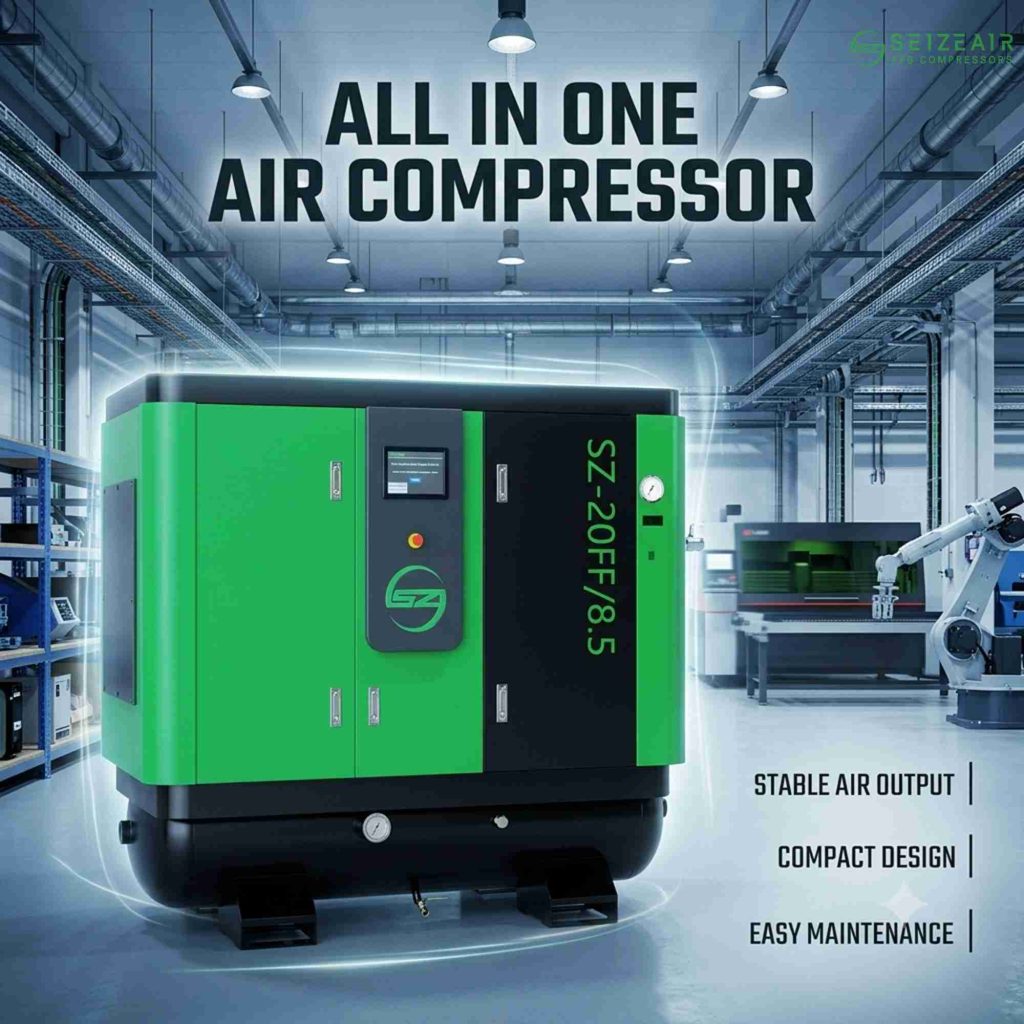
At its simplest, an integrated air compressor does the job of three separate machines without the three-machine footprint. The compressor block pulls in ambient air and raises its pressure. The dryer pulls the water vapor back out. The receiver tank stores the finished air so your tools see steady pressure instead of pulses. Put those three in one enclosure with a shared controller and you have what most catalogs now label an all-in-one air compressor.
The “integrated” part matters more than the marketing word suggests. Because the components are engineered as a set, the dryer is sized to the compressor’s actual output, the tank is matched to the duty cycle, and the whole thing ships as one certificate-tested assembly. You are not left guessing whether the 20 hp compressor you bought will overwhelm the 15 cfm dryer somebody else specified.
| Component | What it does | Why it matters in an integrated unit |
|---|---|---|
| Compressor block | Draws in air and raises its pressure | Screw or piston; sized to the dryer and tank from day one |
| Air dryer | Removes water vapor to a set dew point | Pre-matched, so no wet-air surprises at the tool |
| Receiver tank | Buffers and stores finished compressed air | Stops pressure drops when multiple tools fire at once |
| Controller / VSD | Matches motor speed to live demand | One screen controls the whole package, not three |
| Pre-filters | Strips dust, oil mist, and coarse particles | Protects the dryer and keeps downstream air clean |
Most buyers first meet the category through phrases like “air compressor dryer tank combo” or “packaged air compressor with dryer.” They all point at the same idea: stop buying a system and start buying a box.
How Does an Integrated Air Compressor Work?
Air moves through the unit in a straight line, and that straight line is the whole reason the design is so reliable. In a oil-injected screw air compressor based unit, the rotor pair traps air, squeezes it, and pushes it into an aftercooler. The aftercooler drops the temperature so the bulk of the moisture condenses and drains. What is left goes through the dryer, where it is pulled down to the target dew point, then into the receiver tank, then out to your lines through a final filter.
The controller watches line pressure and tells the motor how hard to work. When demand falls, a variable-speed drive backs the motor off instead of dumping air through a blow-off valve, which is where a lot of the energy savings come from. Because the path is short and enclosed, you lose less pressure between stages than you would across a room full of separate pieces.
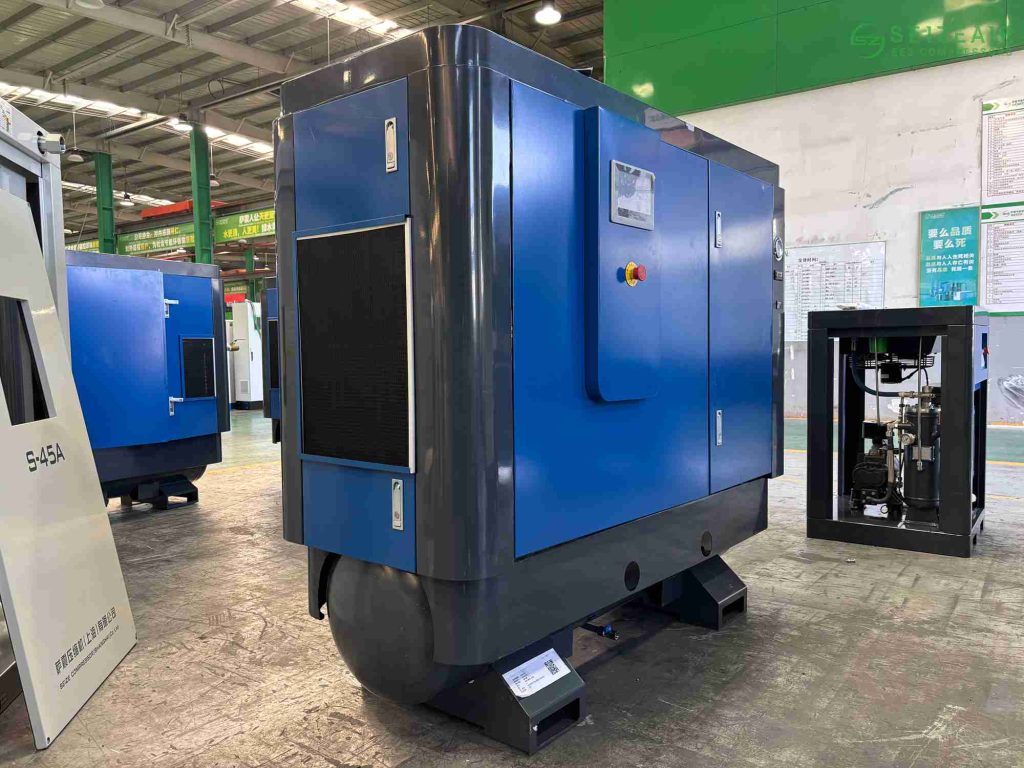
Integrated Air Compressor vs. a Traditional Compressed Air System
The honest comparison is not “integrated is better,” it is “integrated removes a pile of decisions.” A traditional system lets you mix brands, scale each piece independently, and spread the install over months. An integrated unit trades that freedom for speed, a smaller footprint, and one throat to choke when something goes wrong.
| Factor | Integrated unit | Traditional modular system |
|---|---|---|
| Floor space | One skid, often against a wall | Three or more separate footprints |
| Install time | Hours: set, bolt, connect power | Weeks of piping, wiring, commissioning |
| Up-front cost | Higher per unit, lower total project | Lower per piece, higher installed cost |
| Efficiency | Matched components, short air path | Depends on how well pieces were matched |
| Maintenance | One service point, one manual | Multiple vendors, multiple schedules |
| Expandability | Add another skid | Swap or upsize individual pieces |
For a shop that needs air this quarter, not next year, the integrated route is hard to beat. For a plant planning a 10-year capacity ramp, the modular route still has its place.
Why Choose an Integrated Air Compressor with Dryer and Tank?
The benefits show up on the first day and keep showing up on the utility bill.
| Benefit | What it looks like in real use |
|---|---|
| Space saved | Frees floor area for production instead of a machine room |
| Plug-and-play | Power in, air out; no separate dryer or tank project |
| Cleaner air | Dryer and filter are part of the package, not an afterthought |
| Lower energy use | Matched VSD control avoids constant load-unload cycling |
| One warranty | A single supplier answers for the whole air supply |
| Easier move | Skid-mounted units relocate with the business |
A compact integrated air compressor is especially popular in auto body shops, small CNC rooms, and labs where wall space is cheap but floor space is not.
Do You Need a Dryer With Your Air Compressor?
If your air ever touches paint, instruments, food, or anything that rusts, the answer is yes. Compressed air leaving a compressor is saturated with water vapor, and as it cools in your pipes that vapor turns to liquid. You get water in your lines, rust in your receivers, and spots in your finish. A refrigerated air dryer is the standard fix for most shops because it is cheap to run and covers the 33 to 39 F dew point range that handles nearly all general industrial air.
When the job needs bone-dry air, a desiccant air dryer steps in. Desiccant beads pull moisture down to a -40 F dew point or lower, which is what pharma, breathing-air, and some laser-cutting lines demand. The trade-off is higher running cost and periodic media change, so you only spec it where the application forces the issue.
| Sign of trouble | What it means | Dryer response |
|---|---|---|
| Water at the drain | Air cooling in the lines | Refrigerated dryer |
| Rust inside receiver | Chronic saturation | Refrigerated + drain trap |
| Paint spots or blisters | Moisture in spray air | Refrigerated, possibly desiccant |
| Instrument drift | Humidity hitting sensors | Desiccant to -40 F |
Refrigerated vs. Desiccant Air Dryer: Which One Fits Your Unit?
Both dryer types bolt onto an integrated air compressor, but they solve different problems. Refrigerated dryers cool the air and condense the water out, like a dehumidifier. Desiccant dryers pass the air through a bed that adsorbs the vapor, then regenerate the bed with heat or a slip of dry air.
| Attribute | Refrigerated | Desiccant |
|---|---|---|
| Typical dew point | 33 to 39 F | -40 to -100 F |
| Running cost | Low | Higher (regeneration loss) |
| Best for | General shop, pneumatic tools | Pharma, labs, laser, breathing air |
| Maintenance | Filter and refrigerant check | Media change on a schedule |
| Footprint in the unit | Compact | Needs regen space |
For the majority of integrated units shipped to workshops, refrigerated is the right call. Spec desiccant only when the process demands it.
What Size Air Receiver Tank Do You Need?
The tank is not there to make the compressor bigger, it is there to steady the pressure. A rule of thumb used by many installers goes like this, written out so you can size it on the back of an envelope:
Receiver tank size (gallons) is roughly equal to compressor capacity (CFM) times 1 for light duty, and times 2 to 3 for continuous duty. In metric, tank volume (litres) is roughly equal to air output (m3/min) times 60 to times 100.
So a 50 cfm compressor running a few tools part of the day needs about a 50 to 80 gallon tank. The same compressor feeding a continuous blast cabinet wants 100 to 150 gallons. The air receiver tank inside an integrated unit is already matched to that math, which is one less thing to get wrong.
| Compressor output | Light duty tank | Continuous duty tank |
|---|---|---|
| 20 cfm | 20 to 30 gal | 40 to 60 gal |
| 50 cfm | 50 to 80 gal | 100 to 150 gal |
| 100 cfm | 100 to 120 gal | 200 to 300 gal |
| 200 cfm | 200 to 240 gal | 400 to 600 gal |
What to Look for in an Air Compressor with Dryer
When you shop an air compressor with dryer, the dryer should not be a bolt-on afterthought. Check that the dryer capacity meets or exceeds the compressor’s full output, that the dew point is stated in writing, and that the tank has a working drain. Beyond that, the features below separate a unit you will keep from one you will replace.
| Feature | Why it earns its place |
|---|---|
| Variable-speed drive | Cuts energy when demand dips instead of blowing it off |
| Stated dew point | Proof the dryer does the job you need |
| Automatic drain | Stops manual draining from being skipped |
| Star-delta or soft start | Eases the inrush on your electrical service |
| Remote alarm | Warns before a fault becomes downtime |
| Service access | Panels that open without a wrench marathon |
How to Size an Integrated Air Compressor for Your Shop
Sizing starts with your tools, not the catalog. Add up the cfm each tool needs, then add a margin because tools rarely run one at a time. A practical air compressor sizing guide formula reads: required CFM is roughly equal to total tool CFM times 1.5. Pressure follows the highest-pressure tool you run, usually 90 to 125 psi for shops and more for specialist work.
| Shop type | Typical CFM | Typical pressure | Duty note |
|---|---|---|---|
| Small auto body | 15 to 30 cfm | 90 to 120 psi | Intermittent, big tank helps |
| CNC machine shop | 20 to 50 cfm | 90 to 100 psi | Steady, VSD pays off |
| Blast cabinet | 50 to 100 cfm | 90 to 110 psi | Continuous, oversize tank |
| Packaging line | 30 to 80 cfm | 80 to 100 psi | Steady, dry air critical |
Rotary Screw vs. Piston: Which Integrated Design Should You Pick?
Piston (reciprocating) integrated units are cheap and fine for low hours. They are loud, they pulse, and they wear faster under continuous load. A rotary screw block turns continuously, delivers smooth air, and shrugs off all-day duty. For any shop running air more than a few hours a day, the screw version is the safer long-term buy even if the ticket is higher.
| Attribute | Rotary screw | Piston |
|---|---|---|
| Duty cycle | 100 percent continuous | Best under 60 percent |
| Air quality | Smooth, pulse-free | Pulsing, needs bigger tank |
| Noise | Lower, enclosed | Higher, especially unrested |
| Service life | Long under load | Shorter under load |
| Price | Higher | Lower |
How Much Energy Can an Integrated Unit Save?
Compressed air is expensive, often the single largest electric load in a small plant. The saving from an integrated, variable-speed unit comes from avoiding the load-unload cycling that wastes a third of the power in a fixed-speed machine. You can frame the running cost plainly:
Yearly electricity cost (dollars) is equal to motor power (kW) times annual run hours times electricity rate (dollars per kWh) times load factor (about 0.6 to 0.9). Dropping the load factor from a fixed 1.0 to a VSD-typical 0.7 is where the money shows up.
| Setup | 50 hp annual run | Relative cost |
|---|---|---|
| Fixed-speed, load-unload | ~4,900 hrs at full load equiv. | Baseline (100 percent) |
| VSD integrated | ~3,400 hrs at matched load | ~70 percent of baseline |
| VSD + heat recovery | Partial offset | Lower still |
Numbers vary with your rate and hours, but the direction is consistent: matched, variable-speed integrated packages cost less to run than a pile of mismatched pieces.
Installation, Maintenance, and the Mistakes People Keep Making
The most common mistake is treating the unit like a fridge: plug it in and forget it. Integrated units are low-maintenance, not no-maintenance. The second mistake is poor placement, shoving the skid into a hot, poorly vented corner so the compressor breathes its own exhaust. Give it cool inlet air and a clear service front, and it will outlast the warranty by years.
| Interval | Task | Why it matters |
|---|---|---|
| Daily | Check drain, note pressure | Catches water and drift early |
| Weekly | Wipe intakes, listen for change | Keeps cooling air clean |
| 3 months | Replace/clean intake filter | Protects the rotor and efficiency |
| 6 months | Inspect dryer, test dew point | Confirms air stays dry |
| Yearly | Full service, belt/touch check | Keeps the warranty valid |
Which Industries Get the Most from an Integrated Air Compressor?
Anywhere floor space is tight and air is needed now, the integrated unit fits. The list below covers the shops that buy them most.
| Industry | Why integrated wins | Typical spec |
|---|---|---|
| Auto body & repair | Clean dry air, small footprint | 15 to 30 cfm, refrigerated dryer |
| CNC & metalworking | Steady pressure for tools | 20 to 50 cfm, VSD screw |
| Food & beverage | Dry, filtered, traceable | Desiccant or high-grade filter |
| Pharma & labs | Class 0, very dry air | Desiccant to -40 F |
| Packaging | Continuous, reliable | 30 to 80 cfm, VSD |
| Field & mobile | Moves with the job | Skid or container mounted |
Frequently Asked Questions
Is an integrated air compressor worth the money?
For most small to mid shops, yes. The saved install cost, floor space, and energy usually outweigh the higher per-unit price within the first year or two.
Can I add a dryer later if I skip it now?
You can, but it costs more and rarely fits as cleanly as the factory-matched dryer already inside an integrated unit. Buy the dryer with the package.
How loud is an integrated air compressor?
Enclosed screw units often run in the low 60s dBA at a meter, quiet enough for an indoor workshop. Piston versions are noticeably louder.
Do I still need a separate tank if the unit has one?
Usually no. The built-in receiver is sized to the compressor. Add remote tanks only for very long pipe runs or big surges.
What maintenance does the dryer need?
Refrigerated dryers mainly need filter and drain checks. Desiccant dryers need media changes on a schedule. Both are listed in the unit manual.
Will a variable-speed drive really cut my bill?
If your demand varies through the day, yes. Fixed-speed machines waste power cycling; a VSD matches output to demand and avoids most of that loss.
Conclusion
An integrated air compressor with dryer and tank is the shortest path from “we need air” to “we have air,” without trading away efficiency or air quality. Match the dryer to the job, size the tank to the duty, and pick a screw block if the unit will run more than a few hours a day. For buyers weighing a single matched package against a room of separate pieces, the integrated route is usually the smarter build.
Seize Air builds matched all-in-one air compressor packages with the dryer and tank engineered in, so what arrives is what runs. If you are scoping a unit for your shop and want the sizing checked by people who build them, contact us and send your tool list. We will size the compressor, dryer, and tank together and flag the mistakes before they cost you.