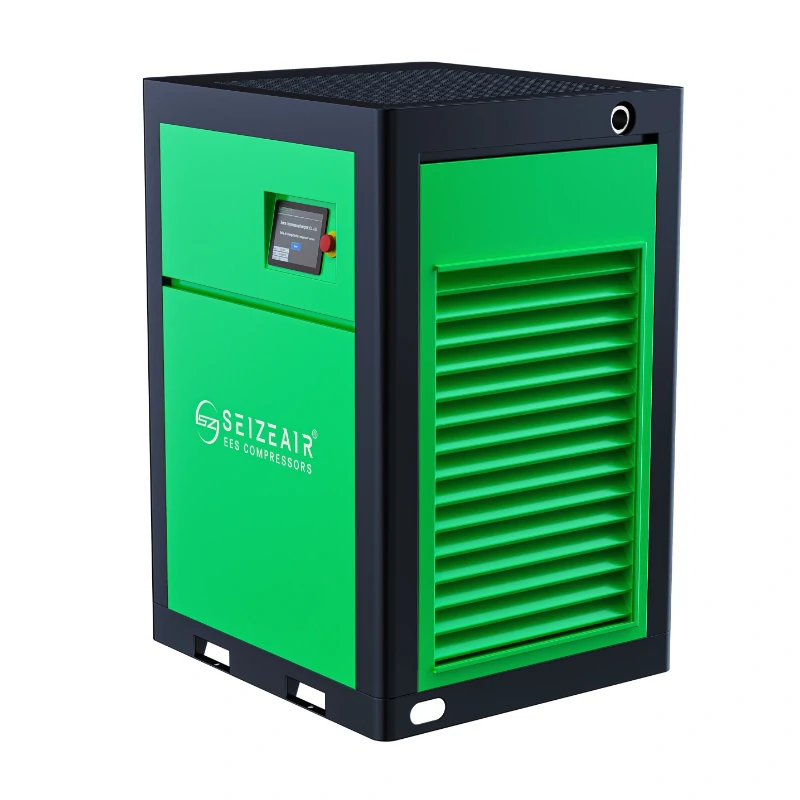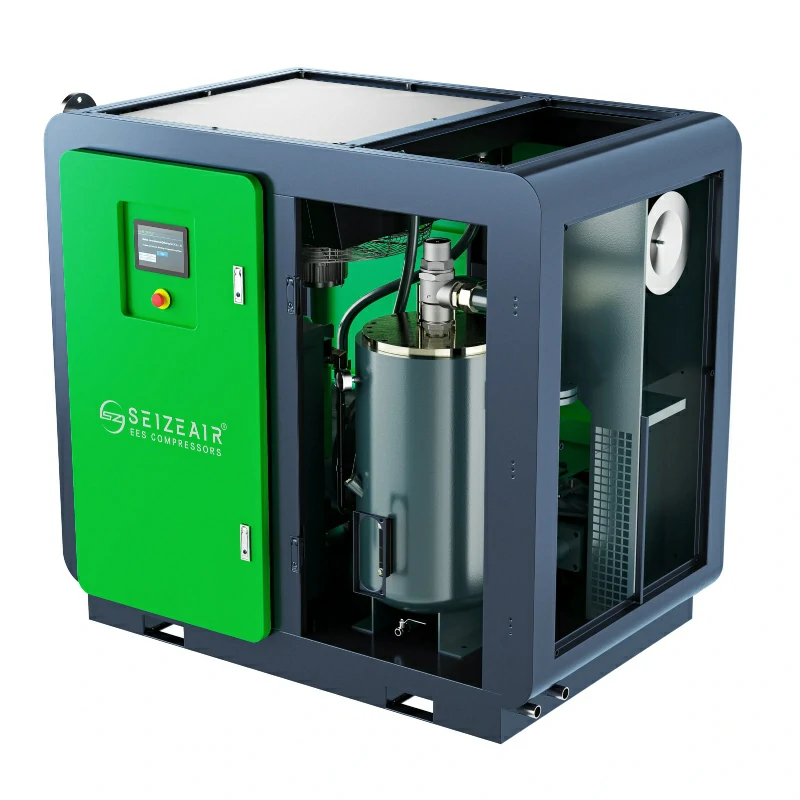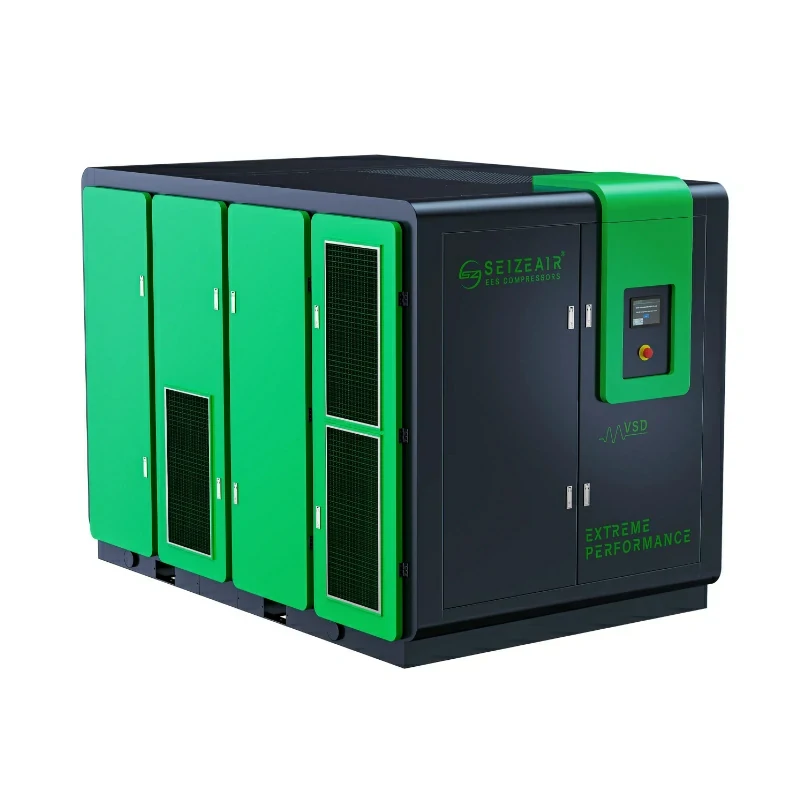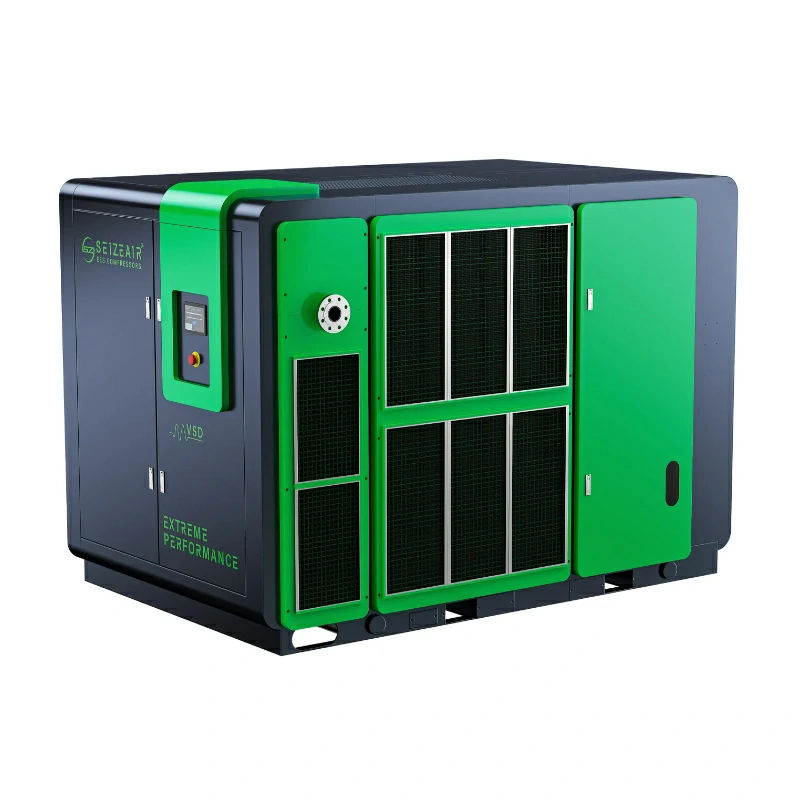


China air compressor factory direct price usually lands 20% to 40% below what a local distributor charges for a comparable machine, and that gap is exactly why so many first-time importers get burned. This guide shows you how to lock in the factory number without inheriting the risk behind it: how to confirm you are really talking to a manufacturer, how to read a factory quote line by line, how to pay without losing your deposit, and how to work out the true landed cost before you sign anything.
What Does “Factory Direct Price” Actually Mean When You Buy From China?
In practice, “factory direct” is a shorthand for three different things, and the seller decides which one you get. It can mean you are buying from the legal entity that owns the machining line. It can mean you are buying from a sales office that belongs to that entity. Or it can mean you are buying from a trading company that buys from the entity and adds its own margin while telling you it is the factory. The third case is the most common reason a China air compressor factory direct price turns out to be no better than a domestic quote once freight, duty and rework are counted.
There is a second misunderstanding that costs just as much money. Even when the factory is genuine, “direct” does not mean the machine arrives ready to run. A distributor’s markup pays for a bundle of services — specification checking, voltage and frequency conversion, documentation, freight booking, customs clearance, commissioning, and someone to call when the machine stops at 2 a.m. When you go direct, you do not eliminate those services. You take them over. If you have a maintenance team and a freight forwarder, that is a genuine saving. If you do not, you have simply converted a price problem into an operations problem.
EXW, FOB, CIF, DDP:
Ask any factory for a price and the first thing they will quote is a number with three capital letters behind it. Those letters define exactly where the factory’s responsibility ends and yours begins, and they move the total by thousands of dollars.
- EXW (Ex Works) — the price of the machine sitting on the factory floor. You arrange inland trucking, export declaration, ocean freight, insurance, import clearance, duty and final delivery. This is the number that looks most like a “real” factory price and it is the least comparable one.
- FOB (Free On Board) — factory price plus inland haulage to the port, export customs clearance and loading onto the vessel. This is the most useful basis for comparing two Chinese suppliers, because everything from the port onwards is identical for both.
- CIF (Cost, Insurance and Freight) — FOB plus ocean freight and marine insurance to your destination port. You still handle import clearance, duty, port charges and inland delivery.
- DAP / DDP (Delivered At Place / Delivered Duty Paid) — the machine arrives at your site, with DDP including import duty and taxes. DDP is the safest for a first-time importer, but it hides a lot: you cannot see how much of the price is freight versus machine, which makes future negotiations harder.
Rule of thumb that saves arguments later: always request FOB as your comparison baseline, and then ask the same factory for a DDP alternative. The difference between the two is your true logistics cost, and it is the number most buyers fail to budget for.
The Job You Take On When You Remove the Distributor
Before you chase the lowest ex-works number, write down the six jobs the distributor was doing, and decide who does each one now.
- Translating your process requirement into a machine specification (flow, pressure, duty cycle, air quality).
- Matching the machine to local electrical standards — 60 Hz vs 50 Hz, 480 V vs 400 V, NEMA vs IEC motor standards, local control voltage.
- Preparing and checking export and import documentation — certificate of origin, CE or UL files, pressure vessel certificates, test reports.
- Booking freight, insurance and customs clearance.
- Installing, commissioning and setting the control parameters.
- Holding warranty stock and enforcing warranty claims in your language and time zone.
Items one and two are where most factory-direct failures happen. A 50 Hz machine with a motor wound for 400 V will physically run on a 60 Hz supply, but it will run about 20% faster, draw more current, and overheat. That is not a warranty defect. That is a specification error, and it will be your error.
How Much Cheaper Is a China Air Compressor Factory Direct Price Really?
The honest answer is: on the invoice, a lot; over the life of the machine, it depends entirely on whether the machine you bought is the machine you specified. Here is where the money actually goes in each channel.
| Cost layer | Local distributor channel | China factory direct | What to verify |
|---|---|---|---|
| Base machine cost | Factory price plus 25-60% channel margin | Factory price | Compare on FOB basis, same spec |
| Sales and application engineering | Bundled into the price | You do it, or pay the factory’s engineer | Ask who signs off the sizing |
| Freight, insurance, duty | Already inside the price | 8-25% of machine value, your account | Get a forwarder quote before you commit |
| Installation and commissioning | Usually included | Often excluded or charged per day | Get a per-diem rate in writing |
| Warranty enforcement | Local, fast, in your language | Remote, parts by air, you fit them | Response time must be in the contract |
| Spare parts | Stocked locally, priced high | Cheap but 3-30 days away | Buy a critical spares kit with the machine |
Two things jump out of that table. First, the factory margin saving is real and it is large. Second, the costs you take on are mostly one-off and manageable, except for one: parts lead time. A plant that runs 24/7 and cannot tolerate a five-day wait for a solenoid valve should buy a critical spares kit with the machine. It costs a few hundred dollars and it is the single best insurance available to a factory-direct buyer.
The Price You Actually Pay Starts in Year One, Not on the Invoice
Here is the part that gets lost whenever someone compares a China air compressor factory direct price against a domestic quote: for a compressor running continuously, the purchase price is the smallest number in the equation. Energy typically accounts for 70% to 80% of what a compressor costs over ten years. A machine that is 8% less efficient than the one you should have bought will eat your entire procurement saving within about two years and then keep charging you for the next eight.
The calculation is simple and worth doing before you compare prices:
ANNUAL ENERGY (kWh) = motor rated kW x annual running hours x load factor / motor efficiency

ANNUAL ENERGY COST = annual energy (kWh) x your electricity tariff

TCO over N years = purchase price
                 + installation and commissioning
                 + (annual energy cost x N)
                 + (annual maintenance cost x N)
                 + estimated cost of unplanned downtime
Worked example, 37 kW screw compressor, 6,000 running hours per year, 75% average load, tariff 0.10 USD per kWh:
Annual energy  = 37 x 6,000 x 0.75 = 166,500 kWh
Annual cost    = 166,500 x 0.10    = 16,650 USD
Ten-year energy = 166,500 USD
Purchase price  = 6,000 to 11,000 USD factory direct
Read that again. Over ten years the electricity costs roughly fifteen to twenty-five times the machine. A 5% efficiency improvement on this machine saves about 8,300 USD over ten years — more than the entire purchase price. This is why “cheapest quote wins” is the wrong rule when you buy compressor capacity, and why a serious factory direct supplier should be willing to publish efficiency data, not just an ex-works number.
Where the Money Sits Between the Factory and Your Wall
  FACTORY DIRECT PRICE
  ┌──────────────────────────────────────────────┐
  │ 1. Airend, motor, VFD, cooler, separator       │  <- real hardware
  │ 2. Cabinet, piping, controls, assembly labour  │
  │ 3. Factory overhead, testing, warranty reserve │
  │ 4. Factory margin                              │
  └──────────────────────────────────────────────┘
                + inland haulage + export clearance
                + ocean freight + marine insurance
                + import duty + VAT / GST
                + port and handling charges
                + last-mile delivery and rigging
                + installation, wiring, pipework
                + commissioning and air audit
                + energy for the next 10 years       <- the biggest number
                + maintenance and spare parts
  ─────────────────────────────────────────────────
  = WHAT YOU ACTUALLY SPEND
Why Do Two Chinese Factories Quote the Same 37 kW Machine 2,000 USD Apart?
Because “37 kW” describes the motor, not the machine. Two compressors with identical nameplates can differ in delivered air by 10% or more, and can differ in service life by a factor of three. When you get a China air compressor factory direct price that is far below the others, one of the following is usually true.
The Airend Is the Engine, and It Is Where the Money Is
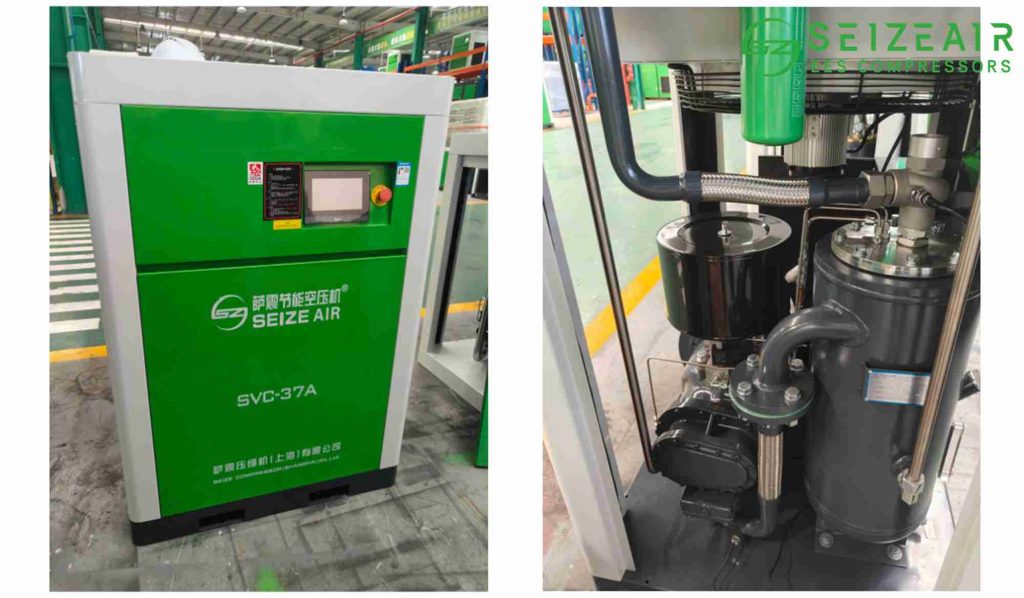
The screw element — the pair of intermeshing rotors that actually compress the air — is the heart of the machine and the single largest cost line inside it. Things that separate an expensive airend from a cheap one: rotor profile design, grinding accuracy, bearing brand and size, and the clearance between rotor and housing. A cheap airend with loose clearances lets air leak backwards internally, which means the motor keeps working but less air comes out the pipe. You will never see this on the nameplate. You will see it on your electricity bill every month for a decade.
Ask for the airend origin by name. A factory that designs and grinds its own rotors will tell you, and it is a genuine advantage. A factory that buys generic elements will say “we use SKF bearings and a German profile”, which tells you nothing. Also ask about the design life: 30,000 hours and 100,000 hours are both sold as “heavy duty”.
This is also where configuration matters. A two-stage screw air compressor compresses in two steps with intercooling, which reduces internal leakage and typically delivers 8% to 15% better specific power than a single-stage machine of the same rating. It costs more up front and pays back on any duty cycle above roughly 40%.
Motor Efficiency Class: The Line Nobody Puts in the Advert
An IE3 motor and an IE4 motor can look identical from the outside and differ by 1% to 3% in efficiency. On the 37 kW example above, that is 1,600 to 5,000 USD of electricity over ten years. Ask for the efficiency class in writing, and ask whether the motor is a variable speed permanent magnet design or a fixed speed induction motor. On a permanent magnet variable frequency screw air compressor, part-load efficiency is dramatically better than a fixed speed machine, because a fixed speed compressor wastes energy every time it unloads.
Specific Power: The One Number That Tells the Truth
If you take only one technical idea away from this guide, take this one. Specific power is how many kilowatts of electricity the compressor needs to deliver one unit of air. Lower is better, and it is the only fair way to compare two machines.
SPECIFIC POWER = input power (kW) / free air delivery (m3/min)

Typical at 7 bar(g) for oil-injected rotary screw machines:
  single-stage, fixed speed .......... 6.4 - 7.6 kW per m3/min
  single-stage, variable speed ....... 6.0 - 6.9 kW per m3/min
  two-stage, variable speed .......... 5.5 - 6.4 kW per m3/min

Unit conversion:  1 bar(g) = 14.5 psi(g)
                  1 m3/min = 35.3 cfm
A 0.5 kW per m3/min difference on a 6 m3/min machine running 6,000 hours a year is 18,000 kWh, or about 1,800 USD a year at 0.10 USD per kWh. Over ten years the “cheaper” machine has cost you 18,000 USD more. This is why a correct China air compressor factory direct price comparison always normalises to specific power and to a ten-year energy figure, not to the ex-works number.
Any supplier worth buying from will give you a measured figure for the serial number you are actually being quoted, not a catalogue average. That is standard practice at Seize Air, and it should be the minimum you accept from anyone else: if a factory will not put specific power in writing, you are not comparing machines, you are comparing brochures.
What Size Air Compressor Should I Specify Before Requesting a Factory Direct Price?
This step happens before you contact anyone, and it is where most of the money is actually won or lost. A factory can only quote what you describe, and if you describe the wrong machine you will get a very good price on the wrong machine.
Do Not Size From the Old Nameplate
The most common mistake is to replace a 30 kW machine with a 30 kW machine. Your old compressor was probably oversized when it was installed, and your air demand has changed since then anyway. Measure instead. A data-logging flow meter and a pressure logger installed for one full production week cost a fraction of a compressor and give you the load profile that every downstream decision depends on: peak flow, average flow, minimum flow, pressure stability, and how much of the day the machine spends unloaded.
Build the Number From the Demand Side
REQUIRED FREE AIR DELIVERY (FAD)
  = sum of (air consumption of each tool or process x simultaneous use factor)
  + allowance for future expansion
  + allowance for existing leakage

PRESSURE AT THE COMPRESSOR OUTLET
  = highest pressure required at any point of use
  + pressure drop across dryers and filters (typically 0.3 - 0.7 bar)
  + pressure drop along the pipework (target under 0.3 bar)
Two notes on that. First, leakage. A mature plant without a leak management programme commonly loses 20% to 30% of the air it produces. Fixing leaks is nearly always cheaper than buying a bigger compressor, and it is worth doing before you size the replacement. Second, pressure. Every additional bar of discharge pressure costs roughly 6% to 8% more energy, all day, every day. Getting the pressure right is usually worth more than any discount you will negotiate.
Altitude, Ambient Temperature and Humidity
These three are the reason a machine that performs beautifully in a Shanghai test room underperforms in your plant. Air is thinner at altitude, so the compressor moves less mass of air per revolution: as a working approximation, free air delivery falls by roughly 0.5% to 1% for every 100 m above sea level. High ambient temperature reduces cooling capacity and pushes the machine toward its thermal limit. High humidity dumps more condensate into your dryer and drains. Tell the factory all three, in numbers, on the first email.
DERATED OUTPUT ~= CATALOGUE FAD x (1 - altitude loss) x (1 - temperature derate)

Example: 6.0 m3/min catalogue FAD at 1,800 m altitude and 40 C ambient
  altitude loss  ~ 0.5% x 18  = 9%
  temperature derate          = 4%
  usable output ~ 6.0 x 0.91 x 0.96 = 5.24 m3/min
If you had specified 6.0 m3/min without correcting, you would have bought a machine that is roughly 13% short of your requirement. The factory did nothing wrong. The specification was wrong.
Headroom, Receiver Sizing and the Case for Two Machines
- Headroom. Specify 10% to 20% above measured peak, not above measured average. Oversizing a VSD machine costs you almost nothing in energy, because it simply runs slower; oversizing a fixed speed machine costs you every time it unloads.
- Receiver tank. A useful starting point is to size for 10 to 20 seconds of storage at full flow: receiver volume in litres is roughly your FAD in litres per second multiplied by 10 to 20. A larger tank stabilises pressure, reduces cycling and protects the separator from pressure pulsation.
- Two machines instead of one. For a plant with a wide load swing, two smaller units with a sequencing controller often beat one large unit on both energy and uptime. It also means a maintenance shutdown is not a production shutdown.
How Do I Compare Factory Direct Air Compressor Quotes Line by Line?
Get every quote onto the same fourteen lines. Any supplier who refuses to complete the list is telling you something, and it is not good.
| Spec line | Why it moves the price | Good answer | Vague answer |
|---|---|---|---|
| Free air delivery | The actual output you are buying | 6.2 m3/min at 7.5 bar(g), ISO 1217 Annex C | “37 kW model” |
| Working pressure | Higher pressure = more power, more cost | 7.5 bar(g) rated, 8.0 max | “7-13 bar” |
| Specific power | Your ten-year electricity bill | 5.9 kW/(m3/min) measured | “energy saving type” |
| Drive type | VSD costs more, saves more | PM VSD, 30-100% turndown | “frequency conversion” |
| Motor class and brand | IE3 vs IE4 changes efficiency | IE4, named brand | “high efficiency motor” |
| Airend origin | Main determinant of service life | In-house, named profile, design life stated | “imported technology” |
| Cooling | Undersized coolers fail in hot climates | Rated to 46 C ambient | “air cooled” |
| Air treatment included | A refrigerated air dryer and filters can be 10-20% of system value | Dryer, filters, drain listed with model numbers | “complete set” |
| Controller | Remote monitoring and sequencing ability | PLC with Modbus, named | “intelligent control” |
| Noise level | Matters for indoor installation | 72 dB(A) at 1 m, measured | “low noise” |
| Electrical standard | Wrong standard = rewinding or replacement | 400 V / 50 Hz / 3 ph, or your local standard | “as customer request” |
| Certification | Required for legal import and insurance | CE, ISO 1217 test report, vessel certs | “all certificates available” |
| Warranty | Who pays when something fails | 18 months from commissioning, terms attached | “one year warranty” |
| Payment and lead time | Cash flow and project risk | 30/70 TT, 25 days production | “T/T, fast delivery” |
One more trap worth naming: check whether the quoted configuration is really a package or just a bare compressor. A factory-direct buyer very often needs the compressor, a refrigerated air dryer, filtration and a receiver tank working as one system. If you buy them separately from different suppliers, nobody owns the system performance. An all-in-one screw air compressor that ships with dryer, tank and filtration already piped and wired removes most of that integration risk and usually costs less than the sum of the parts.
How Should I Write My First Inquiry to a Chinese Air Compressor Factory?
The quality of the quote you receive is almost entirely determined by the quality of the email you send. A one-line message saying “please quote 37 kW screw compressor” will get a generic catalogue price from a salesperson who has no idea what you need. A structured inquiry gets you a real quotation, a faster response, and — because it signals a serious buyer — usually a keener number. Here is a template that works.
Subject: RFQ – 37 kW rotary screw compressor, FOB [port], [your country]
1. Application: [e.g. textile mill, pneumatic looms, 2 shifts]
2. Required free air delivery: [X] m3/min at [Y] bar(g), measured peak
3. Load profile: peak [ ] / average [ ] / minimum [ ], [ ] hours per day
4. Power supply: [V] / [Hz] / 3 phase, [other local standard]
5. Site conditions: altitude [ ] m, ambient [min-max] C, indoor/outdoor
6. Air quality required: ISO 8573-1 class [ ] (or “general workshop air”)
7. Air treatment: refrigerated dryer Y/N, filtration grade, receiver size
8. Certificates required for import: [CE / UL / ASME / EAC / other]
9. Quantity: [ ] now, [ ] planned within 12 months
10. Incoterm: please quote FOB [port] and DDP [my city]
11. Please confirm: measured specific power at rated pressure, motor
efficiency class, airend origin, controller model, noise level,
warranty terms, production lead time, payment terms.
12. Please attach: business licence, ISO 9001 certificate, ISO 1217
test report sample, and photos of the assembly line.
Three things about sending it. Send the identical text to three to five factories so the replies are directly comparable. Ask for answers to item 11 as a filled-in table, not as prose — you will be able to compare five quotes in ten minutes instead of an afternoon. And do not open with a demand for your “best price”; open with the specification. Price comes after the factory knows what it is pricing.
A note on response times. China is eight hours ahead of Central European Time and roughly a working day ahead of North America. A factory that answers within 24 hours is normal; a factory that answers in two hours is often a trading company with a sales team on shift. Neither is disqualifying, but it is a small piece of evidence worth filing.
How Do I Know If I Am Talking to a Real Factory or a Trading Company?
This is the question behind almost every failed China air compressor factory direct price deal. Trading companies are not dishonest by definition — plenty of them are competent and add real value in consolidation, documentation and communication. The problem is only when you pay a factory price for a trader’s service. Here is how the chain usually looks.
  WHAT YOU THINK YOU ARE BUYING

      [ YOU ] ------------ direct ------------ [ FACTORY ]

  WHAT OFTEN ACTUALLY HAPPENS

      [ YOU ] -- [ OVERSEAS AGENT ] -- [ TRADING CO. ] -- [ FACTORY ]
                     +8-15%              +10-25%

  HOW TO SHORTEN THE CHAIN
      1. Ask for the business licence and read the business scope
      2. Ask for the ISO 9001 certificate and read its scope
      3. Ask for a live video walk of the assembly floor
      4. Ask for the factory address and check it against the licence
      5. Ask who owns the machining line for the airend
Documents That Actually Prove It
- Business licence (营业执照). The “business scope” line is the giveaway. A manufacturer’s scope contains words like 制造 (manufacture) or 生产 (produce). A trading company’s scope says 销售 (sell) or 批发 (wholesale). Ask for a scan and read that line, don’t just accept the certificate.
- ISO 9001 certificate. Again, read the scope. Certification for “design and manufacture of air compressors” is meaningful. Certification for “trading of mechanical equipment” is not.
- Export records. A genuine exporter can show shipping records, a customs registration, or anonymised bills of lading for previous shipments.
- Utility bills or land use rights. Sounds intrusive; a real factory will usually show a redacted power bill for the production site. A trading office cannot.
- Product certification held in the factory’s own name. If the CE certificate is held by another company, you are not buying from the certificate holder.
The Video Call Test
Do this once, and do it before you pay a deposit. Ask for a live, unedited walk-through on a normal video call, and direct it: show me the airend assembly area, show me the test bench, show me a machine with my specification on the nameplate, walk to the window and show me the yard. Then ask a question that only a person on the floor can answer: what is the ambient temperature in the test room, what is the pressure setting on that unit, what test are you running it at. A sales intermediary can stage a showroom. They cannot stage a shift change.
If you want a deeper framework for this step, our earlier piece on vetting a screw compressor manufacturer in China goes through the same checklist with screenshots and sample wording you can copy into your own emails.
Should You Refuse to Buy From a Trading Company?
No. Sometimes the trader is genuinely the better route — particularly if you are buying one small machine, or consolidating a container of mixed equipment, or you need someone to handle documentation in your language. Just price it correctly. If you know you are dealing with an intermediary, the margin becomes negotiable, and you should ask directly: are you the manufacturer, or do you represent one? A good intermediary answers plainly. A bad one changes the subject.
Which Certifications Actually Matter When Importing an Air Compressor From China?
Certificates fall into two buckets, and buyers routinely mix them up. The first bucket is legal — without it your machine may not clear customs or may not be insurable. The second bucket is technical — it tells you whether the performance claim is real.
Legal and Market Access Documents
- CE marking (EU) — covers the Machinery Directive, the Low Voltage Directive, EMC, and, for any vessel above a certain pressure-volume product, the Pressure Equipment Directive. Ask for the Declaration of Conformity, not just a logo on the photo.
- UKCA (UK) — separate from CE since Brexit, required for Great Britain.
- ASME Section VIII / “U” stamp — required in many North American jurisdictions for pressure vessels (receiver tanks, separators). If your machine contains an ASME vessel, the factory must have the corresponding authorisation; this cannot be retrofitted on paper.
- UL or ETL listing (North America) — often required by inspectors and insurers for the electrical panel, even where not strictly mandated by law.
- EAC (Eurasian), SONCAP or PVoC (parts of Africa), SASO (Saudi Arabia), PESO (India for vessels) — destination-specific, and your broker can tell you exactly which ones apply.
- Certificate of Origin and, where applicable, Form E / FTA certificates — these can reduce or remove import duty, so ask for them before shipment, not after.
Technical Documents That Protect Your Specification
- ISO 1217 performance test report. This is the international standard for acceptance testing of displacement compressors. Crucially, it allows a tolerance: a machine can deliver slightly less air and draw slightly more power than the catalogue and still pass. Ask which annex the test used and ask for the signed test sheet for your actual serial number.
- ISO 8573 air quality classes. If your process needs clean air, “oil-free” is meaningless without a class. ISO 8573-1 Class 0 is the strictest and is what food, beverage, pharmaceutical and electronics buyers should be asking for. For those applications an oil-free screw air compressor is not an upgrade, it is the specification.
- ISO 9001 quality system — weak evidence on its own, but it does mean somebody audits the process.
- Material and hydrostatic test certificates for any pressure-containing part.
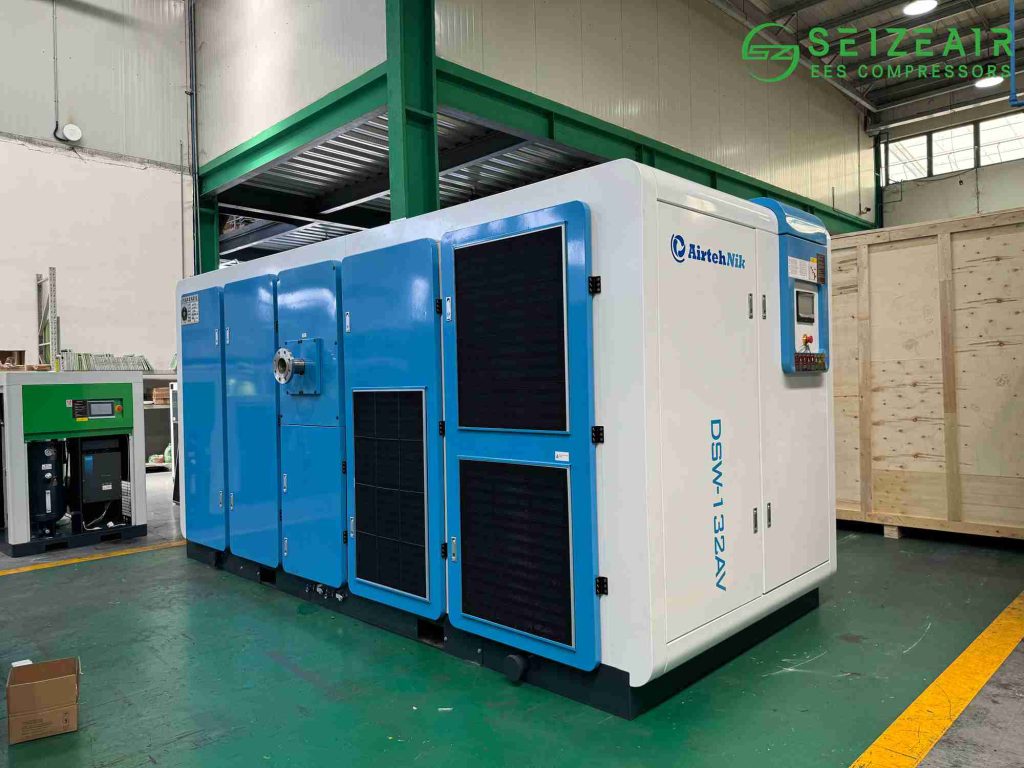
One practical note: certificates get faked, and the fakes are getting better. Always verify with the issuing body where a register exists, and always ask for the certificate number so you can check the scope and expiry date yourself.
How Do I Pay a Chinese Air Compressor Factory Without Getting Burned?
Payment is where a good China air compressor factory direct price turns into either a great deal or a total loss. Two principles: never pay 100% before you have evidence the machine exists and works, and never send money to an account in a different name from the contracting entity.
| Method | Typical use | Buyer protection | Watch out for |
|---|---|---|---|
| TT 30/70 | Standard for factory direct orders | Moderate: 70% is only paid after you see the machine | Pay the balance against inspection, not against a photo |
| LC at sight | Larger orders, first-time buyers | High: bank pays only against documents | Document discrepancies cause delays; costs 0.1-0.5% of value |
| Escrow / platform trade assurance | Small orders, sample machines | High while in the platform | Coverage caps; disputes can be slow |
| PayPal / card | Spares, samples under 2,000 USD | High for small sums | High fees, and most factories will not accept it for machinery |
| 100% prepayment | Almost never justified | None | Do not do this, whatever discount is offered |
| Open account / credit terms | Established relationships only | Highest | You will not get it on order number one |
The 30/70 Pattern, and How to Improve It
The industry norm is a 30% deposit with the order and 70% before the container leaves. That is workable, but the leverage point is the definition of “before shipment.” Improve it in three cheap ways:
- Tie the 70% to your acceptance of a factory acceptance test, or to a third-party inspection report — not to the factory’s word that the machine is finished.
- Ask for the serial number, nameplate photo and a signed ISO 1217 test sheet for your unit before releasing the balance.
- Ask for a short video of the machine running under load at the rated pressure for at least an hour. Almost every factory can do this in an afternoon, and the ones that refuse are telling you what they know.
Lines That Must Appear in the Contract
- Full specification annex: flow, pressure, specific power, motor class, voltage and frequency, dryer and filtration model numbers.
- Incoterm and named port, with the exact version (Incoterms 2020).
- Production lead time and a late-delivery penalty, however small.
- Warranty period, start trigger (commissioning date or bill of lading date), and what is excluded.
- Spare parts: a list, prices, and a commitment to supply for a stated number of years.
- Governing law and dispute resolution — arbitration in a neutral seat is common and enforceable.
- Bank details exactly matching the contracting entity’s name on the business licence.
That last line is the one that catches people. A request to send the deposit to a Hong Kong account, or to a personal account, or to “our sister company” with a different name, is the single most common mechanism in sourcing fraud. It does not matter how good the price is. Verify the account name against the licence and the contract signature block. If they do not match, stop.
What Is the Real Landed Cost of a Factory Direct Air Compressor?
Work this out before you sign, not after the container arrives, because the answer occasionally changes the decision. The formula is not complicated:
LANDED COST = EXW or FOB price
            + inland haulage to port (if EXW)
            + export clearance and documentation
            + ocean freight
            + marine insurance (typically 0.1-0.3% of CIF value)
            + import duty          = customs value x duty rate
            + VAT / GST / sales tax (recoverable for many businesses)
            + port, handling and customs broker fees
            + inland delivery, rigging and installation
            + commissioning and first service
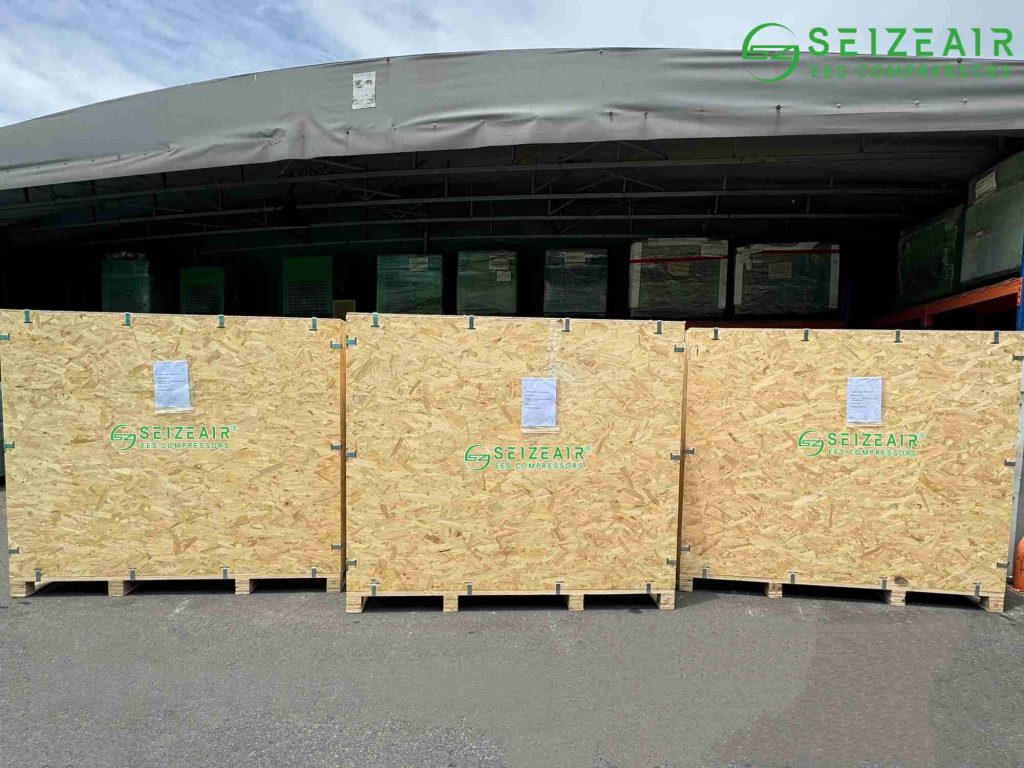
Here is an indicative worked example for a mid-size 37 kW package imported into a Western port. Treat every number as a range to be replaced by your own quotation — freight rates and duty rates move, and this is not a price list.
| Cost item | Indicative range (USD) | Notes |
|---|---|---|
| FOB price, 37 kW PM VSD package | 6,000 – 11,000 | Depends on specific power and components |
| Ocean freight, LCL or 20 ft container | 600 – 4,000 | Strongly lane- and season-dependent |
| Marine insurance | 60 – 120 | Fraction of CIF value |
| Import duty (HS 8414.80 class) | 0 – 5% of customs value | Plus any destination-specific trade measures |
| Port, handling, broker fees | 300 – 1,200 | Ask your broker for a written estimate |
| Inland delivery and rigging | 400 – 2,000 | Distance and crane access matter |
| Installation and commissioning | 500 – 3,000 | Higher if factory engineer travels |
| Critical spares kit | 300 – 1,200 | Recommended for 24/7 sites |
| Total landed | 8,200 – 22,500 | Typically 25-90% above FOB |
Notice the spread. A factory that quotes 6,000 FOB and one that quotes 10,000 FOB may end up 4,000 apart on paper but only 4,000 apart landed — and if the second machine is 8% more efficient, the second one is cheaper within about two years. That is the whole argument for evaluating a China air compressor factory direct price on total cost, not on the invoice.
How Do I Check the Machine Before It Leaves the Factory?
A pre-shipment inspection costs a few hundred dollars and is the highest-return money you will spend. Either fly in yourself for a factory acceptance test, or hire a third-party inspector. SGS, Bureau Veritas, TÜV and Intertek all do machinery inspections out of China, and a half-day visit is usually enough for a single compressor package.
What the Inspection Should Cover
- Identity. Serial number matches the contract. Nameplate shows the voltage, frequency, pressure and flow you specified.
- Run test. Minimum one to two hours under load at rated pressure; four hours is better. Record discharge pressure, motor current, oil temperature, and ambient temperature.
- Performance. Measured flow against the ISO 1217 figure, and measured input power against the quoted specific power.
- Leaks and oil carry-over. Check every fitting, and check the oil content at the outlet if air quality is specified.
- Controls. Start, stop, load, unload, VSD response to a pressure change, alarm functions, emergency stop.
- Safety devices. Pressure relief valve settings and certification, thermal protection, guarding, earthing.
- Packing. Export-grade wooden case, vacuum-packed or sealed, desiccant, shock indicators, and a packing list matching the contract.
- Documentation. Manuals in English, wiring diagram, spare parts list, certificates, test report — all packed with the machine, not “to follow by email”.
There is one piece of cultural advice worth passing on. Chinese factories respond well to a checklist sent in advance and to an inspector who is firm and friendly. They respond badly to surprise. Send the acceptance criteria with the purchase order, so there is no argument about what “acceptable” meant when the inspector is standing on the floor.
How Do I Install and Commission a Factory Direct Compressor Without a Factory Engineer?
Plenty of buyers do this successfully, and the factory-direct saving is what pays for the extra effort. The key is that almost everything that goes wrong at commissioning is decided before the machine arrives.
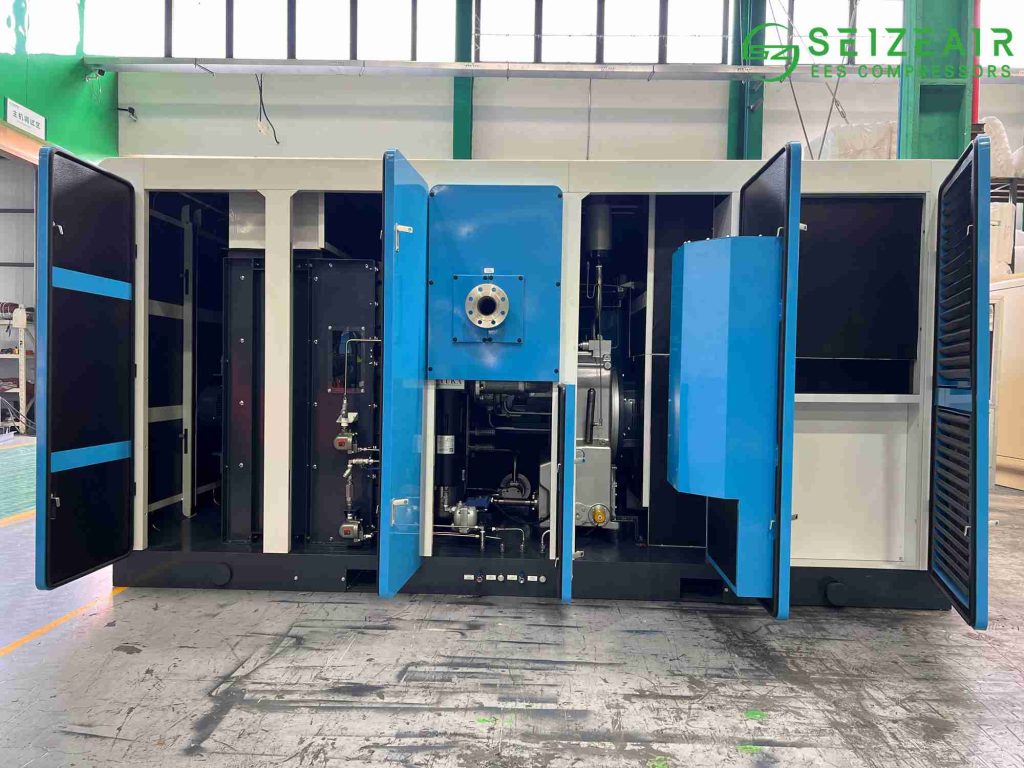
Before the Machine Lands
- Foundation. A level, cured concrete pad of adequate thickness. Rotary screw packages are forgiving compared with reciprocating machines, but a twisted base still misaligns the coupling.
- Power. Correct voltage, correct phase, correctly sized cable and protection, and an isolator within sight of the machine. Check the available voltage at the site before ordering, not after.
- Ventilation. Essentially all of the input electrical energy leaves as heat. As a working figure, expect to reject roughly 0.7 to 0.9 kW of heat for every 1 kW of input power, and size room ventilation for that load. If you duct the cooling air outside, size the duct for the fan’s free-air condition with a margin, or the machine will trip on high temperature every summer afternoon.
- Pipework. Sized for low pressure drop, sloped with drain legs, with an isolation valve and a bypass. Do not use the compressor as a pipe support.
- Condensate. A drain point and, in most jurisdictions, an oil-water separator. Condensate from an oil-injected compressor is normally not sewerable without treatment.
- Access. Can the crate physically get through the door, and can you get a forklift or crane to the pad? Measure the crate dimensions from the packing list before delivery day.
First Start: The Five Checks That Prevent Most Failures
- Phase rotation. Check it with a rotation meter before the first start. Running a screw compressor backwards for even a few seconds can destroy the airend. This is the single most common commissioning accident and it is entirely avoidable.
- Oil level and oil type. Confirm the grade, and confirm it is filled to the mark after the separator has charged.
- Leak check on the air and oil circuits before running at full pressure.
- Ramp up, do not slam. Bring the machine to pressure gradually, watching motor current, discharge temperature and pressure.
- Log the first hour. Current, pressure, temperature, and ambient. That log becomes your baseline, and the baseline is what makes every future fault diagnosis quick.
Using Remote Support Properly
Remote commissioning works well if you give the factory something to work with. Send photos of the nameplate and the installation before energising, keep a phone or tablet on the machine during first start so an engineer can watch and listen, and use the controller’s data log rather than describing symptoms. Learn how to export the fault history — on most modern controllers it is a few taps, and it turns “it stopped” into “it stopped at 14:32 with a high discharge temperature alarm after 41 minutes of running at 8.1 bar,” which is a five-minute diagnosis instead of a two-week email chain.
One thing worth planning while the machine is being built: heat recovery. Roughly 70% to 90% of the input energy is recoverable as warm air or warm water, and on a continuously running machine the payback on a simple heat recovery duct or heat exchanger is often under two years. If your site uses process hot water or space heating, tell the factory at the specification stage — retrofitting is possible, but factory-installed is cheaper and cleaner.
What Warranty and Spare Parts Terms Should I Demand?
A warranty is only as good as the response behind it. A “two-year warranty” from a factory 9,000 km away with no local stock may be worth less than a “12-month warranty” from a distributor with a van. This is the clause where a factory-direct buyer must be most specific.
Warranty Terms Worth Insisting On
- Start trigger and duration. The best form is “18 months from commissioning or 24 months from bill of lading, whichever comes first.” Avoid “12 months from production date,” which can quietly expire before the machine is installed.
- Scope. Which parts are covered, and for how long. The airend often carries longer cover than the rest of the machine. Get that in writing.
- Exclusions. Consumables and wear parts — air filter, oil filter, separator element, lubricant, belts, seals — are normally excluded. Know this before you claim, not after.
- Remedy. Parts free of charge, or parts plus labour? Who pays air freight on a warranty part? For a heavy item, freight can exceed the part value.
- Response time. A written commitment, for example technical response within 24 hours and parts dispatched within 72 hours. Any factory that means it will put a number in the contract.
- Conditions. Warranty normally requires commissioning by an approved person and use of specified consumables. Ask what would void it — the answer is often more revealing than the warranty itself.
The Spare Parts Question Nobody Asks Early Enough
Before you order, ask four questions: what is the part number for the separator element, what does it cost, how long is the delivery time to my country, and is there an alternative available locally? A machine that needs a proprietary €400 element air-freighted from China is more expensive to own than a machine that uses a standard element available from three local suppliers.
Buy a commissioning spares kit with the machine: air filter, oil filter, separator element, a full oil charge where applicable, a set of seals, a solenoid valve, a pressure sensor and a contactor. It is a small line on a large invoice, and it converts a two-week outage into a two-hour one.
Remote monitoring is worth asking about too. Most modern controllers can export data over Modbus or push alarms to a phone. Being able to see discharge temperature trends and load patterns from your office turns a reactive maintenance problem into a planned one, and it makes warranty conversations far easier because you have the machine’s own data.
How Do I Negotiate a China Air Compressor Factory Direct Price Without Wrecking the Relationship?
Chinese industrial suppliers negotiate every day and expect you to. What damages a relationship is not asking — it is asking without knowing what the thing costs, or asking for a discount while demanding more scope. Here is what actually works.
- Send a real specification, not “please quote 37 kW”. A buyer who supplies flow, pressure, duty cycle, ambient conditions, altitude and power supply gets a faster and more accurate price, and is taken seriously enough to earn a better one.
- Ask for the price at two specifications. “What is the price at 5.9 kW/(m3/min) and at 6.5?” This shifts the conversation from discount to value, and factories respect a buyer who understands the product.
- Bundle. Compressor plus dryer plus tank plus filters in one order gives the factory a larger, more efficient order to plan, and bundling usually gets a better response than a discount request on a single unit.
- Sell the second order. If you have a second site or a replacement programme, say so. Repeat volume is worth more to a factory than a one-off margin, but only if it is credible — be specific.
- Use the calendar. Factory capacity is seasonal. Enquiring during a slow production period can genuinely move a quote, and so can a flexible delivery date that lets the factory fill a slot.
- Reduce the factory’s cost, not just its price. Standard colour, standard voltage, standard options, standard packing. Every “custom” request is real cost.
- Trade payment for price, carefully. A slightly larger deposit, or payment by LC at sight rather than long credit, has real value to a factory. Offer it, and ask what it is worth.
- Never negotiate by claiming a fake competing quote. It is transparent, and it costs you credibility. If you have a real alternative, say which one and why you prefer them.
And know when to stop. If you grind a factory to the point where the margin is gone, you will get a machine built to the price — thinner steel, a cheaper contactor, a smaller cooler, less test time. The saving shows up on your invoice and the cost shows up in year three.
Air Compressor Factory Red Flags: When a Cheap Price Is a Warning
A low China air compressor factory direct price is sometimes just a good factory with low overheads. More often, an outlier price is a signal. We have written a dedicated breakdown of air compressor factory red flags with the full list and the wording to use in your emails; the short version is below.
- The quote is far below every other and nobody can explain why in technical terms.
- Specification is given only in kW and bar, with no free air delivery and no specific power.
- Pressure refused to put performance figures in the contract, only in the chat.
- The company name on the quote, the bank account, and the business licence are three different names.
- No live video walk-through is possible, ever, for any reason.
- Certificates are photos with the certificate number obscured.
- Payment must be 100% in advance, and the discount for doing so is unusually large.
- Lead time quoted is impossibly short for a machine that is supposedly being built for you.
- “Same as Atlas / Ingersoll / Sullair quality” with no data behind it.
- No serial number, no test sheet, no manual offered before shipment.
When You Should Not Buy Factory Direct From China
It would be dishonest to suggest direct sourcing is always the answer. Buy through a local channel when:
- You are buying one small machine and your time is worth more than the saving.
- You have no one in-house who can read a wiring diagram or set compressor parameters.
- Downtime costs you more per hour than the entire price difference.
- You need the machine running inside three weeks.
- You operate in a heavily regulated environment where local certification and local liability matter more than price.
- This is a replacement emergency and you cannot absorb any commissioning risk at all.
Conversely, factory direct makes strong sense when you are buying two or more machines, when you have a maintenance team, when you are building a new plant and can plan the lead time, or when you are standardising a fleet and want the same machine with the same spares across sites.
From First Inquiry to a Running Machine: A Realistic Timeline
Most first-time importers underestimate the calendar. Here is a sequence that holds up in practice.
- Days 1-3 — Specification. Measure your actual demand: current flow, pressure at the point of use, duty profile. Do not size from the old machine’s nameplate; size from measured data.
- Days 3-10 — Sourcing. Shortlist three to five factories. Send the same specification sheet to each. Verify licences.
- Days 10-18 — Quotes and clarification. Normalise to FOB and to specific power. Video calls. Shortlist to two.
- Days 18-25 — Negotiation and contract. Agree spec annex, payment terms, lead time, warranty, inspection.
- Days 25-30 — Deposit. 30% against a signed contract with the account name verified.
- Days 30-60 — Production. Standard models 15-30 days; customised or oil-free and centrifugal packages 45-90 days.
- Days 55-62 — Inspection. FAT or third-party inspection. Release the balance against a pass.
- Days 62-105 — Freight. Ocean transit varies widely by lane; air freight is possible for small machines at a large premium.
- Days 105-115 — Clearance and delivery. Broker, duty, inland haulage, rigging.
- Days 115-120 — Commissioning. Installation, first service, air audit, operator training. Warranty starts here.
Roughly three to four months from first email to compressed air, for a standard machine. Plan for that and you will not make an expensive rushed decision at day 45.
Frequently Asked Questions
Is it safe to buy an air compressor directly from a China factory?
Yes, provided you do three things: verify the supplier is the legal manufacturer, pay no more than 30% before you have evidence the machine exists and passes a run test, and inspect before the balance is released. Thousands of plants worldwide run Chinese-built compressors. The failures almost always trace back to one of those three steps being skipped.
How much does a 37 kW screw air compressor cost from a China factory?
A China air compressor factory direct price for a 37 kW rotary screw package is typically in the range of 6,000 to 11,000 USD FOB, depending on drive type, motor efficiency class, airend quality and whether air treatment is included. Be careful with that range: it spans machines with very different specific power, and the efficient end of the range will usually be cheaper to own by year two.
What is the minimum order quantity when buying factory direct?
For standard rotary screw models it is normally one unit. MOQ becomes relevant for customised machines, private-label work, and very small piston units, where a factory may ask for five to twenty pieces to justify a production run. Freight economics also create an effective MOQ: below a certain value, less-than-container-load shipping costs per unit rise sharply, so consolidating two machines or adding a dryer and tank often costs less than you would expect.
Can I get OEM or private label branding from a Chinese factory?
Most export-oriented factories offer it. Expect to provide a logo file and a written authorisation, expect colour and control-panel customisation to carry a setup charge, and expect a longer lead time on the first order. Ask what happens to the branding on internal components and on the manuals, because that is where private label arrangements get sloppy.
Do Chinese factories install and commission the machine?
Some do, some do not. Typically the factory will provide remote commissioning support and detailed documentation at no charge, and will send an engineer for a daily rate plus travel if you ask. Remote commissioning is genuinely viable today if the controller has network connectivity and you have a competent electrician on site. Agree which model applies before shipment — discovering it afterwards is an expensive surprise.
What about after-sales service and spare parts?
Ask the question before you buy, and ask it in terms of numbers: response time in hours, parts dispatch time, and whether a spares kit ships with the machine. A factory that runs a genuine export business will have a parts desk and will commit to a supply period, often ten years or more. A factory that answers “we will always support you” without a number is not making a commitment.
Should I choose fixed speed or variable speed for a factory direct purchase?
If your air demand varies by more than about 20% across a shift, variable speed will normally pay back within one to three years, because a fixed speed machine still draws 25% to 40% of full-load power while unloaded. If demand is genuinely flat and continuous, a well-matched fixed speed machine is simpler and cheaper. The deciding input is your measured load profile, not a rule of thumb.
What does ISO 8573 Class 0 mean and do I need it?
Class 0 is the strictest air purity class in ISO 8573-1 and effectively means no oil contamination beyond a defined limit. You need it for food and beverage contact, pharmaceutical processes, electronics and any application where oil would contaminate the product. For general workshop air, pneumatic tools and most manufacturing, Class 1 or Class 2 with good filtration is normally sufficient and considerably cheaper.
Getting a China Air Compressor Factory Direct Price You Can Trust
The safe version of this purchase is not complicated, it is just unglamorous. Write a real specification. Verify the legal entity. Compare on specific power and ten-year energy, not on the ex-works number. Tie your final payment to an inspection you control. Put response times in the contract. Buy the spares kit. Do those six things and the factory direct route will save you real money, and the saving will still be there in year five.
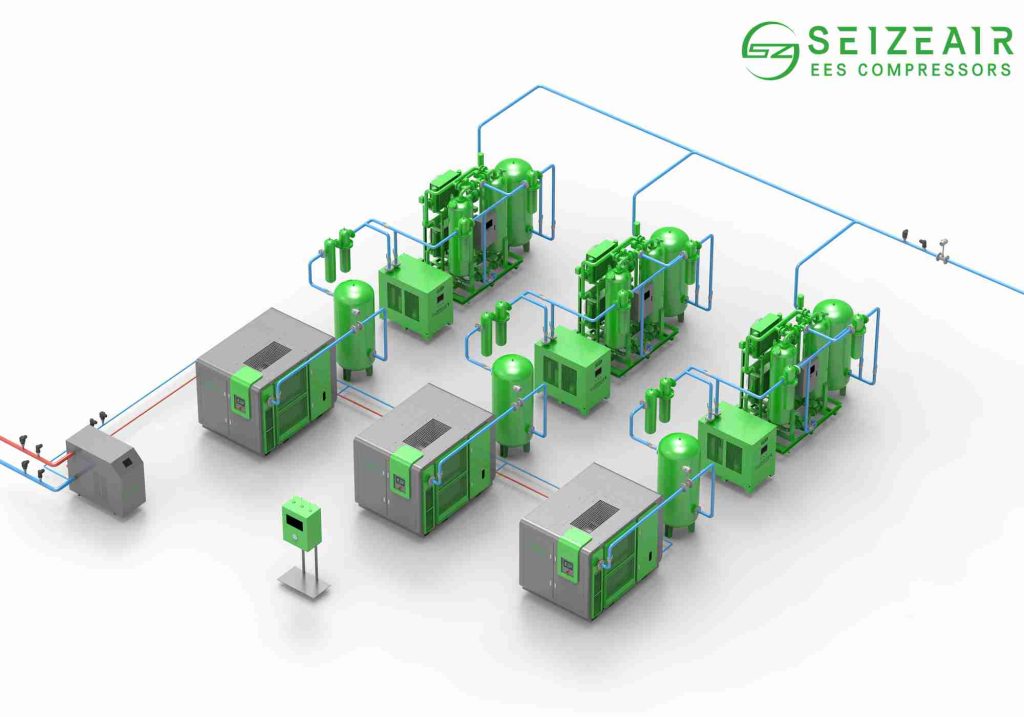
At Seize Air we have spent years on both sides of this conversation — building the machines, and helping buyers who arrived with a quote that was too good to read properly. If you want a second opinion on a China air compressor factory direct price you have been given, send us the specification and the quote. We will tell you what is genuinely competitive, what is quietly missing, and what the machine will cost you to run for ten years. No obligation, and no hard sell.
Ready to check your quote? Send us your required flow, working pressure, duty cycle, power supply and destination port, and you will get a full FOB and DDP quotation with measured specific power figures, a certification pack and a written warranty and spares commitment — usually within two working days.
Talk to a Seize Air application engineer or browse the range to see which configurations are available factory direct.