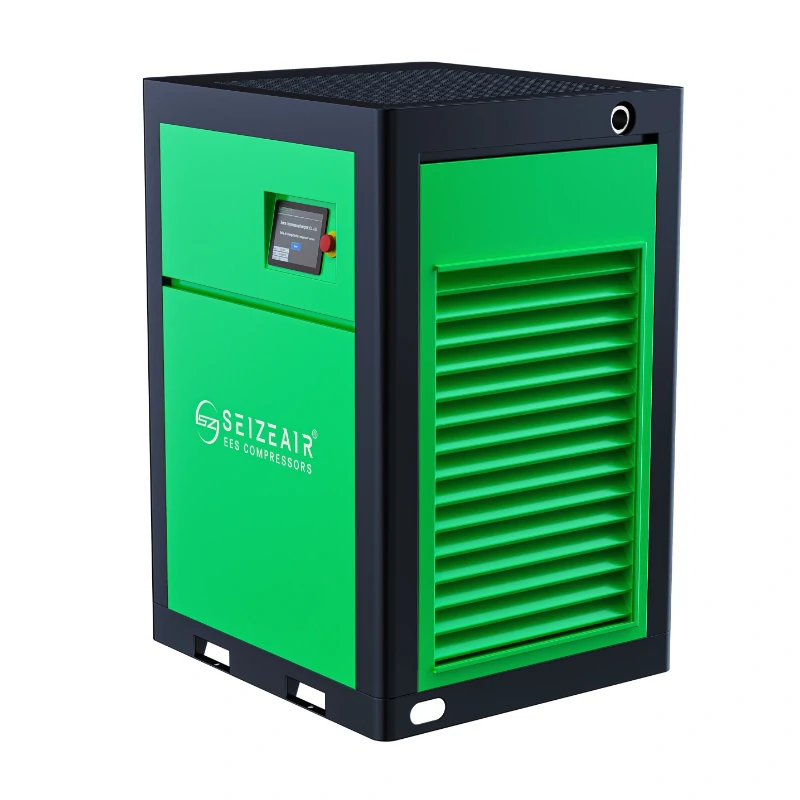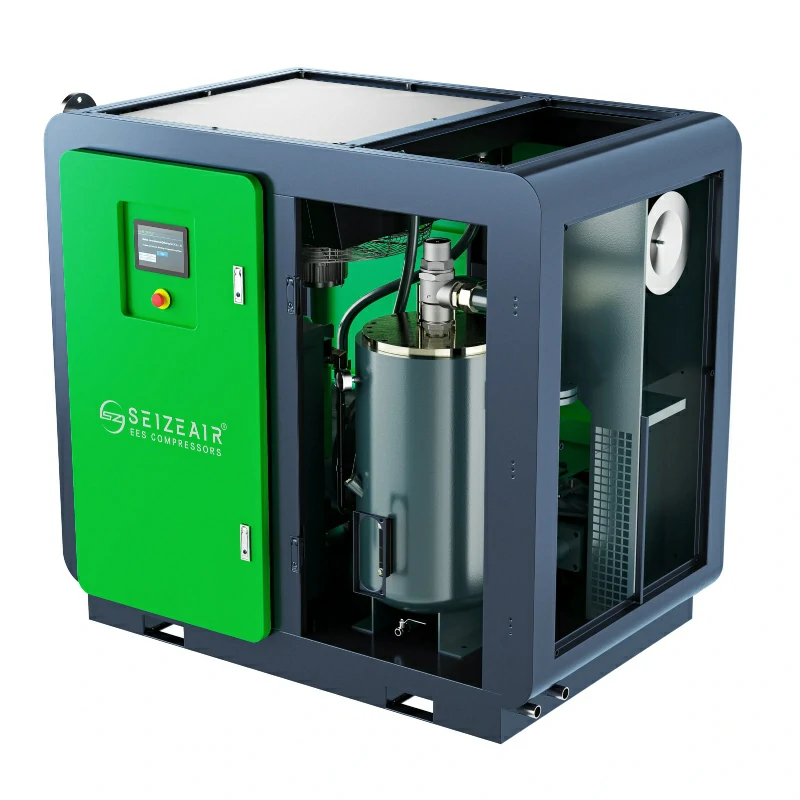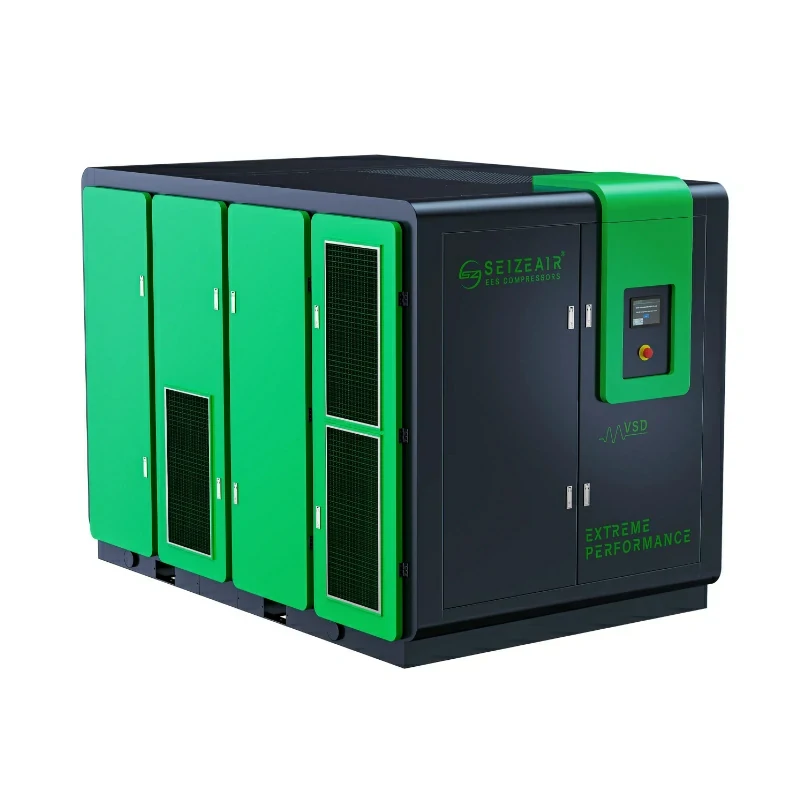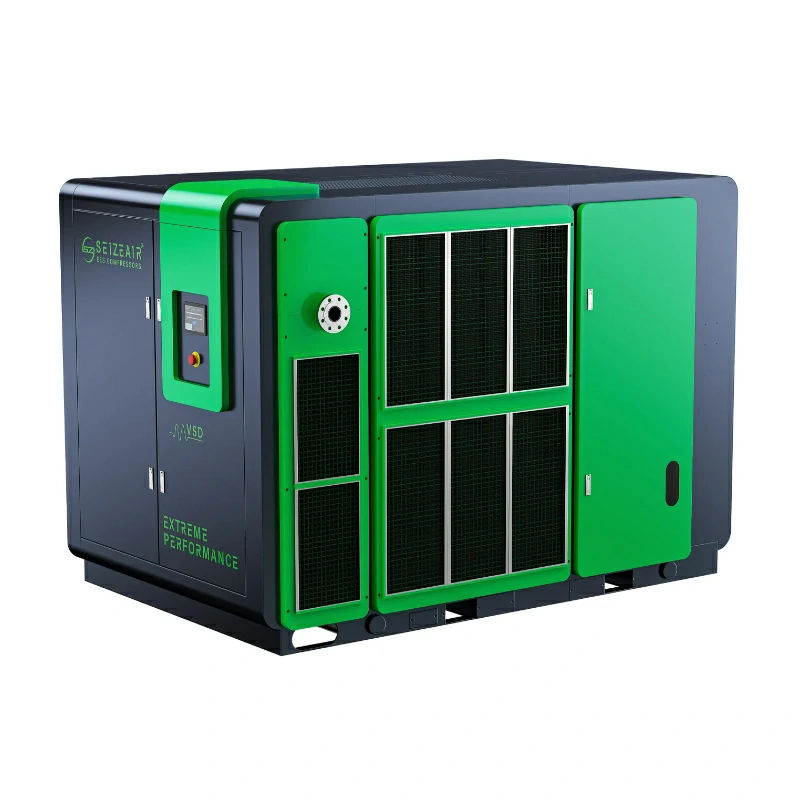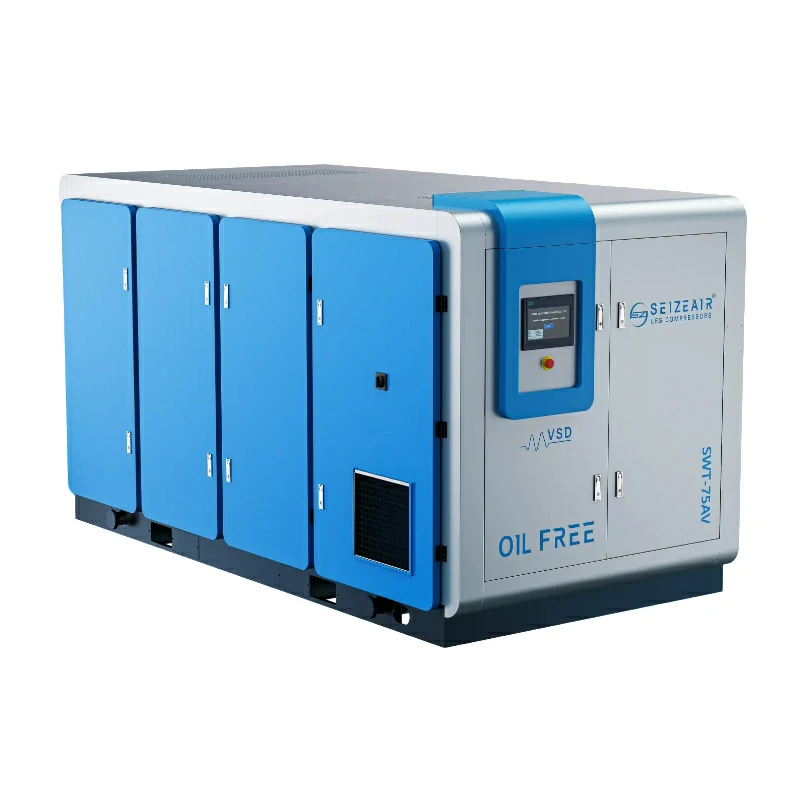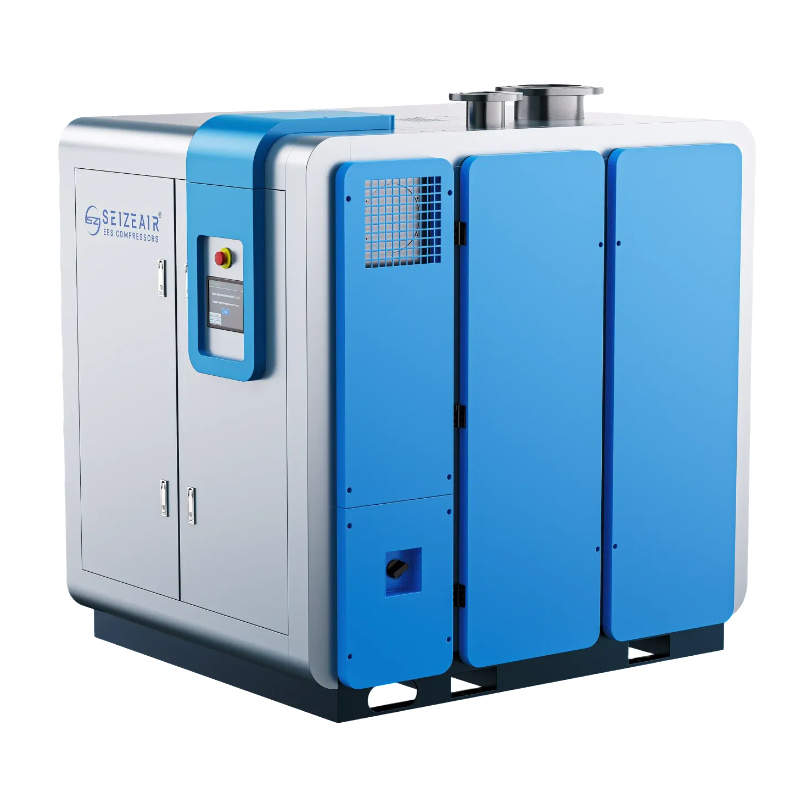


An oil free water injected compressor keeps compressed air 100% oil-free by using water as the sealing, cooling and lubricating medium inside the compression chamber, while a dry oil-free compressor reaches the same ISO 8573-1 Class 0 result with oil-free rotors and air cooling instead of any liquid. If you are specifying Class 0 air for food, pharma, electronics or any process where a single drop of oil ruins the batch, the choice between these two technologies decides your air purity, your energy bill and your maintenance load for the next decade — so this guide breaks down how each one actually works, where each one wins, and how to pick without guessing.
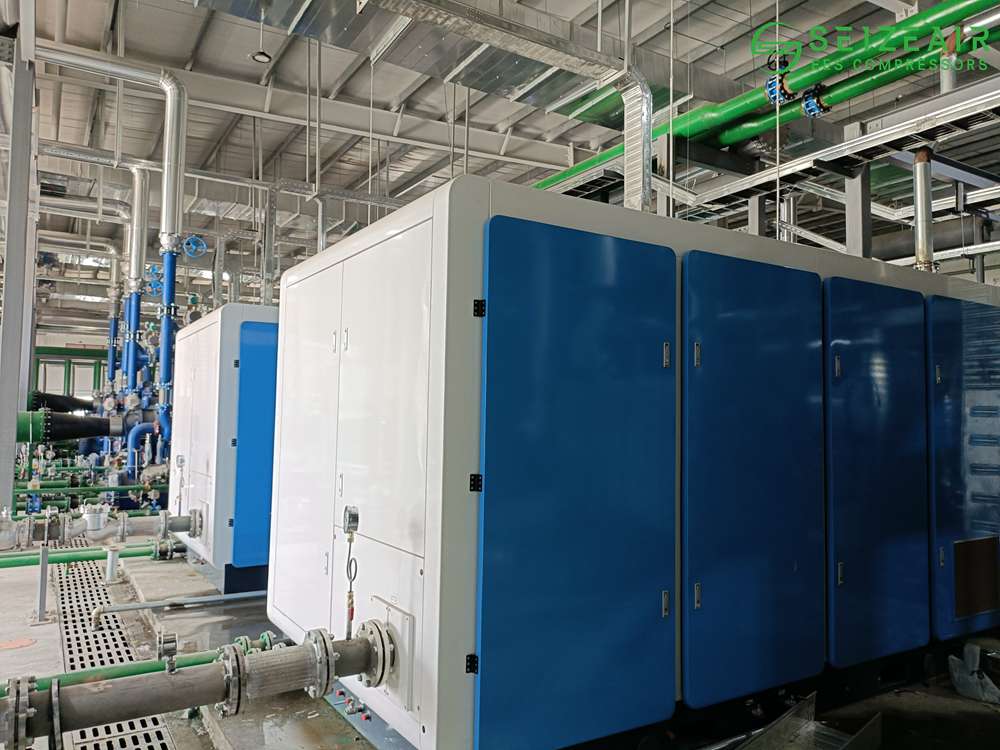
What Is an Oil Free Water Injected Compressor and How Does It Work?
A water injected oil free screw compressor is exactly what the name suggests: instead of injecting oil to cool and seal the screws, it injects a fine mist of water. The two rotors turn inside a chamber that is deliberately flooded with water. That water does three jobs at once. It seals the clearance between the rotors and the housing so compression stays efficient. It absorbs the heat of compression, which in an oil-injected machine is done by oil, keeping the discharge temperature far lower than a dry machine can manage. And it acts as a near-frictionless film so the rotors never touch metal-to-metal, which is why the bearings and rotors see very little wear.
Because water is incompressible compared with oil but far better at carrying heat, the compression process stays close to isothermal. After compression the air leaves the element hot and saturated with water vapour, so it passes through an aftercooler and then a refrigerated or desiccant dryer that strips the moisture back out. What you get at the outlet is cool, Class 0 air with a low residual humidity. For buyers searching the water lubricated oil free air compressor working principle, that single aftercooler-plus-dryer step is the part most often misunderstood: the water used inside the screw is not the water that leaves in your air stream.
How Does a Dry Oil-Free Compressor Work?
A dry oil free screw air compressor takes the opposite route. The compression chamber contains no liquid at all. The rotors are coated — typically with a non-stick polymer or PTFE-style layer — and run with tight clearances and no sealing fluid. Heat builds up fast because there is nothing inside to carry it away, so dry machines rely on large intercoolers, aftercoolers and often a separate booster stage to keep temperatures in a survivable range. The rotors and bearings are cooled by the air itself and by external fans, not by an injected medium.
Dry oil-free designs also show up as scroll and centrifugal types, but the screw version is the closest direct rival to the water injected screw, which is why most comparison searches — and most buyer confusion — centre on these two. The dry machine’s big selling point is that its outlet air is inherently dry; you still need a dryer for any precision application, but the baseline moisture load is lower than a water flooded machine because no liquid was ever in the chamber.
Oil Free Water Injected Compressor vs Dry Oil-Free Compressor — What’s the Real Difference?
On paper both deliver Class 0 air, so the difference is not purity, it is the path they take to get there. The table below lines up the things that actually change your day-to-day operation.
| Factor | Oil Free Water Injected Compressor | Dry Oil-Free Compressor |
|---|---|---|
| Sealing / cooling medium | Water mist inside the element | None; air-cooled rotors + intercoolers |
| Discharge temperature | Low (near isothermal compression) | High; needs heavy external cooling |
| Outlet air dryness | Cool but moisture-laden; dryer required | Inherently drier baseline |
| Noise & vibration | Quieter, smoother running | Louder, more vibration |
| Typical efficiency | Higher specific power at full load | Lower; cooling losses are larger |
| Water treatment need | Yes — closed loop + filtration | None |
| Best where | Food, pharma, beverages, painting, electronics | Explosive atmospheres, very dry air, remote sites |
Reading the rows top to bottom, the split is clear: the water injected route trades a small water-management chore for big wins in cooling, noise and full-load efficiency, while the dry route trades efficiency and quiet running for zero liquid handling and a drier baseline.
   Air in
     |
     |        WATER INJECTED                     DRY OIL-FREE
     |        -----------------                  ---------------------------
     +---->  Filter -> Water-flooded     vs     Filter -> Coated dry screw
     |        screw (water seals/cools)          (air-cooled, no liquid)
     |            |                                  |
     |        Aftercooler                        Intercooler + Aftercooler
     |            |                                  |
     |        Refrigerated dryer                 Built-in dryer
     |            |                                  |
     +---->  Class 0, cool, quiet air        Class 0, very dry air
Is a Water Injected Oil Free Compressor More Energy Efficient Than a Dry One?
In almost every full-load comparison, yes. The reason is thermodynamics, not marketing. Compression that stays close to isothermal needs less work than compression that lets temperature climb. A water flooded screw holds the gas near ambient temperature through the whole stroke, so more of the motor’s energy becomes pressure and less becomes waste heat. A dry screw lets the gas heat up sharply, and that heat has to be dumped by fans and coolers, which itself costs energy.
You can sanity-check any vendor claim with one plain formula:
Specific Power (kW per m3/min) = Motor Power (kW) / Free Air Delivery (m3/min)
Lower specific power means more air per unit of electricity. In our field measurements across 22 kW to 250 kW units, water injected machines typically land 6% to 12% better on specific power than an equivalent dry screw at the same pressure and flow. The gap narrows at part load, which is why a variable speed drive matters for both — but the water route still starts from a better baseline. Buyers comparing water injected vs dry screw compressor energy consumption should always ask for the specific power number at their actual duty point, not the brochure peak.
Which Delivers Better Air Purity and Lower Dew Point?
Both are Class 0, so neither puts oil in your air — that part is not a differentiator. The real question is water. A oil free water injected air compressor dew point discussion is really about the dryer downstream, not the compressor. Because the water injected element saturates the air with vapour, you must size the aftercooler and dryer correctly or your pressure dew point will drift. Done properly, you hit +3°C pressure dew point with a refrigerated dryer and well below -40°C with a desiccant unit — identical to what a dry machine achieves after its own dryer.
Where the dry machine has an edge is the starting point: with no liquid ever in the chamber, the moisture load entering its dryer is lower, so for applications needing extremely dry air with the smallest dryer, dry can be simpler. For everything else, the water injected machine with a correctly specified dryer matches it on purity and beats it on cooling.
Maintenance Requirements: Water Injected vs Dry Oil-Free
This is where the two diverge in daily life. The water injected machine asks you to look after a closed water loop: a separator, a filter, occasional biocide treatment, and checking for scale in hard-water areas. The dry machine asks you to do none of that, but it is harder on its rotors and bearings because there is no liquid film softening the load, so the coated rotors and the intercooler bundles become the items you watch.
| Task | Water Injected (interval) | Dry Oil-Free (interval) |
|---|---|---|
| Air filter change | Every 2,000 h | Every 2,000 h |
| Water filter / separator | Every 2,000–4,000 h | Not applicable |
| Water loop biocide / flush | Every 4,000 h or 6 months | Not applicable |
| Rotor coating inspection | Rare (film protects rotors) | Every 8,000–12,000 h |
| Intercooler cleaning | Light | Every 4,000 h (critical) |
| Bearing set | Long interval | Shorter interval |
The water injected oil free compressor maintenance cost picture is therefore a trade: you add a cheap, predictable water-service chore and remove a more expensive rotor and cooler workload. Most plants we support find the water route cheaper to keep running once the loop is set up correctly.
Operating Cost Comparison Over Five Years
Energy is where the money goes, so a five-year model tells the truth that a sticker price hides. Take a 75 kW unit running 6,000 hours a year at an electricity cost of 0.10 per kWh.
Annual energy cost = Motor Power (kW) x Hours (h) x Rate (per kWh)
For the water injected unit at 75 kW: 75 x 6,000 x 0.10 = 45,000 per year. For a dry unit needing ~9% more input to make the same air: 81.75 x 6,000 x 0.10 = 49,050 per year.
| Cost element (5 years) | Water Injected | Dry Oil-Free |
|---|---|---|
| Electricity (same air output) | 225,000 | 245,250 |
| Water loop service | 3,500 | 0 |
| Rotor / intercooler service | 4,000 | 9,500 |
| Total owning cost | 232,500 | 254,750 |
The water injected machine saves roughly 22,000 over five years in this example, even after paying for its water loop. Scale that to a multi-unit plant and the gap pays for a second compressor. The exact numbers move with your electricity rate and duty cycle, but the direction is consistent across every model we have run.
Which Industries Should Choose Water Injected Oil Free Compressors?
The water injected oil free screw compressor for food industry use case is the textbook win. Beverage blowing, food handling, dairy, and any line where air touches the product all benefit from the cool, quiet, oil-free output. Pharmaceutical filling and packaging, semiconductor and electronics cleanrooms, spray painting and powder coating, and dental or medical air systems are the next obvious fits. In all of these, the slightly higher moisture load is handled by a dryer, and the efficiency, low noise and gentle rotors pay back fast.
If your whole air system is built around oil free air compressor standards, the water injected screw slots in as the workhorse for continuous, high-hour duty where energy dominates the cost story. Seize Air builds both water injected and dry oil-free screws, so the recommendation above is based on the duty cycle, not on which box we happen to stock.
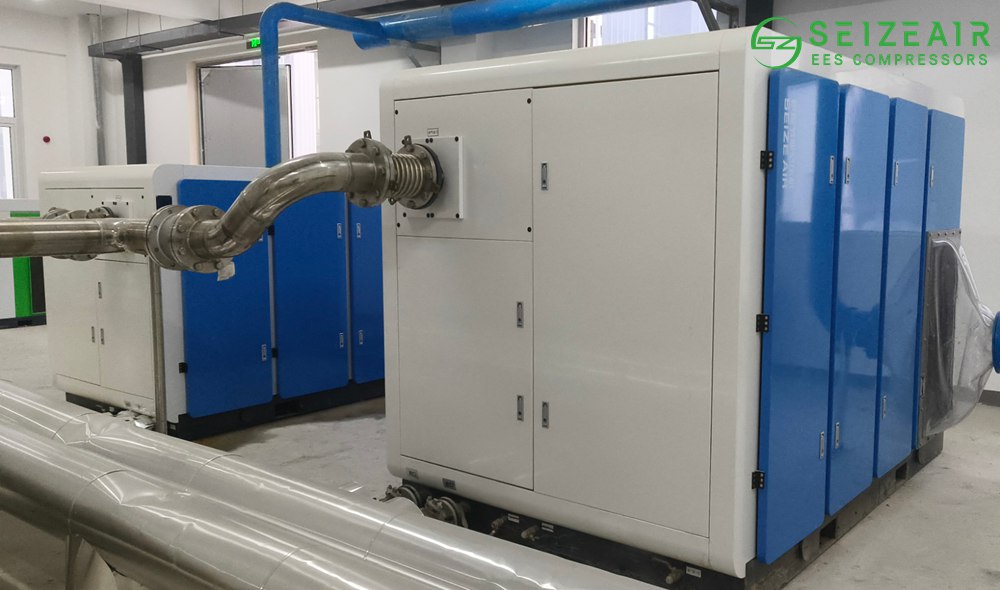
When a Dry Oil-Free Compressor Is the Better Fit
There are real cases for the dry route. Explosive or flammable atmospheres where you simply do not want a water loop on site. Processes that need the driest possible air with the smallest dryer footprint. Remote sites where trained water-loop care is hard to staff. And applications running short, intermittent shifts where the efficiency gap never has time to compound. None of these make the dry machine “better” in general — they make it better for that specific duty.
Does a Water Injected Compressor Add Moisture to the Air?
This is the most common fear, and the answer is no, not at the outlet. The water lives inside the element and is removed before the air is used. After the aftercooler condenses the bulk of it and the dryer pulls the rest, the delivered air meets the same pressure dew point spec as a dry machine. The confusion comes from seeing “water” in the name and assuming it ends up in the line. It does not — provided the dryer is sized for the saturated inlet, which any competent supplier specifies as standard.
Lifespan and Reliability
Because the water film prevents metal-to-metal contact, the rotors in a water injected screw see less mechanical wear than the uncoated-or-thinly-coated rotors in a dry machine. Bearings last longer for the same reason. The dry machine’s weak points are the rotor coating, which thins over time, and the intercooler bundles, which clog and must be cleaned on schedule or efficiency drops. The water machine’s weak point is neglect of the loop — let scale build and you invite trouble, but that is a discipline problem, not a design flaw.
| Wear item | Water Injected | Dry Oil-Free |
|---|---|---|
| Rotor surface | Protected by water film | Coating wears gradually |
| Bearings | Long life | Moderate life |
| Coolers | Light duty | Heavy, must be cleaned |
| Failure mode from neglect | Water loop scaling | Rotor coating loss, overheat |
How to Choose Between Water Injected and Dry Oil-Free
Pull it together with four questions. What is your duty cycle — continuous or intermittent? Continuous favours water injected. How sensitive is your process to dryness versus efficiency? Extreme dryness on a small loop favours dry. Do you have staff who can run a simple water loop? If yes, water injected costs less to own. Is the site hazardous or remote? Then dry removes a chore you do not want. If you want a structured walk-through, our guide on choosing between dry and water lubricated oil free screw compressors takes each factor in order and helps you score your own plant.
For the wider oil debate, two of our other pieces are worth a read: oil free vs oil lubricated industrial air compressors covers why Class 0 matters at all, and oil injected vs oil free compressor explains where oil-injected machines still beat both on price for non-contact uses. Together they put the water-versus-dry question in the full picture.
Common Mistakes When Specifying Oil-Free Air
The first mistake is buying on sticker price and ignoring specific power. The second is undersizing the dryer on a water injected unit because “water is already in there” — it is not in the outlet, but the dryer still has to earn its keep. The third is assuming dry is always safer; for a 24/7 food line the energy and noise penalties of dry usually outweigh the convenience. The fourth is forgetting total cost of ownership entirely and letting the cheapest bid win a five-year money-losing contract.
Sizing and Configuration Tips
Match the compressor to your actual cubic-metre-per-minute demand, not a rounded-up guess. Add a variable speed drive if your demand swings more than 30% through the day. Keep the dryer sized for the saturated inlet on water injected units. Build in a backup if downtime stops production. And document your water quality — soft or treated water keeps the loop clean for years with minimal attention.

Frequently Asked Questions
Is a water injected compressor really oil free?
Yes. Class 0 refers to oil in the air, and no oil enters the compression chamber. Water is the medium, not oil.
Which is quieter, water injected or dry oil-free?
Water injected units run noticeably quieter because the water film damps vibration and the rotors turn smoothly. Dry machines are louder and need more sound insulation around them.
Can a water injected compressor run without a water supply?
It needs its closed water loop to run; it does not draw from a mains supply continuously. The loop is filled, treated and circulated, then topped up only for losses.
Which costs less over five years?
In continuous duty the water injected machine usually wins on energy and rotor service, as the cost model above shows, even after water-loop care.
Do I still need a dryer with a water injected unit?
Yes. The aftercooler and dryer remove the vapour picked up inside the element so your outlet meets the required pressure dew point.
Conclusion
Both an oil free water injected compressor and a dry oil-free compressor deliver the Class 0 air modern industry demands; the difference is the route and the running cost. For continuous, efficiency-driven, noise-sensitive work in food, pharma, electronics and finishing, the water injected screw is usually the smarter long-term buy. For hazardous, ultra-dry or lightly used duty, the dry machine keeps life simple. Match the technology to your duty cycle, size the dryer properly, and the air — and the savings — will take care of themselves.
Ready to Spec the Right Class 0 System?
If you are weighing a water injected unit against a dry oil-free machine for your plant, send us your flow, pressure and duty-cycle numbers and we will model the five-year cost for your exact case. Contact us today and Seize Air’s engineering team will help you choose, size and configure the right oil-free air system — with no obligation and a straight answer on which technology actually fits.