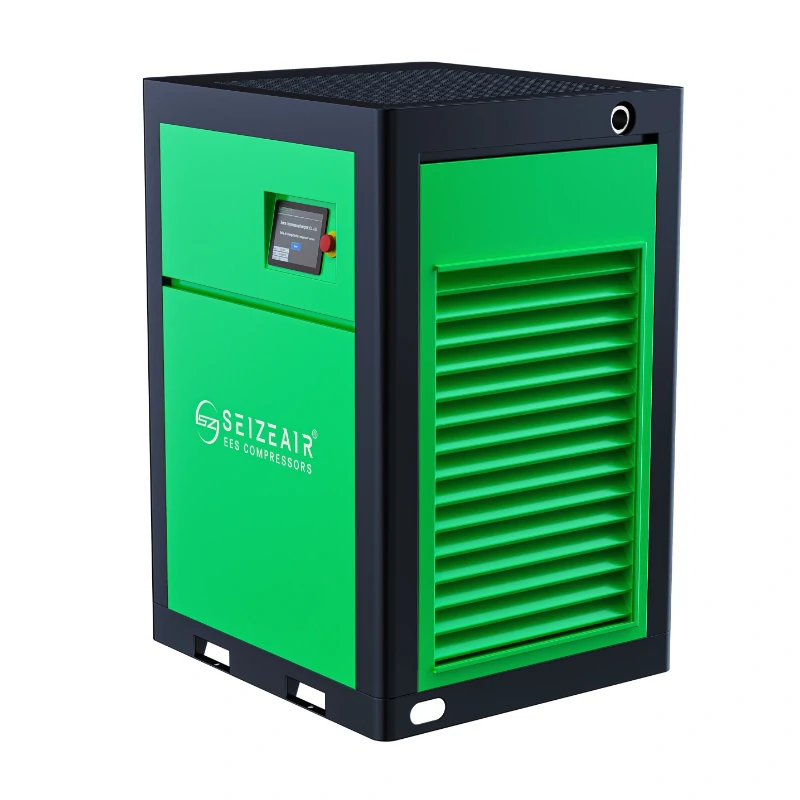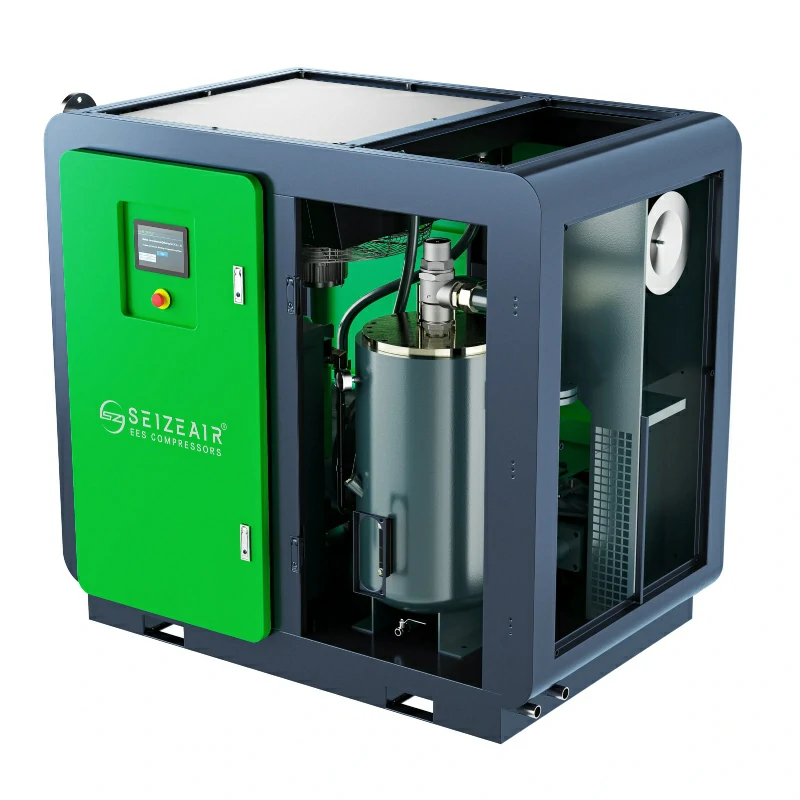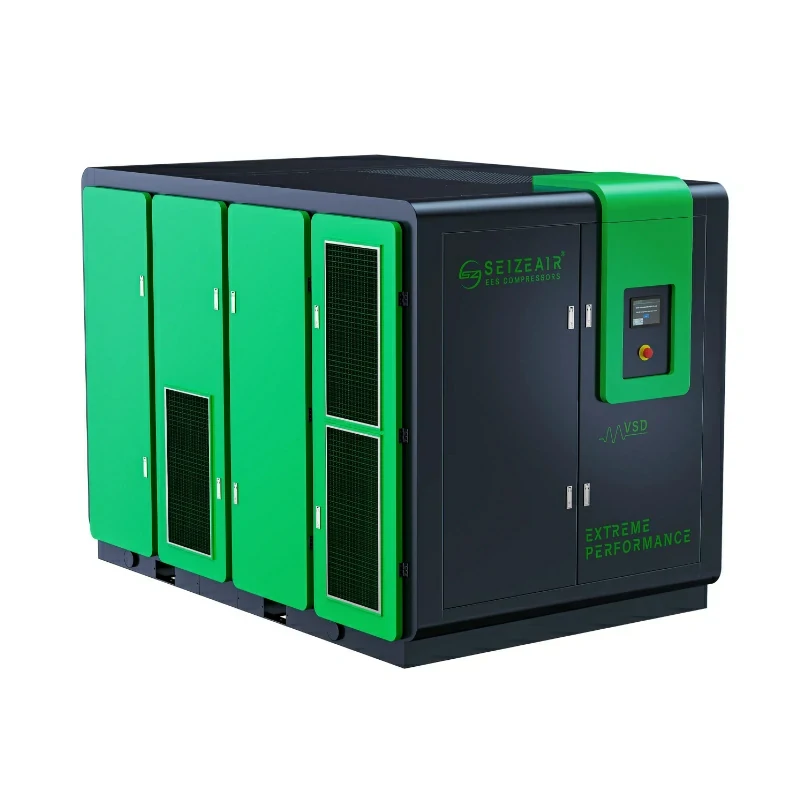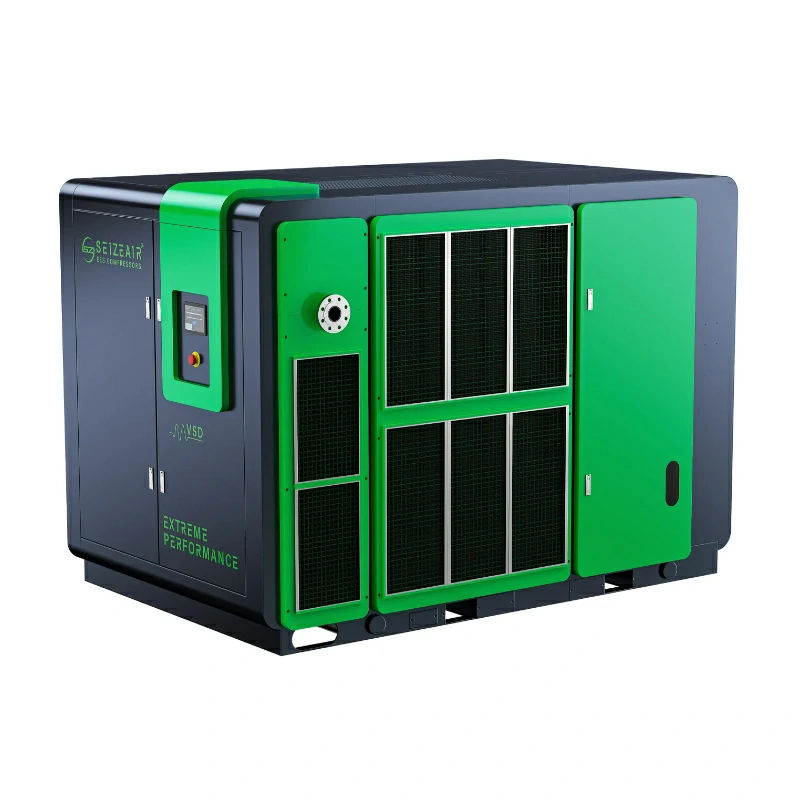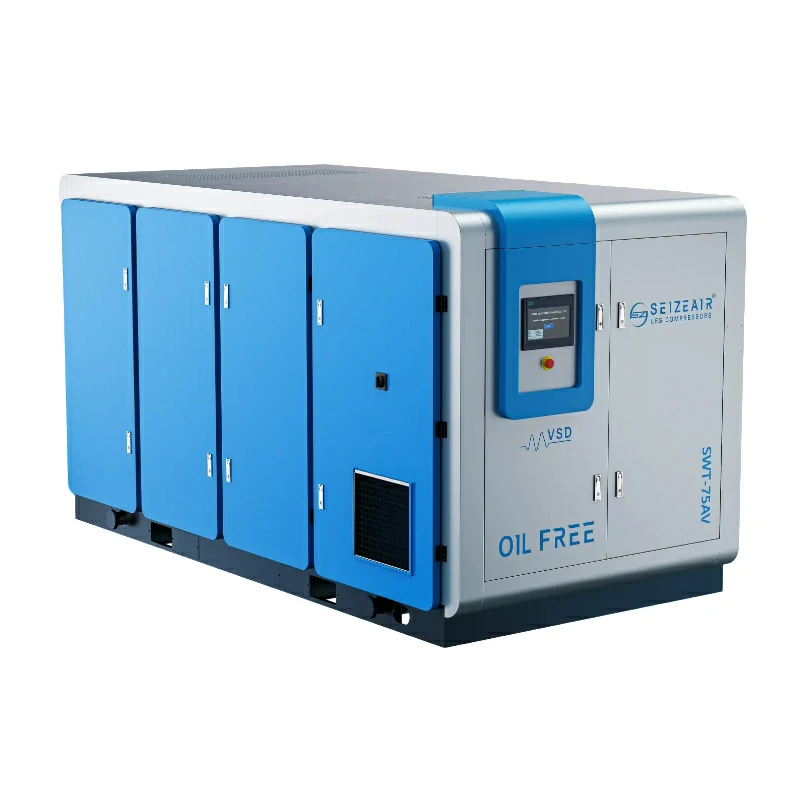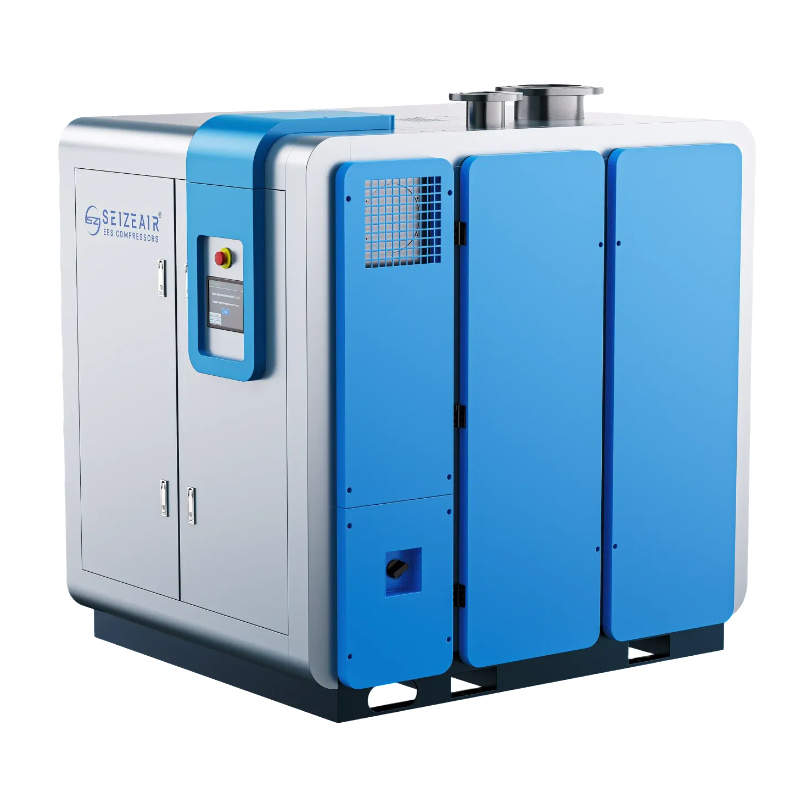


A class zero air compressor is the only compressed air system certified to ISO 8573-1 Class 0, guaranteeing zero oil contamination in the air that touches your product. For food, beverage, and pharmaceutical plants, that guarantee is the baseline for safe production rather than a premium extra. This guide explains what Class 0 actually certifies, how it differs from a standard oil-free machine, which technologies deliver it reliably, and how to choose, install, and maintain a system that keeps both your product and your audit trail clean.
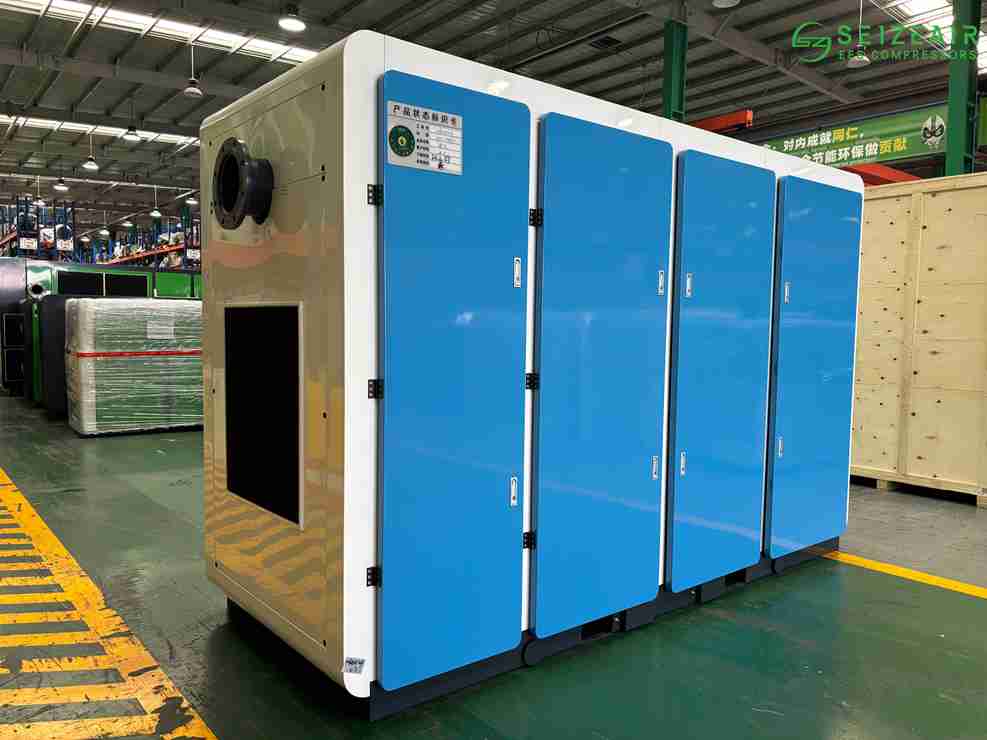
What Is a Class 0 Air Compressor and How Does It Work?
A class zero air compressor is a machine built so that no lubricating oil can enter the compressed air stream during the compression step. In a conventional lubricated screw or piston unit, oil is sprayed into the chamber to seal, cool, and lubricate the rotors. Some of that oil always carries over, even after separators and filters. A true Class 0 machine removes oil from that equation entirely, either by using non-oil sealing media (water or a permanent coating) or by keeping the oil circuit physically separated from the air path so the two never meet.
The result is air where oil content is not just “very low” but certified to a level the manufacturer must define and stand behind. That matters because compressed air is a direct or indirect food contact medium in more places than most plant managers realize. It blows bottles, conveys powders, drives actuators that touch packaging, and aerates products. If oil is in that air, oil is in the food.
Most buyers start their research by looking for an oil-free air compressor, which is the right family to search. The finer point is that “oil-free” describes a design approach, while “Class 0” describes a measured purity outcome. We will separate those two ideas clearly below, because confusing them is the single most common reason a food plant ends up with the wrong machine.
What Does ISO 8573-1 Class 0 Actually Certify?
ISO 8573-1 is the international standard that defines compressed air purity. It splits contaminants into three families, each rated on its own scale:
- Solid particles (dust, rust, microbes) – Classes 0 to 9 by particle count and size.
- Water (humidity, liquid, aerosol) – Classes 0 to 9 by pressure dew point.
- Total oil (aerosol, liquid, vapor) – Classes 0 to 4 by concentration.
A certified class zero air compressor is certified against the total oil scale, which is the part food safety cares about most. Oil is the contaminant that causes taste, odor, and shelf-life problems, and it is the hardest to remove once it has entered the system. The table below shows how the oil classes stack up.
| ISO 8573-1 oil class | Max total oil (mg/m³ at 1 bar, 20°C) | What it means in practice |
|---|---|---|
| Class 0 | Manufacturer-defined, must be stated; effectively the tightest limit, with no oil detectable by the specified method | “Technically oil-free.” The only class accepted for direct food and pharma contact. |
| Class 1 | 0.01 | Trace oil, below most field detection but still present. General industry only. |
| Class 2 | 0.1 | Low oil. Acceptable for non-contact industrial air. |
| Class 3 | 1 | Moderate. Plant air, tools, non-hygienic processes. |
| Class 4 | 5 | High. Never used where product contact is possible. |
The key thing to understand about ISO 8573-1 class 0 compressed air is that Class 0 is the only class where the standard does not print a fixed number. Instead, the equipment maker must publish the limit they guarantee, and an independent lab verifies it. That published number is what you cite in a HACCP plan. If a supplier cannot show you that documented limit, they are not selling you a certified Class 0 system, no matter what the brochure says.
Is a Class 0 Compressor the Same as an Oil-Free Compressor?
This is the question every procurement manager should ask, because the answer decides whether your audit passes. The short version: all Class 0 machines are oil-free in design, but not every oil-free machine qualifies as Class 0. The difference comes down to measurement versus intention.
“Oil-free” tells you how the machine is built. “Class 0” tells you what came out of it when someone actually tested it. A compressor can be engineered without oil in the chamber and still pick up oil vapor from the surrounding factory air at the intake, or pull trace hydrocarbons through a poorly placed intake near a diesel generator. Those routes bypass the compressor entirely, which is why a class 0 certified air compressor is verified as a complete package, intake to outlet, not just as a bare pump.
So when someone asks does class 0 mean no oil at all, the honest engineering answer is: it means no oil above the manufacturer’s stated, third-party-verified limit, across the whole air system. It does not promise a perfect vacuum of hydrocarbon molecules. What it promises is that the risk is driven to a level food and drug regulators consider negligible, and that the claim is backed by test data rather than marketing language.
Class 0 vs Class 1: How Much Oil Is Too Much?
On paper, the gap between Class 0 and Class 1 looks tiny: Class 1 allows up to 0.01 mg of oil per cubic metre of air. That is a fraction of a drop spread across a room-sized volume. For a cement plant, it is nothing. For a food line, it is everything.
The reason is cumulative exposure. Compressed air runs continuously, so that “tiny” concentration multiplies across every cubic metre that touches your product over a shift, a week, a year. Oil aerosols also condense inside piping, forming films that harbor bacteria and slowly shed into downstream air. A single Class 1 machine feeding a bottling line can deposit enough oil over a season to trigger off-flavors and failed sensory tests that no one can trace to a specific day.
| Factor | Class 0 (certified) | Class 1 |
|---|---|---|
| Oil carryover | 0 by manufacturer’s stated, verified limit | Up to 0.01 mg/m³ |
| How the claim is proven | Independent lab test to ISO 8573-1 | Often self-declared |
| Risk to food contact | Accepted by FDA, EC, HACCP frameworks | Not accepted for direct contact |
| Typical application | Food, beverage, pharma, dental, electronics | General workshop and tool air |
| Capital cost | Higher | Lower |
For any plant asking about class 0 vs class 1 air compressor options, the deciding question is simple: does this air ever touch anything a person will eat or drink? If yes, Class 1 is off the table. The comparison only becomes relevant when you are weighing Class 0 against a non-certified oil-free unit, and that is a different (and smarter) conversation about verification, not about the number 0.01.
Why Food and Beverage Plants Cannot Risk Oil in Compressed Air
Oil in food-grade compressed air causes problems that show up in three ways, and none of them are subtle once they appear. The first is sensory: even microgram levels of certain lubricants produce rancid or chemical off-notes that trained panels detect long before a customer complains. The second is biological: oil films inside pipes become breeding grounds for microbes, undermining the clean environment you built the rest of the plant around. The third is regulatory, and it is the expensive one.
A contamination event tied to compressed air can force a recall that costs far more in brand damage than the compressor itself ever did. That is why an oil free air compressor food safety program treats air as an ingredient, not a utility. The same logic applies to a zero oil air compressor for food processing lines where the air directly contacts the product during blowing, mixing, or conveying.
Regulators and retailers have caught up with this. Major food safety schemes now expect documented air purity for any air used in a hygienic zone. A food grade air compressor is therefore less a specification and more a license to operate. Plants that skip it are not saving money; they are moving the cost onto a future recall line item, and that line item rarely ends well.
Where Class 0 Compressors Work Inside a Food Plant
Class 0 air shows up in more process steps than most people expect. Knowing where it matters helps you size the system and decide which lines need the certified supply versus which can run on general plant air.
- PET bottle blowing – the air that inflates every bottle is the inside surface the drink touches. This is the classic direct-contact case.
- Pneumatic conveying – moving flour, sugar, milk powder, or spices through pipes uses air that mixes with the product.
- Packaging and labeling – actuators, grippers, and blowing nozzles that touch wrappers and caps.
- Nitrogen generation – a Class 0 feed stream protects the membrane or PSA unit and the modified-atmosphere pack it serves.
- Fermentation and aeration – any step where air is bubbled through a culture or product.
- Control and instrument air – even “non-contact” valves can leak into contact zones, so many plants standardize the whole site on Class 0.
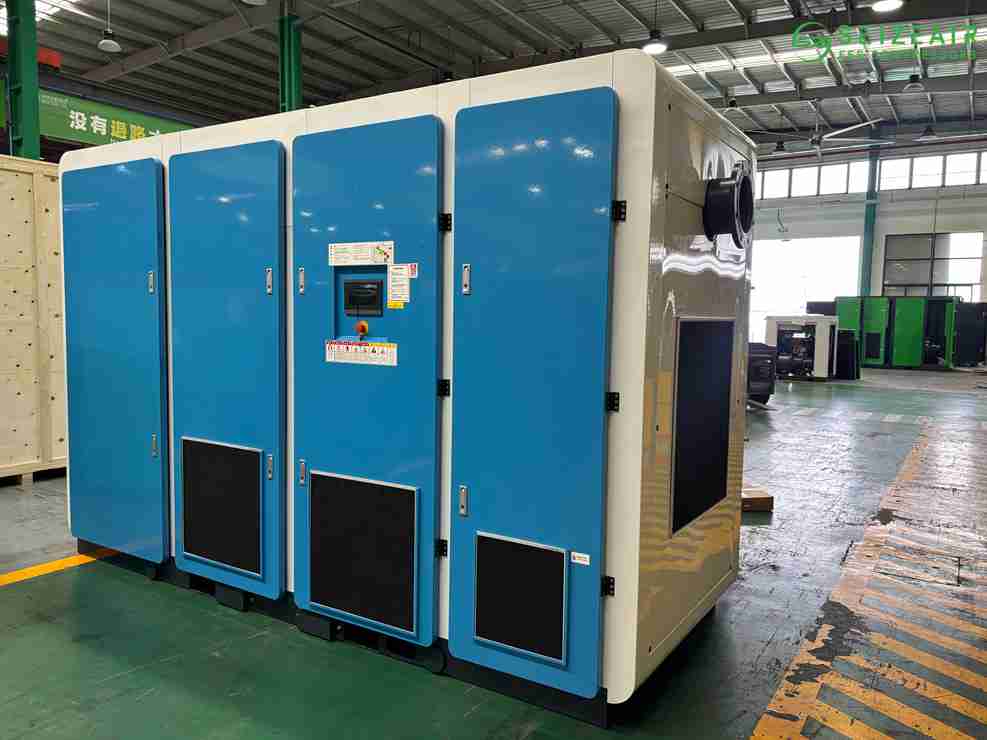
Each of these steps has its own flow and pressure profile, and the safest design is usually one certified ring main feeding every hygienic point. For a deeper walk through the applications and the equipment that fits them, our air compressor for food industry guide breaks down selection by process type.
Which Compressor Technologies Deliver True Class 0 Air?
Class 0 is an outcome, and several technologies can produce it. The right one depends on your flow, pressure, budget, and whether water in the air path is acceptable in your process.
| Technology | How it stays oil-free | Best fit | Practical notes |
|---|---|---|---|
| Dry oil-free screw | Rotors run with a protective coating; gearbox oil is sealed away from the air chamber | Medium to large food and pharma plants, 10–100+ m³/min | Higher air temperature at outlet; needs good cooling and downstream drying |
| Water-lubricated screw | Water replaces oil for sealing and cooling; single-stage, no oil circuit | Food plants where trace water is acceptable or useful | Very clean air, quieter, simpler service |
| Oil-free scroll | Two spirals compress with no contact and no oil | Labs, small packaging, low-flow points | Compact, low noise, limited flow per unit |
| Centrifugal (oil-free) | High-speed impellers, no internal lubrication in air path | Very large, constant-load sites | Best at high, steady flow; less flexible at part load |
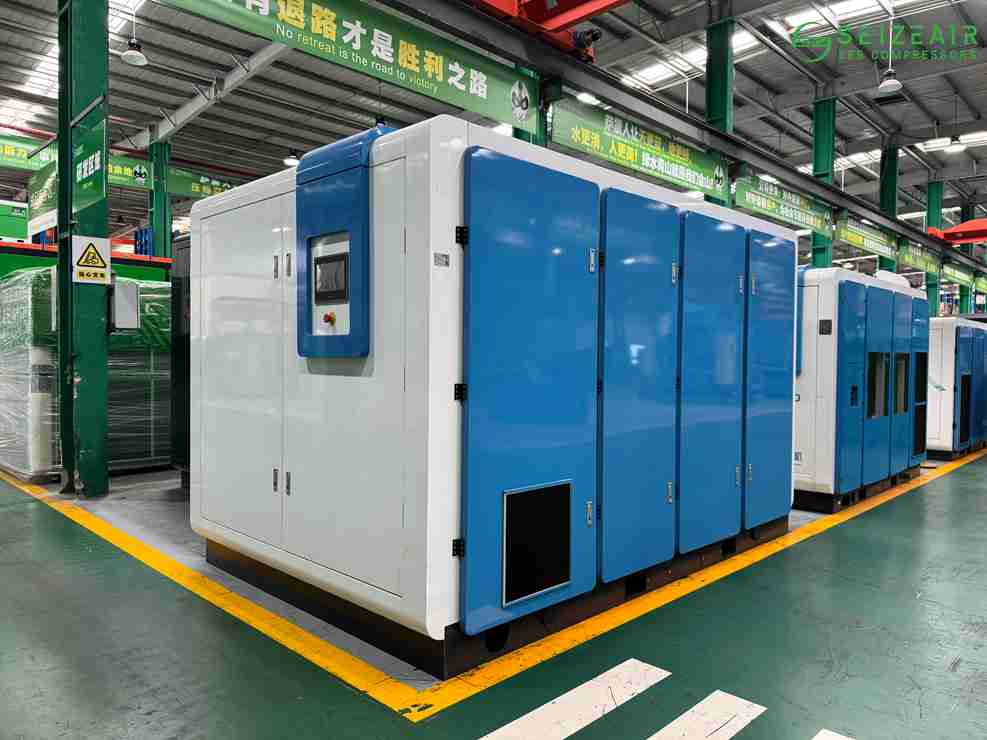
The most common workhorse for mid-size food plants is the oil free class 0 rotary screw air compressor, built either as a dry variant or a water-lubricated variant. The dry oil-free screw air compressor is the default for large, hot, demanding lines. The oil-free water-lubricated screw air compressor is gaining ground where plants want simpler maintenance and naturally clean air without a separate oil system to manage. For low-flow, intermittent points such as a small filling head or a lab, a compact oil-free scroll compressor is usually the economical answer.
The Downstream Chain Matters as Much as the Compressor
Here is the part that traps first-time buyers. A certified Class 0 compressor can still deliver non-Class-0 air if the rest of the system is wrong. The air leaving the machine is clean, but it then travels through pipes, receivers, dryers, and filters, and every one of those is a chance to pick up contamination.
The biggest hidden source is the intake. Ambient plant air near a diesel loader, a cooking line, or a solvent area already contains oil vapor. If the compressor sucks that in, no amount of oil-free compression removes it, because the oil was never in the machine to begin with. Intake placement and pre-filtration are therefore part of the Class 0 promise.
The other source is the drying and filtration train. Even oil-free air leaves the compressor warm and saturated, so you need a dryer to control water, and you need a precision filter to catch particles and any residual aerosol. For tight dew points, an adsorption dryer is the standard choice. The path looks like this:
Ambient air (may contain oil vapor)
      |
Intake pre-filter  -- removes coarse dust and some vapor
      |
Class 0 compressor  -- no oil added in the chamber
      |
Aftercooler  -- drops temperature, condenses bulk water
      |
[ precision filter ]  -- removes particles and aerosol
      |
[ adsorption dryer ]  -- removes water to target dew point
      |
Sterile / carbon filter (optional, for direct contact)
      |
Clean Class 0 air  -->  process
Get any single stage wrong and you invalidate the certificate at the point of use. That is why the compressor, dryer, and filter should be specified together, not bought separately from three vendors who each point at the other when the air test fails.
How Is Class 0 Certification Tested and Verified?
A genuine class 0 air compressor certification is not a sticker the factory prints. It comes from sampling the actual delivered air and measuring total oil with the methods set out in ISO 8573-1, usually by an independent laboratory. The lab collects air at defined points, captures oil aerosol and vapor, and reports a concentration the manufacturer then publishes as their Class 0 limit.
What does class 0 air compressor mean once it is on paper? It means the number is specific, it is verified, and it applies to the delivered system rather than a laboratory prototype. Good suppliers also re-test periodically and keep records you can request during an audit. If your industry is pharma or electronics, you will want those records on file, because auditors do ask to see them, and “we think it’s fine” is not an answer that survives scrutiny.
Class 0 and the Food Safety Rulebook: FDA, EC 1935/2004, and HACCP
Class 0 does not exist in a regulatory vacuum. In the United States, compressed air used in food contact falls under frameworks such as 21 CFR and is expected to meet the same safety expectations as any other food contact surface. In the European Union, materials and articles that touch food are governed by EC 1935/2004, which requires that they do not transfer contaminants in quantities that endanger human health. Compressed air is explicitly treated as a food contact medium in guidance from bodies such as the British Retail Consortium and other GFSI-recognized schemes.
HACCP plans increasingly include a compressed air step, and the accepted control measure is documented air purity, normally Class 0 for contact applications. The practical effect is that your compressor choice becomes part of your food safety paperwork, reviewed during every audit. Plants running pharmaceutical or laboratory-adjacent lines face even tighter particle and microbial limits, and our class 0 air compressor for pharmaceutical resource covers those extra requirements in detail.
How to Choose the Right Class 0 Air Compressor for Your Plant
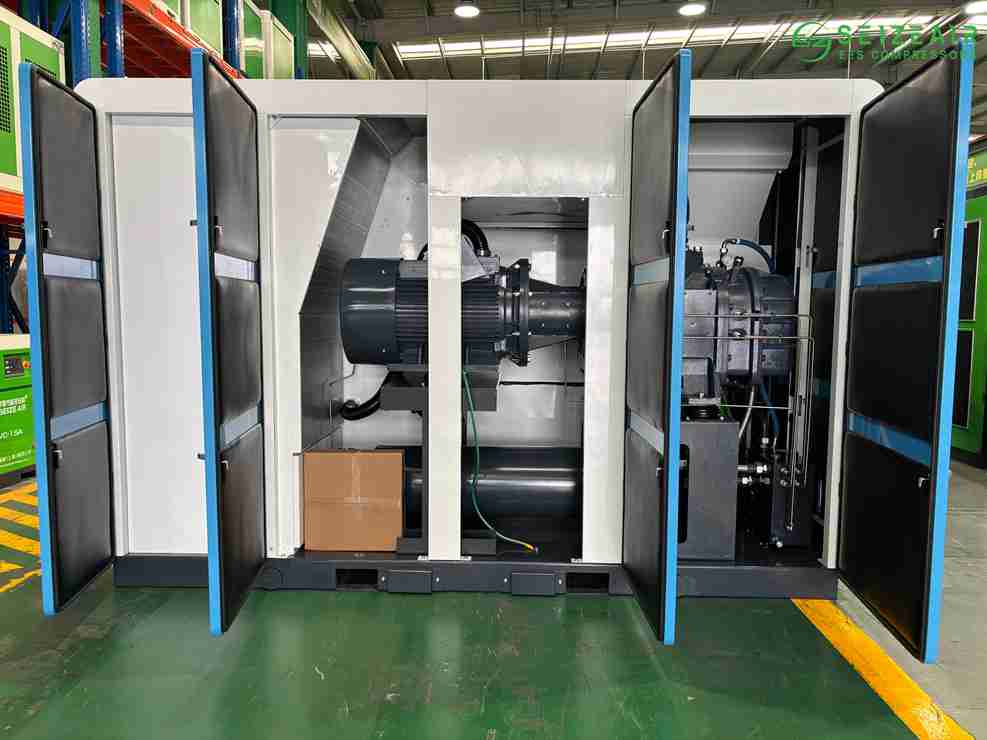
Choosing the best class 0 air compressor for food use is mostly about matching the machine to real duty, not chasing the biggest nameplate. Start with these inputs:
- Required flow in m³/min or cfm, measured at the point of use and including future line additions.
- Working pressure in bar or psi, remembering that filters and dryers drop pressure, so size the compressor above the process minimum.
- Duty cycle – a line that runs 24/7 wants a different machine than one used in shifts.
- Ambient conditions – heat, humidity, and intake air quality change the dryer and filter spec.
- Footprint and noise – food plants are tight and often close to filling rooms.
- Speed control – a variable-speed drive pays back fast where demand swings.
- Redundancy – ask what happens to production if the one Class 0 unit goes down.
The class 0 air compressor standard you are buying against should be stated on the datasheet with the actual verified oil limit, not buried in a footnote. Treat that number as a contract. A supplier who is vague about it is telling you something, and you should listen.
What Does a Class 0 Air Compressor Cost — and What Do You Save?
The purchase price of a Class 0 machine is higher than a lubricated unit, and anyone who tells you otherwise is selling something. But the purchase price is a small slice of the story. Energy is typically 70 to 80 percent of a compressor’s lifecycle cost, and a well-matched Class 0 unit with variable speed is often as efficient as its oil-lubricated cousin once you stop paying for oil, filters, and condensate treatment.
| Cost element over 5 years | Class 0 oil-free system | Oil-injected + filtration |
|---|---|---|
| Capital purchase | Higher | Lower |
| Lubricating oil consumption | None | Continuous, significant |
| Filter and separator elements | Few, long-life | Frequent, oil-soiled |
| Condensate oil disposal | Not required | Required, regulated |
| Product recall risk | Minimal | Materially higher |
| Five-year total cost | Often lower at scale | Often higher at scale |
You can frame the decision with a plain total-cost formula rather than a gut feel:
TCO over 5 years = Purchase price + (Rated kW x Load factor x 8,760 h x $/kWh x 5) + (Filter elements + oil changes + condensate treatment x 5) + Risk provision for contamination events.
Plug your real energy rate and duty into that line and the Class 0 option usually wins on the right-hand side even when it loses on the left. The risk provision is the line food safety teams care about most, because a single recall can erase a decade of small savings.
Keeping Class 0 Air Clean: Maintenance That Actually Matters
Class 0 is certified at commissioning, but it stays Class 0 only if you maintain the system around it. The maintenance that protects food safety is less about the compressor and more about the chain in front of and after it.
- Replace precision filter elements on schedule, not when they look dirty. A clogged filter does not just restrict flow; it can shed what it caught.
- Verify dryer performance with periodic dew-point checks. Water is the other half of the contamination problem.
- Keep the intake clean and well placed, away from diesel exhaust, cooking fumes, and solvent areas.
- Fix leaks promptly. Leaks pull untreated ambient air into the ring main through poorly sealed joints.
- Monitor, don’t assume. Periodic oil and particle sampling at the point of use is cheap insurance and great audit evidence.
- Train the people who open the system. A technician topping up a gearbox with the wrong oil near an air line can undo the certificate in an afternoon.
Common Misconceptions About Class 0
A few myths cost plants real money, so it is worth clearing them up before you buy.
Myth: Class 0 means absolutely zero oil molecules. No. It means no oil above the verified limit, which is already negligible for food and pharma. The certificate is about risk, not about defeating physics.
Myth: Any oil-free compressor is automatically Class 0. No. Without third-party verification of delivered air, “oil-free” is a design claim, not a purity result. Insist on the test data.
Myth: Only pharmaceutical plants need Class 0. Food and beverage lines that blow, convey, or contact product need it just as much. The recall risk is the same industry to industry.
Myth: Class 0 is always the expensive choice. On total cost of ownership, especially at scale and with variable-speed drives, it frequently costs less than running and cleaning an oil-lubricated system.
Talk to an Application Engineer
Choosing a class zero air compressor is less about buying a machine and more about protecting every product that touches your air. Specify ISO 8573-1 Class 0, match the technology to your process, and keep the downstream chain as clean as the compressor itself. If you are planning a new line or upgrading a contaminated system, Seize Air’s application team can size a certified Class 0 solution for your exact flow, pressure, and hygiene requirements. Reach out through our contact page and we will respond with a written recommendation and a budget range.