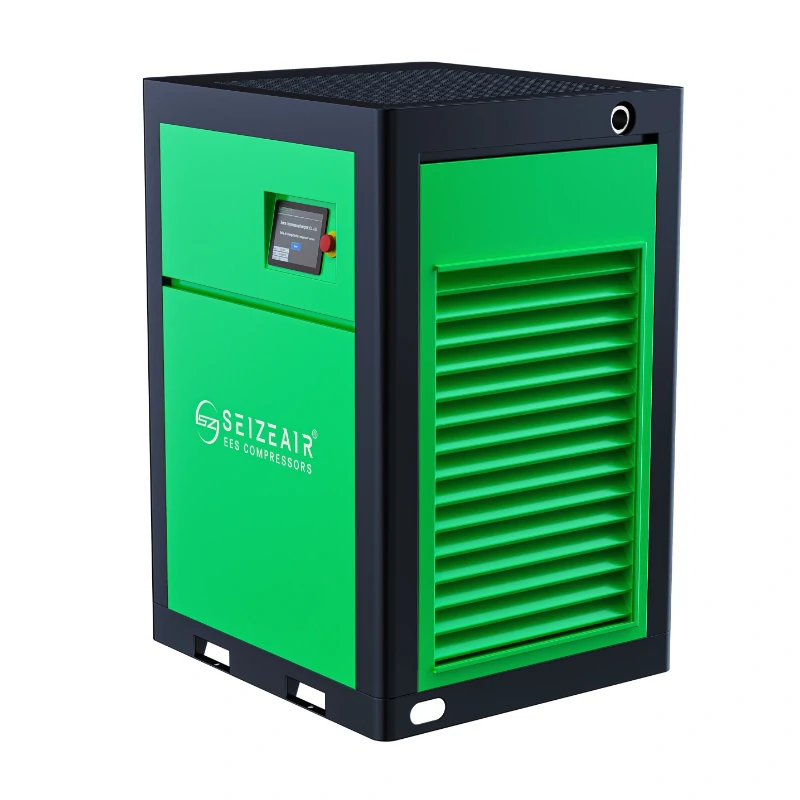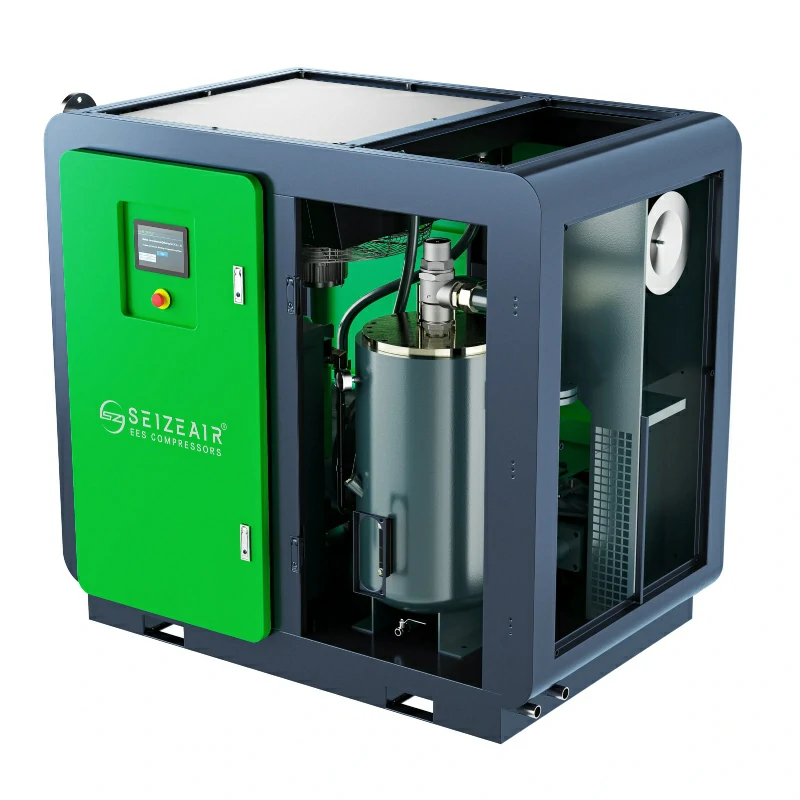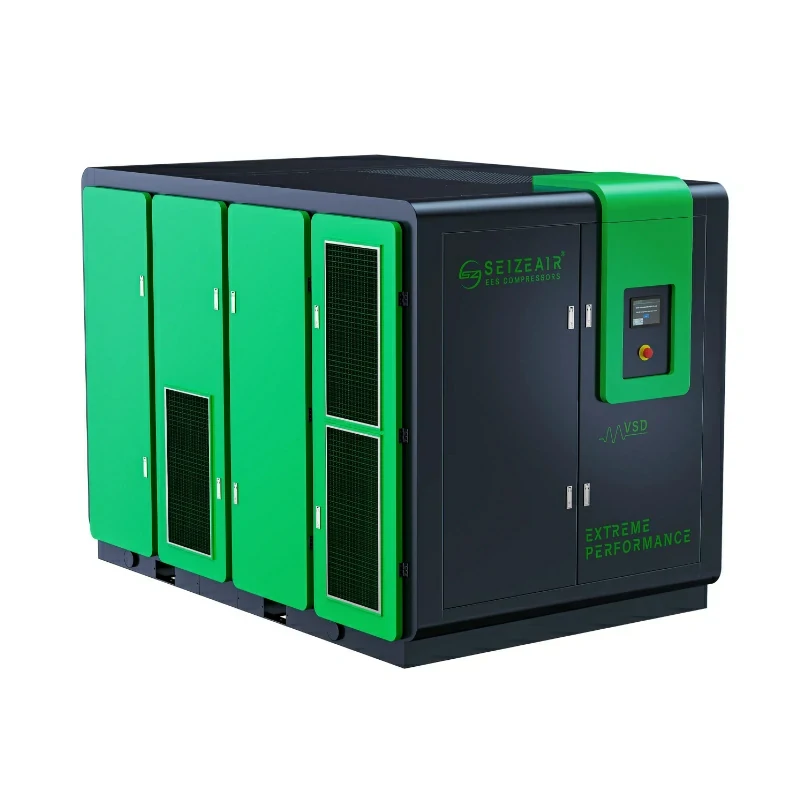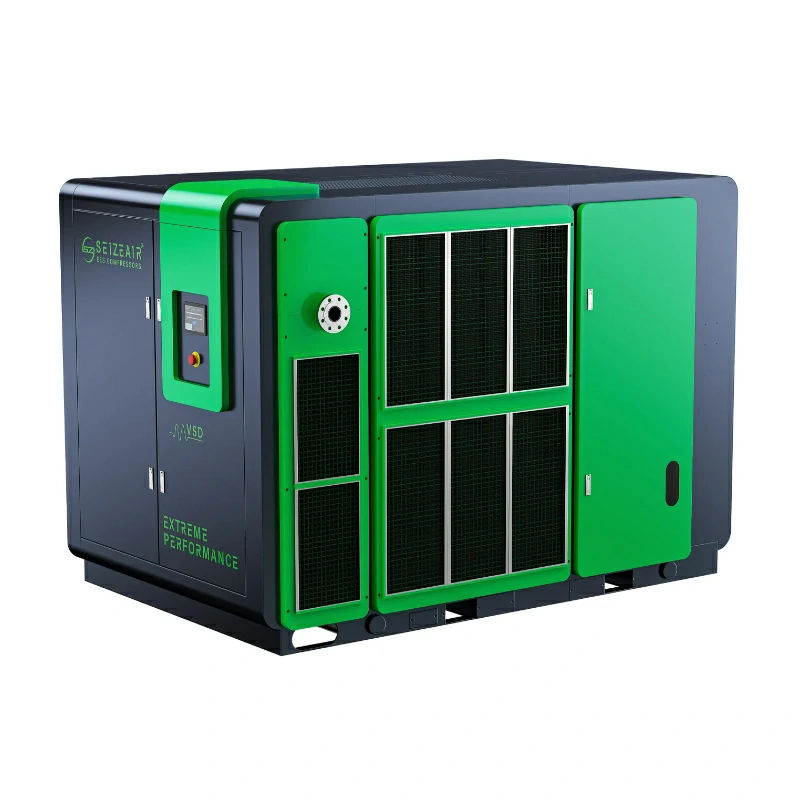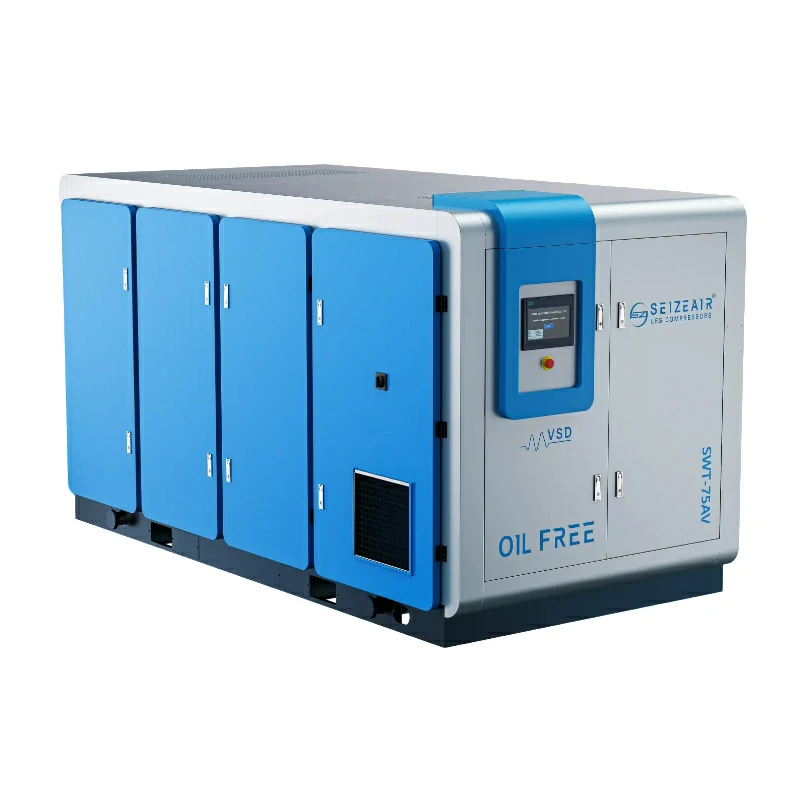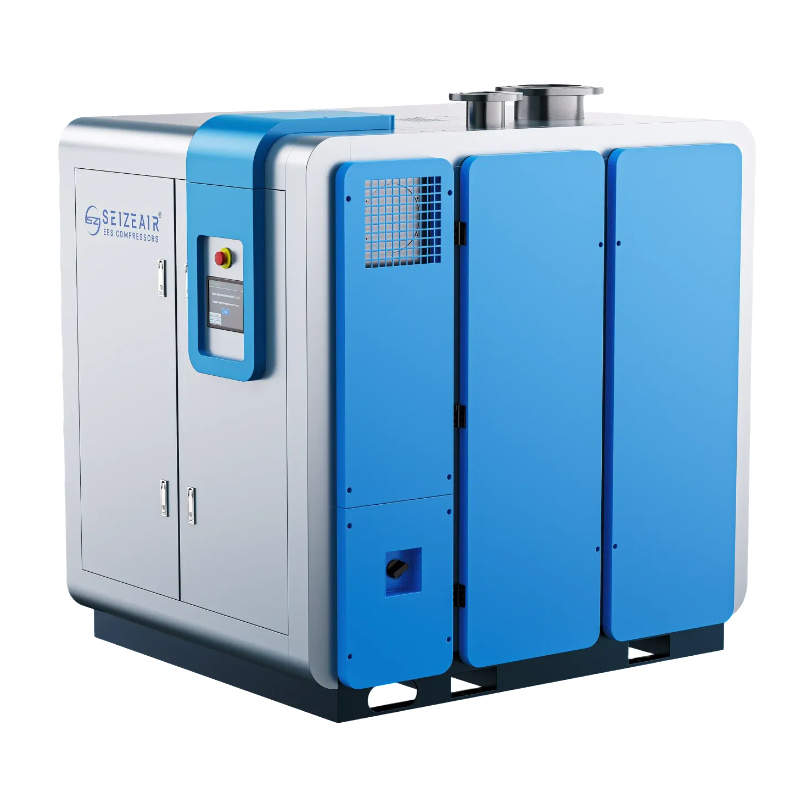


Investing in a 100 horsepower (HP) air compressor is a defining decision for any manufacturing or industrial plant. It is not just an equipment purchase; it is a major capital investment that shapes your facility’s operational efficiency, energy bills, and production uptime for the next decade or more.
But is a 100 hp air compressor truly the right fit for your specific flow demands, or will it leave you with excessive energy costs and underutilized capacity? In this definitive guide, we will break down engineering requirements, CFM outputs, energy dynamics, and total cost of ownership to help you make an informed, data-driven choice.
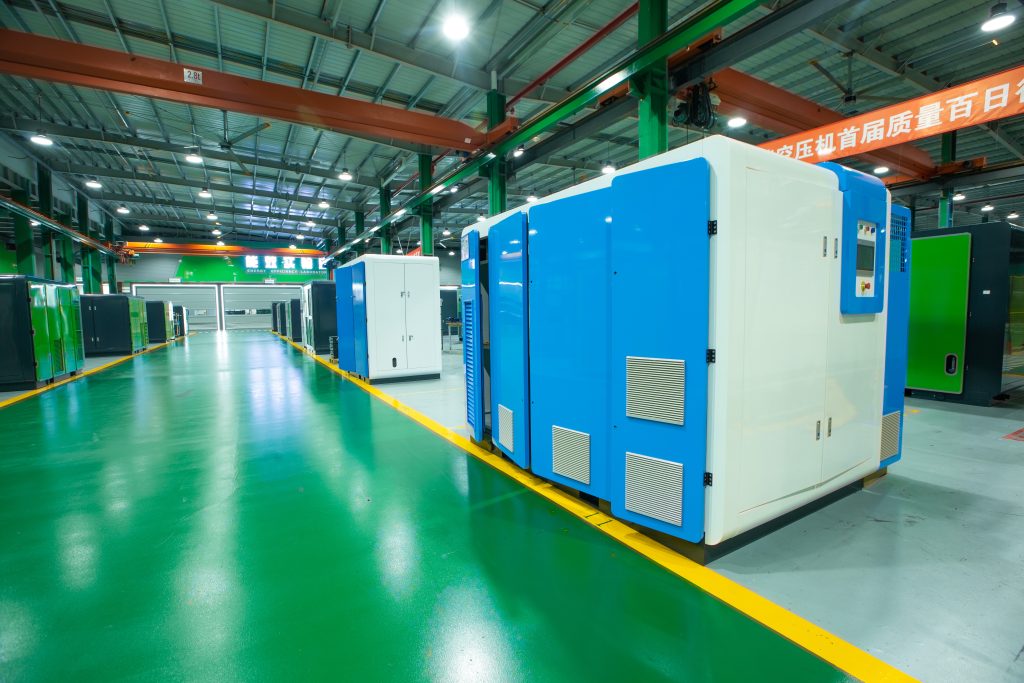
What Does a 100 HP Air Compressor Actually Deliver?
When plant managers look at a 100 HP rating, the first question should always be: What does this translate to in terms of actual air volume?
Horsepower measures the power of the motor, but your pneumatic tools and production lines care about volume and pressure—specifically, Cubic Feet per Minute (CFM) and Pounds per Square Inch (PSI).
As a general rule of industrial engineering, every 1 HP delivers approximately 3.5 to 4.5 CFM at a standard pressure of 100 to 125 PSI. Therefore, a standard 100 hp rotary screw air compressor typically delivers between 350 to 460 CFM of compressed air.
100 HP Compressor Performance Matrix
The exact output depends heavily on your required operating pressure. Higher pressures require more work from the motor, which reduces the total volume of air delivered.
| Compressor Type / Configuration | Operating Pressure (PSI) | Typical CFM Range | Ideal Industrial Applications | Specific Power (kW/100 CFM) |
| Single-Stage (Fixed Speed) | 100 PSI | 440 – 460 CFM | General manufacturing, packaging, assembly lines | 15.2 – 16.5 |
| Single-Stage (Fixed Speed) | 125 PSI | 390 – 410 CFM | Automotive plants, heavy stamping, CNC machining | 17.1 – 18.3 |
| Two-Stage (Fixed Speed) | 125 PSI | 420 – 450 CFM | High-duty cycles, continuous heavy manufacturing | 13.8 – 14.9 |
| Variable Speed Drive (VSD) | 75 – 150 PSI | 110 – 460 CFM | Fluctuating air demands, multi-shift operations | Variable (Optimized) |
If your plant operations require a reliable, continuous flow within these CFM ranges, a 100 HP unit is historically the sweet spot for medium-to-large industrial facilities.
The Real-World Friction
Let’s talk frankly about what happens between the showroom and the plant floor. I’ve seen production managers look at a catalog, see “450 CFM,” and assume their problems are solved. That is nominal performance under laboratory conditions.
Once that machine hits a hot room with poor cross-ventilation, your actual intake air density drops. If your piping layout has three sudden 90-degree elbows right out of the discharge port, you are choking the system before the air even reaches the main header.
You aren’t just buying a motor; you are buying an entire thermodynamic ecosystem. If your system integration is flawed, that 100 HP asset will perform like a poorly optimized 75 HP unit while still drawing full-load amps.
How many CFM does a 100 hp rotary screw compressor deliver at 125 PSI?
(Targeted Mid-Long Tail: 100 hp rotary screw compressor cfm output)
If you check the technical queries from plant floor engineers, they rarely look for generic horsepower charts. They want to know the absolute volume delivery at their exact targeted system header pressure.
The total volume delivery of a 100 hp industrial air compressor is determined by three main engineering factors:
- Airend Design (Single-stage vs. Two-stage): Two-stage air compressors compress the air in two distinct steps, cooling it in between. This increases volumetric efficiency, allowing a 100 HP two-stage machine to output up to 15% more CFM than a single-stage machine at the same pressure.
- Ambient Environment: Air compressors are highly sensitive to temperature and altitude. A unit running in a hot, humid facility or at high elevation will experience reduced air density, which slightly lowers the actual delivered CFM (ACFM) compared to standard test conditions (SCFM).
- Drive Type: Direct-drive systems eliminate the power transmission losses found in belt-driven models, ensuring that the maximum amount of motor horsepower is transferred directly to the compression screws.
The Physics of the Airend
To truly understand CFM generation, we have to look at the profile of the rotors. In a standard single-stage screw, the air is compressed rapidly, generating significant internal heat. This heat represents wasted mechanical energy.
By contrast, when you split the compression ratio across two distinct stages with an intercooler between them, you approach an isothermal compression process. The air becomes denser before entering the second stage, meaning the rotors can scoop up and move more physical air molecules per revolution.
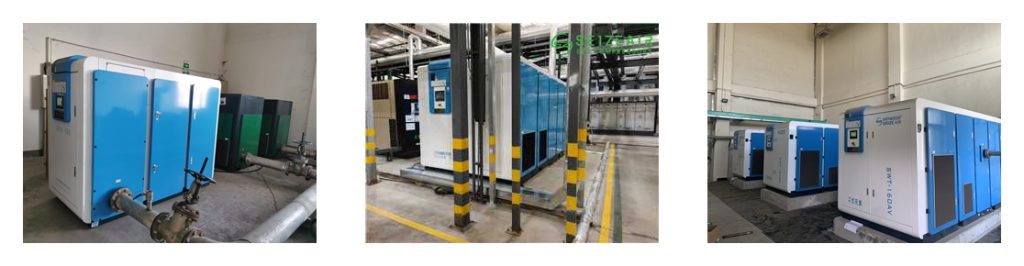
From an integration perspective, this changes everything. If your facility runs 24/7, choosing a machine that optimizes this profile isn’t a minor detail—it’s a core financial strategy. Premium OBM brands like Seize Air design their twin-screw airends to maximize this specific volumetric efficiency. They achieve a lower specific power consumption, pushing the boundaries of the traditional 4 CFM-per-HP benchmark and turning raw physics into direct operational savings.
Why Altitude and Humidity Ruin Your Calculations
Don’t trust standard numbers blindly. If your facility sits at a high elevation, or if you are running in a humid region where the air is thick with water vapor, your actual mass flow rate drops. Water vapor takes up volume in the intake air stream but is squeezed out as liquid condensate during compression.
That means a portion of the CFM you paid for at the intake valve disappears down the drain before it ever reaches your pneumatic tools. Always design your system around Actual CFM (ACFM) at worst-case summer conditions, not standard ambient laboratory specs.
What industrial applications require a 100 hp heavy duty air compressor?
(Targeted Mid-Long Tail: 100 hp heavy duty air compressor applications)
A 350 to 460 CFM capacity is highly versatile. It bridges the gap between smaller workshop compressors and massive, centralized multi-megawatt plant systems.
The most common applications for a 100 hp air compressor include:
Heavy Manufacturing & Automotive Assembly
Automotive plants and heavy fabrication shops rely on a steady stream of compressed air to power pneumatic robotic arms, high-torque impact wrenches, sandblasting booths, and automated paint spraying systems. A drop in pressure can ruin a paint finish or stall an assembly line, making the stable volume of a 100 HP unit essential.
Textile and Garment Production
Modern textile mills use air-jet weaving looms that require high-velocity, continuous compressed air to carry yarn across the warp. Because these machines run 24/7, a heavy-duty 100 hp industrial air compressor with a 100% duty cycle is standard practice to maintain production speeds.
Food, Beverage, and Packaging
From driving pneumatic actuators on conveyor belts to sorting, bottling, and form-fill-seal packaging machinery, clean compressed air is the backbone of the packaging sector. Depending on the exact proximity to the product, these facilities often pair a 100 HP oil-lubricated screw compressor with advanced multi-stage filtration and desiccant dryers, or opt for specialized oil-free variants.
Pharmaceutical & Electronics Cleanrooms
For delicate electronics manufacturing or pharmaceutical packaging, compressed air is used for pneumatic conveying of powders, nitrogen generation, and product testing.
Sector-Specific Air Requirements & Configurations
| Industry | Primary Air End-Use | Critical Risk Factor | Recommended 100 HP Setup |
| Automotive | Robotic tooling, paint booths | Silicone/Oil contamination, pressure drops | Two-Stage Oil-Lubricated + Coalescing Filtration |
| Textiles | Air-jet weaving looms | 24/7 continuous thermal load, dust ingestion | Heavy-duty intake filtration, Direct-Drive Fixed Speed |
| Food & Beverage | Product sorting, packaging | Bacterial growth, oil carryover | Variable Speed Drive + Oil-Free or Food-Grade Lubricant |
| Metal Fabrication | Laser cutting, sandblasting | Moisture causing rust or beam distortion | High-Pressure (145+ PSI) + Desiccant Dryer |
The Realities of Production Demand
Walk onto a textile mill floor or a high-speed packaging line, and you quickly realize that compressed air isn’t just an auxiliary utility—it is the lifeblood of the plant. If a machine tool loses its air supply, the line stops.
In automotive painting, a single micro-droplet of oil carryover can ruin an entire batch of body panels, forcing thousands of dollars in rework. That is why a 100 HP machine in these environments is never just an isolated box in a corner; it must be integrated with targeted filtration and separation systems tailored to the exact sensitivities of your industry’s end products.
Is a 100 hp variable speed drive air compressor worth the extra cost?
Choosing the right horsepower is only half the battle. You must also decide how that horsepower is controlled. This choice directly impacts your facility’s monthly electricity bill.
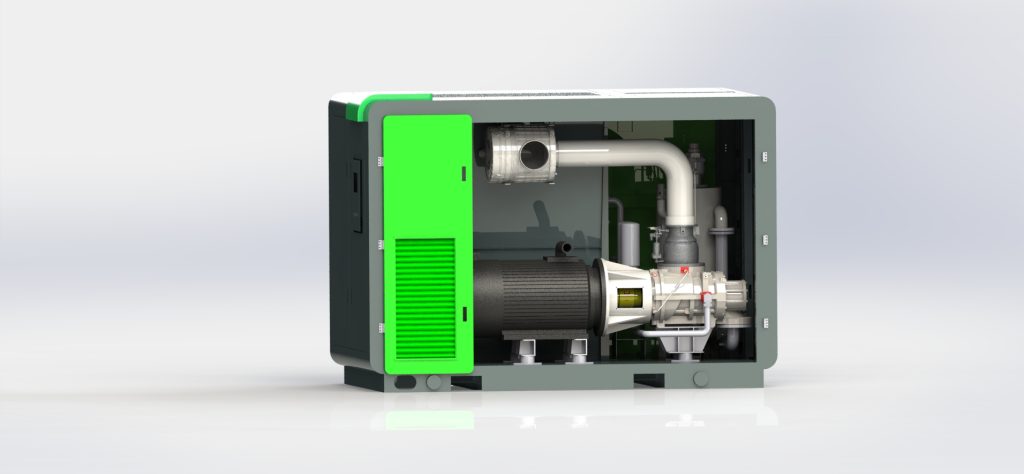
Fixed Speed 100 HP Compressors
A fixed-speed compressor runs at a constant RPM. When your plant demands less air, the compressor uses an inlet valve to choke or “unload” the machine. While unloaded, the motor keeps spinning at full speed, consuming roughly 30% to 70% of its full-load energy while producing zero air.
- Best for: Facilities with a constant, unvarying 24/7 baseload air demand (e.g., continuous chemical processing or fixed production lines).
Variable Speed Drive (VSD) 100 HP Compressors
A 100 hp VSD air compressor utilizes an integrated frequency inverter to precisely regulate the motor’s speed based on real-time air consumption. If your plant only needs 200 CFM at 3:00 AM, the motor slows down to deliver exactly 200 CFM, scaling down energy consumption proportionally.
- Best for: Facilities with fluctuating loads, multi-shift operations, or plants where production volumes change throughout the day.
Fixed Speed vs. VSD Energy Metrics
| Operational Metric | 100 HP Fixed Speed Compressor | 100 HP VSD Compressor |
| Initial Capital Cost | Baseline | +25% to 35% premium |
| Part-Load Efficiency (30-70% load) | Poor (High unloading losses) | Outstanding (Proportional scaling) |
| Pressure Stability | $\pm 5$ to $15 \text{ PSI}$ fluctuation | $\pm 1.5 \text{ PSI}$ constant pressure |
| Mechanical Stress | High (Hard starts, temperature cycles) | Low (Soft-start, constant thermals) |
| Recommended Maintenance Cycle | Standard hours-based | Requires routine inverter dust checks |
The Trap of the Cheap Fixed-Speed Machine
As an engineer who has reviewed hundreds of plant energy balances, I see this mistake constantly: a company buys a fixed-speed 100 HP compressor because the capital expenditure looks attractive on this quarter’s balance sheet.
But their actual air demand fluctuates wildly between the morning shift, evening shift, and weekend maintenance cleanups. During low-demand periods, that fixed-speed machine spends half its life in an “unloaded” state—spinning its rotors, generating heat, and drawing 25 kW to 40 kW of power while doing absolutely nothing for production.
You are paying the utility company for air you aren’t using. If your load profile isn’t a flat, predictable line, a fixed-speed asset is an expensive mistake.
On the other hand, a variable speed system adapts instantly to your demand. Modern permanent magnet variable frequency (PM VSD) systems, like those manufactured by Seize Air, eliminate the high energy losses associated with standard induction motors and traditional gear transmissions. They maintain high motor efficiency even at lower operating frequencies, ensuring that your energy bills track your actual production output closely.
How do I calculate if a 100 hp industrial air compressor fits my plant expansion?
An oversized compressor causes short-cycling and high energy waste; an undersized compressor suffers from pressure drops, overheating, and premature mechanical wear. To determine if a 100 HP unit is right for you, follow this engineering process:
Step 1: Calculate Total Cumulative CFM
List every pneumatic tool, machine, and automated process on your production floor. Note their individual CFM requirements and operational duty cycles.
Total CFM Required = ∑ (Tool CFM x Duty Cycle %)
Step 2: Factor in the Duty Cycle & Future Expansion
Never size a compressor to run at exactly 100% capacity continuously if it’s a standard design. Add a 20% safety margin to account for future machinery additions, expanding lines, and the inevitable minor leaks in plant piping.
Step 3: Check Maximum Operating Pressure
Identify the tool or machine that requires the highest operating pressure. If most of your plant operates at 90 PSI, but one machine requires 130 PSI, you will need a compressor capable of maintaining a stable 125–135 PSI across the system, or a dedicated booster for that specific machine.
Real-World Audit Data
| Total Tool Inventory Demand | Realized Coincidence Factor | System Leakage Estimate | Recommended Unit Class |
| 200 – 280 CFM | 0.70 | 15% | 60 HP to 75 HP Rotary Screw |
| 320 – 430 CFM | 0.75 | 10% | 100 HP Rotary Screw |
| 480 – 600 CFM | 0.80 | 12% | 125 HP to 150 HP (or Dual Units) |
The Myth of the “Coincidence Factor”
Here is where system integrators earn their keep: the coincidence factor. If you add up the maximum nameplate CFM of every tool in your facility, you will likely conclude you need a 150 HP or 200 HP compressor. But do all those machines run at the exact same fraction of a second? Rarely.
If you design for the theoretical maximum without measuring actual usage patterns, you will purchase an oversized machine that runs inefficiently. Conversely, if you underestimate your peak overlapping demands, your system pressure will sag, causing PLC errors and safety shutdowns on sensitive production machinery. A thorough flow audit is essential to verify if 100 HP is your true sweet spot.
What are the electrical and ventilation installation requirements for a 100 hp air compressor room?
A 100 HP compressor cannot simply be plugged into a standard wall outlet. It requires dedicated industrial infrastructure. Before purchasing, verify that your plant room can support the following requirements:
Electrical Infrastructure
A 100 HP motor consumes approximately 74.6 kW of electrical power under full mechanical load. When factoring in motor inefficiencies and fan power, the actual draw is closer to 85–90 kW.
- Voltage: Typically requires 3-phase power at 380V, 460V, or 575V.
- Amperage: Ensure your electrical panel and supply transformers can handle the high full-load amperage (FLA) without causing voltage drops across the rest of your facility.
Ventilation and Heat Rejection
Air compressors generate significant heat; roughly 90% of the electrical energy consumed is converted directly into thermal energy. A 100 HP unit running continuously can reject over 250,000 BTU per hour into the compressor room.
- Ducting: Proper intake and exhaust ducting are essential to prevent recirculation of hot air, which causes high-temperature shutdowns.
- Heat Recovery: Consider ducting this exhaust air into your warehouse during the winter for free space heating, a major energy-saving benefit.
Downstream Air Quality Components
The air leaving a screw compressor is hot, oily, and saturated with water vapor. To protect your production equipment, your setup must include:
- Wet Air Receiver Tank: Minimum 500 to 1,000 gallons to dampen pressure pulsations and separate bulk moisture.
- Refrigerated or Desiccant Air Dryer: To lower the pressure dew point and eliminate water condensation in air lines.
- Coalescing Filters: To remove oil aerosols and particulate matter down to sub-micron levels.
Lessons from the Plant Floor: The Danger of Poor Infrastructure
I’ve seen multi-million dollar production lines halted by simple installation mistakes in the compressor room. One plant placed their 100 HP unit in a small, unventilated closet. Within two hours of full shift operation, the room temperature climbed past 110°F (43°C), triggering the thermal protection sensor and shutting down the entire facility.
Another mistake is installing piping that is too small for the volume of air. Forcing 400 CFM through a 1.5-inch pipe creates extreme velocity and high friction losses, causing a major pressure drop before the air even leaves the equipment room. For a 100 HP system, use at least a 2-inch to 2.5-inch main header loop to maintain efficient distribution.
What is the 10 year total cost of ownership for a 100 hp industrial compressor?
Many purchasing departments focus solely on the initial retail price of the compressor. However, a standard industrial air compressor’s life-cycle cost profile shows that the purchase price is only a small fraction of the total investment.
Over a standard 10-year lifespan, the cost distribution breaks down roughly as follows:
- Initial Capital Investment: ~10%
- Maintenance & Repair Parts: ~15%
- Electrical Energy Costs: ~75%
Life-Cycle Cost Calculation
Let’s look at a realistic example of a standard fixed-speed 100 HP compressor running a two-shift operation (4,000 hours/year) at an average electrical rate of $0.12 per kWh:
Annual Energy Cost = Motor Power (kW) × Hours × Electricity Rate
Annual Energy Cost = 85 kW × 4,000 hours × $0.12 = $40,800 per year
Over 10 years, that equates to $408,000 spent purely on power.
The 10-Year Pro-Forma:
| Cost Component | Economy Unit (Low Upfront Cost) | Premium Energy-Saving Unit | Net Financial Impact |
| Initial Purchase Price | $18,000 | $24,000 | +$6,000 (Upfront cost) |
| Average Yearly Energy Bill | $42,500 | $31,800 | -$10,700 (Annual saving) |
| 10-Year Cumulative Energy | $425,000 | $318,000 | -$107,000 (Direct utility savings) |
| Maintenance & Consumables | $14,000 | $11,500 | -$2,500 (Reliability advantage) |
| Total 10-Year TCO | $457,000 | $353,500 | Net Saving: $103,500 |
The Executive Summary on ROI
If you choose equipment based on the lowest bid, you may save $6,000 on the initial purchase. However, if that machine runs inefficiently, it can easily waste an extra $10,000 in electricity year after year. Over a standard ten-year operational lifecycle, that low-bid option can cost your business an additional $100,000.
When evaluating a 100 HP compressor, look beyond the purchase price. Focus closely on the specific power consumption numbers—the kilowatts required to produce 100 CFM. High-efficiency systems, such as those built by Seize Air, are specifically engineered with large, low-RPM airends and high-grade permanent magnet motors to optimize this ratio, keeping your long-term operating costs as low as possible.
Conclusion
A 100 hp air compressor is an excellent, reliable asset for facilities with steady or fluctuating air demands between 350 and 460 CFM. If your plant fits this profile, choosing a high-efficiency rotary screw configuration will ensure stable pressure, high uptime, and optimized production throughput.
However, do not buy on horsepower numbers alone. Audit your actual flow demands, evaluate your pressure needs, and look closely at the long-term energy profile of Fixed Speed versus VSD options.
Optimize Your Plant’s Utility Efficiency
Navigating compressed air engineering can be complex, and making the wrong choice can lead to years of inflated energy costs. At Seize Air, we specialize in manufacturing high-efficiency, energy-saving industrial air compressors designed to deliver maximum CFM per kilowatt.
Whether you need a precise air audit of your existing facility or want to explore our advanced range of permanent magnet VSD systems, our engineering team is here to help. Contact our industrial air specialists today for a tailored engineering consultation and a free, no-obligation system quote.