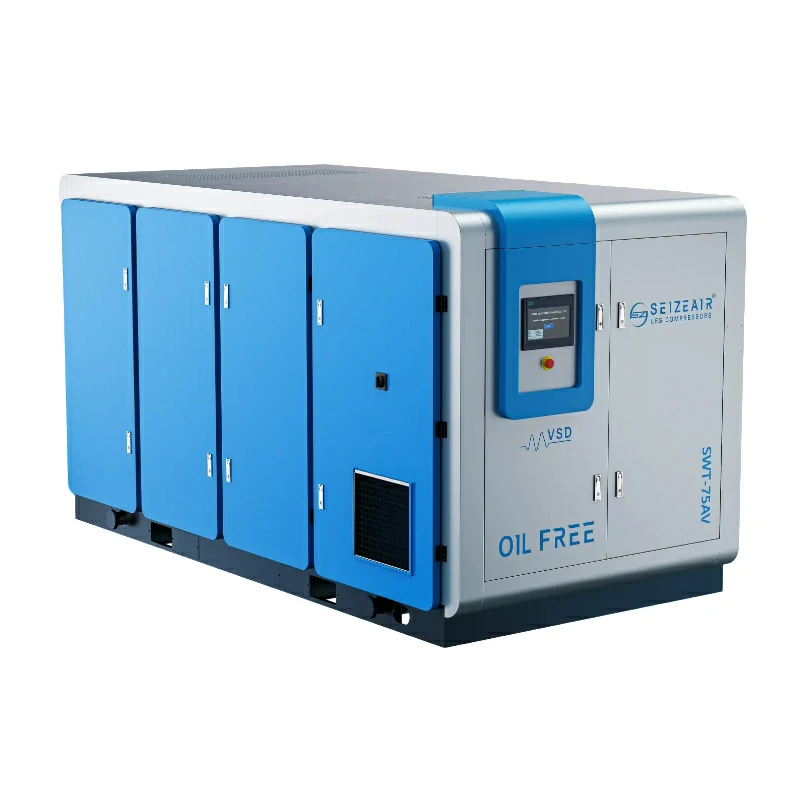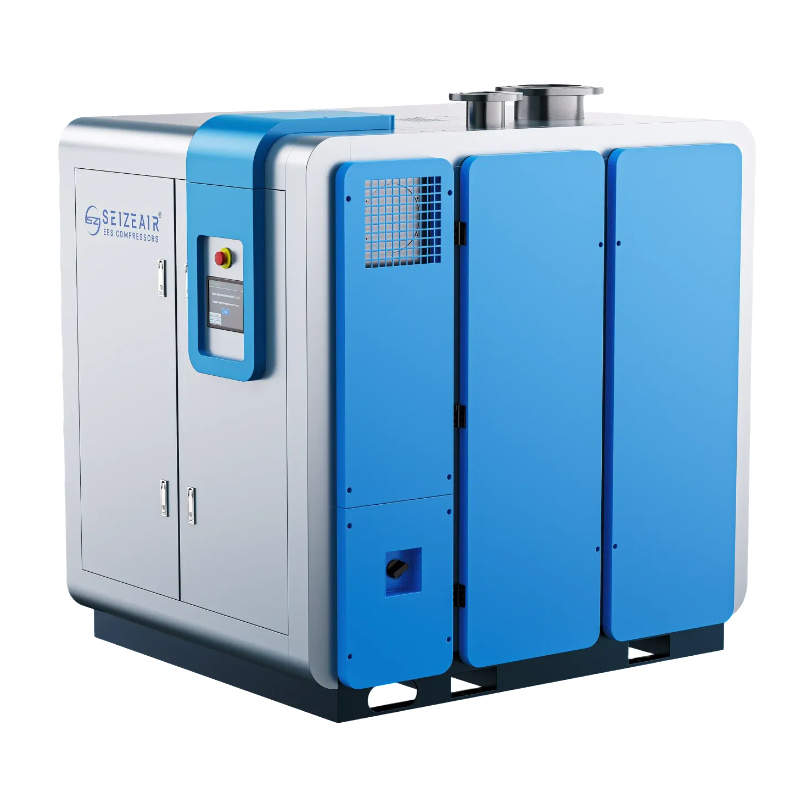


Choosing between a 1 stage and a 2 stage air compressor is one of the most critical decisions you will make for your facility. The choice impacts everything from your initial equipment budget to your monthly energy bills and the lifespan of your pneumatic tools. But what is the real difference, and how do you know which one your specific application demands?
Let’s cut through the marketing jargon. The fundamental difference does not lie in how many cylinders the machine has; instead, it is all about how many times the air is compressed before entering your storage tank.
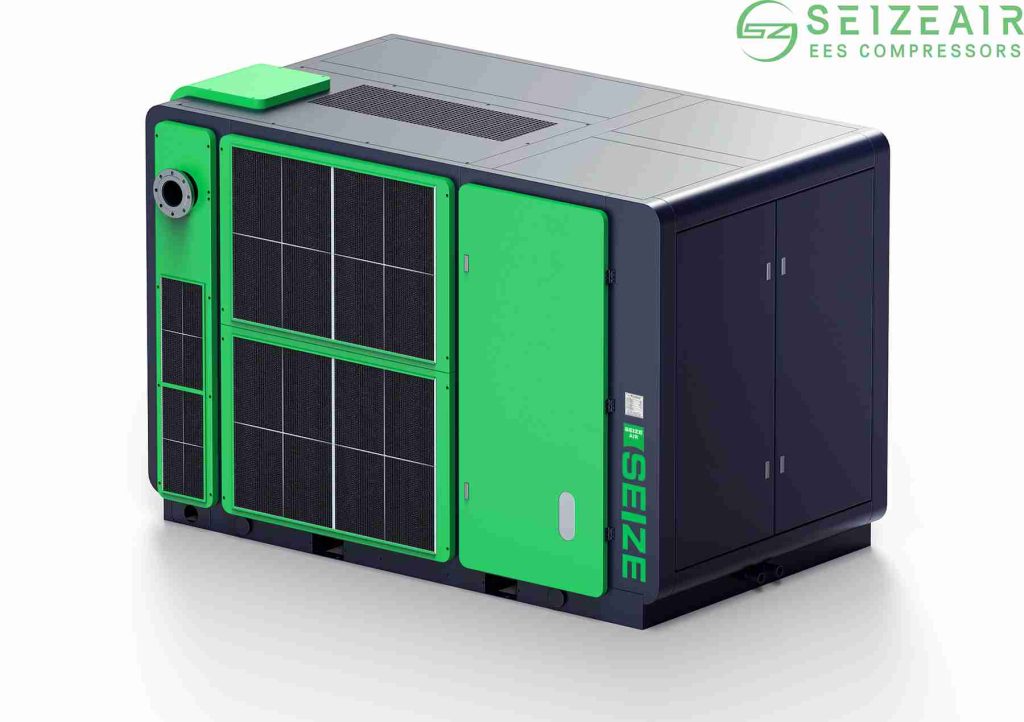
What is the true difference between single stage and two stage air compressor mechanics?
To make an informed investment, it helps to understand the mechanical physics happening inside the pump. Here is a direct breakdown of how both systems operate.
What is a Single-Stage Air Compressor?
In a single-stage (1 stage) compressor, ambient air is drawn into the cylinder and compressed in a single stroke of the piston. The compressed air is then pushed directly into the storage tank. Single-stage units typically max out around 125 PSI to 150 PSI.
What is a Two-Stage Air Compressor?
A two-stage (2 stage) compressor pumps air twice to double the pressure efficiency.
- First Stage: Air is drawn into a large low-pressure cylinder and compressed to roughly half its final pressure.
- The Intercooler: The heated, semi-compressed air passes through a cooling tube (intercooler) to drop its temperature.
- Second Stage: The cooled air is sucked into a smaller high-pressure cylinder, compressed a second time to its final pressure (typically 175 PSI to 200 PSI), and sent to the tank.
| Feature | 1 Stage Air Compressor | 2 Stage Air Compressor |
| Compression Cycles | 1 cycle per stroke | 2 separate cycles with cooling |
| Maximum Pressure | 100 to 150 PSI | 175 to 200+ PSI |
| CFM Output per HP | Lower efficiency at high PSI | Higher efficiency at high PSI |
| Duty Cycle | Typically 50% – 60% (Intermittent) | Up to 100% (Continuous / Industrial) |
| Heat Generation | High (No intercooling) | Controlled (Via active intercooling) |
| Best Used For | Small shops, DIY, carpentry, auto repair | Heavy manufacturing, CNC, sandblasting |
How does a 2 stage compressor vs 1 stage duty cycle affect machine longevity?
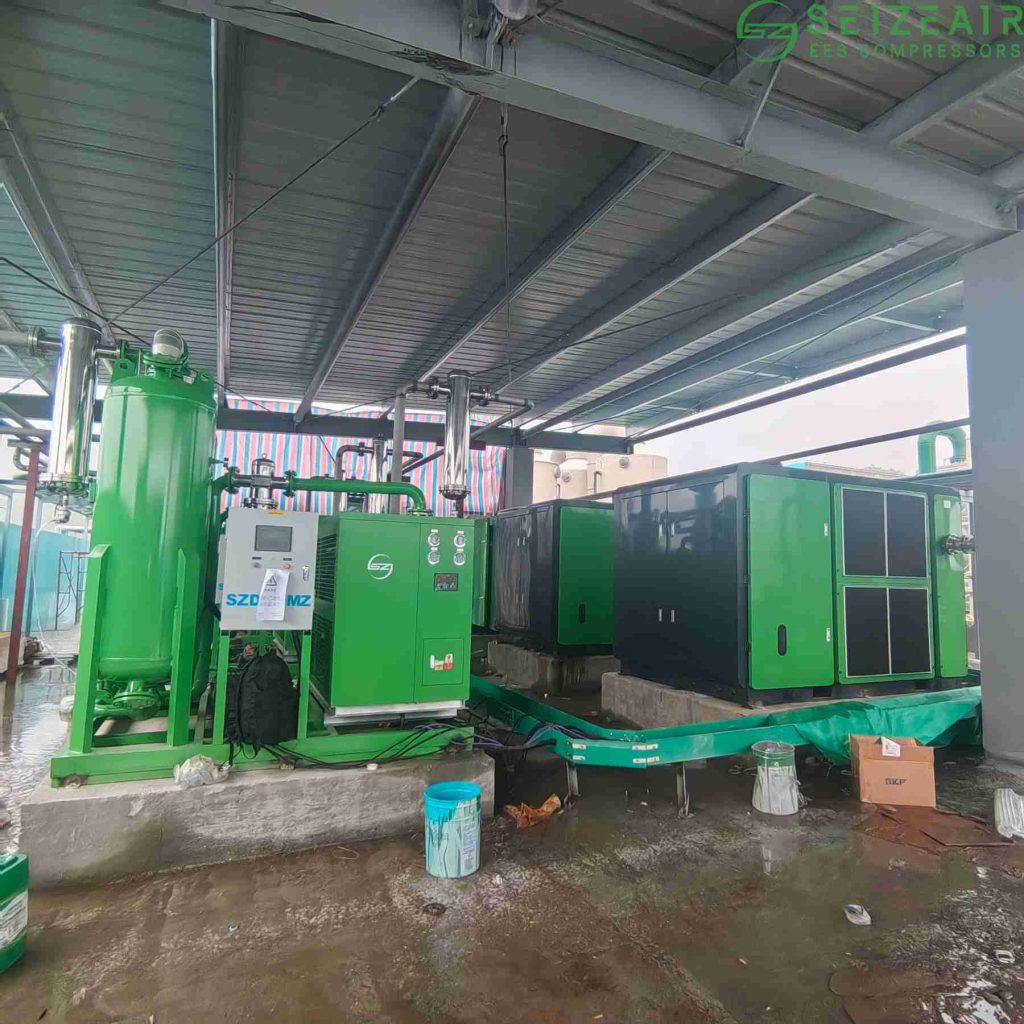
When you compress air, you generate heat. This is governed by Boyle’s Law and the Ideal Gas Law. In a single-stage system, forcing air from atmospheric pressure up to 135 PSI in one shot creates massive thermal spikes. High heat reduces air density, making the compression stroke less efficient, while putting heavy thermal stress on valves, rings, and lubricants.
Two-stage compression solves this heat problem through intercooling. By cooling the air between stages, the air becomes denser. Compressing dense, cool air requires less mechanical work. This thermodynamic advantage allows heavy-duty systems—like the highly efficient solutions engineered by Seize Air—to deliver significantly more air volume (CFM) per kilowatt of power consumed compared to single-stage equivalents, raising the safe duty cycle of the machine up to 100% without risk of overheating.
Do I need a 2 stage air compressor for my business operations?
A two-stage compressor is not universally “better,” but it is vastly more efficient for high-pressure, high-duty-cycle industrial applications. If your operations require continuous air delivery at 150+ PSI, a 2 stage unit is superior because it runs cooler, lasts longer, and consumes less power. However, for intermittent use at lower pressures (under 120 PSI), a 1 stage compressor is the more cost-effective choice.
How do I tell if my air compressor is a 1 stage or 2 stage?
You cannot simply count the cylinders. Many single-stage compressors feature two pistons to pump more volume. To identify a true 2 stage reciprocating compressor, look for these two clear signs:
- Cylinder Size: A 2 stage pump will have cylinders of different sizes. The first-stage cylinder is visibly larger than the second-stage cylinder.
- The Intercooler Tube: Look for a metal finned tube running directly from the larger cylinder to the smaller one. If all cylinders are identical and connect straight to the discharge pipe, it is a single-stage unit.
Can a single-stage compressor reach 175 PSI?
Technically, some single-stage pumps can force air up to 175 PSI, but doing so comes at a severe cost. Pushing a single-stage pump to these limits causes extreme heat generation, rapid oil degradation, and premature component failure. For consistent operation at 175 PSI and above, industrial facilities rely on multi-stage configurations or dedicated industrial rotary screw systems to maintain system integrity.
How does single stage vs two stage air compressor cfm output impact tool performance?
Understanding the relationship between CFM (Cubic Feet per Minute) and PSI (Pounds per Square Inch) is crucial for sizing your equipment correctly.
- PSI measures the force or pressure of the air. It determines whether a tool can function. For example, a heavy-duty impact wrench might require 90 PSI to break a bolt loose, while a tire inflation line might need 150 PSI.
- CFM measures the volume of air flow. It determines how long a tool can run continuously.
Single-stage units provide adequate CFM at lower pressures. However, as the required pressure rises, their CFM output drops drastically. Two-stage compressors maintain high CFM delivery even at maximum pressure limits because their dual-step process keeps the volumetric efficiency high.
What is the industrial 2 stage air compressor vs single stage cost breakdown over time?
The purchase price of an air compressor is only a small fraction of its total lifetime cost. Energy consumption makes up the vast majority of what you will pay over the machine’s lifespan.
Because 2 stage systems utilize intercooling, they require less horsepower to compress the same volume of air to higher pressures. For example, generating 20 CFM at 175 PSI with a single-stage pump would pull massive amounts of electricity and run dangerously hot. A 2 stage pump achieves this with lower energy draws, saving thousands in utility costs over time.
From a maintenance perspective, single-stage units running at high duty cycles degrade their oil quickly due to heat. This leads to carbon buildup on valves. Two-stage units run cooler, preserving oil viscosity and protecting internal bearings, seals, and pistons, which extends the overall service life of the machine and balances the higher upfront investment.
Beyond Pistons: When should you upgrade to industrial rotary screw technology?
While the 2 stage vs 1 stage air compressor debate usually centers around piston (reciprocating) compressors, modern industrial operations often bypass pistons entirely. If your facility runs multiple shifts or requires 100% continuous air flow without a break, a rotary screw air compressor is often the correct upgrade path.
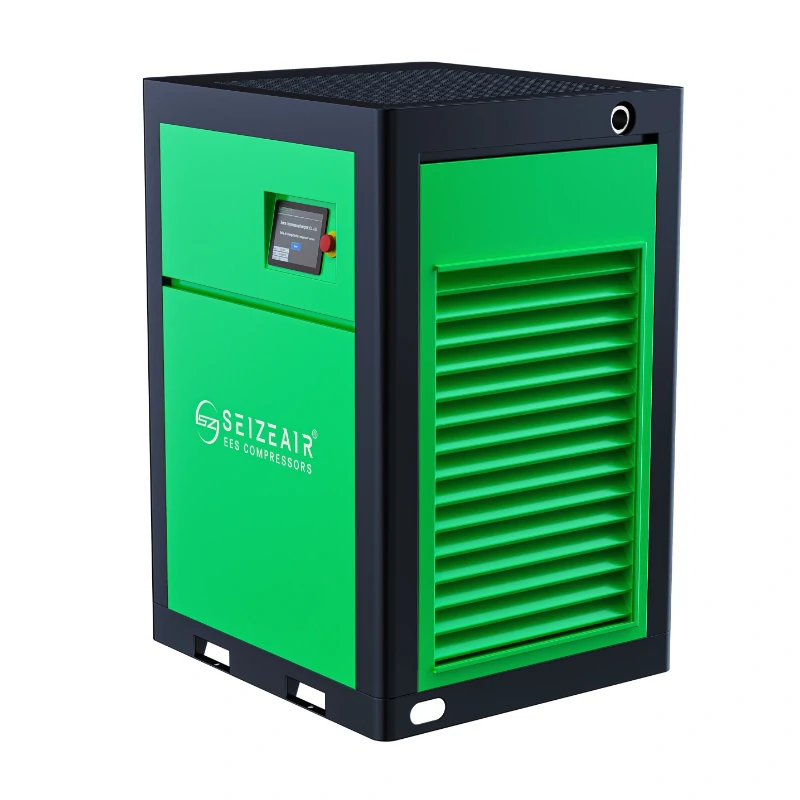
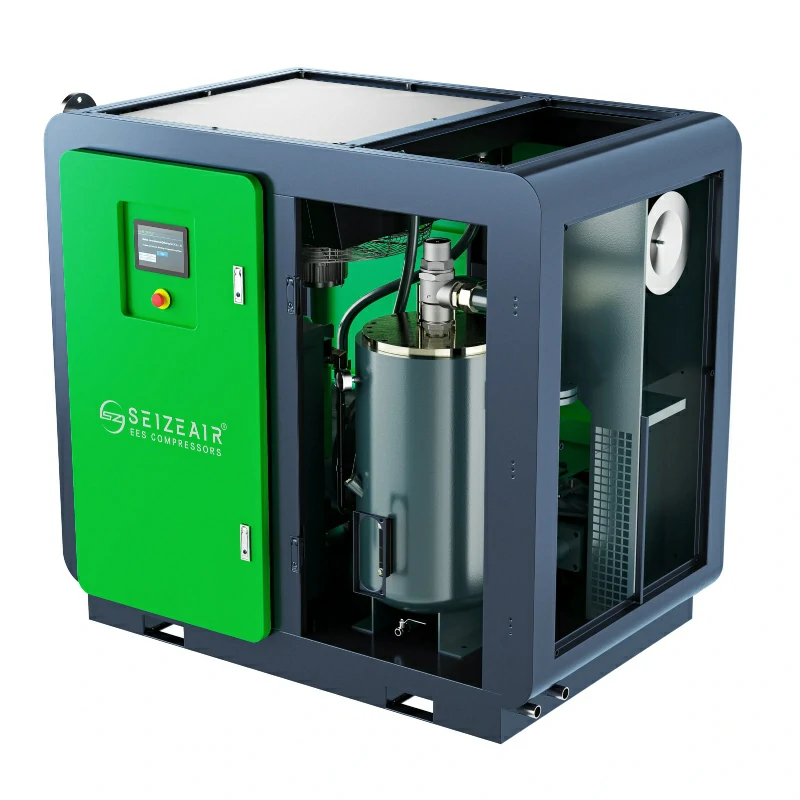
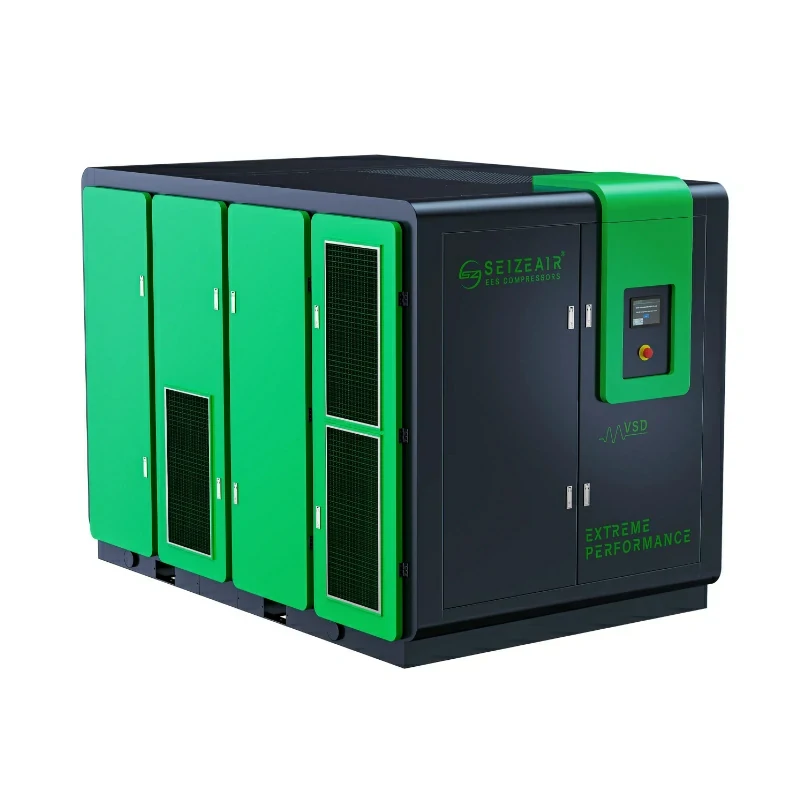
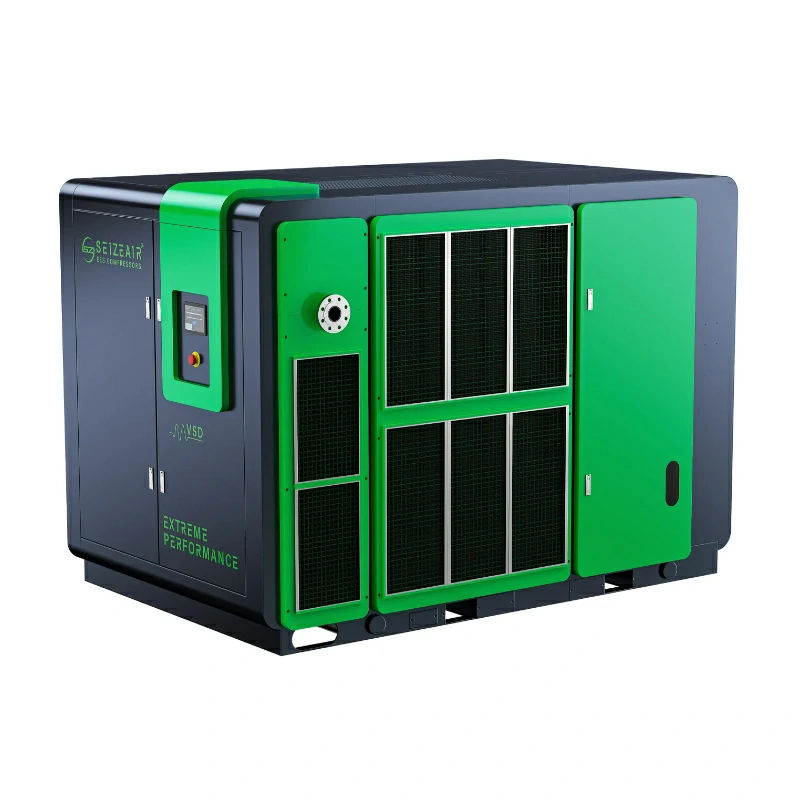
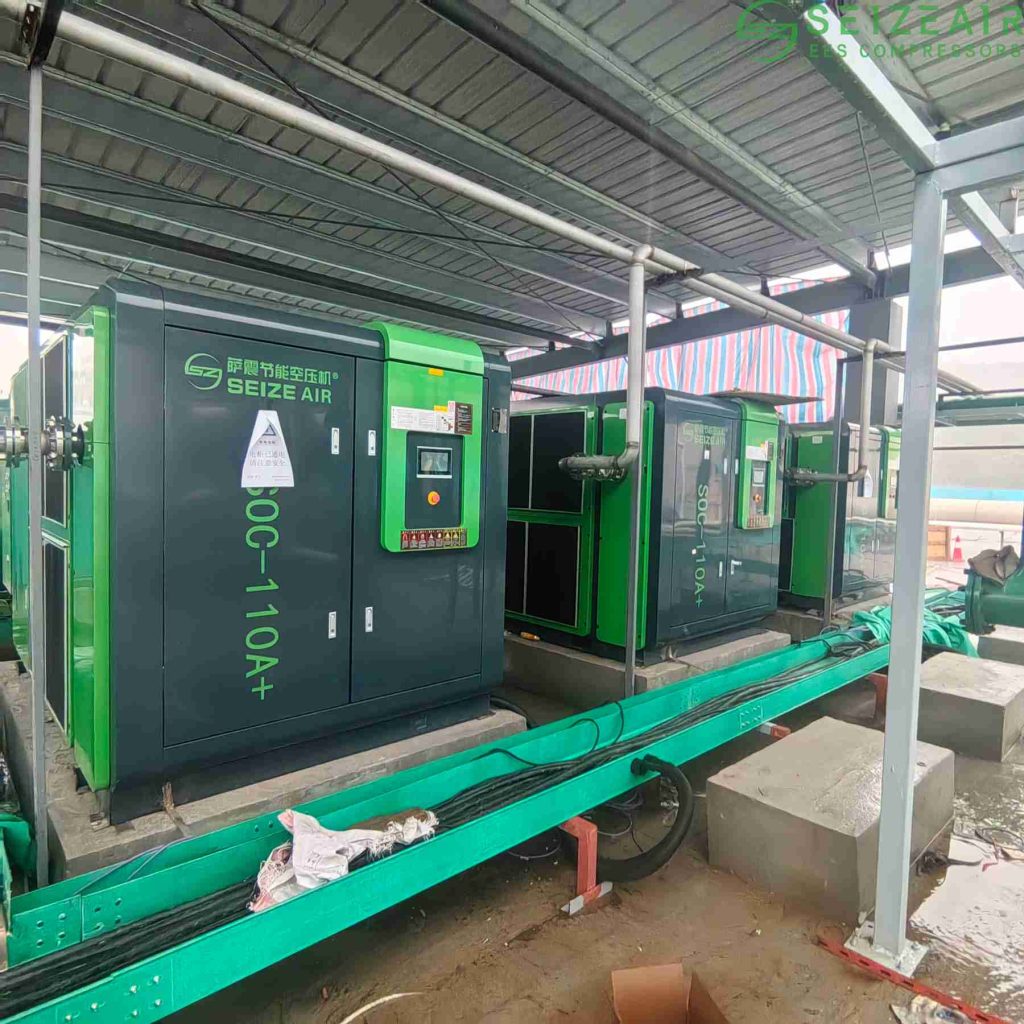
Modern industrial pioneers like Seize Air specialize in advanced energy-saving rotary screw systems that leverage variable speed drive (VSD) technology and ultra-efficient IE5 motors. Instead of pistons hammering up and down, rotary screws use two interlocking helical rotors to compress air smoothly and continuously. This design offers near-silent operation, zero pressure fluctuation, and unparalleled energy efficiency for mid-to-large scale industrial operations.
Final Decision Framework
To pinpoint the exact compressor type your business requires, answer these three quick operational questions:
- What is the maximum PSI required by my most demanding tool?
- Under 125 PSI -> Single-Stage is highly viable.
- Over 150 PSI -> Two-Stage is mandatory.
- How many hours a day will the compressor actively run?
- Intermittent / Under 4 hours a day -> Single-Stage.
- Continuous / Multiple shifts -> Two-Stage or Rotary Screw.
- What are my long-term energy goals?
- If minimizing monthly electricity bills and reducing carbon footprints are priorities, choosing a multi-stage system or a premium VSD compressor from a specialized brand like Seize Air will deliver the fastest return on investment.
Optimize Your Compressed Air Infrastructure Today
Selecting the right compression technology requires balancing upfront equipment costs against long-term operational efficiency. Whether your application is best served by a robust two-stage system or a highly advanced energy-saving rotary screw installation, getting an expert technical assessment saves time, money, and operational headaches.
Ready to eliminate the guesswork and lower your factory’s energy bills? Contact our engineering team today for a tailored, professional consultation to find the perfect compressed air solution for your business operations.