

In the high-stakes world of industrial manufacturing and construction, compressed air is often referred to as the “fourth utility.” Choosing between a portable industrial air compressor and a stationary industrial air compressor isn’t just a logistical decision; it’s a strategic one that impacts your operational efficiency, overhead costs, and long-term scalability.
Whether you are powering a massive automotive assembly line or running a remote bridge-painting crew, understanding the nuances of these powerhouses is critical. In this guide, we break down everything from CFM requirements and duty cycles to the specific ROI of brands like Seize, helping you make an informed investment.
1. What is an Industrial Air Compressor?
Before diving into the mobility debate, we must define what elevates a compressor to “industrial” status. Unlike the small units found in a home garage, an industrial air compressor is engineered for continuous operation, high-pressure output, and extreme durability.
The Mechanics of Power
Industrial units typically utilize rotary screw or heavy-duty reciprocating technology. The goal is to provide a consistent flow of air—measured in Cubic Feet per Minute (CFM)—at a specific Pressure (PSI) to ensure pneumatic tools and machinery function without interruption.
2. Stationary Industrial Air Compressors
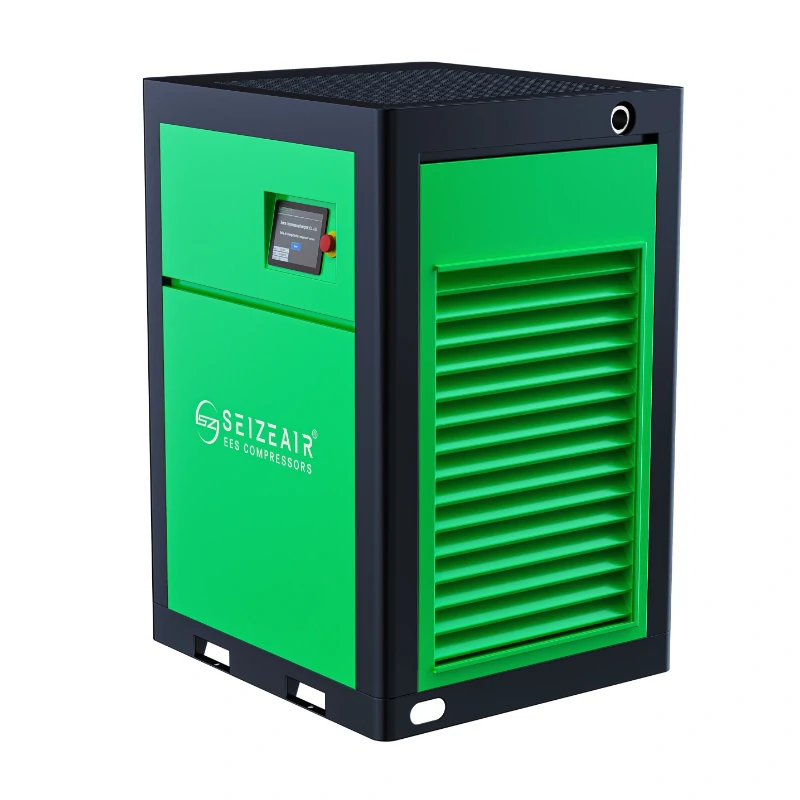
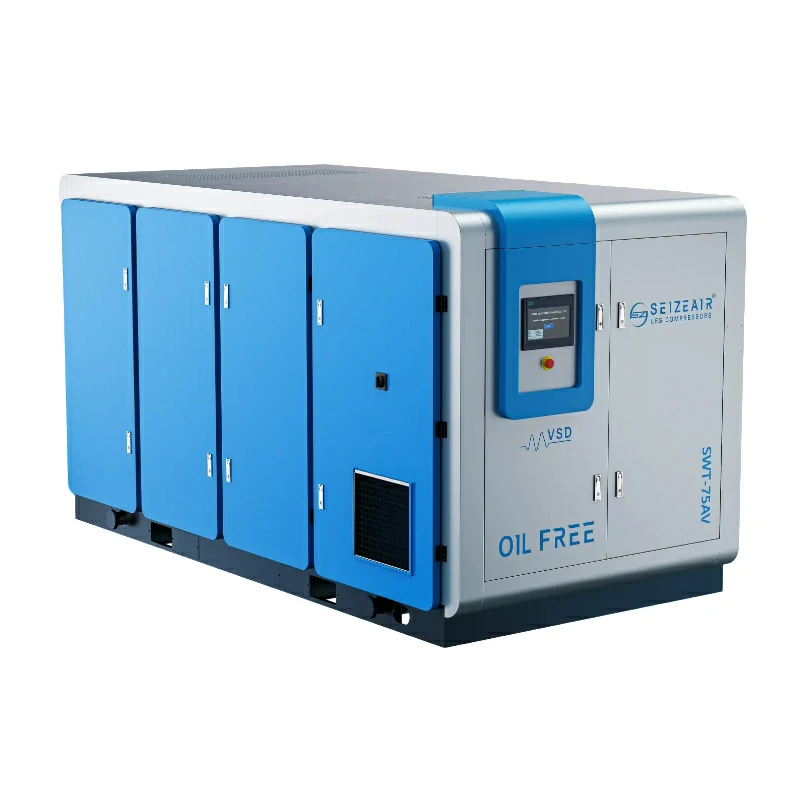
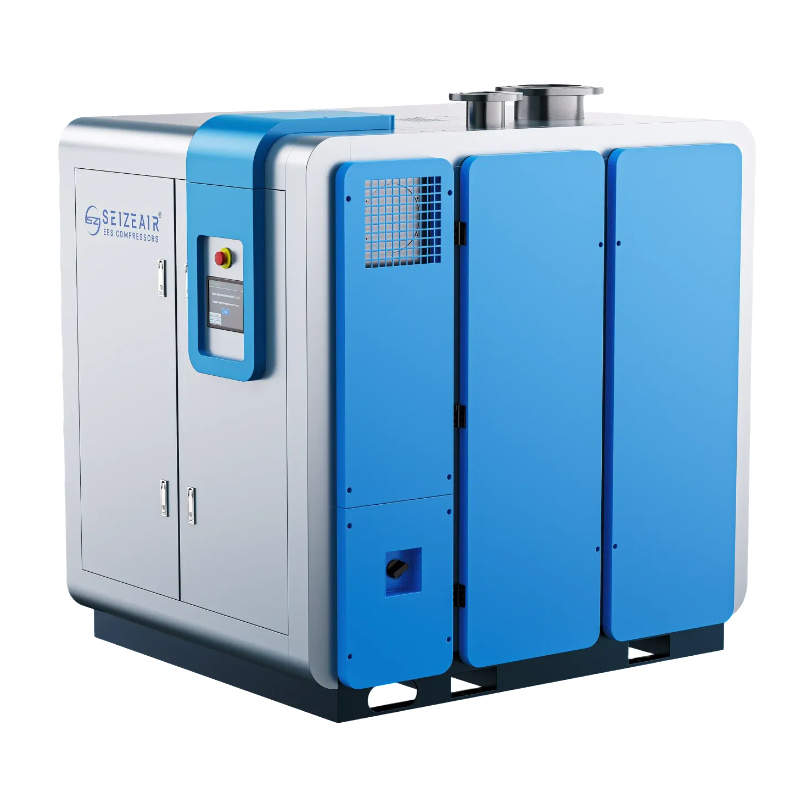
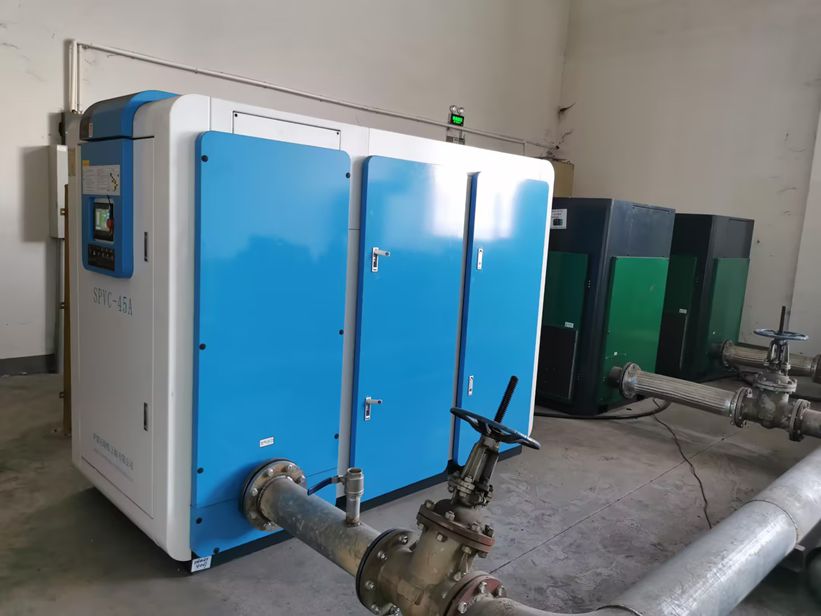
Stationary units are the bedrock of fixed-location industries. These machines are designed to be bolted to the floor, often integrated into a sophisticated complex of piping and air treatment systems.
Key Advantages
- Higher CFM Outputs: Stationary units generally offer much higher airflow capacities, making them essential for factories with dozens of simultaneous air users.
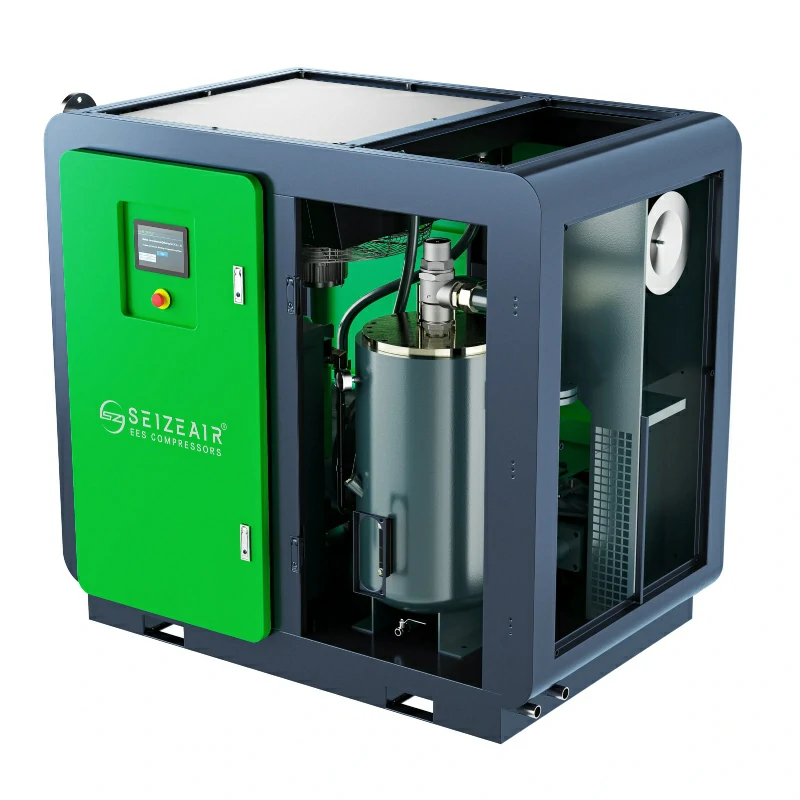
- Superior Cooling Systems: Because they aren’t constrained by weight or size, they feature massive heat exchangers, ensuring the unit stays cool during 24/7 operations.
- Longevity: When maintained correctly, a high-quality stationary industrial air compressor can last decades. For instance, Seize stationary units are renowned for their energy-efficient motors that reduce wear and tear over time.
Common Use Cases
- Manufacturing & Assembly: Powering robotic arms and conveyors.
- Food & Beverage: Using oil-free stationary units for packaging.
- Chemical Processing: Providing stable pressure for volatile environments.
3. Portable Industrial Air Compressors
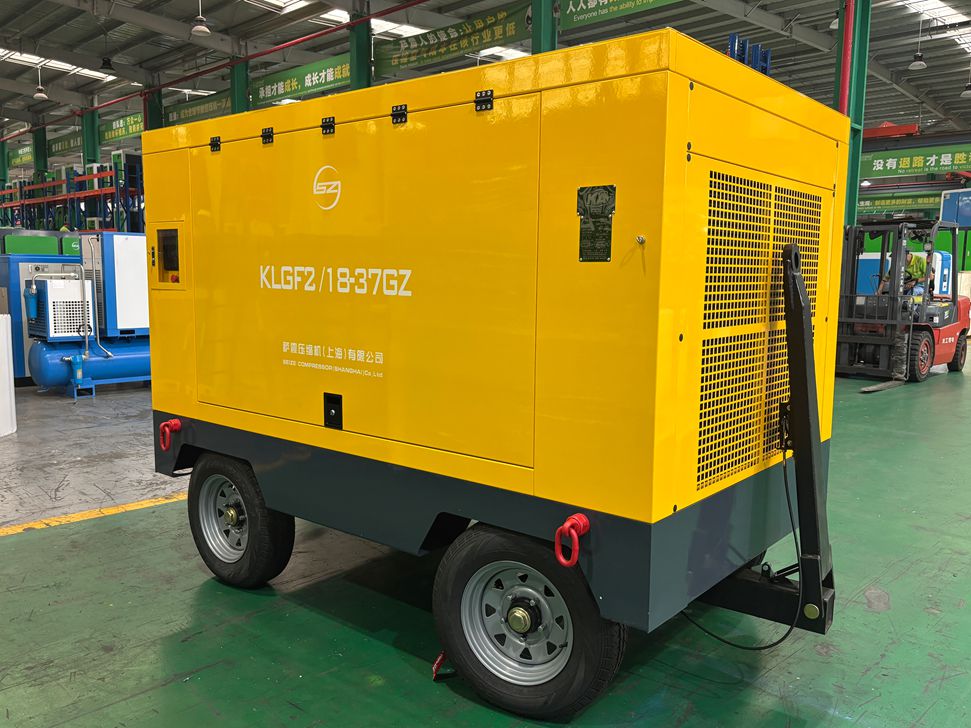
When the work moves, the air must follow. Portable units are the versatile cousins of the stationary world, often mounted on trailers or integrated into “skid” designs for easy transport via forklift.
Key Advantages
- Flexibility: Essential for construction sites, roadwork, and emergency repair jobs where a fixed power source is unavailable.
- Weatherization: These units are built with rugged enclosures designed to withstand rain, dust, and extreme temperature fluctuations.
- Integrated Fuel Sources: Many portable industrial air compressors run on diesel engines, allowing them to operate in “off-grid” locations.
Common Use Cases
- Construction & Infrastructure: Powering jackhammers and sandblasting equipment.
- Mining: Providing air deep within shafts or remote extraction sites.
- Agriculture: Powering irrigation pumps or pneumatic pruning tools in vast orchards.
4. Portable vs. Stationary
To help you visualize the trade-offs, we’ve synthesized the data into a technical comparison.
| Feature | Stationary Industrial Units | Portable Industrial Units |
| Primary Power Source | Electric (3-Phase) | Diesel / Gasoline / Electric |
| CFM Range | 100 to 3,000+ CFM | 50 to 1,600 CFM |
| Duty Cycle | 100% (Continuous) | Varies (Usually high, but fuel-limited) |
| Cooling Method | Air-cooled or Water-cooled | Air-cooled (High-velocity fans) |
| Installation Cost | High (Requires piping & foundation) | Low (Plug and play/Towable) |
| Noise Levels | Variable (Can be silenced in-room) | Generally louder (Engine noise) |
| Efficiency | Maximum (Variable Speed Drive options) | Moderate (Engine-driven constraints) |
5. Sub-Intent Keywords & Technical Nuances
To truly understand the market, one must look at specific sub-categories. If you are looking for an industrial air compressor, you aren’t just looking for “air”; you are looking for quality air.
Rotary Screw vs. Reciprocating
While many smaller portable units are reciprocating (piston-based), most high-end industrial applications—stationary or portable—prefer rotary screw technology. This is where Seize excels, offering rotary screw designs that minimize pulse-flow and maximize energy savings.
Oil-Injected vs. Oil-Free
- Oil-Injected: Common in heavy manufacturing where air quality is secondary to tool lubrication.
- Oil-Free: Mandatory in pharmaceuticals and electronics where even a microscopic drop of oil could ruin a batch of product.
6. Energy Efficiency
Modern Google search algorithms prioritize “Efficiency” and “Sustainability” because users do. An industrial air compressor is an energy-hungry beast.
VSD (Variable Speed Drive) Technology
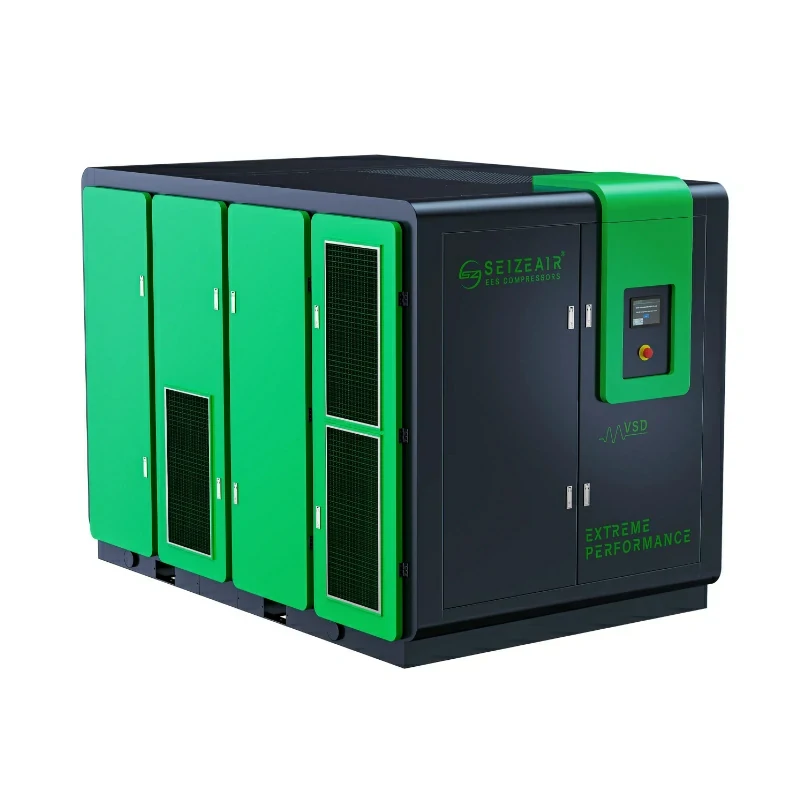
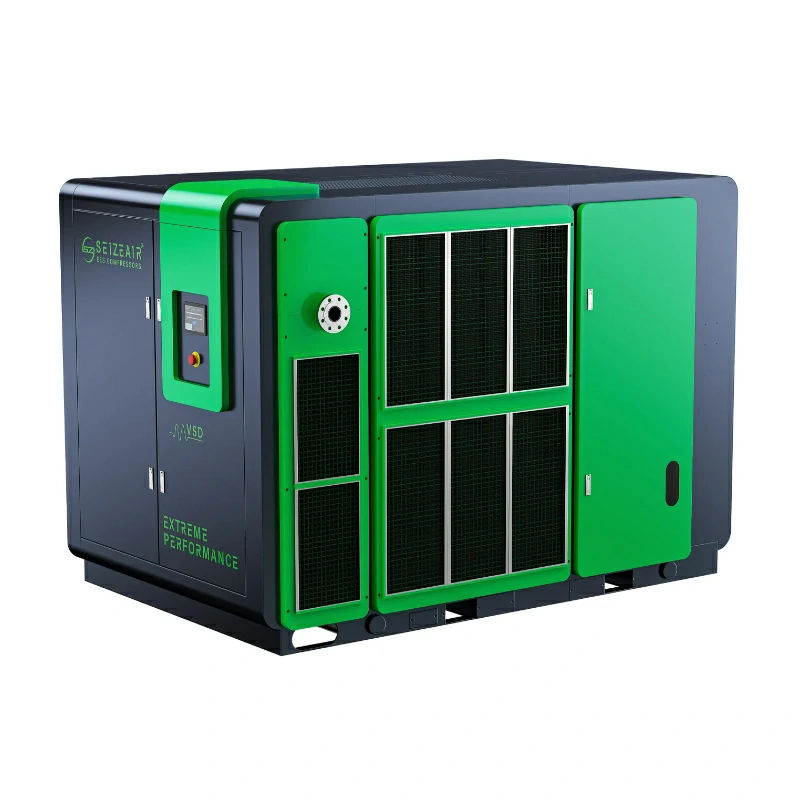
Traditional compressors are either “on” or “off.” VSD technology allows the motor to slow down or speed up based on actual demand. Seize has pioneered the integration of smart VSD controllers in their industrial line, often cutting energy bills by up to 35%. This is a massive “selling point” for both SEO ranking and actual sales.
Fixed Speed vs. VSD
VSD: Like a dimmer switch. The motor speed matches the air demand exactly. If a worker turns off a tool, the Seize VSD sensors instantly slow the motor down, saving thousands of dollars in annual energy costs.
Fixed Speed: Like a light switch. It’s either 100% on or 100% off. If your plant only needs 50% air, the compressor wastes energy by “unloading” or blowing off excess pressure.
7. Maintenance
An industrial air compressor is a significant capital expenditure (CAPEX). Protecting that investment requires a proactive maintenance schedule.
- Filtration: Change air and oil filters every 2,000 hours.
- Condensate Management: Ensure auto-drains are functioning to prevent rust in the tank.
- Vibration Analysis: For stationary units, monitor for unusual vibrations that could indicate bearing failure.
8.The CFM vs. PSI Calculation
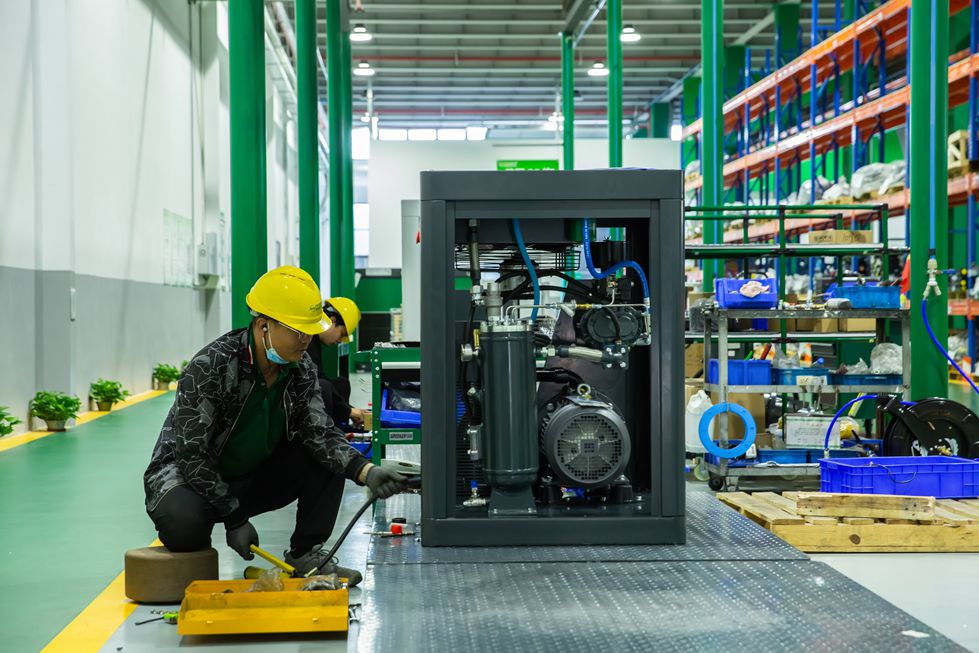
One of the most common mistakes in procurement is buying an industrial air compressor based on horsepower (HP) alone. HP is a measure of work, but CFM (Cubic Feet per Minute) is the measure of volume—and volume is what does the work.
Calculating Total Plant Demand
To size a stationary unit, you must perform a “Load Study”:
- List all pneumatic tools: Note their individual CFM requirements at a specific PSI.
- Apply a Duty Factor: Not every tool runs 100% of the time.
- Account for Leaks: Even a well-maintained factory can lose 10-20% of its air to microscopic leaks.
- Future Proofing: Always add a 25% buffer for future expansion.
Pressure Drop: The Silent Profit Killer
If your industrial air compressor is set to 125 PSI at the tank, but your furthest tool only receives 90 PSI, you have a “Pressure Drop” issue. This is usually caused by undersized piping or clogged filters. For portable units, this often occurs when using excessively long air hoses.
9. Noise Mitigation
In modern urban construction or indoor factory floors, decibel (dB) levels are a health and safety priority.
- Portable Units: Often use “Acoustic Canopies” made of high-density foam and steel to keep engine noise below 75 dB(A) at 7 meters.
- Stationary Units: Can be placed in dedicated compressor rooms, but high-quality industrial air compressors now come with “Silent” packages that allow them to be placed directly on the production floor without disrupting conversation.
10. Global Standards and Air Quality Classes
When discussing an industrial air compressor, we must reference ISO 8573-1. This international standard classifies air purity based on:
- Particles: Dust and dirt.
- Water: Humidity/Dew point.
- Oil: Aerosols and vapors.
For sensitive industries like electronics or medical grade packaging, a Seize oil-free stationary unit is non-negotiable to meet “Class 0” purity standards.
11. The “Total Cost of Ownership” (TCO)
When comparing a portable vs. stationary industrial air compressor, the purchase price is just the tip of the iceberg.
| Expense Category | Stationary (Electric) | Portable (Diesel) |
| Initial Purchase | Moderate to High | High (Engine costs) |
| Installation | High (Electrical/Piping) | Low (Minimal) |
| Energy/Fuel | Lower (Electricity) | Higher (Diesel Fuel) |
| Maintenance | Low (Motor/Filters) | High (Engine/Oil/Coolant) |
| Resale Value | High (Longer lifespan) | Moderate (Engine hours matter) |
12. Maintenance Deep Dive
A stalled industrial air compressor can cost a factory $10,000+ per hour in lost productivity.
The Daily Checklist
- Check oil levels (Critical for cooling and sealing in screw units).
- Drain the receiver tank of water.
- Check for air leaks (Listen for the “hiss”).
The Annual Overhaul
Every 4,000 to 8,000 hours, a stationary unit requires an “Oil-Air Separator” change. This component is what ensures the air coming out of your Seize compressor isn’t contaminated with the lubricant used inside the screws.
13. IoT and Predictive Maintenance
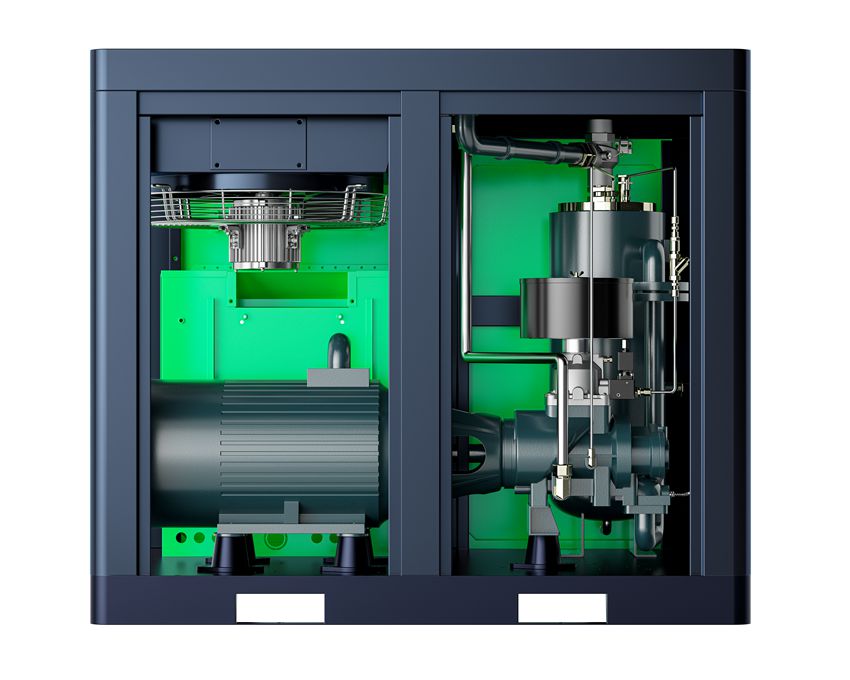
The next generation of the industrial air compressor is “Smart.” Through cellular or Wi-Fi connectivity, modern units now send real-time data to the cloud.
- Predictive Alerts: The machine tells you a bearing is getting too hot before it breaks.
- Remote Monitoring: Managers can check the PSI of a portable unit located at a remote mining site from their smartphone.
14. Case A: The High-Precision Textile Mill (Stationary)
The Environment: A massive spinning and weaving facility in Southeast Asia. The Challenge: The facility operated 24/7 with 400 air-jet looms. These looms require a constant, pulse-free stream of high-pressure air. Any fluctuation in PSI causes the thread to snap, leading to expensive downtime and material waste.
The Solution: Stationary Rotary Screw Installation
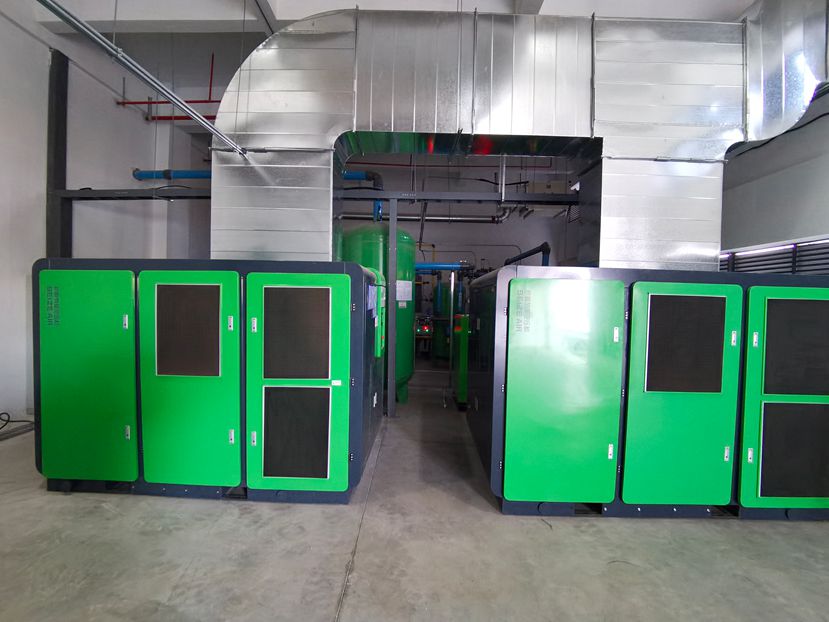
The mill replaced eight aging piston compressors with a centralized system featuring three Seize 250kW VSD (Variable Speed Drive) stationary industrial air compressors.
- Integrated Air Treatment: Because textile fibers are sensitive to oil staining, the system included high-efficiency coalescing filters and a twin-tower desiccant dryer.
- Heat Recovery: The mill utilized the thermal energy generated by the compressors to pre-heat water for their dyeing vats, reducing their boiler fuel consumption by 12%.
The Result
- Energy Savings: 32% reduction in monthly electricity costs due to the VSD motors matching air output to the loom demand.
- Productivity: Thread breakage dropped by 18%, significantly increasing the mill’s “First Quality” yield.
- Maintenance: By switching to a stationary Seize unit, the facility moved from reactive “break-fix” maintenance to a scheduled 4,000-hour service interval.
19. Case B: The Remote Bridge Rehabilitation (Portable)
The Environment: A structural steel painting project on a suspension bridge located 50 miles from the nearest power grid. The Challenge: The crew needed to run four industrial sandblasting nozzles simultaneously to strip lead paint. The equipment had to be moved every few days as the work progressed across the span.
The Solution: Portable Diesel-Driven Power
The contractor deployed two Seize 1600 CFM portable industrial air compressors mounted on heavy-duty tandem-axle trailers.
- Ruggedized Design: These units featured oversized cooling fans and heavy-gauge steel enclosures to protect the internal components from the abrasive sandblasting grit in the air.
- Fuel Efficiency: The units utilized Tier 4 Final diesel engines with electronic fuel injection, ensuring they met strict environmental regulations while maximizing the run-time per tank.
The Result
- Mobility: The “tow-and-go” nature of the portable units allowed the crew to keep air hoses short, preventing the 15-20 PSI pressure drop common in long-distance piping.
- Reliability: Despite 100°F (38°C) ambient temperatures and high humidity, the Seize portable units maintained a steady 125 PSI without overheating.
- Cost-Effectiveness: The project was completed 10 days ahead of schedule, saving the contractor thousands in labor and equipment rental fees.
Final Checklist for Your Industrial Air Compressor Strategy
- Audit Your CFM: Don’t buy based on HP; buy based on actual air volume needs.
- Assess Mobility: Does the air need to move, or can you pipe it from a central hub?
- Prioritize Efficiency: Look for VSD options to slash long-term electricity costs.
- Plan for Maintenance: Ensure your choice of industrial air compressor has a local service footprint for parts and filters.