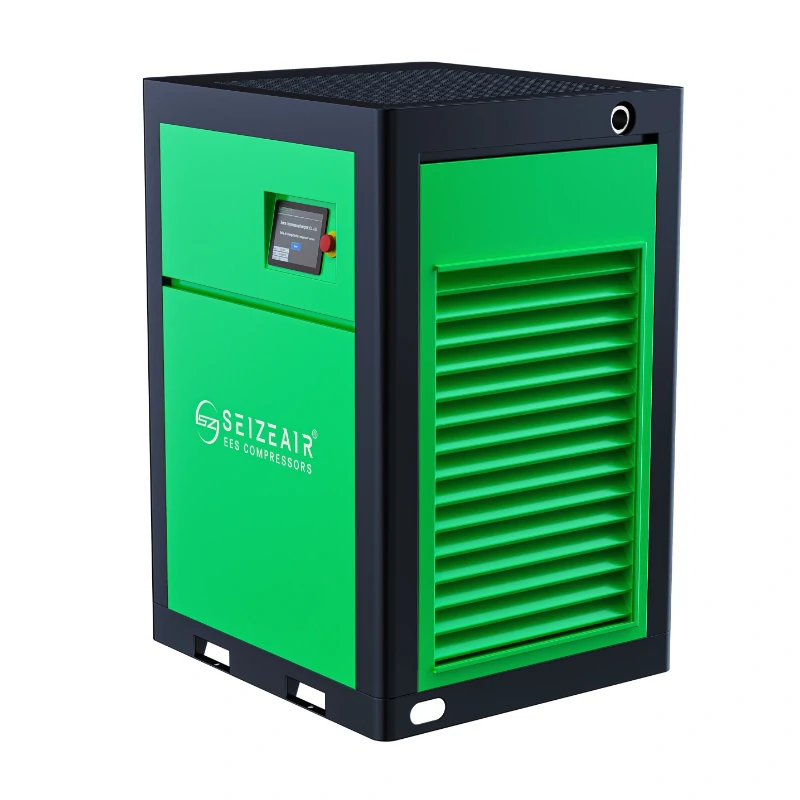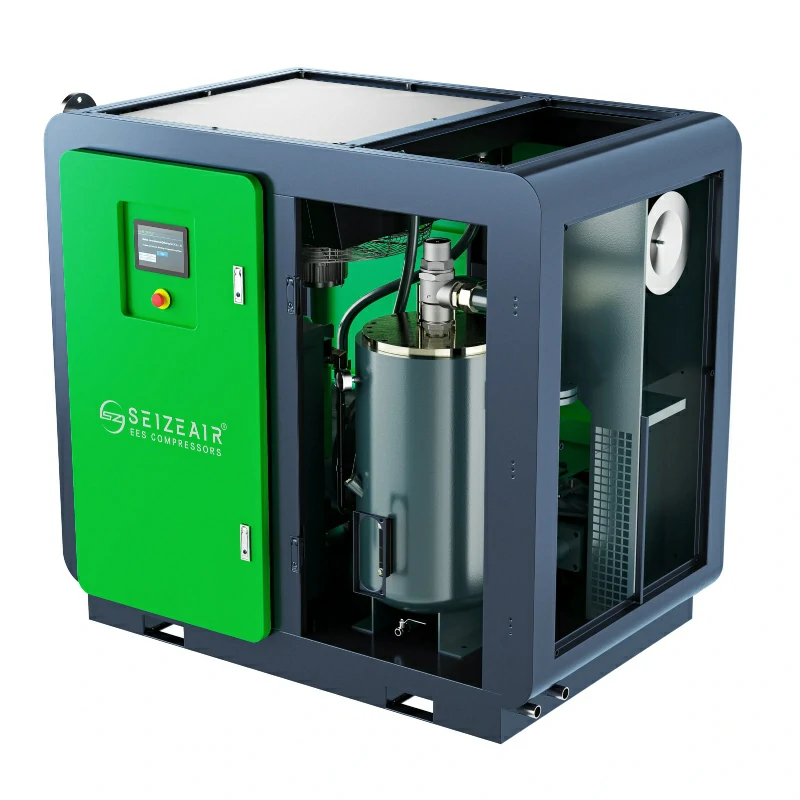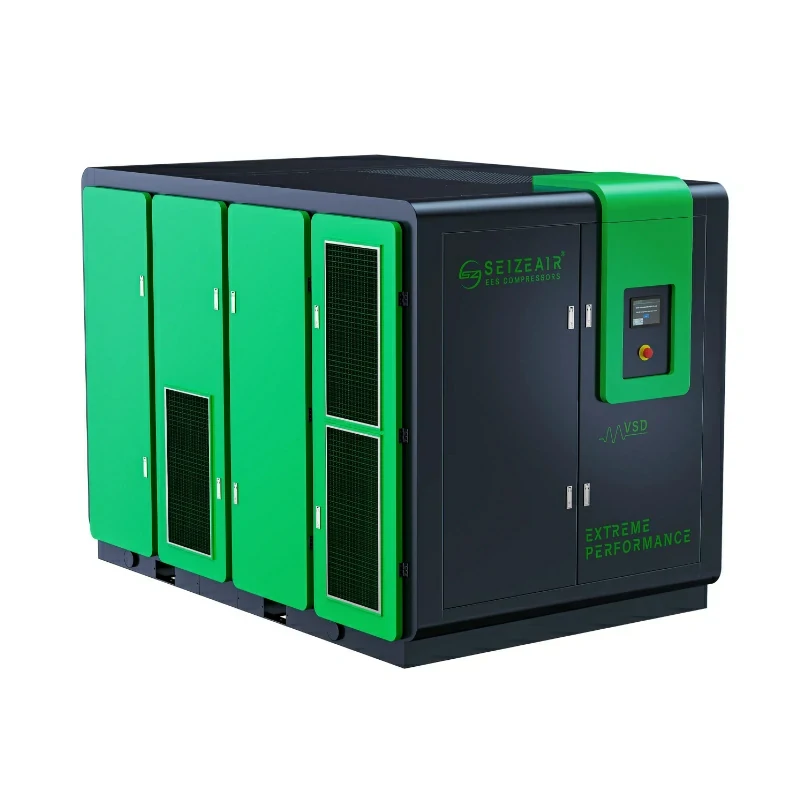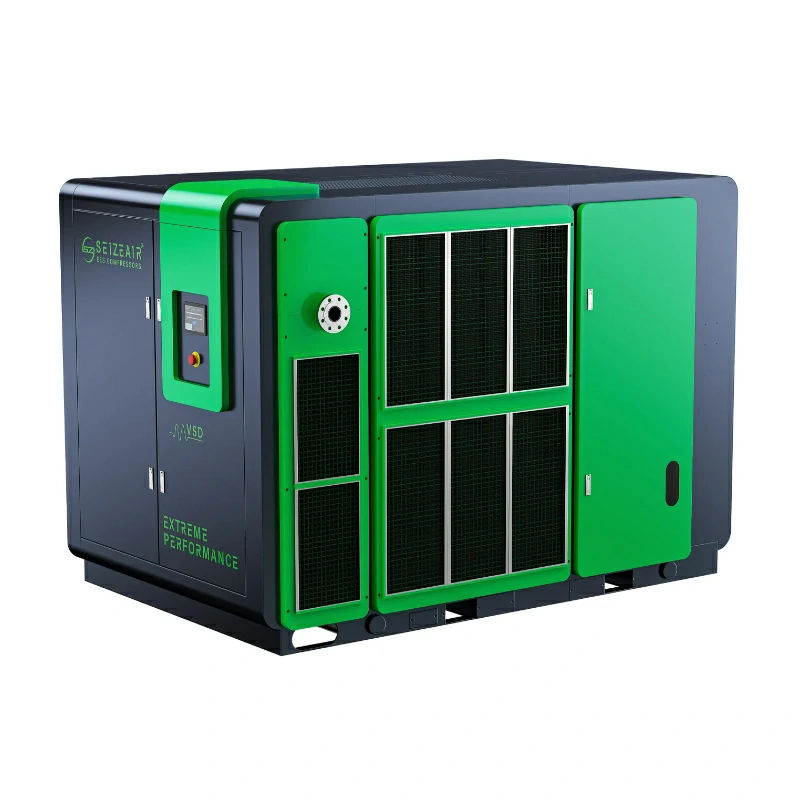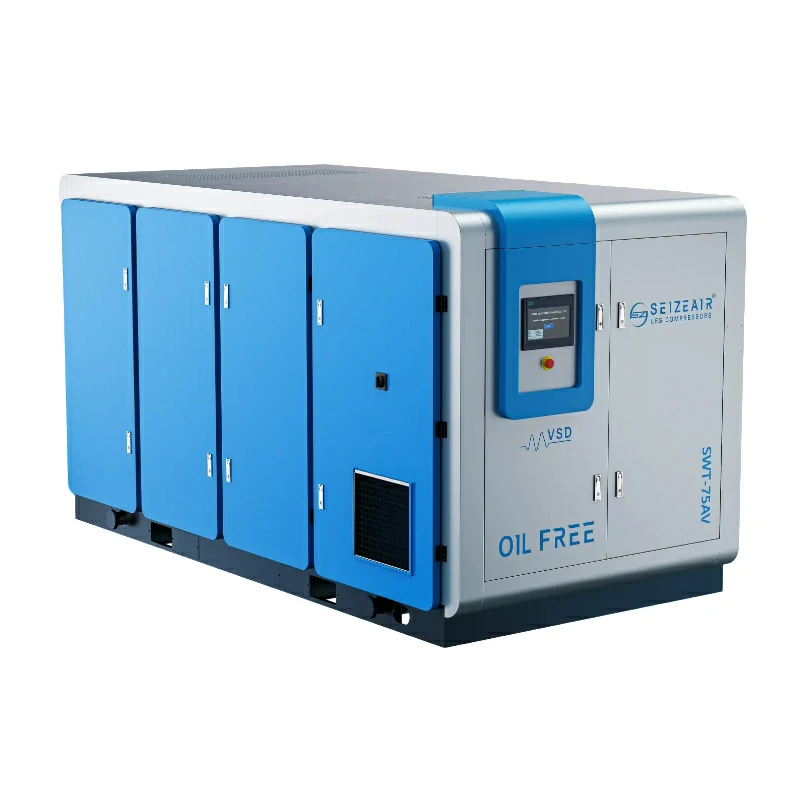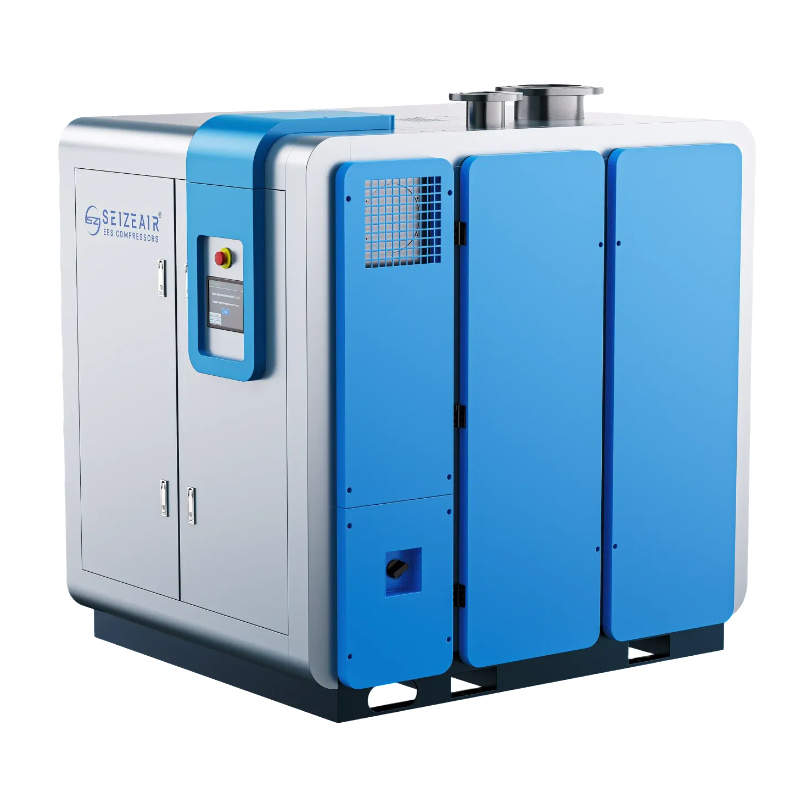


An air compressor for pharmaceutical plant operations must deliver pure, uncompromising air quality, as even the microscopic trace of oil can fail an entire drug batch. For plant managers looking to optimize their oil free air compressor for pharmaceutical application, understanding the exact intersection of ISO standards, energy metrics, and equipment sizing is paramount. This ultimate guide breaks down every technical and regulatory factor required to select, install, and maintain a highly compliant compressed air system.
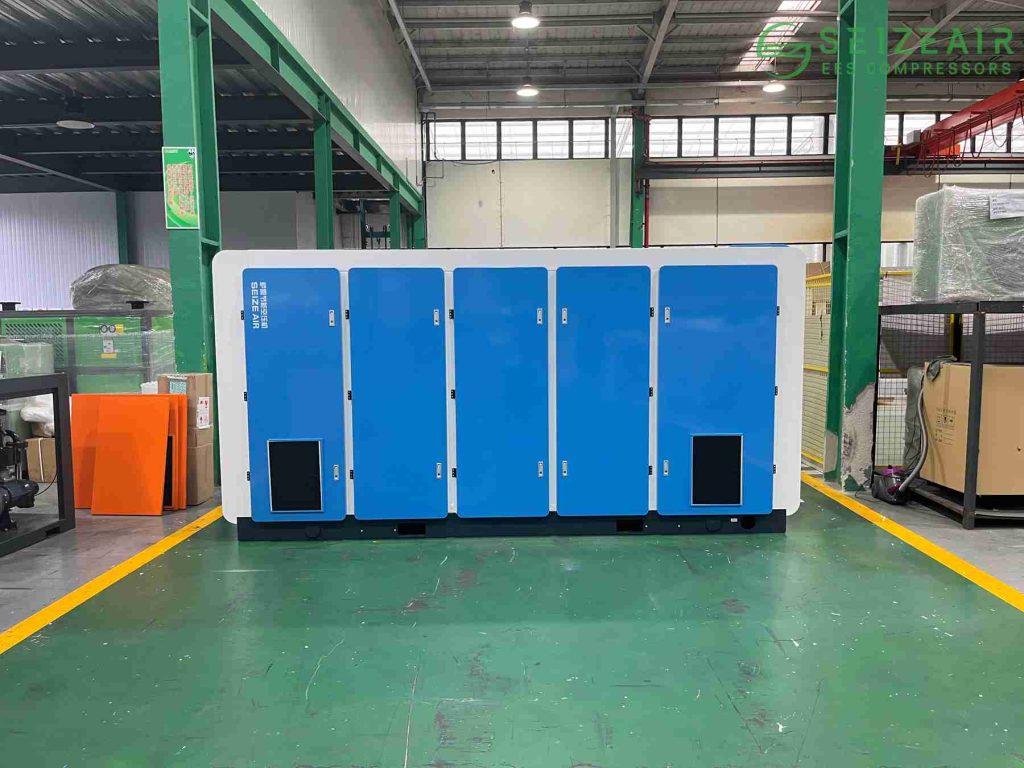
Why is oil-free compressed air mandatory in pharmaceutical manufacturing?
In a drug manufacturing facility, compressed air is classified as a critical utility. It frequently enters into direct or indirect contact with active pharmaceutical ingredients (APIs), container closures, and finished products. Typical processing applications include:
- Tablet Coating and Compression: Air drives the spray atomization of tablet coatings.
- Fluid Bed Drying: Large volumes of air fluidize and dry wet granulations.
- Product Conveying: Dense-phase or dilute-phase pneumatic conveying moves delicate powders through production lines.
- Ampoule and Vial Cleaning: High-velocity air blasts remove microscopic debris before sterile filling.
If an operator attempts to use a standard oil-lubricated compressor equipped with high-efficiency inline coalescing filters, the risk of “oil carryover” remains dangerously high. Coalescing filters are mechanical separators; they are subject to thermal degradation, pressure spikes, and human maintenance errors. If a single separator element tears or saturates, liquid oil and oil vapor will bypass the filtration string, contaminating the pharmaceutical grade compressed air system pipeline. To eliminate this risk entirely, international regulatory bodies favor systems that do not introduce petroleum or synthetic lubricants into the compression chamber in the first place, which is why top-tier facilities implement dedicated engineering setups like those provided by Seize Air.
What are the ISO air purity standards for pharma?
To establish a uniform standard for air quality, the International Organization for Standardization developed the ISO 8573-1 framework. This standard divides compressed air contaminants into three primary categories: solid particles, water (humidity), and total oil (including liquid, aerosol, and vapor).
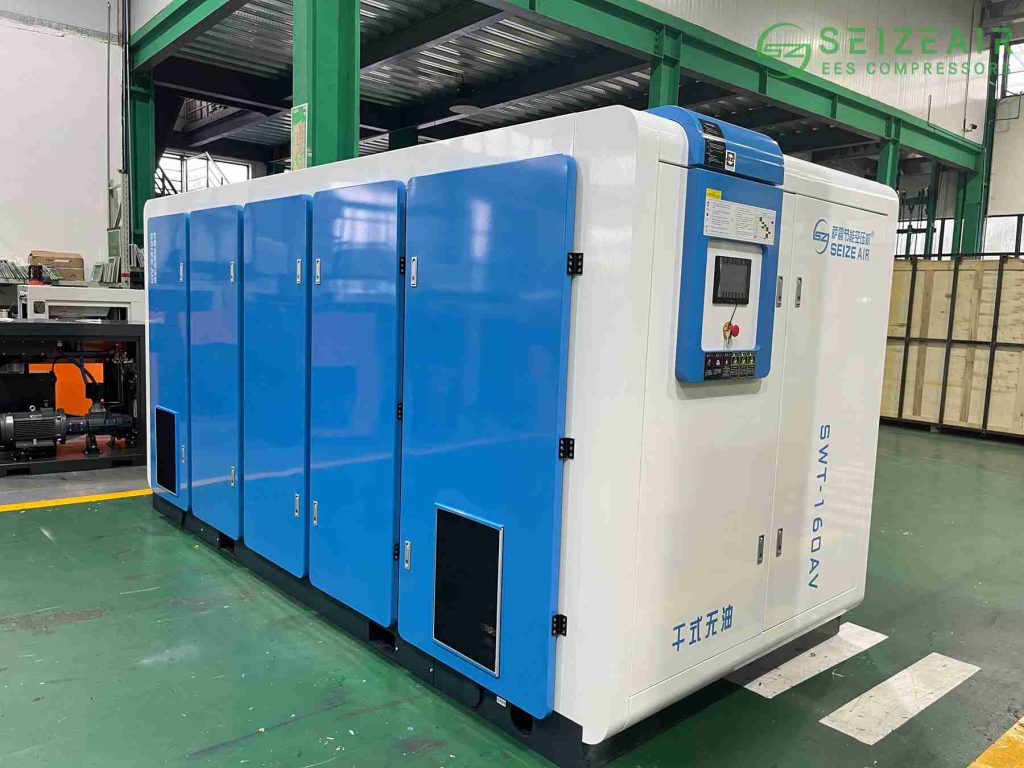
ISO Purity Classes Breakdown
| Quality Class | Maximum Number of Particles per m3 (0.1 – 0.5 microns) | Pressure Dew Point (C) | Total Oil Concentration (mg/m3) |
| Class 0 | As specified by user (stricter than Class 1) | As specified by user | 0.00 |
| Class 1 | <= 20,000 | <= -70 C | <= 0.01 |
| Class 2 | <= 400,000 | <= -40 C | <= 0.10 |
| Class 3 | Not Specified | <= -20 C | <= 1.00 |
The Critical Significance of Class 0 Certification
Many procurement teams mistakenly assume that Class 1 is sufficient. However, Class 1 still permits up to 0.01 mg/m3 of oil contamination. In a cleanroom environment, this small fraction can cause product spoilage. Class 0 certification requires the equipment manufacturer to undergo rigorous independent testing to prove that zero hydrocarbons are detected in the discharge air stream under any operating conditions.
Which oil-free compressor technology fits your plant layout?
When sourcing a premium air compressor for pharmaceutical facilities, two primary mechanical designs dominate the market: oil-free rotary screw compressors and oil-free scroll compressors.
1. Two-Stage Oil-Free Rotary Screw Compressors
Rotary screw systems utilize asymmetric male and female rotors that mesh together without touching. Because there is no oil sealing film between the rotors, these machines run at significantly higher rotational speeds than lubricated variants. They utilize water-jacketed cooling shells or advanced intercoolers to manage the heat of compression.
- Best For: Mid-to-large scale manufacturing plants requiring continuous, uninterrupted base-load air.
- Key Advantage: Exceptional thermodynamic efficiency at high flow volumes.
2. Multi-Scroll Oil-Free Compressors
Scroll compressors use a combination of one stationary scroll interleaved with an orbiting scroll. As the moving scroll orbits, it seals and compresses pockets of air toward the center of the mechanism.
- Best For: R&D laboratories, pilot plants, and localized point-of-use cleanroom sections.
- Key Advantage: Extremely low noise signatures and mechanical simplicity.
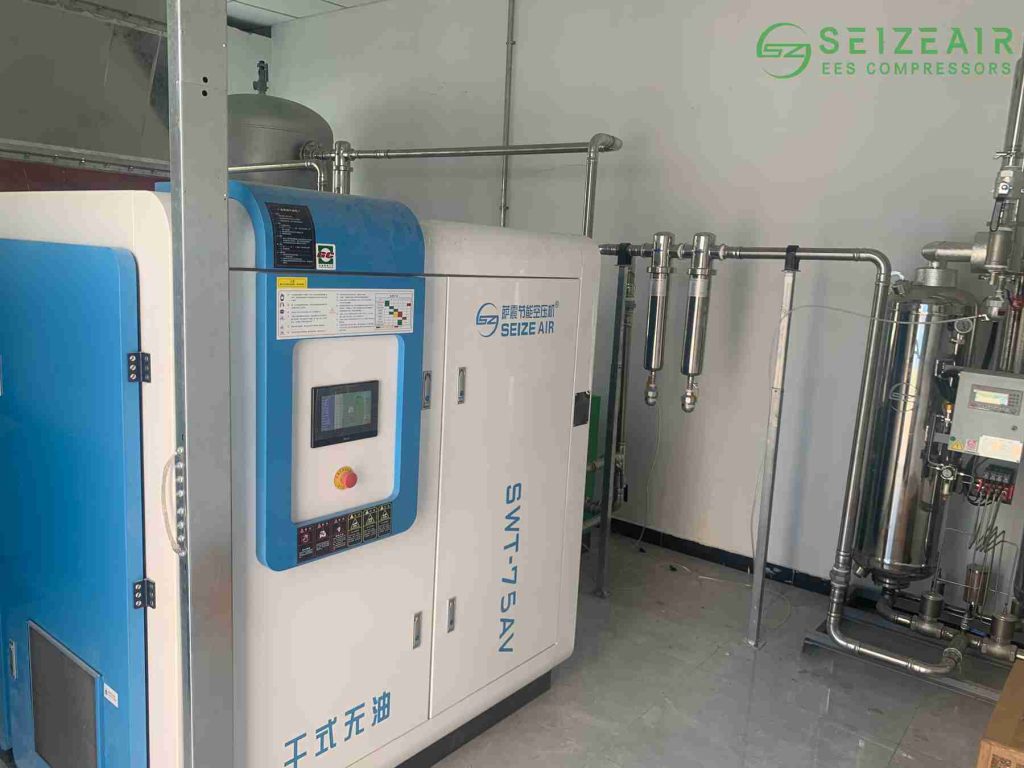
Comparison Matrix: Rotary Screw vs. Scroll Technology
| Operational Parameter | Oil-Free Rotary Screw System | Modular Oil-Free Scroll System |
| Flow Output Range | 100 to over 3,000 CFM | 5 to 120 CFM |
| Standard Operating Pressure | 7.5 to 10.5 bar (108 to 152 PSI) | 8.0 to 10.0 bar (116 to 145 PSI) |
| Acoustic Rating (dB) | 65 to 75 dB(A) with enclosure | 48 to 60 dB(A) |
| Typical Maintenance Focus | Air-end refurbishment at 40,000 hrs | Scroll tip-seal replacement |
How do you calculate CFM and PSI requirements for a pharma cleanroom?
Sizing your system correctly prevents the severe operational issues of under-sizing (pressure drops) and over-sizing (excessive unloaded running hours). To calculate the required capacity, engineers must use total volumetric flow equations alongside safety scaling parameters.
Step-by-Step Capacity Calculation
First, catalog every pneumatic tool, automated packaging line, and fluid bed dryer on the production floor. Sum their maximum consumption ratings using the following pure text formula:
Total Peak Flow = (CFM_1 * DF_1) + (CFM_2 * DF_2) + ... + (CFM_n * DF_n)
Where CFM represents the rated consumption of an individual asset, and DF represents its specific Diversity Factor (the percentage of time the asset actually runs simultaneously with others).
Second, incorporate an allowance for future plant expansions and unpredictable system degradation:
Design Target CFM = Total Peak Flow * 1.20
For the pressure metric (PSI or bar), look for the single piece of equipment with the highest minimum operating pressure requirement on the line, then add the total calculated pressure drop across your dryers, filters, and pharmaceutical grade compressed air system pipeline (typically around 0.8 to 1.2 bar).
What is the energy impact of Variable Speed Drive (VSD) in pharma plants?
Pharmaceutical manufacturing processes rarely demand a constant, flat volume of compressed air 24/7. Packaging lines stop for batch changes, and cleanroom demand fluctuates based on production cycles.
Fixed Speed vs. VSD Power Dynamics
A traditional fixed-speed compressor operates on a “load/unload” cycle. When air demand drops, the compressor closes its inlet valve but keeps the motor spinning at 100% speed, consuming roughly 30% to 70% of its full-load power while producing zero air.
A variable speed drive compressor for cleanroom applications uses an integrated frequency inverter to continuously adjust the motor’s RPM to precisely match the real-time air consumption.
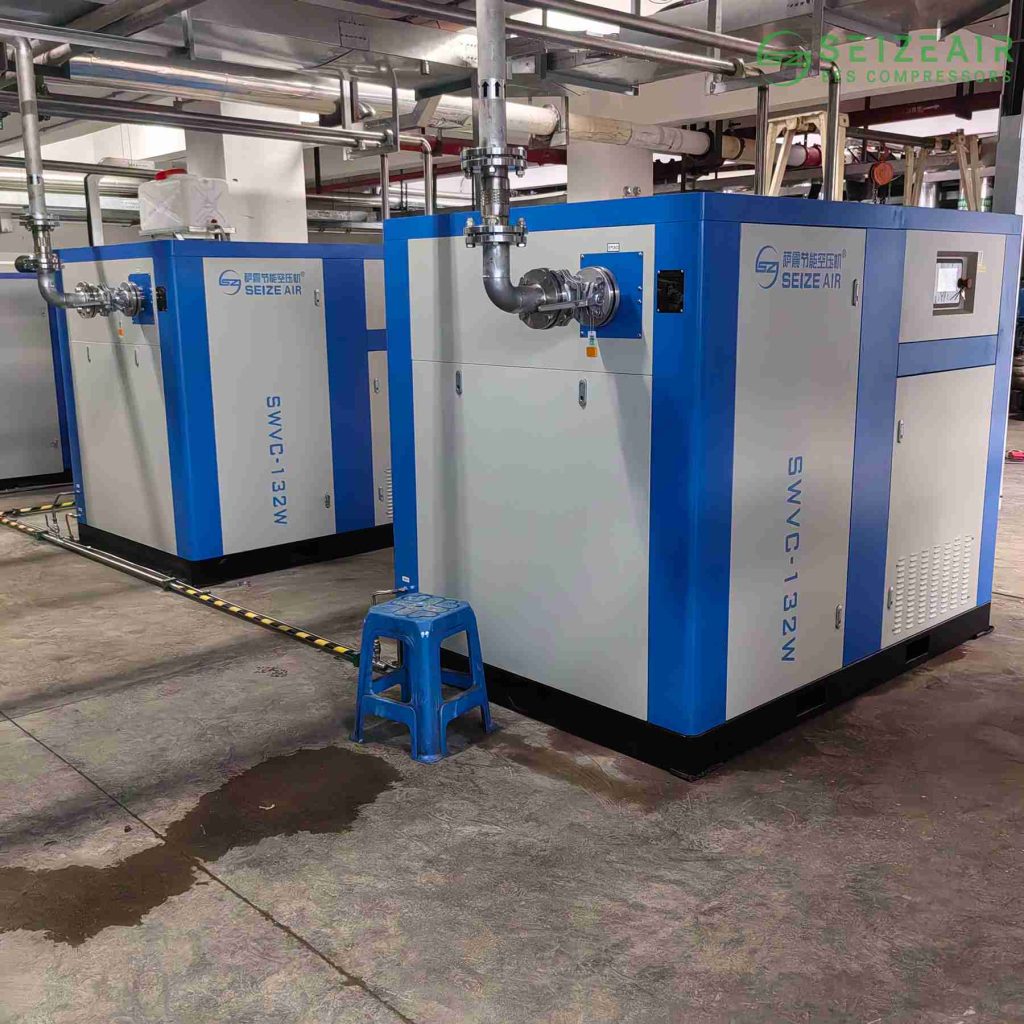
By installing advanced VSD packages, like the high-efficiency smart drives engineered by Seize Air, facilities routinely achieve net energy savings between 35% and 50%, while stabilizing network pressure to within plus or minus 0.1 bar.
What auxiliary air treatment modules are required for GMP validation?
Selecting a high-quality air compressor for pharmaceutical application is only the foundational step. Raw ambient air contains moisture, airborne bacteria, and hydrocarbons. An advanced downstream treatment string is mandatory to achieve Good Manufacturing Practice (GMP) validation.
1. Desiccant Air Dryers (Twin-Tower Adsorption)
Refrigerated air dryers can only lower the pressure dew point (PDP) to +3 C, which allows moisture to condense inside cold piping networks, creating a breeding ground for bio-films. Pharmaceutical validation requires an adsorption desiccant dryer utilizing activated alumina or molecular sieve desiccant beds to drive the PDP down to -40 C or -70 C. This ultra-dry environment renders microbial survival impossible.
2. Multi-Tiered Micro-Filtration Architecture
The downstream pipeline requires a strict sequential filter train:
- Water Separators / Coarse Pre-Filters: Installed directly after the compressor aftercooler to remove bulk liquid condensate and particulate matter down to 1 micron.
- High-Efficiency Particulate Filters: Positioned after the desiccant dryer to capture any desiccant dust or sub-micron solids down to 0.01 microns.
- Point-of-Use Sterile Air Filters: Utilizing hydrophobic PTFE membranes rated at 0.22 microns or 0.01 microns to guarantee total sterilization before air makes physical contact with drug packaging or ingredients.
How to navigate FDA 21 CFR and GMP validation protocols?
Regulatory compliance is the definitive metric of success for any plant manager. Under FDA 21 CFR Part 211, compressed air is scrutinized closely during facility audits.
The 3-Tier Validation Framework (IQ/OQ/PQ)
To achieve full compliance, your engineering team must execute a structured qualification process:
- Installation Qualification (IQ): Verifies that the physical compressor, desiccant dryer, and plumbing match the original design blueprints, electrical specifications, and cleanroom distance regulations.
- Operational Qualification (OQ): Tests the system’s operational boundaries. This includes proving that pressure alarms trip at the correct parameters, auto-drain valves actuate reliably, and VSD modulations stabilize correctly under simulated load shifts.
- Performance Qualification (PQ): The final and most critical phase. Air purity samples must be captured at designated point-of-use drops over an extended timeframe (e.g., 7 to 14 consecutive days) to verify that particle counts, dew point ratings, and microbiological assays consistently remain within Class 0 tolerances.
Frequently Asked Questions
Can you convert an oil-lubricated compressor to Class 0 using carbon filters?
No. Activated carbon towers and multi-stage coalescing filters can reduce oil content under ideal conditions, but they cannot handle catastrophic mechanical seal failures or temperature spikes. If an oil-lubricated compressor leaks fluid downstream, the filtration system can quickly become saturated, leading to immediate cleanroom contamination. Regulatory inspectors do not recognize converted systems as true Class 0 infrastructure.
How often do sterile air filters need to be replaced in a pharma plant?
Sterile point-of-use filters should be replaced or sterilized according to a strict preventive schedule, typically every 6 to 12 months, or sooner if a high differential pressure drop is detected across the filter housing. Daily monitoring of differential pressure gauges is a standard GMP audit requirement.
What pipe material is recommended for pharmaceutical compressed air?
Stainless steel (grade 304L or 316L) is the absolute industry standard for cleanrooms and downstream distribution. Unlike carbon steel or copper, stainless steel completely resists corrosion caused by ultra-dry air and will not shed particulate matter or metallic flakes into your delicate production processes over time.
Operational Maintenance and Calibration Schedule
To maintain peak system efficiency and protect your plant from sudden downtime or failed quality audits, use this comprehensive preventive matrix.
Daily, Monthly, and Annual Checklist
| Testing Frequency | Target Component | Required Technical Action |
| Daily | Electronic Condensate Drains | Manually actuate test buttons to verify zero liquid backup in moisture separators. |
| Daily | Control Panel Monitor | Log system discharge pressure, interstage temperatures, and current dew point readings. |
| Monthly | Air Intake Filters | Inspect for heavy dust accumulation; replace intake elements if differential pressure rises. |
| Quarterly | Point-of-Use Air Sampling | Conduct dew point verification and particle counters analysis using calibrated instrumentation. |
| Semi-Annually | Desiccant Adsorption Beds | Check for desiccant oil fouling or excessive pressure drops across the dryer towers. |
| Annually | Transducers and Controls | Recalibrate all pressure, temperature, and dew point sensors back to traceable national standards. |
By pairing your team with a world-class equipment manufacturer, tracking these maintenance metrics becomes entirely streamlined. Industry leaders like Seize Air provide smart, cloud-linked diagnostic systems and custom tailored support plans that completely take the guesswork out of compliance management.
Ready to optimize your facility with a certified oil-free compressed air network?
Maintaining a 100% sterile manufacturing environment requires absolute technical precision from your equipment. Our application engineers specialize in designing fully optimized, ISO 8573-1 Class 0 compliant systems designed specifically for high-stakes pharmaceutical applications.
Contact the Seize Air expert engineering team today to schedule a complete system audit, receive custom CFM sizing calculations, or request a detailed technical quotation tailored directly to your cleanroom layout.