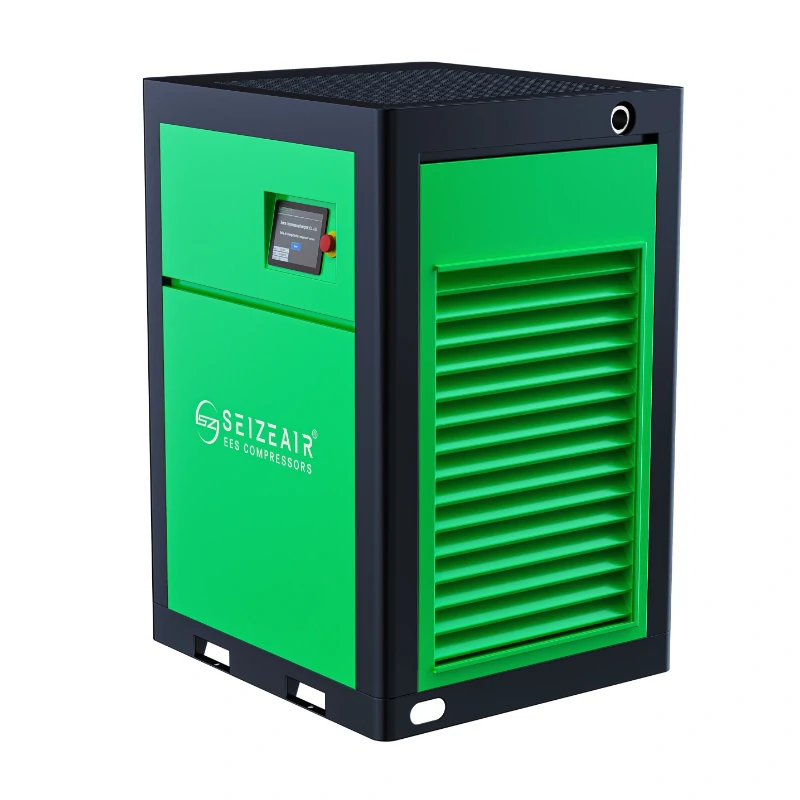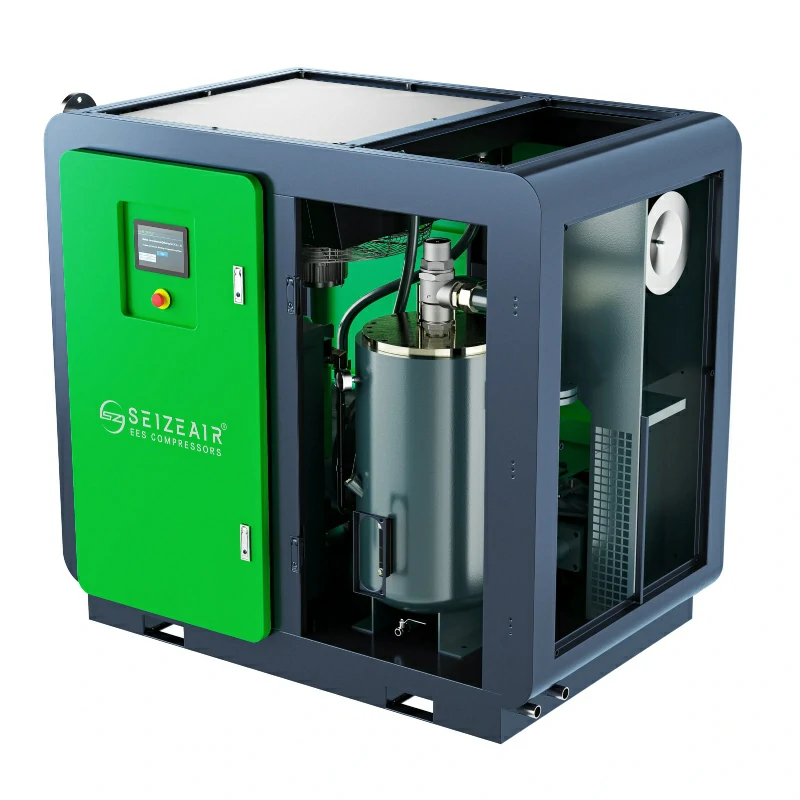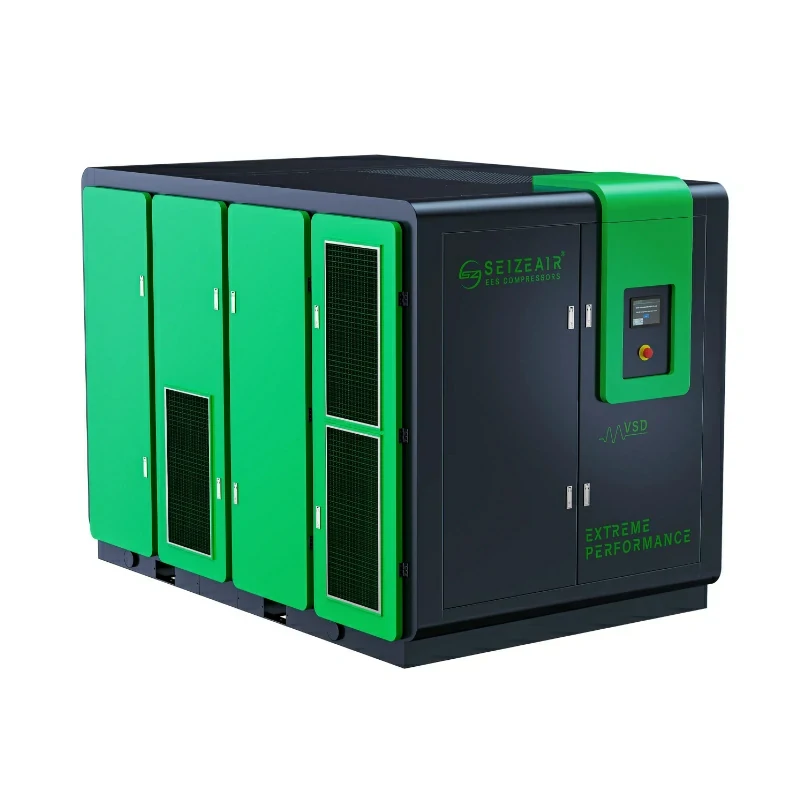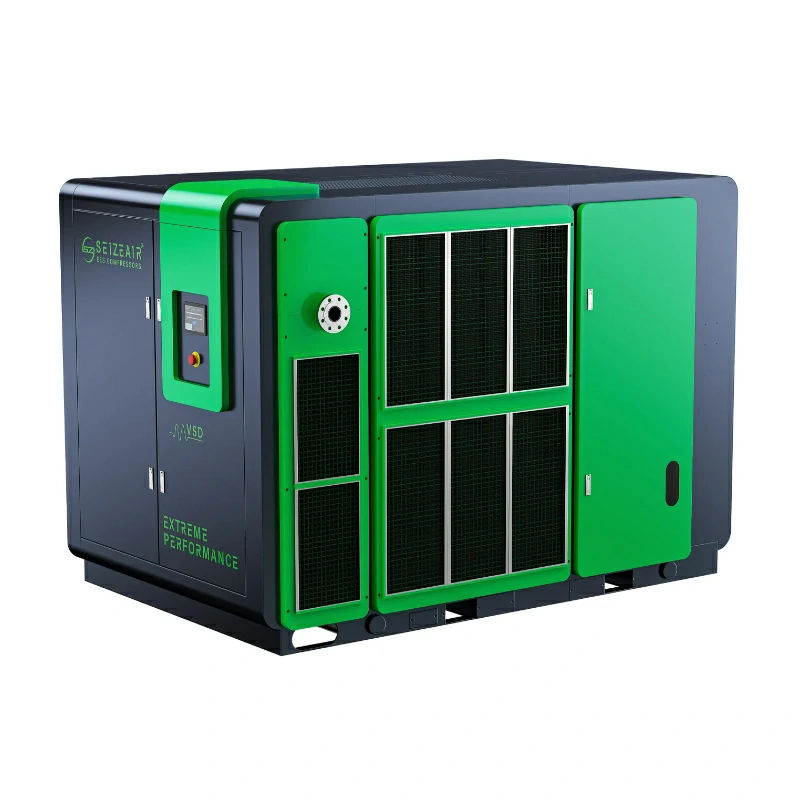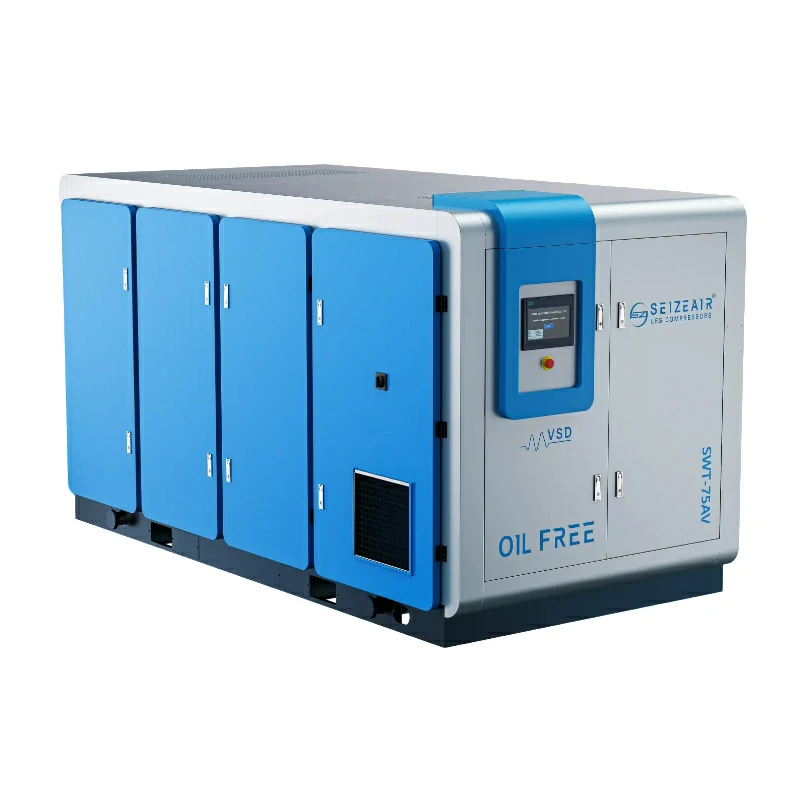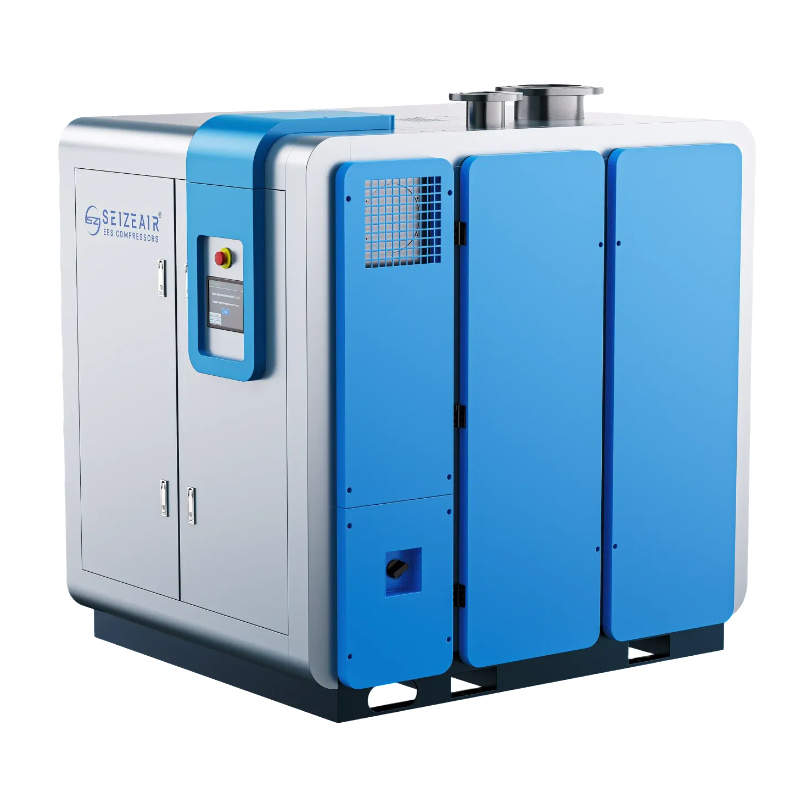


An air compressor for textile industry applications has to do more than just make pressure—it has to deliver clean, steady, oil-free air at the exact flow and pressure your looms, spinners, and finishing lines demand, day after day. In this guide we break down the types, sizing math, air-quality rules, and energy moves that actually matter on a textile plant floor.
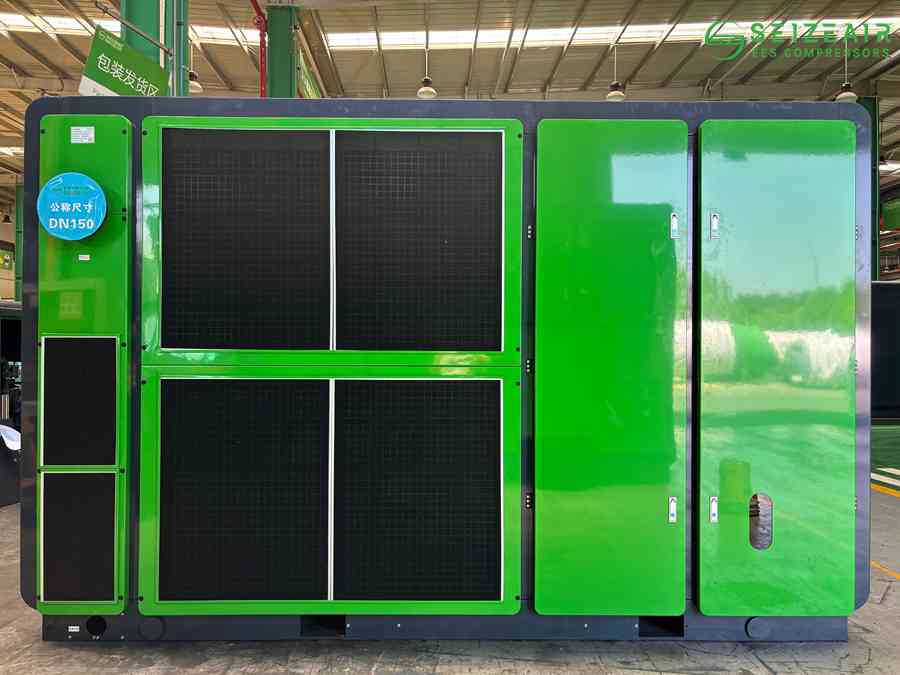
Why Do Textile Plants Rely on Compressed Air Every Day?
Textile factories are among the heaviest users of compressed air in any industry. Walk through a spinning hall or a weaving shed and you will hear it before you see it—the constant hiss of air moving fibre, the snap of a weft being shot across a loom. Compressed air is the quiet utility that keeps almost every process moving.
An air compressor for textile industry work is not a backup system; it is part of the production line. Spinning frames use air to open, clean, and convey fibre. Air-jet looms use a precisely timed burst of air to throw the weft yarn across the warp at speeds mechanical shuttles could never match. Dyeing and finishing lines use air for agitation, mixing, and drying. Even material handling—moving staple fibre from bale to card—often runs on pneumatic conveying driven by a low pressure air compressor for textile plants.
The reason is simple. Air is clean, flexible, and instantly available. You can pipe it anywhere, split it to a hundred machines, and control it with a valve. No shafts, no belts, no hydraulic fluid. For a compressed air system for textile plant operations, that flexibility is exactly why the textile industry has standardized on compressed air for decades.
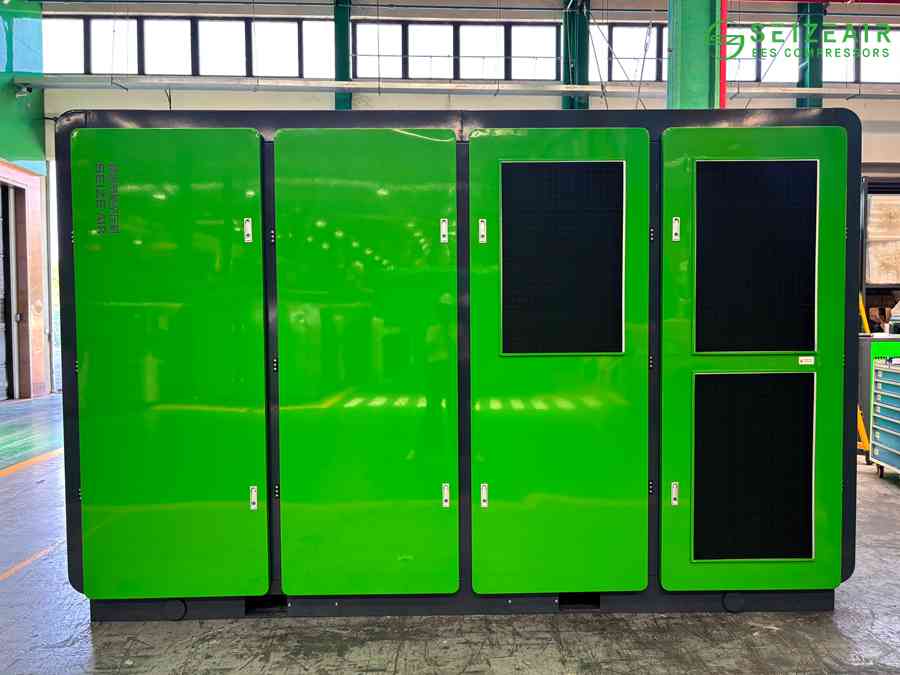
| Textile process | What compressed air does | Typical pressure |
|---|---|---|
| Spinning / opening | Pneumatic conveying of fibre, cleaning | 4–7 bar |
| Weaving (air-jet loom) | Weft insertion (the jet) | 3–6 bar, high volume |
| Knitting | Cylinder cleaning, tensioning | 6–8 bar |
| Dyeing & finishing | Agitation, colour mixing, drying | 6–10 bar |
| Printing | Spray, blanket tension | 6–8 bar |
| Pneumatic conveying | Transporting staple / fluff | 2–4 bar |
What Type of Air Compressor Is Used in the Textile Industry?
Most textile plants run rotary screw compressors, and the split is between oil-injected and oil-free designs. The oil-injected screw air compressor is the workhorse for general plant air, pneumatic conveying, and any line where a small amount of oil carryover can be tolerated after treatment. It is cheaper to buy, rugged, and available in every size from a small workshop unit to a multi-megawatt plant room.
For processes that touch the product directly—air-jet weaving, dyeing, drying, instrument air—mills increasingly specify an oil-free screw air compressor. Because there is no oil in the compression chamber, there is nothing to carry over into the air stream. That matters when a speck of oil can stain a roll of fabric or clog a fine nozzle.
Then there is the low-pressure screw, built for 2–5 bar duty, which is the sweet spot for air-jet looms and pneumatic conveying where you need a lot of volume but not much pressure. Large integrated mills with very steady, very high demand (think 100 m3/min and up) often add a centrifugal stage for efficiency at scale. An air compressor for weaving looms almost always lands in this low-pressure band.
| Compressor type | Best textile fit | Oil-free? | Notes |
|---|---|---|---|
| Oil-free screw | Weaving, finishing, dyeing | Yes (Class 0) | Cleanest air, higher capex |
| Oil-injected screw | General plant, conveying | No (needs filtering) | Lower cost, needs dryer + filter |
| Low-pressure screw | Air-jet looms, conveying | Optional | 2–5 bar, high flow |
| Centrifugal | Large mills >100 m3/min | Yes (dry) | Steady big load |
The right answer is rarely one machine. Most mills run a base load of screw or centrifugal units plus trimming and backup, all feeding a common ring main. A well-designed air compressor for spinning mill duty and a weaving-duty line can even be separated so each runs at its most efficient pressure.
Do Textile Mills Really Need an Oil-Free Air Compressor?
Short answer: for any air that touches fibre, yarn, or fabric, yes—oil-free is the safe default. Here is the issue. In an oil-injected machine, a thin film of oil seals and cools the rotors. Some of that oil becomes aerosol and vapour in the air. Even with a dryer and filter downstream, you are fighting trace oil at every stage. On a dyeing line or a finishing oven, that oil shows up as yellowing, spotting, or tacky residues that ruin batches.
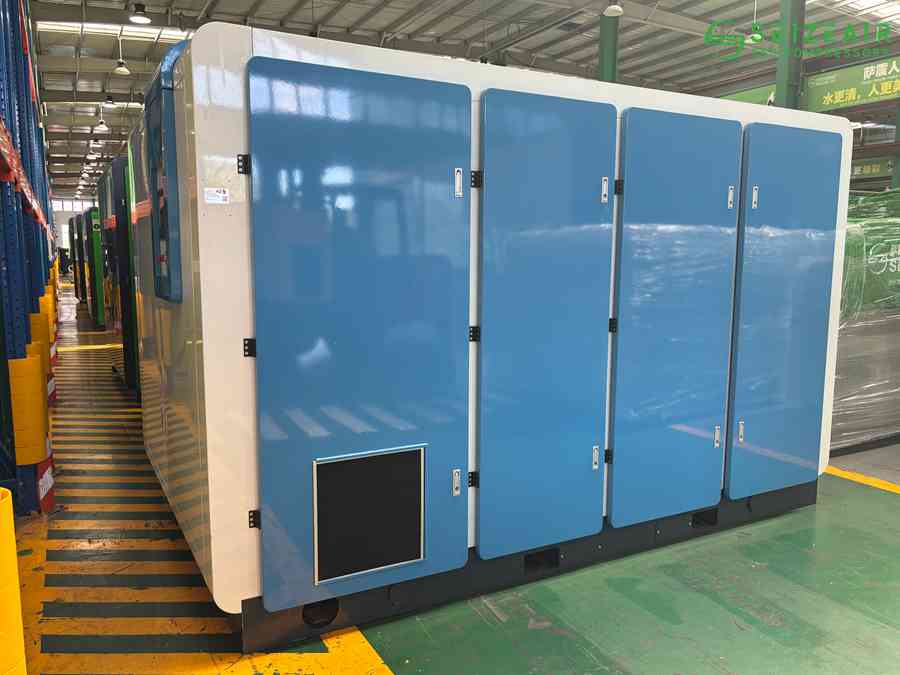
An oil free air compressor for textile industry removes the problem at the source. Class 0 (ISO 8573-1) oil-free units guarantee no oil in the delivered air—by design, not by filtration. For air-jet weaving especially, clean dry air also means fewer nozzle blockages and steadier pick rates. An air compressor for dyeing and finishing benefits the same way: no oil film on rolls, no contamination in the bath mist.
That said, not every cubic metre needs to be Class 0. Conveying of waste or feed stock, general workshop air, and blow-down can run on treated oil-injected air. The smart design separates “product air” (oil-free) from “plant air” (treated oil-injected) and sizes each to its real duty. That split is the difference between a mill that over-spent on treatment and one that right-sized it.
How Much Pressure and Flow Does a Textile Air Compressor Need?
This is where most sizing mistakes happen. Textile air is low-to-medium pressure but high volume, and the numbers vary a lot by process. Air-jet looms are the big consumers. A single air-jet loom can pull 0.5–1.5 m3/min depending on width and speed, and a weaving shed of a few hundred looms can easily need 150–400 m3/min. Spinning and opening run lower pressure (4–7 bar) but continuously. Dyeing and finishing want 6–10 bar for mixing and drying.
A simple way to frame the requirement:
P_required = P_tool + P_loss + P_safety
where P_tool is the machine set pressure, P_loss is line drop (allow 0.5–1 bar over a long ring main), and P_safety is a 0.5–1 bar buffer so you never starve a loom at peak. For flow, add every machine’s demand and then cover leakage:
Q_total = (sum of Q_machine) x (1 + leakage_rate)
Leakage on a textile ring main is typically 10–20% because of the sheer number of connections and jets. Ignore it and you will size 15–20% short and your looms will starve exactly when you push production. A low-pressure air compressor for textile weaving is usually specified at 3–5 bar with generous flow margin, while finishing and instrument air sit at 6–10 bar. Knowing which is which lets you right-size instead of over-buying.
Which Air Compressor Is Best for Air-Jet Looms and Weaving?
Air-jet weaving is its own animal. The loom does not need high pressure; it needs a large, stable volume at 3–6 bar, delivered without dips, because the weft insertion happens in milliseconds and any pressure sag means a missed pick and a defect. That points straight at a low-pressure screw or a dedicated low-pressure package sized with healthy margin.
Two design rules matter. First, use a VSD (variable speed) drive so the compressor tracks loom count through shift changes instead of dumping excess air to atmosphere. Second, keep the air dry—weaving sheds run warm and humid, and wet air plus fine yarn equals clogs and broken ends. Many mills pair the loom supply with the rest of the plant on one ring main but give weaving its own pressure-reducing and drying zone. The result is steadier picks, fewer breaks, and lower scrap.
How Do You Calculate the Right Air Compressor Size for a Textile Plant?
Beyond the quick formulas above, the proper sizing sequence is: (1) list every air-consuming device with its rated flow (m3/min) and pressure (bar); (2) note duty cycle—looms run near 100%, some finishing steps are intermittent; (3) sum concurrent demand using a diversity factor (not everything peaks at once), with typical diversity for weaving sheds at 0.7–0.9; (4) add leakage (10–20%) and a 10–15% growth margin for new looms; (5) convert to required free air delivery (FAD) and pick compressor capacity with one trim/backup unit.
Motor power is then roughly:
P_motor(kW) ≈ Q(FAD, m3/min) x P(bar) / (60 x overall_efficiency)
and the number that actually tells you efficiency is specific power:
SEC = P_motor(kW) / Q(FAD, m3/min)
Lower SEC means more air per kWh. When you compare quotes, ignore nameplate horsepower and compare SEC—two “same size” compressors can differ 15–25% on SEC, which is your real lifetime cost. This is the heart of air compressor sizing for textile plant projects: get FAD, pressure, and SEC right and the rest follows.
How Can a Textile Factory Cut Air Compressor Energy Costs?
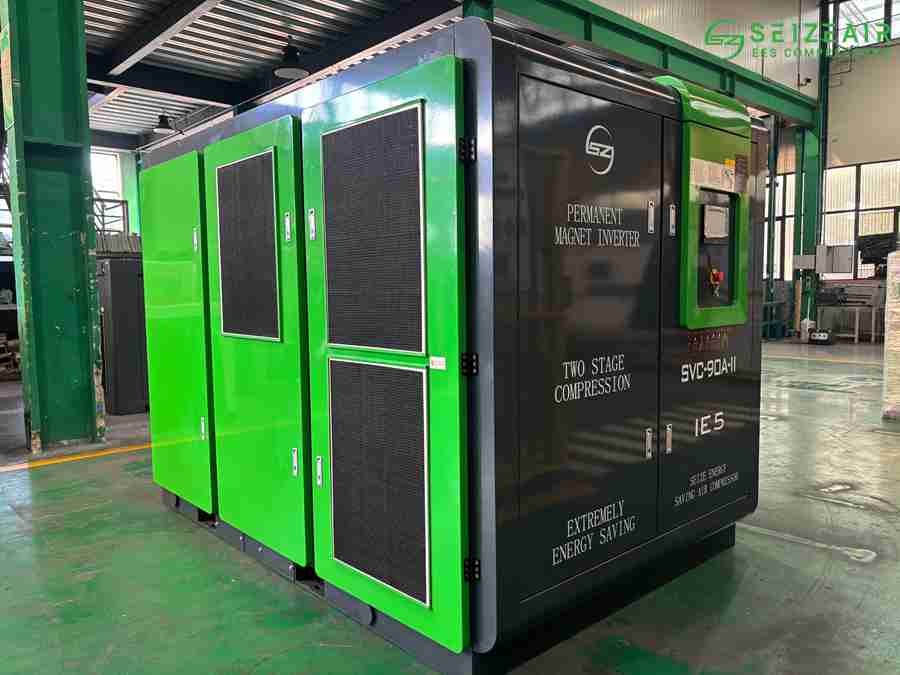
Compressed air is often the largest single electricity load in a textile mill, sometimes 20–40% of the plant bill. Three moves do most of the work. First, variable speed. A permanent magnet variable frequency screw air compressor matches motor speed to live demand, so you stop paying to compress air you dump. On a weaving shed with shifting loom counts, that alone is often 15–35% back.
Second, treat the air, don’t over-compress it. Every extra bar costs roughly 7% more energy. If your looms need 4 bar, don’t run the whole system at 7. Use a low-pressure line for weaving and a separate higher-pressure line only where needed. Third, kill leaks and recover heat. A proper leak program on a textile ring main routinely returns 10–20%. The heat your compressor throws away can pre-heat process water or the finishing hall—10–25% of input energy back as useful heat.
Seize Air and other modern suppliers now ship PM+VSD packages with built-in monitoring, so you can see SEC and leakage drift on a dashboard instead of guessing. An energy efficient air compressor for textile factory use is less about a single headline number and more about the whole system—pressure layering, VSD control, and leak discipline working together.
| Feature | What it does | Typical saving |
|---|---|---|
| VSD / variable speed | Matches output to demand | 15–35% |
| Permanent magnet motor | Higher motor efficiency | 5–15% |
| Heat recovery | Reuses compressor heat | 10–25% (thermal) |
| Zero unloaded run | Avoids no-load waste | 5–10% |
| Leak management | Cuts system losses | 10–20% |
What Compressed Air Quality Standards Apply to Textiles?
Textile air quality is governed by ISO 8573-1, which grades solid particles, water, and oil on a class scale (Class 0 is best). The trick is matching class to process instead of over-specifying everywhere. These compressed air quality standards textile mills care about most are driven by where the air ends up—on the yarn, in the dye bath, or just blowing off a floor.
| Process | Solid particles | Water | Oil |
|---|---|---|---|
| Air-jet weaving | Class 2 | Class 3 | Class 2 |
| Dyeing / finishing | Class 2 | Class 3 | Class 1 |
| Instrument air | Class 1 | Class 2 | Class 1 |
| General conveying | Class 4 | Class 4 | Class 3 |
Achieving these classes means pairing the right compressor with treatment: a refrigerated air dryer to pull dew point down for weaving and finishing, and a precision filter to strip particles and trace oil. For true Class 0 product air, start oil-free at the compressor—filtration cannot remove vapour oil that was never there. Get this wrong and you pay twice: once in stained or defective product, once in over-sized treatment you did not need.
Raw air intake
     |
[ Air compressor for textile industry ]
     |  (oil-free screw / low-pressure screw)
     v
Refrigerated air dryer  -->  Precision filter
     |                        |
     v                        v
Air receiver tank  -->  Ring main distribution
     |
     +-- Spinning frames
     +-- Air-jet looms
     +-- Dyeing & finishing
     +-- Pneumatic conveying
How Should You Maintain an Air Compressor in a Textile Mill?
Textile air is dirty air. Fibre lint, dust, and humidity are rough on intake and coolers. Maintenance that a general workshop can skip, a mill cannot. Change intake filters on a schedule tied to lint load, not the calendar—check them monthly in spinning areas. Keep coolers clean; blocked coolers trip on temperature and stop your looms. Drain condensate automatically; standing water breeds bacteria and rusts the ring main.
Track SEC monthly; a slow rise signals worn rotors or valve leaks before they fail. Service the dryer and filter on time—treatment is what makes “oil-free by filtration” actually work. A simple logbook or the compressor’s own telemetry turns this from guesswork into a plan. Mills that do this see fewer unplanned stops during peak season, which is when a stopped loom costs the most.
What Should You Look for When Choosing a Textile Air Compressor Supplier?
Buying the machine is the easy part; buying the right system with support that shows up is the hard part. Look for a supplier who will size from your actual device list, not a guess; who separates product air from plant air; who quotes SEC not just horsepower; and who has local service for the inevitable 3 am trip. Ask for references in textile or similar continuous-process plants, confirm spare-part lead times, and insist on a written air-quality guarantee for product lines.
The best air compressor for textile industry is the one that still meets spec in year five, not just on day one. If you want a side-by-side, our guide to the best air compressor for textile industry compares types, sizing, and total cost in plain terms. Pneumatic conveying textile lines, spinning halls, and weaving sheds each pull differently—so the supplier’s job is to map the machine to your real layout, not a brochure.
Conclusion
Choosing an air compressor for textile industry use comes down to three things: match pressure and flow to each process, keep product air genuinely oil-free, and design for the energy load before you buy. Get those right and your looms, spinners, and finishing lines run cleaner, steadier, and cheaper.
Ready to size a system for your plant? Reach out to our team for a free compressed-air audit and a model matched to your looms and budget—tell us your loom count, pressure needs, and shift pattern, and we will map the right oil-free or low-pressure package to your floor. Talk to the Seize Air team today and turn compressed air from a hidden cost into a controlled, efficient utility.