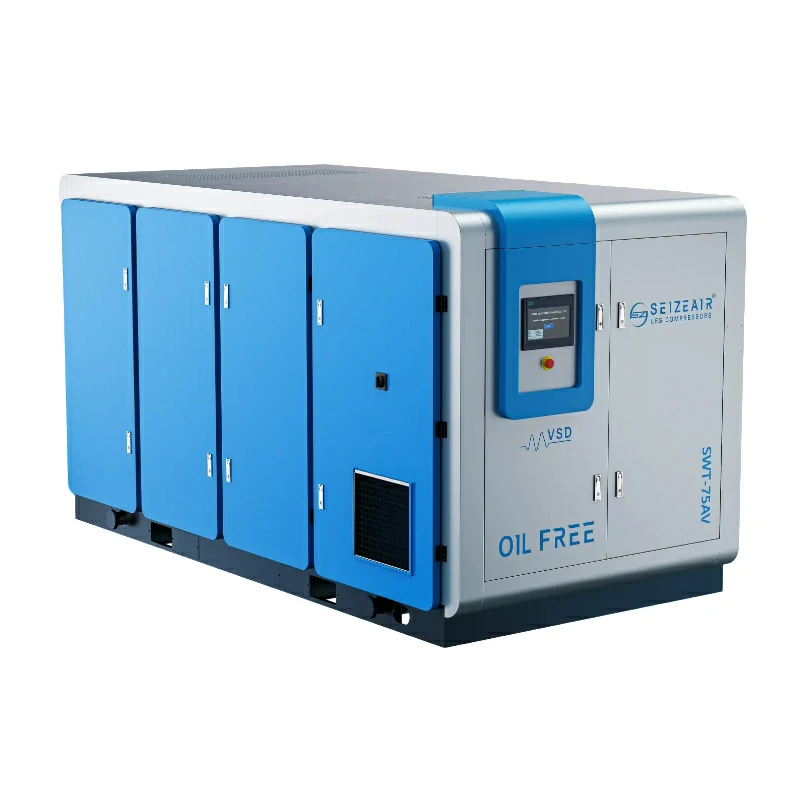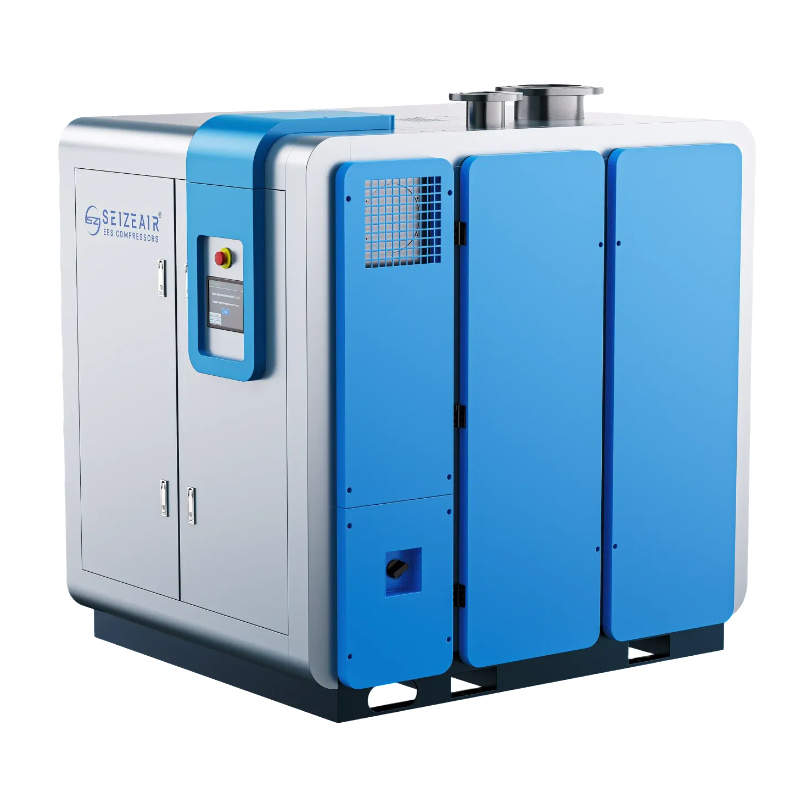


An air compressor maintenance guide is only useful if your team actually follows it. This guide lays out the daily, weekly, and monthly tasks that keep industrial oil-injected screw compressors running at full efficiency, and it explains the why behind each step so the schedule sticks on a busy plant floor.
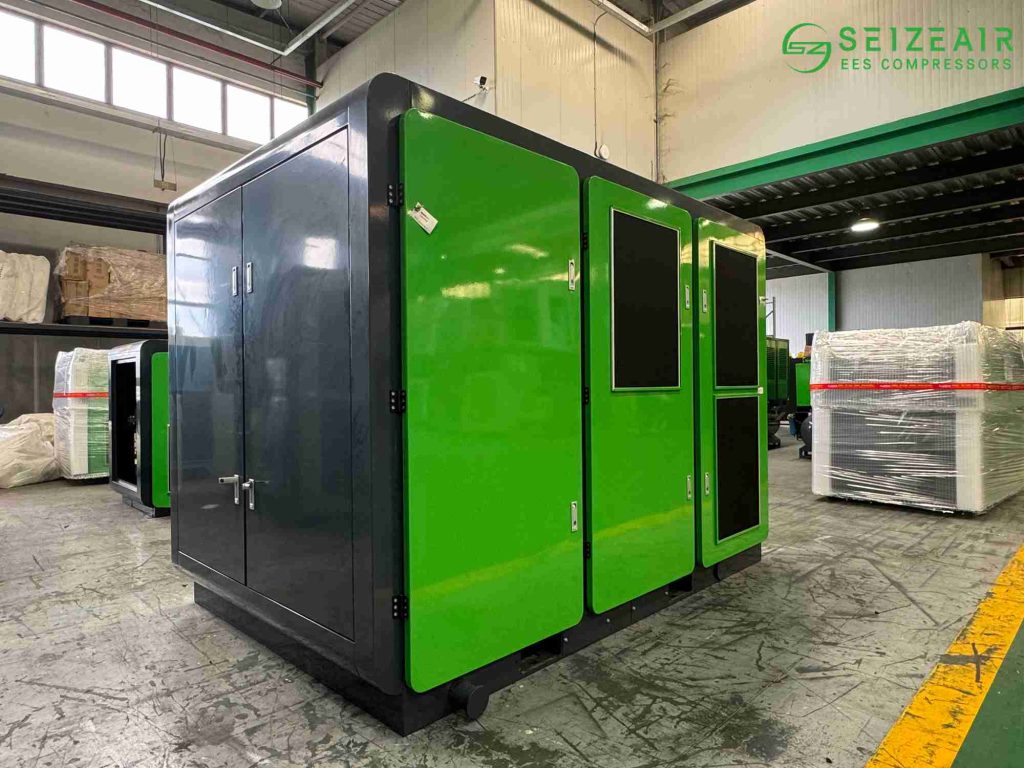
Why a Written Air Compressor Maintenance Guide Pays Off
Compressed air is often called the fourth utility, and like electricity or water it fails quietly until it fails expensively. In most factories the real cost of a compressor is not the purchase price but the electricity it burns over ten years, plus the production you lose every time it trips offline. A disciplined air compressor maintenance guide protects two things at once: it keeps energy use low and it keeps unplanned downtime near zero.
For an oil-injected screw machine the airend and oil system are the two components you are really protecting. The airend is a precision pair of rotors with tolerances measured in microns; the oil is both lubricant and sealant and cooler. Let either drift out of spec and the whole package pays for it. The good news is that the failure modes are predictable, which means they are also preventable with a routine anyone can learn in an afternoon.
Plants that run a real schedule tend to see the air-end last its full design life, energy bills stay flat year over year, and the service van stops showing up for emergencies. None of that happens by accident. It happens because someone wrote the tasks down, posted them at the machine, and checked them.
What Does an Industrial Screw Compressor Actually Need?
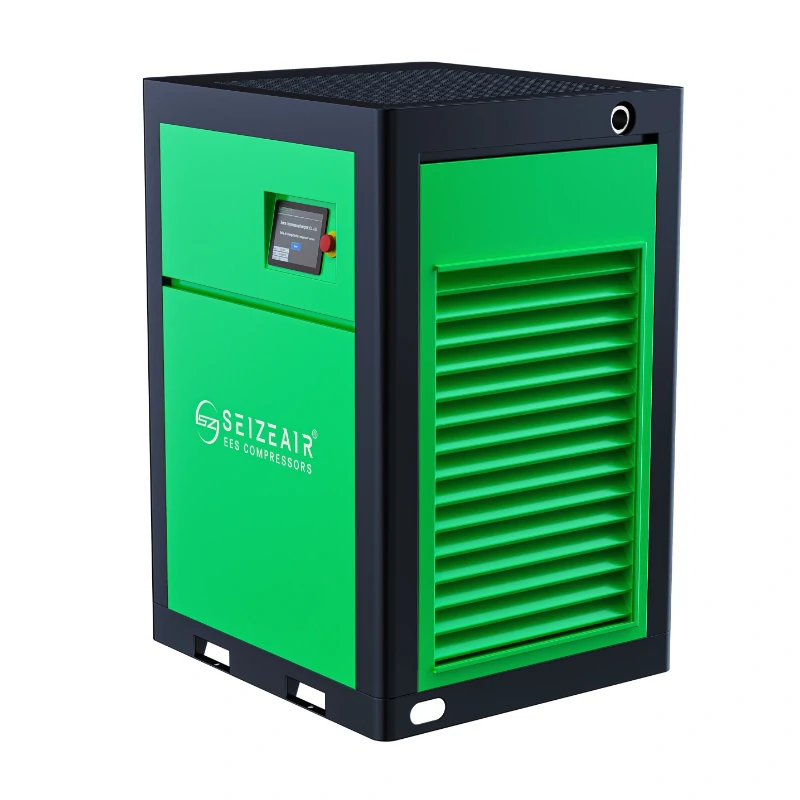
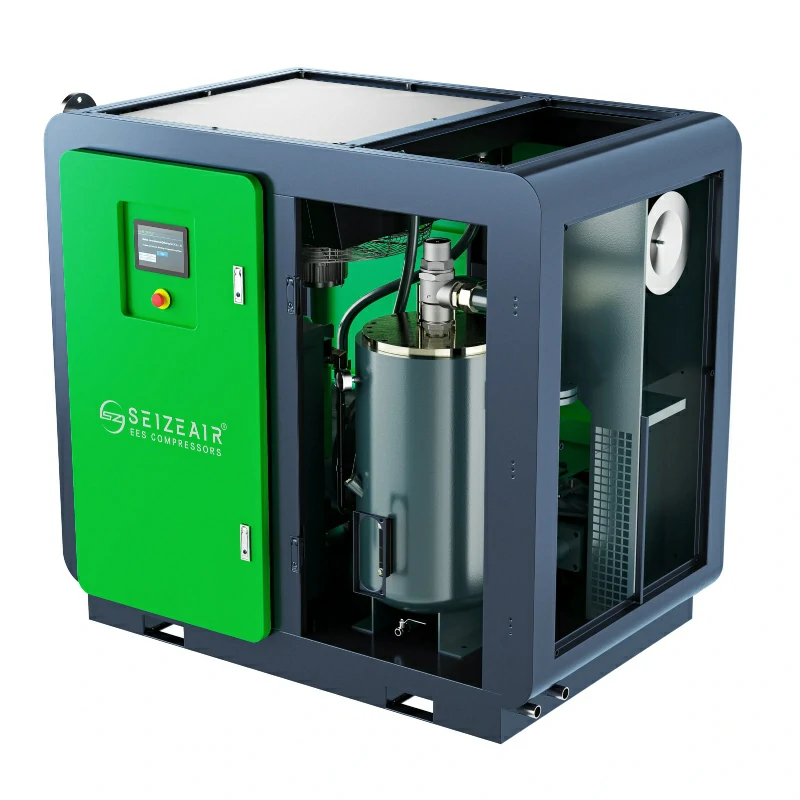
Before the checklists make sense, it helps to picture what is inside the box. A fixed-speed or variable-speed oil-injected screw air compressor pulls intake air through a filter, compresses it between two meshing rotors, mixes it with oil to seal and cool, then spins the oil-air mix through a separator. The cleaned air goes on to a dryer and a receiver; the oil is cooled and returned. Each of those stages has a wear point, and a good maintenance plan is really just a list of those wear points with a date attached.
The subsystems you will touch most often are: the intake air filter, the oil and oil filter, the separator element, the cooling circuit, the drive (belt or direct coupling), the controller and sensors, and everything downstream (dryer, filters, receiver tank). Notice that only one of those is the machine itself. Most “compressor problems” are actually air-treatment or support-system problems wearing the compressor out faster.
Daily Air Compressor Maintenance Tasks
Daily tasks take five to ten minutes at the start of each shift. They are the cheapest insurance you will ever buy, and they are also the tasks most likely to be skipped when everyone is in a hurry. Build them into the shift handover so they happen whether or not anyone feels like it.
| Task | Why it matters | How to do it |
|---|---|---|
| Check oil level in the sight glass | Low oil raises airend temperature and accelerates wear | Confirm the level sits in the marked band; top up only with the specified oil grade |
| Drain condensate from traps and tanks | Water in the line corrodes receivers and ruins air quality | Open manual drains or confirm automatic drains fire; watch for oil-emulsion discharge |
| Walk the unit and listen | New noise or vibration is the earliest warning of failure | Note knocking, whining, or excessive heat; compare against the baseline you recorded |
| Read the controller | Alarms and fault codes catch problems before shutdown | Clear minor alarms, log active ones, and check discharge pressure and temperature |
| Scan for leaks | A single 3 mm leak wastes roughly 10% of compressor output | Soap-test joints and listen for hissing around couplings and valves |
The single most skipped task is draining condensate. In humid sites the air receiver tank can fill with water overnight, and the next morning the dryer is fighting a lake instead of air. If your automatic drains are the only thing between you and a flooded line, test them daily until you trust them, then weekly after that.
Weekly Air Compressor Maintenance Tasks
Weekly work is where you catch the slow creep that daily checks miss. It is also the right cadence for anything that gets dirty: cooling surfaces, intake pre-filters, and the area around the package.
| Task | Why it matters | How to do it |
|---|---|---|
| Clean cooling fins and radiator | Dust blocks airflow and pushes discharge temperature up | Vacuum or blow out with low-pressure air; never dent the fins |
| Inspect intake air filter differential | A clogged filter makes the compressor work harder for the same air | Check the ΔP indicator; replace when it enters the red zone, not on a fixed guess |
| Verify automatic drain operation | Drains fail silently and flood the system | Trigger each drain manually and confirm it cycles and closes |
| Check drive belt tension (if belt-driven) | Slack belts slip and waste energy; tight belts load bearings | Use the manufacturer’s deflection spec; direct-drive units skip this step |
| Tighten visible electrical connections | Vibration loosens lugs and causes hot spots | With power isolated, torque check the main lugs and contactor terminals |
If your site is dusty, the weekly filter and cooling check will drift toward “every few days.” That is fine. The schedule is a floor, not a ceiling; harsh environments simply earn more attention, and the logbook will show it.
Monthly Air Compressor Maintenance Tasks
Monthly is the analytical layer. You are no longer just looking; you are measuring trends. The point is to see a problem coming two months before it arrives.
| Task | Why it matters | How to do it |
|---|---|---|
| Sample and review oil | Oil tells you about water, soot, and metal wear | Send a sample to a lab or use on-site test strips; track viscosity and acidity |
| Record separator pressure differential | A rising ΔP means the element is loading up | Note the gap between sump and line pressure; plan the change before it spikes |
| Review controller trend logs | Load hours and fault history reveal abuse patterns | Export the log; look for repeat alarms and unusual duty cycles |
| Test safety and relief paths | A stuck relief valve is a hidden hazard | Confirm the thermal valve and relief operate within spec; tag anything sluggish |
| Inspect hoses and couplings | Age and heat crack soft lines without warning | Look for bulges, chafe marks, and oil weeping at joints |
One habit that pays back fast: photograph the controller screen and the oil sight glass every month. A year of side-by-side photos makes a trend obvious that a number in a spreadsheet never will. You will spot a slowly climbing temperature long before it becomes a trip.
Quarterly and Annual Service Intervals
Beyond the daily, weekly, and monthly rhythm, every screw compressor has longer service milestones measured in running hours. These are the jobs for a trained technician or the OEM, and they are where most of the lifetime cost is decided.
| Interval | Typical task | Note |
|---|---|---|
| Every 2,000-4,000 h | Replace air intake filter and oil filter | Shorter in dusty or humid sites |
| Every 4,000-8,000 h | Change oil and separator element | Use the grade the airend was designed for |
| Every 8,000-12,000 h | Overhaul inspection, valve and sensor calibration | Often paired with a major service contract |
| Annually | Full system audit: leaks, pressure drop, dew point | Best done while production is light |
Oil change frequency for a screw compressor is not a calendar date. It is a running-hour figure that depends on oil grade, ambient temperature, and how clean your intake air stays. Synthetic oils stretch the interval; dirty sites shrink it. The honest answer to “how often” is always “when the trend says so,” which is exactly why the monthly sample matters.
Oil-Injected Screw Compressor Specific Care
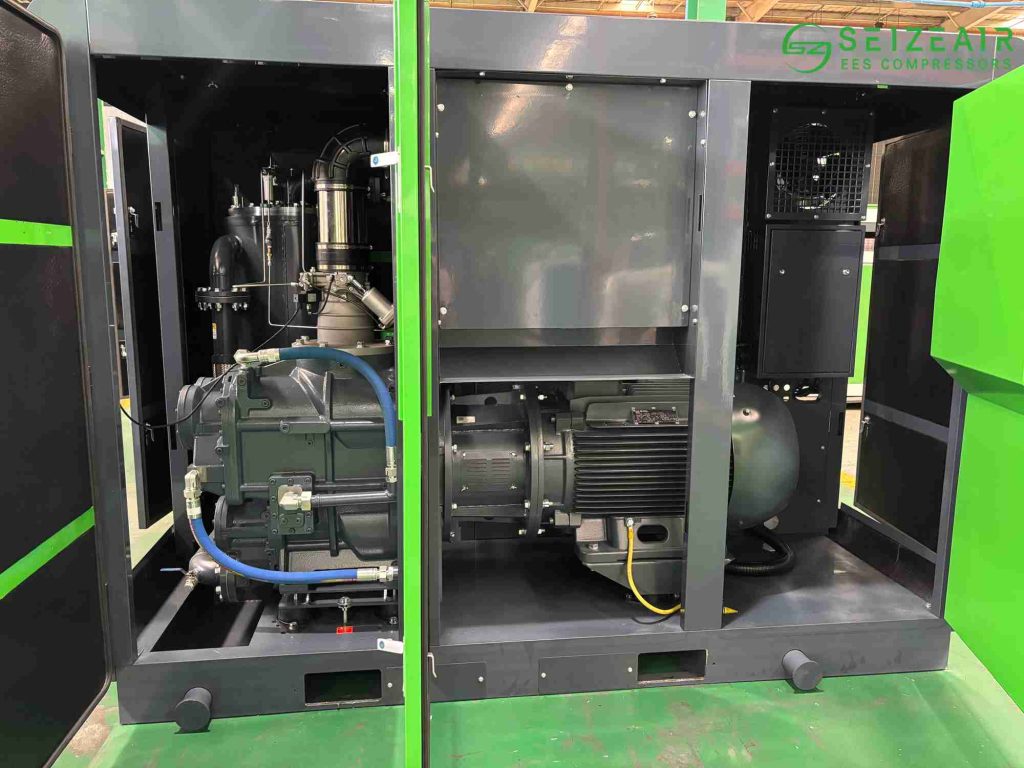
The airend is the heart of an oil-injected screw compressor, and the oil is its blood. Get these two right and the rest of the machine looks after itself. Keep discharge temperature inside the manufacturer’s limit (commonly around 80-95°C, with a hard shutdown near 105-110°C); every degree over the sweet spot shortens both oil life and rotor coating life. Watch the separator pressure differential like a hawk, because a loaded separator forces the airend to work against back-pressure and quietly eats energy.
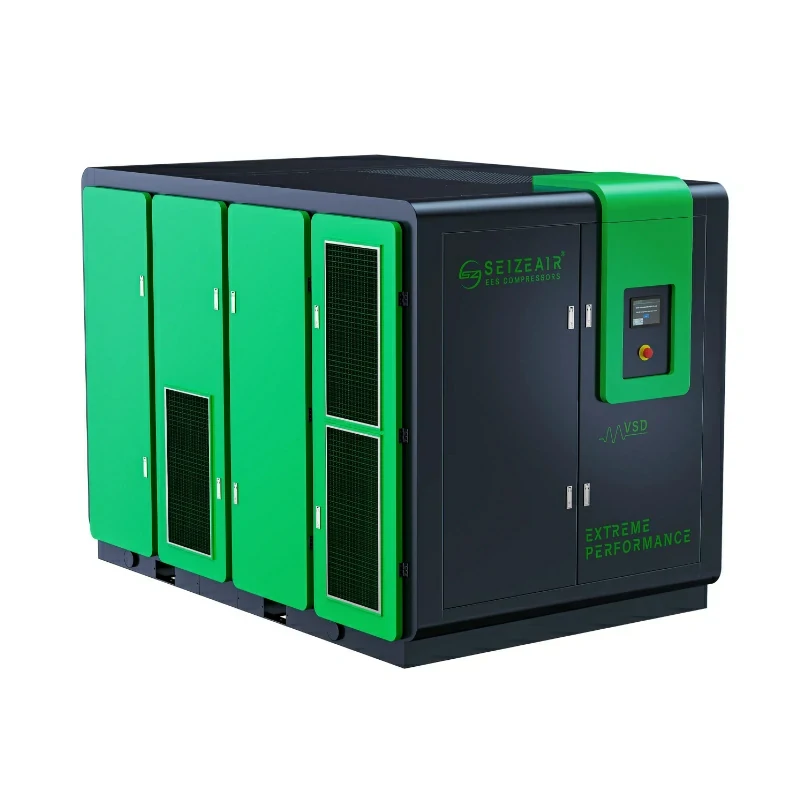
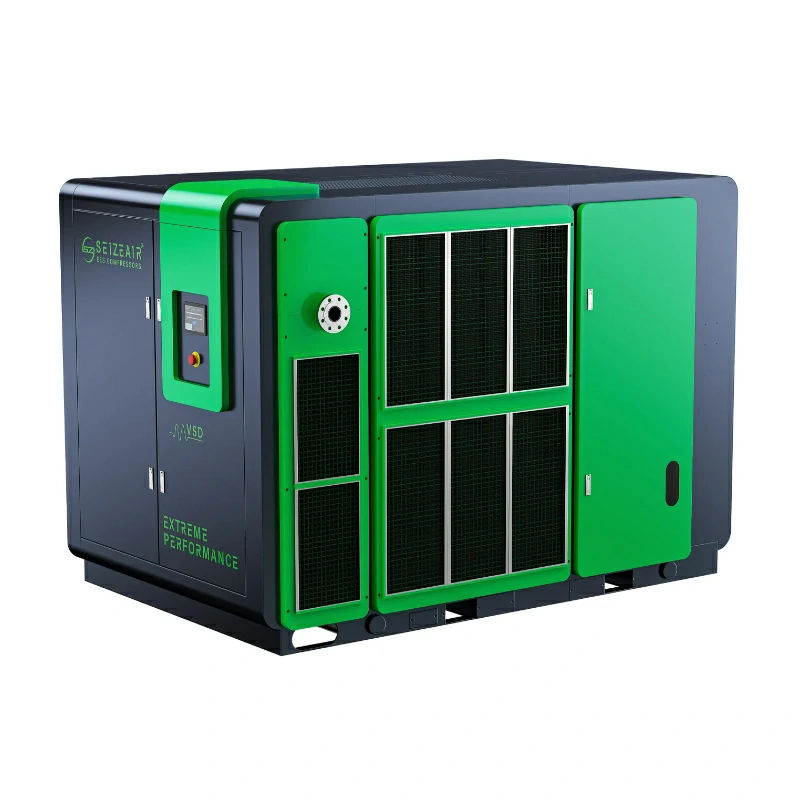
On the product side, the choice of machine changes the maintenance math. A permanent magnet variable frequency single-stage screw air compressor trims part-load energy but still needs the same oil, filter, and separator discipline. A oil-injected two-stage compressor runs cooler and often stretches service intervals, which is worth weighing when you plan the schedule. Units from specialists such as Seize Air are built around a heavy airend and a dedicated oil circuit, which is why their service intervals are described in running hours rather than calendar months.
Compressed Air Treatment: Dryers, Receiver Tanks, and Filters
Your compressor is only half the story. The air it makes still has to be dried, stored, and cleaned before it touches a tool or a process, and those stages fail just as often as the compressor does.
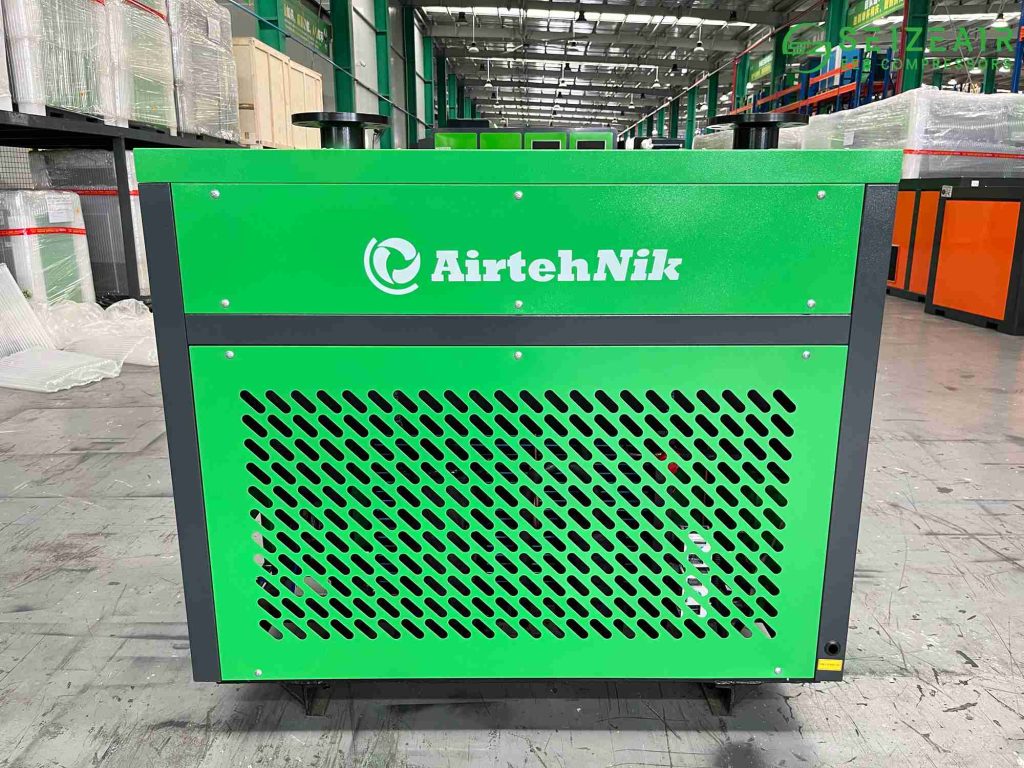
A refrigerated air dryer is the most common type, and its weak points are the condensate drain and the cooling coil. Keep the coil clean and the drain working, and the dryer holds its dew point; ignore either and you start shipping water downstream. For sites that need Class 0 or very low dew points, the adsorption dryer adds a regeneration cycle that must be timed and watched.
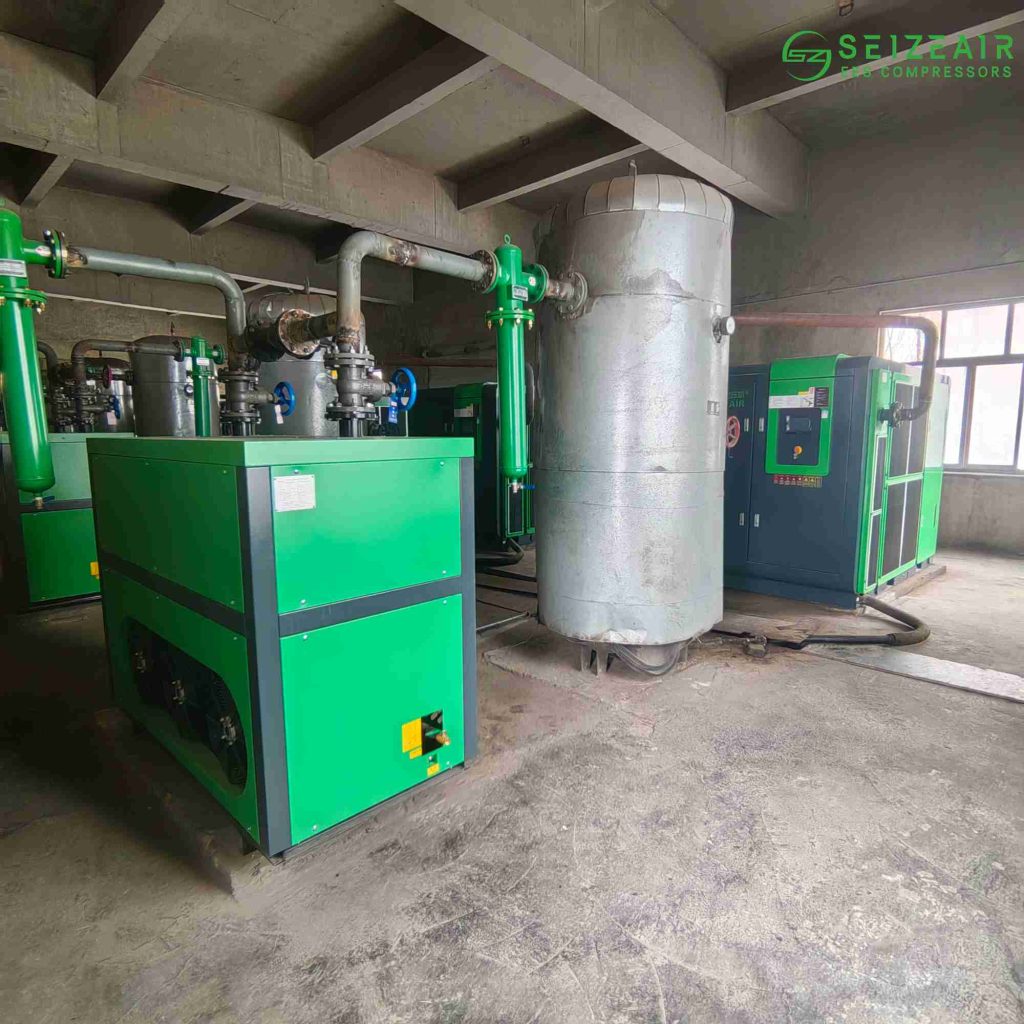
The air receiver tank stores compressed air and evens out demand spikes, but it also collects water. Drain it, inspect it for internal corrosion on the service interval, and have the pressure relief valve tested so it actually opens when it should. A precision filter removes the remaining oil aerosol and particles; its only signal is differential pressure, so read it and change the element before the ΔP climbs.
If you would rather not wire all of this together yourself, the integrated air compressor with dryer and tank approach bundles the treatment into one skid, which shrinks the maintenance surface area to a single point of service.
The Maintenance Mistakes That Quietly Kill Compressors
Most compressor deaths are not dramatic. They are a hundred small ignores stacked on top of each other. The usual suspects:
Skipping condensate drains until the receiver rusts through. Running on the wrong oil because “oil is oil.” Changing filters on a fixed date instead of on differential pressure, so either you waste a precision filter element or you starve the machine. Treating the intake filter as set-and-forget in a dusty hall. Never logging anything, so when it fails nobody can see the trend that predicted it. And the big one: ignoring a slow rise in energy use, because a few percent on the power bill feels cheaper than a service call until the airend seizes.
How to Build a Preventive Maintenance Plan Your Team Will Follow
A preventive maintenance plan only works if someone owns it. Pick a name for each task, post the checklist at the machine where the operator actually stands, and tie the daily checks to the shift handover so they happen by default. Use a simple logbook or a basic CMMS; the tool matters less than the habit. Train the night shift too, because failures love the hours when nobody is watching.
If you run multiple lines, it is worth having the OEM review your schedule. Seize Air’s service team, for example, tunes intervals to duty cycle and site conditions, which is more honest than a generic calendar. The goal is a plan that survives a busy Tuesday, not a plan that looks good in a binder.
Signs Your Compressor Is Due for Service
Even with a good plan, learn to read the early warnings. Rising energy use for the same output is the loudest one. So is a climbing discharge temperature, growing vibration, a dropping line pressure under load, visible oil carryover at the point of use, or a controller that starts logging the same alarm every week. Any one of these is a reason to pull the logbook and compare against last month, not a reason to wait for a shutdown.
Estimating Maintenance Cost and Payback
You do not need a finance degree to justify the plan; you need one honest formula written in plain terms:
Annual maintenance cost = scheduled service + parts + (unplanned downtime hours x loaded labor rate) + lost production value
And the energy side is just as simple. Every extra 0.5 bar of pressure drop across a dirty filter or loaded separator costs roughly 3 to 5 percent more electricity at the compressor. Over a year of running hours, clean elements and a tight system pay for themselves several times over. The maintenance plan is not a cost center; it is the cheapest energy project in the building.
Frequently Asked Questions
How often should I service my screw compressor?
On running hours, not the calendar. Plan minor service around 2,000-4,000 hours and major service around 4,000-8,000 hours, then adjust using your monthly oil samples and differential-pressure readings.
Can my own technicians do the maintenance?
Daily, weekly, and most monthly tasks are operator-level work with a little training. Oil, filter, and separator changes are technician-level. Leave airend overhauls and calibration to a trained service provider.
What oil goes in an oil-injected screw compressor?
Only the grade the airend manufacturer specifies, typically a dedicated compressor synthetic or mineral oil. Do not substitute automotive or hydraulic oil; the additives are wrong and the result is varnish and short life.
How do I drain condensate properly?
Use timed or zero-loss automatic drains where possible, and test them weekly. Manual drains should be opened at the end of each shift and closed after the water clears, with oil-separator handling for the emulsion.
How long will a well-maintained compressor last?
A properly serviced industrial screw compressor commonly reaches 10-15 years or 80,000-100,000 running hours before a major overhaul. Neglected, the same machine can fail inside three years.
Talk to Our Team About Your Compressed Air System
If you want a maintenance schedule tuned to your specific duty cycle, pressure, and required air quality class, talk to our team. Seize Air’s application engineers can review your compressed air system, flag the wear points that matter for your site, and recommend service intervals that fit how you actually run rather than a generic template. Contact us to start the conversation, send your model and operating hours, and get a plan your team can actually keep.