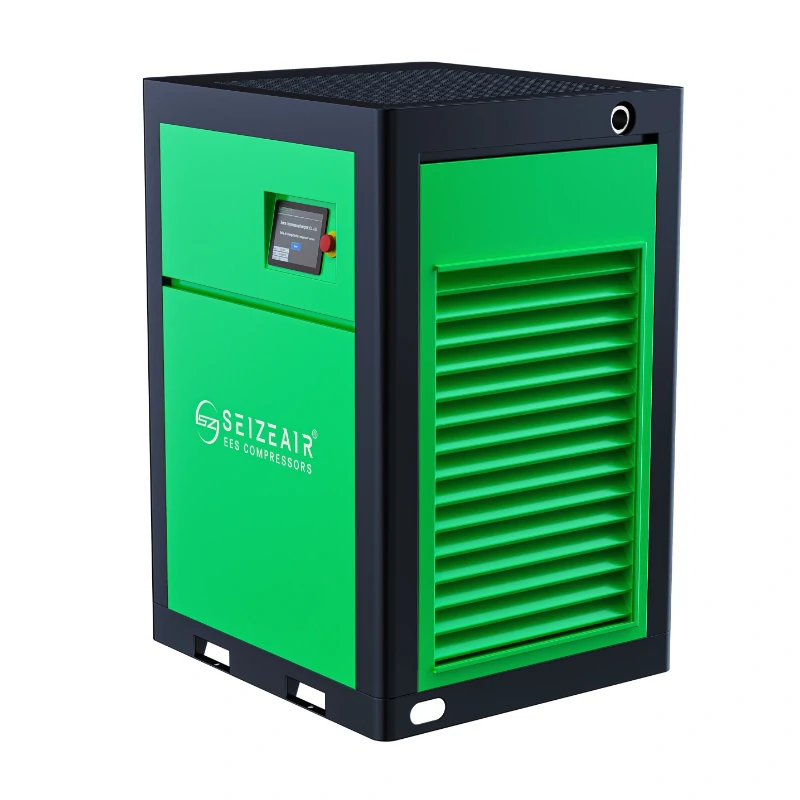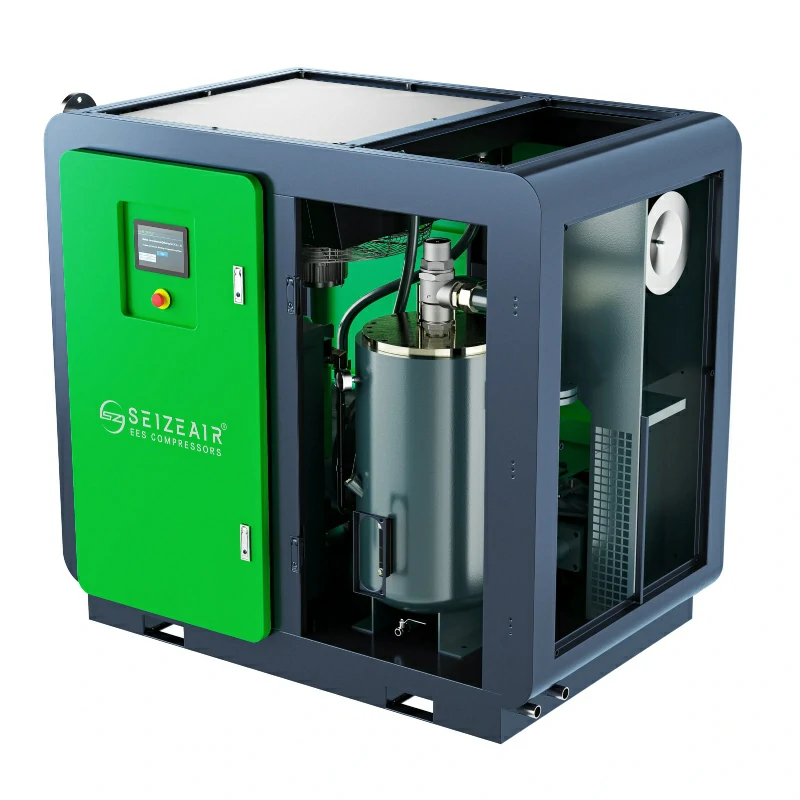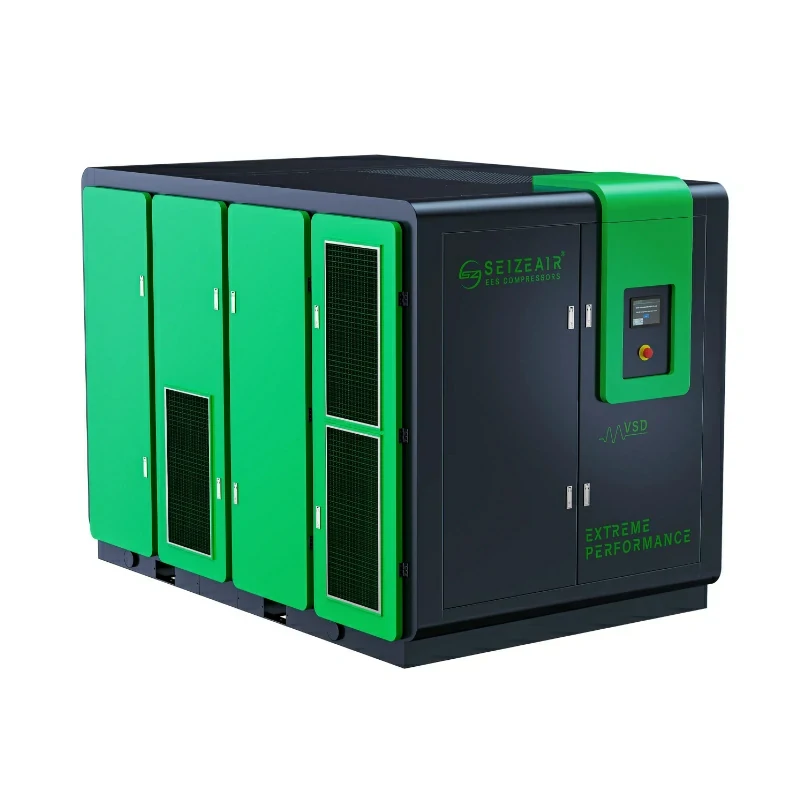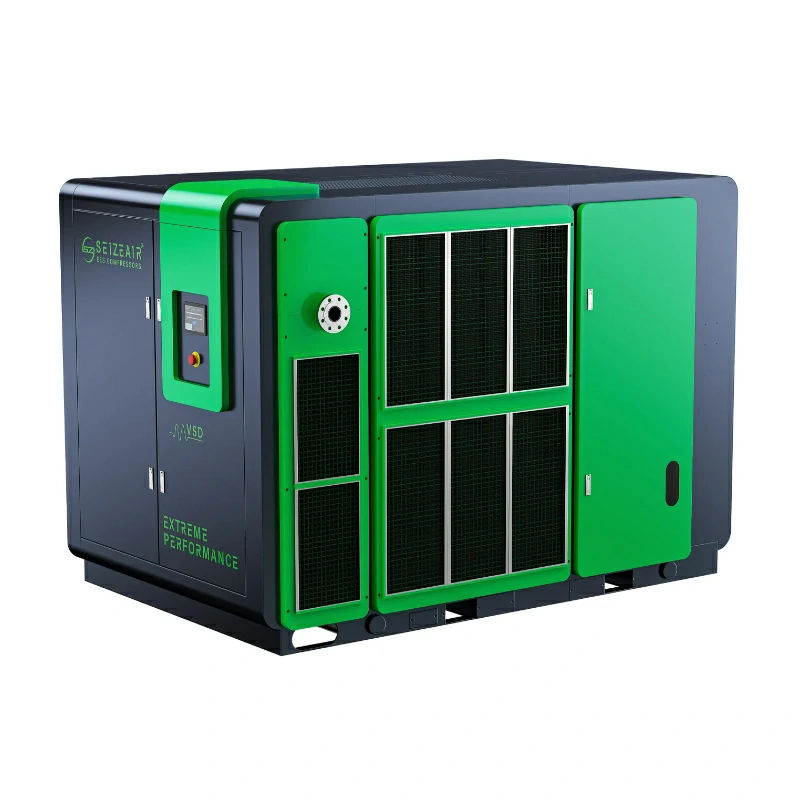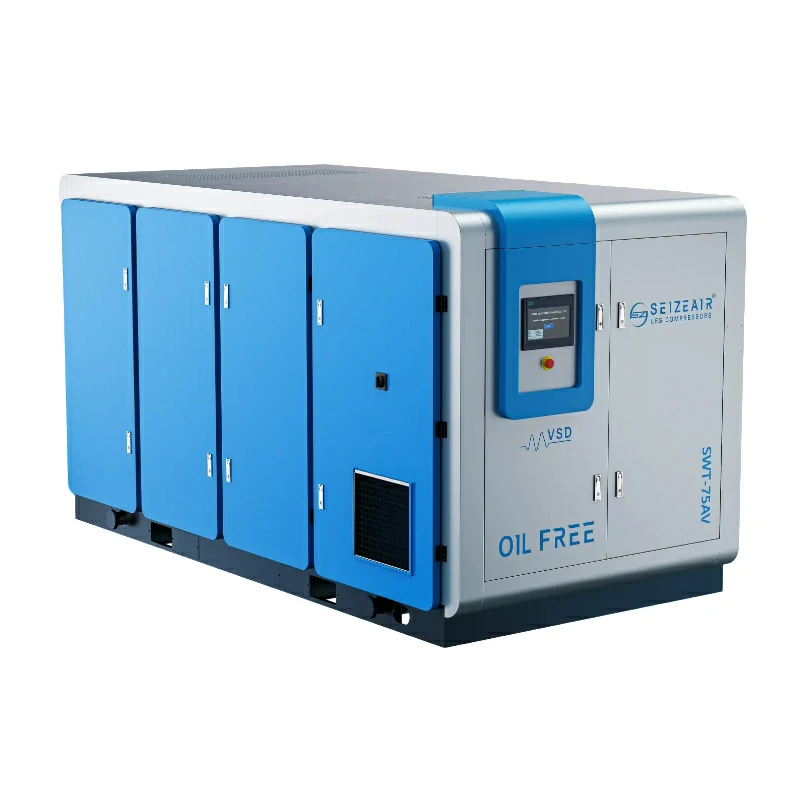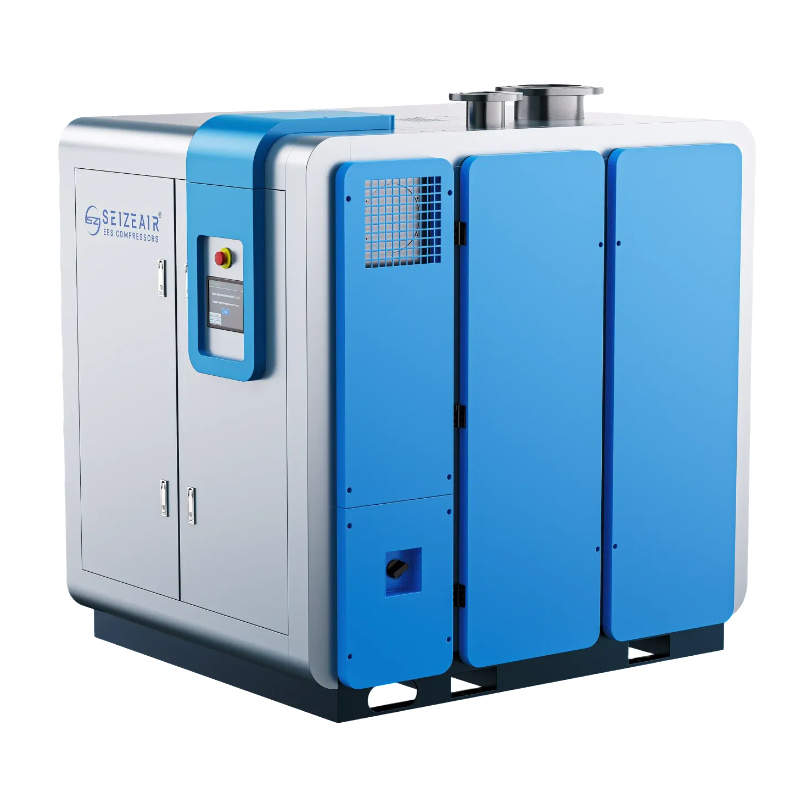


Class 0 air compressor units are now the baseline for food and beverage plants that treat compressed air as a direct food-contact medium. Because that air touches bottles, ingredients, and packaging on nearly every line, any oil carryover is a contamination and compliance risk—which is why Class 0, oil-free, ISO 8573-1 certified air has moved from a premium option to an operating requirement.
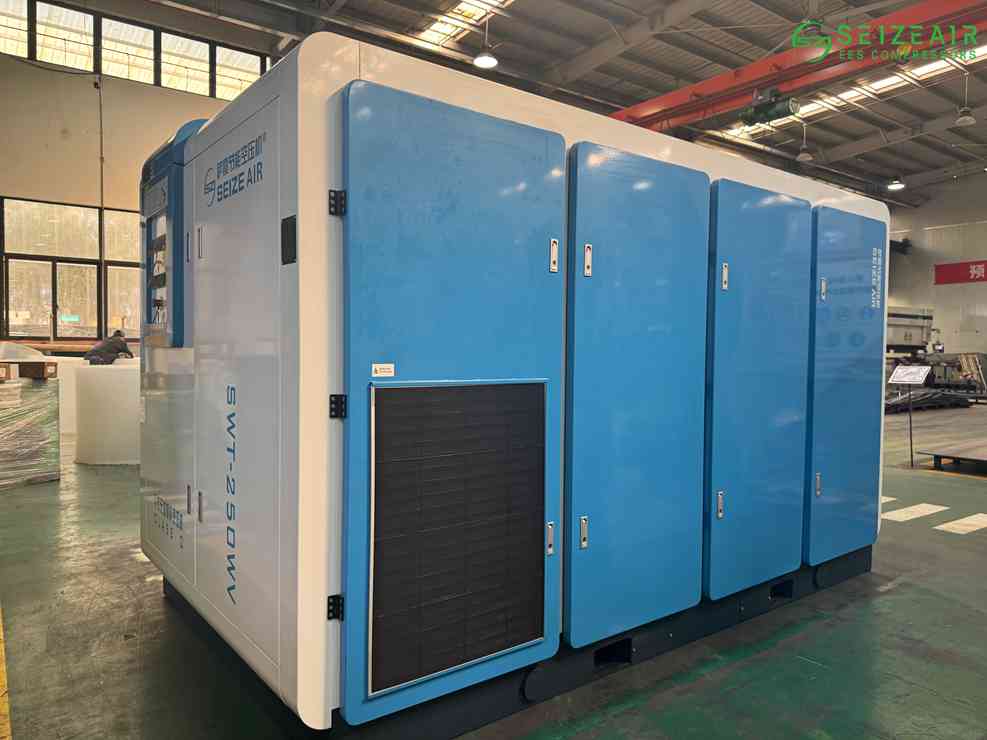
What Is a Class 0 Air Compressor?
A class 0 air compressor is a machine engineered so that no oil ever enters the air stream during compression. That sounds simple, but it is a different design problem from a standard lubricated unit. In a typical oil-injected rotary screw compressor, oil floods the compression chamber to seal, cool, and lubricate the rotors; trace amounts inevitably carry over into the air no matter how good the separator is. A class 0 air compressor removes oil from the equation entirely—using oil-free scroll, dry screw, water-lubricated screw, or centrifugal compression—so the air leaving the machine is, by design, oil-free.
The phrase “Class 0” comes from ISO 8573-1, the international standard that classifies compressed air purity. Under that standard, air is graded for three families of contaminants: solid particles, water (humidity, liquid, and ice), and oil (aerosol, liquid, and vapor). Class 0 is the strictest grade for oil. Rather than naming a fixed number, the standard lets the equipment manufacturer warrant a level of total oil that is stricter than Class 1—effectively below what can be reliably measured. In plain terms, a class 0 oil free air compressor is one whose maker guarantees the output contains no oil introduced by the machine.
It is worth clearing up a common misunderstanding: Class 0 is not a reading you check on a gauge at the outlet. It is a design specification and a contractual promise backed by testing and certification. The compressor reaches it by eliminating oil from the compression chamber itself, not by bolting filters on afterward. That distinction matters, because oil vapor—unlike liquid oil droplets—passes straight through most coalescing filters. If oil is generated inside the machine, no downstream filter fully removes it. The only reliable fix is to not put oil there in the first place.
How ISO 8573-1 Defines Class 0 Purity
ISO 8573-1:2010 is the reference most food and beverage plants cite when they specify air quality. It splits contaminants into the three families above and assigns each a numeric class. For oil, the classes run from 1 (tightest fixed limit) down to 9 (loosest), and then there is Class 0 sitting above them all as a user-specified, stricter-than-Class-1 grade.
The table below shows the total oil limits the standard defines. Note the units: milligrams of total oil per cubic meter of air at reference conditions of 1 bar(a) and 20 degrees C.
| ISO 8573-1 oil class | Max total oil (mg/m3 at 1 bar a, 20 C) | Typical interpretation |
|---|---|---|
| Class 0 | User-specified, stricter than Class 1 (commonly 0.00, below measurable) | Technically oil-free; no oil added by the machine |
| Class 1 | 0.01 | Tightest standard grade; trace oil permitted |
| Class 2 | 0.10 | Low oil; indirect-contact only |
| Class 3 | 1.00 | Moderate; non-contact plant air |
| Class 4 | 5.00 | Higher; general workshop air |
| Class 5 | 25.0 | Loosest listed; heavy industrial use |
Looking at the numbers, Class 1 already limits total oil to 0.01 mg/m3. Class 0, by definition, is below that—manufacturers typically commit to values that sit at or under the measurement threshold, so the practical result is air with no detectable oil. This is why an iso 8573-1 class 0 air compressor is described as “technically oil-free.”
But here is the part plants sometimes miss: Class 0 only addresses oil. The same standard has separate class scales for solid particles and for water. A unit can be perfectly Class 0 on oil and still deliver wet, dusty air if the rest of the system is wrong. That is why the class 0 compressed air quality standard is only the first line of a full air-treatment spec, not the whole story.
Class 0 vs Class 1: What the Difference Means for Food Safety
Buyers often ask whether Class 1 is “good enough” for food. The honest answer is that it depends entirely on where the air touches the product. For an instrument air line that merely moves a pneumatic valve, Class 1 might be acceptable. For any air that contacts food, packaging, or a food-contact surface, Class 0 is the only defensible choice.
| Criterion | Class 0 (oil-free by design) | Class 1 (tightest standard grade) |
|---|---|---|
| Total oil limit | User-specified, below measurable (0.00 mg/m3 typical) | Up to 0.01 mg/m3 |
| How it is achieved | No oil in compression chamber | Oil-injected + separator + filters |
| Oil vapor control | Eliminated at source | Vapor can pass through filters |
| Food-contact use | Required for direct contact | Not recommended for direct contact |
| Typical technology | Dry screw, water-lubricated screw, scroll, centrifugal | Oil-injected screw with filtration |
| Audit defensibility | Strong; certified oil-free | Weaker; trace oil is a documented hazard |
The reason is biological and chemical. Oil is not inert in a food plant. It is a growth medium for microbes, a carrier of off-flavors, and a source of sticky residue that traps bacteria and dust. Even the 0.01 mg/m3 allowed by Class 1 is a measurable, recurring dose of hydrocarbon that accumulates on every surface the air touches—inside bottles, on filler necks, across conveyor guides. Over a high-speed bottling shift, that adds up to a real contamination pathway. The class 0 vs class 1 air compressor question, in practice, is a question of whether you are willing to let a known nutrient into your product stream.
Why Oil in Compressed Air Is a Food Safety Hazard
Compressed air in a food plant is classified by most food-safety frameworks as a food-contact material or an indirect food additive. That means the same laws that govern a conveyor belt or a mixing tank govern your compressed air. When oil is present, several hazards appear at once.
First, microbiological risk. Oil films on internal surfaces feed bacteria and mold. In a moist, warm compressor room, a thin oil coating becomes a culture plate. Second, sensory risk. Hydrocarbon taint is notoriously hard to detect until a customer complains about a “plastic” or “chemical” aftertaste—by which point a batch is already shipped. Third, recall and brand risk. A single positive oil finding during a customer audit or a regulatory inspection can trigger a hold, a recall, and a headline. Fourth, regulatory risk. Agencies from the FDA to the EU’s food-safety bodies expect documented control of air that touches food; an undefined oil level is hard to defend.
The trap is that oil vapor is invisible and passes through ordinary filters. A plant can run a brand-new coalescing filter bank and still push oil vapor downstream if the compressor itself generates it. The only robust control is generation at source: a certified oil free class 0 screw compressor or another oil-free design that never introduces oil.
Where Food and Beverage Plants Use Compressed Air
Walk any food or beverage floor and you will hear compressed air long before you see it. The applications where Class 0 matters most share one feature: the air meets the product.
| Application | Contact type | Why Class 0 matters |
|---|---|---|
| PET bottle / can blow-off before fill | Direct | Air touches the inside of every container |
| Pneumatic conveying of powders (sugar, flour, milk) | Direct | Oil contaminates the whole batch invisibly |
| Mixing, whipping, and aeration | Direct | Air is incorporated into the product |
| Filling, sealing, packaging actuation | Direct / near | Oil mist settles on food-contact surfaces |
| Nitrogen generation for MAP | Indirect–direct | Feed air purity sets the N2 purity |
| Instrument and control air | Indirect | Shared ring mains can cross-contaminate |
A few deserve closer attention. Pneumatic conveying moves powders—sugar, flour, milk powder, spices—through pipes; if the air is oily, the entire batch is contaminated invisibly. Blow-off and cleaning use air to eject debris from bottles and cans before filling. Mixing and aeration introduce air directly into product. And packaging lines use air for filling, sealing, and actuating the machinery that handles wrapped goods. In every one of these, a class 0 air compressor for beverage production or food line is not a luxury; it is the baseline.
Beverage Production: PET Bottling and the Case for Class 0
Beverage plants are where Class 0 is most non-negotiable. In PET stretch blow molding, compressed air is blown directly into the preform to expand it into a bottle. The air touches the interior surface of every bottle your customer eventually drinks from. There is no filter between that air and the beverage. Any oil in the blow air becomes oil in the bottle.
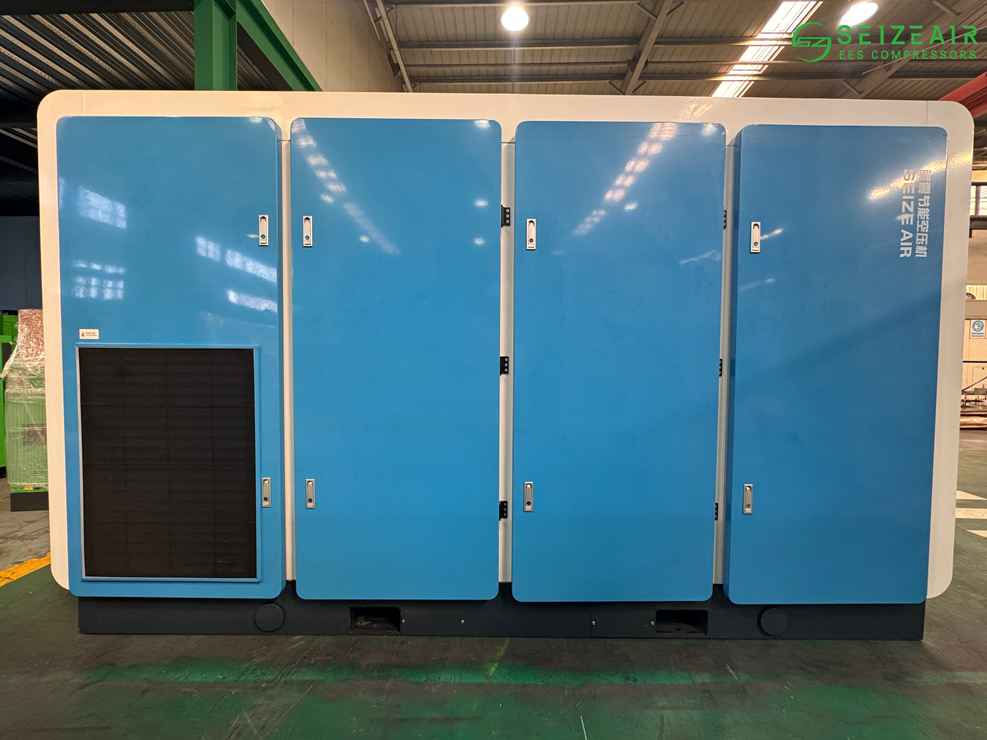
Soft drinks, bottled water, juices, and beer all run this process, often at thousands of bottles per hour. The air demand is high, the speed is relentless, and the contact is direct. A class 0 air compressor for PET bottle blowing is therefore standard practice across serious bottlers, and many specify it contractually in their supplier audits. The same logic applies to canning and to the air used in clean-in-place (CIP) blow-off before fills.
For plants running both blowing and filling, the cleanest design pairs a dedicated oil-free unit for the blow line with plant air for non-contact uses. That segmentation keeps the contact air at true Class 0 while avoiding the cost of over-specifying every line.
Dairy, Brewing, and Ready-to-Eat
Dairy is a classic Class 0 application. Spray-drying and conveying milk powder, fluid milk filling, and yogurt cup lines all move product through air-exposed steps. A class 0 air compressor for dairy protects both safety and shelf life, because dairy is unforgiving about spoilage organisms.
Breweries present a subtler case. The brew itself is protected by boiling and fermentation, but packaging is not. Blow-off of cans and bottles, actuator air on fillers, and the air used in keg washing all contact the final package. Ready-to-eat and prepared foods are the highest-risk category of all, because there is no kill step after packaging—whatever touches the product stays with it. For a deeper look at how plants specify air for these lines, our guide on air compressor for food industry walks through sizing and selection in detail.
Oil-Free Technologies Behind Class 0 Units
Reaching Class 0 means picking a compression technology that needs no oil in the chamber. The main options each have a place.
Dry oil-free screw compressors use rotors coated with non-stick, low-friction materials (often PTFE or a similar polymer) and run with tight clearances and air cooling. They are workhorses for mid-to-large flows. For most bottling and dairy sites, an oil-free screw air compressor running dry and oil-free is the standard backbone.
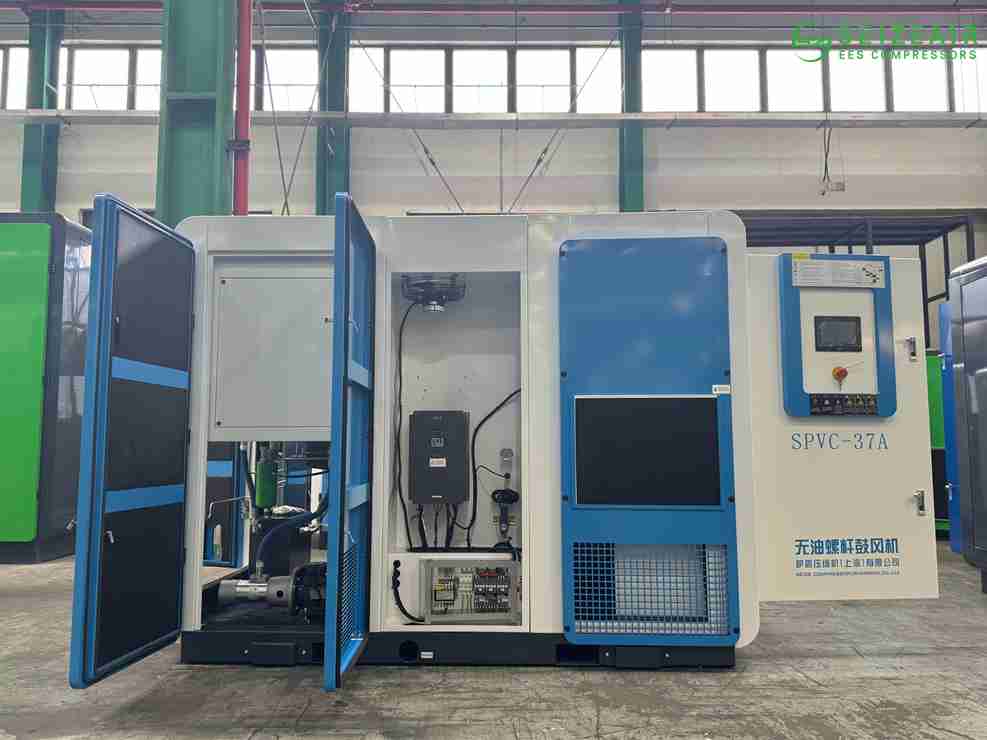
Water-lubricated screw compressors replace oil with water as the sealing and cooling medium. The result is air that is not only oil-free but also naturally clean and cool. A modern oil-free water-lubricated screw air compressor is especially attractive where plants want single-medium simplicity and the lowest possible hydrocarbon risk, and it pairs well with food-grade water treatment.
Oil-free scroll compressors use two interleaving spirals with no oil in the compression pocket; they suit smaller, lower-flow, ultra-clean duties such as labs and instrument air. Oil-free centrifugal compressors use high-speed impellers and are the choice for very large, continuous flows such as big bottling sites and central utility plants.
The right pick depends on flow, pressure, and duty cycle. A plant running 24/7 bottling at high CFM leans centrifugal or large dry screw; a mid-size dairy with variable demand may prefer water-lubricated screw with variable speed.
Downstream Treatment: Why Class 0 Still Needs Dryers and Filters
A frequent and expensive mistake is assuming that because the compressor is oil-free, the rest of the system can be ignored. It cannot. The intake air still carries atmospheric water vapor and dust, and compression concentrates both. Class 0 guarantees no oil from the machine—it does not magically dry the air or strip particles.
The treatment chain below shows the typical path from intake to point of use.
Raw intake air (from clean, upwind roof vent)
        |
[ Class 0 oil-free compressor ]   <-- no oil added in chamber
        |
[ Aftercooler + moisture separator ]
        |
[ Refrigerated or adsorption dryer ]   <-- water removed to target dew point
        |
[ Precision filter ]   <-- particles and trace aerosol removed
        |
Point of use (bottle, filler, conveyor, MAP line)
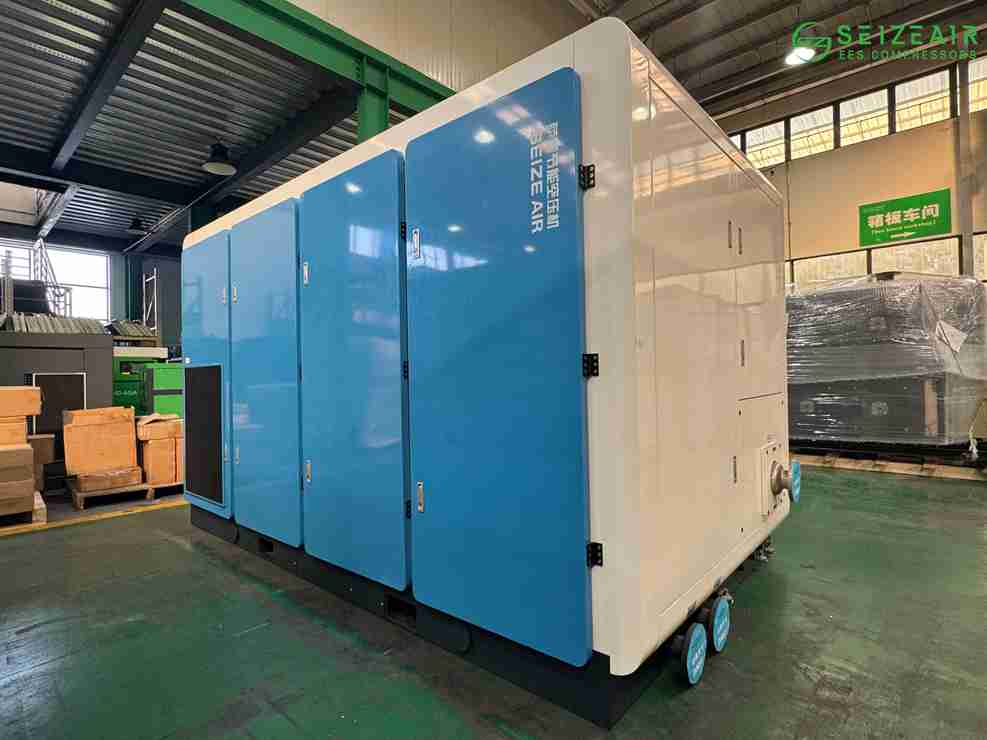
After the compressor, an aftercooler drops the temperature and condenses bulk water. A refrigerated dryer then removes most remaining moisture for general plant air, while an adsorption dryer delivers the low dew point needed for packaging and dry-product lines. Finally a precision filter catches particulates and any trace coalescible contamination. Each step matters: skip the dryer and you get condensation in fillers; skip the precision filter and you get particles in product-contact zones.
Energy Efficiency and Variable Speed in Class 0 Systems
Class 0 units carry a higher price tag than oil-lubricated machines, so energy efficiency is where the payback is won or lost. In most plants, energy is 70 percent or more of a compressor’s lifetime cost. Food and beverage sites are especially variable: demand swings with shift patterns, seasonality, and CIP cycles that temporarily idle lines.
A variable speed drive (VSD) matches output to demand instead of idling a fixed-speed machine, and in food plants the savings are often dramatic. Pairing a class 0 air compressor with VSD control, heat recovery, and a properly sized dryer typically recovers the price premium within a few years—while also smoothing the air quality during demand dips, when fixed-speed machines tend to over-dry or short-cycle.
The two plain-text formulas below are the ones plant engineers actually use when justifying a Class 0 + VSD purchase:
Specific power = Motor power (kW) / Free air delivery (m3 per min) [kW per m3/min]
Annual energy cost = Motor power (kW) x Running hours per year (h) x Electricity tariff ($ per kWh)
Rule of thumb: every 1 bar of unnecessary discharge pressure adds about 7% motor power. Removing oil-removal filter stages on a true Class 0 line lets you run at lower system pressure and recover that 7% repeatedly. (Conversion: 1 CFM = 0.0283 m3/min.)
Total Cost of Ownership:
It is tempting to compare compressors on sticker price alone. That comparison almost always favors the oil-lubricated machine. But sticker price ignores the costs that actually bite: oil purchases, separator and filter replacements, condensate oil disposal, unplanned downtime, and—worst of all—a contamination event.
| Cost factor (over a 10-year life) | Oil-injected + filtration | Class 0 oil-free unit |
|---|---|---|
| Upfront machine cost | Lower | Higher |
| Oil purchases and separators | Recurring, significant | None |
| Filter element replacement | Frequent (oil + carbon stages) | Particulate only, infrequent |
| Energy (clean, low pressure drop) | Higher as filters clog | Stable baseline |
| Contamination / recall risk | Present, hard to defend | Removed at source |
| Audit defensibility | Weak for direct contact | Strong, certified |
A class 0 certified air compressor for food industry avoids oil purchases and most separator changes entirely, and it removes the single largest tail risk: a recall triggered by oil in product. When you price in a single avoided recall, the “expensive” Class 0 unit is usually the cheaper machine over its life.
Choosing the Right Class 0 Unit for Your Plant
Specifying well starts with an air audit: measure actual CFM and pressure at each use point, note peak vs average demand, and map which lines are contact (Class 0 required) versus non-contact (plant air). From there, set the dew point target—general lines may be fine at +3 C, while dry powder conveying and packaging often need -40 C, which points to an adsorption dryer.
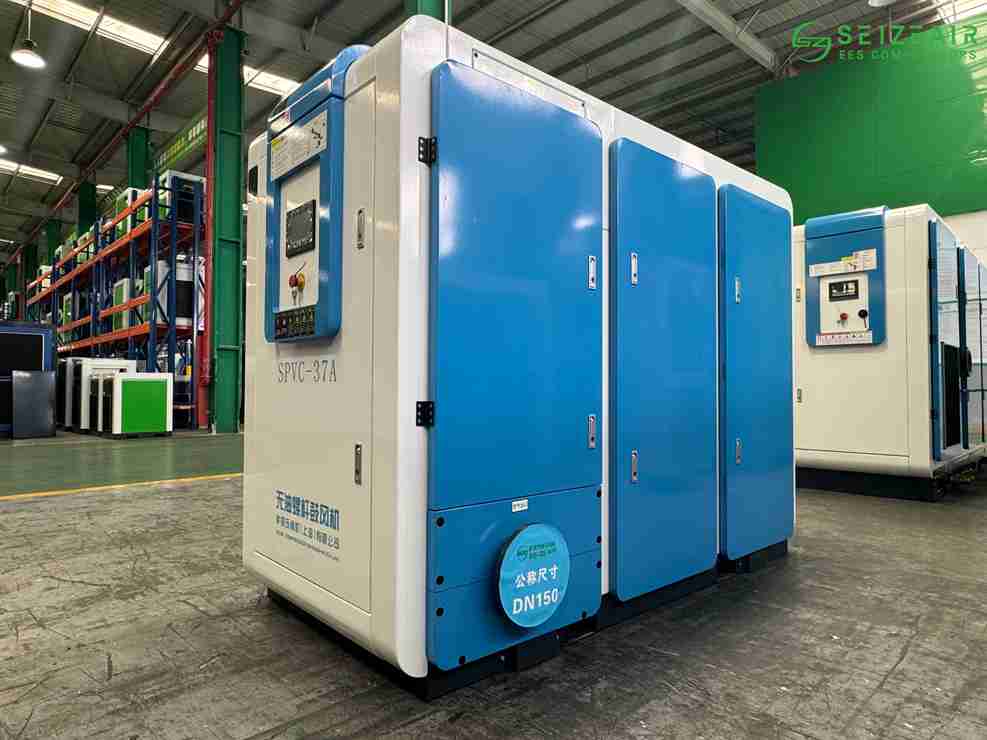
Seize Air’s oil-free portfolio spans dry screw, water-lubricated screw, scroll, and centrifugal designs, so the right unit is matched to flow and duty rather than forced into one technology. Redundancy is another judgment call: a single bottling line with no backup risks a full stop if the compressor fails, so many plants add a second unit or a rental contingency.
Compliance, Standards, and Documentation
Class 0 is necessary but not sufficient for an audit. Food plants must also document air quality and prove control. The relevant frameworks overlap by region: HACCP treats compressed air as a hazard to assess; BRCGS, IFS, and SQF all require monitoring of air that contacts product; EHEDG and 3-A Sanitary Standards guide hygienic design; and regulators such as the FDA treat food-contact air under indirect-additive rules while the EU uses Regulation 1935/2004.
Documentation that auditors expect includes the oil-free certification from the compressor maker, periodic air-quality test reports (particle counts, oil, dew point), and maintenance logs for dryers and filters. The same purity logic that protects food also protects pharmaceuticals, and our class 0 air compressor pharmaceutical solutions cover the stricter norms life-science sites face.
Seize Air application engineers routinely help plants build this paper trail alongside the equipment, because an uncertified or undocumented air system fails audits even when the air itself is clean.
Common Mistakes Plants Make With Compressed Air
A short list of the errors that quietly undermine Class 0 programs:
- Assuming an oil-free compressor needs no dryer or filter.
- Specifying Class 1 where the audit requires Class 0.
- Placing the intake where it draws in dust, heat, or vapors.
- Never testing outlet air quality after commissioning.
- Running a single contact-air compressor with no redundancy.
- Letting filter and dryer maintenance lapse, which degrades air over time.
Each of these turns a clean design into a contaminated reality. Class 0 is a system property, not just a compressor property.
Frequently Asked Questions About Class 0 Air Compressors
These are the questions plant managers and procurement teams ask most often when they first scope a food- or beverage-grade air system.
What does Class 0 mean on an air compressor?
Class 0 is the strictest oil-purity grade in ISO 8573-1. Instead of a fixed number, the manufacturer warrants total oil (aerosol, liquid, and vapor) below the measurable limit—effectively oil-free at the source. It is a design promise backed by certification, not a gauge reading at the outlet.
Is a Class 0 air compressor the same as oil-free?
In practice, yes: a true class 0 oil free air compressor reaches oil-free output by eliminating oil from the compression chamber (dry screw, water-lubricated screw, scroll, or centrifugal). Be careful with “technically oil-free” claims built on downstream filters—those still generate oil vapor inside the machine and only try to catch it afterward.
Do food plants legally need Class 0 air?
Laws vary, but the direction is clear. Most food-safety frameworks (HACCP, BRCGS, IFS, SQF, FDA indirect-additive rules, EU 1935/2004) require documented control of any air that touches food. For direct contact, auditors expect Class 0; a lower grade is hard to defend and often fails the audit.
How do I verify my compressed air is actually Class 0?
Start with the compressor maker’s oil-free certification, then test at the point of use—not just at the compressor. Periodic checks for total oil, particle counts, and pressure dew point, kept in a maintenance log, are what an auditor actually reads.
What pressure dew point do food lines need?
General plant air is often fine around +3 C dew point. Dry powder conveying, packaging, and MAP lines usually need -40 C, which points to an adsorption dryer rather than a refrigerated one. Match the dew point to the risk, not to a generic default.
Conclusion
Food and beverage plants rely on class 0 air compressor units because the alternative is a controllable, recurring, and potentially catastrophic risk to product, brand, and compliance. From PET bottle blowing to dairy powder conveying, oil-free, ISO 8573-1 certified air is now the operating baseline rather than a premium option. Getting there means choosing the right oil-free technology, treating the air properly downstream, and documenting the result for every audit.
If you are specifying or upgrading compressed air for a food or beverage line, contact us to discuss flow, dew point, and compliance requirements—and to see which class 0 air compressor configuration fits your plant.