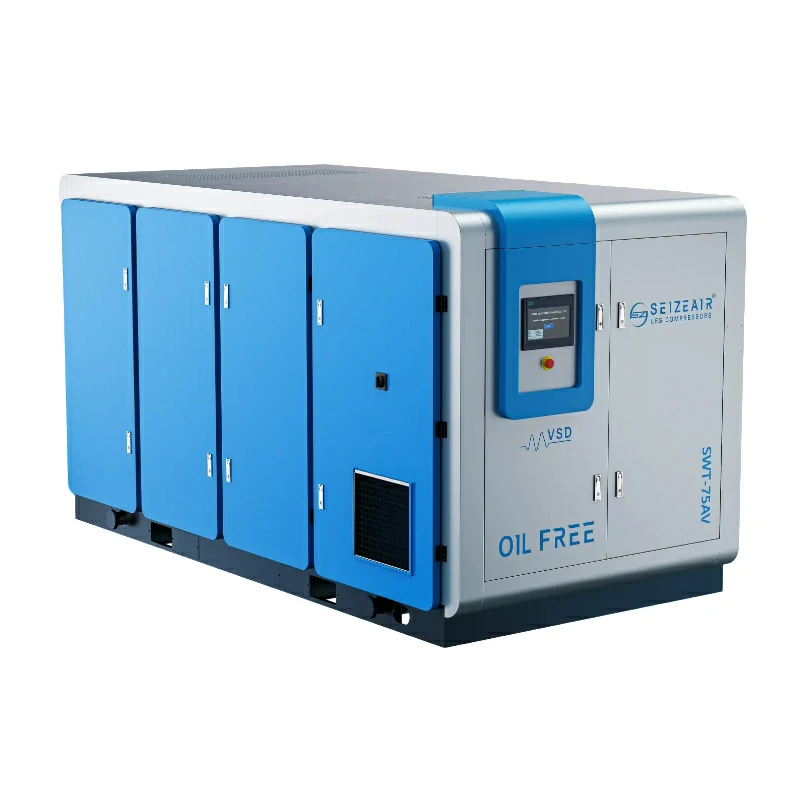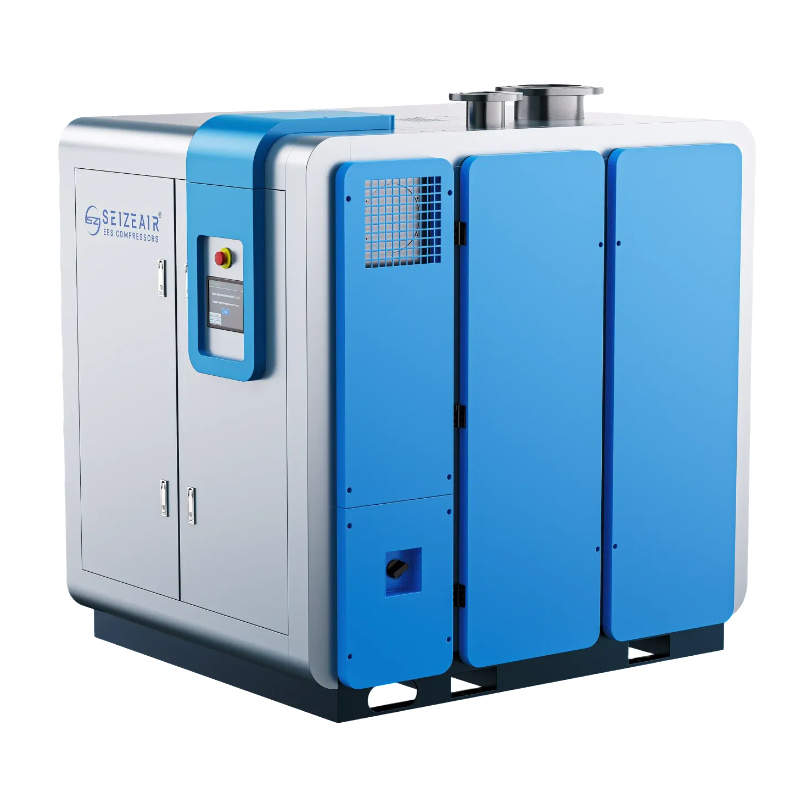


Choosing between a single-stage and a dual-stage air compressor isn’t just about picking a machine; it’s about matching your facility’s pneumatic demand with the right compression physics. While a single-stage unit might suffice for a small workshop, industrial operations often find that the leap to two-stage technology is the turning point for both performance and long-term ROI.
In this guide, we’ll break down the mechanical nuances, efficiency gains, and why high-output environments are increasingly shifting toward dual-stage systems.
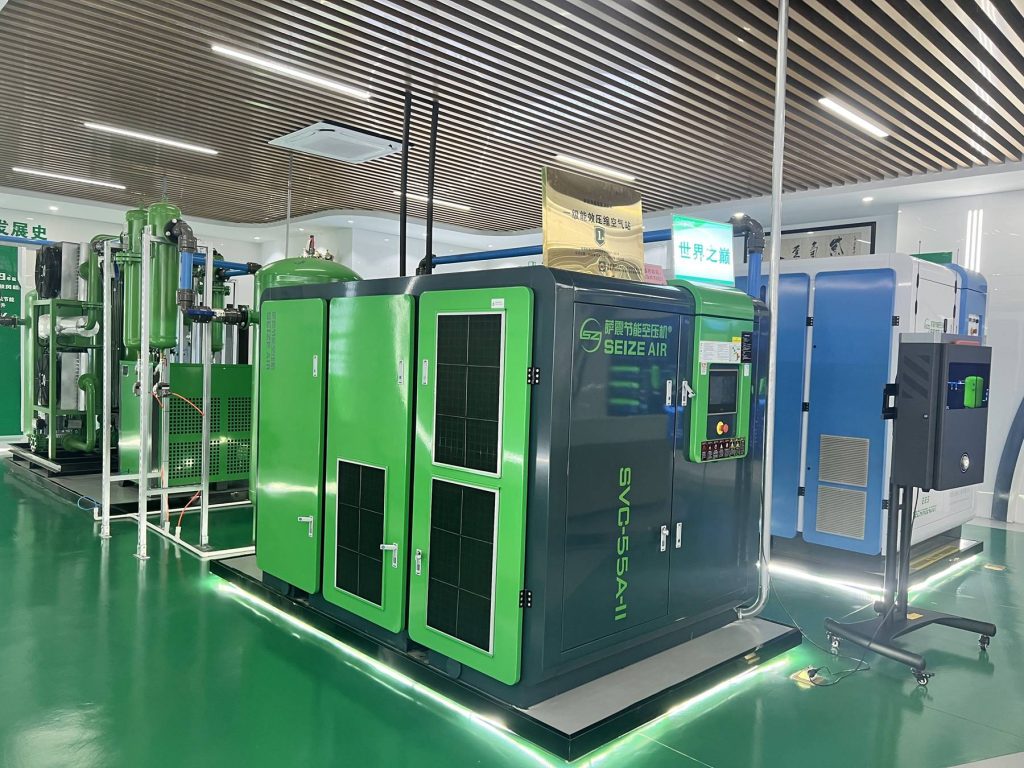
How does a dual stage air compressor work compared to single stage?
To understand why a dual stage air compressor is often the superior choice, we have to look past the exterior sheet metal and into the thermodynamics of the pump.
The Single-Stage Limitation
In a single-stage piston compressor, the air is drawn into a cylinder and compressed to its final pressure in one solitary stroke. If you’re aiming for 125 PSI, that piston is fighting immense back-pressure through the entire upward movement. From a field engineer’s perspective, this is a “brute force” method. The heat generated is exponential; as the air molecules are jammed together, they vibrate violently, creating discharge temperatures that can easily exceed 300°F.
This heat isn’t just a byproduct—it’s a thief of efficiency. According to Gay-Lussac’s Law, as temperature increases, so does pressure at a constant volume. This means the motor is fighting “artificial” pressure created by heat rather than actual air density. By the time that hot air hits your tank and cools down, the pressure drops, meaning you’ve paid for energy that literally vanished into thin air.
The Two-Stage Precision
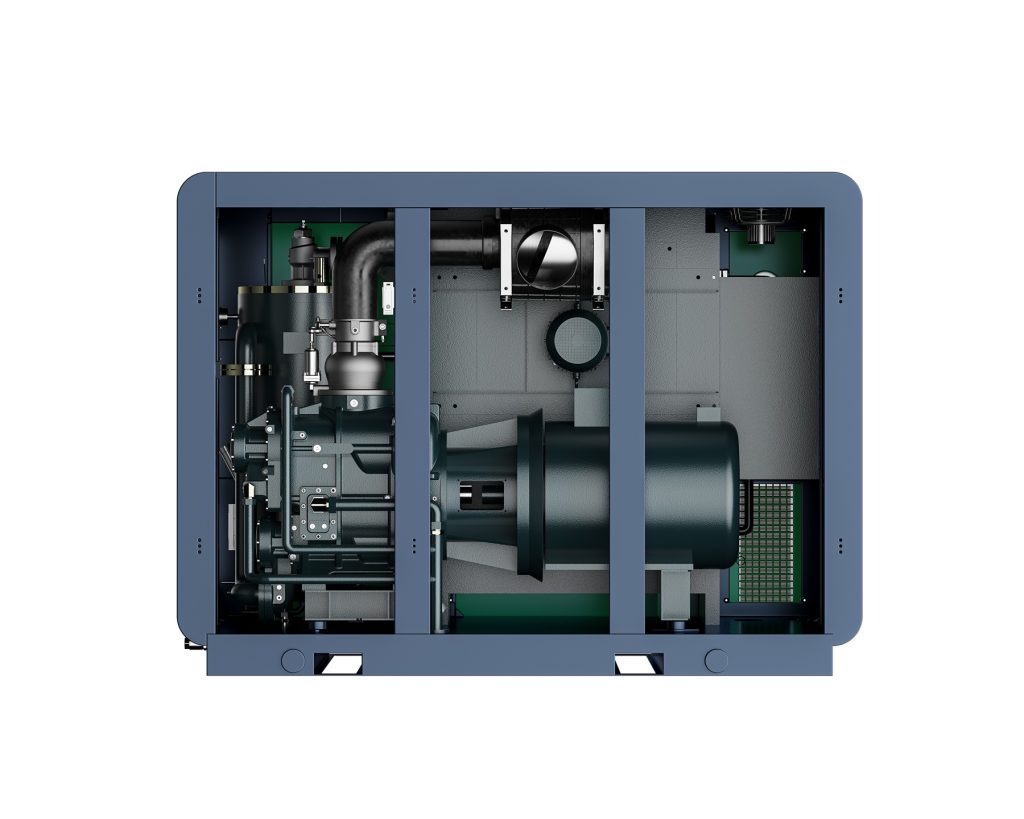
A dual-stage system handles the air in a relay format, distributing the mechanical load across two distinct phases.
- Stage One (The Low-Pressure Side): A large-diameter piston pulls in atmospheric air. Its job isn’t to reach the final pressure but to provide “bulk compression” up to roughly 40–50 PSI. Because the compression ratio is lower, the heat spike is manageable.
- The Intercooler Phase: This is the mechanical “secret sauce.” Before the air enters the second cylinder, it travels through a series of finned copper or aluminum tubes. By the time it reaches the second stage, the temperature has dropped significantly, and the air has become denser.
- Stage Two (The High-Pressure Side): A smaller-diameter piston takes this pre-compressed, cooled, dense air and finishes the job. Because the air is already at 40 PSI, the “work” required to reach 175 PSI is far less than starting from zero.
| Mechanical Variable | Single-Stage (Entry-Level) | Dual-Stage (Industrial-Grade) |
| Piston Configuration | Single or Twin (Same size) | Tapered (Large LP, Small HP) |
| Compression Ratio | High per cylinder (Stressful) | Low per cylinder (Efficient) |
| Max Pressure Output | 100–135 PSI | 175–200+ PSI |
| Discharge Temp | High (Potential for oil carryover) | Managed (Cleaner, drier air) |
| Tool Capability | Impact wrenches, staplers | Sandblasting, CNC, Heavy automation |
What are the energy efficiency benefits of a dual stage air compressor?
If you talk to any plant manager concerned with the bottom line, the conversation eventually turns to the cost per CFM of compressed air. When air is hot, it is chemically and physically resistant to being compressed. By cooling the air between stages, a dual-stage compressor approaches what engineers call isothermal compression—the theoretical ideal where air is compressed without a change in temperature.
Volumetric Efficiency and Density
Think of it like packing a suitcase. If you throw clothes in loosely, it’s hard to zip (Single Stage). If you vacuum-seal the clothes first to make them dense and cool, you can fit twice as much in the same space (Dual Stage). The intercooler on a dual stage air compressor acts as that vacuum seal.
While we can’t reach the isothermal ideal in the real world, the intercooler on a two-stage pump gets us much closer than any single-stage unit ever could. This density shift means that for every stroke of the second-stage piston, you are moving more actual oxygen and nitrogen molecules into the tank. Seize Air has spent decades refining this thermal exchange, recognizing that a 20-degree drop in intercooler temperature can translate directly into a measurable percentage drop on the monthly utility bill. It’s the difference between “just making air” and “making air profitably.”
Is a two-stage air compressor worth it for a small shop or factory?
From a system integrator’s viewpoint, “worth it” is defined by uptime and the cfm rating at 175 psi. If you install a single-stage compressor in a facility that runs 8 hours a day at 70% capacity, that machine is essentially on a suicide mission.
A two-stage compressor is objectively better if your application hits any of these “Red Zones”:
- Pressure Headroom: You need a consistent 90 PSI at the end of a 200-foot pipe run. To maintain that at the tool, you need the 175 PSI storage pressure of a two-stage unit to overcome the friction loss in the piping system.
- Air Quality and Moisture Drop: Because the air is cooled between stages, much of the moisture “drops out” and stays in the tank. If you’re running plasma cutters or sensitive paint lines, the cooler discharge of a two-stage pump prevents moisture from ruining your finished product.
- Continuous Demand (Duty Cycle): Most single-stage units are rated for a 50% duty cycle. If they run for 10 minutes, they need to rest for 10. Industrial-grade two-stage units are often rated for 80% to 100%, meaning they can hammer away all day without the internal valves melting down or the oil carbonizing.
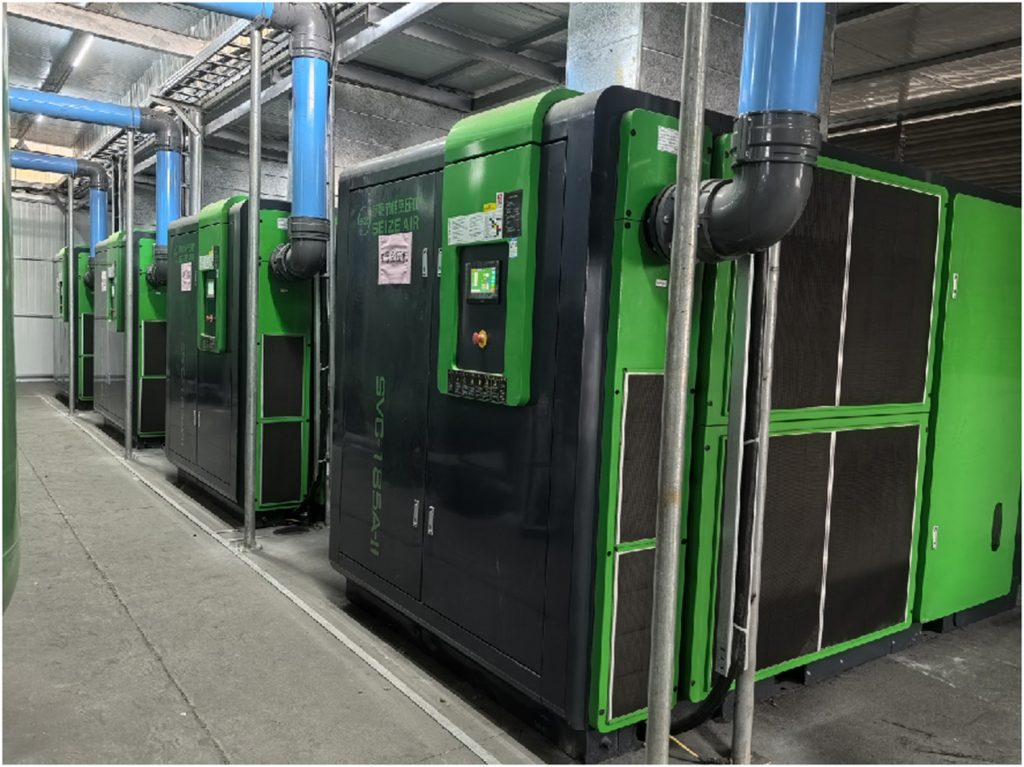
Does a dual stage air compressor improve the life of downstream tools?
Decision-makers often forget that the compressor is just the start of the line. What happens after the air leaves the pump?
Managing Moisture and Oil Carryover
In a single-stage setup, the air enters the lines “wet and wild.” It’s hot, it’s holding a lot of water vapor in suspension, and because the pump is running hot, it’s often carrying atomized oil from the crankcase. This “sludge” eventually hits your solenoid valves, your air cylinders, and your high-end pneumatic tools.
A dual stage air compressor acts as a preliminary air treatment plant. By the time the air leaves the high-pressure cylinder, it has already been through one cooling cycle. This means your refrigerated air dryers don’t have to work as hard, and your point-of-use filters stay cleaner for longer. We often see facilities where switching to Seize Air high-pressure systems reduced their pneumatic tool repair costs by nearly 30% in the first year alone. The reduction in “thermal shock” to the air lines also prevents the expansion and contraction that leads to pinhole leaks in older piping.
What is the difference between a twin cylinder and a 2 stage compressor?
This is where many buyers get caught by clever marketing. You might see a pump with two cylinders and assume it’s a “two-stage” machine. As a buyer, you need to be savvy about piston compressor cylinder configurations.
- Twin-Cylinder Single Stage: Both cylinders are the same size. Both draw in atmospheric air and pump it directly to the tank. It’s just two small compressors sharing a crankcase.
- True Two-Stage: One cylinder (the first stage) is significantly larger—often twice the volume—than the second. You will see a dedicated intercooler tube (often finned like a radiator) connecting the two.
The engineering team at Seize Air emphasizes that true two-stage performance requires precise balancing between the LP (low pressure) and HP (high pressure) cylinders. If the ratios are off, one cylinder does all the work, and you lose the energy-saving benefits. This is why “branded” engineering matters; a generic pump might have two stages but lack the balanced stroke necessary to actually save you money.
Why is a low RPM dual stage air compressor more durable?
Here is a metric you won’t find on many glossy brochures: Pump RPM vs. Longevity.
To get high CFM out of a single-stage pump, manufacturers often “over-clock” the motor, running the pump at high RPMs (sometimes over 1,200 RPM). This creates friction, noise, and vibration.
Industrial-grade dual stage air compressors are typically designed to run at lower RPMs (often 600–900 RPM). Because they are more efficient at moving air per stroke, they don’t need to spin the crank at breakneck speeds to meet demand.
- Low RPM = Less Heat. Heat is the number one killer of compressor oil.
- Low RPM = Less Vibration. Vibration leads to metal fatigue in the tank and loose electrical connections.
- Low RPM = A pump that lasts 20 years instead of 5.
| Impact Factor | Over-Clocked Single-Stage | Low-RPM Dual-Stage |
| Noise Level | 85-90+ dB (Requires earpro) | 70-80 dB (Conversation possible) |
| Maintenance Interval | Every 500 hours | Every 2,000+ hours |
| Vibration Stress | High (Loosens fittings) | Low (Stable operation) |
| Capital Lifespan | 3–7 Years | 15–25 Years |
Why does a 2 stage compressor pump more air (CFM) under load?
Technically, it’s about volumetric efficiency. In a single-stage pump, as the piston moves up, a small amount of highly compressed, hot air is always trapped in the “clearance pocket” at the top of the stroke. When the piston moves down, that air expands, preventing new atmospheric air from entering until the pressure drops.
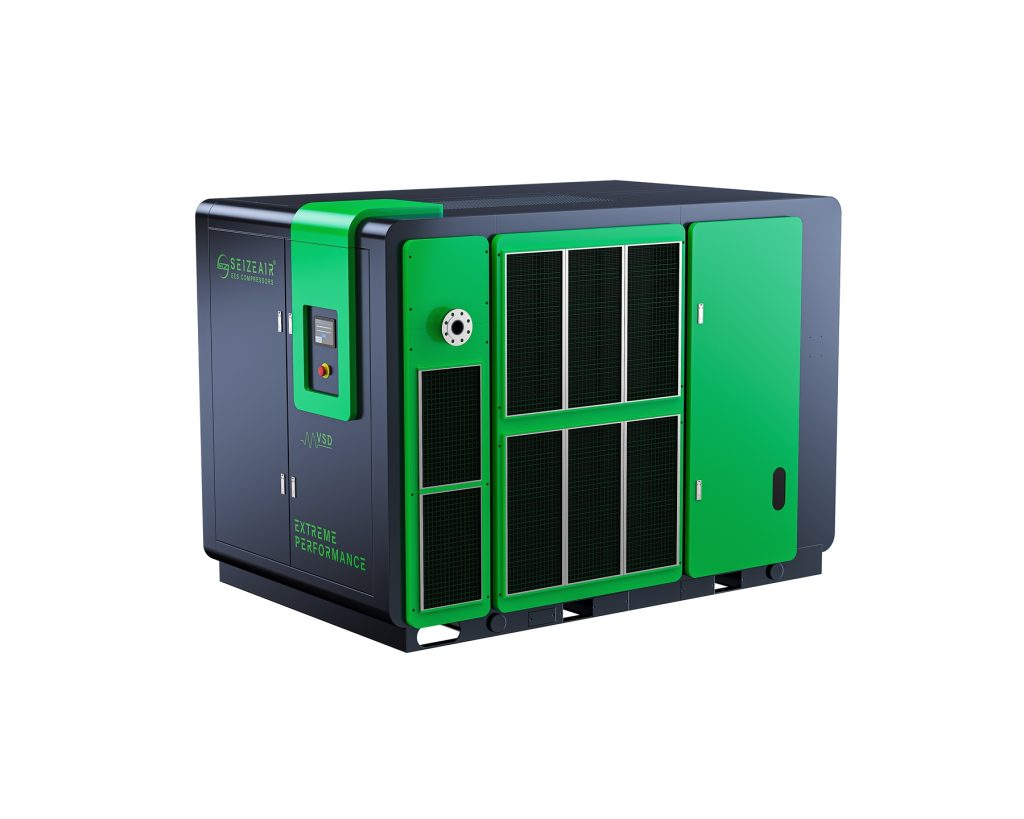
In a dual stage air compressor, the second stage only has to compress air from 40 PSI to 175 PSI. The “pressure gap” is smaller, which reduces the impact of that clearance pocket expansion. Furthermore, the intercooler shrinks the air volume between stages, allowing the second stage to “grab” more mass per stroke. From a field engineer’s perspective, the two-stage pump is simply more “honest” with its CFM ratings under load.
For specialized applications like laser cutting or textile manufacturing, the stability of a Seize Air dual-stage system ensures that pressure fluctuations don’t result in product defects. While a single-stage unit might “dip” in pressure during a heavy cycle, the 175 PSI reserve in a two-stage tank acts as a massive pneumatic capacitor.
Which One Should You Buy?
If your business relies on air to make money, the answer is almost always the dual-stage. It is a more “mature” technology for an industrial setting. It treats your electricity bill with respect, it preserves your downstream tools, and it provides the pressure headroom necessary for modern manufacturing.
The single-stage compressor has its place—in tire shops, for trim carpenters, and for intermittent DIY use. But when the stakes are high and the “cost of downtime” is measured in thousands of dollars per hour, the mechanical integrity of a Seize Air dual-stage system provides the peace of mind that a single-stage unit simply cannot match. You aren’t just buying air—you’re buying a utility that you can finally stop worrying about.