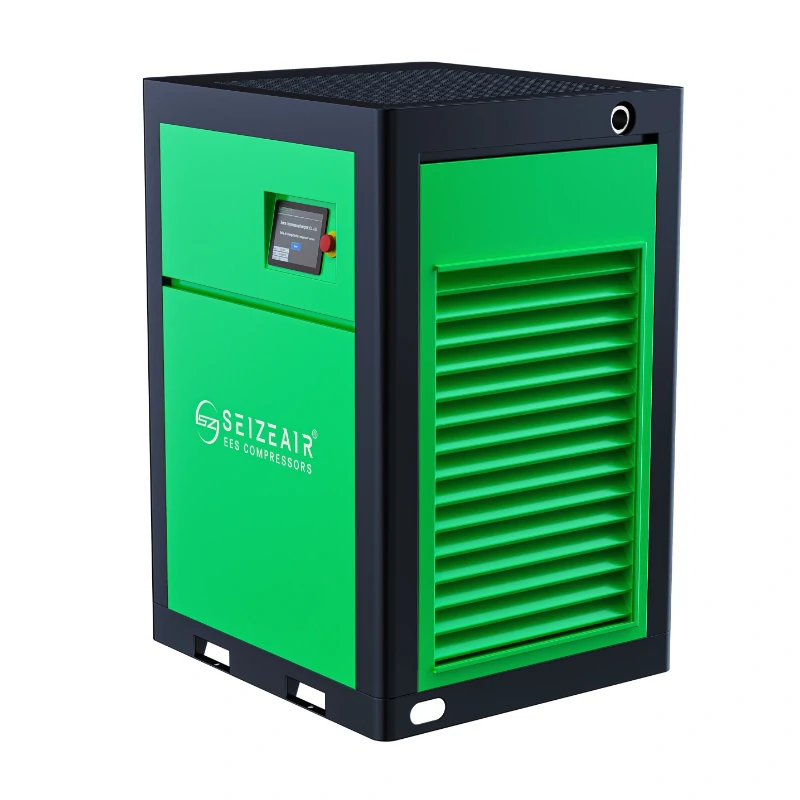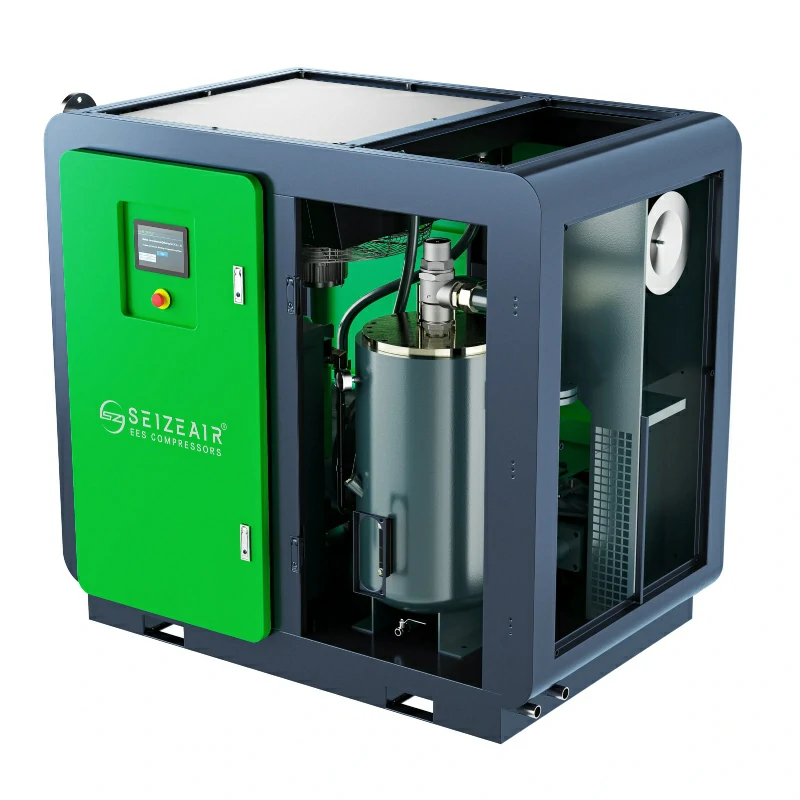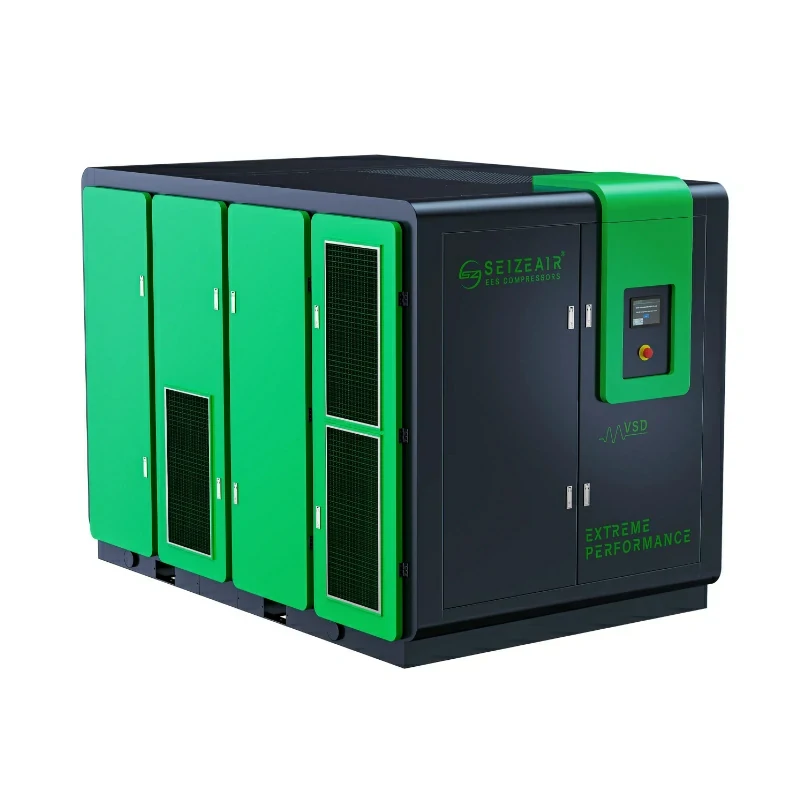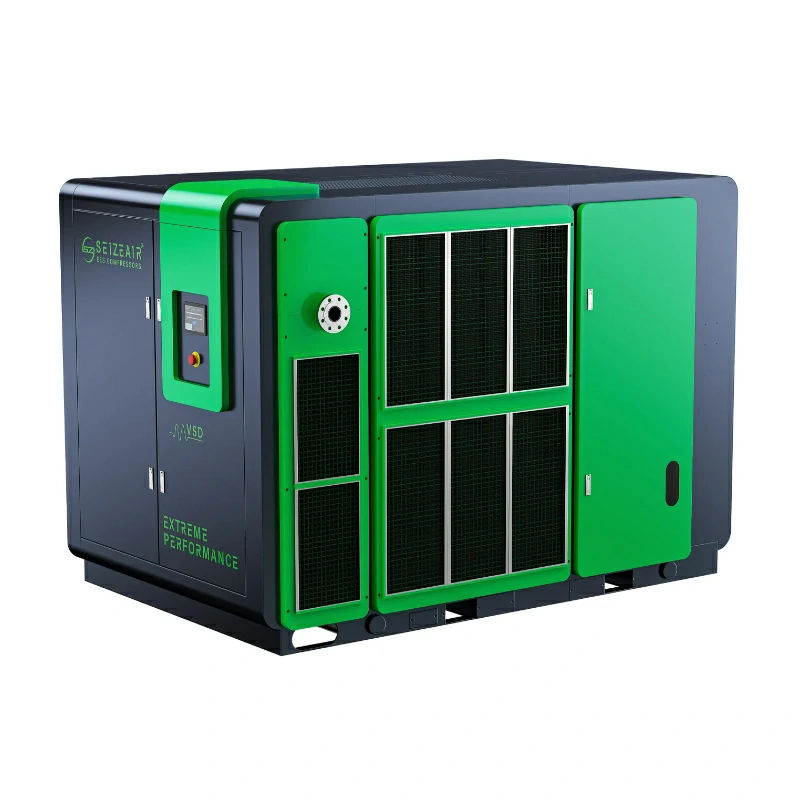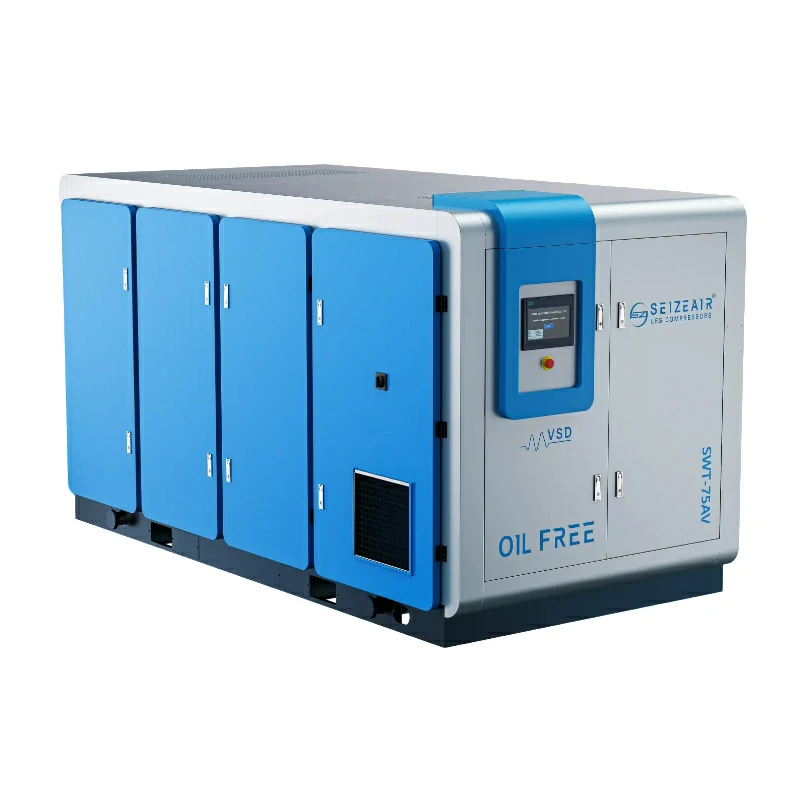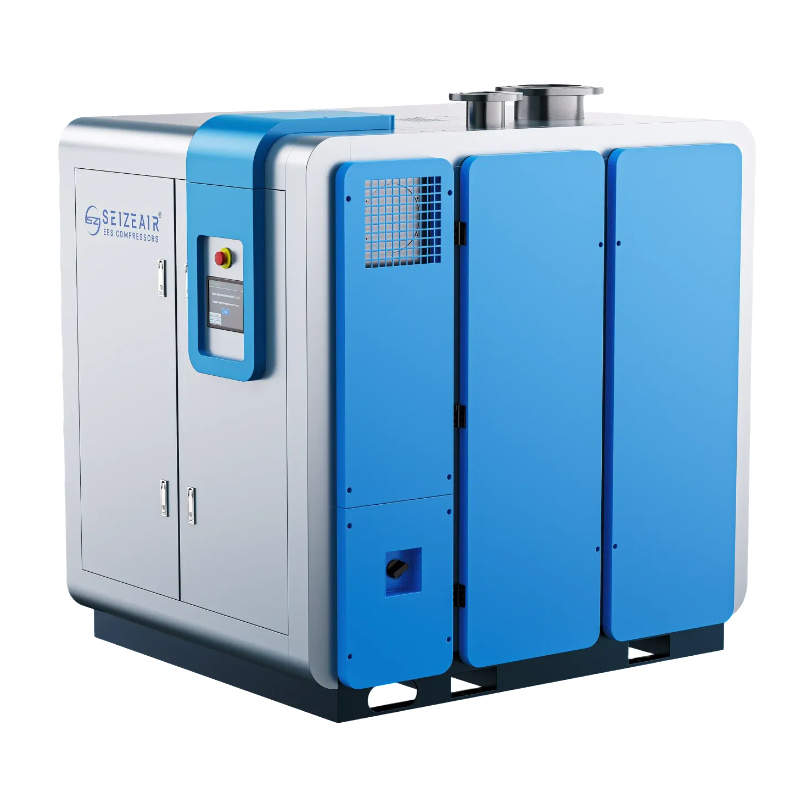


A factory air compressor is a critical food safety mandate in an industry governed by stringent SQF, BRC, and FDA standards, where the air powering pneumatic sorters and packaging lines must be as clean as the ingredients themselves. Choosing the right system involves more than just matching horsepower to tools; it requires a deep-dive analysis into ISO purity classes, life-cycle cost dynamics, and the granular engineering realities of maintaining a sterile air system in a high-pressure production environment.
1. Why is Air Quality Non-Negotiable in Food Manufacturing?
When we talk about compressed air in food plants, we aren’t just talking about “power.” We are talking about a “hidden ingredient.” If your air contains oil aerosols, moisture, or particulates, you are essentially injecting contaminants into your product. This is why the search for a factory air compressor often leads to the door of “oil-free” technology.
The Myth of “Technical Oil-Free”
Many plant managers believe that high-efficiency coalescing filters can turn a standard oil-lubricated compressor into a food-safe machine. As a system integrator, I’ve seen this fail repeatedly. Filters are passive components; they have breakthrough points. If a separator element ruptures or a drain clogs, a slug of oil travels directly into your mixing vats. Even industrial air compressors for food grade applications can fail if they rely solely on filtration rather than true oil-free compression.
What is the ISO standard for food grade air?
To maintain compliance, you must understand the “Class” system. For food-grade applications, anything less than Class 1 for particles and oil is a gamble.
| Contaminant | Class 1 Requirement | Class 0 (The Gold Standard) |
|---|---|---|
| Solid Particles | ≤ 20,000 (0.1–0.5 μm) | Strictly more stringent than Class 1 |
| Water (Pressure Dew Point) | ≤ -70°C (-94°F) | As specified by the equipment user |
| Total Oil | ≤ 0.01 mg/m³ | 0.00 mg/m³ (Total absence of oil) |
The “Class 0” Reality
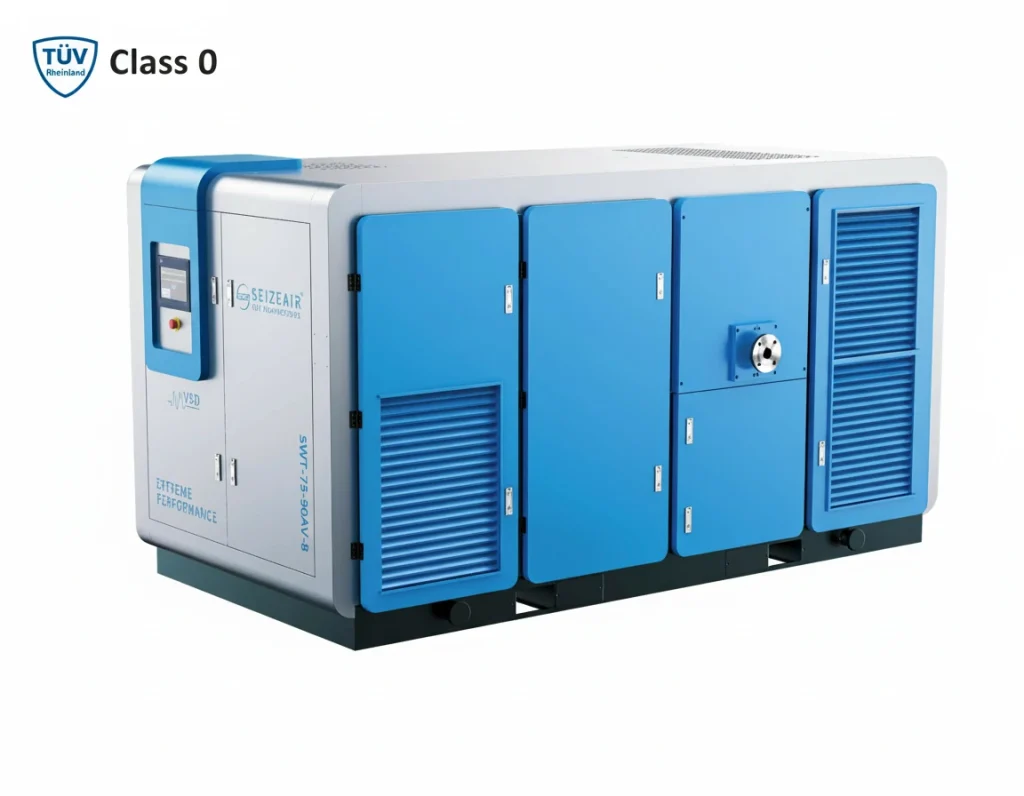
Class 0 does not mean zero contamination in the ambient air; it means the compressor adds zero oil to the compression cycle. For facilities aiming for Global Food Safety Initiative (GFSI) certification, Class 0 is the only way to eliminate “oil carryover” from your Hazard Analysis and Critical Control Point (HACCP) risk assessment. It’s about removing the variable of human error in maintenance.
2. Oil-Free vs. Oil-Injected
The debate usually centers on risk vs. initial capital expenditure (CAPEX). However, the long-term operational reality is far more complex when evaluating a factory air compressor for a 24/7 facility.
Can I use an oil-lubricated compressor for food processing?
In an oil-injected system, the lubricant is used to seal, cool, and lubricate the rotors. Even with “Food Grade” lubricants (H1/H2), you are still dealing with a hydrocarbon. If that oil vaporizes due to high discharge temperatures—a common occurrence in poorly ventilated rooms—it becomes a gas that no standard filter can fully trap. This leads to tainted odors and flavors in the food product. This is why oil-free screw air compressor for food plant setups are becoming the baseline requirement for audit-heavy sectors like dairy and infant formula.
Dry Oil-Free Screw Technology and Seize Air
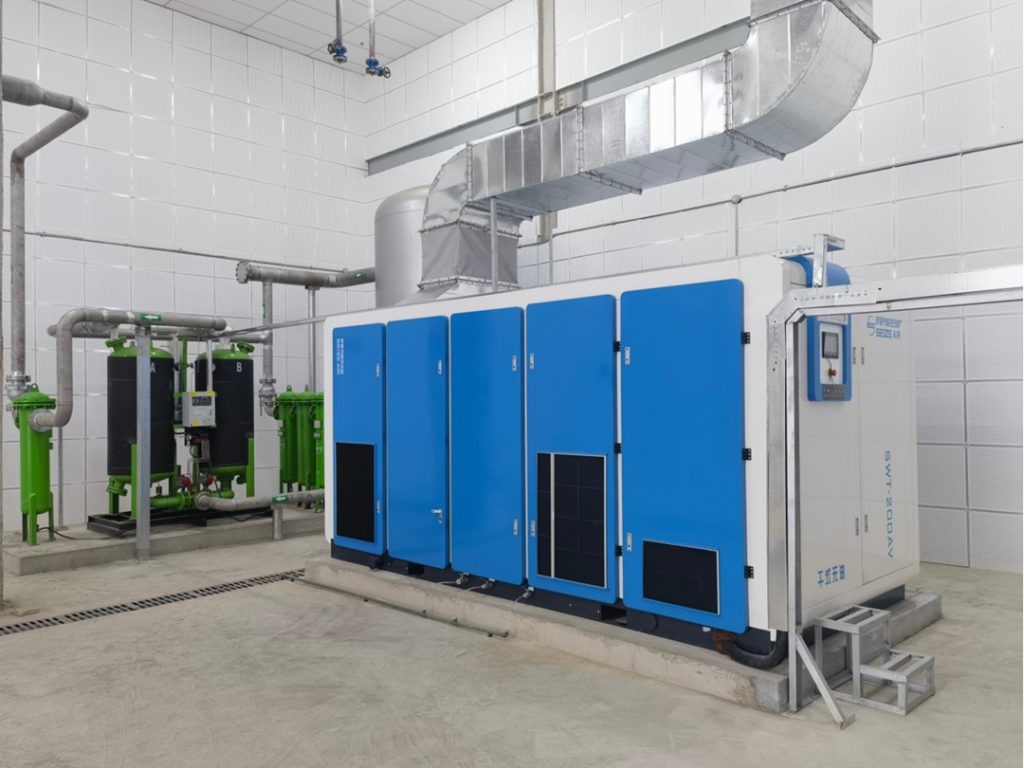
Dry oil-free screws use specialized coatings (like Teflon or ceramic) and precision-timed gears to ensure the rotors never touch. Because there is no oil in the chamber, there is nothing to leak into the air stream.
Field Note: In my experience auditing plants, brands like Seize Air have gained traction here because they focus on “Total Air Integrity.” Their oil-free designs remove the human error factor—you don’t have to worry about a technician forgetting to change a filter or using the wrong oil. Furthermore, stainless steel air compressor components in these units prevent the internal corrosion that often plagues standard machines.
The Maintenance Paradox of Industrial Systems
While oil-free units have a higher purchase price, they eliminate the need for expensive oil-saturated filter disposal and the constant monitoring of oil levels and separator differential pressures. When you factor in the cost of a single product recall (averaging $10M in the US), the “expensive” oil-free unit suddenly looks like the cheapest insurance policy you ever bought.
3. What are the Common Applications of Compressed Air in Food Plants?
Understanding the “end-use” is where most factories over-spend. If you treat all air in the plant to the highest standard, you waste energy. If you treat it all to the lowest, you fail inspections.
How much air pressure is needed for food packaging lines?
- Pneumatic Conveying: Moving grains, sugar, or flour. Here, moisture is the enemy. If the air is damp, the powder clumps, leading to pipe blockages and microbial growth. High-volume low pressure factory air systems are often specialized for this.
- Modified Atmosphere Packaging (MAP): High-purity air is fed into Nitrogen generators to displace oxygen in snack bags or meat trays. Any oil trace here will foul the carbon molecular sieve of the N2 generator, a $20,000 mistake.
- Automated Sorting & Peeling: High-speed air jets “kick” bruised fruit off a conveyor. This air is hitting the internal flesh of the food. It must be sterile.
- PET Bottle Blowing: Requires high-pressure (often 30-40 bar) air. If you use an oil-injected booster here, the oil becomes embedded in the plastic of the bottle itself.
When sizing a factory air compressor, we look at the peak demand. For example, if your packaging line has a sudden burst of pneumatic activity every 30 seconds, your compressor needs to handle that “spike” without dropping system pressure, which would lead to sensor errors and machine downtime.
4. Total Cost of Ownership (TCO): The 10-Year Financial Trap
If you are a decision-maker looking only at the “Quote Price,” you are seeing less than 15% of the truth. Over a 10-year period, electricity is your primary cost.
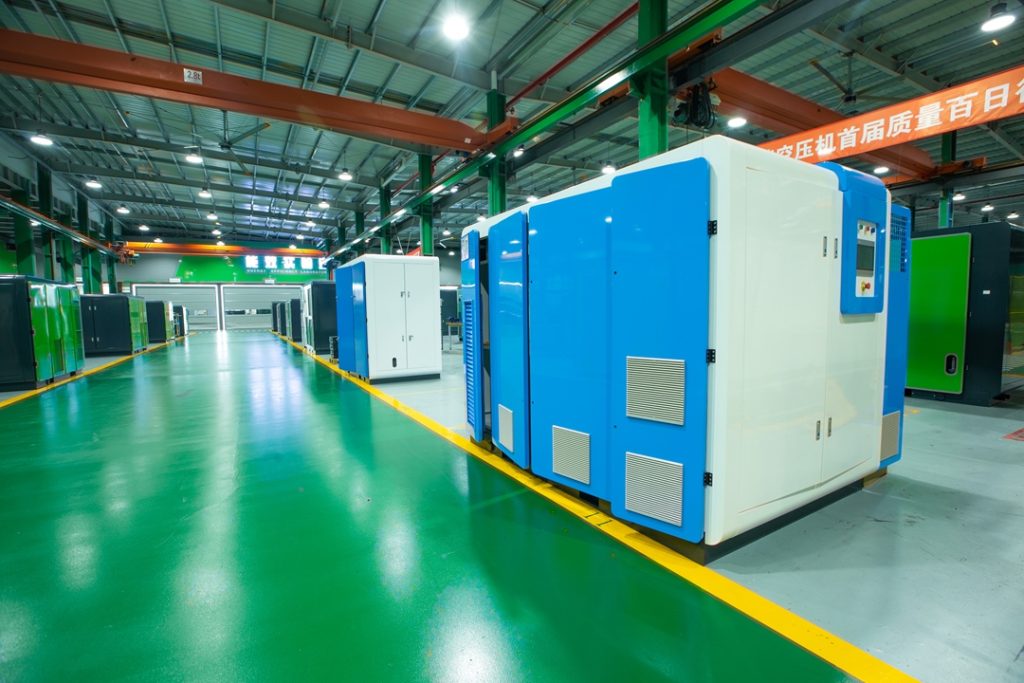
What is the most energy efficient air compressor for a factory?
Most food plants don’t run at 100% capacity 24/7. They have cleaning shifts, packaging-only shifts, and peak production.
| Metric | Traditional Fixed Speed | Two-Stage PM VSD |
|---|---|---|
| Startup Type | Star-Delta (600% current spike) | Soft Start (No spike) |
| Part-Load Efficiency | Terrible (Wasted “unloaded” power) | Excellent (Linear power consumption) |
| Pressure Stability | ± 1.0 Bar (Fluctuating) | ± 0.1 Bar (Constant) |
| Internal Heat Loss | High | Low (Ultra-cool operation) |
Why Two-Stage Compression and VSD Matter
For a factory air compressor in a high-demand environment, two-stage compression is a game-changer. By dividing the compression into two steps with inter-cooling, the air becomes denser and easier to compress in the second stage. This reduces the work required by the motor.
When combined with a Permanent Magnet (PM) motor—which retains high efficiency even at low speeds—the energy savings are undeniable. Seize Air specializes in this specific VSD air compressor for food manufacturing niche, ensuring that even when production slows down, your electricity meter doesn’t keep spinning at full speed.
5. Designing the “Sanitary” Air Room: Beyond the Compressor
A great compressor in a bad room is a failed system. As a site engineer, I look at three things immediately to ensure the compressed air system layout for food safety is up to par.
1. The Intake Environment
Is your compressor sucking in air from near a loading dock? If so, it’s inhaling diesel fumes and humidity. Your factory air compressor is a giant vacuum cleaner. It concentrates whatever is in the air by a factor of 8 or 10. Always pipe intake air from a clean, cool, and dry location. If the ambient air is 30°C and 80% humidity, your dryer has to work twice as hard.
2. The Piping “Dead Leg” Danger
In food plants, we often see “dead legs”—sections of piping that are capped off. These are breeding grounds for Legionella and mold because moisture traps there and stays warm. Use a “Ring Main” or “Loop” piping system to keep air moving and pressure balanced across the plant. Corrosion resistant air piping for food plants is the only acceptable standard.
3. Material Choice
Never use black iron or galvanized steel. They rust from the inside out due to the condensate. Use Anodized Aluminum or Stainless Steel. It keeps the air “Class 1” all the way to the nozzle. Many modern factory air compressor installations now mandate aluminum piping for its leak-free push-to-fit connections and smooth internal bore.
6. Dryers and Condensate
Air compression creates water—gallons of it every hour. In food processing, this water is a biohazard.
What type of air dryer is best for food processing?
- Refrigerated Dryers (3°C Dew Point): Sufficient for “plant air” (tools, actuators) where the air lines stay indoors at room temperature.
- Desiccant Dryers (-40°C to -70°C Dew Point): Mandatory if any piping runs through cold storage or if the air touches dry powders. Seize Air provides integrated dryer solutions that sync with the compressor’s VSD logic, ensuring that the dryer doesn’t waste energy when the compressor is at low load.
A heatless desiccant dryer for food grade air is often the preferred choice for extreme purity, though “heat of compression” dryers are more energy-efficient for larger 100HP+ systems.
Zero-Loss Drains
If you hear a “hissing” sound in your air room, you are throwing money away. Manual or timed solenoid drains either waste air or don’t drain enough. Electronic “Zero-Loss” drains only open when water is present. They are a $300 investment that saves $1,000 a year in wasted energy on your factory air compressor setup.
7. The Era of the “Smart” Factory
We are moving away from “Fix it when it breaks.” In the food industry, a breakdown during a production run can mean throwing away tons of perishable product.
How to monitor compressed air quality in real-time?
Modern factory air compressor systems now feature cloud connectivity. From my laptop, I can see the discharge temperature, the vibration levels of the bearings, and the current pressure drop across the filters.
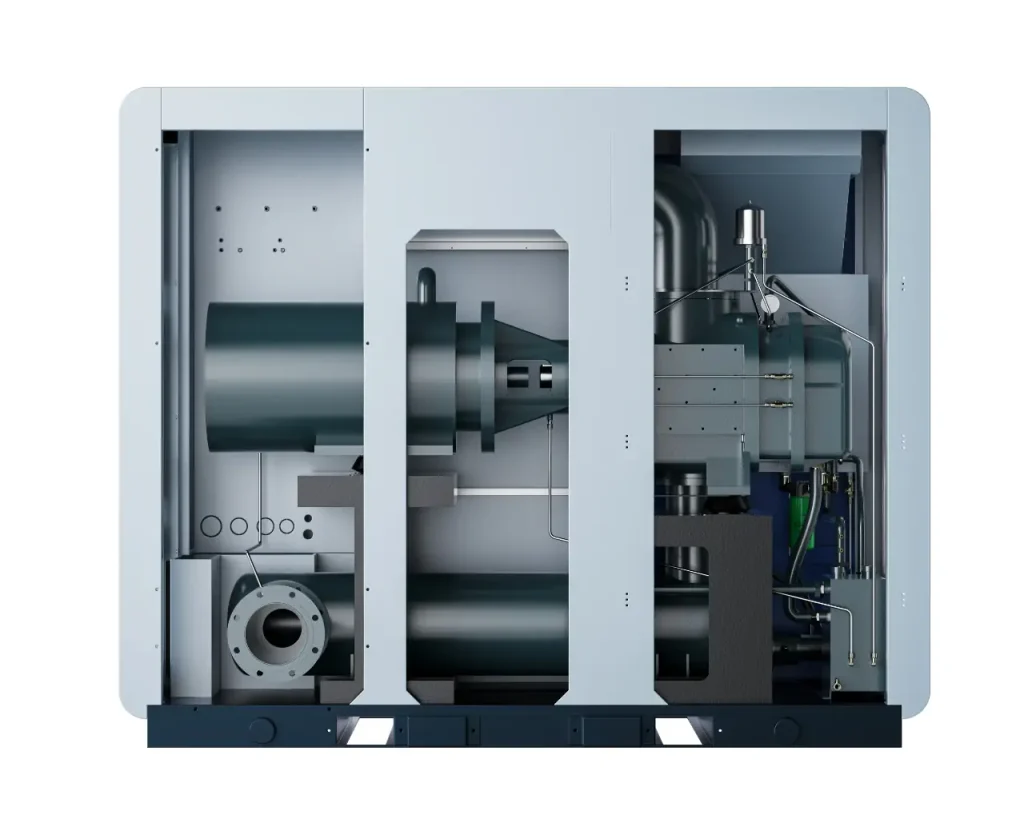
Why This Matters to the CEO
Predictive maintenance means you schedule a service on a Saturday when the plant is down, rather than having the machine seize up on a Tuesday morning. By using the specialized monitoring platforms offered by industry leaders like Seize Air, plants have reduced unplanned downtime by nearly 40%. It turns the air system from a “black box” into a transparent utility. Integrated smart air compressor controllers for industrial use allow for sequencing multiple machines, ensuring that the most efficient unit always leads the load.
Strategic Summary for Modern Operations
To stay competitive in the global food market, your compressed air strategy must evolve.
- Shift to Oil-Free: Eliminate the risk of oil contamination at the source. It simplifies your HACCP plan and protects your brand.
- Audit for Leaks: A 1/4 inch leak in an air line can cost over $8,000 a year in wasted electricity. Regular ultrasonic leak detection is mandatory.
- Choose PM VSD Technology: The ROI on a Permanent Magnet Variable Speed compressor is often less than two years in a multi-shift food plant.
- Think Systemically: Don’t just buy a box. Think about the piping, the dryers, the drains, and the ventilation.
By taking a holistic engineering approach, you ensure that your factory air compressor isn’t just a cost center, but a reliable, efficient, and clean foundation for your entire production line. Quality air isn’t an accident—it’s the result of rigorous design and the right technology partners.