

Introduction
In modern manufacturing and heavy industries, compressed air is often referred to as the “fourth utility” alongside electricity, water, and gas. While small workshops can get by with standard reciprocating units, a full-scale production plant operates on an entirely different level of demand.
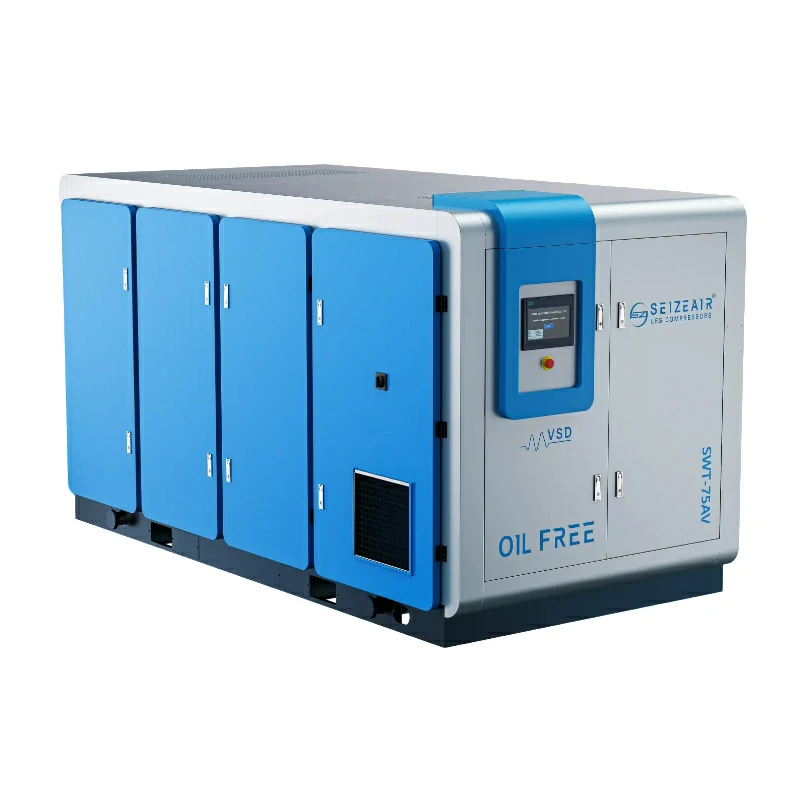
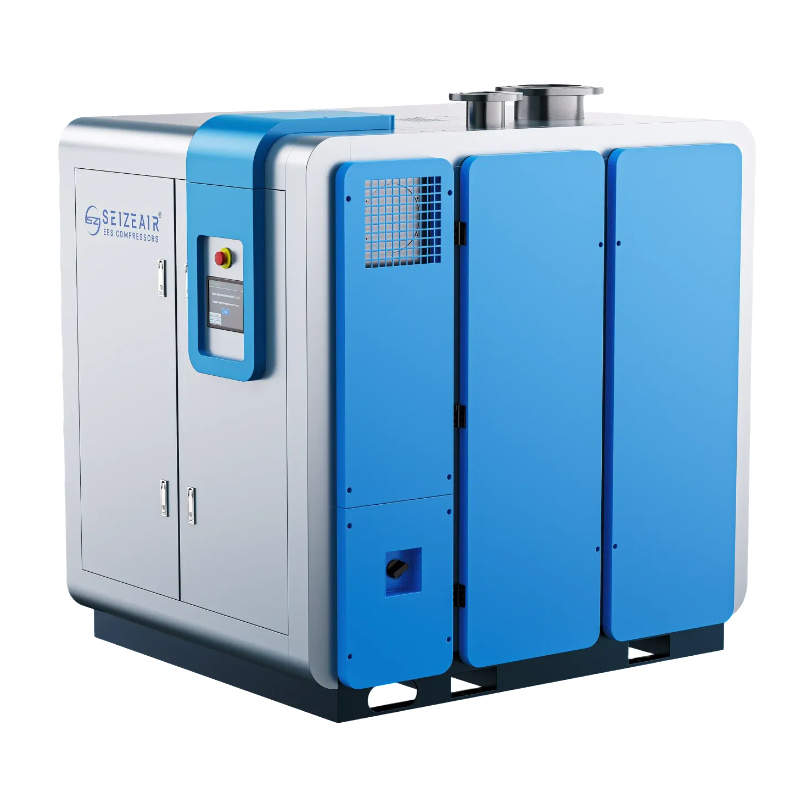
Continuous operations, harsh environmental conditions, and massive volumetric flow requirements demand an air supply system that refuses to quit. This is where a heavy duty industrial air compressor becomes the backbone of your facility. It isn’t just an equipment upgrade; it’s a critical investment in your plant’s operational reliability, energy efficiency, and long-term profitability.
What Defines a Heavy Duty Industrial Air Compressor?
Before diving into why your facility needs one, it’s essential to understand what separates a true heavy duty industrial unit from standard commercial compressors. Many buyers fall into the trap of looking only at horsepower (HP) or Cubic Feet per Minute (CFM) without considering the engineering behind the machine.
True industrial-grade machines are engineered for 100% duty cycle. This means they are designed to run 24 hours a day, 7 days a week, 365 days a year without overheating or experiencing accelerated wear.
Standard Commercial Compressor:  [==== Run (50%) ====][---- Rest (50%) ----]
Heavy Duty Industrial Unit:     [================= Run (100%) =================]
Key Technical Distinctions
- Advanced Aerodynamics & Airend Design: Industrial units utilize precision-engineered rotary screw or centrifugal designs. The rotors are larger, turn at lower RPMs to reduce heat and friction, and use high-grade bearings designed for over 50,000 to 100,000 hours of operation.
- Superior Thermal Management: Heavy-duty systems feature oversized oil coolers and aftercoolers to manage the extreme heat generated during continuous compression, ensuring the compressed air entering your plant is stable and manageable.
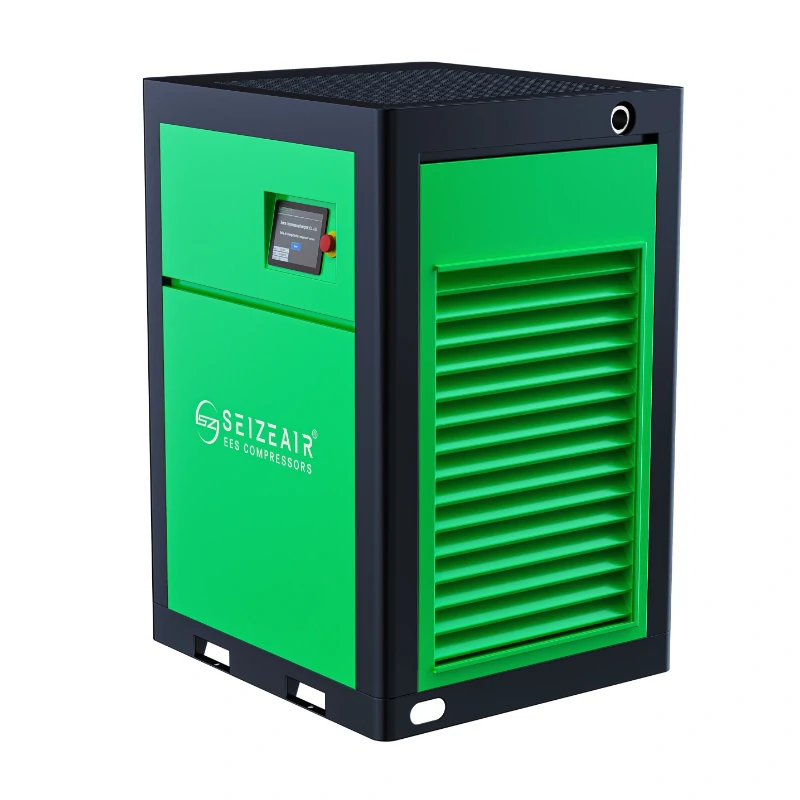
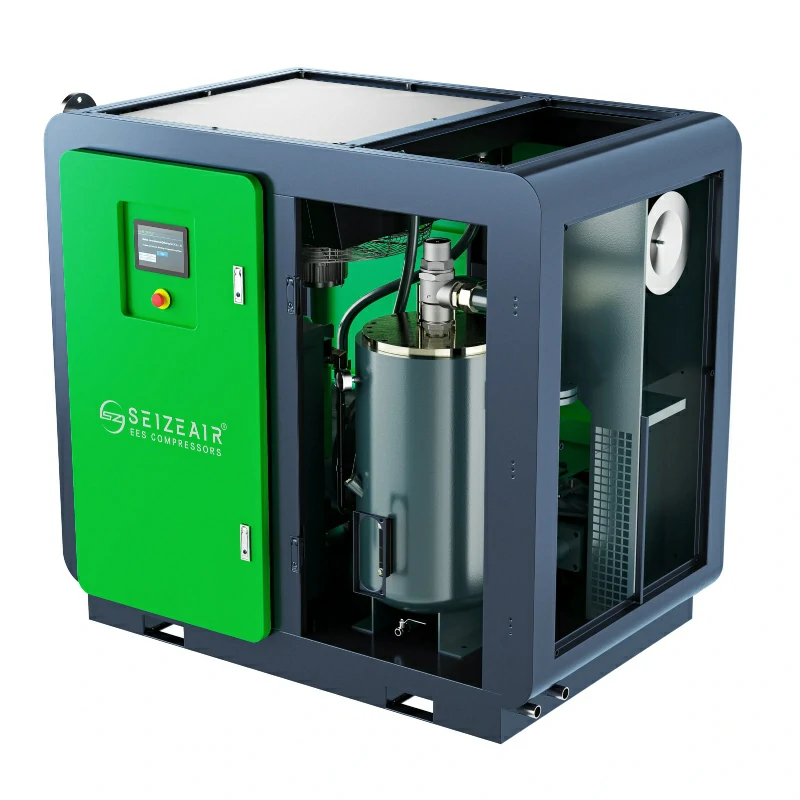
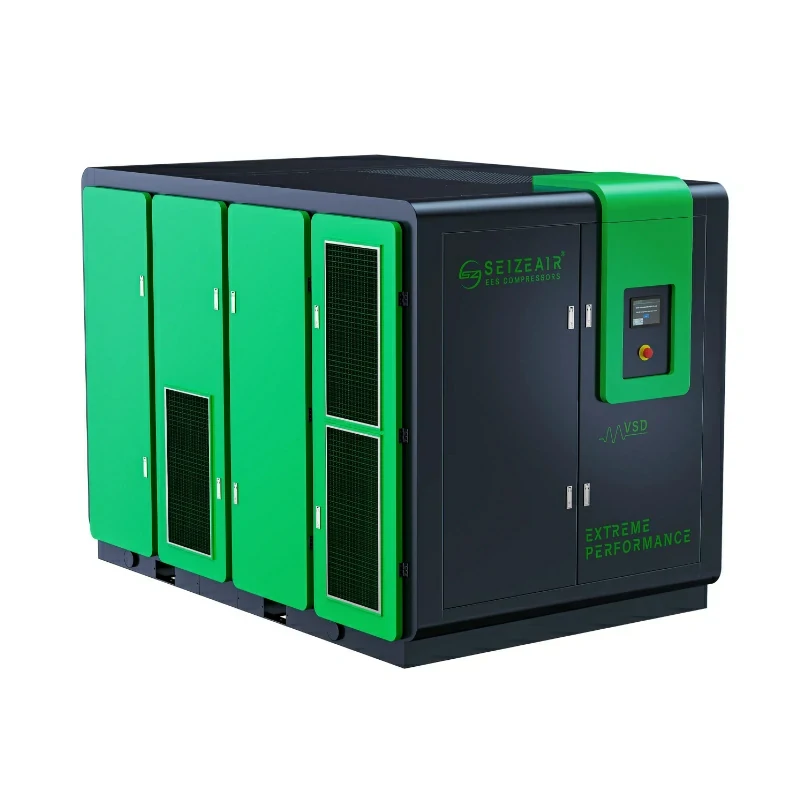
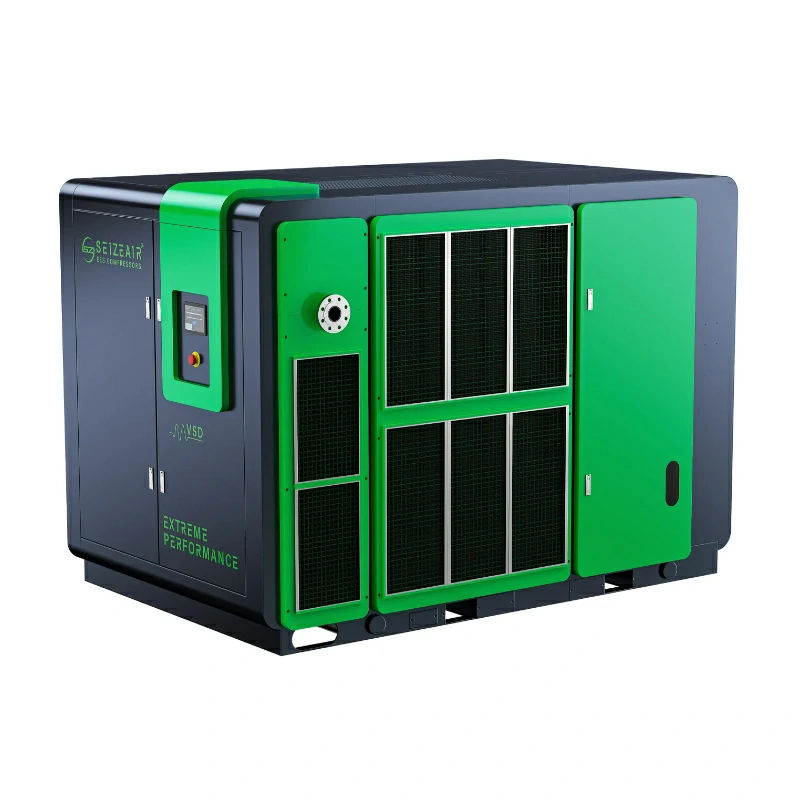
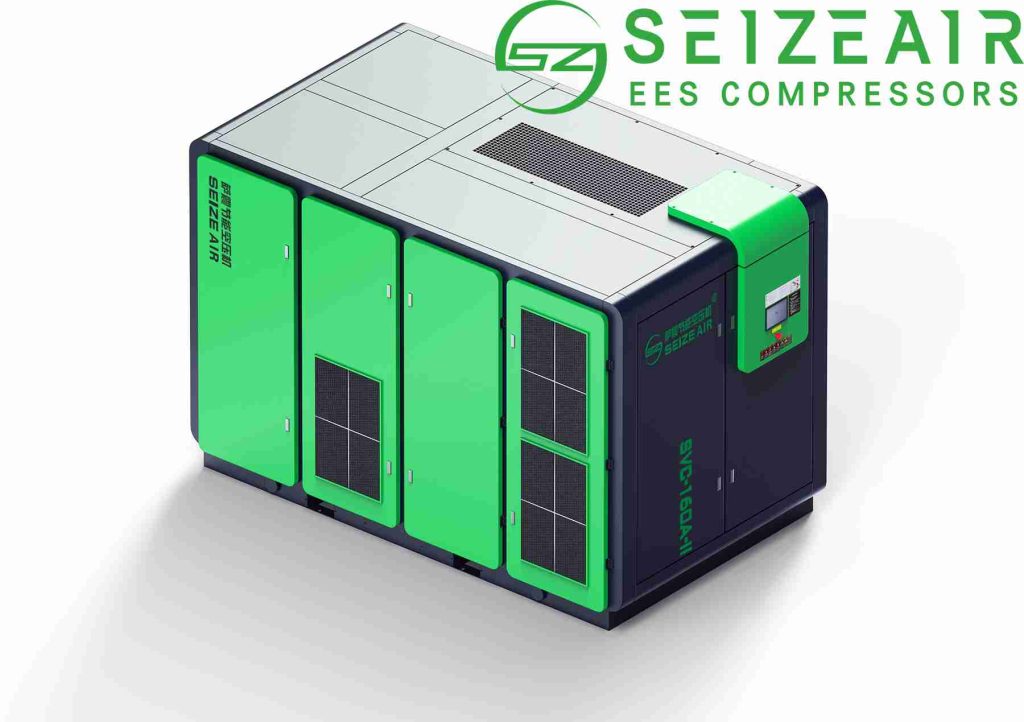
- Heavy Industrial Enclosures: Built with sound-dampening, heavy-gauge steel enclosures, these machines protect internal components from factory dust, debris, and extreme ambient temperatures while keeping floor noise within safe limits.
The Metallurgy and Component Integrity Factor
If you crack open a standard commercial-grade compressor and place its components next to a heavy-duty industrial unit, the differences are immediate and stark. It comes down to metallurgy. Industrial airends don’t just use standard steel; they utilize high-alloy, precision-ground rotors housed within heavy, high-tensile cast iron casings.
This thick-walled casting serves a dual purpose: it dampens the intense acoustic energy generated during continuous air shearing, and it completely resists thermal distortion. When a machine runs at 90℃ to 100℃ for three weeks straight without stopping, minor thermal expansion in an inferior casing can alter the micro-clearances between the rotors. Once those clearances slip by even a few microns, internal air blow-by occurs. Your volumetric efficiency drops off a cliff, energy consumption spikes, and you are on a fast track to a catastrophic airend lockup.
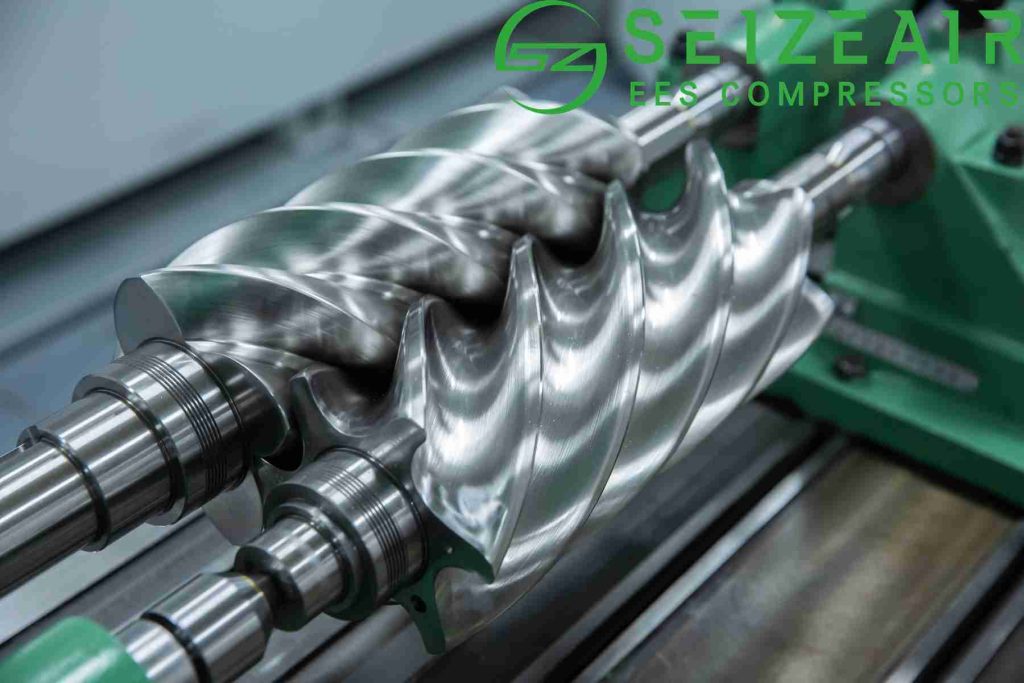
Furthermore, look at the bearings. Standard units often rely on basic ball bearings designed for moderate radial loads. A heavy-duty unit incorporates pairs of heavy cylindrical roller bearings and angular contact thrust bearings on the discharge side. These are spec’d to handle massive axial thrust loads generated when squeezing air up to high pressures day in and day out. If your bearing arrangement isn’t over-engineered, the rotor profile will eventually shift, leading to metal-on-metal contact. In our field experience, saving money on the initial purchase price by accepting lighter internal construction is a gamble that always ends in an expensive emergency rebuild.
| Feature / Specification | Standard Commercial Compressor | Heavy Duty Industrial Air Compressor | High-End Premium Industrial Unit (e.g., Seize Air) |
| Duty Cycle | 50% – 70% (Requires rest periods) | 100% Continuous Duty | 100% Continuous Duty + Extended Overload Range |
| Expected Lifespan | 5,000 – 10,000 hours | 50,000 – 100,000+ hours | Up to 150,000 hours (with proper maintenance) |
| Primary Compression Tech | Reciprocating Piston / Light Screw | Rotary Screw, Two-Stage Screw, Centrifugal | Precision Dual-Stage Smart Rotary Screw |
| Typical CFM Range | 10 – 50 CFM | 100 – 5,000+ CFM | Custom Scalable Configurations up to 10,000+ CFM |
| Cooling System | Air-cooled (Flywheel fan) | Oversized Fluid-Cooled or Water-Cooled Systems | Smart Variable-Speed Fluid/Water Independent Cooling |
| Smart Control Systems | Basic pressure switch | Advanced Microprocessor / VFD Integration | IoT Remote Diagnostics, Multi-Machine Sequencing |
Why Do Continuous Manufacturing Plants Require Heavy Duty Compressed Air Systems?
When you scale up from a batch workshop to an unceasing, multi-shift plant, the physics of your utility room changes completely. Operating a plant without a dedicated, high-capacity industrial air system introduces massive bottlenecks. Below are the primary operational reasons why upgrading to or installing a heavy duty system is vital for your facility.
1. Eliminating Costly Production Downtime
In heavy manufacturing—whether automotive, steel fabrication, or chemical processing—downtime is measured in thousands of dollars per minute. If your air compressor fails, your entire pneumatic assembly line, robotic arms, and packaging systems grind to a halt.
Cheap or undersized compressors overheat when pushed past their limits, triggering automatic thermal shutdowns. A heavy-duty unit is explicitly built to handle unexpected demand spikes without breaking a sweat, ensuring your production lines keep moving.
The Domino Effect of Compressed Air Failure
When a primary compressor trips on a high-temperature alarm in the middle of a shift, the consequences hit the entire facility like a wave. It is not just about one machine shutting down; it is about the sudden loss of system pressure across your entire header network.
Pneumatic cylinders lose their holding force, which can cause automated heavy assembly fixtures to drop parts mid-cycle, damaging expensive tooling. On an automotive line, a drop in pressure halfway through a robotic paint cycle causes the spray atomization to sputter, ruining the finish and forcing a complete scrap and rerun of the chassis.
From a systems integration perspective, trying to bridge these reliability gaps with multiple small, uncoordinated standby units is a nightmare. You end up with a complex web of pressure switches fighting each other, causing short-cycling, massive electrical inrush currents, and localized thermal overloads.
A single, robustly engineered heavy-duty industrial unit running under a unified control system provides a stable baseload pressure that eliminates these erratic variables. You cannot build a predictable, automated manufacturing flow on top of an unstable, unpredictable air supply.
2. Handling Massive Volumetric Flow (CFM) and Pressure (PSI) Simultaneously
Industrial pneumatic tools, sandblasting equipment, and automated sorting lines don’t just require pressure (PSI); they require a massive, uninterrupted volume of air (CFM). When multiple high-draw tools cycle on at the same time, a standard compressor’s pressure tank drains instantly, causing a pressure drop across the entire plant. Heavy duty units utilize advanced air control and massive displacement mechanisms to sustain high CFM outputs even during peak plant operational hours.
The Dynamics of Velocity, Friction, and Artificial Demand
Many plant managers mistake low pressure at the end of a line for a lack of compressor PSI. They respond by cranking up the pressure setpoints at the compressor room, which is the most expensive mistake you can make.
What is actually happening is a classic volume problem. If your compressor cannot dump enough CFM into the header to match the instantaneous consumption of your machinery, the velocity of the air inside the pipes increases drastically. High velocity creates massive friction against the pipe walls, causing a severe localized pressure drop.
By pushing the compressor to run at a higher PSI to compensate, you create “artificial demand”—forcing air out of every small leak in the facility at a much faster rate and driving up your power bills. A heavy-duty industrial compressor solves this by maintaining a massive, stable volume of air in reserve. It allows you to run your entire plant header network at a lower, more efficient pressure while still supplying the exact CFM volume your equipment needs to trip open and close without lagging.
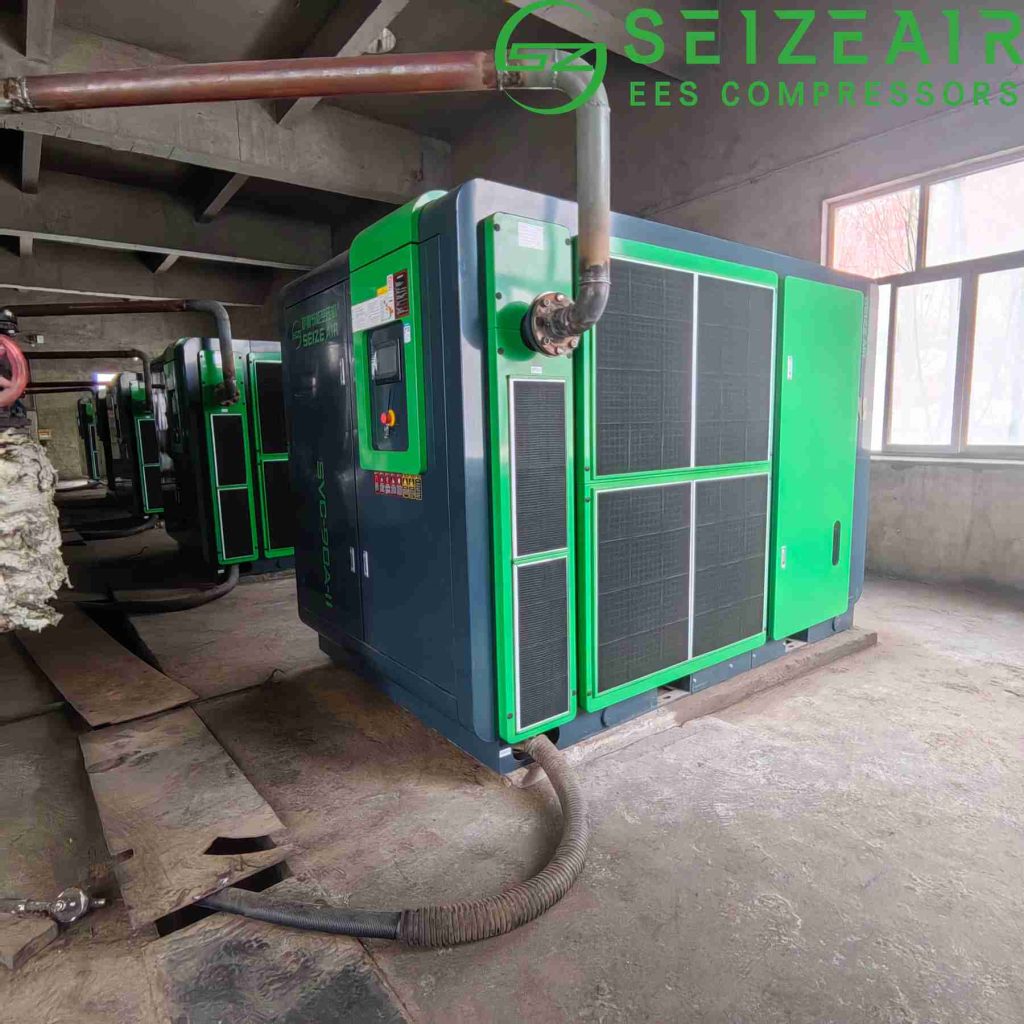
3. Superior Energy Efficiency and Lower Operational Costs
It is a well-known industry fact that over a 10-year lifespan of an industrial compressor, roughly 70% to 80% of its total cost of ownership comes from energy consumption, while the initial purchase price accounts for only a fraction.
Total Cost of Ownership (10-Year Lifecycle):
[  15% Purchase/Installation  ][  10% Maintenance  ][============== 75% Energy Consumption ==============]
Modern heavy-duty systems focus heavily on energy optimization. For instance, top-tier global brands like Seize Air design their systems with permanent magnet variable frequency drives (PM VFD) and two-stage compression technology. This allows the machine to match its energy input precisely to your plant’s real-time air demand, preventing the massive energy waste associated with traditional “load/unload” cycles.
Unmasking the True Cost of Load/Unload Inefficiencies
Let’s look at the financial math from a procurement and executive decision-maker perspective. If you operate a standard fixed-speed compressor under a traditional load/unload control strategy, the motor runs at full speed regardless of whether your plant needs 100% air or 40% air. When the pressure hits the upper limit, the intake valve closes (unloaded state). The machine is no longer producing air, but the motor is still spinning, consuming anywhere from 30% to 40% of its full-load power just to overcome internal mechanical friction. That is pure waste.
Fixed-Speed Load/Unload Waste Pattern:
[=== Loaded: 100% Power / Producing Air ===][--- Unloaded: 40% Power / ZERO Air Produced ---]
Over a year of three-shift operations, those unloaded hours add up to tens of thousands of dollars spent on absolutely nothing. A heavy-duty unit featuring an integrated PM VFD eliminates this entirely. The motor slows down smoothly, drawing only the exact wattage required to sustain the current air demand. When you look at the monthly utility bills, a high-efficiency system pays back its capital expenditure premium within the first 12 to 18 months of installation.
What are the Main Types of High Capacity Rotary Air Compressors Used in Factories?
Choosing the right type of heavy-duty compressor depends entirely on your specific applications, air quality requirements, and scale of operations. Let’s break down the primary categories used in heavy industry.
1. Heavy Duty Rotary Screw Air Compressors
The rotary screw design is the undisputed workhorse of the modern manufacturing facility. It functions via two counter-rotating intermeshing screws (rotors) that trap and compress air continuously.
- Oil-Injected (Micro-Oil): The rotors are lubricated by specialized compressor fluid, which seals clearances and absorbs compression heat. Ideal for heavy machinery, structural steel fabrication, and general manufacturing.
- Dry Oil-Free Screw: No oil enters the compression chamber. Crucial for industries where even a single part-per-million of oil contamination can ruin a product batch.
A Deep Dive into Lubrication Dynamics
In an oil-injected rotary screw machine, the compressor fluid does far more than just keep the bearings slick. It plays a critical role in sealing the internal compression paths. Because there are no physical seals between the moving rotor lobes, the oil creates a micro-fluid barrier that prevents compressed air from leaking back to the suction side. It also acts as a primary thermal sponge, absorbing the heat of compression right at the point of origin before carrying it away to an oversized radiator.
However, if your process cannot tolerate a single molecule of hydrocarbons, you have to transition to a dry oil-free design. Here, the rotors cannot touch because there is no oil film to prevent friction. They are synchronized by ultra-precise, external timing gears. Because you lose the sealing and cooling benefits of oil, these machines run much hotter and require specialized, multi-stage cooling designs alongside advanced rotor coatings like Teflon or ceramic variants to prevent wear.
2. Centrifugal Air Compressors (Dynamic Displacement)
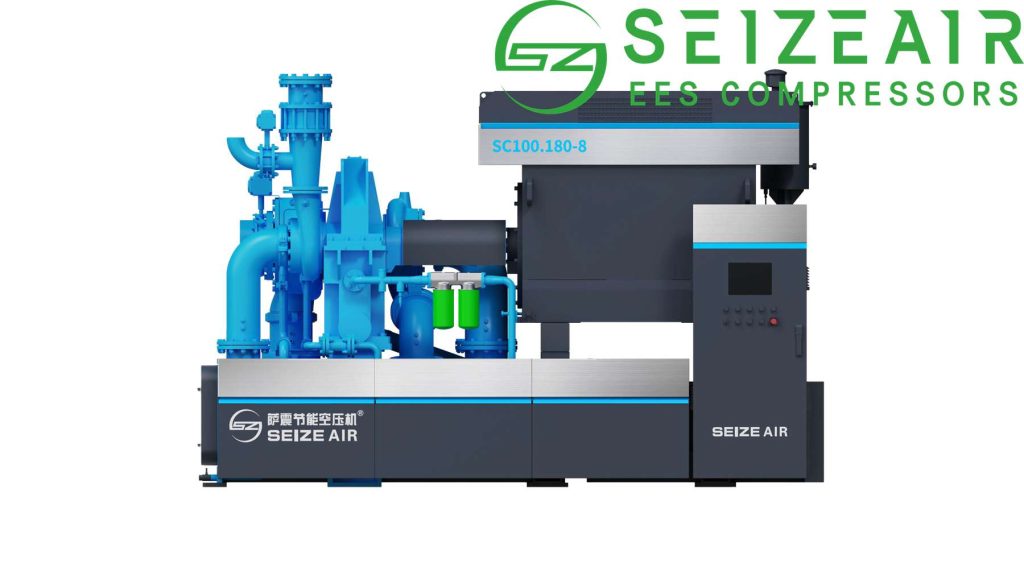
For mega-plants requiring astronomical amounts of continuous air—such as massive chemical plants, oil refineries, or large textile mills—centrifugal compressors are the gold standard. They use a high-speed impeller to accelerate air, which is then converted into pressure energy via a diffuser. They are inherently oil-free and designed for incredibly large, steady-state air demands.
Understanding Kinetic Energy Transformation
Unlike positive displacement rotary screw machines that mechanically reduce the volume of a trapped pocket of air, a centrifugal compressor relies on kinetic energy transfer. The high-speed impellers spin at rotational speeds often exceeding 30,000 RPM, accelerating incoming air molecules to supersonic speeds. As this high-velocity air passes through the stationary diffuser vanes, its speed drops sharply, and that kinetic energy is instantly converted into static pressure.
This type of machinery requires meticulous aerodynamic engineering. It is perfectly optimized for facilities that run at a massive, steady-state baseload 24 hours a day. However, system integrators must be aware of “surge limits.” If your plant’s air consumption drops below a specific critical threshold, the air can actually reverse flow direction within the impeller, causing severe vibrational spikes that can destroy the internal rotor assemblies if not managed by sophisticated blow-off valves.
3. Two-Stage Rotary Screw Air Compressors
Instead of compressing air from atmospheric pressure to the target plant pressure in a single step, two-stage units split the workload across two separate rotor sets. The air is cooled between the stages (intercooling). This drastic reduction in the thermal workload means the machine requires significantly less power to deliver the exact same CFM, making it the premier choice for eco-conscious and high-production plants.
The Thermodynamics of Isothermal Efficiency
Why does two-stage compression save so much energy? It all comes down to basic thermodynamics. Squeezing air generates heat, and hot air is physically harder to compress than cold air because it wants to expand. In a single-stage machine, you are fighting against that thermal expansion the entire time you are compressing up to your final target pressure.
By dividing the process across two separate airends, the two-stage unit compresses the air to an intermediate pressure (around 3 to 4 bar) in the first stage, passes it through an oil-curtain intercooler to drop its temperature back down, and then feeds that dense, cool air into the second stage to complete the journey to 8 or 10 bar. This brings the compression cycle much closer to an ideal “isothermal” process. The power savings are substantial—frequently reaching 10% to 15% lower energy consumption compared to a single-stage unit of the exact same capacity.
| Compressor Type | Best Suited For | Pro | Con |
| Single-Stage Rotary Screw | General manufacturing, medium-to-large plants | Reliable, compact footprint, lower upfront cost | Less efficient at very high CFM requirements |
| Two-Stage Rotary Screw | 24/7 heavy manufacturing, automotive plants | Maximum energy efficiency, low thermal stress | Higher initial capital expenditure |
| Centrifugal | Petrochemical, mining, massive automated factories | Massive CFM capacity, 100% oil-free air | Complex maintenance, not suited for fluctuating loads |
| Oil-Free Screw | Pharmaceuticals, electronics, food & beverage | Zero risk of oil contamination | Higher initial cost, shorter airend lifespan than lubricated |
How Do I Calculate the CFM Requirements for a Heavy Duty Screw Compressor?
To help plant managers make highly informed decisions, we have compiled and answered the most frequent questions searched across global industrial forums and search engines.
Sizing It Right
Sizing a compressor requires analyzing your plant’s total pneumatic load. Do not guess. Follow these steps:
- Calculate Total CFM: List every pneumatic tool, machine, and process that runs simultaneously. Add their CFM requirements together.
- Add a Safety / Growth Margin: Multiply the total CFM by 1.2 to 1.3 (adding a 20% to 30% buffer) to account for future plant expansions and potential system air leaks.
- Determine PSI Requirements: Identify the single piece of equipment that requires the highest operating pressure. Your compressor must be rated to comfortably hit that pressure, factoring in a slight pressure drop across your plant’s piping network.
The Real-World Nuance of Intermittent Demand Sizing
When you are tallying up your plant’s total CFM, you cannot just look at the data plates on your machinery and add them together blindly. If you do that, you will significantly oversize your compressor, leading to short-cycling and massive capital waste. You have to apply a realistic “utilization factor.” For example, a heavy-duty pneumatic hoist might require 40 CFM, but does it run continuously for 60 minutes every hour? Or does it operate for only 45 seconds at a time, ten times an hour?
In the latter scenario, your true average consumption is negligible, and that transient spike can easily be handled by local air receiver tanks rather than sizing your main compressor to hit that peak. A skilled systems integrator will map your plant’s consumption over a multi-day period using data loggers to capture the true operational valleys and peaks before specifying a final machine size.
What Is the Expected Lifespan of a Heavy Duty Industrial Air Compressor Under Continuous Load?
The Reality of Thermal Fatigue and Wear Profiles
With a disciplined, preventive maintenance schedule, a premium heavy duty industrial air compressor can easily last between 15 to 20 years. The core component—the airend—frequently reaches 60,000 to 100,000 hours of run time before requiring a precision rebuild.
To put it bluntly, commercial units are designed with a built-in shelf life based on intermittent operation. If you run a commercial-grade piston compressor for more than 40 minutes out of every hour, its internal temperatures will skyrocket, causing the lubricating oil to break down into carbon varnish. This leads to reed valve failure, ring wear, and eventual seizure.
Industrial compressors are built around continuous thermal stabilization. The cooling fans, fluid loops, and internal surface areas are intentionally engineered so that the machine reaches a stable, safe operating temperature and stays there indefinitely. Furthermore, industrial units are completely rebuildable. When bearings or seals eventually wear out after years of hard service, you don’t throw the machine away; you drop in standard overhaul kits and reset the clock for another 50,000 hours.
Factors That Can Prematurely Kill an Industrial Compressor
While a 20-year lifespan is entirely achievable, it is not a given. We have seen heavy-duty units completely ruined in under three years due to environmental neglect and poor fluid management. The primary killer is ambient contamination. If your factory floor is filled with abrasive particles—such as cement dust, metal grid grit, or chemical vapors—and your team neglects to change the intake filters on time, those particles will bypass the media and mix with the compressor fluid.
Once inside the airend, that contaminated fluid acts like a liquid sandpaper, grinding down the precision tolerances of the screw rotors. Another silent killer is running the compressor consistently underloaded in cold environments. If the machine never reaches its optimal operating temperature, moisture from the ambient air will condense inside the oil separator tank instead of being exhausted as vapor. That water then mixes with the oil, wiping out the lubrication qualities and causing rapid bearing corrosion.
Why Is an Energy Efficient Industrial Air Compressor Crucial for Lowering Factory Operational Costs?
The Executive Perspective on Carbon Mandates and OpEx Control
Because air compressors are notorious energy hogs. A standard single-stage fixed-speed compressor running continuously can rapidly rack up electricity bills that dwarf the machine’s initial purchase price within its first year of operation. Choosing a unit engineered for energy savings—such as the highly optimized systems manufactured by Seize Air—directly improves your plant’s bottom-line profitability and reduces your carbon footprint.
From a corporate governance standpoint, reducing energy consumption is no longer just a nice-to-have goal for the annual sustainability report; it is a critical regulatory compliance and operational necessity. Across global manufacturing hubs, industrial electricity tariffs are rising, and carbon penalties are becoming increasingly punitive.
When a single 75kW air compressor running 24/7 can easily consume over $60,000 worth of electricity annually, optimizing that single utility loop yields an immediate, massive impact on your operational expenditure control. Transitioning to a high-efficiency platform isn’t just about environmental stewardship; it’s about protecting your operating margins against volatile energy markets and ensuring your plant remains competitive.
Which Industrial Applications Benefit Most from Heavy Duty 24/7 Compressed Air Packages?
Heavy-duty systems are not one-size-fits-all, but specific sectors cannot function without them. Let’s take a closer look at how different industries leverage these systems.
Automotive & Heavy Transportation
From operating high-torque pneumatic impact wrenches on assembly lines to powering advanced robotic welding arms and multi-stage paint booths, automotive plants require flawless air quality and completely steady pressure. A sudden pressure drop can lead to inconsistencies in robotic painting or errors in precision torque tools.
The Grid Challenges of a Multi-Shift Automotive Assembly Line
Walk onto any Tier-1 automotive manufacturing floor, and you will see an incredibly complex grid of automated systems operating in tight sync. The compressed air loop must supply hundreds of point-of-use drops simultaneously.
On the structural frame line, heavy pneumatic clamps hold high-strength steel pieces in place while robotic spot welders do their job. If the air pressure dips by even 5 PSI due to a slow-responding compressor, those clamps can slip slightly, throwing off the entire structural alignment of the vehicle frame.
Furthermore, automotive plants operate on razor-thin delivery timelines. A bottleneck in the stamping or paint shop caused by a malfunctioning compressor instantly ripples down the entire supply chain, costing thousands of dollars in unabsorbed factory overhead every hour.
Food, Beverage, and Pharmaceuticals
In these highly regulated sectors, air quality is paramount. Compressed air often comes into direct or indirect contact with products (e.g., sorting snacks, blowing out plastic bottles, or packaging medicine pills).
- Facilities here utilize oil-free heavy duty industrial air compressors paired with advanced desiccant air dryers and multi-stage filtration tracks to guarantee zero contamination, ensuring strict compliance with international food safety standards.
Navigating ISO 8573-1 Class 0 Certification Realities
In pharmaceutical and food processing, there is no margin for error. If your compressed air line carries even a micro-trace of oil carryover, an entire multi-million dollar batch of antibiotics or infant formula can become contaminated, leading to immediate product recalls, severe regulatory fines, and permanent brand damage.
This is why system designers in these fields strictly demand ISO 8573-1 Class 0 certified air. Achieving Class 0 doesn’t just mean installing an oil-injected compressor and adding a bunch of coalescing filters downstream. Filters can and do fail if a drain valve gets stuck or a membrane tears. True peace of mind comes from using a fundamentally oil-free compression technology where no hydrocarbons exist within the compression chamber in the first place, completely removing human error from the air purification loop.
Mining and Structural Construction
Deep underground or on sprawling quarry sites, air compressors are used to drive heavy pneumatic drills, rock splitters, and conveyor systems. These environments are brutal—filled with highly abrasive dust, moisture, and extreme temperature swings. Heavy duty units engineered with heavy-duty air intake filtration and rugged chassis are mandatory to survive these environments.
Engineering for Survival in Remote, Harsh Environments
When a compressor is deployed out in a remote mining operation or an aggregate quarry, it has to survive conditions that would destroy standard equipment in days. The ambient air is filled with highly abrasive silica dust that can rapidly score internal engine parts if it gets past the primary filters.
Furthermore, these units are often subjected to extreme vibrations from nearby blasting operations and must run reliably in ambient temperatures ranging from sub-zero winter freezes to blazing desert heat. A breakdown out here means waiting days for replacement parts to arrive at a remote site. Heavy-duty units built for this sector feature massive, multi-stage heavy-particle air pre-cleaners, rugged structural steel skid mounts, and independent, heavy-duty cooling fans that can handle dust accumulation without plugging up.
What Key Technical Specifications Should You Compare in a Heavy Duty Compressor Proposal?
When you are reviewing specifications from equipment manufacturers, look beyond the glossy brochures. Focus on these core technical features to ensure you are getting a machine that can truly handle your plant’s workload:
Advanced Variable Frequency Drive (VFD) Integration
If your plant’s air demand fluctuates throughout the day (e.g., shifts changing, machines cycling on and off), a fixed-speed compressor wastes immense energy by venting excess air. A VFD dynamically slows down or accelerates the compressor motor to perfectly match real-time consumption.
Why the Choice of Inverter Technology Matters
Don’t assume all VFD systems are built equal. Many lower-tier manufacturers simply take a standard, off-the-shelf fixed-speed compressor and bolt a generic external inverter onto the control panel. This is a shortcut that often leads to major reliability issues down the line.
A true, purpose-built VFD industrial compressor incorporates an oil-cooled permanent magnet motor that is specifically engineered to run efficiently across a wide speed range without overheating at low RPMs. Standard induction motors cooled by a shaft-driven fan lose their cooling ability when the motor slows down, which can lead to insulation breakdown.
Furthermore, your inverter should feature a wide frequency modulation range (e.g., 15Hz to 60Hz). If the turn-down ratio is too narrow, the compressor will still be forced to vent excess air when your plant demand drops below the machine’s minimum running speed, defeating the entire purpose of buying a variable-speed unit.
Intelligent Microprocessor Control Systems
Modern industrial plants run on data. Your compressor should feature an intuitive electronic controller that monitors critical metrics in real-time:
- Airend discharge temperatures
- Operating pressure tracking
- Fluid levels and filter differential pressure alerts
- Remote monitoring and Modbus/Industry 4.0 connectivity for integration into your central plant control room
Moving from Reactive to Predictive Maintenance Layouts
An advanced microprocessor controller does far more than just trip the machine when something goes wrong; it serves as your early warning system. By monitoring the differential pressure across your air filter and oil separator elements, the controller can accurately predict exactly when those components will need replacement based on actual usage trends, rather than relying on a blind calendar schedule.
With Modbus, Ethernet, or cellular IoT connectivity, your maintenance team can receive real-time alarm alerts directly on their smartphones the second an anomaly occurs, allowing them to intervene long before a minor issue escalates into a full-blown emergency shutdown. If you are managing a modern, connected factory, buying a compressor with an outdated, isolated controller is a massive step backward.
Low Noise and Vibrational Control
Industrial plants must maintain safe working environments for floor technicians. High-end heavy-duty compressors feature isolated vibration pads for the motor and airend assembly, heavy internal sound insulation, and radial cooling fans that drastically reduce operational decibel levels. For example, modern industrial offerings from premium brands like Seize Air focus extensively on lowering noise pollution, allowing the machines to be installed closer to the point of use without disrupting personnel.
The Structural Benefits of Eliminating Harmonic Vibrations
Excessive noise isn’t just an annoyance for your workers; it is a direct physical indicator of destructive mechanical vibrations. When an airend and motor assembly vibrates excessively, it creates high harmonic frequencies that travel throughout the entire compressor frame.
Over time, these structural vibrations cause copper oil lines to fatigue and crack, loosen electrical terminal connections inside the main control box, and accelerate bearing wear across the entire drive train. By utilizing heavy, sound-dampening acoustic enclosures and anchoring the internal mechanical assemblies onto specialized, heavy-duty anti-vibration isolation mounts, top-tier manufacturers eliminate these harmonic stresses at the root. This results in a machine that runs smoothly and quietly, protecting its own internal component connections and ensuring a vastly longer operational lifespan.
How Do Factory Maintenance Teams Maintain Volumetric Efficiency in Industrial Air Systems?
Purchasing a heavy duty compressor is only the first step. To ensure it delivers high-efficiency performance for decades, your engineering team must focus on the entire compressed air ecosystem.
Implementing a Strict Preventive Maintenance Plan
Do not wait for a component to break before fixing it. Establish a rigid maintenance routine based on running hours:
- Weekly: Check fluid levels, inspect for air or fluid leaks, and verify that automatic condensate drains are cycling correctly.
- Every 3,000 Hours: Replace the air intake filter element, oil filter element, and sample the compressor oil to check for internal wear metals.
- Every 8,000 Hours: Replace the oil separator element, check the operational calibration of all temperature and pressure sensors, and service the minimum pressure valve.
The Crucial Role of Oil Analysis in Industrial Diagnostics
Think of regular oil sampling as a blood test for your air compressor. You shouldn’t just dump out the old fluid and pour in new oil blindly every few thousand hours without checking what’s going on inside. Sending an oil sample to a specialized lab for spectrometric analysis tells you exactly what is happening inside your airend.
If the lab report shows a sudden spike in iron or copper particles, it gives you an immediate warning that a bearing cage is starting to degrade or a rotor profile is beginning to score the casing wall. This gives you a massive window of opportunity to schedule a controlled, planned bearing swap during a routine holiday shutdown, completely avoiding a catastrophic field failure that catches your production team completely off guard.
Addressing Plant Air Leaks Immediately
An incredible amount of energy is wasted not by the compressor itself, but by poor downstream piping. Statistically, the average manufacturing plant loses 20% to 30% of its total compressed air directly to pipe leaks. Conducting regular ultrasonic leak detection audits and repairing faulty fittings, worn hoses, and rusted pipe joints instantly unburdens your air compressor, lowering your energy costs and saving wear and tear on the machine.
The Hidden Geometry of Air Leak Waste
Many floor supervisors see a tiny, barely audible hiss from a quick-connect fitting on a workstation hose and ignore it, thinking it’s no big deal. That is a costly misconception. The math behind compressed air discharge through an orifice is brutal. A single, tiny 3mm leak hole in a 7-bar system will leak roughly 11 liters of air per second.
To continuously generate that wasted air, your compressor has to draw roughly 3kW of electricity every single hour it runs. If your plant operates multiple shifts, that single tiny hole throws thousands of dollars straight out the window every year. Now multiply that by thirty or forty small leaks hidden across your overhead piping networks, automated tool manifolds, and old filter-regulator-lubricator (FRL) units. Fixing these leaks is the absolute lowest-hanging fruit for immediate operational cost reduction.
Conclusion
A heavy duty industrial air compressor is far more than a utility machine; it is the fundamental heart of your plant’s production capacity. Investing in an under-engineered compressor might save a few dollars upfront, but it exposes your operation to devastating downtime risks, soaring energy bills, and frequent mechanical failures.
By selecting a high-efficiency system tailored to your specific CFM requirements and structural environments, you guarantee consistent production, minimal maintenance overhead, and maximum energy optimization.
Need Expert Guidance for Your Plant’s Air System?
Selecting the perfect air system requires deep technical insight. As an established OBM (Original Brand Manufacturer) with more than 30,000 energy-saving air compressors operating globally, Seize Air specializes in delivering high-efficiency, ultra-reliable compressed air solutions engineered specifically for challenging industrial environments.
Our team of senior application engineers is ready to help you analyze your plant’s real-time air demands, conduct comprehensive energy audits, and configure a heavy-duty system that maximizes your operational uptime while minimizing energy bills.
[Contact Our Industrial Air Experts Today] Let’s build an efficient, heavy-duty foundation for your manufacturing future.