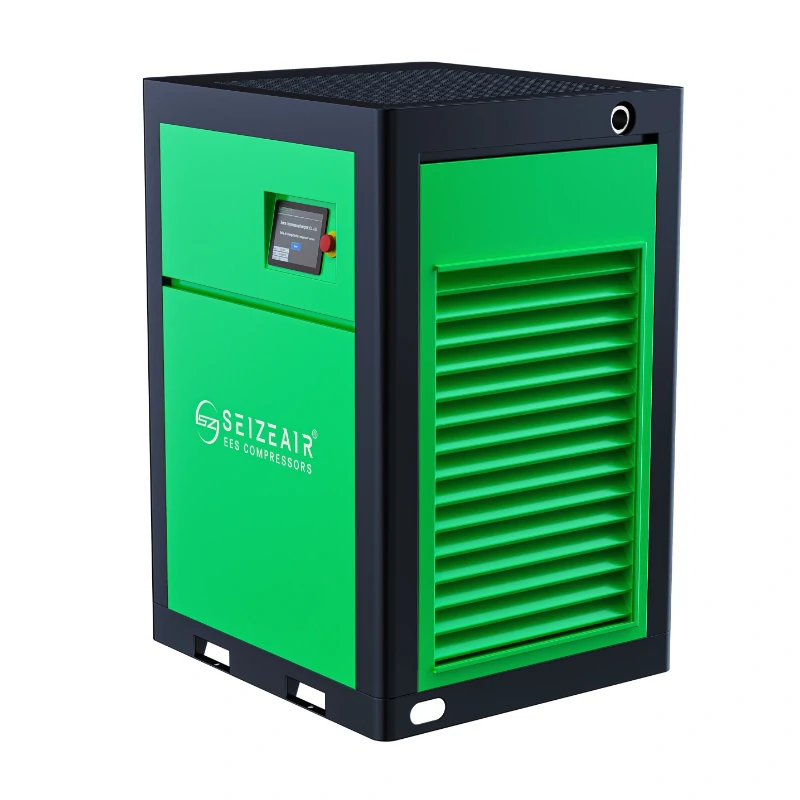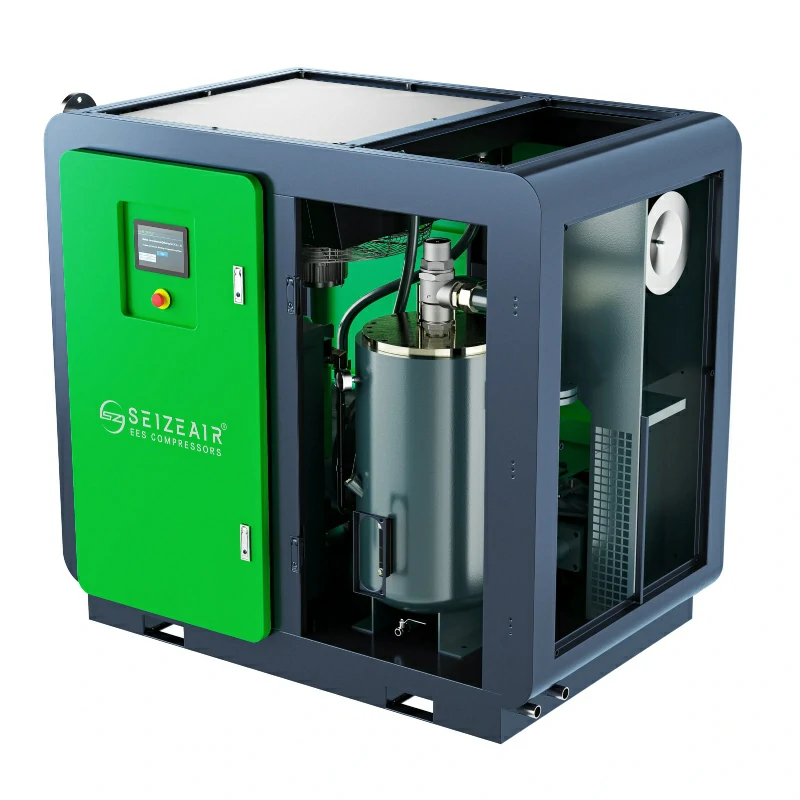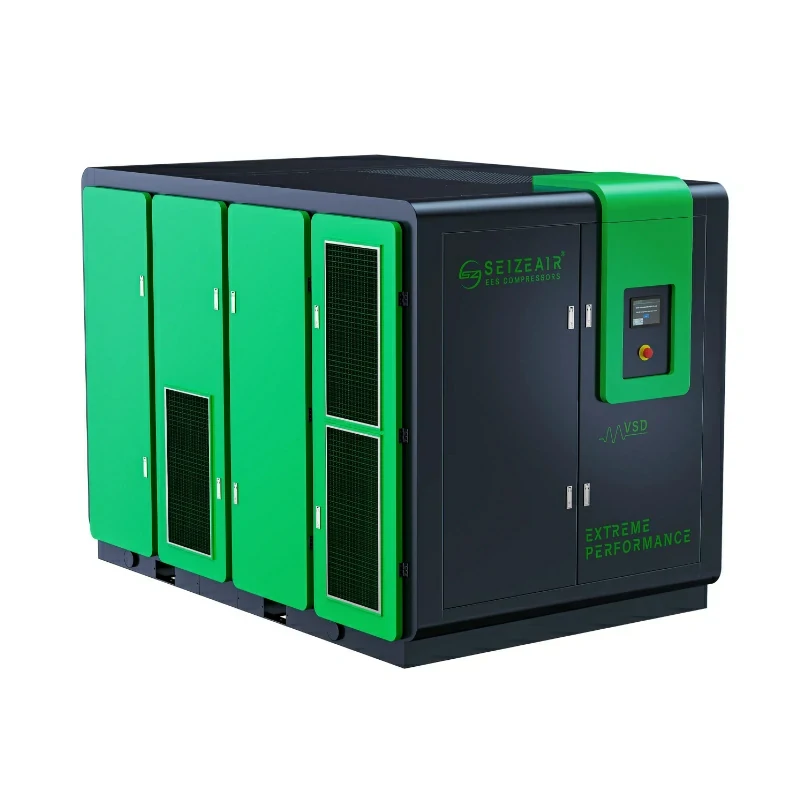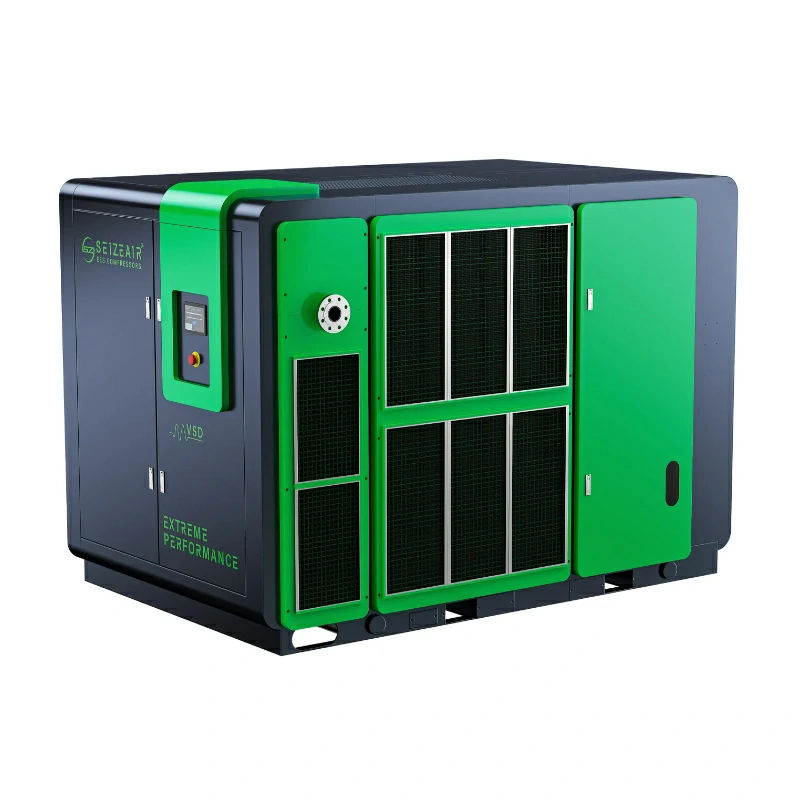


Choosing a heavy-duty chemical compressor manufacturer requires evaluating custom metallurgy, zero-leakage sealing systems, API compliance, and lifetime operating costs to safeguard plant uptime and meet environmental regulations.
What Is a Heavy-Duty Chemical Compressor and Why Is Supplier Selection Critical?
A heavy-duty chemical compressor is a specialized process machine engineered to compress, transfer, and elevate the pressure of toxic, highly corrosive, flammable, or ultra-pure industrial gases under continuous, harsh operational conditions. Unlike standard commercial air compressors that handle ambient air, a industrial process gas compressor operates within aggressive processing streams—such as wet chlorine, sour gas, ammonia, hydrogen sulfide, and volatile hydrocarbons—where material degradation or mechanical failure leads to severe consequences.
Selecting an experienced heavy-duty process compressor supplier directly determines plant reliability, worker safety, and profitability. Industrial facilities like oil refineries, petrochemical plants, fertilizer manufacturing sites, and specialty chemical processing lines run non-stop for 8,000+ hours per year between scheduled turnarounds. An unplanned outage caused by seal failure, valve fatigue, or casing erosion can cost chemical plant operators anywhere from $100,000 to over $500,000 per day in lost production, non-compliance fines, and emergency maintenance.
Furthermore, stringently regulated process environments demand tailored machinery built in accordance with recognized international standards such as API 618 for heavy-duty reciprocating units, API 617 for dynamic centrifugal systems, or API 619 for rotary screw skids. A qualified supplier doesn’t merely assemble off-the-shelf components; they conduct complex thermodynamic calculations, gas compatibility analyses, dynamic pulsation modeling, and torsional analysis to build a fully integrated gas compression skid that withstands thermal shocks, pressure spikes, and chemical attack over a 20-to-30-year operational lifespan.
Key Types of Chemical Gas Compressors: Which Technology Fits Your Application?
Aligning your gas stream chemistry, pressure ratio, and required volumetric flow rate with the right mechanical architecture is the foundation of any procurement evaluation.
| Compressor Type | Pressure Range | Flow Rate Capacity | Best Suited Applications | Key Operational Advantage |
| Reciprocating (Piston) | Up to 3,000+ bar | Moderate to High | High-pressure hydrogen compression, synthesis gas, CO2 boosting | Superior volumetric efficiency at extreme pressure ratios |
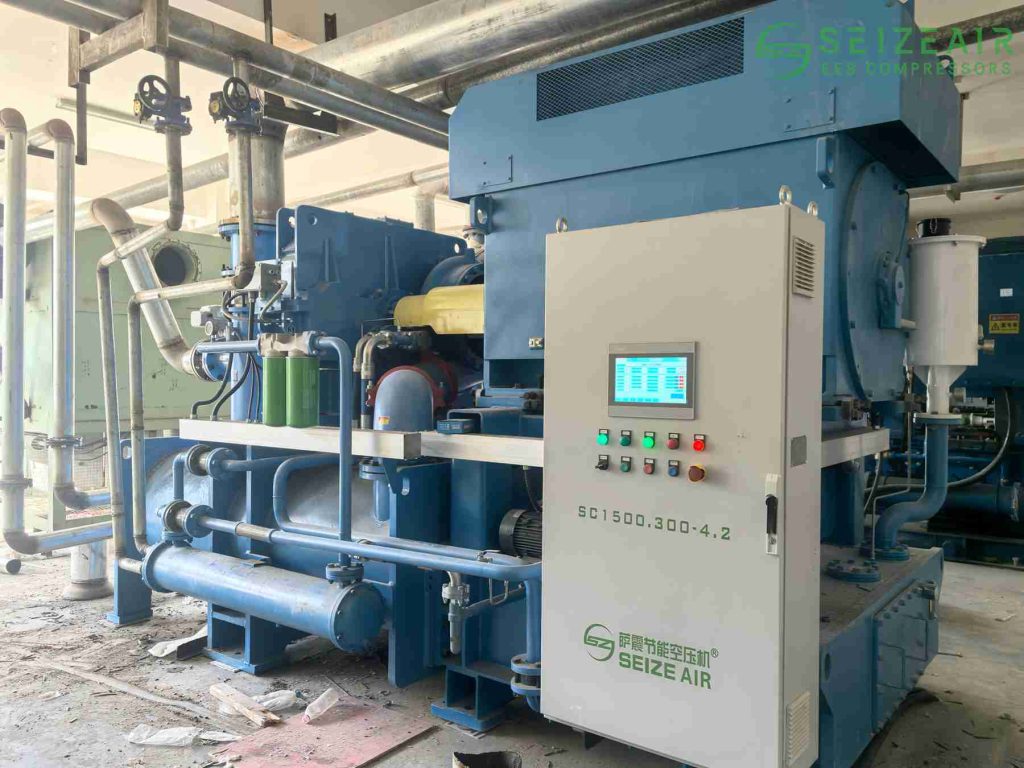
| Centrifugal Air Compressor (Dynamic) | Up to 450 bar | High to Ultra-High | Olefins cracking, ammonia synthesis, large-scale hydrocarbon processing | Continuous pulse-free discharge, long run-times, low maintenance |
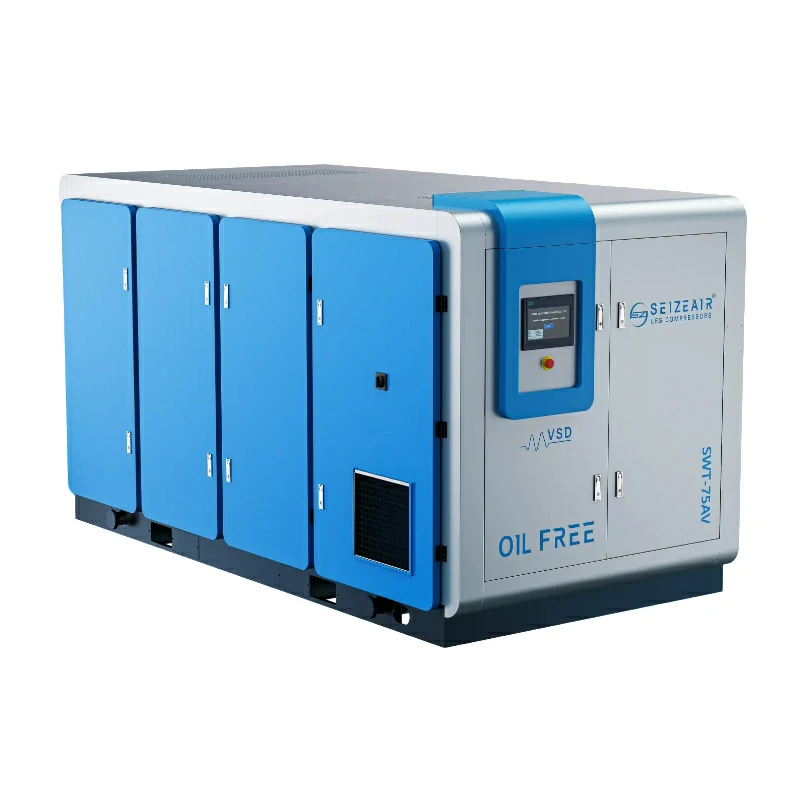
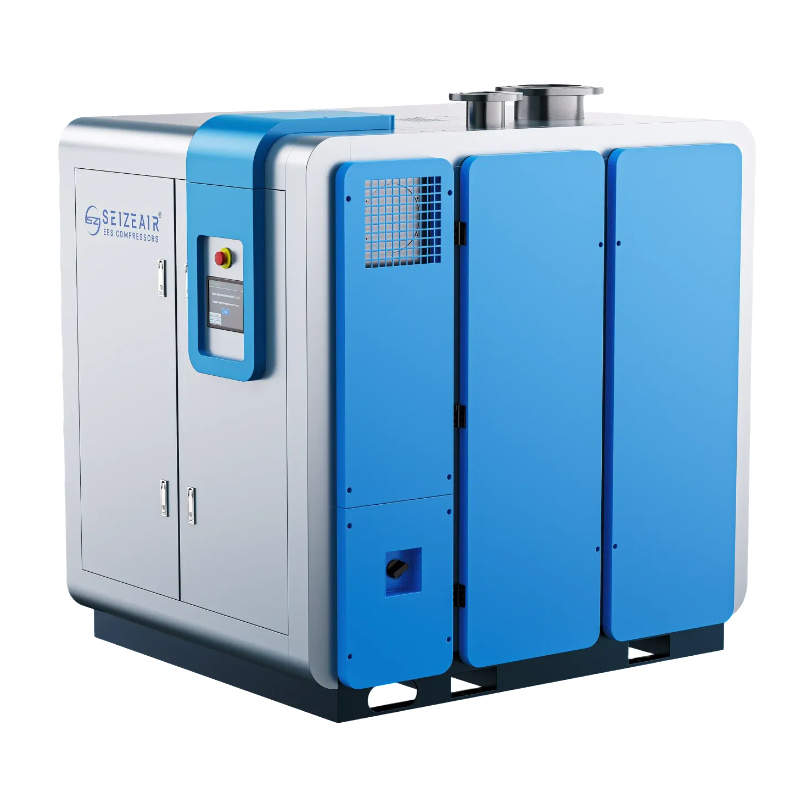
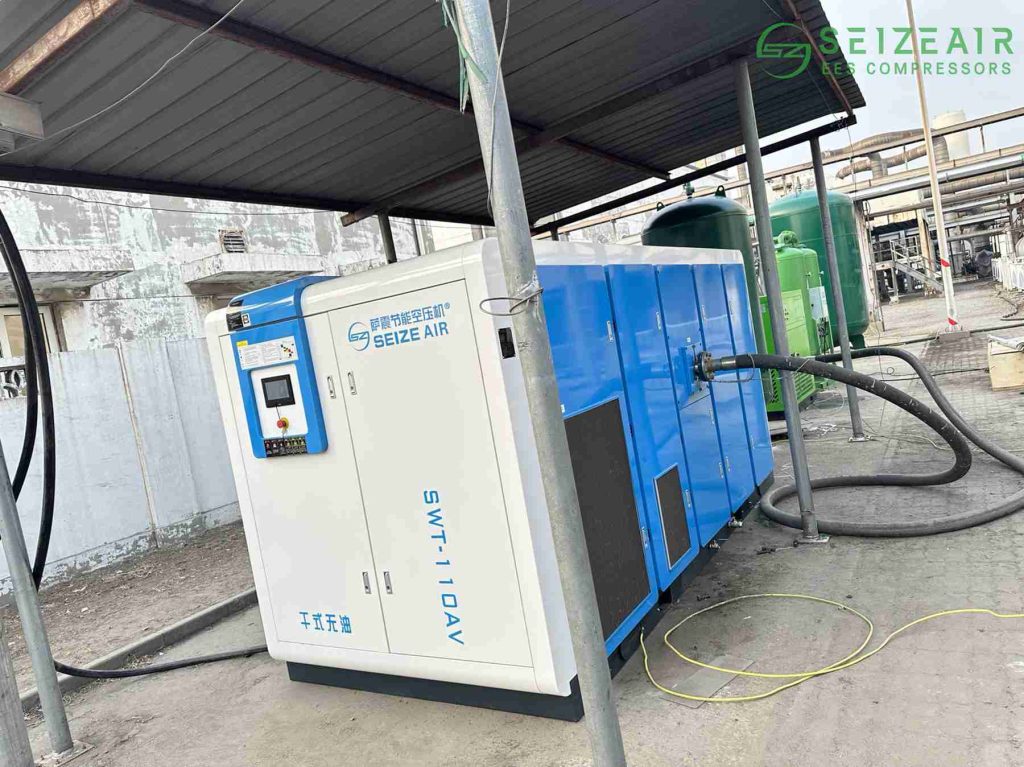
| Rotary Screw Air Compressor (Oil-Free) | Up to 40 bar | Low to Medium | Flare gas recovery, acid gas transfer, vapor recovery units (VRU) | Compact skid footprint, excellent tolerance to variable gas molecular weights |
| Diaphragm | Up to 4,000 bar | Low to Moderate | Ultra-pure specialty gases, highly toxic gases (fluorine, silane) | Hermetically sealed, 100% oil-free, zero risk of process gas contamination |
How Do You Select the Right Type for Your Plant?
Each design handles specific chemical dynamics. For instance, an oil-free screw compressor for chemical processing excels in continuous low-to-medium pressure applications where entrained liquid droplets or variable gas compositions would damage other machinery. Conversely, high-pressure chemical process gas equipment handling small molecular weights—like pure hydrogen—typically mandates a multi-stage API 618 reciprocating compressor with specialized piston rings and water-cooled cylinder jackets to manage heat of compression.
Dynamic centrifugal units thrive in high-throughput applications where steady-state gas flow is paramount. However, if your chemical process experiences frequent turndown cycles or significant fluctuation in suction pressure, a multi-cylinder reciprocating machine equipped with stepless capacity control (such as suction valve unloaders) offers better part-load energy efficiency.
How to Evaluate Material Selection and Metallurgy Capabilities for Corrosive Gas Compressors?
Chemical gases rapidly degrade basic carbon steels through mechanisms like pitting corrosion, stress corrosion cracking (SCC), and hydrogen-induced cracking. Evaluating a supplier’s metallurgical capability is non-negotiable.
Essential Metallurgy Standards and Alloy Selection
- Sour Gas & H2S Service: Equipment exposed to hydrogen sulfide must fully comply with NACE MR0175 / ISO 15156. The supplier must ensure all wetted metallic components—including cylinder liners, valves, shafts, and impellers—undergo controlled heat treatment (hardness held strictly below 22 HRC) to eliminate Sulfide Stress Cracking (SSC).
- Acidic & Chloride Environments: Handling wet chlorine, hydrochloric vapors, or organic acids requires high-alloy materials. Qualified vendors routinely engineer wet gas compressor packages using Duplex 2205, Super Duplex 2507, or nickel-base alloys like Hastelloy C-276, Monel 400, and Inconel 625.
- Hydrogen Service: High-pressure hydrogen compression demands high-purity, low-alloy steels with tight grain structure controls to resist Hydrogen Embrittlement (HE) under high temperature and partial pressure.
- Cryogenic Gases: Low-temperature applications (such as ethylene or liquid natural gas boil-off gas handling) require Austenitic stainless steels (316L) or 9% nickel steels that retain impact toughness at sub-zero temperatures down to -196 degrees C.
Leading manufacturers like Seize Air partner directly with certified metallurgical laboratories to perform specialized corrosion testing, positive material identification (PMI) on raw forgings, and strict weld procedure qualification (WPQR) before machining custom process casings.
What Sealing Systems Are Needed for Toxic, Flammable, and Corrosive Gases?
Controlling fugitive emissions is crucial for plant safety, worker health, and strict environmental compliance (such as EPA LDAR regulations or EU Industrial Emissions Directives).
Primary Sealing Technologies for Process Compressors
- Dry Gas Seals (DGS): Used predominantly in high-speed centrifugal compressors, DGS systems employ non-contacting, grooved seal rings separated by a micro-thin film of inert buffer gas (usually dry nitrogen). Tandem or double-intermediate seal configurations ensure zero process gas leaks into the atmosphere, even if primary seal faces experience distress.
- Double / Tandem Mechanical Seals: Essential for rotary screw and liquid ring units handling toxic liquids or condensable vapors. The barrier fluid is maintained at a pressure higher than the internal seal chamber, ensuring any minor leakage is directed inward rather than outward.
- Pressure Packing Rings with Nitrogen Purge: Standard on heavy-duty reciprocating gas compressors. A sequence of self-lubricating PTFE or PEEK segmental packing rings seals the oscillating piston rod. The packing case incorporates distance pieces equipped with nitrogen buffer zones, vacuum vents, and leak-off recovery lines to route fugitive gases back to a flare header.
When auditing vendors, request their Fugitive Emission Certification (ISO 15848-1) test records. A supplier who cannot show third-party verification for low-leakage seal integrity should not be trusted with toxic or explosive gas duty.
Which International Quality Standards Should Your Chemical Compressor Supplier Meet?
Industrial process equipment operates under severe mechanical and thermal loads. A capable vendor must demonstrate strict adherence to globally recognized engineering codes:
| Standard / Code | Application Focus |
| API 618 | Reciprocating Compressors for Petroleum, Chemical, and Gas Industry Services |
| API 617 | Axial and Centrifugal Compressors |
| API 619 | Rotary-Type Positive-Displacement Units |
| API 614 | Lubrication, Shaft-Sealing, and Oil-Control Systems |
| ASME Sec VIII Div 1 & 2 | Pressure Vessel Design (U-Stamp / S-Stamp) |
| NACE MR0175 / ISO 15156 | Materials for H2S-Containing Environments |
| ATEX / IECEx | Equipment for Explosive Atmospheres |
| PED 2014/68/EU | European Pressure Equipment Directive |
Verify that the supplier’s manufacturing facilities hold active ISO 9001:2015 (Quality Management), ISO 14001 (Environmental Management), and ISO 45001 (Occupational Health & Safety) certifications. This guarantees that traceability—from raw material mill test reports (MTRs) to non-destructive testing (NDT) records—is maintained across every step of fabrication.
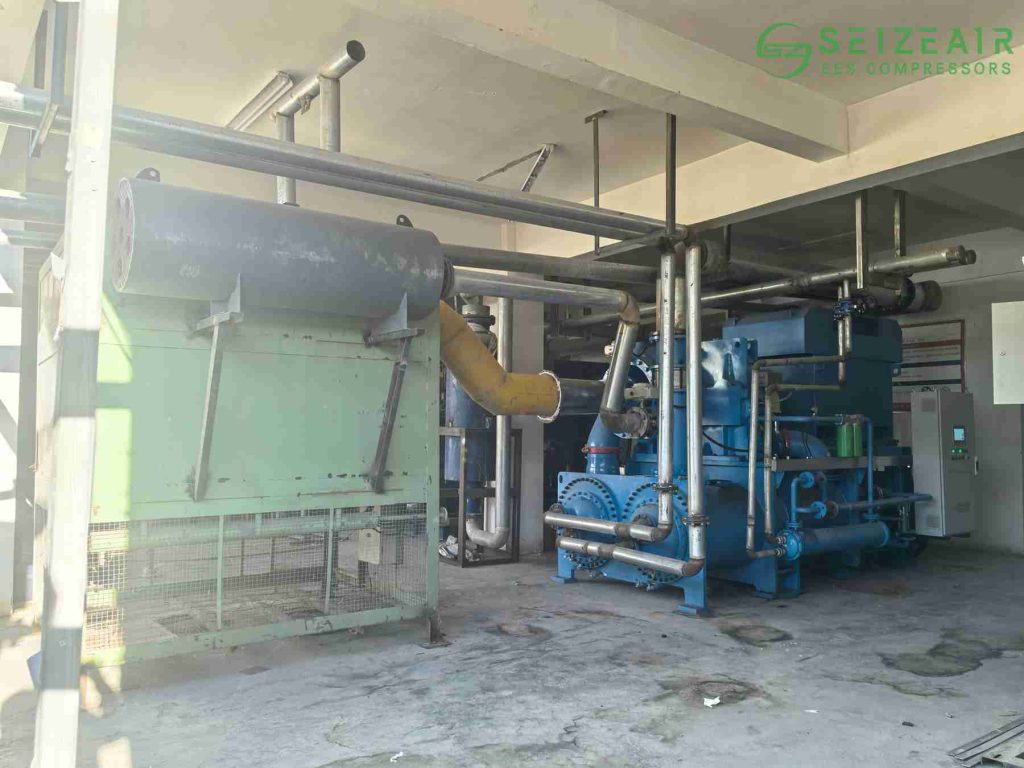
Essential Supplier Vetting Checklist: Questions You Must Ask Before Buying
Issue this comprehensive technical vetting questionnaire during the Request for Proposal (RFP) stage:
1. Engineering & Simulation Analysis
- Can the vendor provide 3D Pulsation & Acoustic Analysis (API 618 Design Approach 3)?
- Is Finite Element Analysis (FEA) performed on critical pressure-retaining castings?
- Are Torsional Vibration Analysis (TVA) reports included for the driver-compressor train?
2. Quality Assurance & In-House Testing
- Does the factory possess a dedicated gas testing loop for full-load performance tests?
- Are non-destructive examination (NDE) methods like Radiographic (RT), Ultrasonic (UT), Magnetic Particle (MT), and Dye Penetrant (PT) conducted in-house by certified Level II/III inspectors?
- Is Hydrostatic Testing performed at a minimum of 1.5 times the Maximum Allowable Working Pressure (MAWP)?
3. Automation & System Integration
- Does the compressor control panel (CCP) integrate with Emerson DeltaV, Honeywell Experion, Siemens PCS7, or Yokogawa DCS via redundant Modbus TCP/IP or Profinet?
- Are SIL-2 or SIL-3 rated Emergency Shutdown Systems (ESD) available for critical alarm loops?
4. Lifecycle & Service Support
- What is the Mean Time Between Failures (MTBF) for high-wear components like compressor valves and rod packings?
- Does the supplier maintain local emergency spare parts hubs, and what is their guaranteed field service engineer response time?
Tier-1 manufacturers such as Seize Air provide complete Factory Acceptance Testing (FAT)—including mechanical run tests, string testing with job drivers, and helium leak testing—to prove performance before the package is shipped to your site.
Total Cost of Ownership (TCO)
Procuring custom chemical process gas equipment based solely on the lowest initial capital expenditure (CAPEX) is a costly mistake. Over a typical 20-year operational life, the initial purchase price accounts for only 15% to 20% of the total cost. Energy consumption makes up roughly 70%, while maintenance, routine overhauls, and spare parts constitute the remainder.
Total Lifecycle Cost = CAPEX (Equipment & Civil Works) + OPEX (Electrical Power over 20 Years) + Scheduled Maintenance & Wear Parts + Downtime Losses – Residual Value
Engineering Power Calculation for Process Gas Compression
To evaluate the operational efficiency of competing vendor proposals, engineers calculate the theoretical shaft power requirement for multi-stage gas compression:
P = (n / (n – 1)) * (P1 * V1 / 60000) * [ (P2 / P1) ^ ((n – 1) / (n * z)) – 1 ] / eta_m
- P: Shaft power required (kW)
- n: Polytropic expansion exponent of the specific process gas stream
- P1 / P2: Absolute suction and discharge pressures (kPa)
- V1: Volumetric flow rate at suction conditions (m3/h)
- z: Average gas compressibility factor under operating conditions
- eta_m: Mechanical and driver efficiency factor (decimal)
A supplier that offers custom-designed, high-efficiency plate valves, optimized interstage cooling, and low-friction piston ring coatings can reduce power draw by just 3% to 5%. In a 1,000 kW continuous process unit, that small efficiency gain saves tens of thousands of dollars in annual utility costs—quickly offsetting any difference in upfront equipment price.
How Important Is After-Sales Technical Support and Field Engineering?
Heavy-duty gas processing machinery requires specialized care throughout its operating life. Your equipment partner must offer long-term technical support rather than just unit sales.
Pillars of Comprehensive Technical Field Service
- Precision Installation & Site Commissioning: Laser alignment of driver-to-compressor shafts, piping strain checks, foundation grouting supervision, and dry-run testing before process gas introduction.
- Predictive Maintenance & Condition Monitoring: Installation of online vibration sensors (proximity probes and accelerometers per API 670), continuous temperature tracking on packing cases, and periodic lube oil analysis to catch micro-wear before catastrophic failure occurs.
- Overhaul & Reconditioning Services: Fast-turnaround reconditioning of valve assemblies, cylinder re-boring, dynamic balancing of motor rotors, and refurbishment of dry gas seals in certified cleanroom facilities.
With an expansive international logistics network and an expert team of field service engineers, Seize Air supports chemical process facilities worldwide with rapid spare parts fulfillment, custom engineering upgrades, and on-site troubleshooting aimed at maximizing Overall Equipment Effectiveness (OEE).
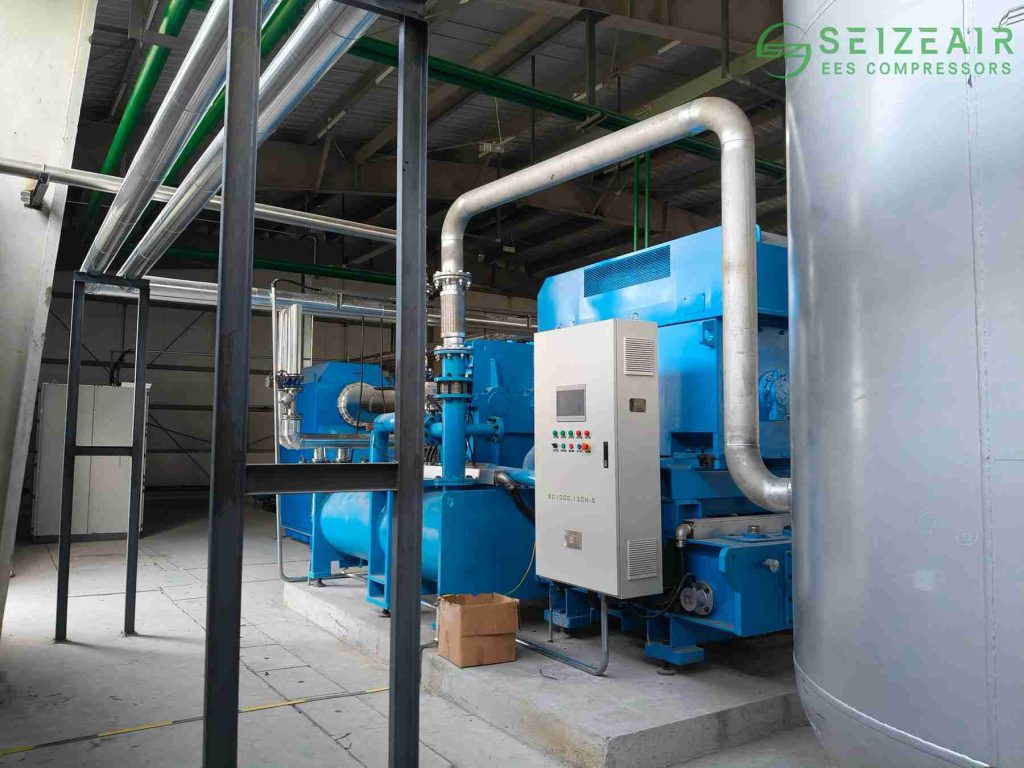
Streamline Your Chemical Compressor Sourcing with Seize Air
Finding the ideal supplier for a heavy-duty chemical compressor requires balancing metallurgy, zero-leakage sealing, API compliance, and lifecycle efficiency.
Ready to optimize your plant’s process gas compression infrastructure with a high-reliability system? Contact the engineering specialists at Seize Air today to request a comprehensive technical evaluation, custom package design, or a detailed engineering proposal tailored specifically to your facility’s gas profile and operational requirements.