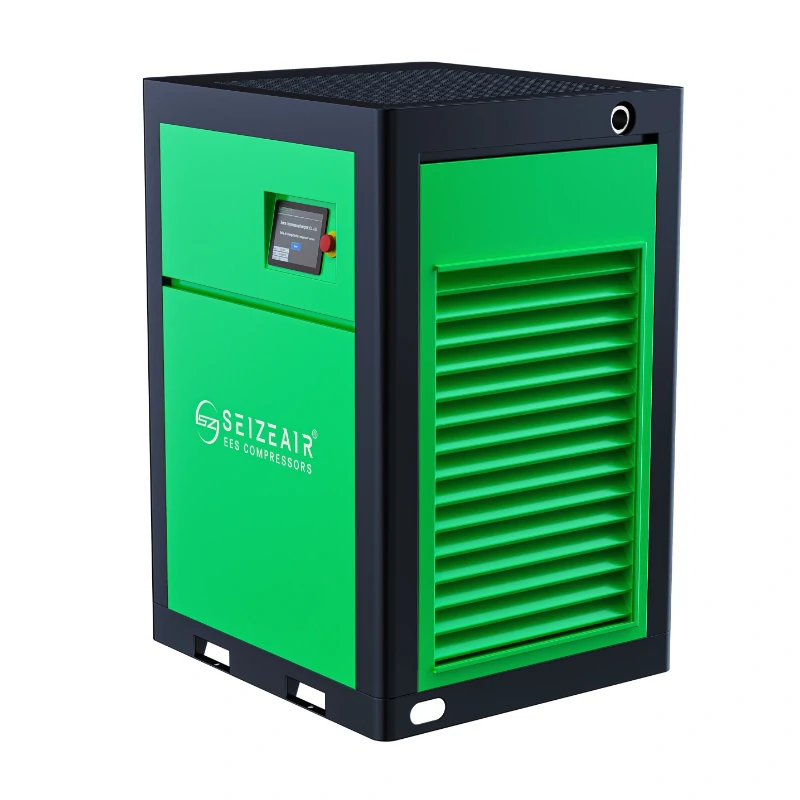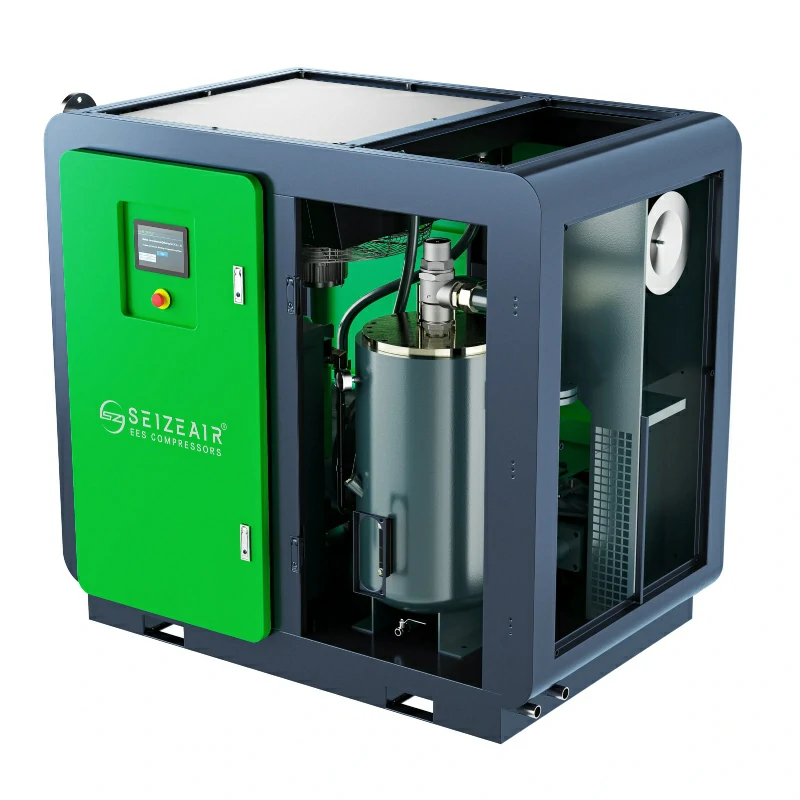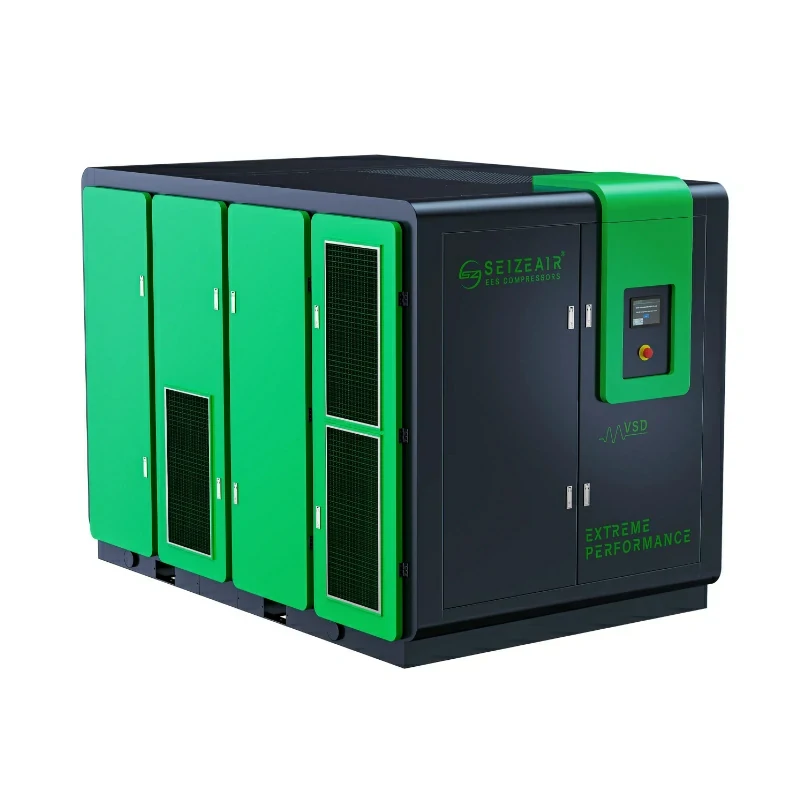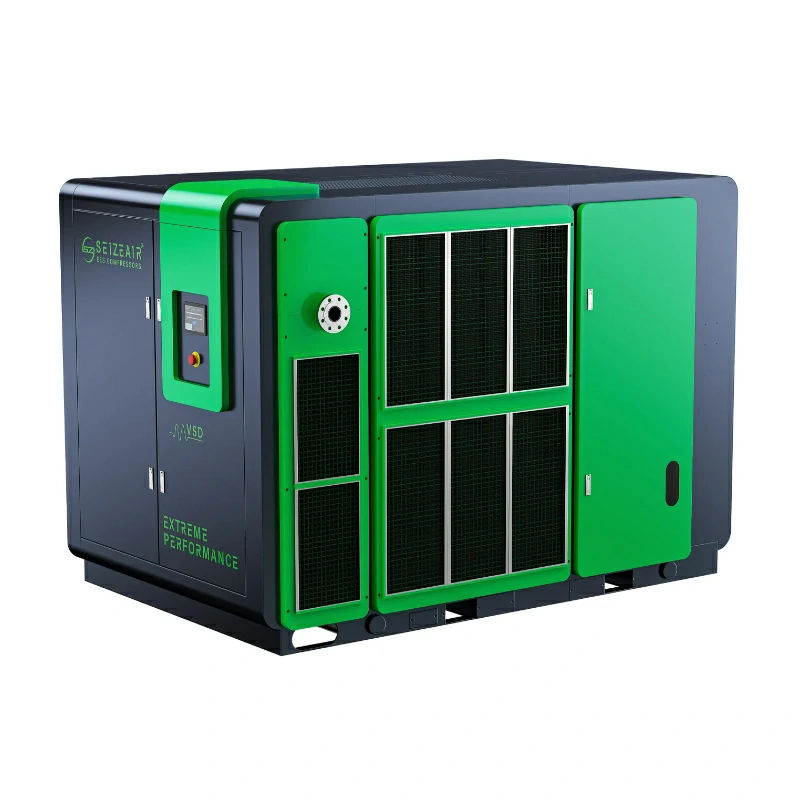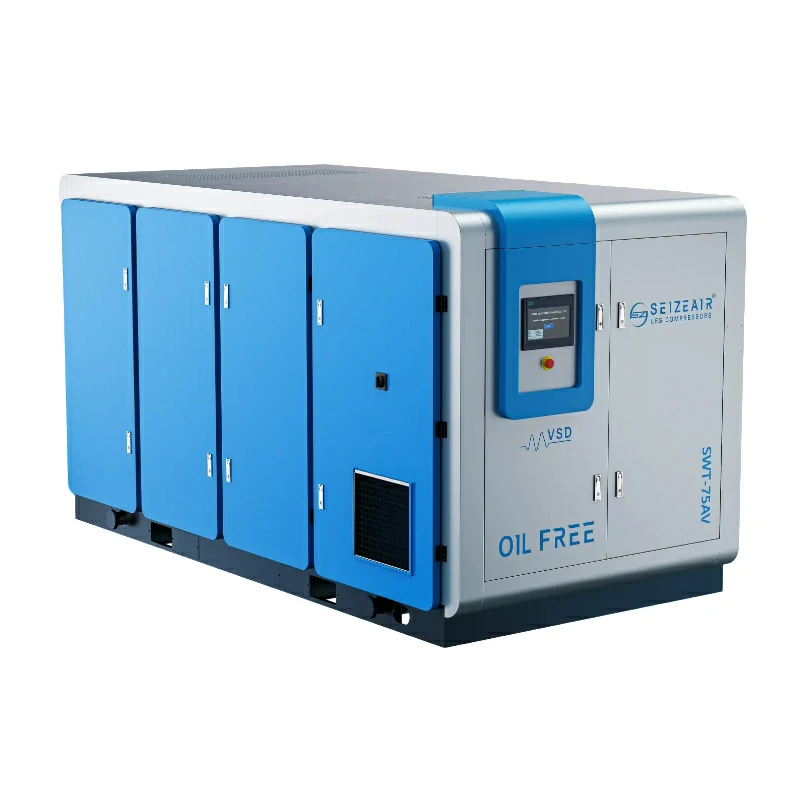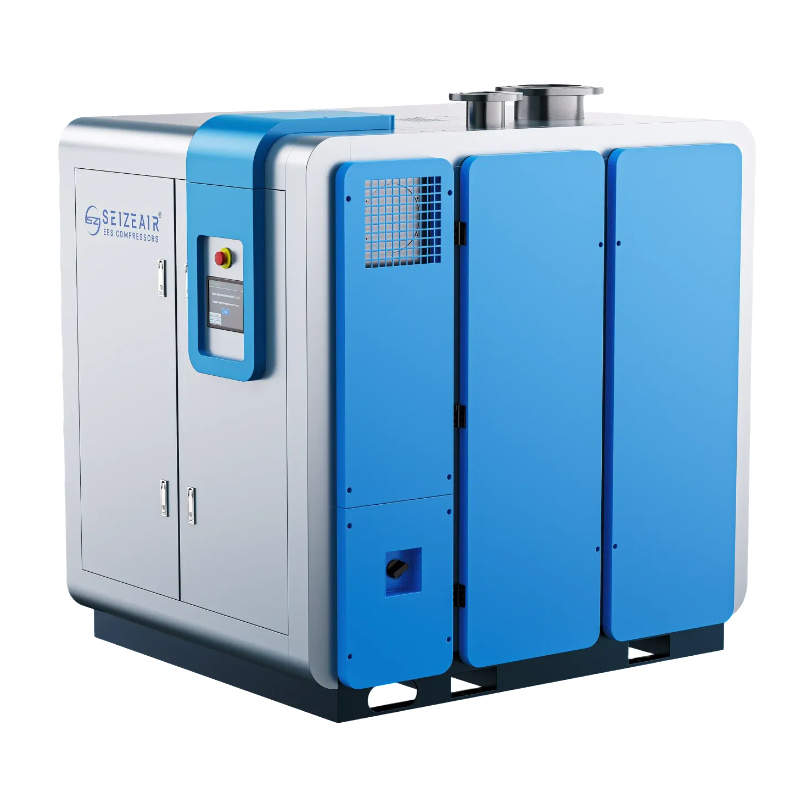


For most manufacturing facilities, an industrial air compressor is more than just a piece of equipment—it’s the “fourth utility.” However, unlike water or electricity, the true cost of compressed air is often hidden behind inefficient cycles, outdated technology, and high maintenance overhead.
If you are considering upgrading your system, you aren’t just buying hardware; you are investing in operational efficiency. Calculating the Return on Investment (ROI) is the only way to transform a “gut feeling” into a data-backed business case.
1. Deconstructing Total Cost of Ownership: Why Purchase Price is a Distraction
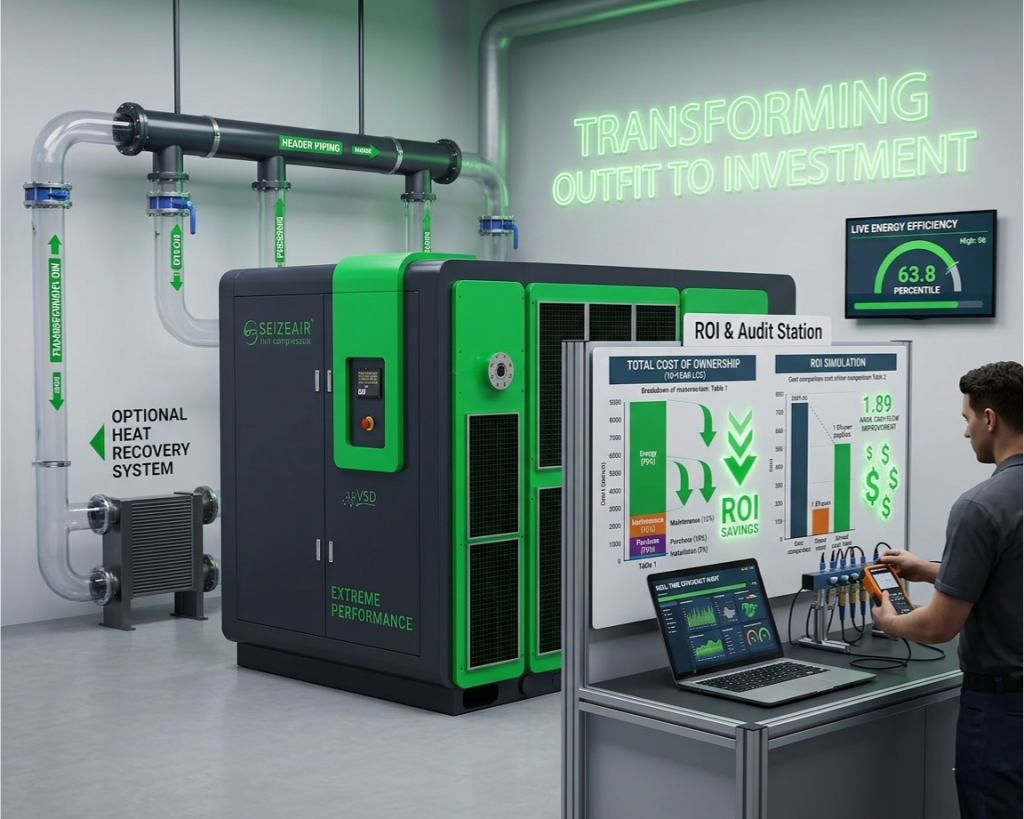
When a procurement manager looks at a quote for a new industrial air compressor, the focus is almost always on the CAPEX. But if you talk to a system integrator who has spent twenty years in the trenches, they’ll tell you that the purchase price is a rounding error in the long run. We call this the “10-Year Trap.” Over a decade, the initial check you write only represents about 10% of what that machine will actually cost you.
The real monster is the specific power consumption (the energy required to produce a certain volume of air). If your unit is inefficient, you are essentially paying a “hidden tax” every single hour the motor is coupled to the grid. Then there is the “Reliability Tax”—the cost of maintenance, parts, and the labor required to keep an aging airend from seizing up.
Detailed 10-Year Life Cycle Cost (LCC) Breakdown
| Cost Component | Percentage | Real-World Financial Impact |
| Energy Consumption | 76% | Direct variable cost; fluctuates with utility rates. |
| Maintenance & Repair | 12% | Includes consumables (oil, filters) and major overhauls. |
| Initial Investment | 10% | Depreciating asset; often the only focus of CFOs. |
| Installation & Piping | 2% | One-time cost; critical for preventing pressure drops. |
From a decision-maker’s perspective, saving $5,000 on the purchase price of a cheaper, less efficient unit is a catastrophic mistake if it results in a $50,000 increase in electricity bills over its lifespan.
2. Is it worth upgrading to a VFD industrial air compressor for energy savings?
This is the most common PAA (People Also Ask) query for a reason. To answer it, we have to look at part-load efficiency. Most factories have a “jagged” air demand profile—machines cycle on and off, shifts change, and leaks vary. A traditional fixed-speed compressor is like a car that can only drive at 100 mph or be parked; to slow down, you have to ride the brakes (in this case, using an intake valve to throttle air).
A Variable Frequency Drive (VFD) changes the game by adjusting the motor speed to match the exact CFM (cubic feet per minute) required.
- Eliminating Unloaded Run Time: When air demand drops, a fixed-speed unit “unloads.” The motor still spins, consuming roughly 30% of its full-load power, but it produces zero air. This is pure waste.
- Lowering Starting Current: VFDs allow for a “soft start,” preventing the massive spikes in amperage that can lead to “demand charges” from your utility provider.
- Precision Pressure Control: VFD units can maintain a tight ±1.5 PSI range. Older units might swing by 10-15 PSI, forcing the compressor to work at a higher average pressure than necessary.
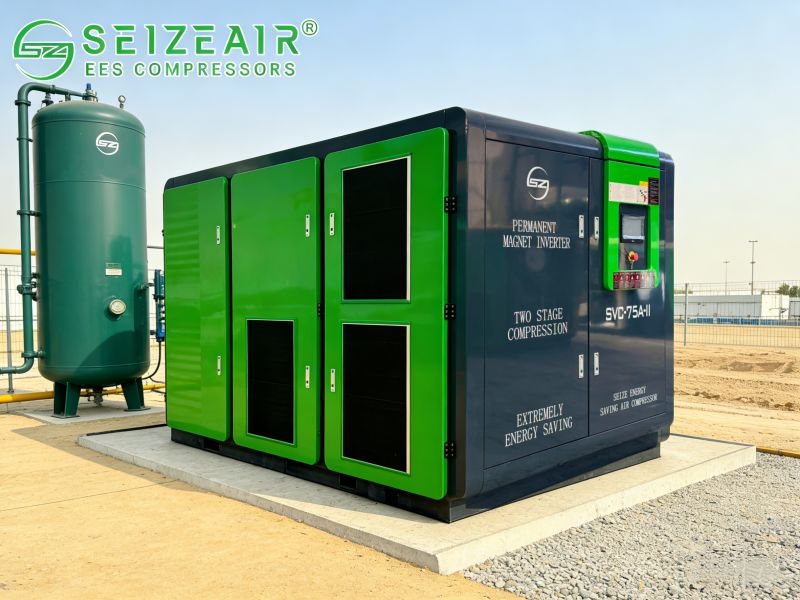
Systems designed by Seize often incorporate two-stage screw air compressor technology alongside VFD. By compressing air in two steps rather than one, the internal compression ratio is lower, heat is reduced, and volumetric efficiency jumps by another 10–15%. When you stack these technologies, the ROI doesn’t just improve; it accelerates.
3. How to conduct an industrial air compressor audit to find hidden costs?
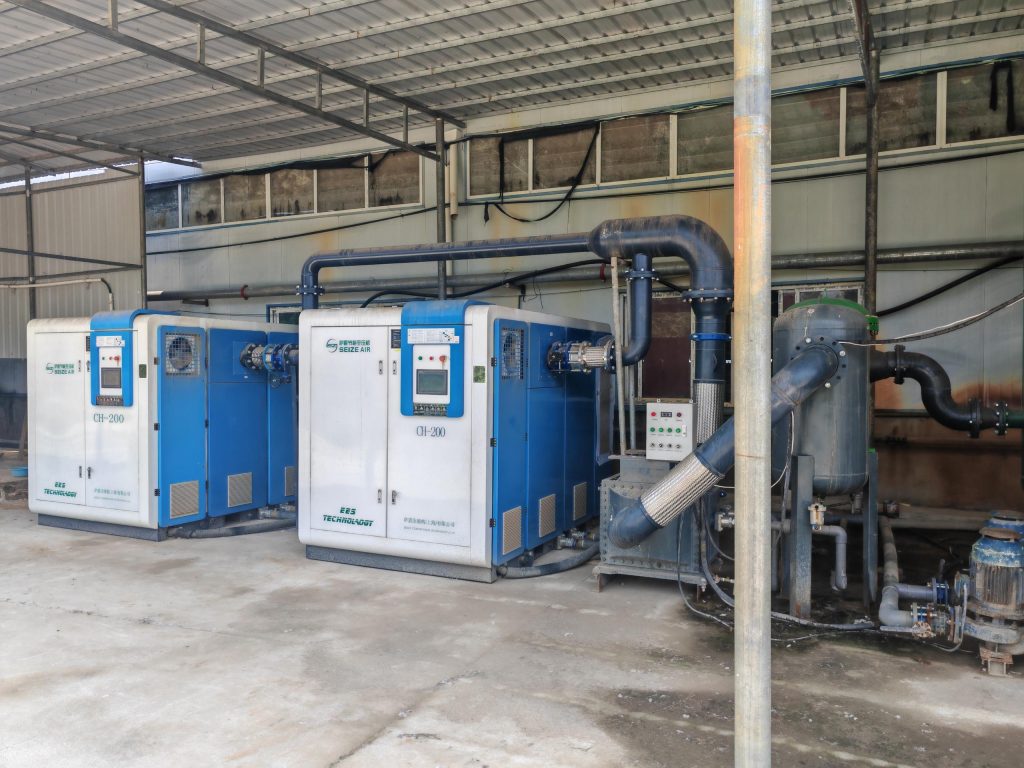
Before you can calculate ROI, you need a baseline. You can’t fix what you can’t see. A professional air audit involves placing data loggers on your current system for at least seven days to capture a full production cycle.
The “Big Three” Efficiency Leaks
- The Leak Rate: In many plants, 20% of the air produced never reaches a tool. It escapes through cracked hoses, rusted pipe joints, and failed seals. If your industrial air compressor is 100 HP, and your leak rate is 25%, you are literally throwing 25 HP worth of electricity into the ceiling.
- Pressure Drop (The Friction Tax): Every elbow, undersized pipe, and clogged filter creates resistance. If your compressor has to pump at 115 PSI just so you get 90 PSI at the tool, you are wasting energy. Remember: 1% energy increase for every 2 PSI of over-pressurization.
- Artificial Demand: This occurs when equipment is operated at a higher pressure than required. By stabilizing system pressure with a new, smarter controller, you reduce the “appetite” of your downstream equipment.
4. What is the average payback period for a high-efficiency industrial air system?
The “Simple Payback” is the metric that usually gets a project approved. It’s the time it takes for the cumulative savings to equal the initial investment. In the current energy climate, we are seeing payback periods for high-end industrial air compressor upgrades drop from 36 months down to 18–24 months.
ROI Simulation (Old Fixed-Speed vs. New Permanent Magnet VFD)
| Variable | Baseline (Old Unit) | Upgrade (New Unit) | Difference/Savings |
| Nominal Power | 75 kW | 75 kW | — |
| Annual Operating Hours | 6,000 hrs | 6,000 hrs | — |
| Average Load Factor | 70% | 70% | — |
| Specific Power (kW/m³/min) | 7.2 | 6.1 | 1.1 (Efficiency Gain) |
| Annual Energy Cost ($0.15/kWh) | $67,500 | $49,200 | $18,300 |
| Maintenance (Annual) | $5,500 | $2,200 | $3,300 |
| Total Annual OpEx | $73,000 | $51,400 | $21,600 |
| Total Investment | $0 | $41,000 | — |
| Payback Period | — | — | 1.89 Years |
Think about that: after 23 months, you are essentially receiving a $21,600 “dividend” every year. Over a 10-year lifespan, the new machine doesn’t just pay for itself—it pays for itself five times over.
5. How does downtime impact the ROI of an air compressor replacement?
As any factory manager knows, the most expensive air is “no air.” Calculating the ROI of reliability is often more important than energy math. If your main production line goes down because of a bearing failure in an old industrial air compressor, the costs spiral instantly:
- The Labor Burn: If 50 employees are earning an average of $30/hr, every hour of downtime costs $1,500 in wages alone—not counting the lost value of their output.
- The Quality Crisis: Many processes (like chemical mixing or plastic extrusion) cannot be stopped mid-stream. A loss of air means scrapping the entire batch.
- The Reputation Hit: Missing a shipping deadline because of a equipment failure can cost you a contract worth ten times the price of a new compressor.
Modern units now feature cloud-based monitoring. Technical consultants can now track vibration, temperature, and pressure in real-time. Brands like Seize have integrated these “Smart Link” systems to provide predictive alerts. Getting an alert that a separator is reaching its limit is a minor maintenance task; finding out when the machine has already tripped is a financial disaster.
6. How does air quality and filtration affect system longevity?
An industrial air compressor is only as good as the air it delivers. If you are sending “wet,” oily air into your pipes, you are destroying your ROI from the inside out.
- Piping Decay: Moisture leads to rust in carbon steel pipes. That rust flakes off and clogs your tools, leading to expensive repairs and more downtime.
- Product Spoilage: In industries like textile manufacturing or food packaging, a single drop of oil carryover can ruin thousands of dollars of inventory.
- Valve Failure: Pneumatic cylinders and solenoid valves rely on clean air to function. Wet air washes away the internal lubrication, causing them to stick and burn out.
By investing in an integrated system—one that includes a high-efficiency refrigerated dryer and multi-stage filtration—you aren’t just buying “clean air”; you are extending the life of every single pneumatic asset in your building.
7. Are there government tax incentives for buying an energy efficient compressor?
One of the most overlooked “boosters” for ROI is the regulatory environment. Because an industrial air compressor is such a massive energy consumer, many governments and utility providers offer aggressive incentives:
- Direct Rebates: Some utilities pay “per kW saved,” which can sometimes cover up to 30% of the equipment cost.
- Accelerated Depreciation: Tax codes (like Section 179) often allow businesses to deduct the full purchase price of the equipment in the first year, providing a massive cash-flow advantage.
- Carbon Reduction Grants: As ESG (Environmental, Social, and Governance) scores become more important for financing, moving to a low-carbon, high-efficiency system can actually lower your interest rates on business loans.
Manufacturers such as Seize specifically engineer their equipment to meet or exceed the “Tier 1” energy standards required to qualify for these top-level subsidies, ensuring the financial barrier to entry is as low as possible.
8. Common FAQs
What is the difference between a screw compressor and a piston compressor for ROI?
For small shops, a piston (reciprocating) unit is cheap. But for industrial use, they are inefficient and have a 100% heat-sink profile. A screw-type industrial air compressor is designed for 100% duty cycle, meaning it can run 24/7 without the massive wear-and-tear and energy spikes of a piston unit.
How do I know if my compressor is oversized?
If your compressor spends more than 50% of its time “unloaded” (running but not pumping), it is oversized. This is a common mistake where “bigger is better” leads to massive energy waste. A smaller, more efficient unit—or a VFD unit—would provide a much higher ROI.
Can I recover heat from my air compressor to improve ROI?
Yes! Roughly 90% of the energy used by a compressor is turned into heat. By using a heat recovery system, you can use that “waste” to pre-heat boiler water or provide space heating for your warehouse, effectively turning your compressor into a free furnace.
Summary
ROI isn’t just a number on a spreadsheet; it’s about competitive advantage. In an era of rising energy costs and tight margins, the facility with the most efficient industrial air compressor has a lower cost per unit produced.
Don’t guess—get an audit. Transitioning from a legacy system to a modern, high-performance unit from a manufacturer like Seize isn’t just an engineering decision; it’s a strategic move to insulate your business from energy volatility and operational downtime. The math is clear: the most expensive compressor you can own is an old one.