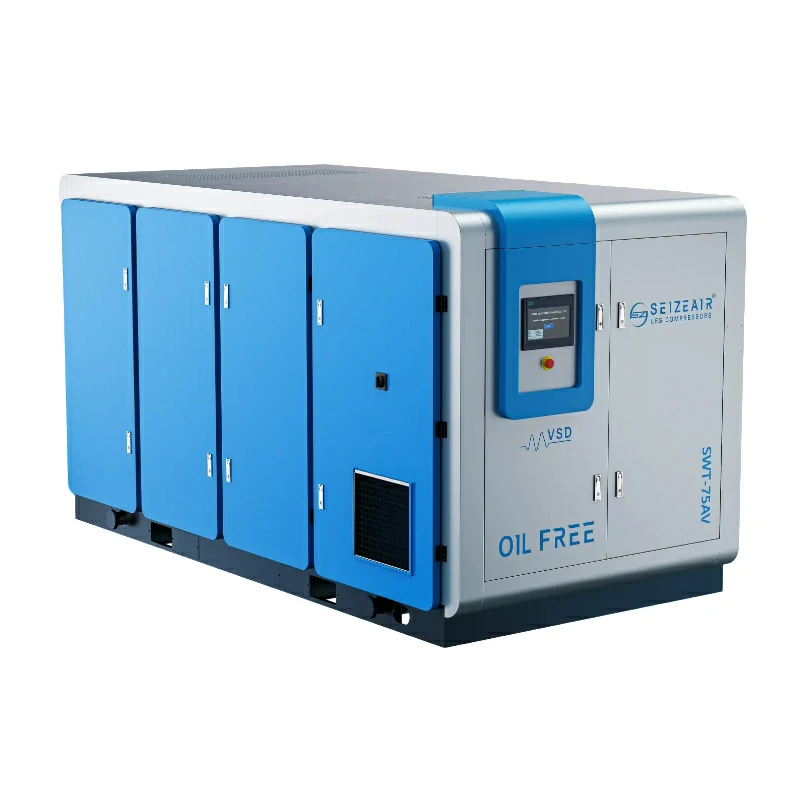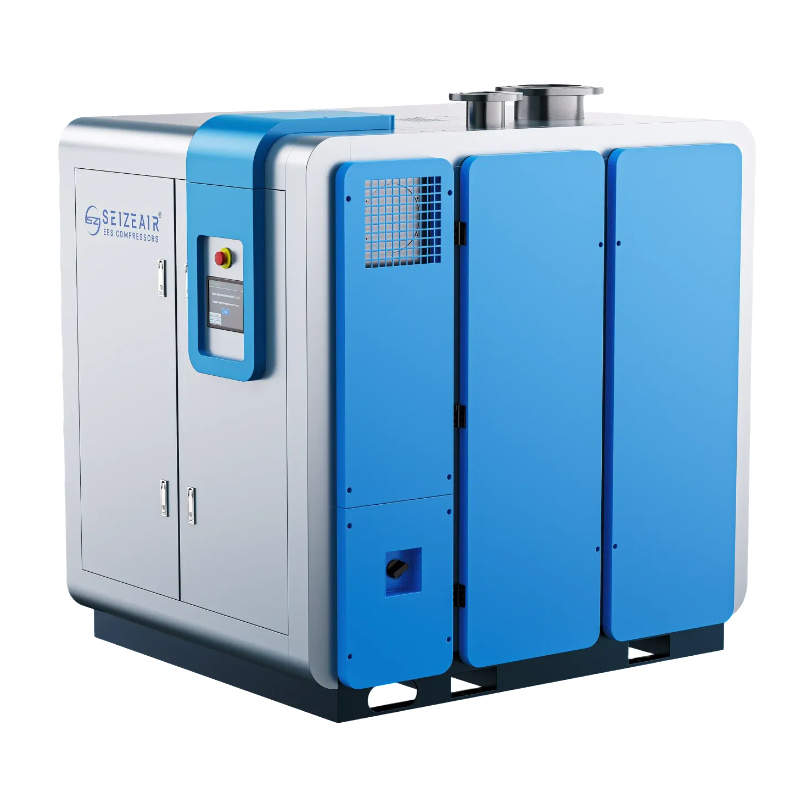


Selecting an industrial air compressor is not just a standard procurement task; it is a critical operational decision that directly impacts your facility’s energy efficiency, maintenance overhead, and overall productivity. When your entire production line relies on a stable supply of compressed air, choosing inadequate air compressor units can result in costly downtime and skyrocketing energy bills.
This comprehensive guide breaks down the essential technical variables, application requirements, and structural costs to help you select the ultimate compressed air system for your industrial operations.
What Are the Key Types of Industrial Air Compressor Units?
Before diving into specifications, you must understand the core technologies driving modern industrial air compressors. Different applications demand different compression methods, primarily divided into positive displacement and dynamic compression.
Rotary Screw Air Compressors
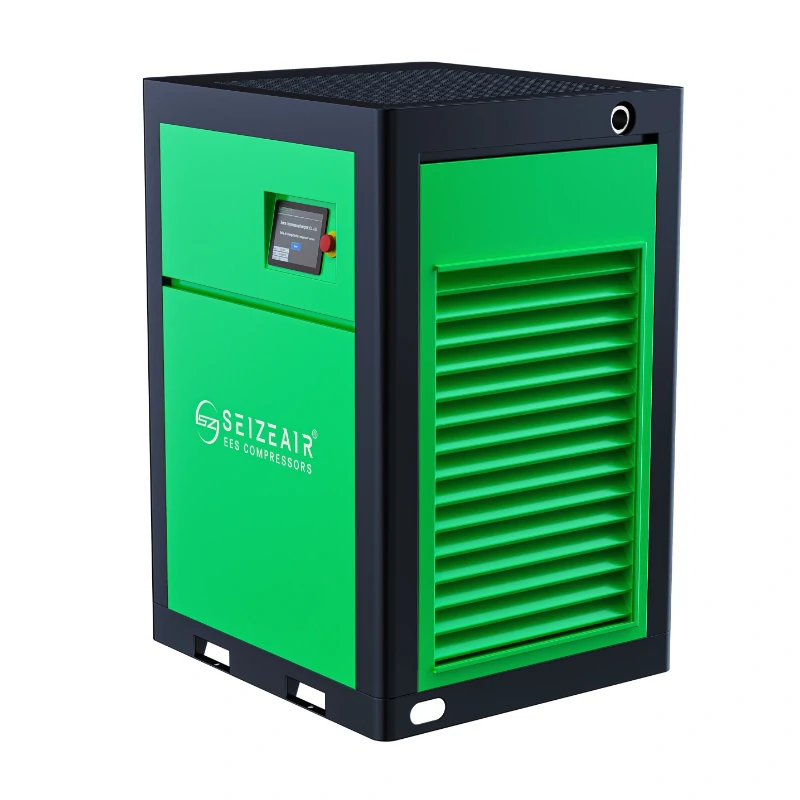
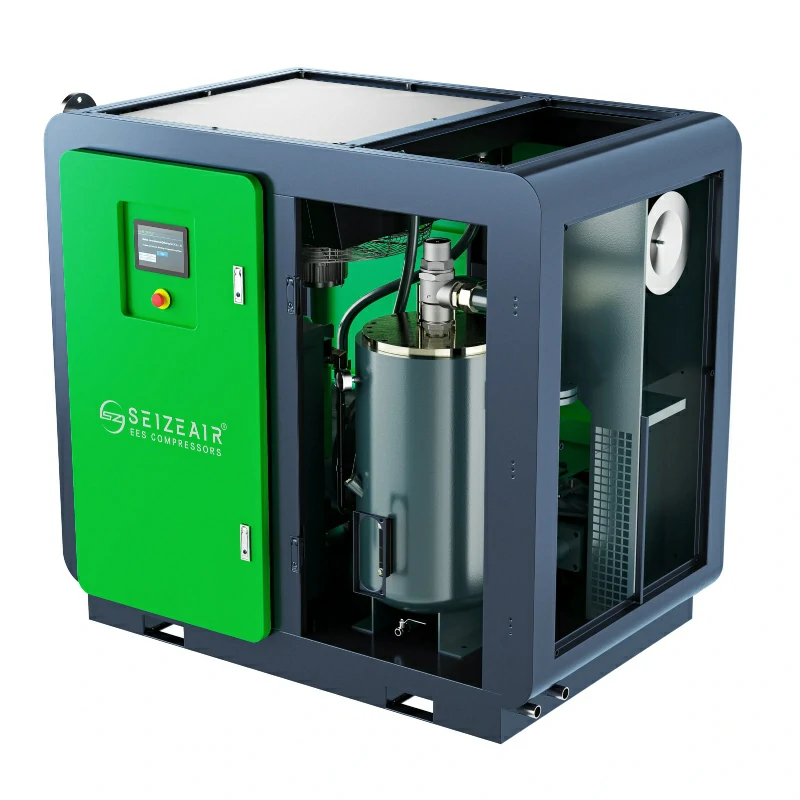
Rotary screw compressors are the true workhorses of modern manufacturing. Utilizing two counter-rotating intermeshing screws (rotors), these machines trap and compress air continuously. They are specifically engineered for 100% continuous-duty cycles, making them ideal for plants running non-stop 24/7 operations.
Centrifugal Air Compressors
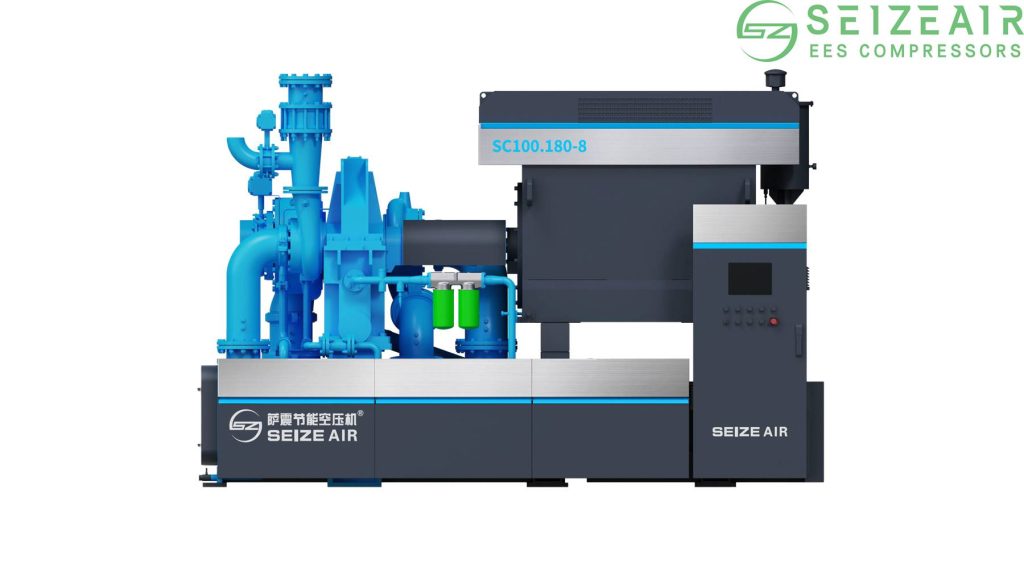
Operating via dynamic compression, centrifugal units use high-speed impellers to accelerate air, which is then slowed down through a diffuser to convert kinetic energy into pressure. These units excel in large-scale, high-volume industrial environments requiring massive, steady airflow rates.
Reciprocating (Piston) Air Compressors
Piston-driven units use a crankshaft and connecting rod to compress air inside a cylinder. While highly reliable for high-pressure requirements, they operate best on intermittent duty cycles. They are generally suited for smaller workshops or specialized, high-pressure applications rather than continuous plant-wide air supply.
| Compressor Type | Common Flow Range (CFM) | Typical Pressure Range (PSI) | Duty Cycle Ideal | Primary Industrial Use Cases |
| Rotary Screw | 30 – 3,000+ | 80 – 200 | 100% Continuous | General manufacturing, automotive, textiles, heavy industry |
| Centrifugal | 1,000 – 100,000+ | 50 – 600+ | 100% Continuous | Petrochemical, large electronics, automotive plants, power generation |
| Reciprocating | 1 – 100 | 90 – 1,000+ | Intermittent (60-70%) | Workshops, specialized high-pressure lines, auto repair |
Should You Choose Oil-Free or Oil-Lubricated Heavy Duty Air Compressor Units?
A pivotal decision in selecting air compressor units involves evaluating your industry’s tolerance for oil carryover.
Oil-Lubricated (Oil-Injected) Compressors
In these units, oil is injected into the compression chamber to lubricate moving parts, seal internal clearances, and dissipate heat. Advanced downstream filtration systems (coalescing filters, carbon towers) can remove up to 99.9% of the oil, but minute traces may still pass through. These systems offer lower upfront capital costs and a highly extended service life for mechanical components.
Oil-Free Air Compressors
For sectors where even a single part-per-million of oil contamination can ruin entire batches of products, damage public health, or compromise high-tech equipment, oil-free systems are mandatory. They utilize specialized coatings and water-cooled jackets instead of oil injection.
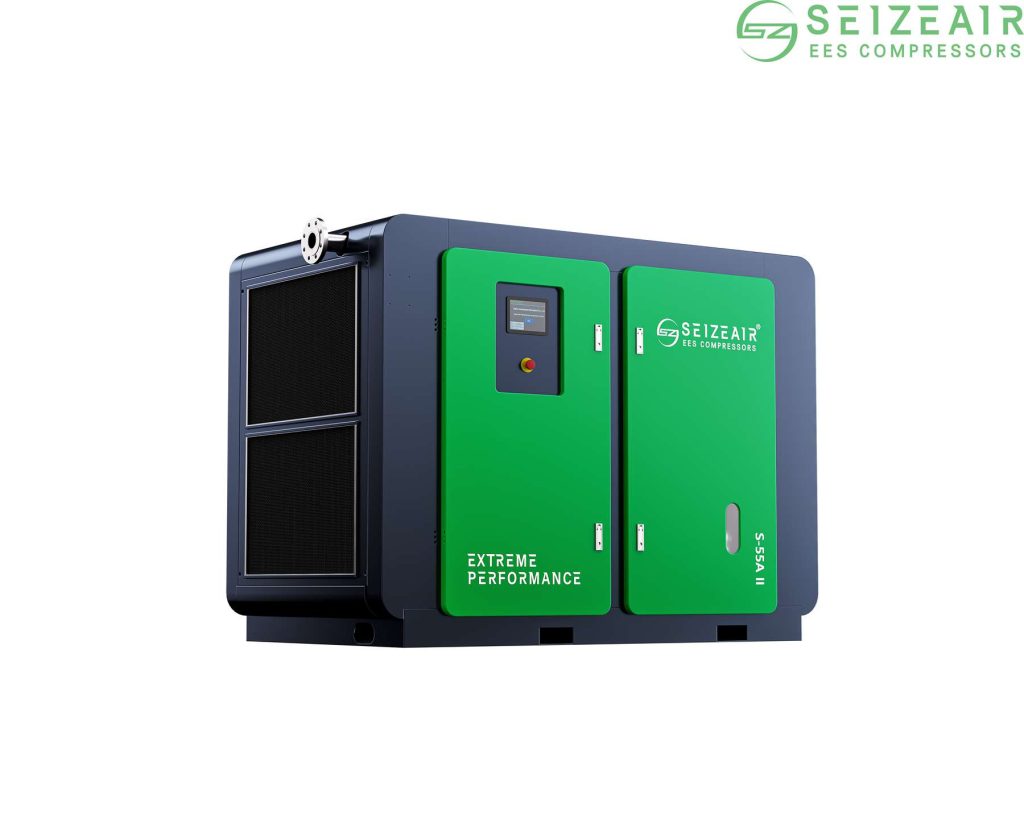
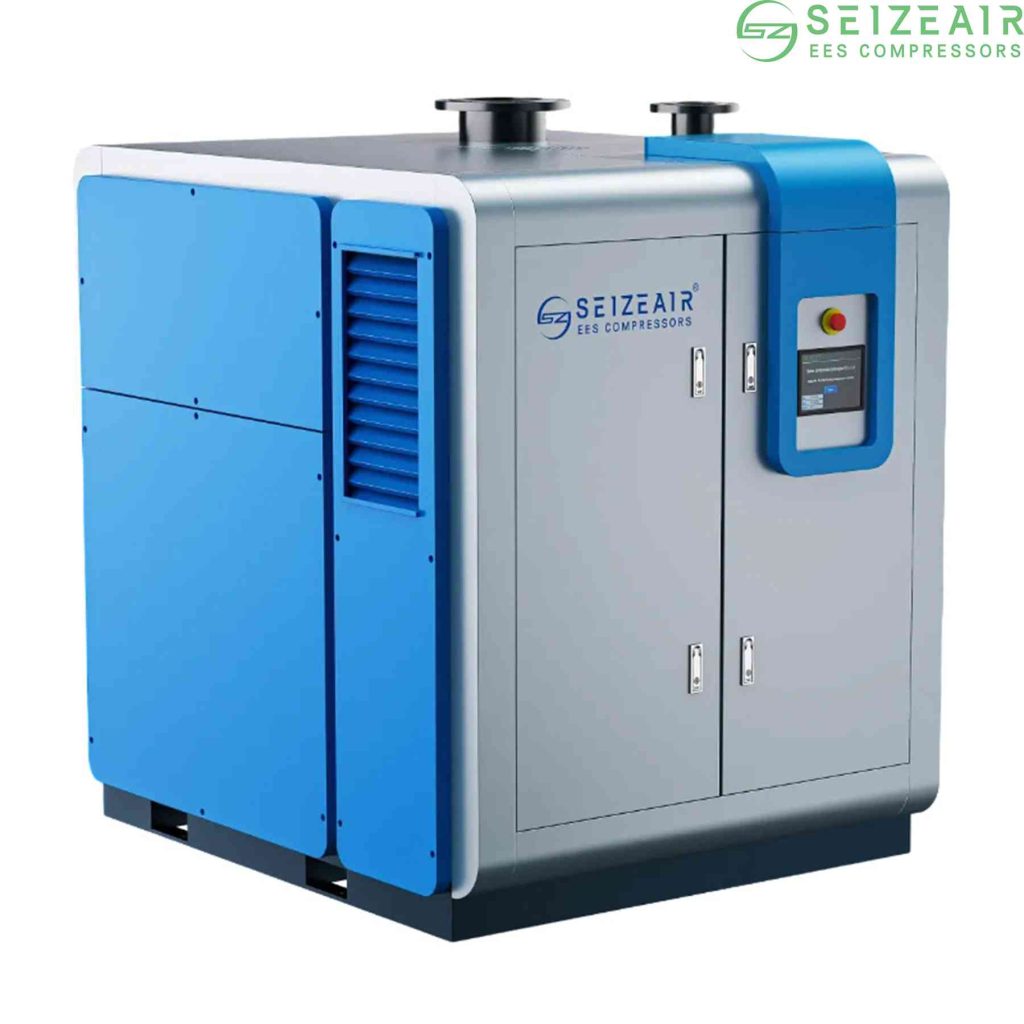
Leading manufacturers, such as Seize Air, engineer advanced dry or water-lubricated oil-free screw systems that completely eliminate the risk of oil downstream, making them ideal for highly sensitive environments that require oil-less multi-stage air compressor systems.
Industry Matching Matrix
- Food & Beverage: Requires Class 0 oil-free air to prevent direct product contamination during packaging, mixing, and pneumatic sorting.
- Pharmaceuticals & Biotechnology: Mandatory oil-free air to maintain sterile lab conditions and ensure strict compliance with international drug safety standards.
- Electronics & Semiconductor Manufacturing: Ultra-clean, oil-free air is critical; any trace oil vapor can ruin delicate microchips and sensitive silicon wafers during processing.
- Heavy Machinery & Metal Fabrication: Oil-lubricated heavy duty air compressor units are preferred here, as downstream mechanical components benefit from the natural lubrication properties of the air.
How to Calculate the Right Industrial Air Compressor Sizing for Your Plant?
Sizing an industrial air compressor requires precise engineering calculations. Under-sizing causes a drop in system pressure, stalling production lines. Over-sizing leads to rapid cycling, massive energy waste, and premature wear on components.
Understanding CFM vs. PSI
- CFM (Cubic Feet per Minute): Measures the volume of air delivered. It determines whether the compressor can supply enough air to run all your pneumatic tools and machines simultaneously.
- PSI (Pounds per Square Inch): Measures the pressure or force of the air. It determines whether the compressor can provide enough force to operate a specific mechanical function.
Step-by-Step Capacity Calculation
- Identify Tool Consumption: List every single air-consuming device in your plant and log its individual CFM rating at its required operating pressure.
- Apply the Utilization Duty Factor: Tools do not all run at the exact same second. Multiply each tool’s CFM by its percentage of active run-time per hour (e.g., a tool running 15 minutes out of every hour has a 25% duty factor).
- Calculate Total Max CFM: Sum up the adjusted CFM numbers of all tools.
- Account for Future Expansion & System Leaks: Even the best-maintained industrial plants experience an average of 10% to 15% air loss through pipe joints and fittings. Add a safety factor of 20% to 30% to your total calculated CFM to account for real-world system leaks and future addition of automated machinery.
When reviewing industrial air compressor sizing, always look at the combined load during peak operation times rather than average daily use to avoid unexpected pressure drops.
Industrial Engineering Rule of Thumb:
Total System CFM = (Sum of all individual tools CFM * Duty Factor) * 1.30 (Safety & Expansion Multiplier)
What Are the Benefits of Variable Speed Drive Air Compressor Units Over Fixed Speed?
Energy consumption represents roughly 70% to 80% of the total lifecycle cost of running industrial air compressor units. Choosing the correct drive type can save your business tens of thousands of dollars annually.
Fixed-Speed Air Compressors
Fixed-speed units run at a constant RPM regardless of how much air the plant actually needs. When air demand drops, the compressor goes into an “unloaded” state—it keeps running the motor at full speed while closing the intake valve, drawing roughly 30% to 50% of its operational power while producing absolutely zero air. If your factory runs steady, predictable, 3-shift production profiles with virtually no variance in air load, fixed-speed machines are a highly reliable option.
Variable Speed Drive (VSD) Air Compressors
VSD systems utilize an advanced integrated inverter to constantly monitor system demand and automatically adjust the motor speed to match actual air usage in real time. If your plant slows down production or takes a break, the VSD motor reduces its RPM proportionally, dropping power consumption instantly.
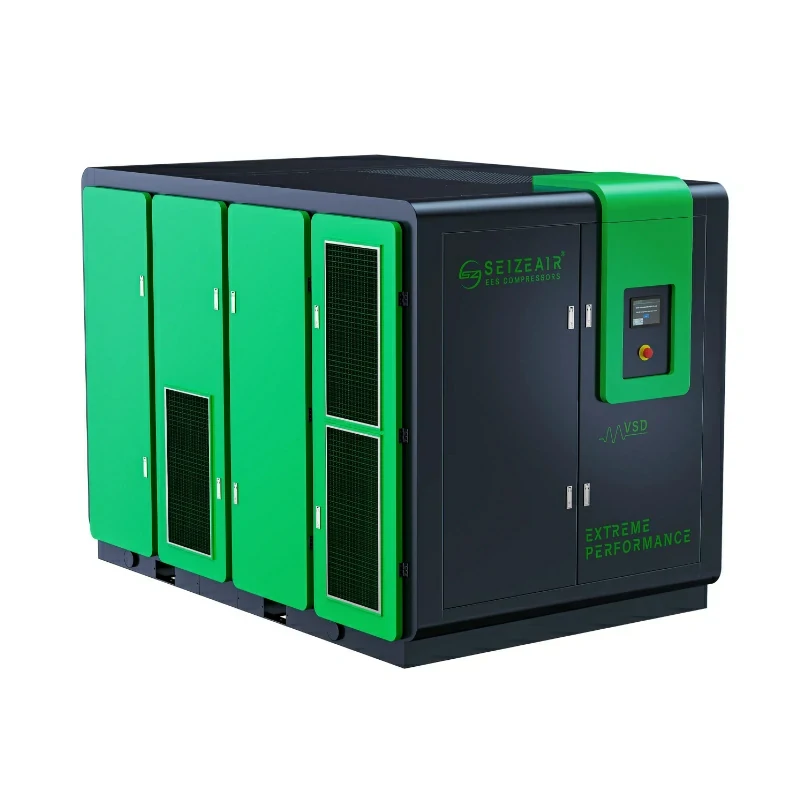
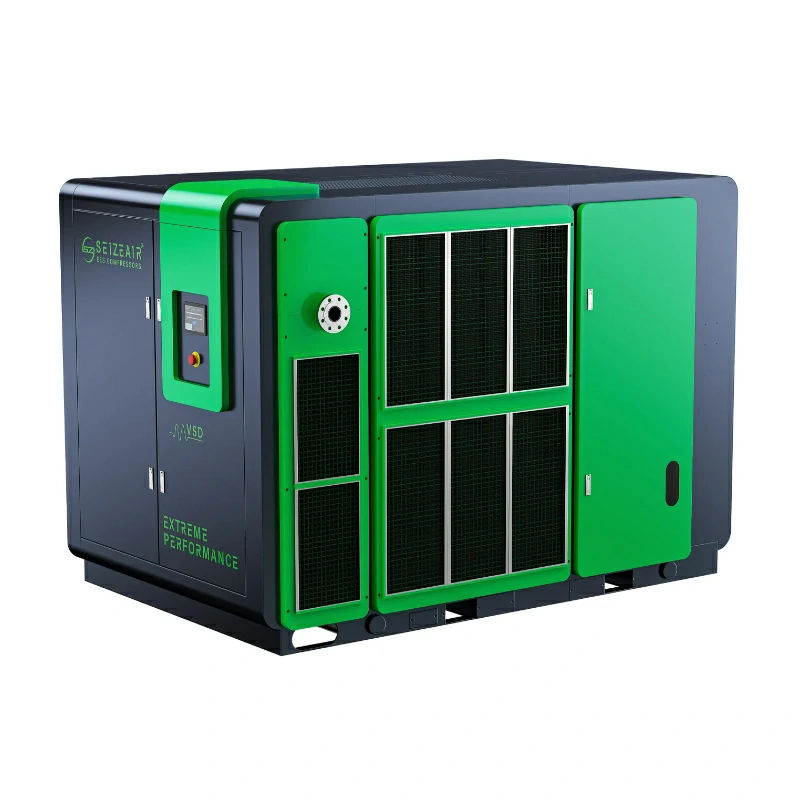
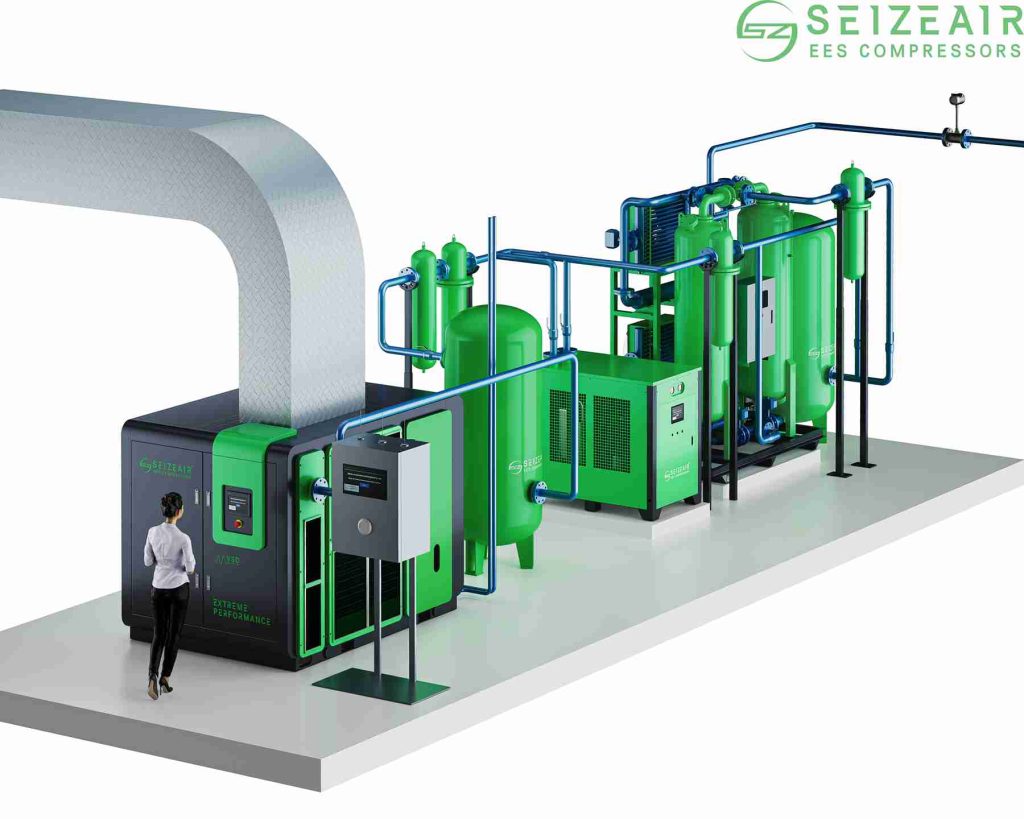
When working with variable production schedules or fluctuating shifts, installing a high-tier system like a Seize Air permanent magnet variable speed drive air compressor units setup can cut your facility’s energy bills by up to 35% to 50% compared to a traditional fixed-speed setup.
Why Is Choosing the Proper Compressor Auxiliary Equipment Crucial for Air Quality?
A raw air compressor simply pulls in ambient atmospheric air, concentrates it, and pushes it downstream. This intake air contains ambient moisture, solid particulates, hydrocarbon vapors, and microbes. Without robust compressor auxiliary equipment, this toxic mix will quickly rust your metal pipes, destroy sensitive solenoid valves, and contaminate finished products.
Industrial Air Dryers
- Refrigerated Air Dryers: These units cool the compressed air down to approximately 35°F to 39°F (3°C to 4°C), causing vaporized moisture to condense into water droplets so they can be separated and automatically drained out. Ideal for general industrial applications where the ambient air temperature stays safely above freezing.
- Desiccant Air Dryers: These systems pass the air stream through chemical desiccant beads (like silica gel or activated alumina) to achieve an ultra-low pressure dew point of -40°F to -100°F (-40°C to -73°C). These are mandatory for outdoor piping networks prone to freezing, chemical processing plants, and sensitive electronics assembly lines.
Filtration Grades
- Coalescing Pre-Filters: Engineered to extract bulk oil droplets, liquid water, and large particulate matter down to 1 micron.
- High-Efficiency Fine Filters: Designed to remove microscopic oil aerosols and ultra-fine dust particulates down to 0.01 microns.
- Activated Carbon Towers/Filters: Specifically built to eliminate residual vaporized hydrocarbon smells and organic odors, crucial for food production and medical environments.
| Air Quality Requirement | Target Industry | Recommended Dryer Type | Required Filtration Stages |
| Standard Utility Air | Foundries, Heavy Welding, Packaging | Refrigerated Dryer | Coalescing Pre-Filter + General Particulate Filter |
| High-Quality Industrial | Automotive Paint Shops, CNC Machining | High-Efficiency Refrigerated | Coalescing + Secondary Fine Oil-Removal Filter |
| Ultra-Pure Class 0 | Pharmaceuticals, Semi-conductors, Food | Desiccant Dryer | Pre-Filter + Micro-Filter + Activated Carbon Tower |
How to Determine the Lifecycle Cost of Multi-Compressor Air Plant Configurations?
Far too many purchasing managers make the costly mistake of focusing exclusively on the initial purchase price of air compressor units. Real-world financial analysis demonstrates that the purchase price is a minor fraction of what you will actually spend over the equipment’s operational lifespan.
Breakdown of the 10-Year TCO
- Initial Capital Investment: 15% of total costs.
- Preventative Maintenance & Spare Parts: 10% of total costs (filters, oil changes, element overhauls).
- Electrical Energy Costs: 75% of total costs.
To illustrate this, consider a typical 75 kW (100 HP) industrial compressor running 6,000 hours per year at an average electricity rate of $0.12 per kWh. The annual energy cost alone totals roughly $54,000. Over a ten-year span, you will spend $540,000 purely on power.
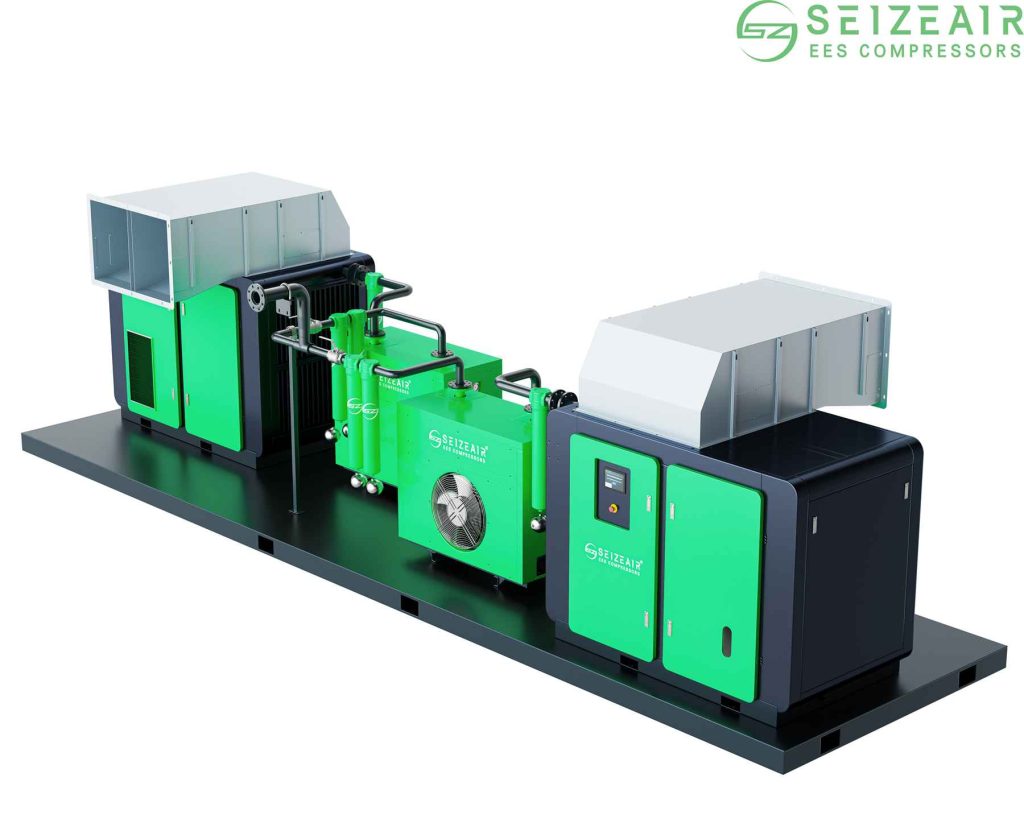
When managing complex multi-compressor air plant configurations, alternating workloads between a master and slave unit configuration can prevent single-point mechanical failures and balance out machine run hours. Investing in a highly engineered, energy-efficient system can easily yield substantial financial returns over time. Opting for premium solutions from specialized brands like Seize Air allows facilities to recover their initial capital investment within the first few years of operation through reduced power consumption.
What Are the Best Technical Practices for Industrial Compressed Air System Installation?
Where and how you install your compressed air system plays a vital role in determining its ultimate reliability, safety, and operational longevity.
Room Ventilation and Ambient Temperatures
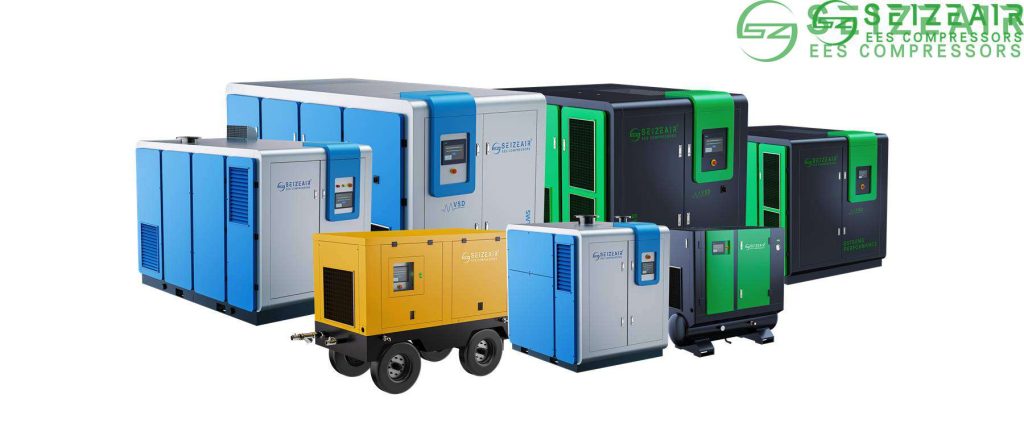
Air compressors generate massive amounts of heat during operation. Your compressor room must feature high-volume mechanical ventilation or custom ductwork to exhaust hot air out of the building. Ambient room temperatures should consistently be maintained between 40°F and 105°F (4°C and 40°C) to prevent the compressor oil from overheating, degrading prematurely, or causing thermal shutdown trips.
Industrial Piping Network Design
- Avoid Closed-End Pipe Dead Legs: Ensure your layout utilizes a continuous loop design to distribute air pressure evenly across the entire manufacturing floor.
- Slope Horizontal Run Lines: Always slope horizontal pipes away from the compressor unit and towards dedicated moisture drop legs equipped with reliable automatic electronic drains.
- Choose the Right Piping Material: Opt for corrosion-resistant aluminum or stainless steel lines. Avoid using standard schedule 40 black iron pipes if possible, as they scale internally over time, causing clogs and damaging downstream pneumatic equipment. Proper planning during the industrial compressed air system installation phase prevents chronic pressure drops down the line.
Essential Preventative Maintenance Schedule
- Daily Routine: Check the oil level sight glass, monitor the control panel for active error codes, and manually verify that all automatic condensate drains are cycling properly.
- Weekly/Monthly Routine: Blow out the heavy intake air filters with low-pressure air, clean the external cooling fins on the heat exchanger, and inspect the system for audible air leaks along the main pipeline.
- Semi-Annual/Annual Routine: Pull comprehensive compressor oil samples for fluid analysis, replace all internal air filters and oil separation elements, check motor belt tension, and grease the primary motor bearings according to factory instructions.
Ready to Optimize Your Industrial Air System?
Selecting the perfect industrial compressed air setup requires a balance of proper capacity sizing, matching your specific air quality standards, and choosing an energy-efficient drive technology. Selecting the ideal system protects your manufacturing facility from unexpected operational downtime while keeping your monthly electrical overhead as low as possible.
If you are looking to upgrade your existing plant infrastructure or need a custom configuration for a brand-new facility, our engineering team is here to help. Contact Seize Air today to receive a detailed, professional system audit, custom energy-saving calculations, and a tailored quote for your industrial needs.