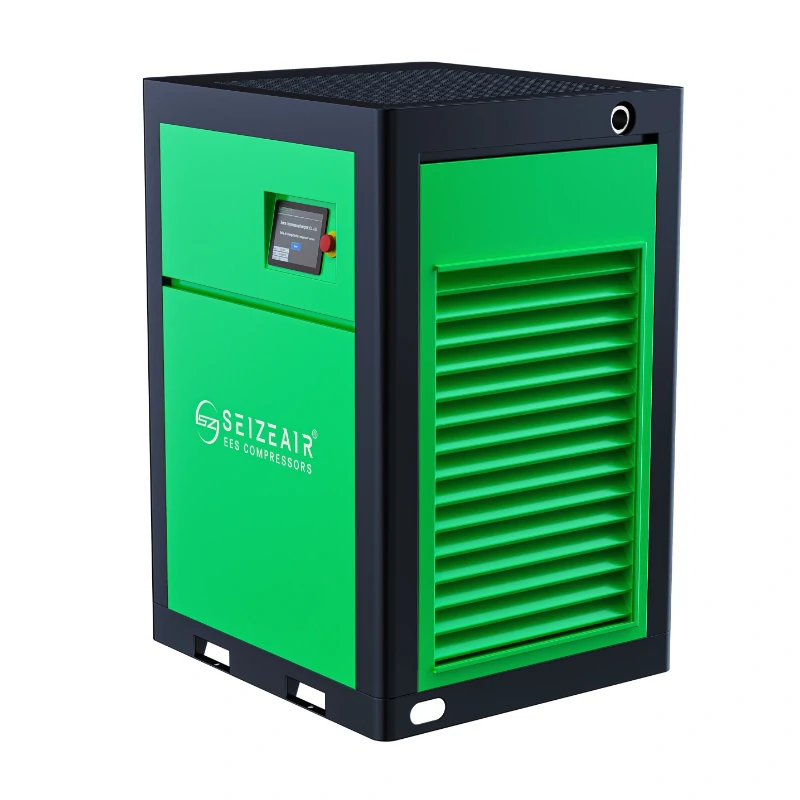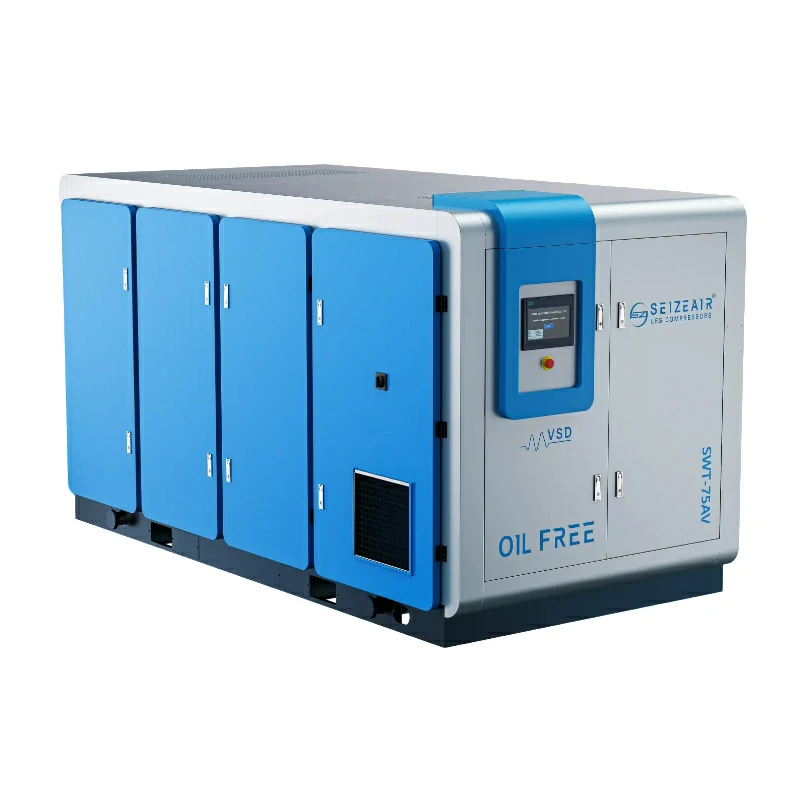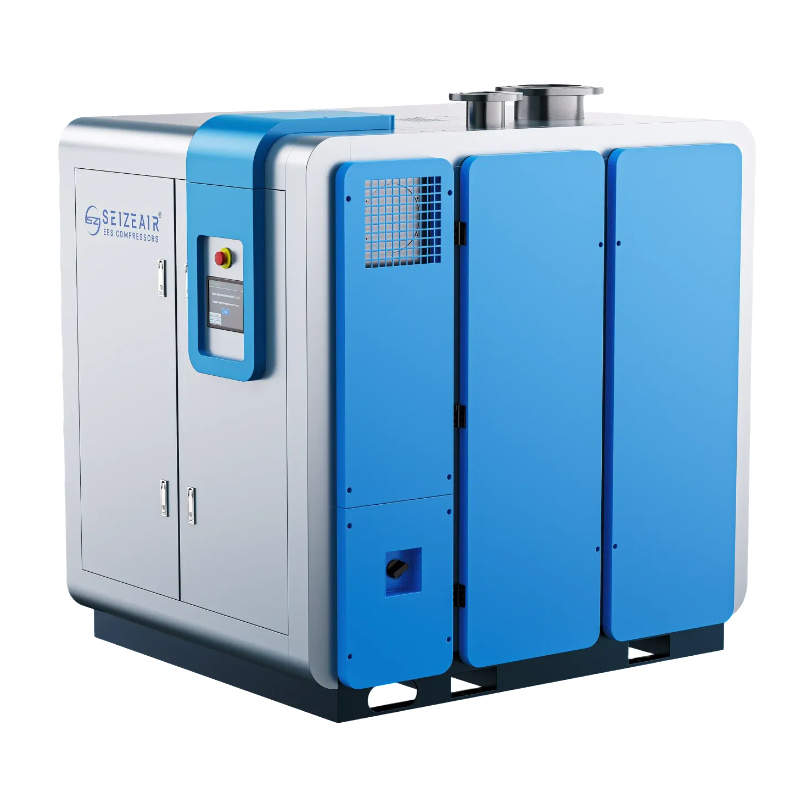


For modern metal fabrication, laser cutting technology has shifted from a luxury to a standard. However, while most focus on fiber laser wattage or cutting heads, the unsung hero of the operation is the laser cutting air compressor. Whether you are cutting stainless steel, carbon steel, or aluminum, the quality and pressure of your assist gas determine your edge quality and your bottom line.
Using compressed air as an assist gas is a massive trend in the industry because it significantly reduces operating costs compared to bottled nitrogen or oxygen. But you can’t just plug in any shop compressor and expect clean cuts.
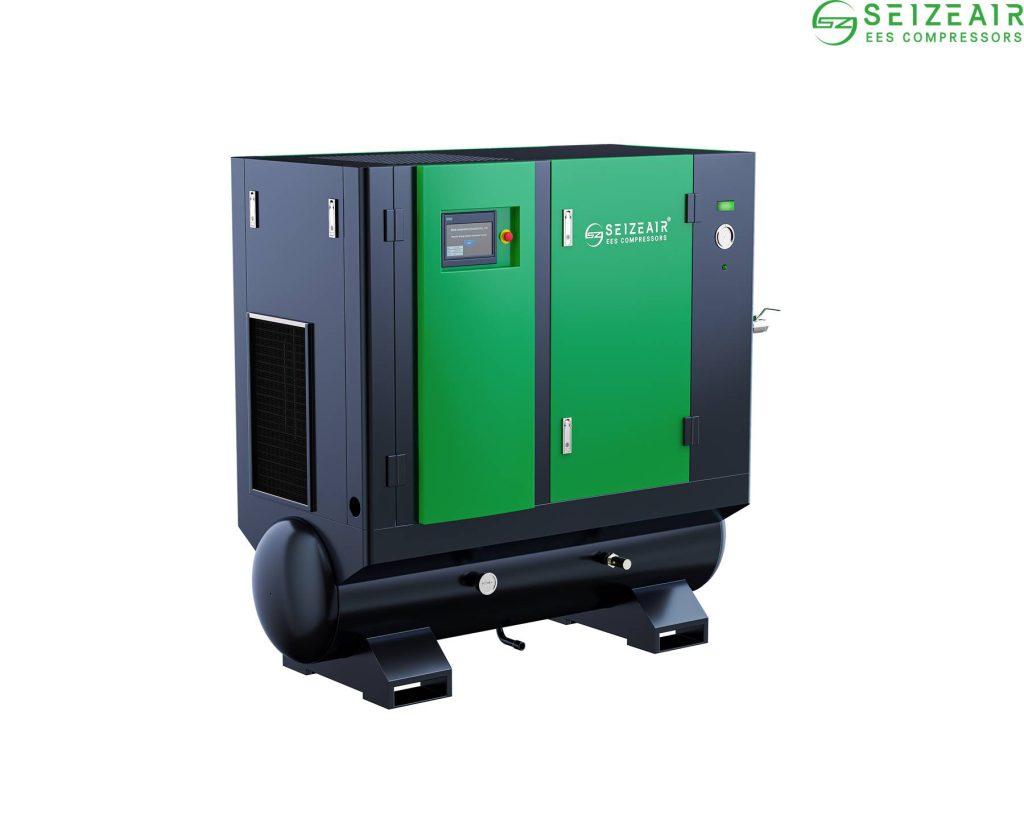
Why Air is Replacing Liquid Nitrogen
In the early days of fiber lasers, the debate was always Oxygen vs. Nitrogen. Oxygen for thick carbon steel (the exothermic reaction helps the cut), and Nitrogen for everything else where a clean, oxide-free edge was needed. But the hidden cost of Nitrogen—deliveries, tank rentals, and “boil-off” waste—can eat 30% to 50% of a shop’s hourly margin.
High-pressure compressed air is effectively 78% nitrogen. When delivered at 16 bar or higher with surgical-grade purity, it provides enough kinetic energy to blow out the melt pool while maintaining a cut speed that often exceeds nitrogen on materials like 3mm stainless or 5mm aluminum. From a decision-maker’s perspective, the “payback period” for a dedicated high pressure air compressor for fiber laser is often less than 12 months when compared to the monthly gas bill of a high-production shop. This transition isn’t just about saving money; it’s about gaining logistical independence from gas suppliers.
Is a Screw Air Compressor Better Than Piston for Laser Cutting?
When you deep-dive into the technical constraints, you realize that choosing a laser cutting air compressor isn’t just about “big” or “small.” It’s about meeting the high-precision demands of a fiber laser. If any of these three pillars fail, your laser becomes a very expensive paperweight.
Pressure Stability
Most people look at the nameplate and see “16 Bar” and think they are safe. But as a field engineer will tell you, static pressure is not dynamic pressure. When the laser head opens the solenoid and starts a long cut on a 10mm sheet, the pressure in the line can “sag” significantly.
If your 16-bar compressor drops to 13 bar at the nozzle during a cut, the plasma won’t be cleared efficiently. This results in “dross” or “slag”—hardened metal droplets at the bottom of the cut that require manual grinding. A high-tier system, like those engineered by Seize Air, utilizes oversized air ends and larger internal buffer volume to ensure that the 16 bar you set on the controller is the 16 bar you get at the nozzle, even during 24/7 operation. In many cases, a skid mounted air compressor for laser machine is the ideal solution because it integrates the tank and compressor to minimize pressure drops in the piping.
The Flow Rate (CFM) Calculation Trap
I’ve seen many shops buy a compressor based on their “average” consumption. This is a critical mistake. Laser cutting is binary—it’s either off or it’s slamming the system at 100% flow.
- The Nozzle Factor: A 1.5mm nozzle at 16 bar consumes roughly 0.8 m³/min. But if you switch to a 3.0mm nozzle for thicker plate, your air consumption doesn’t double—it quadruples.
- The Safety Margin: We always recommend a 20% “buffer” over your laser’s maximum theoretical consumption. This prevents the compressor from running at its absolute thermal limit, extending the life of the screw air end. If you are running multiple heads, the air compressor for 3000w fiber laser needs to be sized differently than a 12kW unit to handle the surging demand.
Air Purity
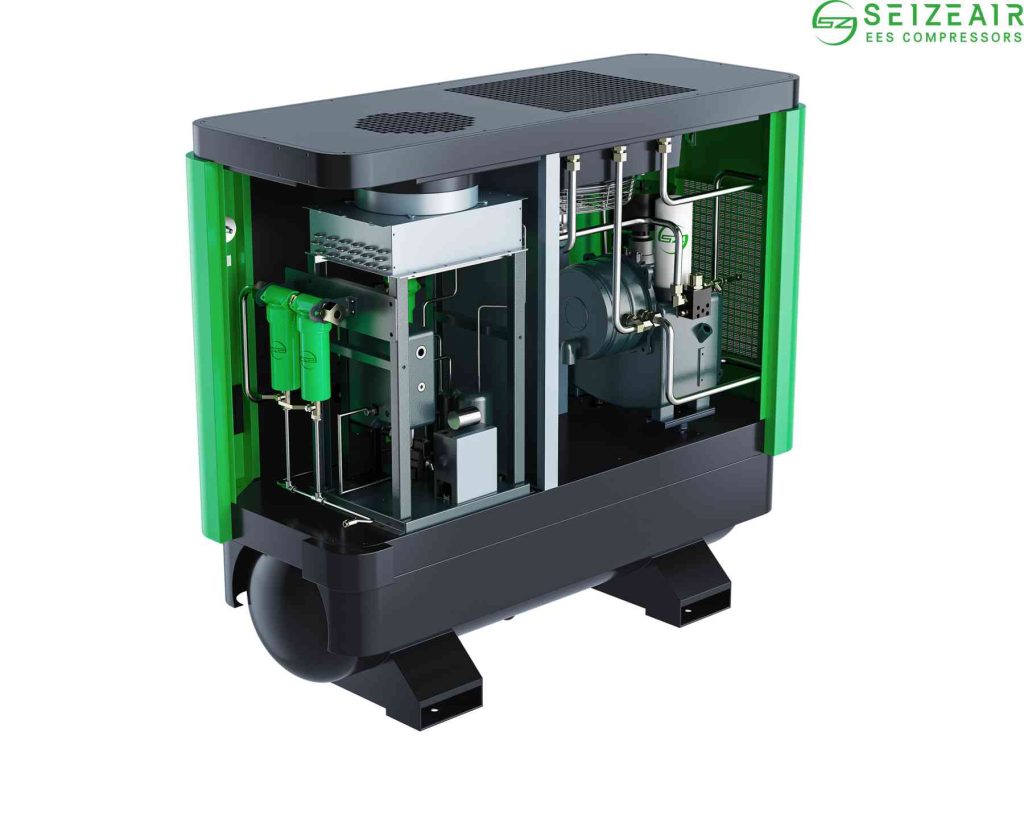
If you take away one thing from this guide, let it be this: Water and oil are the enemies of light. A fiber laser beam is focused through a protective window (lens) that is often 99.9% transparent. A single microscopic droplet of oil on that lens will absorb the laser’s energy, heat up instantly, and crack the lens. This is why a 4 in 1 screw air compressor for laser cutting is so popular; it handles the filtration in one unified step.
To achieve “Laser-Grade” air, you need a multi-stage approach:
- Centrifugal Separation: Removes bulk liquid.
- Refrigerated Drying: Lowers the pressure dew point to 3-5°C to prevent condensation in the lines.
- Four-Stage Coalescing Filtration: Captures particles down to 0.01 micron.
- Activated Carbon Tower: The final “fail-safe” that adsorbs oil vapors, essential if you aren’t using an oil free air compressor for laser cutting machine.
| Contaminant | Impact on Laser Cutting | Solution |
| Liquid Water | Immediate lens cracking / Beam scattering | High-efficiency Refrigerated Dryer |
| Oil Mist | Carbonization on optics; “Yellowing” of edges | 0.01-micron precision filters |
| Fine Dust | Micro-pitting on the cutting head protective glass | High-grade HEPA-level filtration |
| Humidity | Oxidation of the cut surface in aluminum | Desiccant Dryer (for sensitive alloys) |
What Is the Best Air Compressor for Fiber Laser Cutting Machines?
From a system integrator’s point of view, the “Best” setup depends on your floor plan and your growth strategy. You have to choose between convenience and massive industrial scale.
The “All-in-One” Integrated Station (4-in-1 Systems)
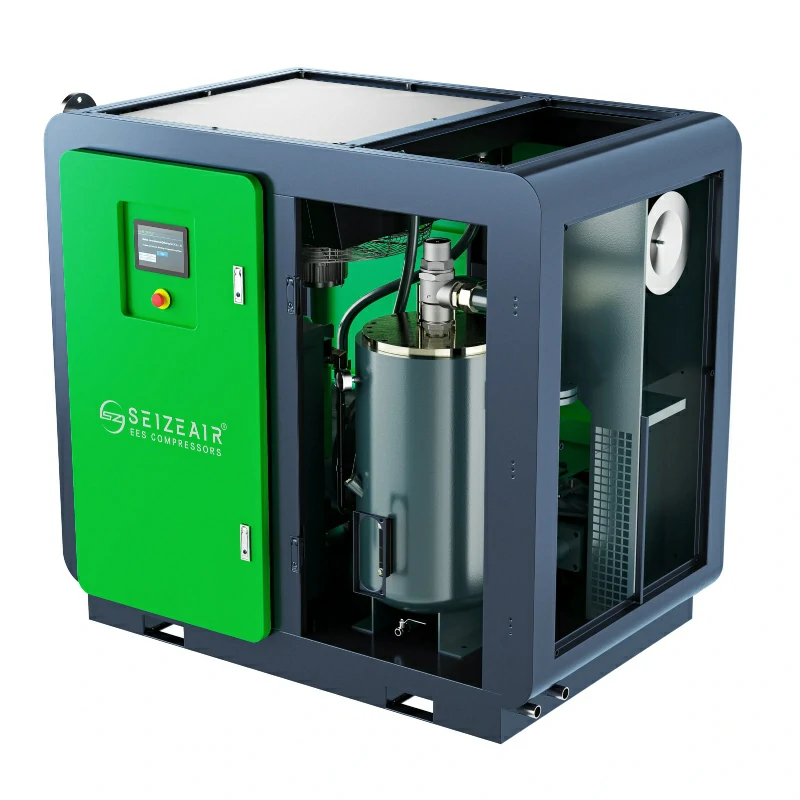
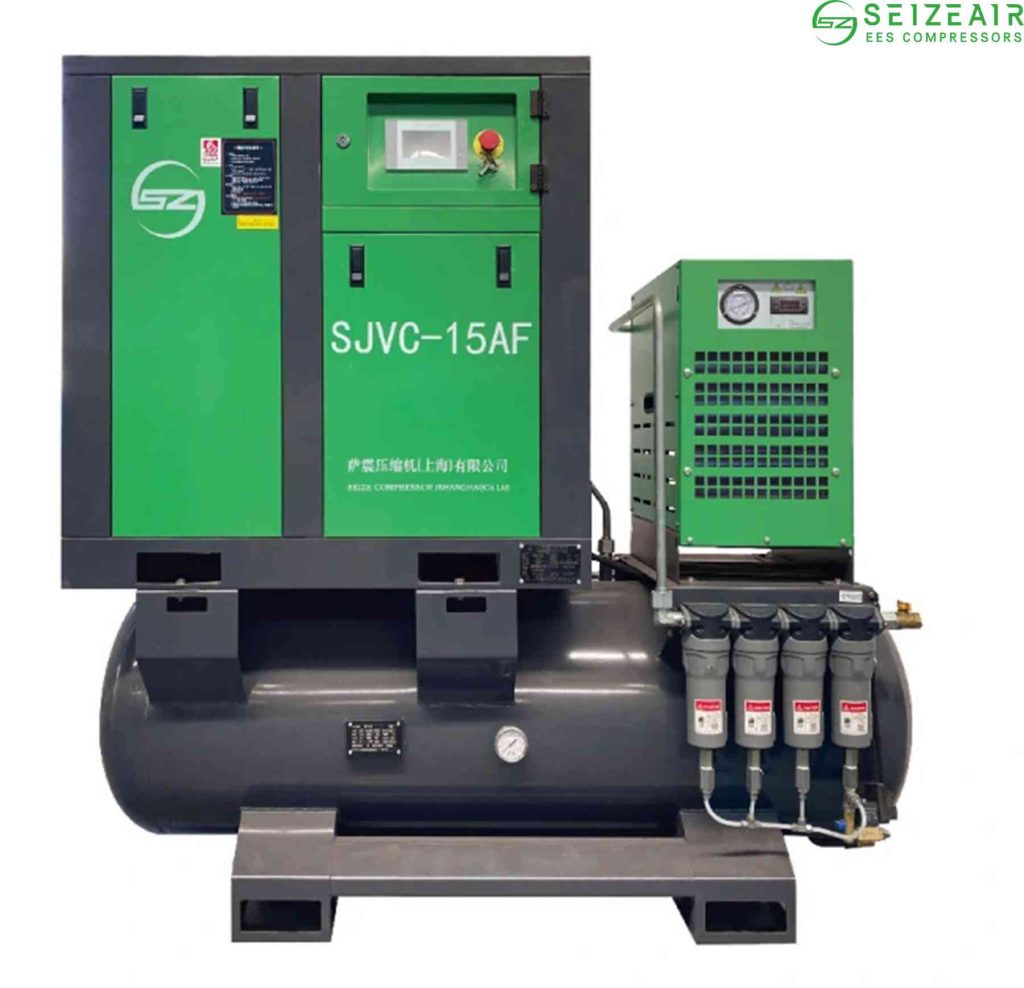
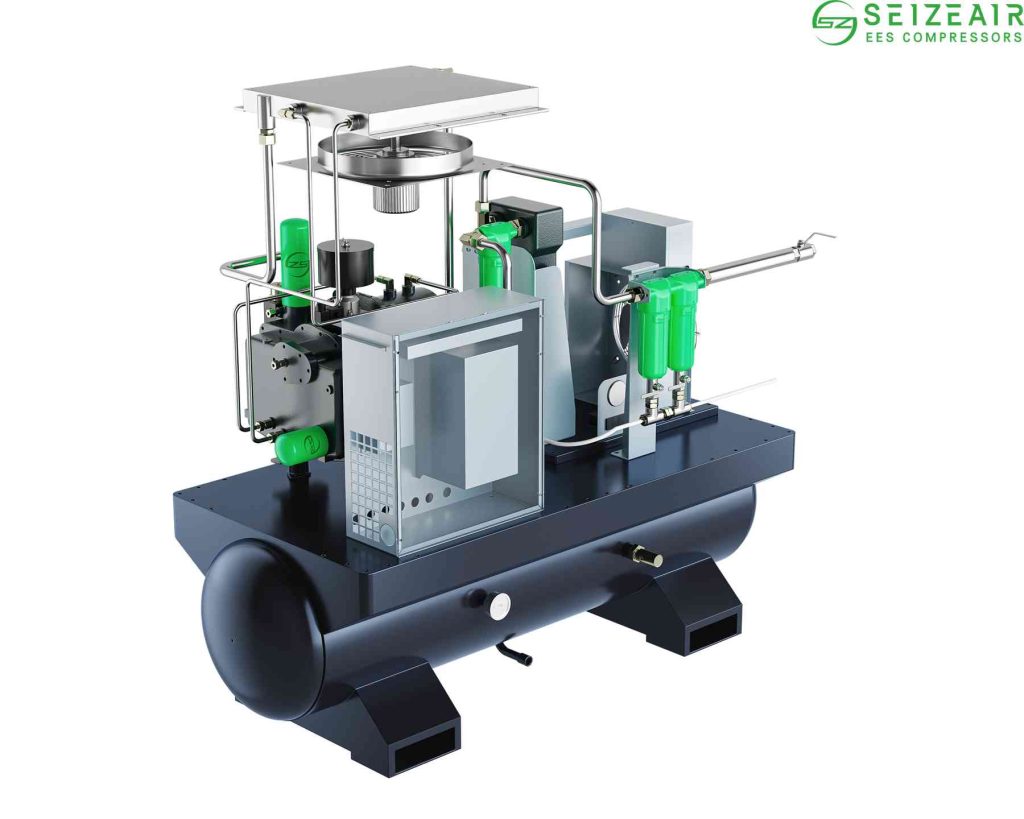
This is the modern standard for 3kW to 12kW lasers. It houses the screw air compressor, tank, dryer, and filters in a single cabinet.
- The Reality: It’s incredibly convenient. You connect power and one air line, and you’re cutting within the hour. Because the components are matched at the factory, there’s no risk of “bottlenecking” between the dryer and the tank.
- The Caveat: Heat management is critical. Since everything is in one box, the cooling fans must be robust. Seize Air designs their integrated units with dedicated cooling zones to ensure the dryer isn’t fighting the radiant heat of the compressor motor. This makes it a top-tier integrated air compressor for laser cutter for shops with limited floor space.
The Modular Industrial Build for High Power Lasers
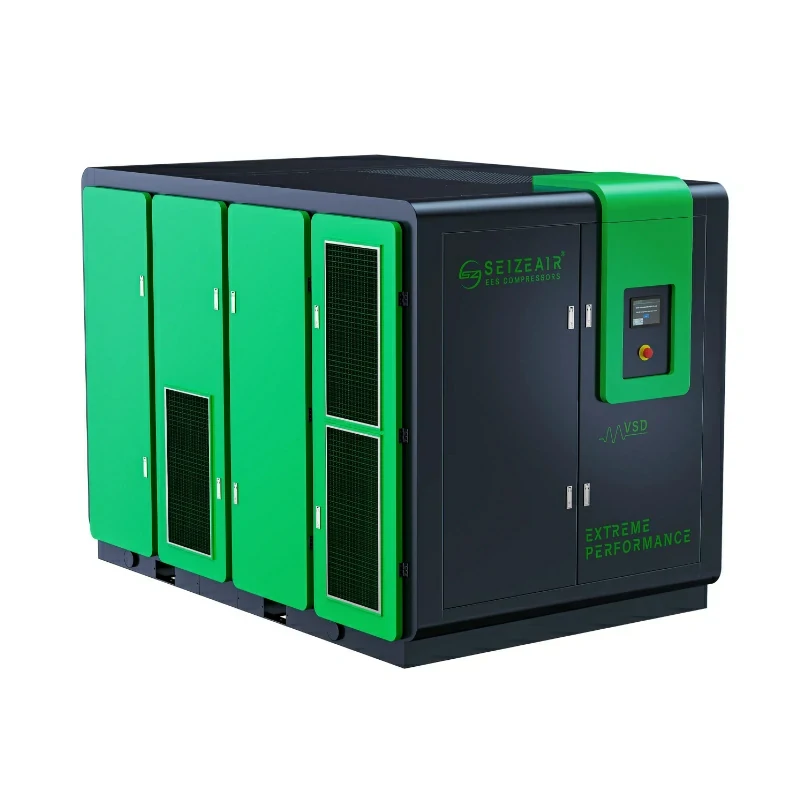
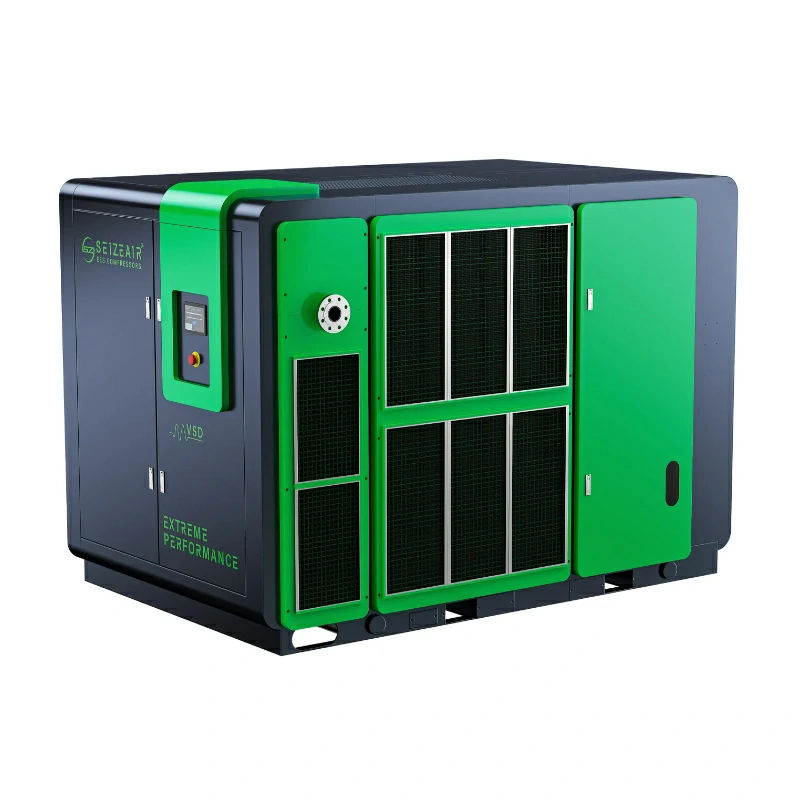
For massive 20kW+ lasers or shops running four or five machines simultaneously, you need a modular setup.
- Why? You can use a massive “wet tank” before the dryer to drop the air temperature naturally, making the dryer significantly more efficient. It also allows for “Redundancy.” If you have two modular compressors, you can perform maintenance on one while the other keeps the laser running at half-speed. This is often the preferred route when looking for an industrial air compressor for laser machine that needs to support an entire factory floor.
Technical Requirements
| Laser Power (Watts) | Material Thickness (Typical) | Pressure (Bar) | Volume (m³/min) |
| 1kW – 2kW | 1mm – 4mm | 12 – 13 Bar | 0.6 – 1.0 |
| 3kW – 6kW | 5mm – 12mm | 14 – 16 Bar | 1.2 – 2.5 |
| 12kW – 20kW | 14mm – 25mm | 20 – 25 Bar | 3.0 – 4.5 |
| 30kW+ | 30mm+ Heavy Plate | 30 Bar+ | 5.0+ |
Note: As wattage increases, the trend is moving toward higher pressures (25 bar+) to maintain the “nitrogen-like” finish on thicker carbon steel. A 232 PSI air compressor for laser cutting is usually the bare minimum for professional results on 6mm+ stainless.
People Also Ask
“My cut has a yellow tint. Is my air dirty?”
Yellowing on stainless steel is usually a sign of oxygen contamination (from the air) or, more likely, high moisture levels. If your refrigerated dryer is failing or bypassed, the water vapor reacts with the metal at high temperatures. Check your dew point indicator immediately. If you’re using a high pressure screw compressor for laser, ensure the filters aren’t saturated with oil, as burnt oil can also discolor the cut path.
“Is a PM VFD motor actually worth the extra cost for laser air?”
As a decision-maker, look at your duty cycle. If your laser is loading/unloading 30% of the time, a standard fixed-speed compressor is wasting energy by “venting” air or idling at high RPM. A Permanent Magnet Variable Frequency Drive (PM VFD) motor, like the ones found in Seize Air premium models, adjusts motor speed to match your cutting state. The 30% energy savings usually covers the price difference of the motor in less than 15 months. It’s the smartest move for anyone looking at energy saving air compressor for laser cutting.
“Can I just use my existing 8-bar factory air with a booster?”
You can, but it’s often a maintenance nightmare. Boosters are loud, vibrate heavily, and often introduce extra oil into the stream through the piston rings. If you are serious about laser cutting as a core business, a dedicated 16-bar or 25-bar screw compressor is a much more stable and “quiet” industrial solution. Relying on a compressed air system for laser cutting that wasn’t designed for the task often leads to inconsistent edge quality across a single sheet.
Maintenance
In a high-volume shop, one hour of downtime can cost $500 in lost revenue.
- The Filter Rule: Never wait for the “service light.” If you see a pressure drop of 0.5 bar across your filter bank, change them. The cost of a filter is 1% of the cost of a laser lens.
- The Temperature Rule: In summer, if your compressor room exceeds 40°C, your air quality will drop because the dryer can’t keep up. Ensure proper ventilation or ducting. This is particularly important for an all in one air compressor for fiber laser where the heat is concentrated.
- The Discharge Check: Periodically check the “auto-drain” valves. If they clog, water stays in the tank and eventually reaches the laser head. This is the #1 cause of “mysterious” lens failures.
By utilizing high-performance equipment like Seize Air, many of these monitoring tasks are simplified through smart controllers that alert you before a “quality event” happens.
The Bottom Line
Selecting a laser cutting air compressor is an investment in your product’s finishing quality. If you choose a unit with insufficient pressure or poor filtration, you’ll pay for it in wasted material and ruined lenses.
When evaluating brands, look for those with a proven track record in the fiber laser industry. For instance, Seize Air focuses specifically on the high-pressure demands of modern metal fabrication, ensuring that your “air cutting” looks just as clean as nitrogen cutting, but at a fraction of the cost.
By matching your compressor’s CFM and Bar ratings to your laser’s nozzle requirements and ensuring a “Class 1” air purity, you turn your compressed air system from a utility into a competitive advantage.