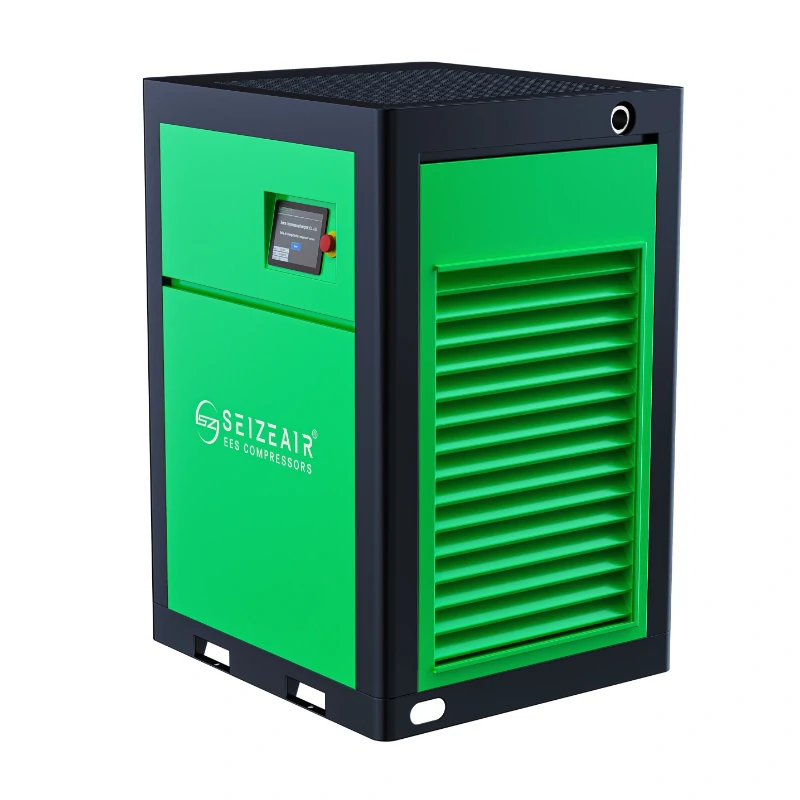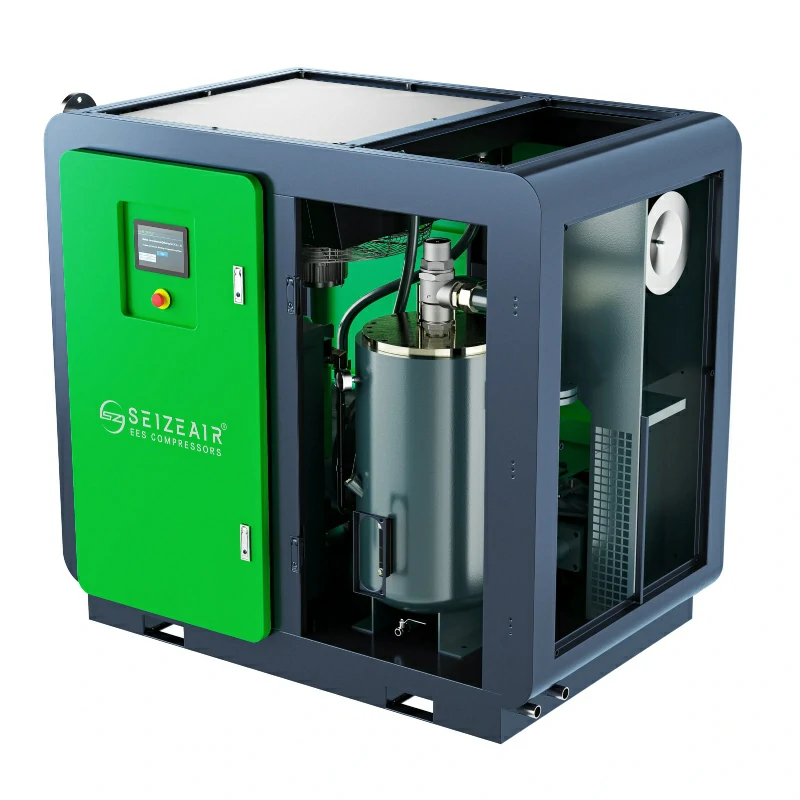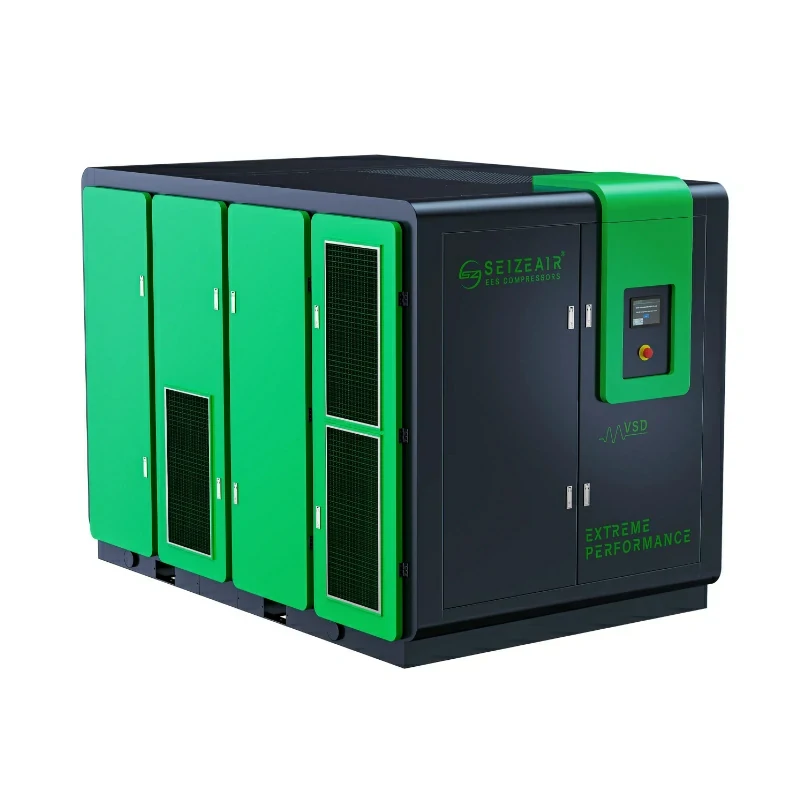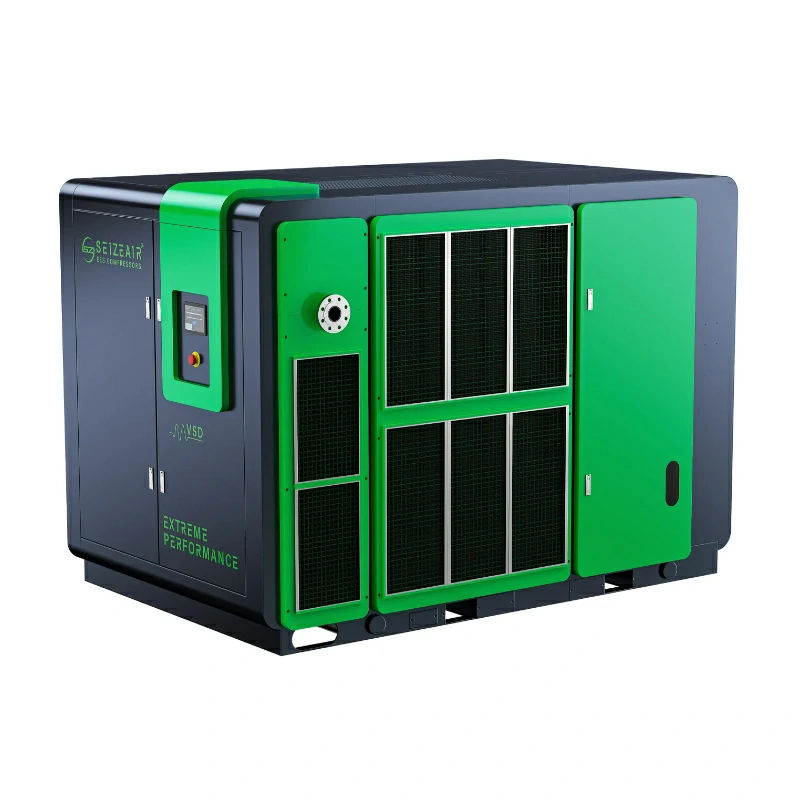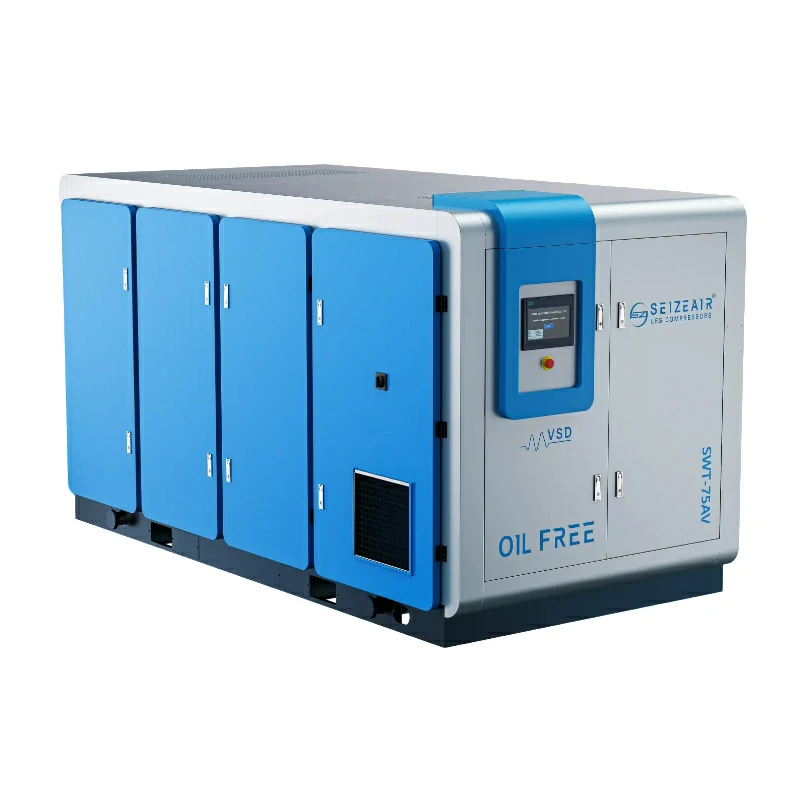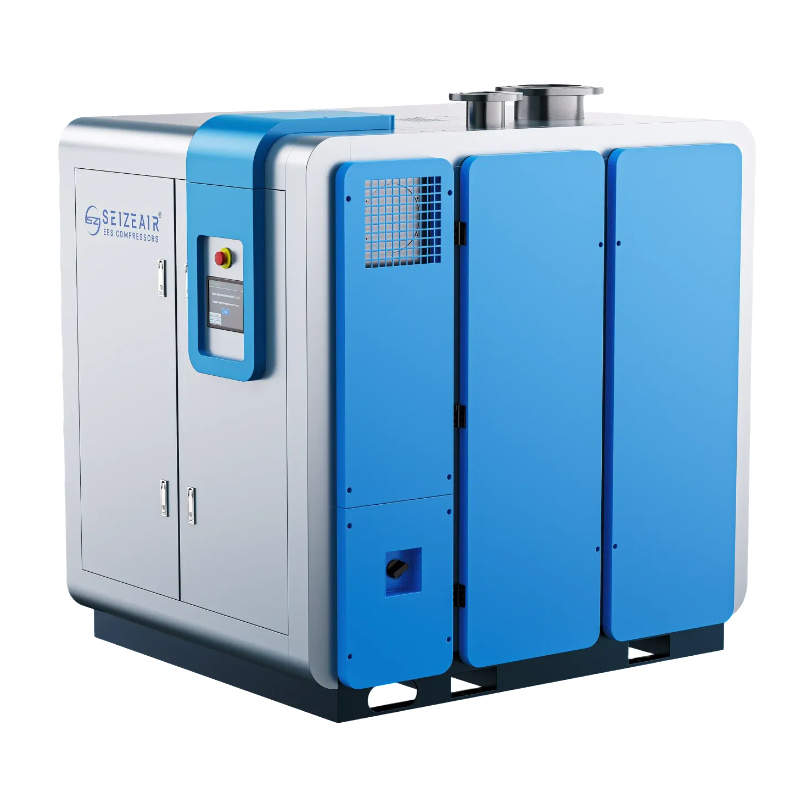


A low pressure air compressor saves energy by delivering compressed air at the lower pressure your process actually needs, instead of over-pressurizing the entire system. Because compression power climbs with discharge pressure, trimming just 1 bar off your setpoint can cut electricity use by roughly 7 to 12 percent across a typical plant. This guide walks through the physics, the technology, and the real numbers behind low pressure compressed air systems.
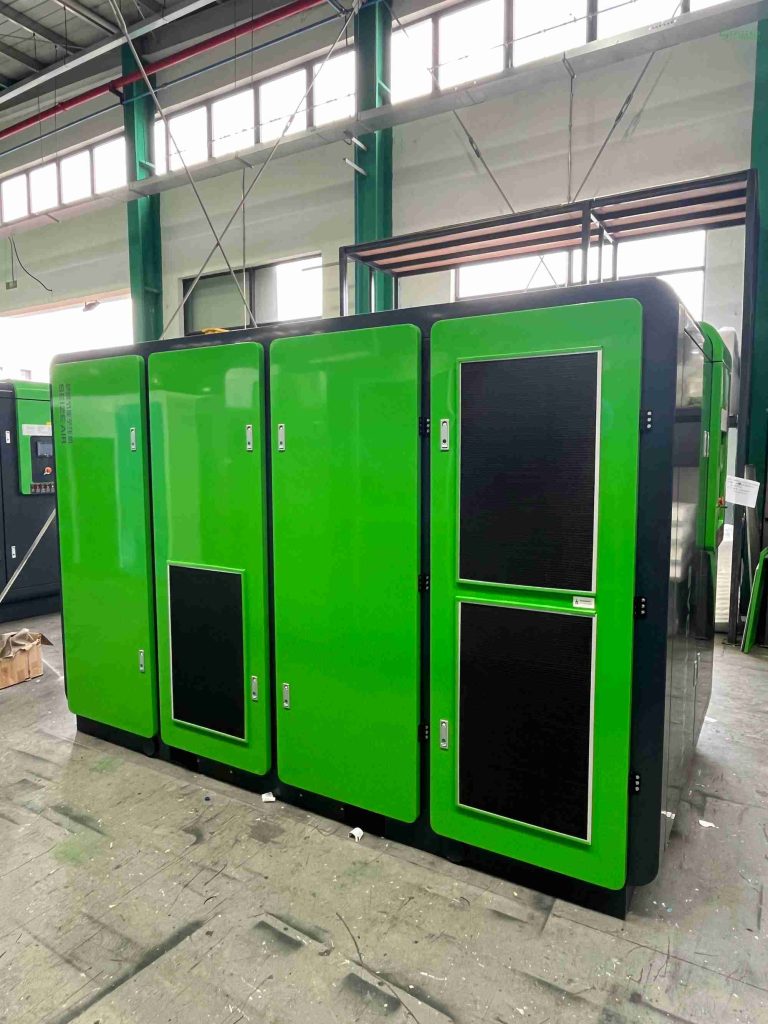
What Is a Low Pressure Air Compressor?
Most people picture an air compressor pushing air to 7 or 8 bar. A low pressure air compressor lives at the other end of the scale. In everyday industrial language, “low pressure” means discharge pressures roughly between 0.5 bar(g) and 3.0 bar(g). Some operations run even lower, around 0.3 bar(g), where the line between a compressor and a blower starts to blur.
The reason this category exists is simple: a lot of processes never needed 7 bar in the first place. Textile spinning, pneumatic conveying, wastewater aeration, cement and glass cooling, and many cleaning and drying lines work perfectly well at 1 to 2.5 bar. Forcing those jobs through a standard 7 bar machine is like using a fire hose to water a houseplant — it works, but you pay for far more pressure than you ever use.
The table below shows how the industry generally buckets pressure ranges. Treat it as a rule of thumb, not a hard law; the boundaries shift a little between manufacturers and regions.
| Pressure band | Typical discharge range (bar gauge) | Common name | Where you usually see it |
|---|---|---|---|
| Very low | 0.3 – 0.8 | Blower / low pressure zone | Wastewater aeration, gentle conveying |
| Low | 0.8 – 3.0 | Low pressure air compressor | Textile, cement, glass, drying, cleaning |
| Medium | 3.0 – 6.0 | General industrial | Packaging, small tools, instrumentation |
| Standard | 6.0 – 10.0 | Conventional plant air | Most pneumatic tools and actuators |
| High | 10.0 – 30.0+ | High pressure / booster | PET blowing, laser cutting, testing |
How Does a Low Pressure Air Compressor Work?
The working principle is the same family of physics you already know from a regular rotary machine. Air enters the low pressure screw air compressor, gets trapped between two interlocking rotors, and the shrinking cavity squeezes it to the target pressure before it leaves through the outlet. What changes is the geometry and the tuning: low pressure rotors are built with a larger free air delivery per revolution and a lower compression ratio, so they move a lot of air without fighting a steep pressure gradient.
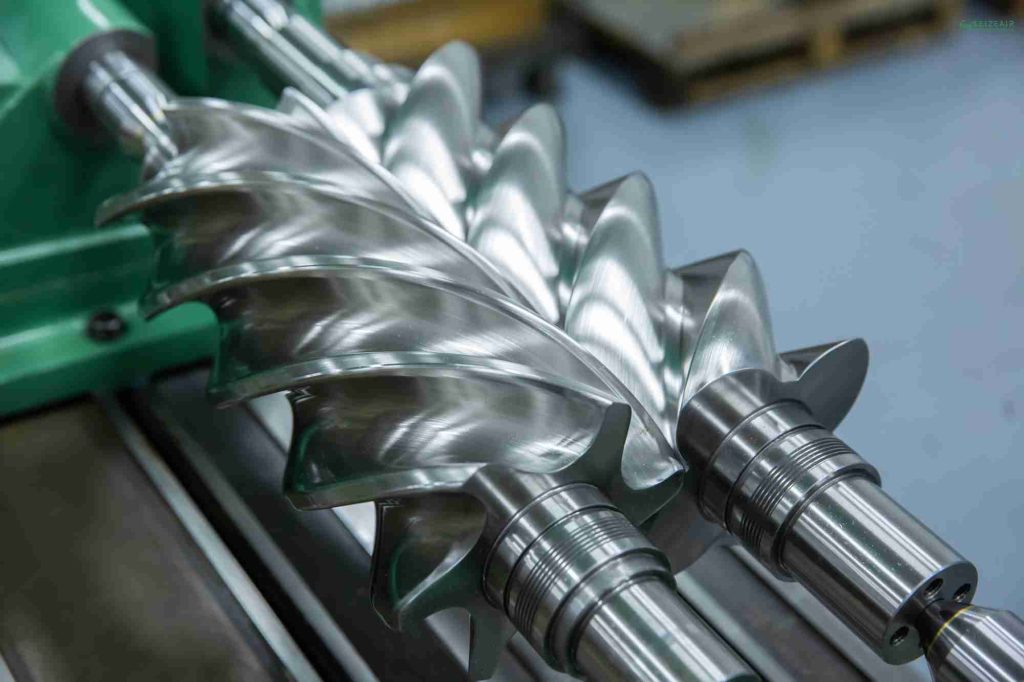
In practice, modern energy saving screw air compressors pair that rotor design with a permanent magnet motor and a variable speed drive. The motor spins only as fast as the demand calls for, and the controller holds the discharge pressure in a tight band instead of letting it drift upward the way older load-unload machines do. Less drift means less wasted pressure, and less wasted pressure means less wasted electricity.
One detail that trips people up: the pressure a compressor “makes” is not the pressure your machine “sees.” By the time air travels through filters, dryers, and dozens of meters of pipe, you lose some pressure. So plants oversize the discharge setpoint to guarantee the end tool still gets enough. A low pressure strategy attacks exactly that waste — generate closer to what is actually needed, and protect the margin with better piping rather than brute force.
Low Pressure vs High Pressure Air Compressor: What’s the Real Difference?
People often ask whether a low pressure unit is just a “weaker” version of a high pressure one. It is not. The difference is mostly about where the energy goes.
| Factor | Low pressure air compressor | High pressure air compressor |
|---|---|---|
| Discharge pressure | 0.5 – 3.0 bar(g) | 7 – 30+ bar(g) |
| Energy per unit of air | Much lower | Much higher |
| Rotor and stage design | Large displacement, low ratio | Smaller displacement, high ratio, often multi-stage |
| Best fit | Bulk air at modest pressure | Tools, PET, lasers, high-force jobs |
| Typical saving vs 7 bar | Up to 20–35% on the same airflow | Baseline |
When a process only needs 2 bar, running a 7 bar machine and “letting the pressure drop” through the line is the most expensive way to do it. You paid to compress to 7 and then threw away 5 bar of that work as heat and noise. A dedicated low pressure air compressor skips that step entirely. For a deeper look at staging, our write-up on the two stage screw compressor explains why pressure ratio matters to efficiency.
Why Does Running at Lower Pressure Save So Much Energy?
Here is the part that matters most. Compression is not a flat “twice the pressure, twice the power” relationship. It is logarithmic, which is good news: small pressure cuts give you meaningful savings, and the math is predictable.
For a fixed amount of air, the theoretical work to compress it follows a polytropic relation. Written out in plain text:
W = ( n / (n – 1) ) × P1 × [ (P2 / P1)^((n – 1) / n) – 1 ]
Where W is the specific work per unit volume, P1 is the absolute inlet pressure, P2 is the absolute discharge pressure, and n is the polytropic exponent (about 1.2 to 1.3 for real air compression). Notice P2 sits inside a power term, not outside it. That is why dropping discharge pressure from 3.0 bar(g) to 2.0 bar(g) does not feel like a tiny 1-bar change — the absolute pressures are 4.0 and 3.0 bar(abs), and the ratio shift is what the formula “sees.”
A useful, simpler way to estimate: for modest pressure changes near operating range, the power needed scales roughly with the natural log of the pressure ratio. So if you cut the absolute ratio, you cut power almost in proportion to that log change. In plain shop terms, every 1 bar you remove from a low pressure setpoint is commonly worth 7 to 12 percent of the compression energy.
A second, quieter saving comes from leakage. Leakage flow scales with the square root of pressure. Lower the system pressure and you literally leak less air, which means the compressor runs less often to top the system back up. Lower pressure also means lower temperatures, gentler seals, and less moisture load on your dryer — all of which nibble at the bill.
Low Pressure Compressor vs Blower
This is the question that actually decides the budget. Below about 1 bar(g), a blower (often a lobe or screw-type blower) is usually the cheaper, more efficient choice. Above roughly 1.5 to 2 bar(g), you cross into compressor territory because blowers lose efficiency and struggle to hold pressure against restriction.
| Need | Choose a blower | Choose a low pressure air compressor |
|---|---|---|
| Pressure under ~1 bar(g) | Yes | Usually overkill |
| Pressure 1 – 3 bar(g) | Marginal | Yes |
| Need clean, oil-free bulk air | Possible, check class | Often yes with oil-free models |
| Long pipe runs with restriction | Risky | Safer, holds setpoint |
The takeaway: do not automatically reach for a compressor just because it is familiar. Map your real pressure demand first. If it sits at 0.5 bar, a blower wins. If it sits at 2 bar with long, lossy piping, a low pressure screw air compressor is the safer bet.
Where Are Low Pressure Air Compressors Used?
Low pressure compressed air shows up in more places than most engineers expect. The common thread is “lots of air, modest push.”
| Industry | Typical pressure | What the air does |
|---|---|---|
| Textile | 1.0 – 2.0 bar(g) | Spinning, cleaning, conveying fiber |
| Cement | 1.5 – 2.5 bar(g) | Pneumatic conveying of powder, cooling |
| Glass | 1.0 – 2.0 bar(g) | Cooling, blow-off, handling |
| Wastewater | 0.3 – 0.8 bar(g) | Diffused aeration (blower zone) |
| Food & beverage | 1.5 – 3.0 bar(g) | Conveying, cleaning, packaging |
| Chemical / pneumatic conveying | 1.5 – 3.0 bar(g) | Moving granules and powders |
In food and pharma lines where purity matters, an oil free water lubricated screw air compressor is often the right call, because the last thing you want is oil aerosol landing in product. The low pressure version keeps the same cleanliness at a fraction of the energy of a 7 bar oil-free unit.
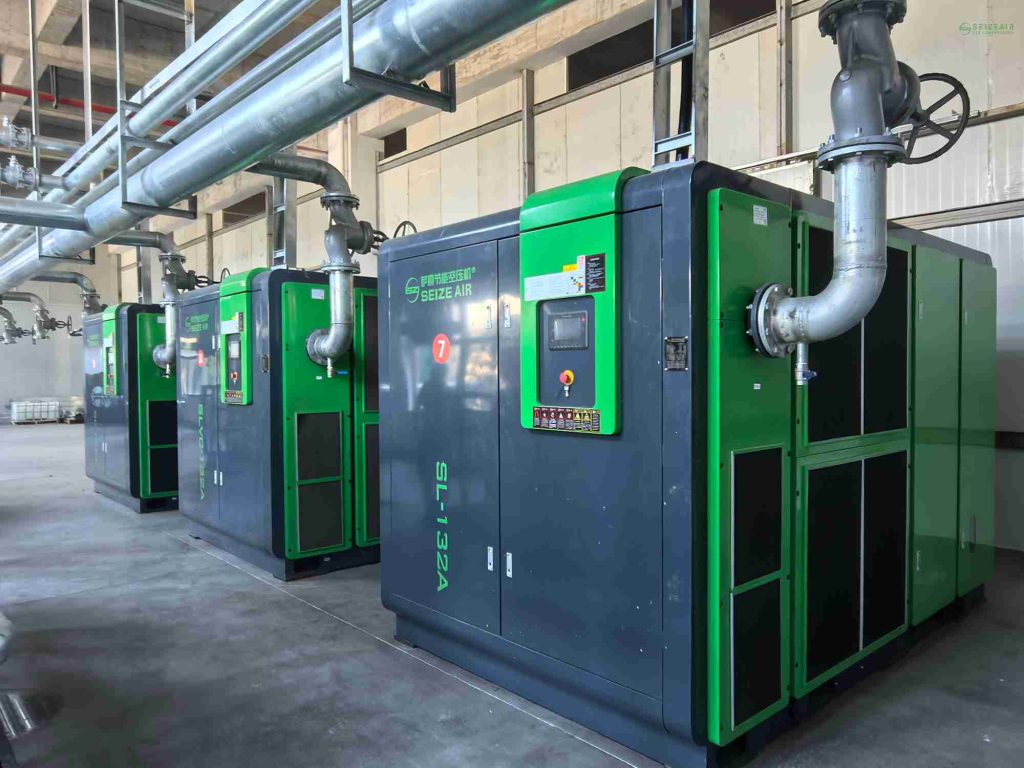
The Role of Permanent Magnet and VSD Technology in Low Pressure Savings
A low pressure machine only reaches its full potential when the drive matches the load. That is where permanent magnet motors and variable speed drives (VSD) earn their keep.
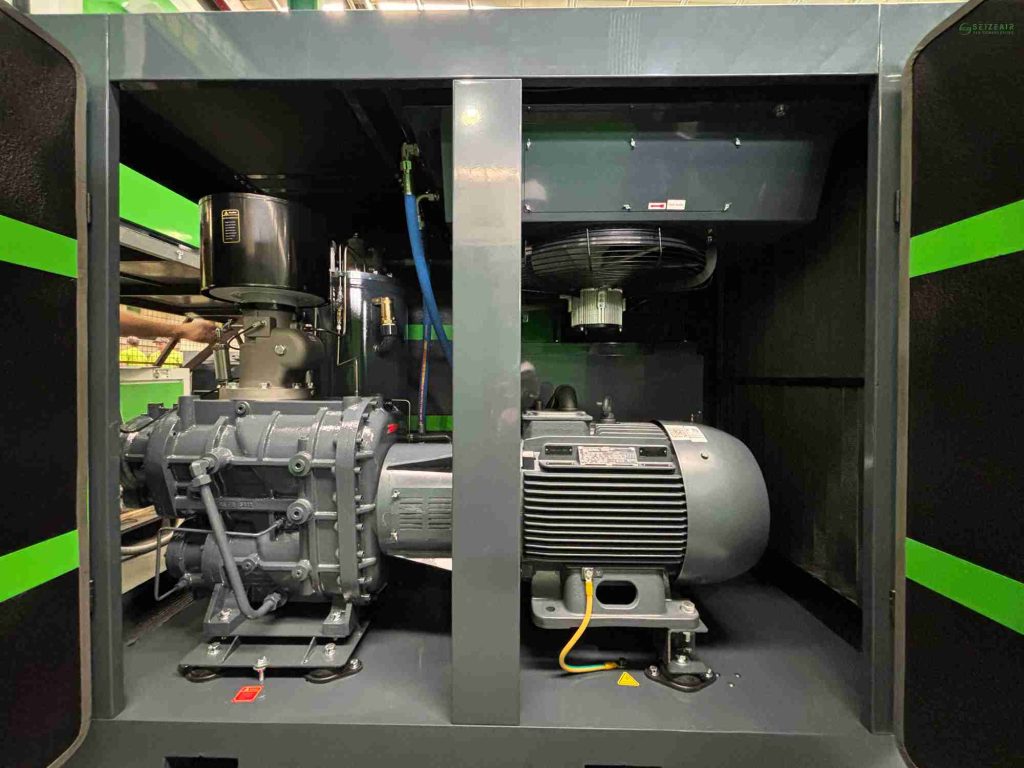
A permanent magnet screw compressor holds high efficiency even at partial load, because the motor stays efficient across its speed range instead of falling off a cliff the way standard induction motors do at low rpm. Pair it with a VSD and the machine tracks demand in real time: it slows down when the line needs less air and speeds up only when it truly must. The alternative — a fixed-speed machine that runs flat-out then dumps excess air through a blow-off valve — is quietly one of the biggest energy drains in any compressor room.
If you are weighing the drive choice, the comparison of variable speed vs fixed speed air compressors breaks down where each one pays off. For low pressure bulk-air duty with a swinging load, VSD is almost always the winner.
Seize Air, for example, builds permanent magnet low pressure packages specifically tuned so the rotor, motor, and inverter speak the same language — which is why the part-load curve stays flat instead of sagging. That kind of integration is what separates a machine that is “efficient on the brochure” from one that is efficient at 3 a.m. when the plant is quiet.
How to Calculate the Energy Savings of a Low Pressure Air Compressor
You do not need a simulation suite to make a business case. Start with specific power, the single most useful number on a compressor nameplate.
SPC = Motor power (kW) / Free air delivery (m3/min)
Lower SPC means more air per kilowatt. When you compare a 7 bar machine and a low pressure machine moving the same FAD, the low pressure unit almost always shows the lower SPC. Multiply that by your real duty to get hard savings.
Annual energy cost = Power (kW) × Running hours per year × Electricity price ($/kWh)
So if a low pressure retrofit drops your absorbed power from 160 kW to 120 kW on a line running 6,000 hours a year at $0.10/kWh, the math is plain:
Saving = (160 – 120) × 6000 × 0.10 = $24,000 per year.
For a quick pressure-based estimate without full data, use the rule of thumb:
Approx saving percent ≈ 7% to 12% per 1 bar removed from a low pressure setpoint.
Our complete guide on how to save energy for air compressors walks through measuring your actual load profile so the estimate is based on your meters, not a guess.
Real-World Energy Savings: Case Comparisons
Numbers stick better with a comparison. The table below models a textile plant moving 40 m3/min of air, running 6,000 hours a year, at $0.10/kWh. It is illustrative, but the shape matches what audits typically show.
| Setup | Discharge pressure | Absorbed power | Annual energy cost | vs 7 bar |
|---|---|---|---|---|
| Standard 7 bar machine | 7.0 bar(g) | 220 kW | $132,000 | Baseline |
| Low pressure, fixed speed | 2.0 bar(g) | 150 kW | $90,000 | -32% |
| Low pressure, PM + VSD | 2.0 bar(g) | 120 kW | $72,000 | -45% |
The jump from “low pressure fixed speed” to “low pressure with PM and VSD” is the part most budgets ignore, and it is often where the payback actually gets exciting. Roughly speaking, a 45 percent cut on a six-figure energy bill pays back a well-specified retrofit faster than most people expect, especially when incentives for efficiency equipment are in play.
How to Choose the Right Low Pressure Air Compressor for Your Plant
Choosing is less about picking the biggest name and more about matching three things: your true pressure demand, your air volume, and how much that volume swings through the day.
| Question | Why it matters |
|---|---|
| What is the real end-use pressure? | Drives the whole energy case |
| What is peak and average FAD? | Sizes the machine and the VSD band |
| How variable is the load? | Decides fixed vs VSD |
| Oil-free required? | Food, pharma, electronics |
| How lossy is the pipe network? | Lower setpoint needs tighter leaks |
When you sit down with a manufacturer such as Seize Air, ask for the specific power curve at your operating point, not just the nameplate. A good supplier will show you part-load efficiency, not only full-load, because that is where low pressure systems spend most of their life. Also pin down service access and spare-part lead time before you sign — a 45 percent saving evaporates fast if the machine is down for three weeks waiting on a seal.
Maintenance Tips to Keep the Savings Coming
A low pressure machine does not stay efficient by itself. The savings you design on day one leak away through neglect, usually in boring, preventable ways.
- Fix leaks on a schedule. At 2 bar you leak less than at 7, but leaks still add up across a big plant.
- Keep inlet filters clean. A clogged inlet forces the machine to work harder for the same air.
- Check the pressure band. If the setpoint has crept up over the years, you are paying for pressure nobody asked for.
- Service the VSD and motor cooling. Heat is the enemy of part-load efficiency.
- Review the dryer. Low pressure air often needs less aggressive drying, so right-size it instead of over-cooling.
Common Mistakes That Wipe Out Your Energy Savings
The usual suspects are predictable. Oversizing “just in case” leaves a VSD parked at low load where it does little good. Setting pressure by habit (“we have always run 7 bar”) ignores that the new process only needs 2. Skipping a leak survey means the compressor quietly runs extra hours to cover losses. And buying on upfront price alone, without the specific power curve, hides the real lifetime cost inside the electricity bill.
The good news is that every one of these is fixable with a half-day audit and a willingness to question the setpoint you inherited.
Conclusion
A low pressure air compressor is not a compromise — for the right duty it is the most direct energy win in the compressor room. Match the pressure to the job, let permanent magnet and VSD technology track the load, and the savings show up on the bill every single month. If your process runs at 1 to 3 bar and you are still feeding it from a 7 bar machine, you are paying for pressure you throw away.
Ready to see what your plant could save? Contact us at Seize Air for a load-profile review and a specific power comparison tailored to your air demand. Our team will help you size the right low pressure package and map the payback before you commit a cent.