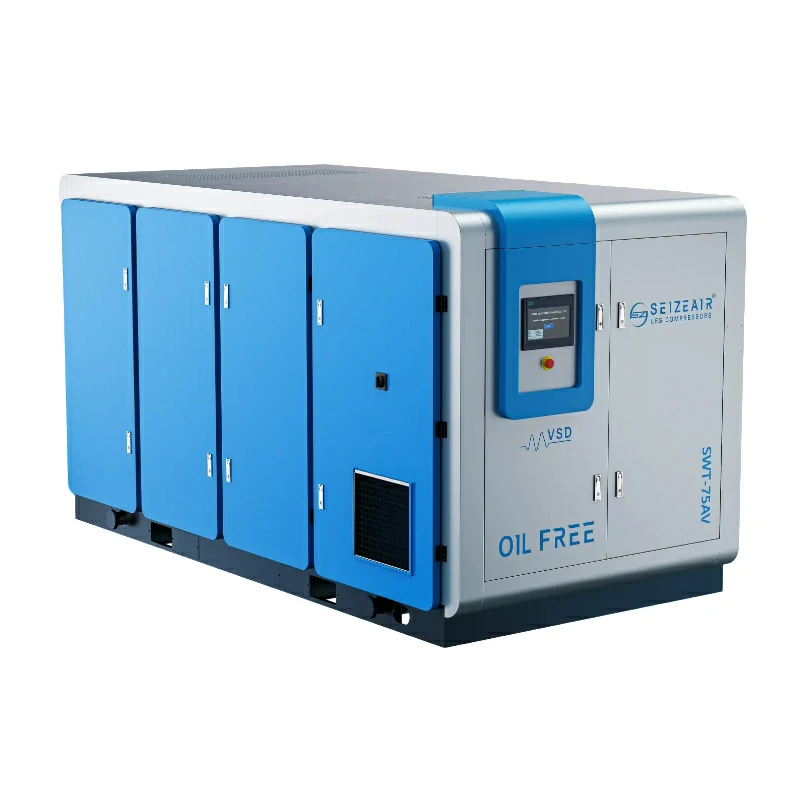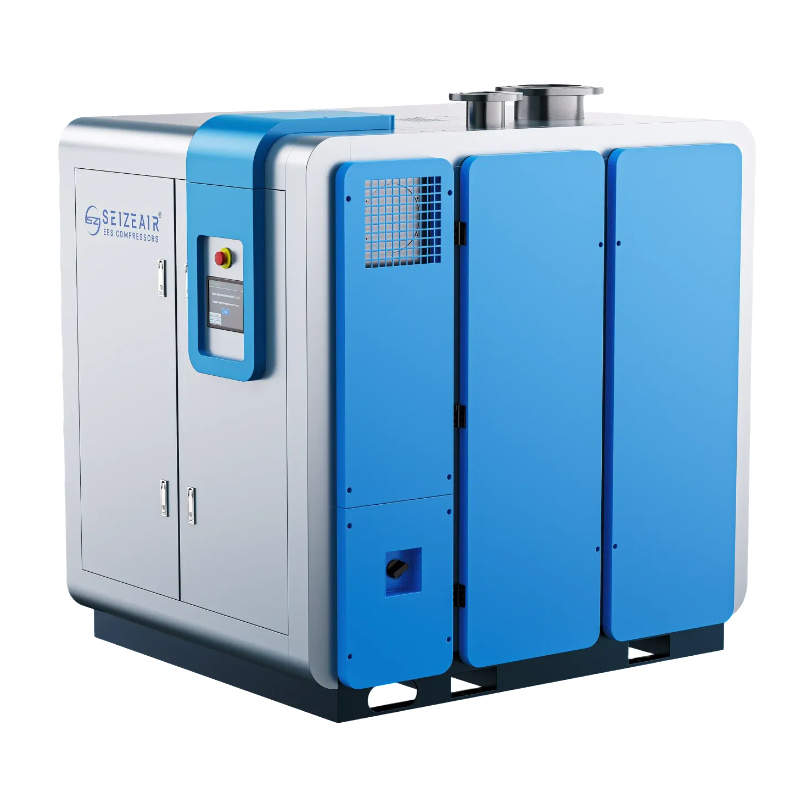


As industries push for higher energy efficiency and “oil-free” mandates become stricter, traditional contact-bearing systems are hitting their physical limits. Enter the magnetic bearing compressor—a leap in engineering that replaces mechanical contact with electromagnetic levitation.
In this guide, we will break down how this technology works, why it is disrupting the market, and whether it’s the right investment for your facility.
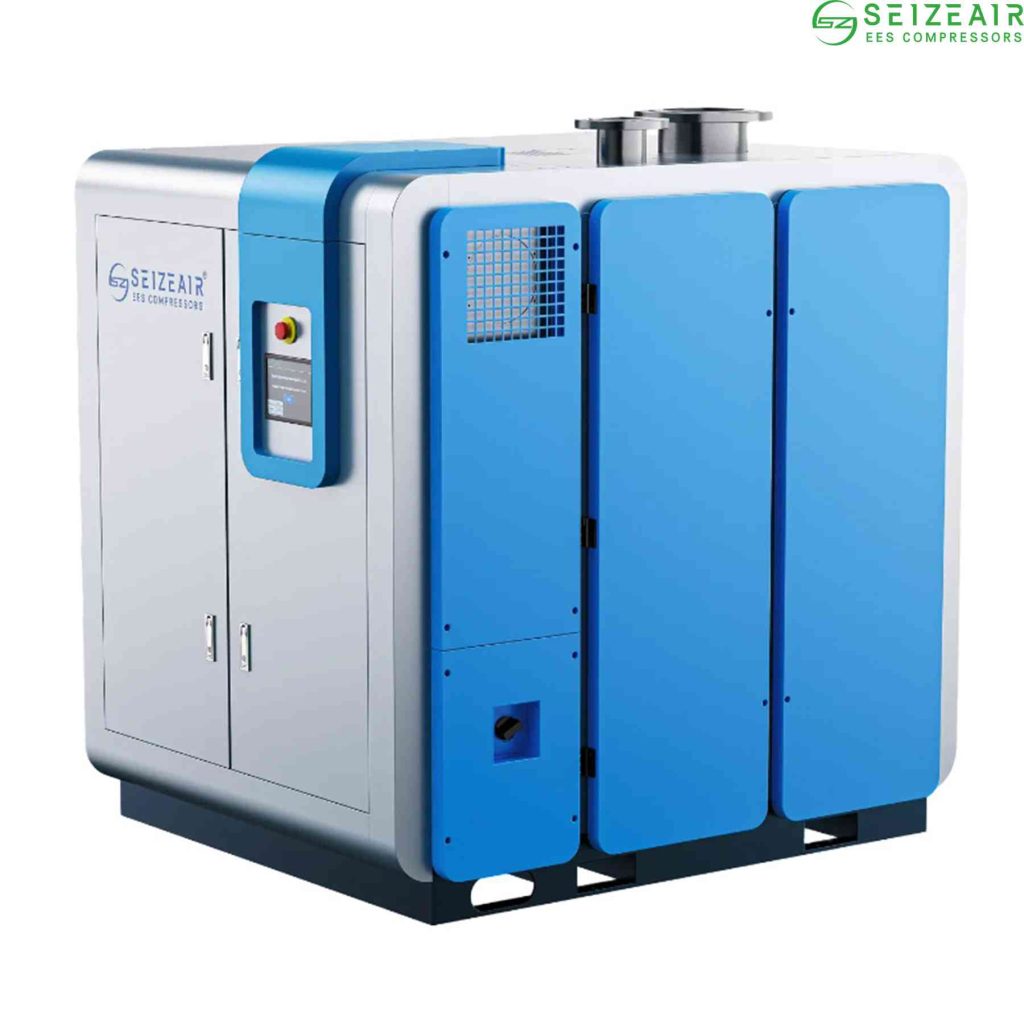
How Does a Magnetic Bearing Compressor Work and Is It Truly Frictionless?
At its core, a magnetic bearing compressor uses Active Magnetic Bearing (AMB) technology. Unlike traditional compressors that rely on ball bearings or hydrodynamic bearings—both of which require oil or grease—these systems use electromagnetic forces to suspend the rotating shaft in mid-air.
The Real-Time Levitation Control Loop
If you’ve ever worked with high-speed centrifugal gearboxes, you know that vibration is the enemy. In a magnetic bearing system, the “bearing” isn’t a solid object; it’s a software-defined magnetic field. This involves a sophisticated feedback loop that operates faster than the human eye can blink.
- Detection: High-resolution sensors detect shaft position at a rate of roughly 15,000 times per second. They look for “radial runout” and “axial displacement.”
- Correction: The digital controller calculates the necessary current to counteract any deviation. It’s essentially a high-speed computer solving physics equations in real-time.
- Execution: Power amplifiers adjust the magnetic flux in the electromagnets, keeping the shaft perfectly centered within a clearance thinner than a human hair.
From a maintenance perspective, this is a dream—you aren’t just preventing wear; you’re monitoring the health of the machine in high-definition. If the shaft starts to wobble due to an external factor, like an unbalanced impeller, the system tells you exactly when and why before a catastrophic failure occurs. This is the hallmark of low maintenance centrifugal air compressors.
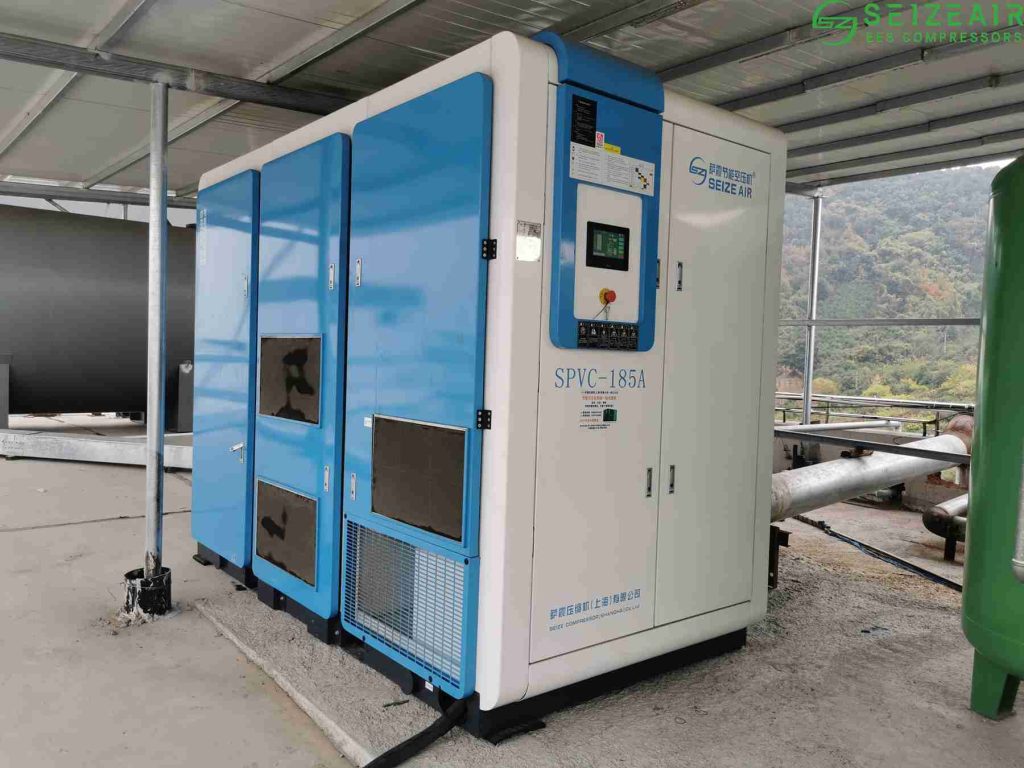
Technical Component Breakdown
| Component | Engineering Function | Practical Advantage |
| Electromagnetic Actuators | Generates the lifting force for the shaft. | No physical contact; zero mechanical wear. |
| Position Sensors | Monitors shaft vibration and displacement. | Provides 24/7 “built-in” vibration analysis. |
| Digital Controller | Manages magnetic flux and logic. | Allows for “soft starts” and variable speeds. |
| Backup Bearings | Mechanical “landing” or “catcher” bearings. | Protects the core during total power loss. |
| Permanent Magnet Motor | Drives the high-speed impeller directly. | Higher power density and less heat. |
What Are the Main Magnetic Bearing Compressor Advantages for Industrial Plants?
When researching magnetic bearing compressor advantages, most plant managers focus on one thing: the bottom line. But if you talk to a floor engineer, they’ll tell you the value is in the silence, the lack of mess, and the stability of the air supply.
100% Oil-Free Operation
Most “oil-free” compressors still have oil in the gearbox to lubricate the gears. There’s always a risk—a seal failure, a leak, or an aerosolized mist bypass. With a high speed oil free centrifugal compressor, there is literally no oil in the machine.
For industries like pharmaceuticals, electronics, and food processing, this isn’t just a “plus”—it’s a risk mitigation strategy. Brands like Seize Air have optimized these systems to ensure that “oil-free” actually means zero contamination risks. This effectively removes the need for expensive downstream oil-removal filtration that creates pressure drops and wastes energy. You save on the filters you don’t have to buy and the pressure you don’t have to lose.
Radical Energy Efficiency
Traditional centrifugal compressors use inlet guide vanes or blow-off valves to manage air demand, which is incredibly wasteful. Magnetic bearing units are almost always paired with High-Speed Permanent Magnet (HPM) motors.
Because there is no mechanical friction to overcome at startup or during low-load periods, the efficiency curve stays remarkably flat. You don’t see the massive drop-off in performance when the factory is only running at 50% capacity. In many real-world audits, we see these units outperforming traditional oil-injected screws by 30% to 50% in annual kilowatt-hour consumption. This makes them a top choice for companies seeking energy saving centrifugal blower solutions or air compressors.
The Death of the “Overhaul” Cycle
In a standard compressor, you are essentially counting down the hours until the bearings fail. It’s a mechanical certainty. Magnetic bearings don’t have a “L10 life” (the basic rating life of a bearing). As long as the electronics are kept cool and the power is stable, the mechanical core of the compressor could theoretically run for decades without intervention. You are trading a $50,000 overhaul every 5 years for a simple annual check of the cooling fans and air filters.
Magnetic Bearing vs. Traditional Air Compressors: Which Is Better for Your Facility?
When we look at system integration, the choice between magnetic and traditional tech often comes down to the environment and the total cost of ownership (TCO).
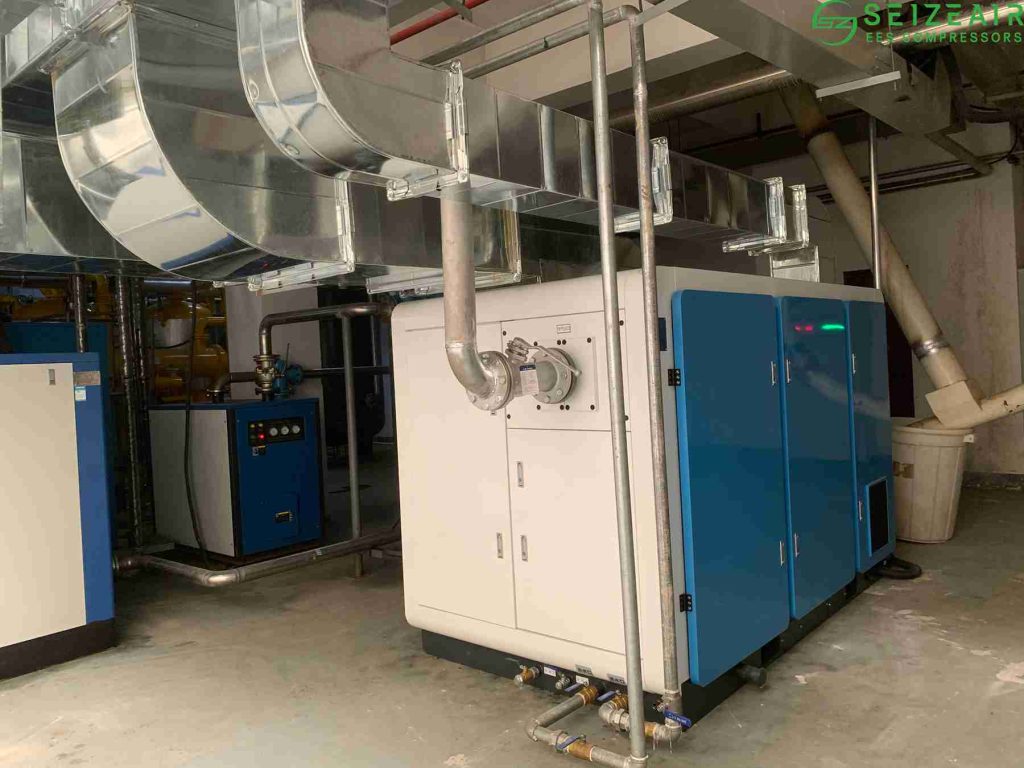
| Feature | Magnetic Bearing Centrifugal | Oil-Injected Screw | Standard Centrifugal (Geared) |
| Friction Level | Zero | High | Medium |
| Lubrication Requirements | None | High (Oil/Filters) | Moderate (Gearbox Oil) |
| Noise Level | Very Low (<75 dB) | High (90+ dB) | Medium (85 dB) |
| Vibration Level | Negligible | Moderate | Moderate |
| Mechanical Wear | None | Progressive | Progressive |
| Reliability | Digital/Solid State | Mechanical/Analog | Mechanical/Complex |
| Typical Lifespan | 20+ Years | 10-12 Years | 15+ Years |
From an installer’s point of view, the magnetic bearing centrifugal blower or compressor is significantly lighter and smaller. You don’t need a massive concrete plinth to dampen vibrations because there are no vibrations. However, you do need to ensure your electrical room is up to the task—these machines are essentially high-powered computers that happen to move air. If your plant has “dirty” power with frequent spikes, you’ll want to discuss power conditioning with your provider.
Are Magnetic Bearing Compressors Reliable and What Happens During a Power Outage?
This is the most common “site engineer” question. The fear is that the shaft will “crash” into the magnets if the power fails. In reality, modern industrial magnetic bearing systems are designed with multiple layers of redundancy.
The “Landing” and Power Loss Scenario
What happens if the power goes out?
- Kinetic Energy Recovery: Many systems use the motor’s back-EMF (Electromagnetic Frequency) as the shaft slows down to keep the bearings powered. The motor becomes a generator, keeping itself levitated until it reaches a safe speed.
- Capacitor Buffers: Internal capacitors provide enough juice for a controlled “landing.”
- Touchdown Bearings: If all else fails, there are carbon or ceramic “touchdown” bearings designed to handle a few full-speed stops without damaging the shaft. It’s a fail-safe environment, but it’s a detail you should verify with your supplier. Seize Air designs focus heavily on this redundancy, ensuring the high-speed core remains protected even in unstable power grids.
The “Electronic” Reliability Factor
While you don’t have to worry about grease, you do have to worry about heat. The “bearings” are controlled by power electronics. If the control cabinet gets to 60°C (140°F), the electronics will fail. Therefore, the reliability of a magnetic bearing air compressor is directly tied to how well you maintain the cooling fans and cabinet filters. It’s a different kind of maintenance, but it’s much cleaner and cheaper.
Common Questions
Why is the initial cost of magnetic bearing compressors so high?
The price reflects the advanced materials—specifically the permanent magnets and the high-speed digital signal processors (DSPs) required for the active control system. However, when you calculate the return on investment (ROI) based on energy savings and the elimination of oil changes/overhauls, the payback period is often less than 2 to 3 years for 24/7 operations.
Can magnetic bearing compressors be used in high-vibration environments?
Actually, they are better for it. Because the bearing is “active,” it can be programmed to dampen external vibrations. However, if the environment is extremely dusty, the cabinet cooling systems must be upgraded to prevent the electronics from overheating.
What is the speed range of these compressors?
We are talking about speeds that would shatter a traditional ball bearing. Most high speed turbo compressor shafts spin between 30,000 and 100,000 RPM. This high velocity is what allows a 200kW magnetic compressor to be a fraction of the size of a 200kW screw compressor.
Is it hard to find technicians for these machines?
It requires a shift in mindset. You don’t need a mechanic with a wrench as much as you need a technician with a laptop. Most diagnostic work is done through the HMI (Human Machine Interface) or remote monitoring. Seize Air provides specialized training to ensure your local teams can handle the digital nature of these units.
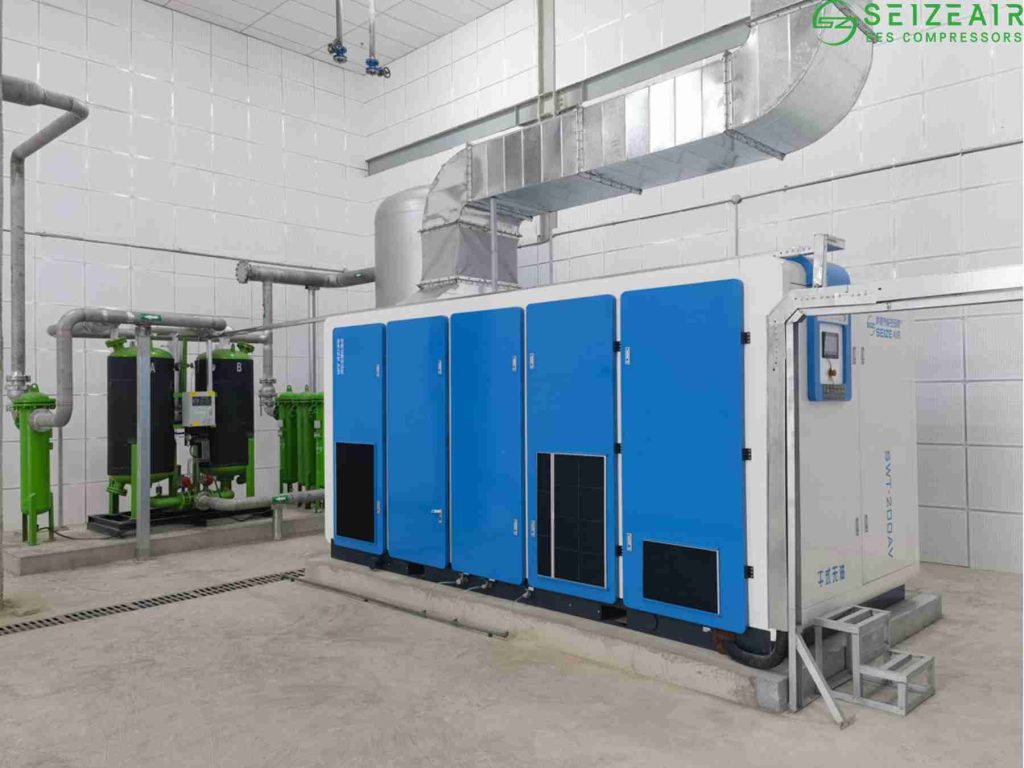
Is it Worth the Investment for Your Factory?
The decision to move to magnetic bearings is a strategic one. It represents a move away from 19th-century mechanical friction toward 21st-century digital control. If your facility operates 24/7 and energy costs are a significant portion of your overhead, the answer is a resounding yes.
The “smart” nature of these machines also means they integrate seamlessly into Industry 4.0 setups. Real-time monitoring of the magnetic bearing’s position acts as a built-in vibration analysis tool, predicting potential issues before they cause downtime. When we integrate these units for clients, we often look at the life cycle cost. When you factor in the lack of oil disposal costs, the zero-cost bearing maintenance, and the avoided production downtime from “oil-in-the-line” events, the magnetic option usually wins.
At Seize Air, we’ve seen the evolution first-hand. By combining the precision of magnetic levitation with our specialized air-end designs, we’ve created a system that doesn’t just save energy—it changes how a plant operates. You move from “reactive maintenance” (fixing what broke) to “predictive management” (watching the data).
Ready to Upgrade Your Air System?
Navigating the complexities of frictionless compressor technology doesn’t have to be a solo journey. Whether you are looking to reduce your carbon footprint or simply want to eliminate the headaches of oil maintenance, our team is ready to help.
Contact Seize Air today for a comprehensive energy audit or a custom quote on our latest magnetic bearing and permanent magnet air solutions. Let’s build a more efficient future together.