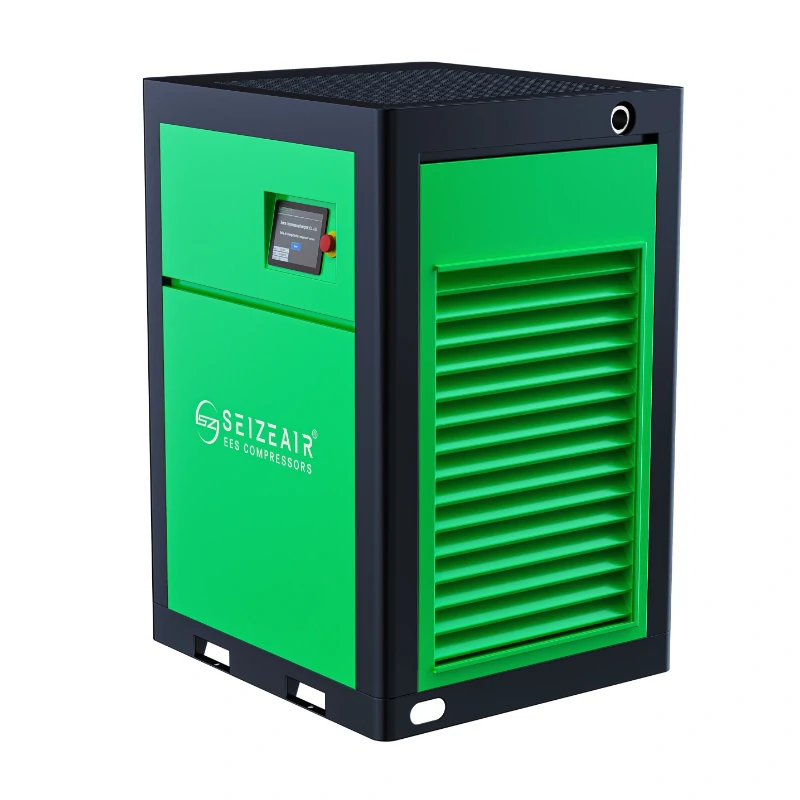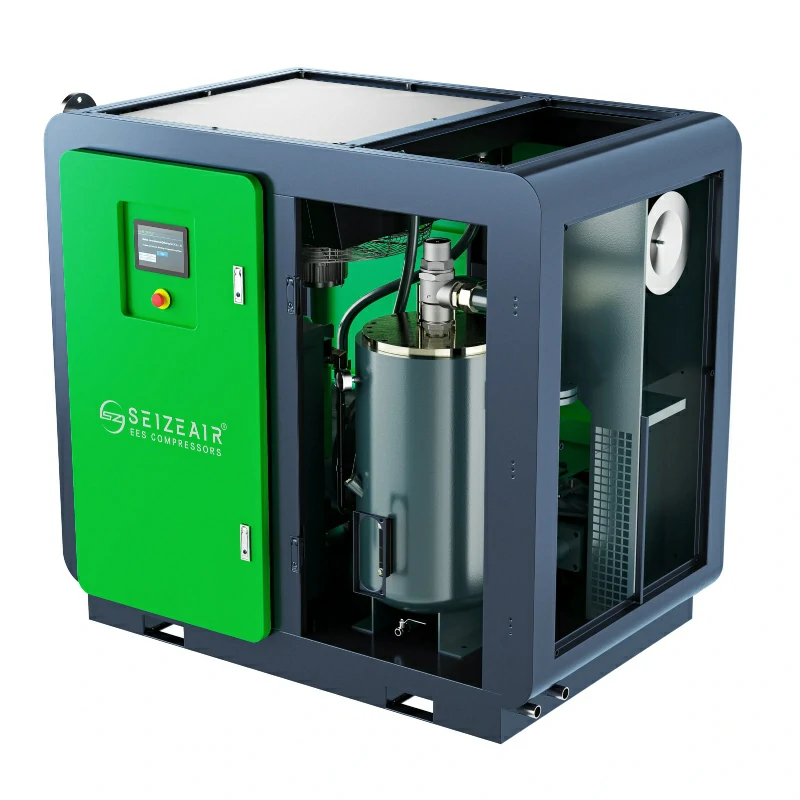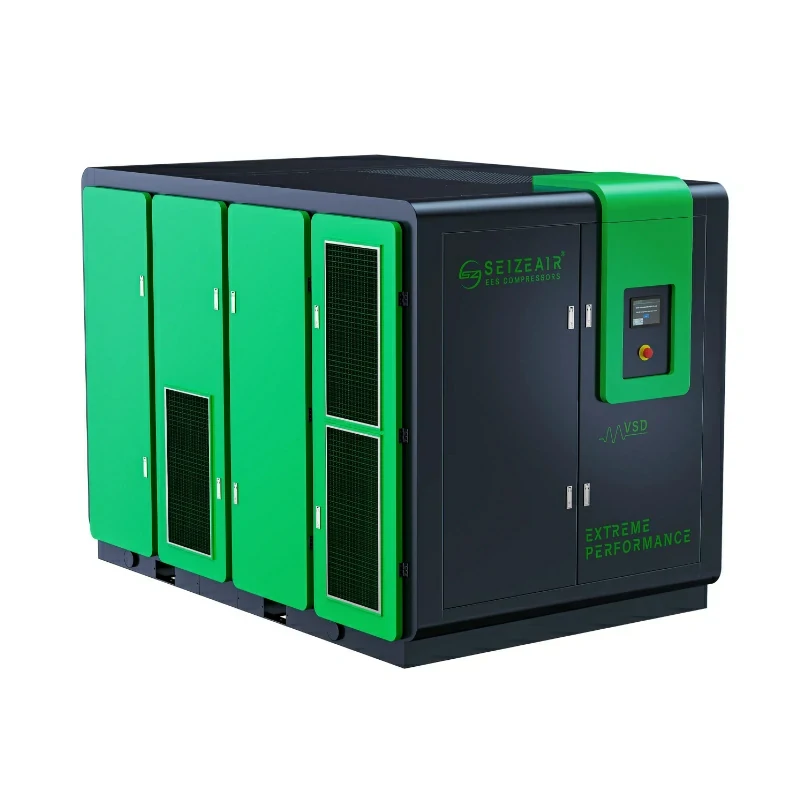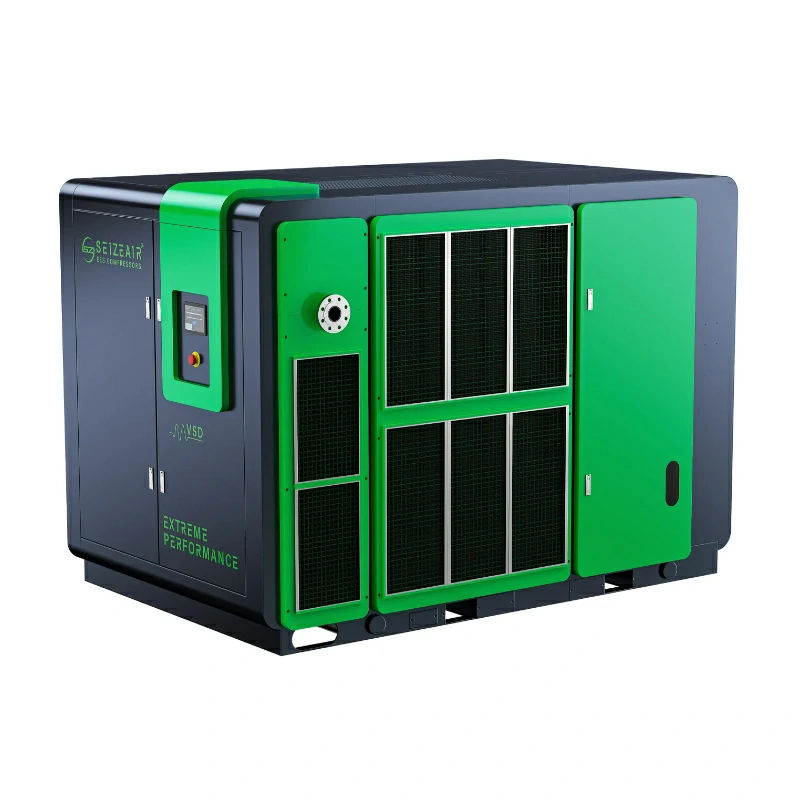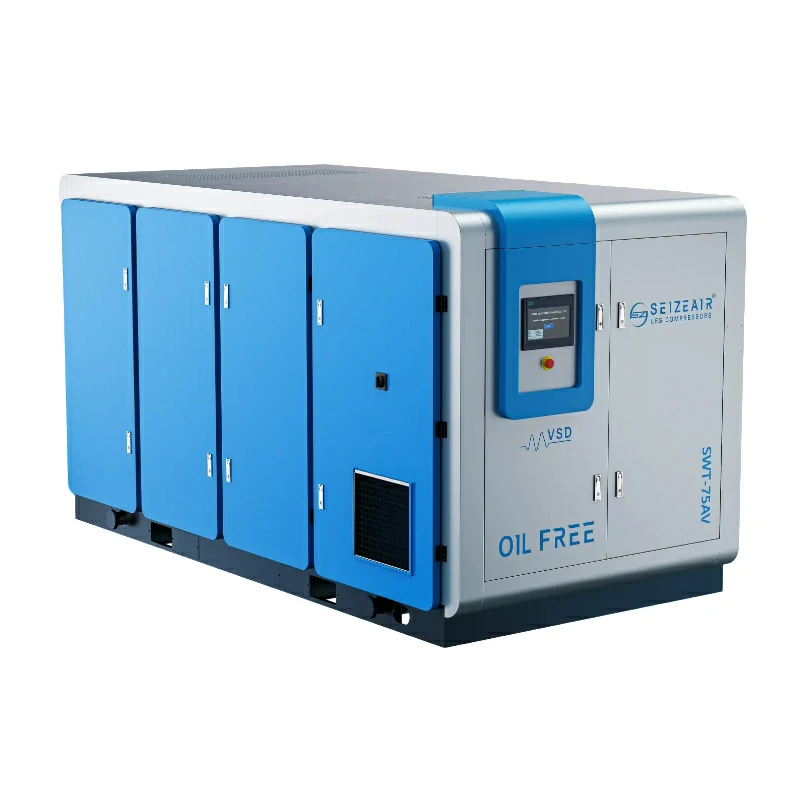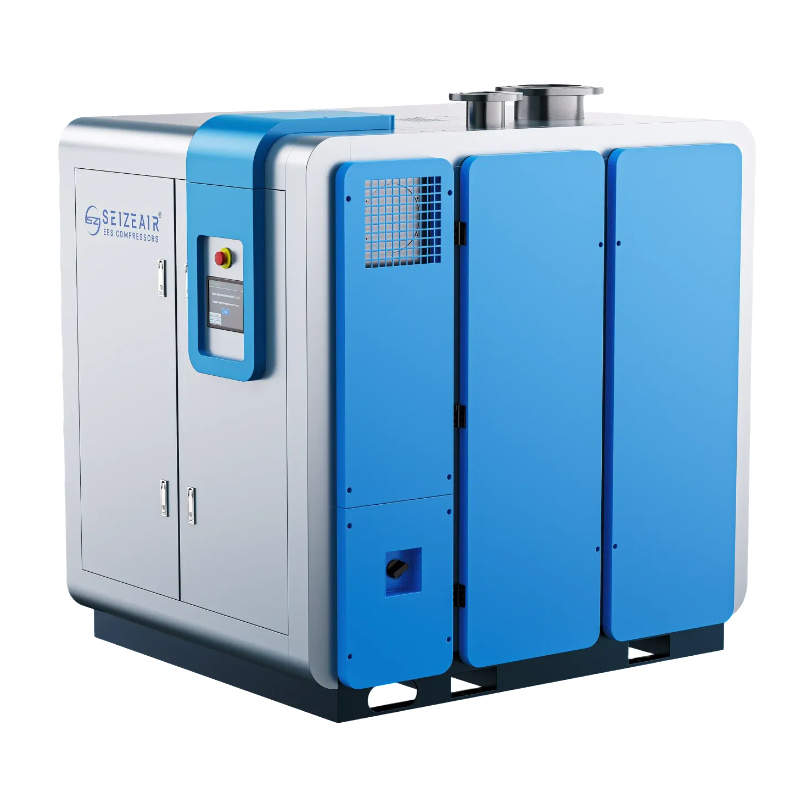


Partnering with an OEM air compressor manufacturer lets distributors, resellers, and engineering firms source custom-built units under their own brand while skipping the capital cost of a factory. Beyond lower unit pricing, the real upside is control — over specifications, margins, lead times, and the customer relationship. The sections below walk through what these partnerships actually involve, how to vet a supplier, and where the money really gets made.
What Does an OEM Air Compressor Manufacturer Do?
An OEM air compressor manufacturer designs and builds compressors that other companies then sell under their own name. The factory owns the tooling, the production line, the engineering team, and usually the certifications. The buyer owns the brand, the channel, and the end customer. That split is the whole point: you get a market-ready product without sinking millions into a plant you would have to staff, audit, and keep running through demand swings.
Most factories in this space also run as an energy-efficient air compressor manufacturer, because efficiency is now the single spec buyers ask about first — energy can be 70% to 80% of a compressor’s lifetime cost, so a few points of efficiency decide whether your brand looks premium or penny-grade. energy-efficient air compressor manufacturer capabilities matter here more than almost any other attribute.
The work breaks down into four layers a good partner handles end to end:
| Layer | What the OEM owns | What you own |
|---|---|---|
| Engineering | Rotors, airends, control logic, testing | Feature priorities, brand voice |
| Production | Machining, assembly, QA, batch records | Forecast, order cadence |
| Branding | Blank hardware, neutral packaging | Logo, manual, livery, model names |
| Compliance | CE/ISO/UL filings, test reports | Local market registration |
OEM vs ODM vs Private Label: What Is the Difference?
These three terms get mashed together constantly, and the confusion costs buyers real money. They describe how much of the product the factory designed versus how much you designed.
| Model | Who designs it | Your involvement | Best for |
|---|---|---|---|
| OEM (Original Equipment Manufacture) | Factory builds to your drawings/spec | High — you supply spec or co-develop | Distributors with a clear product vision |
| ODM (Original Design Manufacture) | Factory designs, you rebrand | Low — pick from existing platforms | Fast market entry, low R&D |
| Private label | Factory designs + builds, you badge it | Minimal — branding only | Resellers wanting speed over differentiation |
An air compressor OEM ODM service usually means the factory offers both routes and lets you sit anywhere on that spectrum. A white label air compressor supplier sits at the private-label end — fastest to launch, weakest on differentiation. The smart play for most B2B brands is OEM or ODM with light customization, because that is where margin and defensibility meet.
Why Build Your Own Compressor Brand Instead of Reselling a Big Name?
Reselling a legacy brand is easy to start and hard to profit from. You inherit their price sheet, their territory rules, and a customer who remembers the manufacturer’s name, not yours. The moment the factory runs a promo or a cheaper rival appears, your “relationship” evaporates.
| Resell a big brand | Build your own (OEM) | |
|---|---|---|
| Unit margin | 8%–15% | 25%–45% |
| Customer remembers | Their brand | Your brand |
| Pricing control | None | Full |
| Switching cost for buyer | Low | High (spare parts, familiarity) |
| Speed to launch | Immediate | 6–14 weeks first run |
The gap widens over time. A custom air compressor manufacturer for resellers lets you own the recurring spare-parts revenue too — filters, separators, and consumables that a customer reorders for a decade. That is the part of the P&L legacy brands keep for themselves.
Can You Put Your Own Logo on an Air Compressor?
Yes, and it is routine. This is the core of air compressor private labeling and the reason most regional distributors eventually move away from borrowing someone else’s name. The factory ships neutral units; your logo goes on the housing, the nameplate, the control-screen boot screen, the carton, and the manual.
For a step up, an air compressor co branding manufacturer will run a dual badge — your mark alongside theirs — which reads as “engineered with a serious partner” and helps you borrow credibility while you build your own. Many first-time exporters start here before dropping the factory mark entirely.
What Can Be Customized When You OEM an Air Compressor?
More than most buyers expect. A competent custom OEM air compressor program will let you tune the things your market actually cares about, not just the paint.
| Customization area | Typical options | Why it matters |
|---|---|---|
| Electrical | Voltage 220/380/440/575V, 50/60Hz, single/3-phase | Match local grid, avoid retrofit anger |
| Mechanical | Pressure band, flow rate, tank size, cooling type | Fit the application exactly |
| Control | PLC brand, remote IoT, multi-unit sequencer | Integration with buyer’s plant |
| Branding | Logo, color, model code, boot screen | Own the shelf presence |
| Packaging | Carton, crate, instruction languages, QR docs | Cut downstream handling cost |
The bulk of private-label volume still runs on oil-injected screw air compressors, because they cover 80% of general industrial duty at a price point that leaves room for everyone. Pharma, food, and electronics lines instead lean toward oil-free air compressors, where Class 0 purity is non-negotiable and the premium is easier to defend.
What Certifications Should a Reliable OEM Air Compressor Manufacturer Hold?
Certifications are your export license. Without them, customs and procurement departments will block you before a single demo runs. Before signing, verify the supplier’s international certifications — not a screenshot, the actual valid certificate numbers you can cross-check.
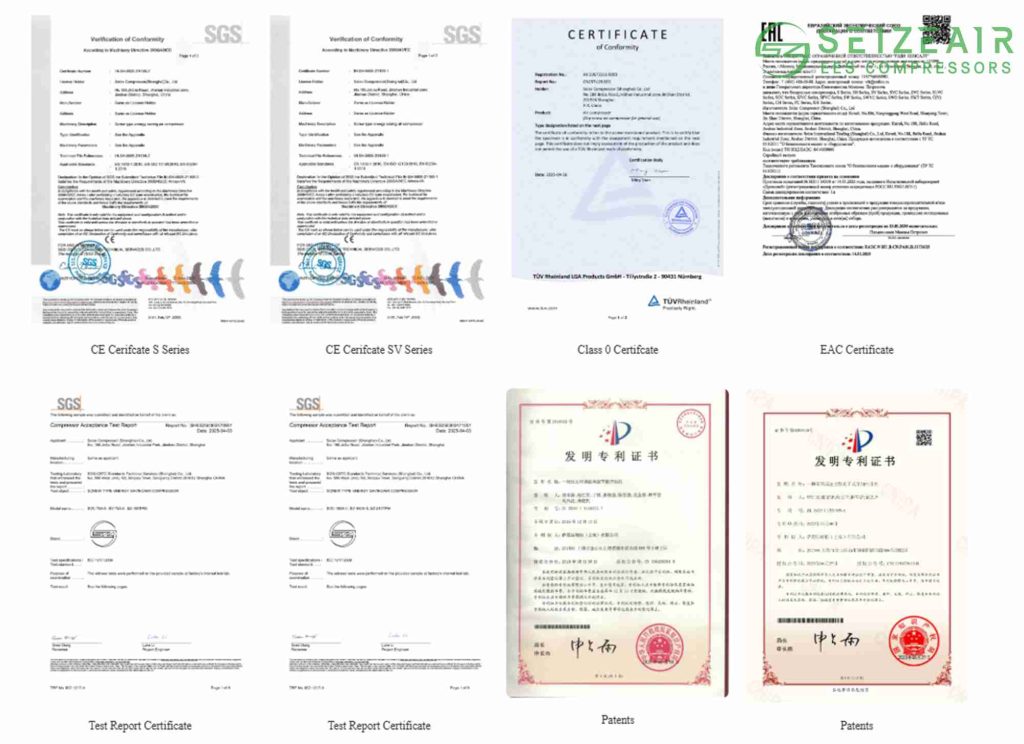
| Certificate | Covers | Needed for |
|---|---|---|
| ISO 9001 | Quality management system | Every serious tender |
| CE | EU machinery & EMC directives | Europe |
| UL / CSA | North American safety | USA, Canada |
| Class 0 (ISO 8573-1) | Oil-free air purity | Food, pharma, electronics |
| ISO 14001 | Environmental management | EU / ESG-driven buyers |
| Patents | Airend / VSD / cooling IP | Long-term defensibility |
A white label air compressor supplier that cannot show current certs is a liability, not a shortcut. The certificate page should be live and verifiable, not a PDF that “we’ll email later.”
How Do You Find and Vet a Reliable OEM Air Compressor Manufacturer?
This is where most first deals go wrong — buyers pick on price, then discover the factory has never shipped to their region or cannot document a single airend test. We cover the full checklist in our guide on how to choose a reliable industrial air compressor supplier, but the short version is a scored audit.
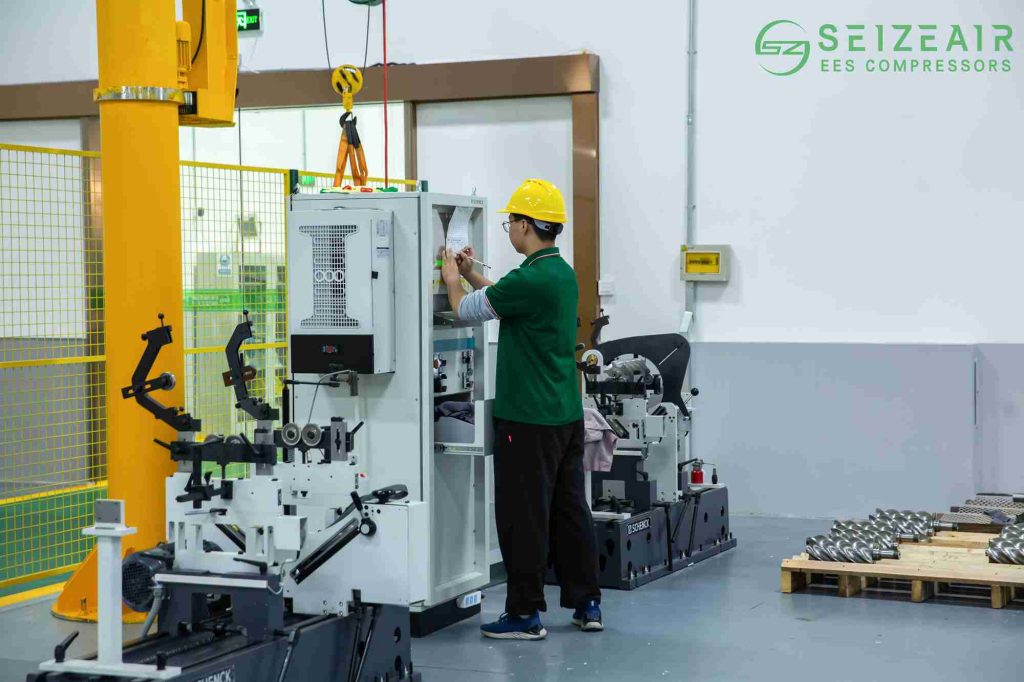
| Check | Pass signal | Red flag |
|---|---|---|
| Years shipping to your region | Named references, not “many” | Vague or none |
| In-house airend machining | Owns rotor grinders | Buys airends from unknown 3rd party |
| Test rig on site | Live performance report per unit | “We trust the design” |
| Spare-parts continuity | 10-yr parts guarantee in writing | Discontinued after 2 years |
| Engineering response | Answers spec questions in days | Only sends price lists |
What Is the Typical MOQ, Lead Time, and Cost for OEM Air Compressor Orders?
Buyers ask this within the first five minutes, so here is a realistic band for a mid-size OEM screw air compressor factory. Numbers shift with power range and customization depth, but the shape holds.
| Order profile | MOQ | Lead time | Indicative unit saving vs branded |
|---|---|---|---|
| Private label, stock model | 10–20 units | 4–6 weeks | 20%–30% |
| OEM, light custom | 20–50 units | 6–10 weeks | 25%–38% |
| OEM, full custom platform | 50–100 units | 10–16 weeks | 30%–45% |
| Containerized / project | 1–2 containers | 8–14 weeks | 35%–50% |
A low MOQ OEM air compressor program exists at the smaller end, but watch the tooling math: the factory amortizes molds and jigs across your volume, so very small runs carry a per-unit premium. The sweet spot for a new brand is usually 30–60 units of one model — enough to dilute tooling, small enough to risk-test the market.
How Long Does OEM Air Compressor Production Take? (The Real Flow)
People picture “they build it and ship it.” The actual path has more gates, and each one is where quality is either locked in or lost.
RFQ → Engineering review → Prototyping → Pilot run →
Mass production → QA + cert → Packing → Global shipment
Many buyers ask for a factory tour and production line review before signing the first contract. A transparent OEM air compressor manufacturer will welcome it — video call on the line counts if travel is hard — because seeing the rotor grinders and test rigs answers more than any brochure.
Do OEM Air Compressor Manufacturers Ship Worldwide and Offer Warranty?
The good ones do both, and the warranty is where partnerships are won or lost. What matters more is the after-sales service and global support behind the unit: local stocking of wear parts, remote commissioning, and a response clock that does not slip across time zones.
| Support element | Entry-level supplier | Strong OEM partner |
|---|---|---|
| Warranty | 12 months | 24 months + extended options |
| Spare parts stock | Ships from China on demand | Regional warehouse |
| Commissioning | PDF manual only | Remote + on-site option |
| Response time | “We’ll get back to you” | SLA in writing (24–48h) |
An air compressor contract manufacturing agreement should spell out all four rows. If the supplier dodges the SLA conversation, that is your answer about their support.
OEM Partner vs Branded Reseller vs Building Your Own Plant: Where Is the Real Margin?
Three ways to get compressors to market. Only one avoids a nine-figure bet while still owning the brand. The payback math is plain text, not magic:
Margin per unit = Your sell price − OEM unit cost − freight − duty
Payback period (months) = Tooling cost ÷ Monthly margin gain
10-yr value = (Margin per unit × Annual volume × 10) + Spare-parts revenue
| Route | Upfront capital | Brand owned? | Margin | Risk |
|---|---|---|---|---|
| Resell big brand | Low | No | 8%–15% | Low |
| OEM / private label partner | Low–Medium | Yes | 25%–45% | Medium |
| Build your own plant | Very high | Yes | 40%–55% | Very high |
For nearly every regional distributor, the air compressor manufacturing partner model sits in the sweet spot: brand ownership and healthy margin without a balance sheet that keeps you awake at night.
Which Industries Gain the Most from an OEM Air Compressor Partnership?
| Industry | Preferred platform | Why OEM wins |
|---|---|---|
| Textile | Oil-injected screw, VSD | Energy is the biggest cost; efficiency sells |
| Food & beverage | Oil-free Class 0 | Purity compliance + own the audit story |
| Pharma | Oil-free, validated | Documentation and traceability under your brand |
| Mining | Diesel mobile, heavy duty | Rugged spec + regional service bundle |
| Electronics | Oil-free, low dew point | Clean dry air protects yield |
| General fabrication | Oil-injected, all-in-one | Price-sensitive, volume-driven |
A custom OEM air compressor tuned per industry lets you walk into a tender already speaking the buyer’s language — flow, pressure, dew point, Class 0 — instead of a generic catalog.
How Seize Air Supports OEM and Private Label Partners
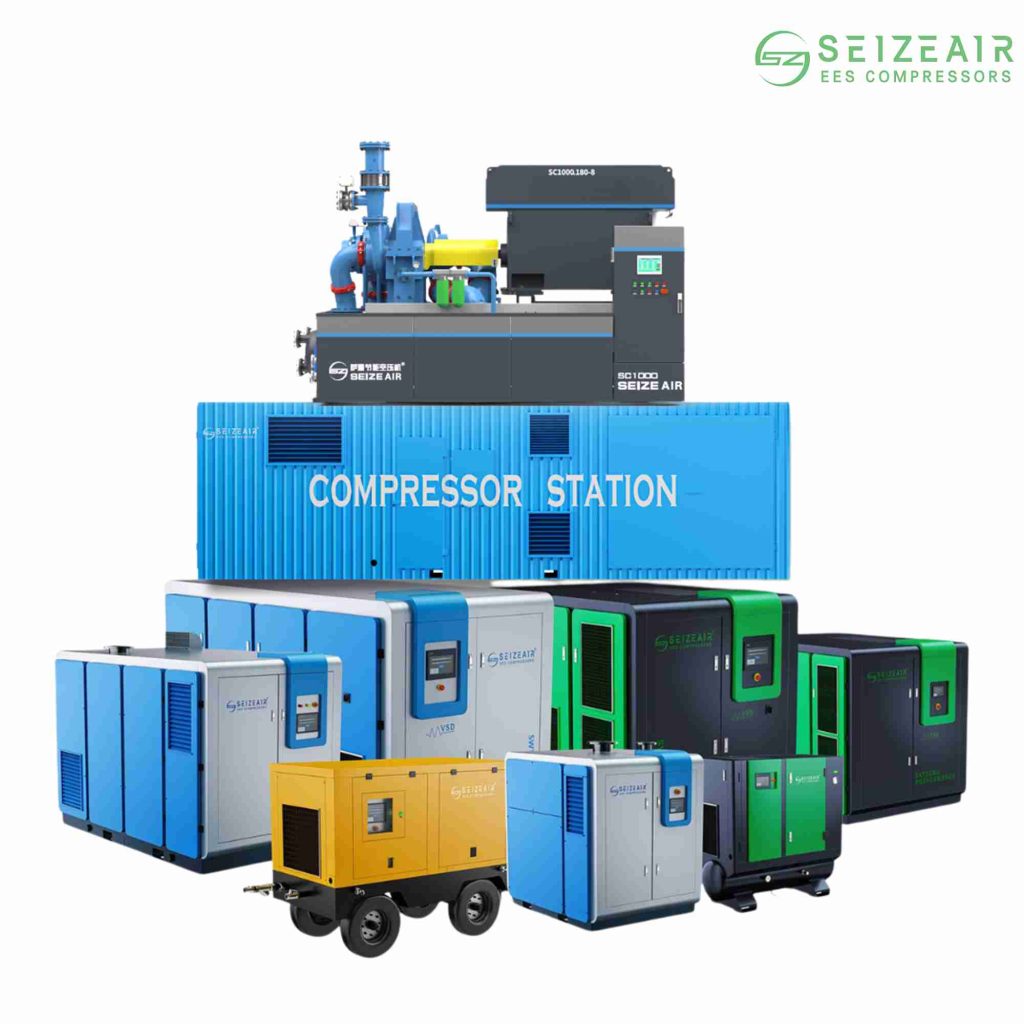
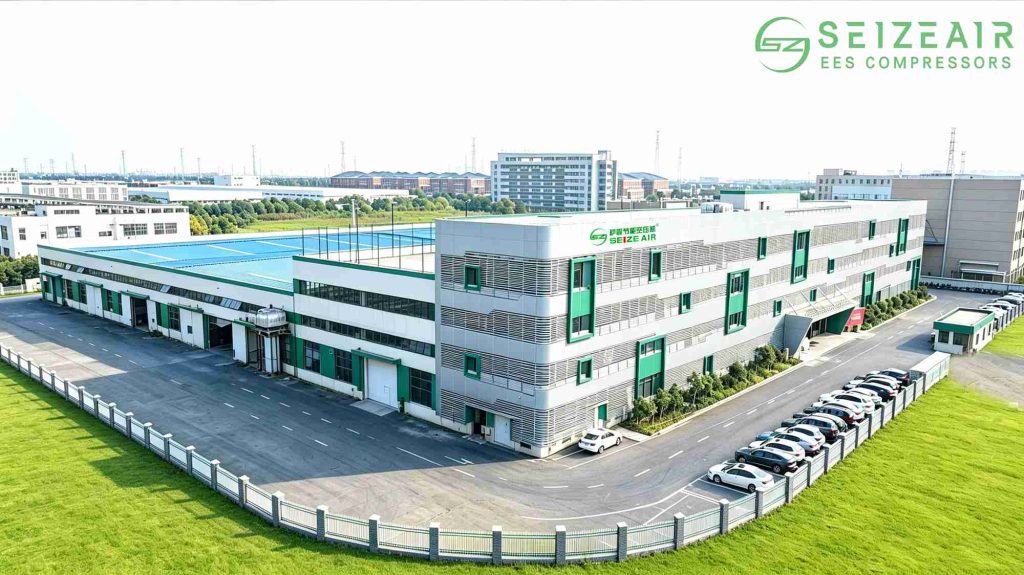
As an OEM air compressor manufacturer with in-house airend machining and more than 100 granted patents, Seize Air runs both OEM and ODM programs for distributors across 200+ countries and regions. The practical difference for a partner is simple: you get neutral hardware, your brand on it, and a Shanghai production base that already carries the certs most markets demand. Private-label screw and oil-free lines are the most common starting point, with custom voltage, control, and livery handled inside the normal lead time rather than as a premium “special project.”
What Are the Most Common Mistakes When Choosing an OEM Air Compressor Manufacturer?
| Mistake | What it costs you | Better move |
|---|---|---|
| Choosing on unit price alone | Hidden freight, weak support | Score total landed cost |
| Skipping the factory audit | Undocumented quality | Tour or live line video |
| No written SLA | Support vanishes post-sale | Lock response time in contract |
| Ignoring spare-parts plan | Lost 10-yr revenue | Negotiate parts continuity |
| Over-customizing first run | Slow, expensive launch | Start light, iterate |
An air compressor private label program should feel like a launch, not a gamble. The fixes above are cheap compared to a container of units nobody can service.
Where Is OEM Air Compressor Manufacturing Headed Next?
Three shifts are already reshaping the air compressor ODM factory landscape. First, variable-speed drives are now default, not premium — fixed-speed is becoming the budget line. Second, IoT monitoring is moving from optional add-on to expected, because remote fault prediction protects both your brand and the factory’s warranty exposure. Third, modular platforms let one airend family spawn dozens of branded SKUs, which means a custom OEM air compressor can look unique without a unique production line behind it.
For distributors, that last point is the unlock: you get apparent breadth and differentiation on a shelf, while the factory keeps costs low by reusing proven cores. Everyone wins except the legacy brand charging you for the same thing with their logo.
Conclusion
Choosing the right OEM air compressor manufacturer is less about finding the cheapest unit and more about securing a manufacturing partner that protects your margin, your brand, and your customers for the next decade. The wins stack: better unit economics, a brand the market remembers, recurring spare-parts revenue, and a product tuned to the industries you actually sell into. If you are weighing a private-label or full OEM program for your market, the fastest next step is to contact our OEM team with your target specs and volume — Seize Air will return a priced, cert-ready proposal and a realistic lead time so you can model the numbers before committing a dollar.