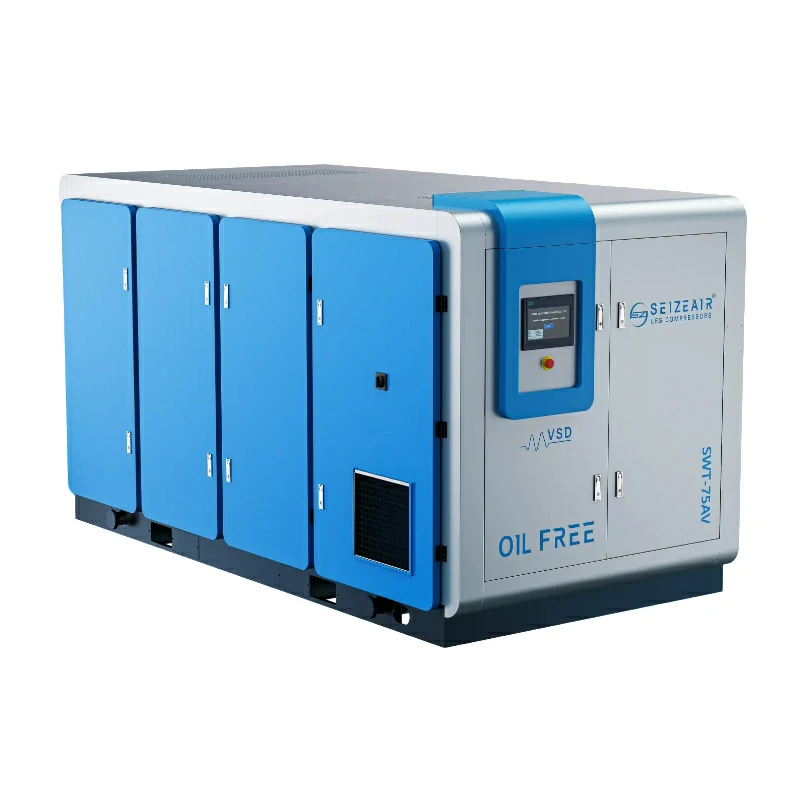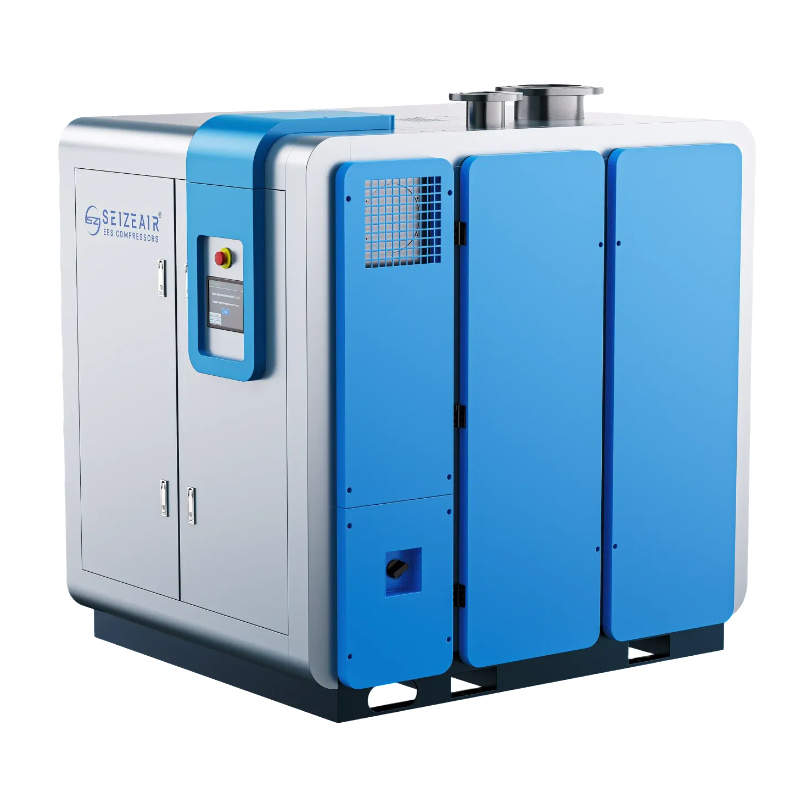


The demand for high-purity compressed air has moved from a “luxury” to a baseline requirement. Whether you are managing a large-scale food processing facility, a pharmaceutical lab, or a heavy manufacturing plant, the stakes of air quality are incredibly high.
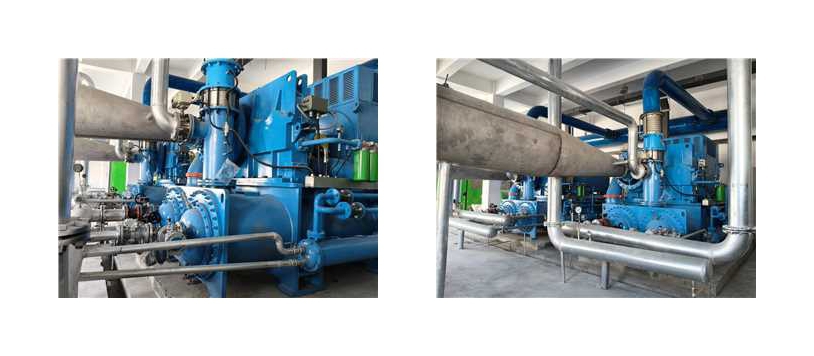
While many technologies exist, the oil-free centrifugal compressor stands out as the gold standard for high-volume, mission-critical applications. But why exactly is this technology dominating the market, and is it the right investment for your specific floor?
How does an oil free centrifugal compressor work to ensure 100% air purity?
To understand why these machines are the preferred choice for sensitive environments, we have to look past simple mechanics and into the physics of dynamic compression. Unlike reciprocating or screw compressors that rely on positive displacement—physically trapping and squeezing air—an oil free centrifugal compressor is a kinetic machine. It uses high-speed rotating impellers to impart velocity to the air, which is then converted into pressure through a stationary diffuser.
The Mechanical Isolation Advantage
From a field engineer’s perspective, the “oil-free” designation isn’t just a marketing label; it is a structural reality. In a typical multi-stage centrifugal air compressor, the lubrication system for the gearbox is physically separated from the compression chambers. There are atmospheric vents located between the oil seals and the air seals. This ensures that even in the event of a seal failure, the lubricant is vented to the atmosphere rather than migrating into the process air. This is the only way to achieve a true ISO 8573-1 Class 0 oil-free air certification that is “fail-safe.”
Comparative Reliability Architecture
| Feature | Centrifugal Compressor | Rotary Screw (Oil-Injected) | Oil-Free Rotary Screw |
| Compression Method | Dynamic (Kinetic Energy) | Positive Displacement | Positive Displacement |
| Contacting Parts | None in the air path | Rotors in contact with oil | Timing gears/Coated rotors |
| Air Purity | Inherently Class 0 | Dependent on filtration | Dependent on coatings |
| Risk of Oil Carryover | Zero | High if filters fail | Moderate if seals/coatings degrade |
| Maintenance Cycle | Very Long (Predictive) | Frequent (Consumables) | Moderate (Critical Rebuilds) |
When you integrate a Seize Air centrifugal system, you are removing the “human error” variable from your air quality equation. You no longer have to worry if a technician forgot to change a separator element or if a filter has reached its saturation point.
Why is Class 0 oil-free air critical for pharmaceutical and food industries?
If you are a decision-maker in the pharmaceutical, food and beverage, or electronics sectors, you aren’t just buying air; you are buying risk mitigation. A common question in the industry is: Can I use an oil-injected compressor with high-efficiency filters instead? The answer, technically, is yes—until a single component fails.
The Cost of Contamination
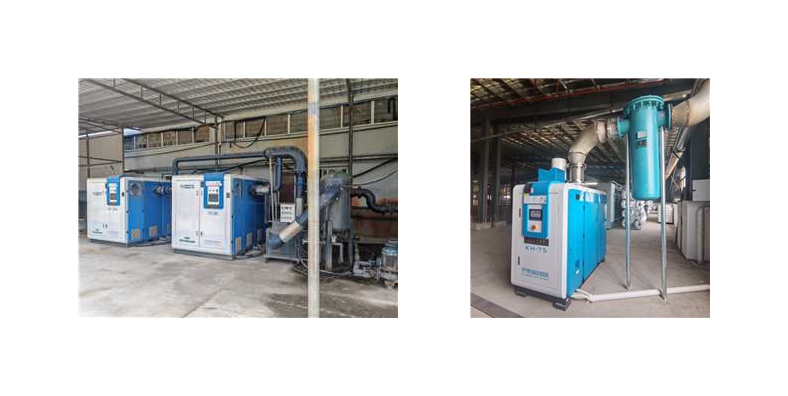
In a large scale food processing air system, a single drop of oil can trigger a nationwide product recall, costing millions in revenue and irreparable brand damage. Oil vapor can also foul sensitive sensors in semiconductor manufacturing or cause “fisheyes” in high-end automotive paint booths.
- Pharmaceuticals: Total sterility and zero hydrocarbons are required to prevent chemical reactions with active ingredients.
- Food & Beverage: Prevents the alteration of taste, odor, and shelf-life.
- Textile Manufacturing: Eliminates oil stains on high-value fabrics during the air-jet weaving process.
By utilizing Seize Air technology, plants move from a “reactive” safety posture to a “preventative” one. The inherent design of the centrifugal machine means there is no oil in the compression stage to begin with, making contamination a physical impossibility rather than a filtered probability.
What is the total cost of ownership for centrifugal vs screw compressors?
As a system integrator, I often see companies focus solely on the “Sticker Price” (CAPEX). This is a strategic mistake. Over a 10-year period, the purchase price of an industrial centrifugal air compressor is usually less than 15% of the total cost. Energy consumption represents nearly 80%, with maintenance making up the remainder.
Energy Efficiency and Isentropic Gains
The efficiency of centrifugal compressors at full load is significantly higher than that of screw compressors. This is due to the lack of internal friction and the ability to use intercoolers between stages. In a three-stage centrifugal design, the air is cooled back toward ambient temperature between each impeller, which reduces the work required for the next stage of compression.
Maintenance
In the field, we see that centrifugal compressor maintenance costs are much lower because there are no touching parts in the air end.
- No Rotor Wear: Unlike oil-free screws, which have rotors that lose their Teflon coating over time (leading to a 10-15% efficiency drop), centrifugal impellers are typically made of high-grade stainless steel or titanium that maintains its aerodynamic profile for decades.
- Long-Life Bearings: Utilizing hydrodynamic bearings means the shaft floats on a film of oil, resulting in zero metal-to-metal contact during operation.
- Predictive Monitoring: Modern systems monitor vibration and temperature at the micron level, allowing you to plan maintenance months in advance rather than reacting to a catastrophic breakdown.
How long does a centrifugal compressor last in a 24/7 manufacturing environment?
One of the most frequent PAA queries is: Is the lifespan of a centrifugal compressor worth the investment? The reality is that these machines are designed for the “long game.” While a standard rotary screw might require a major “air-end rebuild” every 40,000 to 50,000 hours, a well-maintained oil free centrifugal compressor can easily operate for 20 to 25 years without a fundamental overhaul.
Engineering for Longevity
The mechanical simplicity of a single rotating shaft with impellers means there are fewer points of failure. Seize Air units are engineered with robust gearboxes and high-efficiency cooling jackets that prevent the thermal stress often seen in smaller, high-heat displacement machines.
Performance Over Time
| Metric | Centrifugal (10 Years) | Oil-Free Screw (10 Years) |
| Efficiency Change | < 1% loss | 10–15% loss (coating wear) |
| Major Overhaul | Not typically required | 1–2 full air-end replacements |
| Reliability Rating | 99.9% Uptime | 95-97% Uptime |
| Parts Cost | Low (Filters/O-rings) | High (Rotors/Bearings) |
For a plant manager, this longevity means the “depreciation per CFM” is actually lower for the centrifugal unit, making it the more sustainable financial choice for any facility running more than two shifts.
What are the turndown capabilities and surge limits of centrifugal units?
A common critique of older centrifugal technology was its lack of flexibility. However, modern centrifugal compressor turndown capability has evolved significantly. Plant managers often ask: Can a centrifugal compressor handle fluctuating air demand?
The Role of Inlet Guide Vanes (IGV)
Modern machines use Inlet Guide Vanes to “pre-swirl” the air before it enters the impeller. This allows the compressor to adjust its flow (typically down to 70% or 75% of full capacity) while maintaining high efficiency. This “throttling” capability ensures that during periods of low production, you aren’t blowing off expensive compressed air to the atmosphere.
Managing the Surge Line
The “Surge Line” is the physical limit of how much you can throttle the machine before the pressure at the discharge side pushes back against the impellers.
- Advanced Controllers: Systems like those from Seize Air utilize sophisticated algorithms to track the surge line in real-time, adjusting the IGVs and bypass valves to ensure the machine operates at its peak “sweet spot” without ever risking mechanical instability.
- System Integration: By pairing a centrifugal unit with a smaller “trim” compressor, you can handle a wide range of plant demands with the highest possible energy efficiency across the entire curve.
How do I choose between an oil-free screw and a centrifugal compressor?
The choice often comes down to your total plant CFM (Cubic Feet per Minute) requirements. As a general rule of thumb used by system integrators, there is a “crossover point” where the physics of the centrifugal machine simply outclasses the screw.
The Volume Benchmark
- Below 800 CFM: An oil-free screw is often more practical and easier to manage for smaller, localized applications.
- 800 to 2,000 CFM: This is the “grey zone” where both technologies compete. The decision here usually rests on the complexity of your cooling water system and the stability of your load.
- Above 2,000 CFM: The high-capacity centrifugal compressor is the undisputed champion. The efficiency gains at this scale are so large that a screw compressor simply cannot compete on a kilowatt-per-CFM basis.
Application Checklist
| Consideration | Go Centrifugal if… | Go Screw if… |
| Load Type | Steady/Base Load | Highly intermittent |
| Cooling | Water-cooled available | Air-cooled preferred |
| Plant Growth | Planning for expansion | Fixed, small-scale demand |
| Air Quality | Critical (Pharma/Food) | Standard industrial |
By analyzing your specific flow profile, Seize Air experts can help determine if the aerodynamic advantages of a centrifugal unit will provide the ROI your facility needs.
What are the installation requirements for industrial centrifugal compressors?
Installing a centrifugal unit is not a “plug and play” affair; it requires careful system integration to ensure the machine performs at its rated efficiency.
Foundation and Piping
Because these machines operate at very high RPMs (often exceeding 30,000 RPM at the impeller), a level, vibration-dampening foundation is non-negotiable. Furthermore, the piping must be sized correctly to prevent “backpressure” that could induce premature surge.
- Intake Air Quality: Since a centrifugal unit moves a massive volume of air, any dust or chemical fumes in the intake will be concentrated. High-quality, multi-stage intake filtration is essential to protect the impellers.
- Cooling Water Systems: Most large units are water-cooled. The quality of your cooling water (pH levels, hardness, and temperature) directly impacts the efficiency of the intercoolers. Scaling in the coolers is the #1 cause of efficiency loss in these systems.
Electrical Infrastructure
The starting current of a large industrial centrifugal air compressor motor can be significant. Utilizing soft-starters or VFD-driven centrifugal technology (for specific applications) can help mitigate the impact on your plant’s electrical grid. Consulting with Seize Air during the design phase ensures that your “Power to Air” ratio is optimized from the transformer to the discharge valve.
Conclusion
The shift toward oil-free centrifugal compressors is driven by the need for absolute air purity, high-volume reliability, and long-term energy savings. While the initial capital expenditure is higher, the reduction in maintenance, the elimination of oil-treatment costs, and the sheer longevity of the machine make it the most cost-effective solution for large-scale operations.
By prioritizing 100% oil-free air, you aren’t just buying a machine; you are buying insurance for your production quality. If your plant demands high flow and zero risk, the centrifugal path is the most strategic move you can make for your facility’s future. For those ready to optimize their air system, Seize Air offers the high-efficiency, industrial-grade solutions required to stay competitive in today’s market.