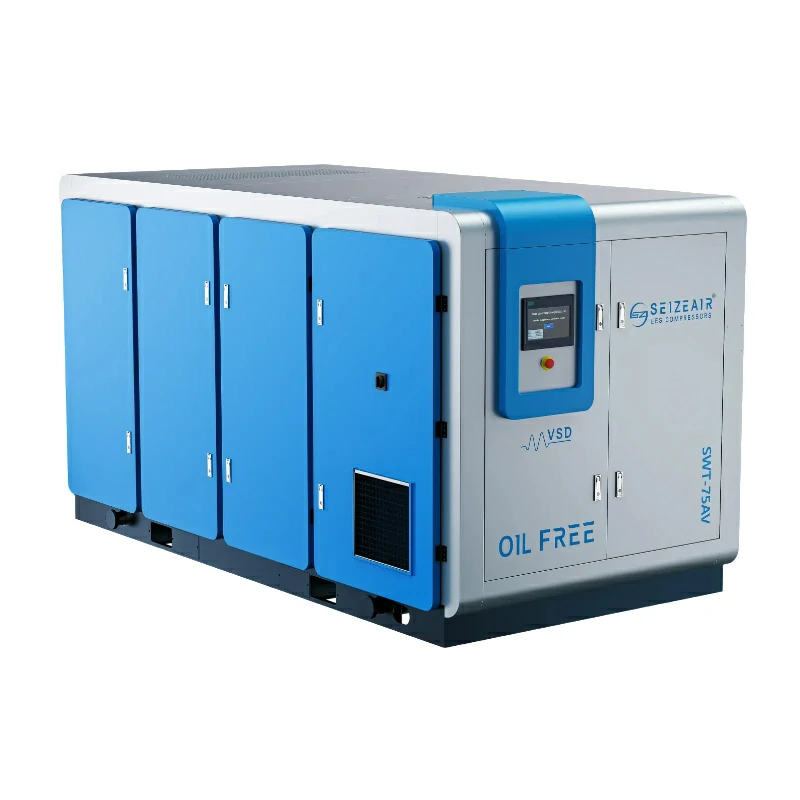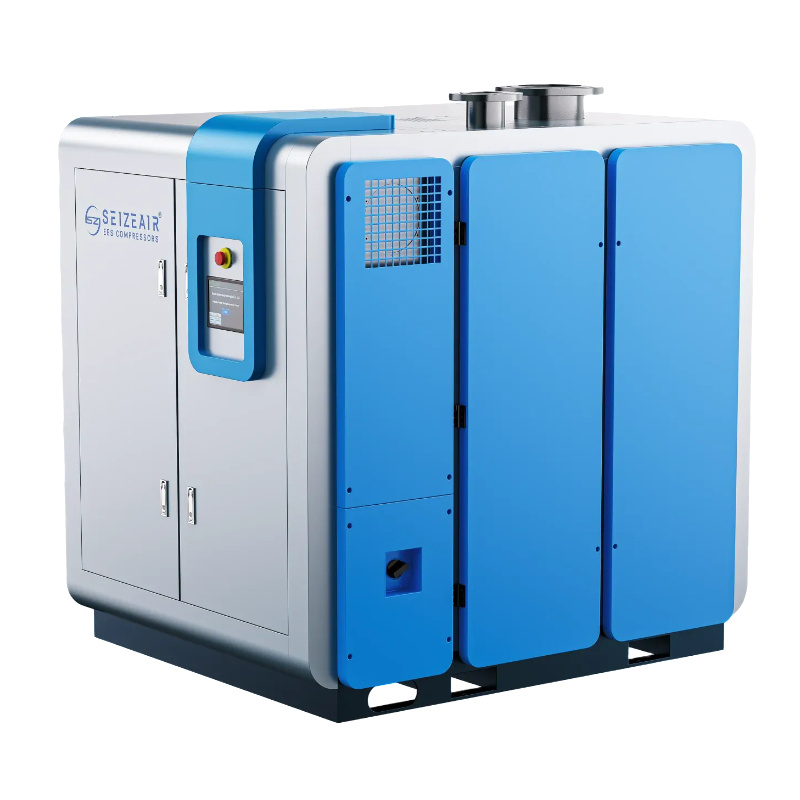


A turbo blower is a high-speed, centrifugal blower that moves air or gas using a rotating impeller instead of reciprocating or lobe mechanisms. It converts rotational energy into kinetic energy and then into pressure, delivering oil-free, low-pulsation flow for aeration, conveying, and process air. Most modern industrial units use a direct-drive high-speed motor and contact-free bearings, which removes oil from the air path and cuts mechanical losses. This guide explains what a turbo blower is, how it works, the main types, where it is used, and how to select one based on measured plant requirements rather than catalogue headlines.
Buyers searching for a turbo blower usually need three answers: how the technology differs from older blowers, which type fits their duty, and what to specify so the unit performs for years. The sections below give plant engineers, procurement teams, and system designers a structured way to evaluate the technology. This article treats the turbo blower as a technology class, then points to SEIZE AIR’s specific magnetic levitation offering where it is relevant. Where SEIZE AIR equipment is relevant, links point to the manufacturer’s product and technical pages so you can compare specifications directly.
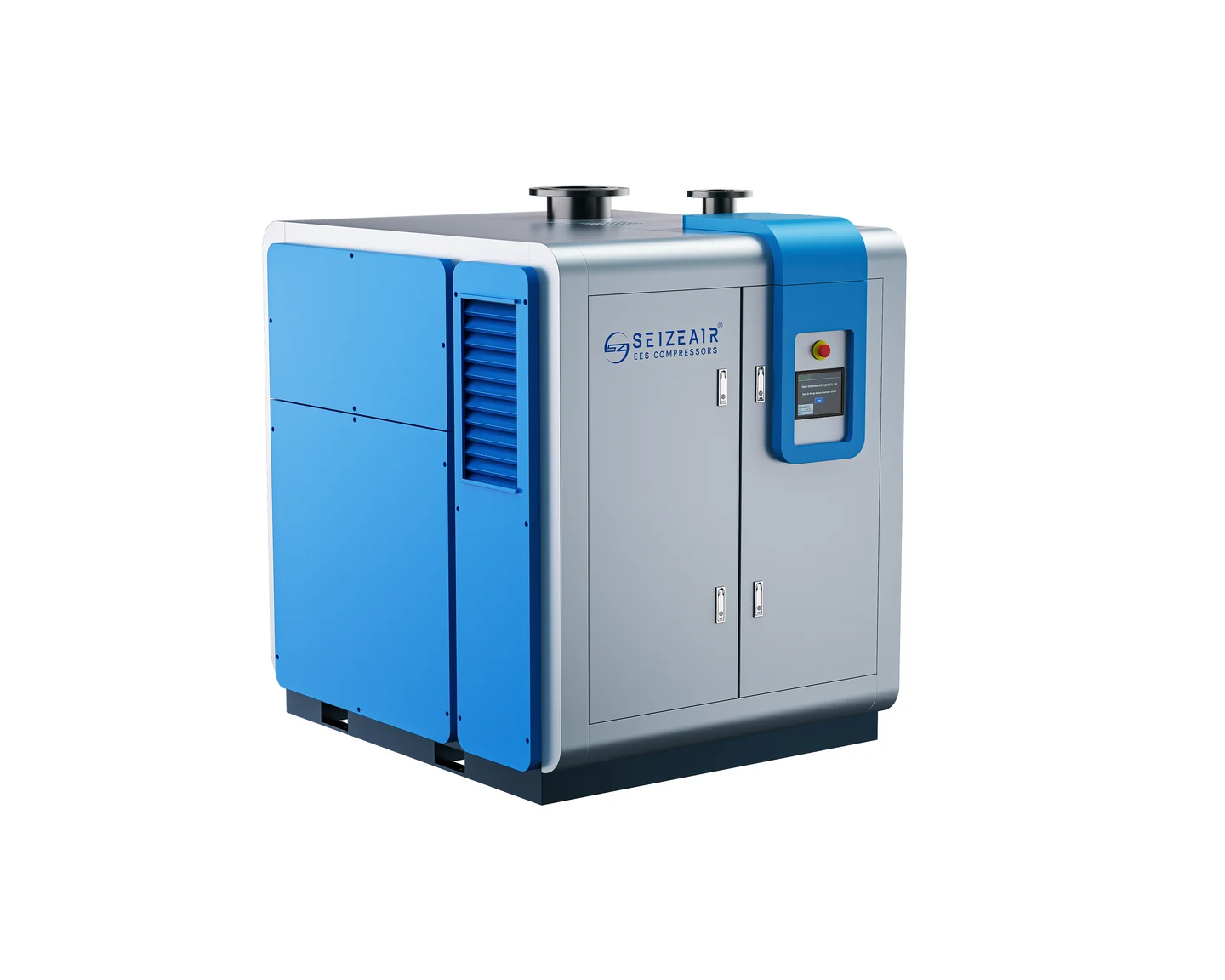
What Is a Turbo Blower?
A turbo blower belongs to the family of dynamic (centrifugal) compressors. Air enters near the centre of a high-speed impeller, accelerates as the blades spin, and leaves at the rim with high velocity. A stationary diffuser then slows the air and converts that velocity into static pressure. Because the air is moved by momentum rather than trapped in a chamber, the output is continuous and nearly pulse-free.
The simplest way to separate the concept from familiar equipment is to contrast it with a positive displacement blower. A Roots or rotary lobe blower traps a fixed volume of air between lobes and the casing, then pushes it to the discharge. A turbo blower, by contrast, has no sealed trapped volume; pressure is generated by speed and impeller geometry. That difference drives nearly every advantage and limitation discussed later.
Typical industrial turbo blowers run on a single high-speed shaft rather than a low-speed motor coupled through a gearbox. Many use magnetic or air bearings so the rotor never touches a surface. The result is a compact package with no oil in the compression chamber, low vibration, and a small footprint for the airflow it provides.
How Does a Turbo Blower Work?
The working principle has two clear stages. First, the impeller imparts velocity to the gas. Second, the diffuser recovers that velocity as pressure. Efficiency depends on how well the impeller and diffuser are matched to the operating point, which is why selection against a real flow-and-pressure curve matters more than a single nameplate number.
From kinetic energy to pressure
In operation, inlet guide vanes or motor speed control adjusts the flow. As demand falls, the unit slows or throttles rather than recycling air, which keeps power consumption tied to actual need. Surge and stonewall are the two flow limits of any centrifugal machine; good control systems keep the operating point inside the stable window.
The role of the high-speed impeller
The impeller is the heart of the machine. Its blade shape, diameter, and speed set the head and flow. Higher tip speeds raise the achievable pressure, but also raise the demands on bearing and rotor dynamics. Modern designs use precision-machined or cast aluminium impellers balanced for continuous high-speed rotation.
Because there is no contact inside the gas path, wear is concentrated in peripheral items such as filters and sensors. That is the core reason turbo blowers can offer long service intervals compared with lubricated positive displacement machines.
Surge, stonewall, and the stable window
A centrifugal machine has a left limit called surge, where flow becomes too low for stable compression and flow can reverse. The right limit, stonewall, is where the impeller can no longer pass more air. Between them lies the stable operating range. Variable-speed control lets the unit track demand while the protection system prevents excursions past either limit.
Controlling flow without wasting energy
Older blowers often hold pressure by opening a bypass and dumping air, which spends energy to produce flow that is then thrown away. A turbo blower instead changes impeller speed, so power follows the load. The saving is largest where demand swings through the day, which is exactly the pattern in aeration and many process duties.
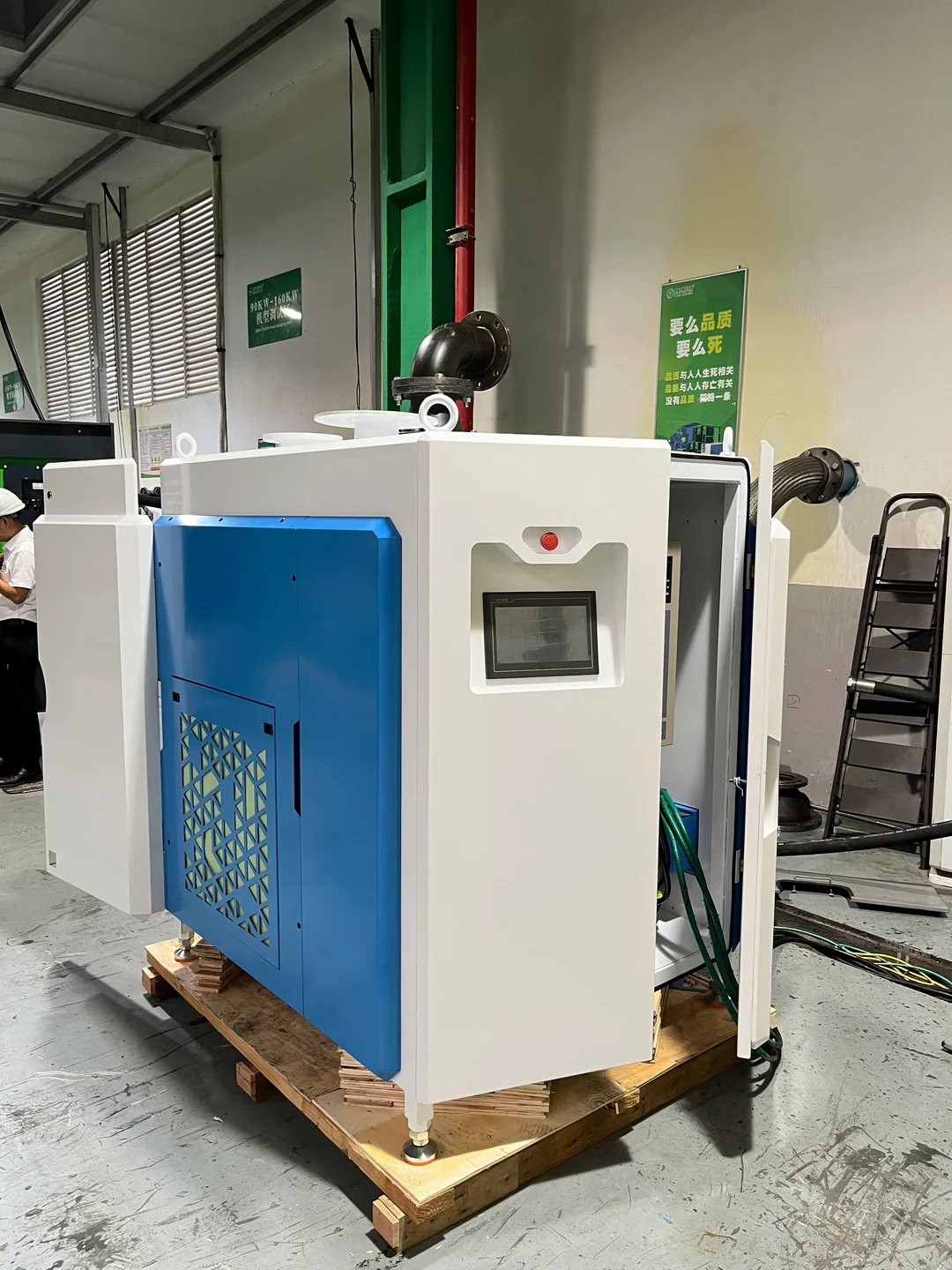
Turbo Blower vs Positive Displacement Blower
The comparison most buyers care about is turbo blower versus the Roots (rotary lobe) blower that has dominated aeration and process air for decades. Each has a place, but their efficiency and maintenance profiles diverge as duty and runtime grow.
| Aspect | Turbo (centrifugal) blower | Positive displacement (Roots/lobe) blower |
|---|---|---|
| Air path lubrication | Oil-free possible via contact-free bearings | Oil in timing gears; air-side sealing needed |
| Flow character | Smooth, low pulsation | Pulsating, fixed volume per revolution |
| Efficiency at part load | Strong with speed control | Weak; often bypasses air |
| Noise and vibration | Low with balanced rotor | Higher, needs isolation |
| Maintenance items | Filters, sensors | Gears, belts, seals, oil |
| Best fit | Large, continuous, variable demand | Small, steady, intermittent |
A turbo blower tends to win on lifecycle cost where airflow is large and the load varies through the day. A positive displacement blower remains attractive for small, steady duties and lower capital outlay. Our centrifugal versus reciprocating compressor guide covers the broader compressor choice for higher-pressure duties.
The choice is rarely absolute. Many plants keep a small positive displacement blower for backup or for low-duty periods and run a turbo unit for the main load. That hybrid arrangement captures the turbo blower’s efficiency at scale while preserving the simple, low-cost machine for intermittent needs. The decision should follow the load profile, not a preference for one technology.
Main Types of Turbo Blowers
Not every turbo blower is the same. The bearing system and drive layout define the categories most relevant to buyers.
Magnetic-bearing turbo blowers
These units suspend the rotor on active magnetic bearings, so there is no physical contact at any speed. Lubrication is removed from the air path entirely, which supports oil-free classification. Magnetic bearing machines also allow very high shaft speeds and built-in vibration monitoring. SEIZE AIR publishes magnetic levitation centrifugal blowers in this category; review the magnetic levitation centrifugal blower product page for the stated range and options.
Air-bearing turbo blowers
Air bearings use a thin film of pressurized air to float the rotor. They are simpler in control than magnetic bearings but still eliminate oil from the gas path. They suit applications where oil-free air is mandatory and the duty is stable.
Geared centrifugal blowers
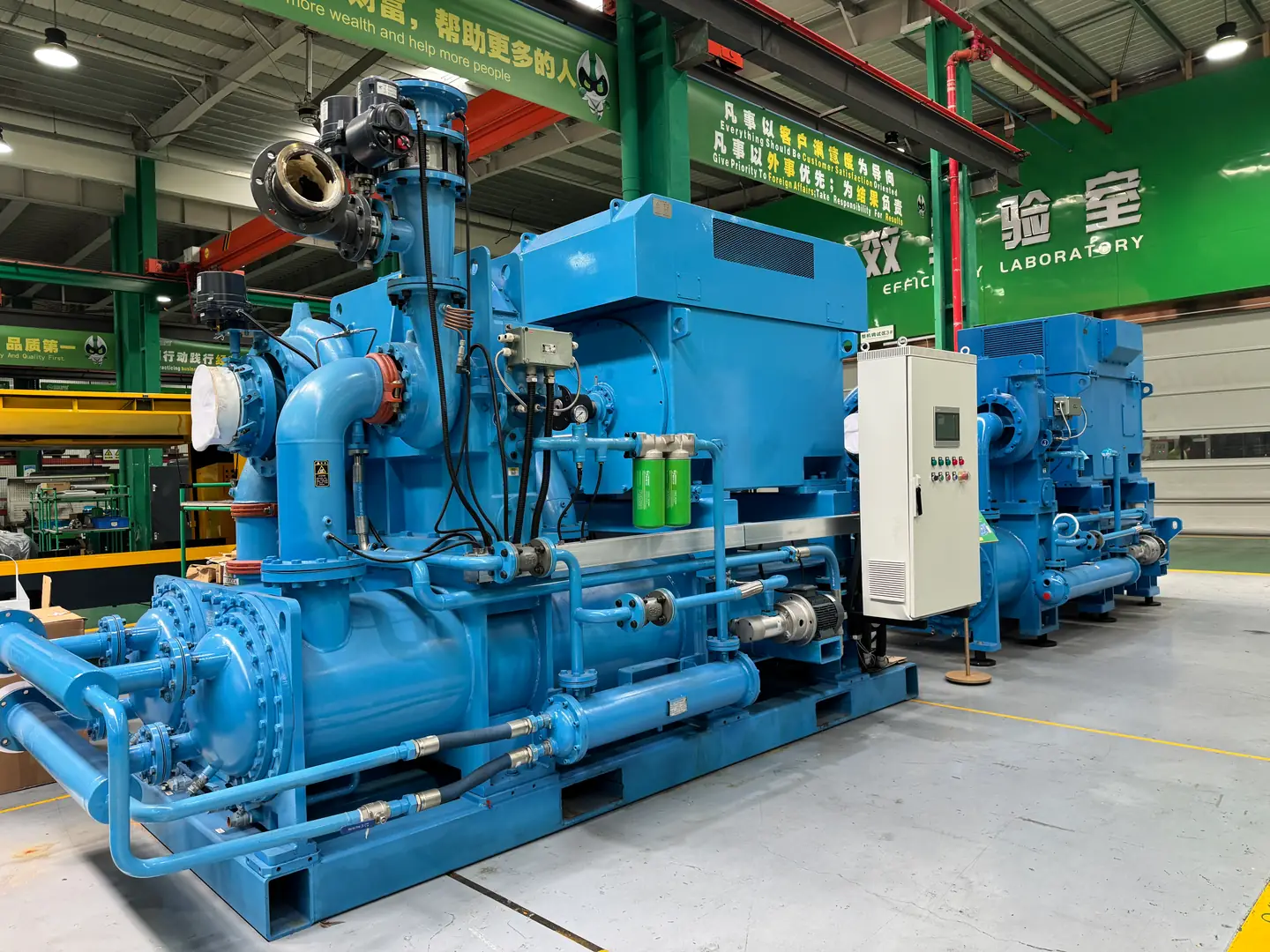
A geared design uses a gearbox to reach high impeller speed from a standard-speed motor. This is a mature, robust architecture for heavy industrial service. The trade-off is gear oil containment and periodic gear service.
Multistage centrifugal blowers
Multistage machines stack several impellers in series to reach higher pressure in one package. They are common in medium-pressure process air and pneumatic conveying. Selection still follows the same flow-and-pressure-curve discipline described below.
Key Components of a Turbo Blower
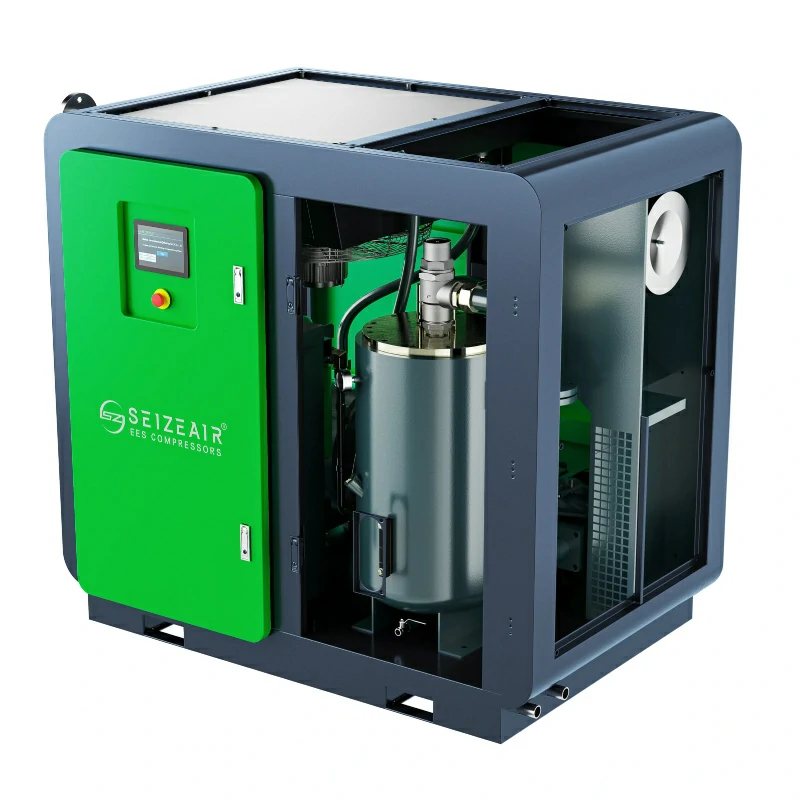
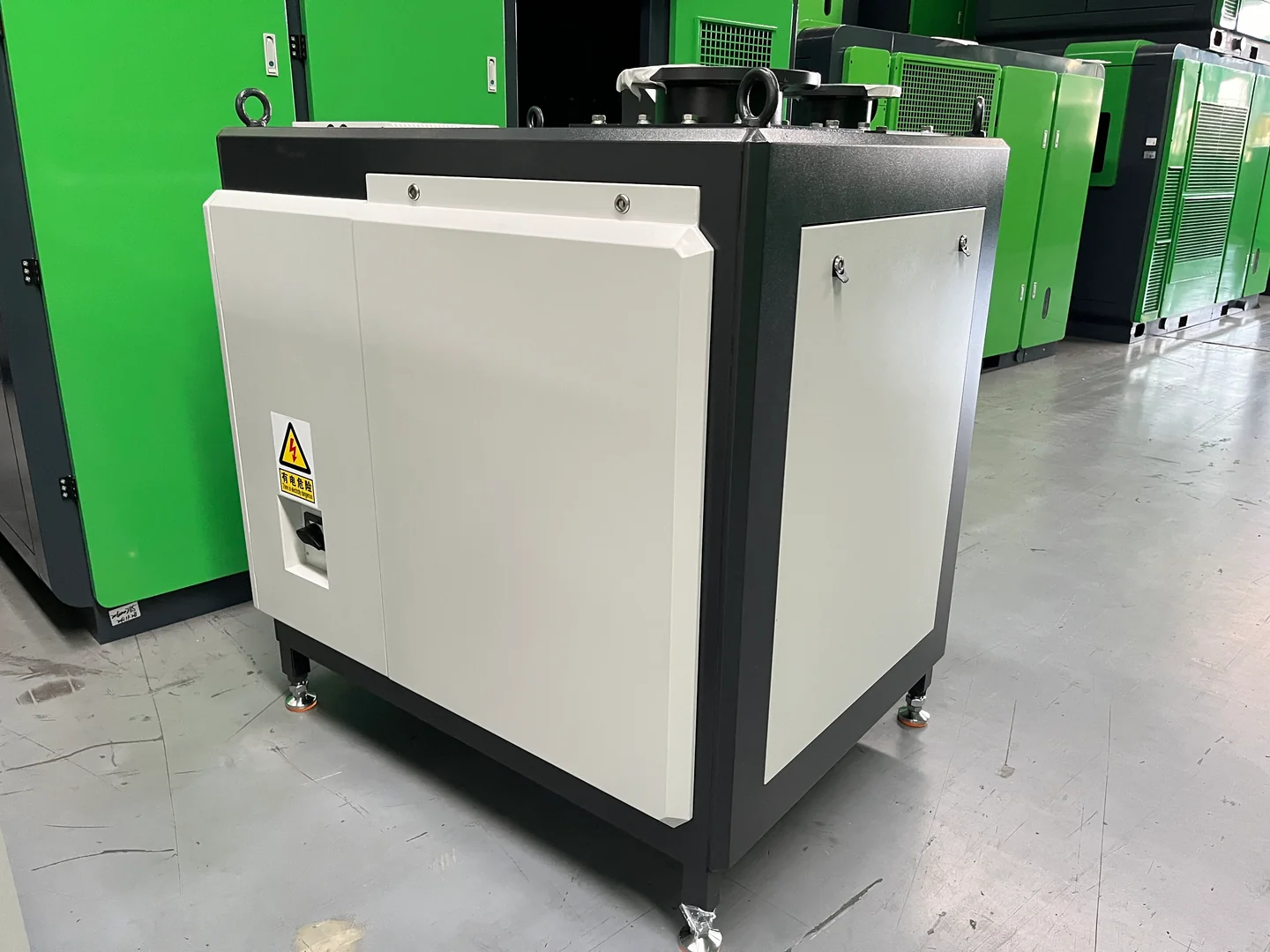
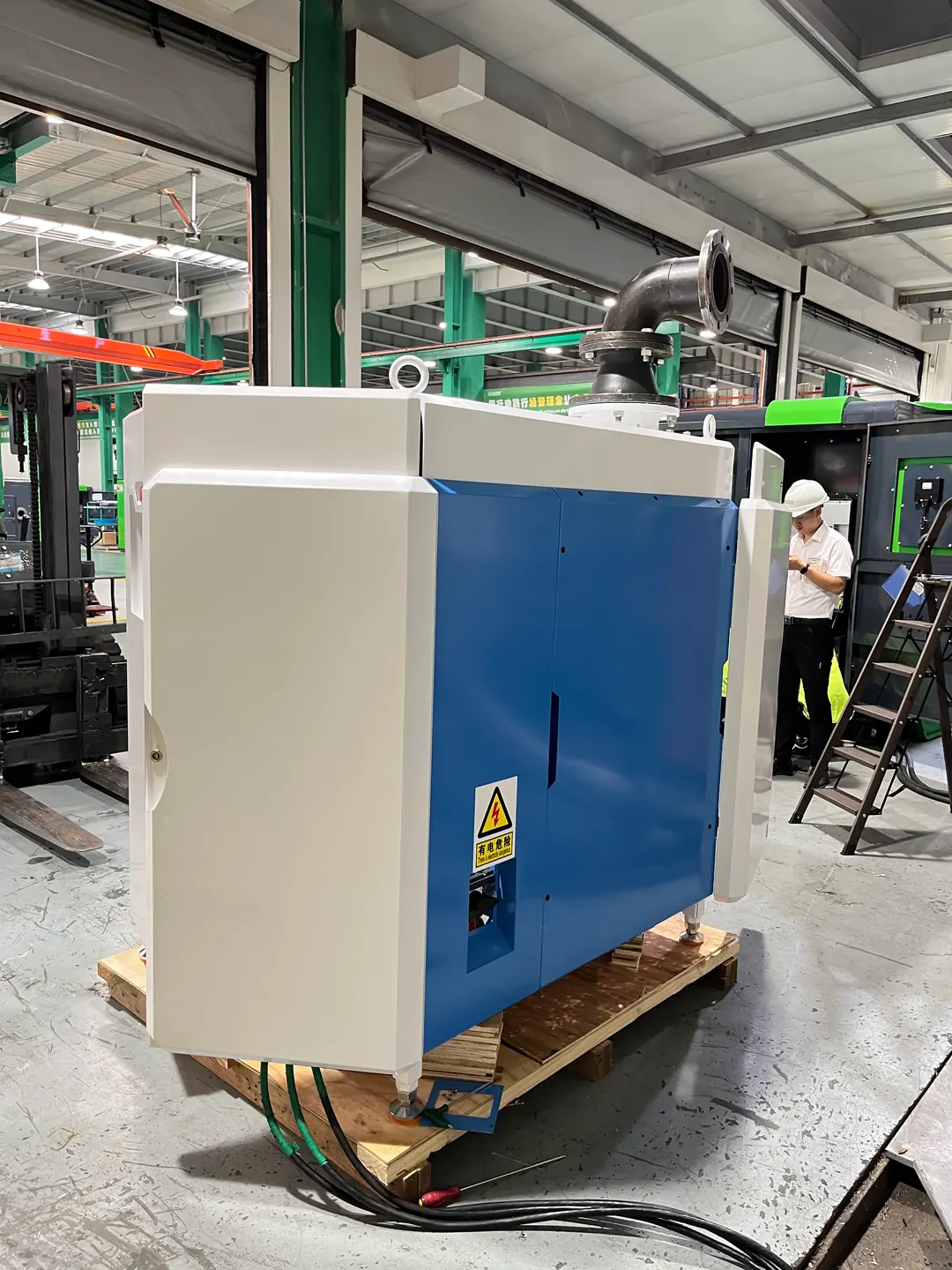
Understanding the main components helps with both selection and maintenance planning. The motor is usually a high-speed permanent magnet synchronous machine coupled directly to the impeller. The bearing system—magnetic, air, or oil film—defines the air purity and service model. An impeller and diffuser form the compression stage. An inlet filter protects the rotor from dust, while a control cabinet manages speed, protection, and often remote monitoring.
Cooling and condition monitoring are the supporting systems that keep the high-speed group stable. The drive and motor generate heat that the enclosure or a cooling circuit must remove, and embedded sensors watch vibration, temperature, and position continuously. Those readings let the protection system act before a fault develops, which is why the control cabinet is as important to reliability as the rotating parts themselves.
Good units integrate the motor, bearing, and impeller into a single compact cartridge. That integration shortens the air path, reduces leak points, and simplifies installation. For hazardous or humid sites, inlet pre-filtration and corrosion-resistant materials extend component life.
Advantages of Turbo Blowers
The technology’s strengths line up with the weaknesses of older blowers. Oil-free air protects downstream processes and products. Smooth flow removes the pulsation that stresses piping and silencers. Speed-based control tracks demand instead of wasting energy through bypass. Low vibration permits installation close to sensitive areas without heavy foundations.
From a plant perspective, the biggest advantage is often energy. Blowers can run continuously, and power is the dominant lifetime cost. A unit that matches power to demand at every operating point can change the economics of an entire aeration or conveying system. Our energy-efficient compressor guide discusses the same principle for compressed air generation.
Footprint and heat are two further benefits. A direct-drive package is shorter than a geared or belted train, freeing floor space. Because there is little friction inside the air path, less shaft power becomes heat that must be removed from the room. In enclosed or climate-controlled buildings, that reduction in cooling load is a real, if often overlooked, saving.
Safety and labour also improve. Without oil changes, belt tensioning, or gear servicing, the routine workload on plant staff drops, and the risk of an oil spill near a process is removed. For sites with limited maintenance crews, that reduction in recurring work can be as valuable as the energy saving itself.
Part-load behaviour is where the technology pulls clearly ahead. Because output is set by speed, the unit can operate efficiently across a wide turndown band instead of running fixed and dumping excess air. For plants whose demand rises and falls, that modulation turns directly into avoided energy, which is the single largest contributor to the lifecycle saving.
Common Industrial Applications
Turbo blowers serve any process that needs moderate-pressure, oil-free, high-volume air. The classic duty is wastewater treatment aeration, where diffused air feeds biological treatment and energy use is large. Aquaculture and fish farming use the same principle to oxygenate water without contaminating it.
Because the pressure is moderate and the volume large, the technology suits aeration and conveying far more often than it suits high-pressure tool air, which remains the domain of screw and reciprocating compressors. The sections below outline the duties where turbo blowers are most often the right answer, and where an older blower type would struggle to match the lifecycle cost.
Wastewater treatment aeration
Aeration can be the largest electrical load in a treatment plant. A turbo blower’s ability to follow the dissolved-oxygen setpoint with speed control makes it a strong fit for variable loads across day and season. Air purity matters because oil in the basin can harm biology and compliance.
Aquaculture and fish farming
Recirculating and flow-through systems rely on steady dissolved oxygen. Oil-free air protects stock and avoids the residue that lubricated machines can introduce. Low noise is a secondary benefit in near-urban or enclosed facilities.
Food and beverage
Bottling, fermentation, and packaging often require air that meets strict hygiene limits. Our oil-free versus oil-lubricated comparison explains why oil-free generation is specified in these lines.
Petrochemical and power
Instrument air, flue gas, and combustion air duties value reliability and oil-free output. Continuous operation and remote monitoring reduce the need for on-site attendance.
Cement, steel, and pneumatic conveying
Dusty, hot environments test enclosure and filtration design. The same air-moving principle supports conveying and combustion air. Background on heavy-industry air systems appears in our ceramics industry air guide.
Across all of these duties, the common thread is a need for clean, reliable, moderate-pressure air at high volume. Where that need is continuous and variable, a turbo blower’s efficiency and oil-free operation make it the default modern choice, and the application list keeps widening as energy costs rise.
How to Select a Turbo Blower
Selection should start from measured demand, not a catalogue headline. Confirm the required flow, the required pressure at the point of use, the air quality class, and the site conditions before comparing models.
Flow and pressure requirements
Specify flow in volume per minute and pressure at the actual process connection, not at the blower flange. Pipe losses, filters, and diffusers consume pressure between the machine and the point of use. A correct duty point prevents both under-performance and oversized, inefficient operation.
Air quality (oil-free) requirements
If the process cannot tolerate oil, define the required purity class and select a contact-free bearing machine or a properly sealed design. Our oil-free selection guide gives a fuller checklist for specifying air purity.
Site conditions: altitude, temperature, inlet air
Altitude and inlet temperature change the mass flow a given machine delivers. Dust, humidity, and corrosive traces shape the filter and material choices. State the worst-case site condition so the supplier sizes for it rather than for ideal laboratory air.
Control, turndown, and redundancy
Variable demand needs adequate turndown without surging. For critical processes, plan standby or modular redundancy so maintenance does not stop production. Confirm how the unit talks to the plant control system.
Lifecycle cost, not just purchase price
Energy usually dominates the total cost of ownership. Compare options on delivered cost per unit of useful airflow over the expected operating profile, including maintenance and downtime. A lower capital price can hide a much higher running cost.
A practical selection checklist
- Measured peak and average flow, with the expected daily and seasonal profile.
- Required pressure measured at the process connection, including distribution losses.
- Required air purity class and any hygiene or compliance standard.
- Worst-case site conditions: altitude, inlet temperature, humidity, dust, corrosives.
- Control interface and required turndown range for the load pattern.
- Redundancy and maintenance access for the duty criticality.
- Delivered lifecycle cost, not just the quoted equipment price.
Comparing supplier proposals on the same basis
Ask each supplier to state the delivery condition, the basis of the flow and pressure rating, and the applicable limits. Include air treatment and any associated piping in the scope so the comparison covers the complete duty. Require any efficiency or saving claim to name its conditions and comparison basis; without that, a headline percentage cannot be trusted. A specification document written around your measured profile keeps every bid on the same operating basis.
Decide in advance how the result will be checked. The acceptance method should include the affected process and a representative demand profile, not just a no-load spin test. Agreement on the test condition before purchase prevents disagreement later about whether the unit met its duty.
Energy Efficiency and Operating Cost
Because blowers run for long hours, small efficiency gains compound into large savings. The U.S. Department of Energy’s compressed air sourcebook highlights how system losses and poor control inflate blower energy use, and how matching supply to demand reduces it. The same lessons apply to blowers: avoid bypass, size to the real duty, and control output with speed rather than throttling.
When reviewing a proposal, separate motor rating from delivered system efficiency. Ask for performance at your operating point, not a peak-lab number. Tie any efficiency claim to the stated conditions and duty cycle before accepting it as a saving.
A measurement or audit of the existing air or aeration system is the most reliable starting point. Record flow, pressure at the point of use, and energy over a representative period before changing equipment. Those numbers let you size the new blower to the real load and later verify that the expected saving actually appeared, instead of assuming it from a vendor curve.
Control strategy deserves as much attention as the machine. Where several blowers serve one system, coordinate them so the most efficient unit carries the base load and others trim to demand. Good staging avoids running every machine partly loaded, which is a quiet source of wasted energy in many plants.
Maintenance Considerations
Contact-free bearing machines shift maintenance away from gears, belts, and oil toward filters and condition monitoring. Schedule inlet filter inspection by site dust load, not by a fixed calendar alone. Keep the control system’s alarm and trend data available so bearing and temperature trends are reviewed before they become faults.
Even oil-free designs need disciplined air filtration, because the impeller and motor are sensitive to ingested particles. Document the model and revision of replacement elements so the next service restores the same duty. A short maintenance record prevents repeated troubleshooting of the same failure.
Plan the spare parts and service relationship early. Confirm which items the local team can handle and which need the manufacturer, and agree on response expectations for a critical-air duty. Keeping a documented baseline of normal vibration and temperature makes it easier to judge whether a trend is meaningful, which prevents both missed faults and unnecessary interventions.
Installation and Layout Considerations
Good layout protects both the machine and the result. Place the inlet away from exhaust, dust sources, and heat so the unit draws clean, cool air. Allow clear access to the filter, control panel, and any service points so routine work does not require dismantling piping. Plan for the air path, electrical supply, and any cooling or ventilation the enclosure needs.
Foundations are usually light because vibration is low, but the supporting structure must still be firm and level. Route the discharge piping with proper supports so its weight does not load the blower casing. A layout drawn before delivery prevents the cramped, hard-to-service installation that shortens equipment life.
Electrical supply and ventilation deserve the same attention as the air path. Confirm the voltage, starting method, and cable route, and provide the enclosure ventilation the manufacturer specifies so the motor and drive stay within their temperature limits. Neglecting ventilation is a common cause of shutdowns that have nothing to do with the blower itself.
Common Specification Mistakes to Avoid
Several recurring errors undermine blower projects. Sizing from a single peak number ignores part-load hours that drive most energy use. Quoting pressure at the flange rather than at the point of use produces a unit that cannot reach the process. Choosing a cheaper lubricated machine for an oil-free duty forces add-on sealing that still risks contamination.
Another mistake is treating the blower as a standalone box. Its performance depends on filters, piping, and control working together as a system. Finally, comparing bids only on price hides differences in efficiency, turndown, and service that decide the lifetime cost. A disciplined specification document keeps all suppliers on the same operating basis.
SEIZE AIR Magnetic Levitation Centrifugal Blowers
SEIZE AIR offers magnetic levitation centrifugal blowers built around a direct-drive high-speed motor and contact-free magnetic bearings. According to the manufacturer’s published product information, the range covers low-pressure aeration through higher-pressure process air, with oil-free output and integrated control. For the stated specifications, selection options, and certifications, see the detailed magnetic levitation blower guide, which explains the technology and typical industrial benefits in depth.
The practical value is a single package that removes oil from the air path, tracks demand with speed control, and supports remote monitoring. As with any major equipment choice, validate the quoted performance against your measured duty and site conditions before committing.
The same platform serves aeration, process air, and conveying duties across wastewater, aquaculture, food and beverage, petrochemical, and heavy-industry sites. Because the range spans low-pressure aeration to higher-pressure process air, one supplier conversation can cover several plant needs, which simplifies spare parts and service across a site.
Frequently Asked Questions
Is a turbo blower the same as a centrifugal blower?
The terms overlap. A turbo blower is a high-speed centrifugal blower; both generate pressure dynamically through an impeller rather than by trapping volume. “Turbo” usually signals a direct-drive, high-speed, often oil-free design, while “centrifugal blower” is the broader category that also includes geared and multistage machines.
Do turbo blowers need oil?
Oil-free versions with magnetic or air bearings need no lubrication in the air path. Geared designs still use gear oil, which must be contained away from the gas stream. Specify the air purity class your process requires and choose the bearing type accordingly.
What pressure and flow can a turbo blower deliver?
It depends on the model and stage count. Always read the performance curve at your operating point. Published ranges describe the available product families, not a guarantee for an unmeasured duty; confirm against your flow, pressure, and site conditions.
Are turbo blowers worth the higher capital cost?
For large, continuous, variable-demand duties, the energy and maintenance savings often justify the higher purchase price over the equipment lifetime. For small, steady, intermittent use, a simpler positive displacement blower may be the better economic choice.
How noisy is a turbo blower?
Balanced high-speed rotors and enclosed packages run much quieter than lobe blowers, though the exact level depends on the model and enclosure. Verify the declared sound level at your operating point if the unit sits near personnel.
Can a turbo blower run continuously?
Yes; continuous operation is the normal duty for which these machines are designed, provided cooling, filtration, and monitoring are maintained. Contact-free bearing units avoid the wear that limits continuous running in lubricated machines.
What fails first in a turbo blower?
In oil-free designs the inlet filter is the most frequently serviced item, followed by sensors and control components. The rotating group is protected by bearings and monitoring, so catastrophic rotor failure is uncommon when filtration and alarms are respected.
How long do turbo blowers last?
Service life depends on duty, filtration, and environment, but the rotating group in a contact-free bearing machine is designed for very long operation because nothing wears through contact. The practical limit is more often set by site conditions and electrical components than by the impeller itself. Treat the manufacturer’s design-life statement as a target that requires the stated filtration and operating limits to be met.
Can a turbo blower replace an existing Roots blower directly?
Often yes, but not as a like-for-like swap. The control, piping, and sometimes the discharge pressure setpoint differ, and the turbo unit needs clean, cool inlet air. A conversion should start with the measured duty and a check that the existing air path can deliver the required pressure at the new machine’s operating point. Done properly, the change is straightforward; done blindly, it can under-deliver.
Conclusion
A turbo blower is a dynamic, oil-free-capable air mover whose value comes from matching speed to demand, removing lubrication from the air path, and running with low vibration. Select one from measured flow, pressure, air quality, and site conditions, and compare options on lifecycle cost rather than headline price. When oil-free, continuous, variable air is the requirement, the magnetic levitation centrifugal design is worth a serious evaluation against older technologies. Treat the blower as one element of an air system—filters, piping, and control matter as much as the machine—and the result will hold up in service rather than only on paper.
If you are scoping an aeration, conveying, or process-air project, gather the duty data above and compare candidate turbo blower units against the manufacturer’s stated curve. Start from a clear specification that states your measured operating profile, then request a quotation tied to that same basis so suppliers compete on real performance rather than on optimistic labels.