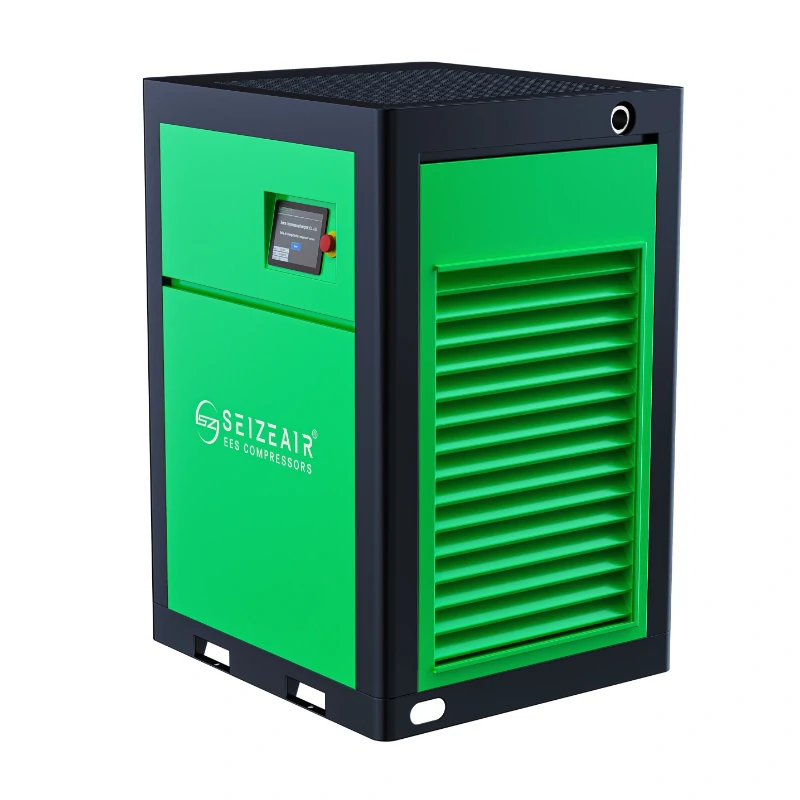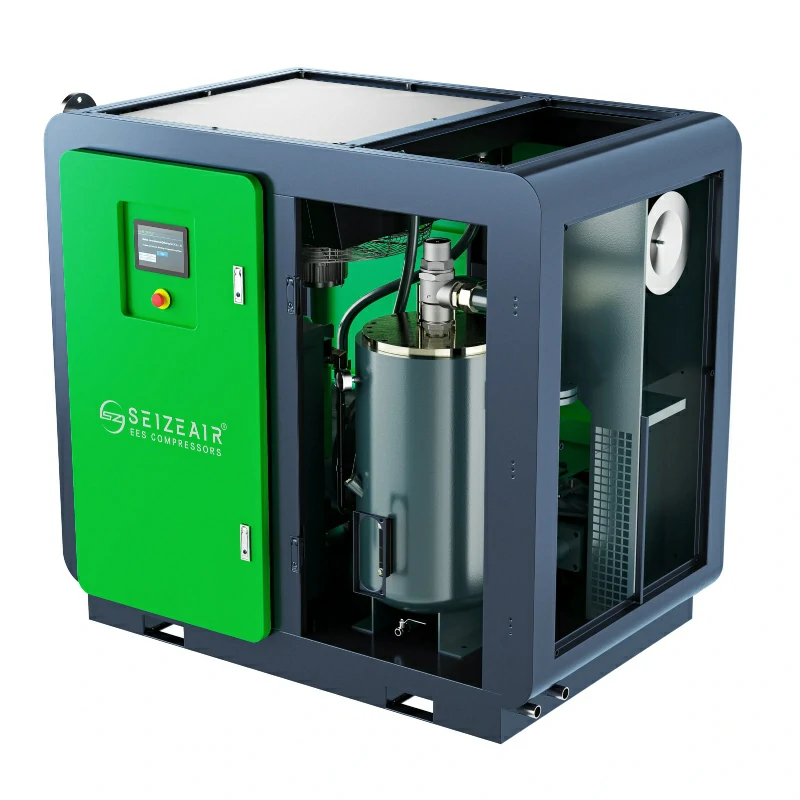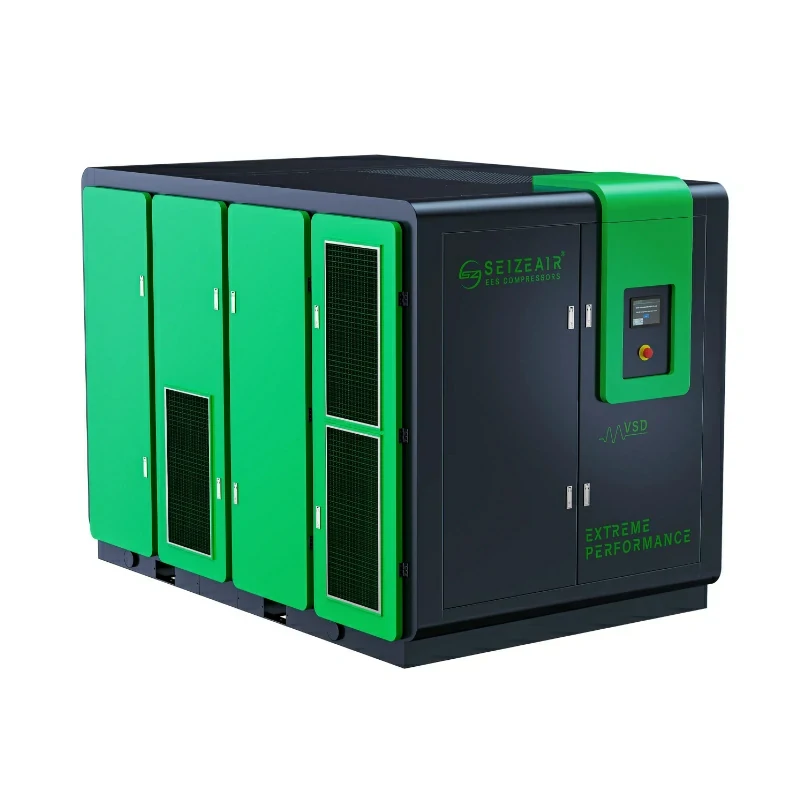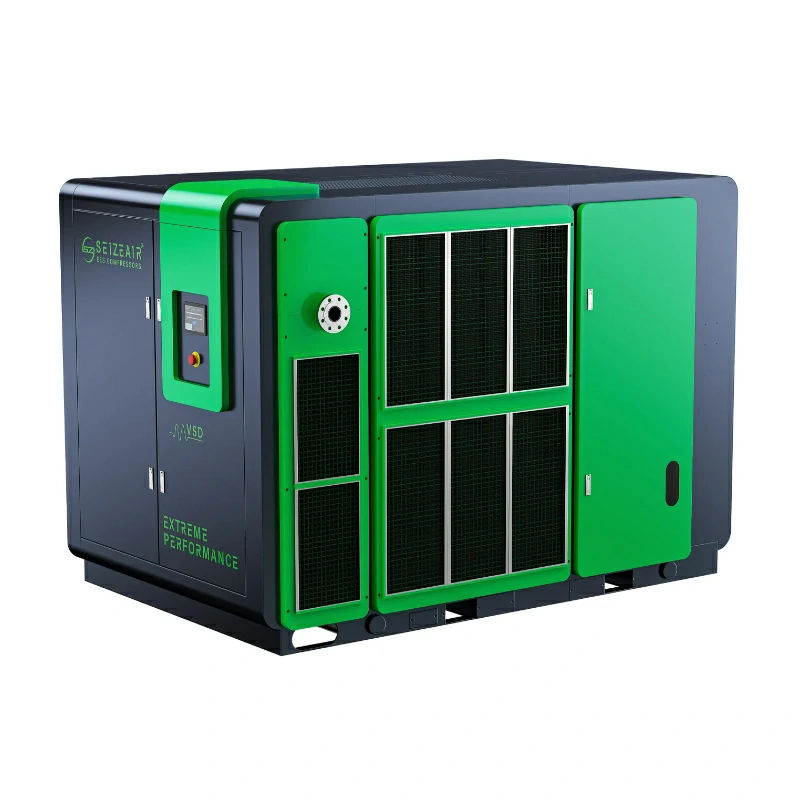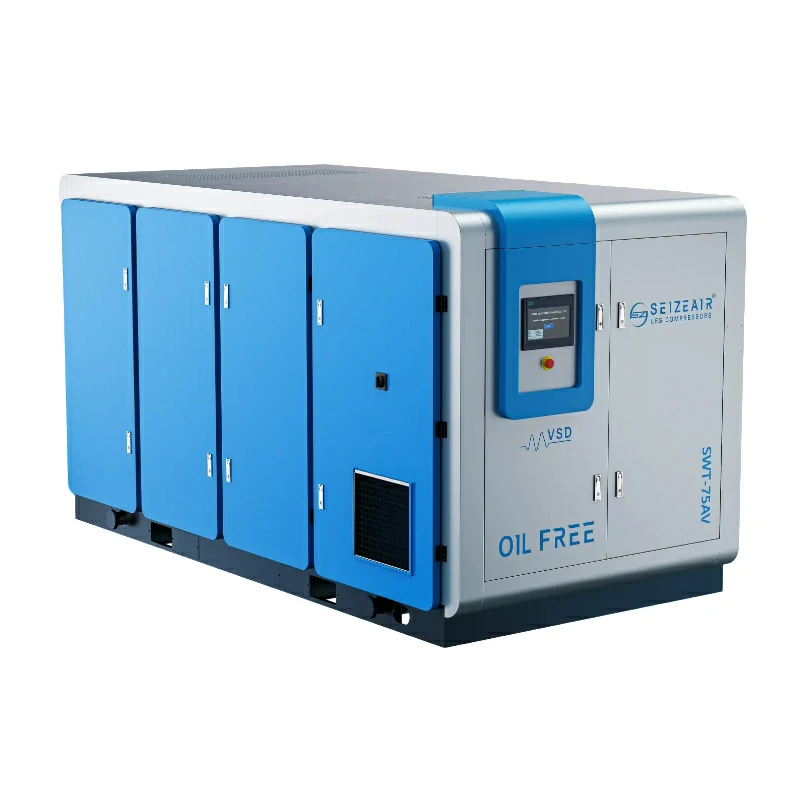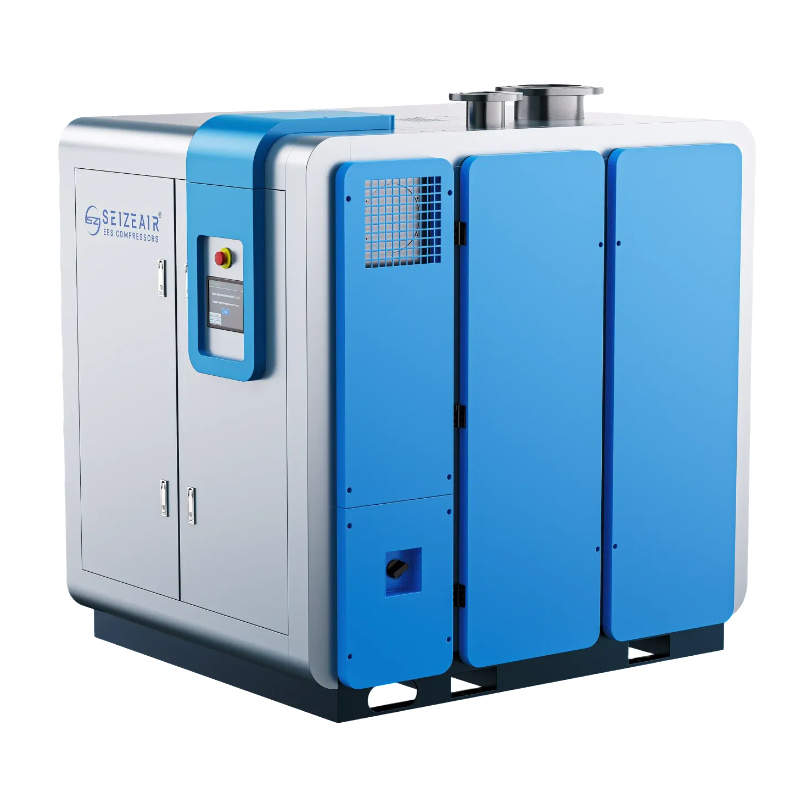


For any plant manager or factory owner, energy is no longer just a line-item expense—it is a critical variable in your competitive edge. In industrial manufacturing, compressed air systems frequently account for up to 15% to 40% of a facility’s total electricity consumption.
If your facility relies on a standard single-stage air compressor to run heavy pneumatic tools, assembly lines, or packaging processes, you are likely venting profits directly into the atmosphere. Upgrading to a two stage screw compressor is one of the most reliable capital investments you can make to slash overheads and stabilize operational costs.
Let’s break down exactly how two-stage compression works, why it outperforms traditional systems, and how the thermodynamics translate directly into financial savings for your factory.
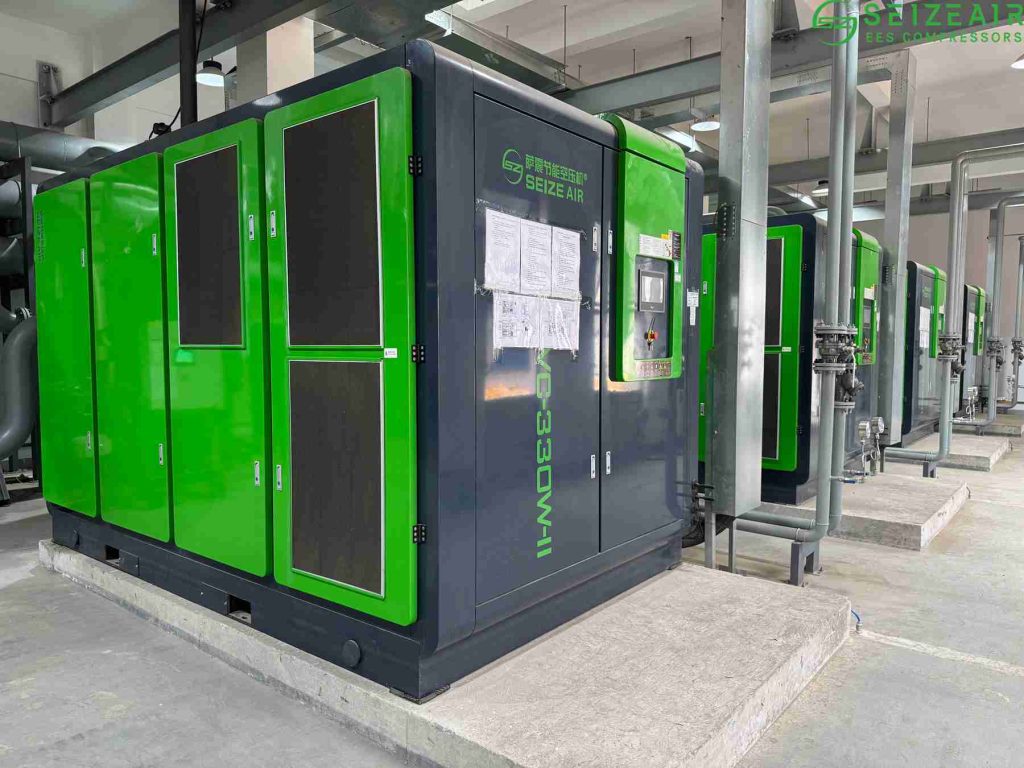
What is a Two Stage Screw Compressor and How Does it Work?
To understand the financial benefits, we first need to look under the hood. A standard rotary screw compressor compresses air in a single motion, forcing atmospheric air through a single pair of intermeshing rotors to reach its target pressure (usually around 7 to 10 bar).
A two stage screw compressor, by contrast, divides this workload between two distinct pairs of rotors (stages) aligned in series.
The Two-Stage Compression Process:
- The First Stage (Low Pressure): Ambient air enters the first set of rotors and is compressed to an intermediate pressure (typically around 2 to 3 bar).
- Intercooling Stage: As air is compressed, it naturally heats up. In a lubricated twin-screw system, cool oil is injected into the air stream right as it leaves the first stage. This acts as a highly efficient intercooler, dropping the air temperature significantly before it moves forward.
- The Second Stage (High Pressure): The cooled, semi-compressed air enters the second set of rotors, where it is compressed to its final working pressure.
By splitting the compression ratio across two separate stages, the mechanical stress on each rotor pair is dramatically reduced, and the air stays significantly cooler throughout the cycle. Advanced systems, like those engineered by Seize Air, leverage this precise balance to maximize volumetric efficiency, ensuring you get more cubic feet of air per minute (CFM) for every kilowatt of power consumed.
The Physics of Internal Leakage and Rotor Dynamics
Look at this from an installation perspective. Every rotary screw air end has internal clearances—tiny gaps between the male and female rotors, and between the rotors and the housing. Air naturally wants to leak backward from the high-pressure discharge side to the low-pressure intake side.
In a single-stage machine bumping against 8.5 bar, that pressure differential across a single set of rotors is immense, forcing a measurable volume of air to slip backward. That is pure wasted energy; you’ve paid to compress that air, but it leaked internally before leaving the machine.
In a two-stage configuration, the pressure drop across each individual stage is significantly lower. Stage one only works from 1 bar to 2.5 bar, and stage two works from 2.5 bar to 8.5 bar. Because the pressure differential across each rotor set is halved, internal blow-by drops off a cliff.
You get a massive jump in volumetric efficiency. From an engineering standpoint, you are physically trapping more air per revolution, which means the machine doesn’t have to spin as fast or draw as much raw current to deliver the exact same plant-side CFM.
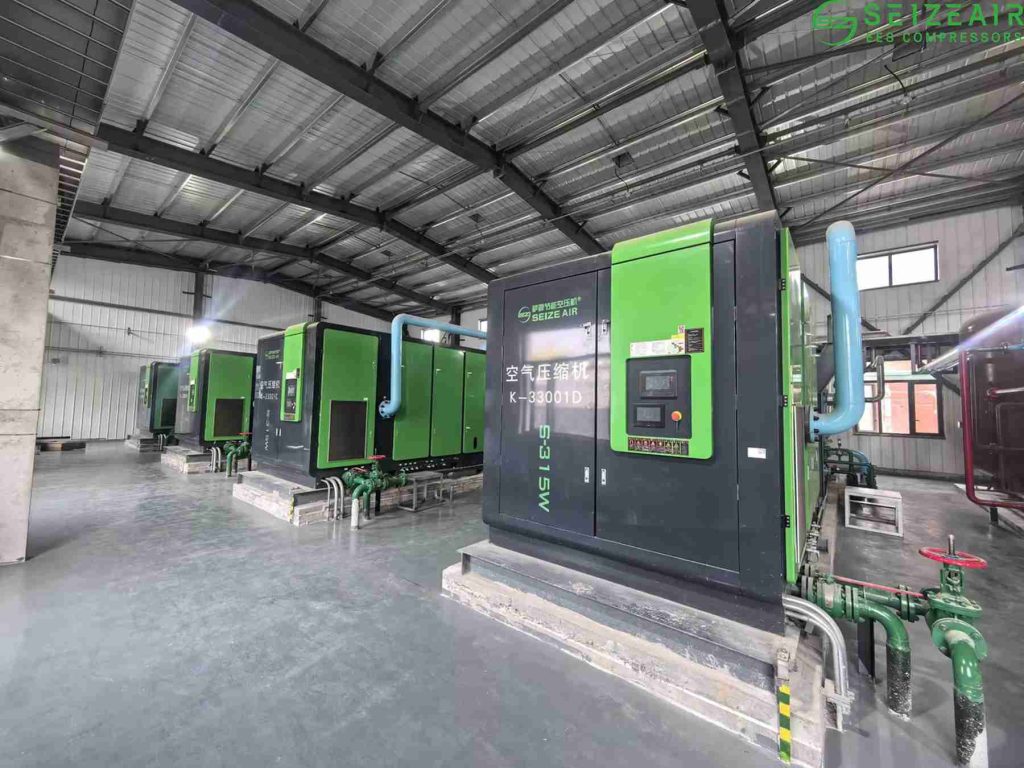
Eliminating the High Compression Ratio Penalty
When a machine operates at an aggressive, high compression ratio within a single set of rotors, the performance drops exponentially as the target pressure rises. The air end is forced to overcome severe thermodynamic resistance.
By utilizing two distinct stages, the compression ratio for each stage is kept remarkably low (often around a 1:2.5 or 1:3 ratio). This targeted mechanical distribution fundamentally changes how the machine performs under heavy load. Instead of fighting intense internal resistance, the rotors glide smoothly, maintaining a high volumetric output even when your plant demands continuous, maximum flow during peak production shifts.
Optimizing Fluid Injection for True Isothermal Gains
In an oil-injected twin screw setup, the fluid serves a dual purpose: it seals the internal clearances and removes the heat generated by compression. In a single-stage machine, the fluid is injected into a highly volatile, rapidly heating environment, which drastically reduces its cooling efficiency.
A two-stage system solves this by injecting precisely metered, cooled fluid directly into the interstage crossover passage. This specialized fluid-injection intercooling method acts as a continuous thermal sponge, instantly absorbing heat from the first-stage discharge air before it enters the second stage. This keeps the air dense and easy to compress, locking in energy savings that single-stage units simply cannot achieve.
Is a Two-Stage Air Compressor More Efficient Than a Single-Stage Unit?
Why go through the trouble of adding a second stage? The answer lies in thermodynamics.
When you compress air quickly in a single stage, the process is adiabatic—meaning heat is trapped, causing the air temperature to spike. Hot air expands, which means the rotors have to work significantly harder (and draw more electrical power) to push against that expansion and compress it further.
By introducing intercooling between two stages, the process moves closer to an isothermal compression profile (compressing air at a constant temperature).
Because cool air is denser and easier to compress than hot air, the second stage requires far less energy to reach the final pressure.
Side-by-Side Comparison
| Operational Feature | Single Stage Screw Compressor | Two Stage Screw Compressor | System Integration Impact |
| Compression Ratio per Stage | High (e.g., 1:8 or 1:10) | Low (e.g., 1:3 per stage) | Reduces internal blow-by and volumetric slip. |
| Discharge Temperature | High (80℃ – 100℃ ) | Low (60℃ – 75℃ ) | Lowers the cooling load on downstream dryers. |
| Volumetric Efficiency | 75% – 85% | 90% – 95% | Delivers more usable CFM per real kW input. |
| Internal Air Leakage | Higher | Minimal | Prevents re-compression of leaked hot air. |
| Component Lifespan | Standard | Extended | Drastically cuts plant downtime and bearing wear. |
| Energy Consumption | Baseline | 10% – 15%Lower | Directly lowers the facility’s baseline utility bill. |
The “Real-World” Thermal Load on Downstream Air Treatment
Let’s talk about something system integrators constantly run into: downstream air quality. A single-stage compressor running hot pushes high-temperature air into your facility’s piping network. Hot air holds significantly more moisture than cool air. When that hot, moisture-laden air hits your refrigerated air dryers, the dryers have to work overtime, pulling massive amounts of energy just to drop the dew point and prevent water from condensing inside your pneumatic valves and laser cutters.
With a two-stage unit, because the air leaving the machine is already much cooler, the thermal load on your entire downstream filtration and drying setup drops. Your air filters don’t get choked with degraded, cooked compressor oil, and your refrigerated dryers run efficiently. You aren’t just saving power at the compressor motor itself—you are reducing energy consumption across your entire air house infrastructure.
Understanding Specific Power Consumption
When looking at an industrial air compressor data sheet, the most critical metric to look for is the specific power consumption. This number tells you exactly how many kilowatts of electrical power are required to produce one cubic meter of compressed air per minute ($kW/m^3/min$).
Single-stage compressors typically show a much higher specific power rating because they spend a massive portion of their energy fighting thermal resistance and internal air leakage. A two-stage compressor consistently demonstrates a lower specific power rating across all operating pressures, proving that it extracts more mechanical work out of every single watt of electricity drawn from your plant’s substation.
The Impact of Ambient Temperature Fluctuations
A factory floor isn’t a climate-controlled laboratory; ambient temperatures fluctuate drastically between winter mornings and mid-summer afternoons. Single-stage compressors are highly sensitive to these swings. When the ambient temperature rises, their efficiency plummets because the intake air is already expanded before compression even begins.
Because a two-stage machine features an active interstage cooling zone, it inherently stabilizes internal operating conditions. Even during brutal summer heatwaves, the dual-stage architecture mitigates the performance loss, maintaining steady, energy-efficient CFM delivery while single-stage units begin to struggle, overheat, or trip out completely.
What is the ROI and Payback Period of a Two-Stage Air Compressor?
Let’s look at the actual numbers. In the industrial sector, a compressor’s purchase price represents only about 10% of its total lifetime cost, while maintenance accounts for 10%. The remaining 80% is purely energy consumption.
Because a two-stage system operates closer to the ideal isothermal line, it offers an average 11% to 15% energy savings over a comparable single-stage unit at the same pressure and flow rates.
Calculating the ROI (Real-World Industrial Scenario)
Let’s calculate the potential savings for a typical mid-sized manufacturing plant operating a 110 kW (150 HP) compressor.
- Motor Rating: 110 kW
- Annual Operating Hours: 6,000 hours (Two shifts, 5.5 days a week)
- Electricity Cost: $0.12 per kWh
- Baseline Single-Stage Annual Cost:110 kWx6,000 hours x$0.12/kWh=$79,200/year
If you switch to a premium two-stage model, assuming a conservative 13% energy savings:
- Annual Financial Savings: $79,200 x0.13 =$10,296 saved per year
- 5-Year Cumulative Savings: $51,480
Over a standard 10-year equipment lifespan, that amounts to over $100,000 kept in your business rather than handed over to the power utility. When looking for the most efficient options, investing in a high-performance system like a Seize Air energy-saving two-stage compressor often allows factories to recover the initial capital premium within the first 12 to 18 months of operation.
The Myth of Low Capital Costs
From a pure corporate budgeting view, procurement teams often make the mistake of choosing equipment based on upfront capital expenditure (CAPEX). It’s an easy trap: a single-stage compressor is cheaper upfront. But if you look at the operational expenditure (OPEX), that initial “savings” disappears within months.
Think about it this way: buying a less efficient air compressor because it’s cheaper upfront is exactly like buying a delivery truck with a leaking fuel tank just because the dealership offered a small discount. You will pay for that discount every single day at the pump. In modern manufacturing, where operating margins are razor-thin, reducing fixed utility costs is one of the most effective ways to instantly improve your plant’s bottom line.
Factor in the Carbon Footprint and Energy Rebates
In today’s regulatory environment, industrial energy efficiency isn’t just about cutting costs—it’s also about compliance. Many local governments and utility providers offer substantial cash rebates or tax incentives for manufacturing facilities that upgrade to high-efficiency machinery with low specific power consumption.
By documenting the double-digit percentage drop in kilowatt-hour usage that comes with a two-stage system, your facility can frequently qualify for these corporate sustainability grants. This slashes the initial purchase cost even further, compounding your true return on investment before the machine even runs its first production cycle.
Tracking the Cost of Idle and Unloaded Power Waste
Standard single-stage compressors often consume up to 30% to 40% of their full-load power even when they are running completely unloaded (idling without producing air). This is a massive hidden drain on profits.
A high-performance two-stage unit is designed to maximize mechanical workflow efficiency during loaded periods and transition smoothly during cycles. When paired with smart system controls, it prevents your factory from paying premium utility rates for an idling machine, ensuring that every kilowatt drawn from your grid is directly converted into usable, high-pressure pneumatic energy.
How Long Do Two-Stage Compressors Last Compared to Single-Stage?
Energy bills aren’t the only place you save money; maintenance overhead and downtime can be equally costly. Two-stage units are inherently more durable than single-stage alternatives due to how pressure forces are distributed.
Reduced Pressure Differential and Bearing Load
In a single-stage machine, the rotors experience a massive pressure jump from 1 bar (atmospheric) to 8+ bar across a single chamber. This extreme pressure creates high thrust and radial loads on the rotor bearings, accelerating wear and tear.
In a two-stage setup, the pressure ratio across each individual stage is much lower. Because the workload is shared, the mechanical force pushing against the bearings drops significantly. Lower bearing load directly translates to:
- Fewer bearing replacements and overhauls.
- Less risk of unexpected rotor lockups or catastrophic failures.
- A significantly extended overall machine lifespan.
Cooler Operating Temperatures
Heat is the primary enemy of rotary screw longevity. High operating temperatures break down compressor oil quickly, reducing its lubricating properties and leading to varnish formation on the rotors. Because a two-stage system utilizes intercooling, it runs much cooler. The lubricant remains stable for longer intervals, protecting internal components from friction and saving your team thousands in premature oil changes and fluid filters.
A Note from the Maintenance Floor
Ask any maintenance technician what kills a compressor, and they won’t say “old age”—they will say “heat exhaustion.” When a single-stage compressor runs continuously during hot summer months, internal temperatures can regularly spike past 95℃. At those temperatures, the specialized oil inside begins to degrade through polymerization, turning into a thick, sticky varnish that coats the bearings and rotors.
Once varnish forms, mechanical friction increases, temperatures climb even higher, and you enter a failure spiral that ends with an emergency maintenance shutdown. By keeping operating temperatures low through two-stage architecture, the oil stays clean and fluid. Your maintenance intervals become predictable events rather than frantic, mid-shift production emergencies.
Extending the Useful Life of Your Air End Assembly
The air end assembly is the literal heart of your rotary screw system, and it is by far the most expensive component to replace or rebuild. In a single-stage unit, the combination of high thermal stress and intense bearing load means that most air ends require a complete mechanical overhaul or replacement every 30,000 to 40,000 operating hours.
Because a two-stage machine divides the physical strain and keeps operating temperatures low, it is common to see these heavy-duty industrial air ends run smoothly for 60,000 to 80,000 operating hours before requiring bearing maintenance. You are effectively doubling the lifespan of your primary capital investment.
Do I Need a Two-Stage Air Compressor for My Industrial Plant?
While the efficiency gains are clear, whether a two-stage system is ideal for your specific facility depends heavily on your production environment and airflow patterns.
Operational Fit Analysis
| Factory Production Profile | Recommended System | Financial Justification |
| Continuous 24/7 Operations (Automotive, Chemical, Textile) | Two Stage | High operational hours compound hourly energy savings into massive annual returns. |
| Intermittent / Single-Shift (Small Fabricators, Light Repair Shops) | Single Stage | Lower upfront cost is preferable if low runtime makes energy savings negligible. |
| Fluctuating / Variable Load (Packaging, Assembly Lines with Peak Demand) | Two Stage + VSD | Matches volatile demand patterns while maintaining peak mechanical efficiency. |
| High Pressure Requirements (Above 8 Bar / 115 PSI) | Two Stage | Single-stage units experience high volumetric slip at high pressures; two-stage does not. |
Assessing Your Plant’s Actual Demand Profile
Before making a capital budget request, look closely at how your factory actually uses air. If your plant operates on a single shift and the compressor spends half its time sitting idle, the energy savings won’t accumulate fast enough to justify the initial price premium.
However, if you are running automated packaging lines, heavy injection molding, or continuous chemical processing across multiple shifts, your air demand is steady and heavy. In these environments, a single-stage machine is an expensive liability. Investing in a robust platform like a Seize Air two-stage machine isn’t a luxury; it is a fundamental operational necessity to prevent your electricity bills from eating into your manufacturing margins.
Evaluating Your Capacity Expansion and Future Proofing Plans
When selecting an air compressor, smart operators don’t just look at today’s production requirements—they look at where the facility will be in five to ten years. If your company plans to add new automated assembly lines, high-output packaging machinery, or expanded pneumatic processing arrays, your air demand will scale up significantly.
Buying a single-stage compressor today means you will quickly push it past its ideal efficiency curve tomorrow. A two-stage system provides your plant with a highly efficient foundation that scales effortlessly, allowing you to increase your air consumption without triggering a massive, non-linear spike in your monthly corporate utility bills.
Analyzing the Real Impact on Low-Load Operations
A common concern among plant operators is whether a massive two-stage machine will lose its efficiency advantages during periods of low production, such as weekend cleaning crews or maintenance shifts. This is where modern system design shines.
Even when running at a lower capacity, the dual-stage air end retains its core geometric advantages: the pressure drop across each rotor stage remains low, and internal leakage is kept to a absolute minimum. This ensures that even during off-peak operations, you aren’t hit with the massive efficiency drops that plague single-stage units when they are forced to run outside their tight, narrow performance envelopes.
What Should I Look For When Buying a Two Stage Air Compressor?
Not all two-stage systems are engineered equally. If you are comparing quotes from industrial suppliers, look past the initial price tag and audit these technical specifications:
- Variable Speed Drive (VSD / VFD): Combining a two-stage air end with a permanent magnet VSD motor offers the absolute peak of modern efficiency. It allows the compressor to match its output precisely to your factory’s real-time air demand, preventing energy waste during low-production shifts.
- Integrated Intake Filtration: Heavy industrial environments are dusty. Ensure the unit features a high-efficiency intake filter to prevent micro-particles from entering the first compression stage and scoring the precise rotor profiles.
- Smart Control Panel with Remote Monitoring: Modern plants rely on data. Look for controllers that track real-time specific energy consumption (kW/m³/min), pressure drops, and service intervals so your maintenance crew can stay ahead of issues.
Evaluating Air End Design and Rotor Profiles
When evaluating different manufacturers, pay close attention to the physical layout of the air end. Some brands attempt to save manufacturing costs by stacking the two stages vertically inside a single housing, sharing a single gear drive. While compact, this can make field maintenance and seal replacements incredibly difficult for your technicians.
The gold standard for reliability is an inline or parallel configuration where each stage is fully accessible, allowing for optimal oil injection alignment and balanced mechanical loads. High-efficiency systems, such as those engineered by Seize Air, prioritize this type of heavy-duty industrial layout, ensuring your facility benefits from both peak thermodynamic performance and straightforward, low-cost maintenance accessibility for decades to come.
Checking the Quality of the Interstage Coolant Injection Control
The heart of a two-stage system’s efficiency is its interstage cooling capability. When comparing units, dive deep into how each manufacturer regulates fluid injection between the stages. Inferior designs use a fixed, mechanical orifice that injects the same volume of cooling fluid regardless of whether the machine is running hot, cold, loaded, or unloaded.
Premium industrial systems utilize an active, temperature-modulated injection valve. This advanced component dynamically adjusts fluid flow based on real-time sensor data, ensuring the air temperature entering the second stage is always perfectly optimized for maximum density and lowest specific power consumption.
Inspecting Bearing Configurations and Thrust Containment
Go beyond the sales brochure and ask for the internal engineering schematics of the air end. High-load industrial applications require robust, heavy-duty bearing arrangements to handle continuous axial and radial forces.
Look for two-stage units that employ multiple high-precision tapered roller bearings aligned in pairs on each rotor shaft, along with dedicated oil retention channels. This commercial-grade structural reinforcement ensures that the low pressure differentials achieved by the two-stage process are fully leveraged to maximize mechanical stability, keeping your plant running reliably for decades without catastrophic bearing breakdowns.
Conclusion
Choosing the right compressed air architecture is one of the most impactful operational decisions you can make for your facility. A high-efficiency two stage screw compressor cuts your electricity bills, reduces mechanical wear, and delivers the reliable, high-volume air flow your production lines need to maintain peak output.
Stop letting inefficient equipment drain your monthly profitability. If you are ready to audit your current air usage, calculate your exact payback period, or find the perfect energy-saving compressor configuration for your plant, Seize Air is here to help.
[Contact our application engineering team today] to get a tailored compressed air assessment and a free, no-obligation quote for your facility. Let’s work together to make your factory floors cleaner, quieter, and significantly more profitable.