

In industrial compressed air systems, two stage screw compressors have been gaining renewed attention over the past few years. The reason is straightforward: production lines are running longer, utilization rates are higher, and energy costs continue to rise.
As a result, air compressors are no longer viewed as auxiliary equipment. They have become a critical part of operational cost control and production stability.
For manufacturers planning equipment upgrades or capacity expansion in 2026, choosing a two stage screw compressor can significantly influence long-term energy consumption, maintenance frequency, and downtime risk. This guide looks beyond brochures and specifications, focusing instead on how two-stage compression performs in real industrial environments, helping you decide whether it fits your operation.
What Is a Two Stage Screw Compressor, and How Does It Work in Practice?
A two stage screw compressor divides the compression process into two separate steps instead of completing all compression in a single stage.
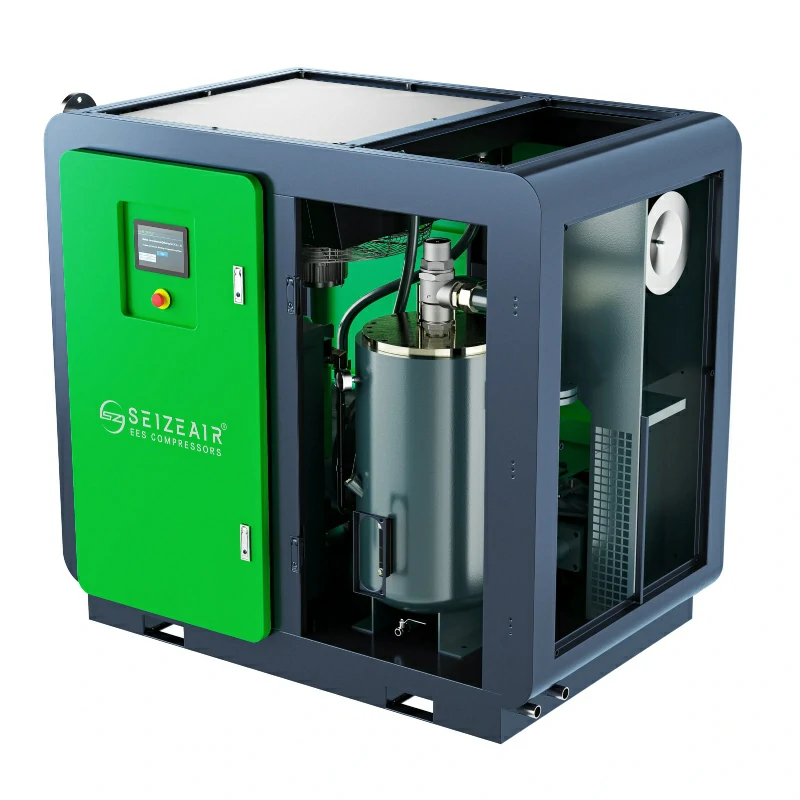
In real operation, air is first compressed by the first screw element to roughly 30–40% of the final discharge pressure. After that, it passes through an internal or external intercooler, where most of the heat generated during compression is removed. The cooled air then enters the second screw element, where it is compressed to the final operating pressure.
This design is not about adding complexity for its own sake. It is a deliberate optimization of the compression process.
In a single-stage screw compressor, all pressure rise happens at once. The compression ratio is typically higher than 3.5, which leads to higher discharge temperatures and sustained thermal stress during continuous operation.
With two-stage compression, each stage operates at a lower compression ratio—usually below 2.5. Because the air is cooled before entering the second stage, the entire process runs closer to ideal conditions. The result is smoother operation, better thermal control, and reduced mechanical stress over time.
Across multiple industrial projects delivered by Seize, one pattern consistently appears: once the compressor enters continuous operation, two stage machines maintain far more stable performance. Even under minor voltage fluctuations or load variations, discharge pressure typically stays within ±0.1 MPa, a level of stability that is difficult for single-stage units to maintain long-term.
Long-Term Differences Between Two Stage and Single Stage Screw Compressors
During short trial runs or low-load operation, the performance gap between single-stage and two-stage compressors is often small. The real differences emerge after thousands of operating hours, especially beyond 8,000 hours of continuous use.
Over time, temperature control, energy efficiency, and mechanical wear begin to separate the two designs clearly.
| Key Aspect | Single Stage Screw Compressor | Two Stage Screw Compressor |
|---|---|---|
| Compression process | One-step compression | Two-step compression with intercooling |
| Compression ratio per stage | High (often >3.5) | Lower (typically ≤2.5) |
| Discharge temperature | 95–110°C common | Typically 80–90°C |
| Specific power trend | Increases noticeably over time | Remains relatively stable |
| Continuous operation stability | Sensitive to heat buildup | More stable under long runs |
| Annual energy consumption | Higher | Usually 10–15% lower, more in heavy-load use |
Lower discharge temperatures have a direct impact on internal components. Bearings, rotors, and lubrication systems experience less thermal stress, which translates into longer service life and more consistent air output. In high-hour applications, these differences accumulate quickly and become visible in both energy bills and maintenance records.
This is one of the main reasons why high-load users are increasingly reconsidering two stage screw compressors.
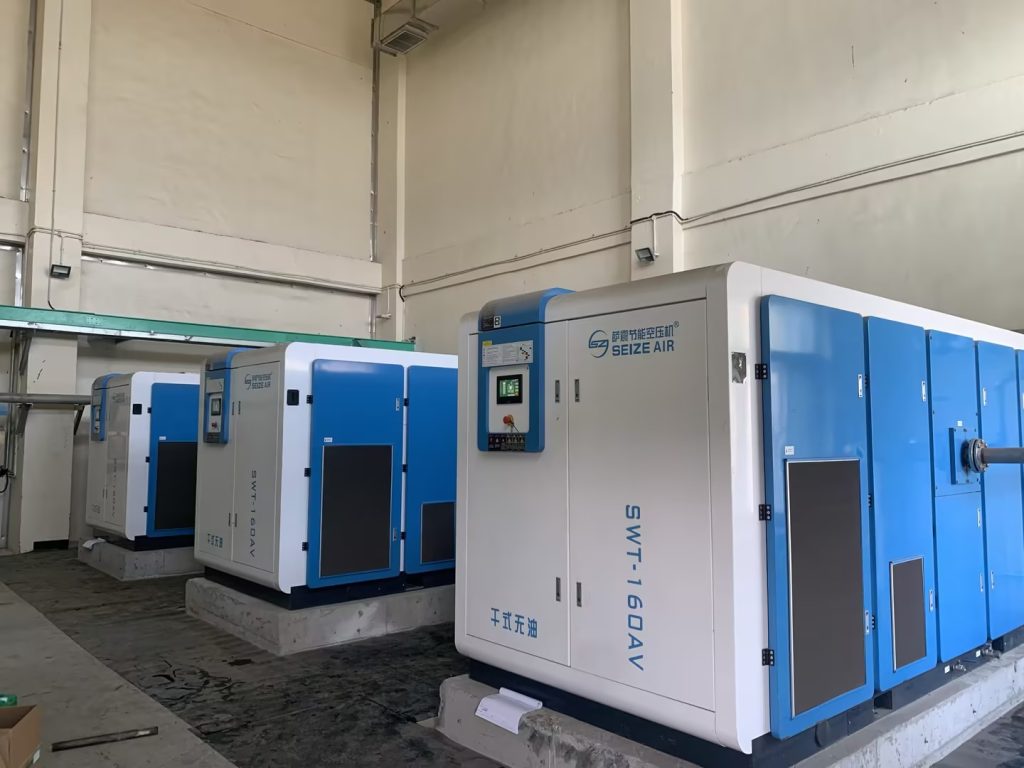
How Energy Savings Show Up in Real Operating Conditions
The efficiency advantage of a two stage screw compressor does not come from a single parameter. It is the combined effect of stage-by-stage compression, intercooling, and reduced mechanical load.
When compression ratios are properly distributed between two stages, irreversible energy losses are significantly reduced. More of the motor’s power is converted into useful compression work instead of heat. This effect becomes especially noticeable at discharge pressures of 0.8 MPa and above, where single-stage units typically operate under greater thermal stress.
Intercooling plays an equally important role. Cooler air entering the second stage has higher density, allowing more air mass to be compressed at the same power input. In practice, effective air delivery can increase by 5–8%, especially in high-ambient-temperature environments.
In one Seize automotive component facility, a two stage screw compressor ran continuously for over 12,000 hours. During that period, its specific energy consumption increased by only 3.2%, while a comparable single-stage machine operating under similar conditions saw nearly 10% deterioration. This stability is what allows two stage systems to deliver energy savings year after year, not just on paper.
Which Applications Benefit Most from Two Stage Screw Compressors?
The suitability of a two stage screw compressor depends less on motor size and more on how compressed air is used.
Two stage systems perform best in environments where their long-term efficiency and stability can fully offset the higher initial investment, such as:
- Continuous production lines where downtime is costly
- Multi-shift or 24/7 operations with long annual run hours
- Facilities where compressed air accounts for a significant share of total energy use
- Processes that require stable pressure with minimal fluctuation
Industries such as automotive manufacturing, metal fabrication, welding, textiles, and food packaging rely heavily on compressed air as part of the production process. In these settings, unstable air supply can affect not only output but also product quality.
Based on Seize project experience, once companies shift their evaluation from purchase price to total cost of ownership, two stage screw compressors often become the more attractive option.
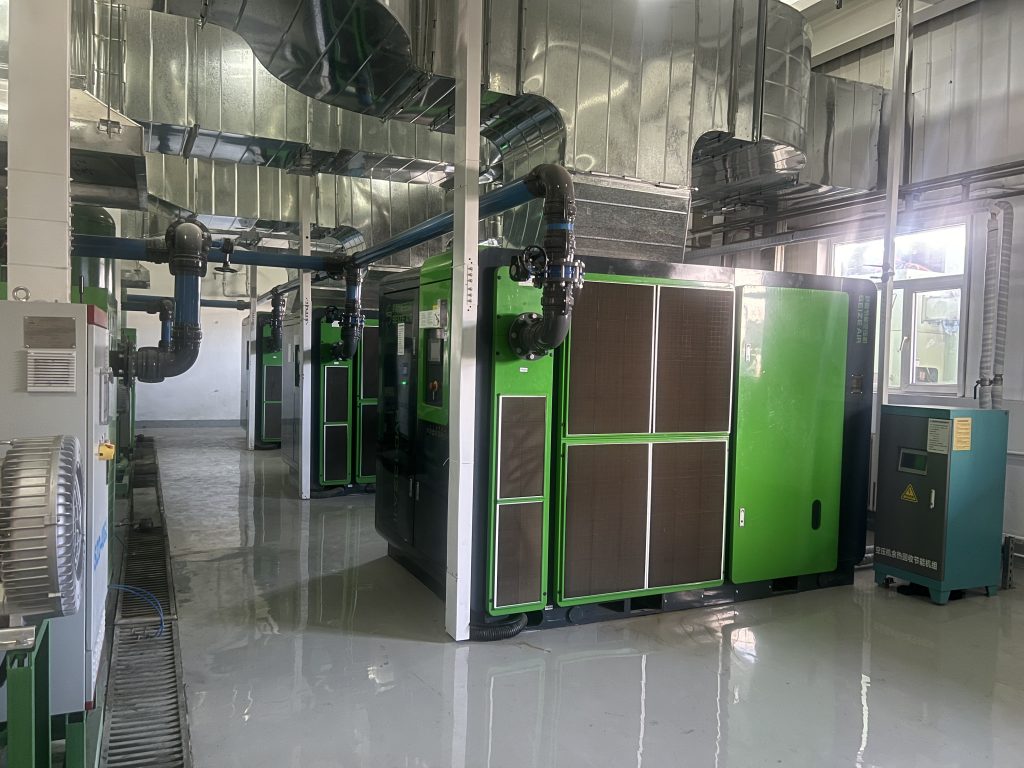
Maintenance and Reliability in Long-Term Operation
Although a two stage screw compressor includes additional components—such as a second rotor set and an intercooler—this does not necessarily mean higher maintenance risk.
Because each compression stage operates under lower load, internal components work in a more favorable environment. Over the same number of operating hours, rotor wear, bearing fatigue, and lubricant degradation tend to progress more slowly than in single-stage machines.
In long-term applications, this translates into more stable output and fewer unexpected shutdowns. Seize service data shows that in facilities running more than 7,000 hours per year, two stage compressors experience significantly fewer unplanned stoppages and reduced total maintenance time.
Key Factors to Consider When Selecting a Two Stage Screw Compressor for 2026
In real purchasing decisions, nameplate specifications alone rarely tell the full story. What matters most is how the compressor performs under actual operating conditions over time.
Key points to evaluate include:
- Long-term trends in specific power, not just initial values
- Whether the design is a true two-stage system rather than a modified single stage
- Proper matching of rotor size and rotational speed to the target application
- Control system responsiveness to load changes
- The manufacturer’s experience with industrial two stage applications
Manufacturers like Seize, which emphasize system matching and application-driven design, tend to deliver better long-term results than solutions focused purely on headline specifications.
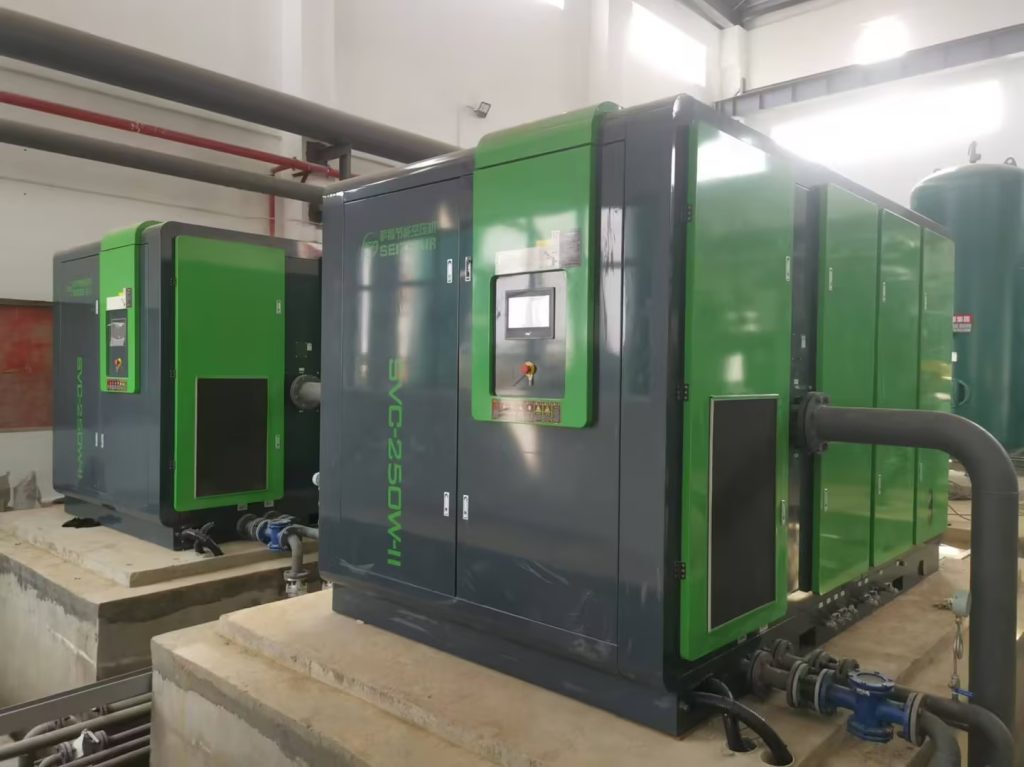
Is a Two Stage Screw Compressor Worth the Investment in 2026?
For operations with long run hours, high loads, and strict stability requirements, a two stage screw compressor often proves its value within three to five years, gradually offsetting the higher upfront cost.
The benefit does not appear immediately in the first year’s budget. Instead, it accumulates over the full equipment life cycle through lower energy consumption, more stable performance, and more predictable maintenance planning.
For manufacturers aiming to remain competitive beyond 2026, two stage screw compressors are no longer just a premium option. They represent a mature, rational solution for long-term compressed air efficiency—one reason why Seize continues to expand its two stage compressor portfolio.