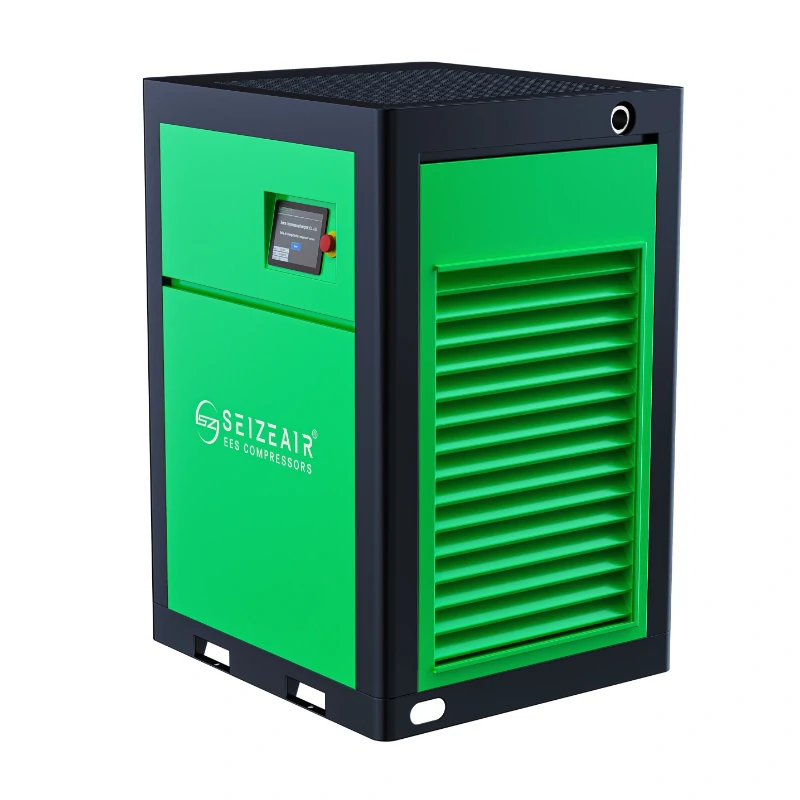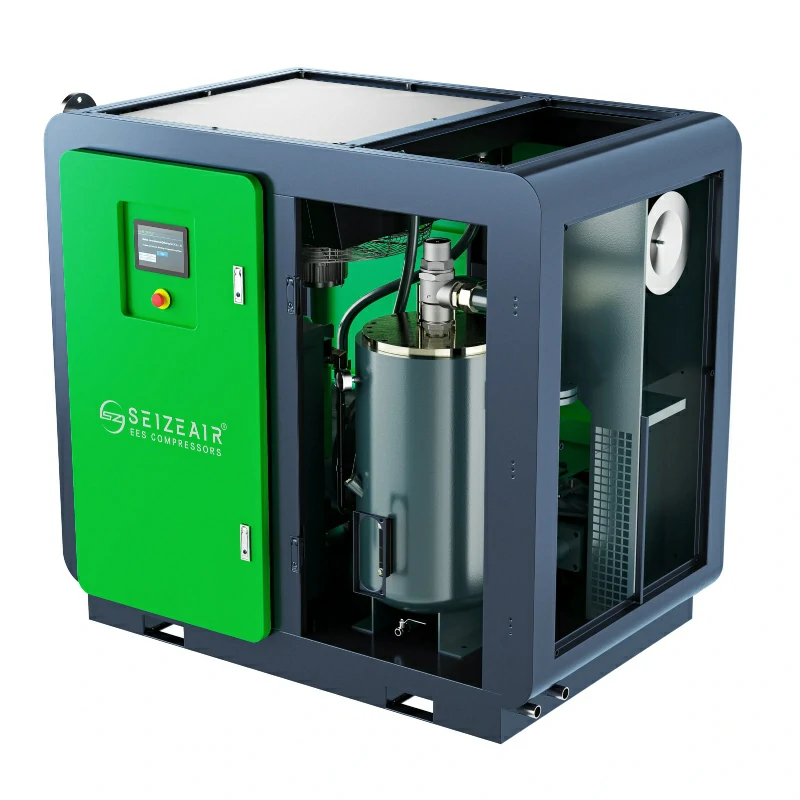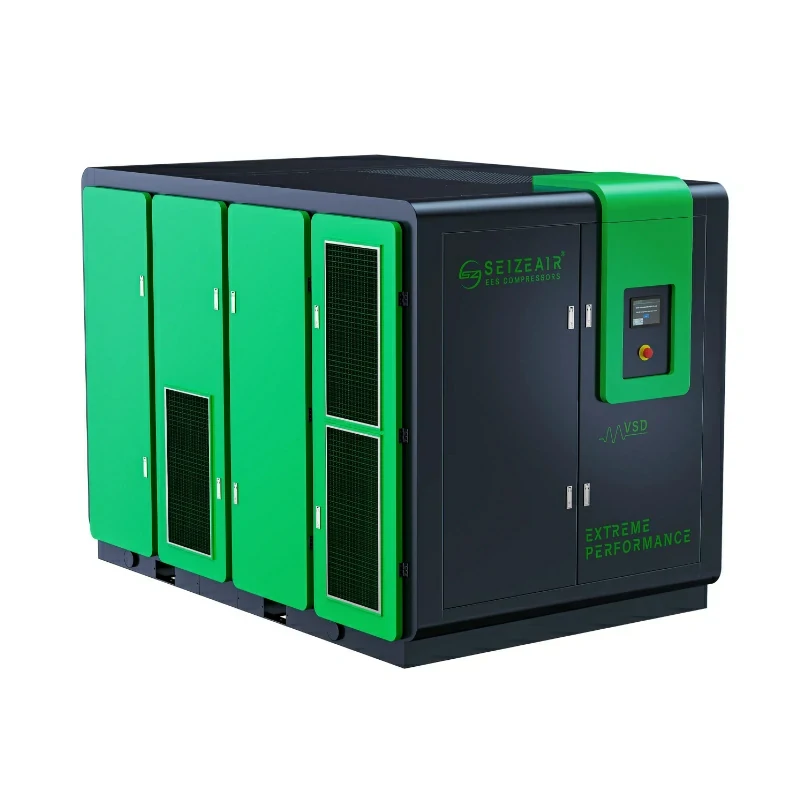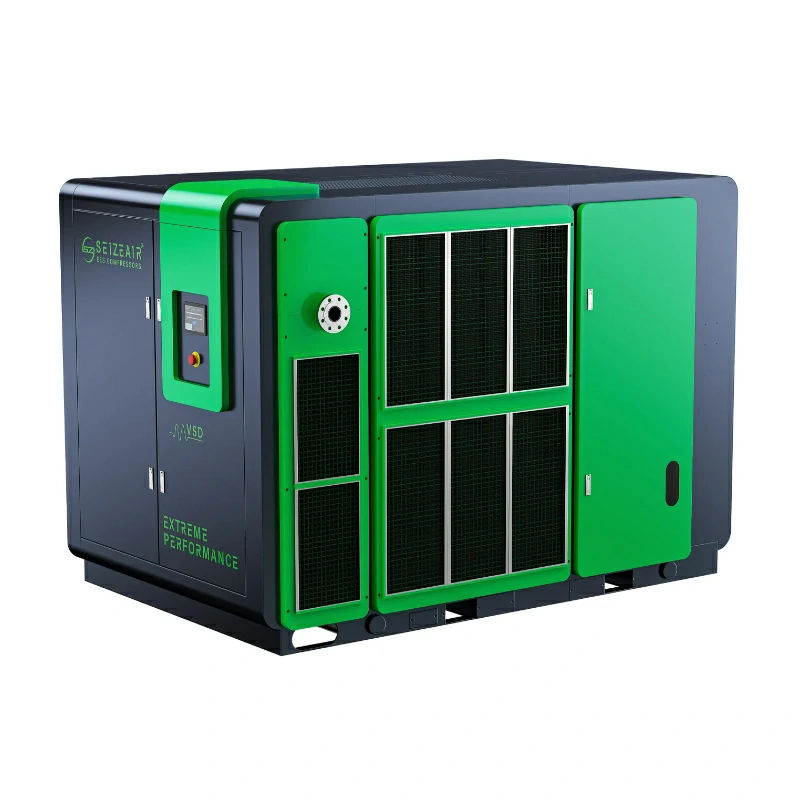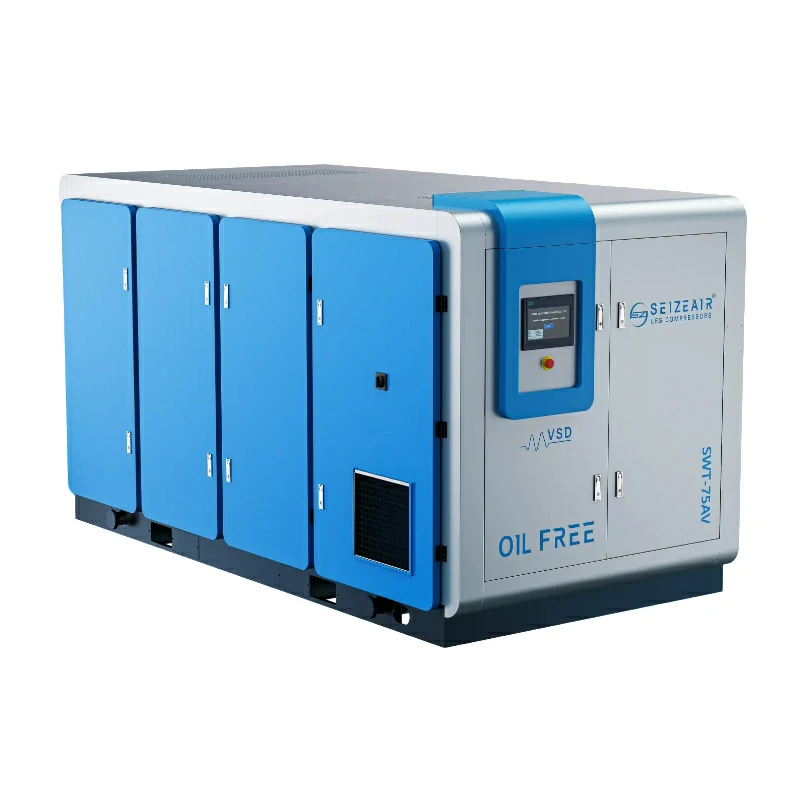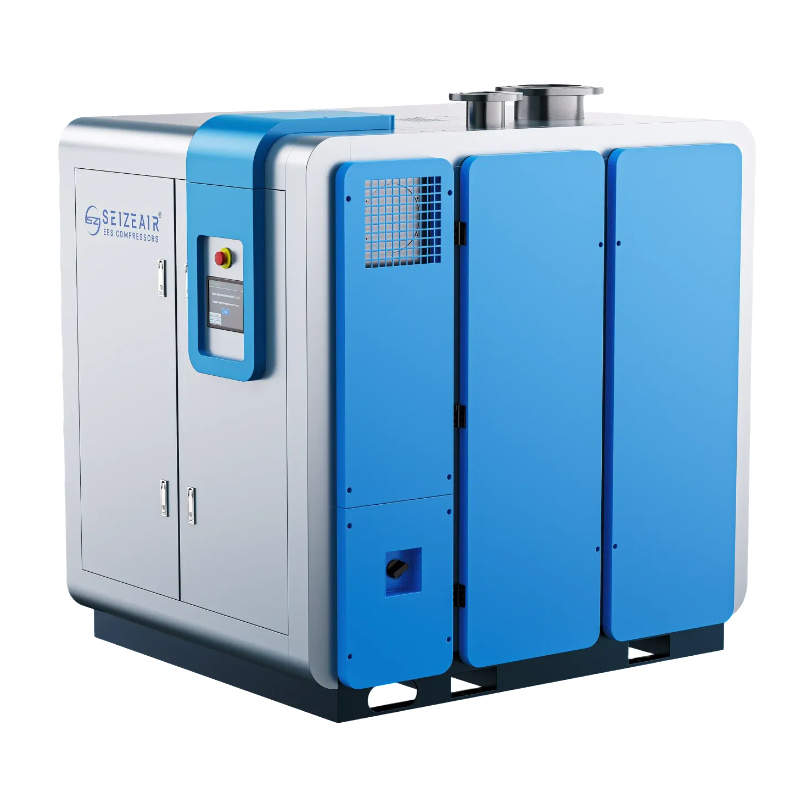


In the modern industrial landscape, energy consumption isn’t just an overhead cost—it’s a competitive variable. For facilities relying on compressed air, the traditional “fixed-speed” approach is rapidly becoming a relic of the past. Enter the VSD screw compressor. By aligning motor speed with real-time air demand, these machines have redefined what operational efficiency looks like.
Whether you are looking to slash utility bills or stabilize plant pressure, understanding the nuances of Variable Speed Drive technology is the first step toward a smarter production floor.
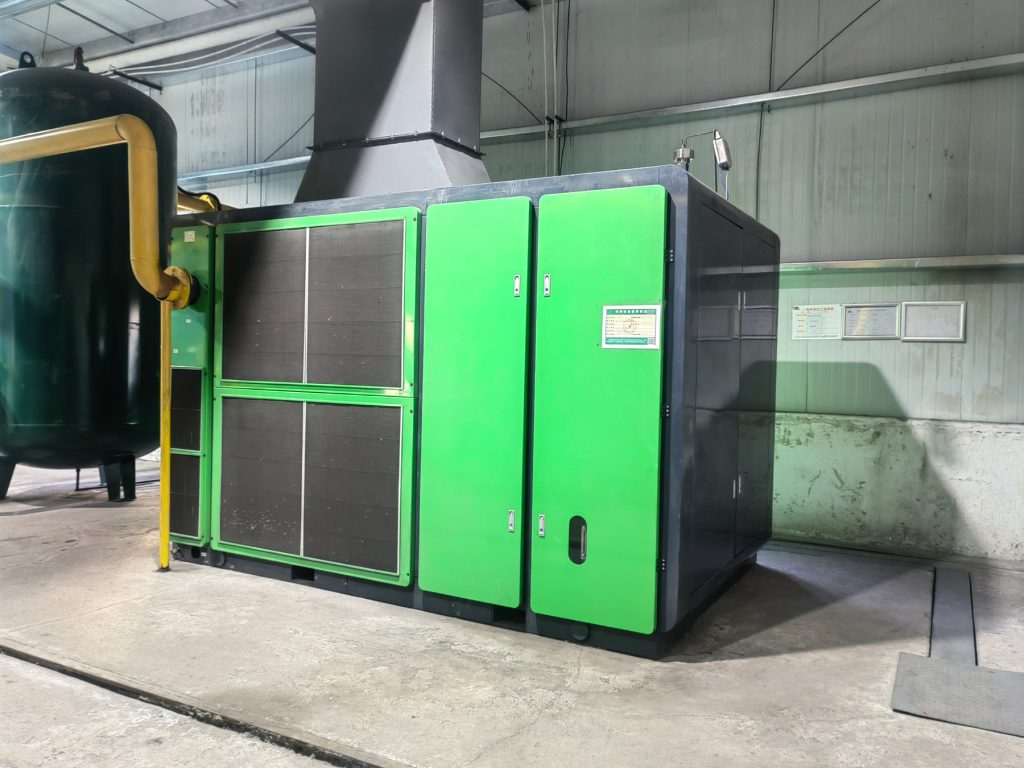
How Does a VSD Screw Compressor Work to Save Energy?
To appreciate the benefits, we must first understand the mechanism. A standard fixed-speed compressor operates like a light switch—it’s either 100% on or 100% off. When your demand drops, the motor continues to run at full speed, wasting energy through “unloading.”
A VSD screw compressor, however, utilizes a sophisticated frequency inverter to control the voltage and Hertz supplied to the motor. This allows the compressor to speed up or slow down in direct proportion to the actual air consumption in the pipeline.
Fixed Speed vs. VSD
| Feature | Fixed Speed Compressor | VSD Screw Compressor |
| Motor Speed | Constant (3000/3600 RPM) | Variable (Adjusts to demand) |
| Starting Current | High (6–8x Full Load Current) | Soft Start (Smooth acceleration) |
| Pressure Stability | Swings between 1–1.5 bar | Constant within 0.1 bar |
| Energy Waste | High during unloading | Minimal; consumes only what is needed |
| Turndown Ratio | Non-existent (0% or 100%) | Up to 80% (Matches low demand) |
Solving the “Turndown Ratio” Problem
In a real-world factory, air demand is never a flat line; it’s a jagged mountain range of peaks and valleys. Fixed-speed machines are designed for the peak demand, meaning they are inherently inefficient for 90% of their operational life. VSD technology addresses the “turndown ratio”—the ability of a compressor to slow down without losing lubrication or over-heating.
When you look at the vsd vs fixed speed screw compressor debate, the fixed-speed unit’s inability to “downshift” is its fatal flaw. A high-quality inverter doesn’t just slow down the motor; it manages the torque curves to ensure that even at 30% load, the specific energy requirement (kW/m³/min) remains optimized.
Why is a VSD Compressor More Efficient Than Fixed Speed?
The most cited advantage of a vsd screw compressor is its ability to slash electricity costs. Since energy accounts for roughly 70% to 80% of the total lifecycle cost of a compressor, even a modest gain in efficiency translates to thousands of dollars saved annually.
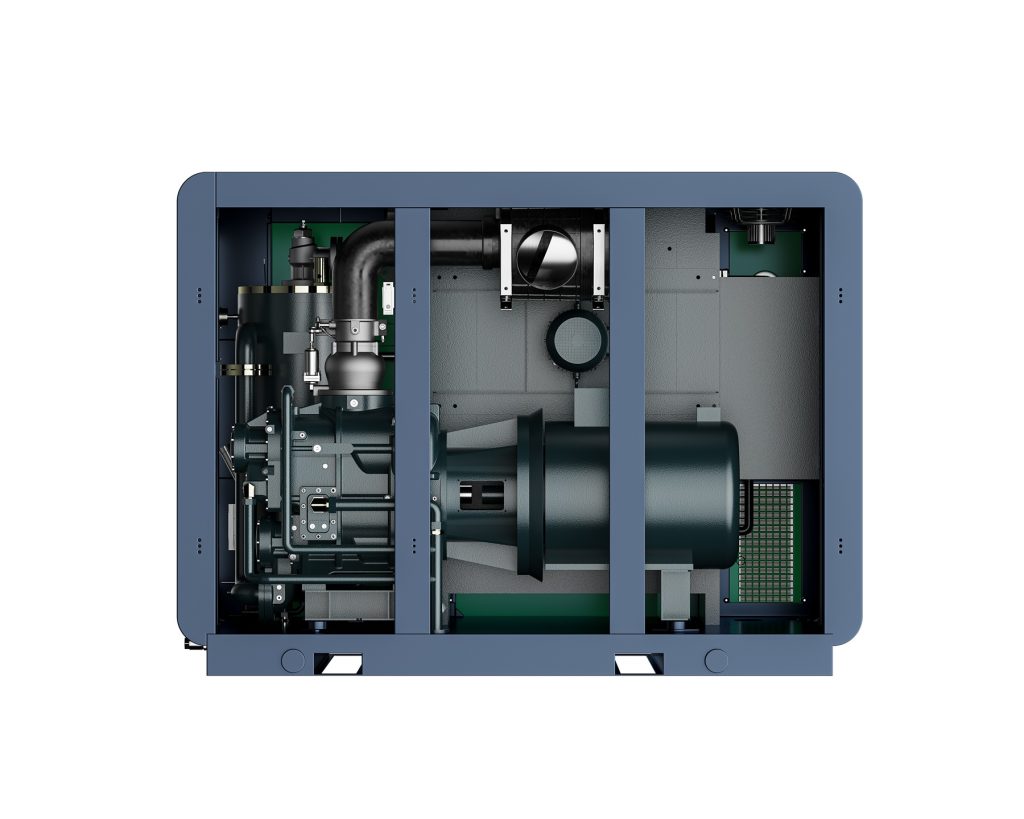
- Eliminating Unloaded Running: When a fixed-speed machine reaches its pressure setpoint, it “unloads.” It keeps spinning but produces no air, consuming about 25–35% of its full power. VSD models simply slow down or stop, eliminating this “phantom” power draw.
- Precision Matching: If your process only requires 40% of the compressor’s capacity, a VSD unit will only consume roughly 40% of the power, minus minor inverter losses.
The Hidden Cost of “Idling”
I’ve walked into plants where the compressor was unloading for 15 minutes every hour. That’s 25% of the time you are paying for electricity and getting zero air in return. Over a year of 24/7 operation, that’s a massive leakage of capital. A vsd screw compressor effectively turns that “idle time” into “savings time.”
By integrating the latest permanent magnet technology, manufacturers like Seize Air have pushed this efficiency floor even lower. Unlike standard VSDs that might struggle at very low speeds, a permanent magnet vsd compressor maintains nearly 95%+ motor efficiency across the entire speed range. From a decision-maker’s perspective, this isn’t just a technical upgrade; it’s a guaranteed hedge against rising energy prices.
How Does VSD Improve Compressed Air Pressure Stability?
Fluctuating air pressure can ruin precision tasks like laser cutting, food packaging, or textile weaving. Fixed-speed units operate within a “pressure band” (e.g., kicking in at 6.5 bar and stopping at 8 bar).
A VSD screw compressor maintains a steady discharge pressure. By constantly adjusting the motor speed via a PID loop (Proportional-Integral-Derivative), the system reacts to even minor pressure drops instantly. This consistency ensures that your downstream equipment operates at peak performance without the risk of “low-pressure” cycles affecting product quality.
The “Hunting” Problem in System Integration
Ask any CNC operator or system integrator about pressure drops. When the pressure swings by 1 bar, your actuators move slower, your nozzles spray differently, and your scrap rate goes up. You end up setting your compressor to 8 bar just to ensure it never drops below 6.5 bar. This “over-pressurizing” is a massive energy drain—every 1 bar of excess pressure costs about 7% more in energy.
With an energy-saving vsd air compressor, the “hunting” for pressure stops. It sits exactly where you set it, usually within a 0.1 bar margin. This allows you to lower your overall system pressure, further compounding your energy savings. Brands like Seize Air often emphasize this “low-pressure operation” capability because it’s the most immediate way to see a difference in work-piece consistency.
Can VSD Compressors Reduce Maintenance Costs and Wear?
Every time a fixed-speed motor starts, it experiences a massive surge of electricity—often called “Inrush Current”—and high mechanical torque. This “hammer effect” stresses the belts, bearings, and motor windings.
- Soft Start Technology: VSD units accelerate from 0 to full speed smoothly. This eliminates current peaks and reduces the heat generated during startup.
- Longer Component Lifespan: Because the machine isn’t constantly cycling between “load” and “unload,” the internal components experience less thermal and mechanical fatigue.
Maintenance Perspective
From a site engineer’s view, the VSD isn’t just about electricity; it’s about heat management. Most mechanical failures in screw compressors are heat-related. Because a VSD unit isn’t fighting the friction of constant “on-off” cycles, the internal temperatures are more stable. This preserves the viscosity of the lubricant and keeps the seals from hardening prematurely.
Furthermore, because the machine runs at lower average speeds, the linear wear on the screw rotors (the “air end”) is significantly reduced. It’s the difference between a car driving steadily on a highway versus one stuck in stop-and-go city traffic. While the inverter itself requires a clean, cool environment, the mechanical trade-off is a much more robust system with fewer emergency breakdowns.
How Does VSD Contribute to Carbon Neutrality and ESG?
As global regulations tighten around industrial carbon emissions, transitioning to high-efficiency hardware is no longer optional. A vsd screw compressor is a cornerstone of “Green Manufacturing.” By reducing total kWh consumption, you directly lower your facility’s CO2 emissions.
The ESG Compliance Factor
We are seeing more Tier-1 suppliers requiring “Green Audits” from their partners. If your plant is running old-school piston or fixed-speed screw compressors, you are leaving points on the table during environmental assessments.
Companies like Seize Air focus heavily on the “IE5” motor standard—the highest efficiency class available—which, when paired with VSD, drastically cuts the carbon intensity of every cubic meter of air produced. This isn’t just a “feel-good” initiative; it’s a prerequisite for doing business with global conglomerates in 2026. Reducing energy waste is the fastest way to hit sustainability targets without compromising production output.
When Should I Choose a VSD Screw Compressor?
While the benefits are clear, VSD technology is most effective under specific conditions. Use the table below to evaluate your facility:
| Operating Condition | VSD Recommended? | Reasoning from the Field |
| Fluctuating Demand | YES | Perfect for multi-shift or variable-load shops. |
| Constant 24/7 Full Load | NO | Fixed speed is slightly more efficient at exactly 100% load. |
| Strict Power Grid Limits | YES | Soft starts prevent voltage drops that trip other equipment. |
| High Dust/Heat Environment | Caution | The inverter electronics need a clean, ventilated space. |
| Frequent Start/Stop Cycles | YES | VSD handles “unlimited” starts per hour; fixed speed does not. |
The “Sweet Spot” and Potential Pitfalls
If your air demand profile shows a variation of more than 15-20%, VSD is a no-brainer. However, the “trap” some buyers fall into is buying a VSD for a process that never changes. If you are running a large chemical plant where the compressor never unloads, a high-efficiency fixed-speed unit might actually serve you better because inverters have a small internal power loss (about 2-3%).
The trick is to look at your data logs. If you don’t have logs, get an air audit. Modern permanent magnet vsd compressor efficiency curves have become so flat that they now rival fixed-speed even at full load, but the real ROI still lives in the variability of your production floor.
6. Why are Permanent Magnet (PM) VSD Compressors Better?
The market has shifted from standard induction VSDs to PM VSD (Permanent Magnet) motors. This is a critical distinction for anyone looking at a vsd screw compressor.
- Efficiency at Low Speed: Standard induction motors lose efficiency rapidly when they slow down. PM motors, because they have integrated magnets, maintain high torque and efficiency even at 15% speed.
- Internal Cooling: Many Seize Air models use oil-cooled PM motors. By using the compressor’s own oil circuit to cool the motor, you eliminate the need for a noisy, energy-consuming electric fan on the motor itself.
- Integrated Drive-Train: PM motors are often “direct-coupled,” meaning there are no gears or belts to lose energy. This 1:1 drive ratio is the gold standard for energy-saving vsd air compressor design.
What is the ROI on a VSD Air Compressor?
When I talk to plant owners, the conversation always ends at the “Payback Period.” A VSD compressor might cost 25-30% more than a base model. However, let’s look at the lifecycle:
- Year 1: High initial investment, but immediate 30% drop in the monthly power bill.
- Year 2-3: The “delta” in energy savings typically covers the price difference between the VSD and a fixed-speed unit.
- Year 4+: Pure profit.
In most industrial sectors, the ROI for a vsd screw compressor upgrade is under 24 months. If you factor in government rebates for energy-efficient equipment—which are becoming more common—the payback can be even faster. From a capital expenditure (CAPEX) perspective, it’s one of the few equipment upgrades where the machine literally pays for itself.
Optimizing Your Compressed Air System
Installing a vsd screw compressor is the single best move for energy efficiency, but it shouldn’t be the only one. To maximize your VSD benefits, consider these steps:
- Conduct an Air Audit: Quantify your demand swings before buying.
- Fix Leaks: A VSD is efficient, but it shouldn’t be used to “efficiently” pump air through a leaky pipe.
- Proper Sizing: Ensure your VSD unit is sized to cover the peaks and valleys of your specific workflow.
Final Thoughts
The shift toward VSD screw compressor technology represents a move toward data-driven, responsive manufacturing. By eliminating the waste of unloaded running, stabilizing system pressure, and extending machine life, VSD units offer a rare “win-win”: lower operational costs and better performance.
If you are looking to upgrade your system, brands like Seize Air offer cutting-edge solutions that combine two-stage compression with VSD technology to reach the pinnacle of energy savings. Investing in VSD isn’t just buying a compressor; it’s securing the future of your facility’s efficiency.