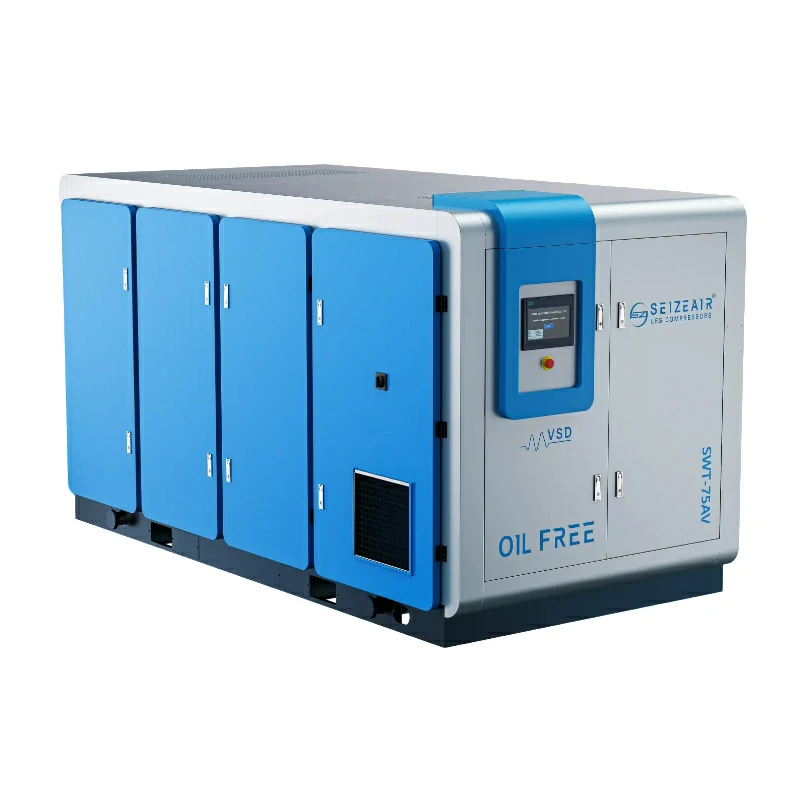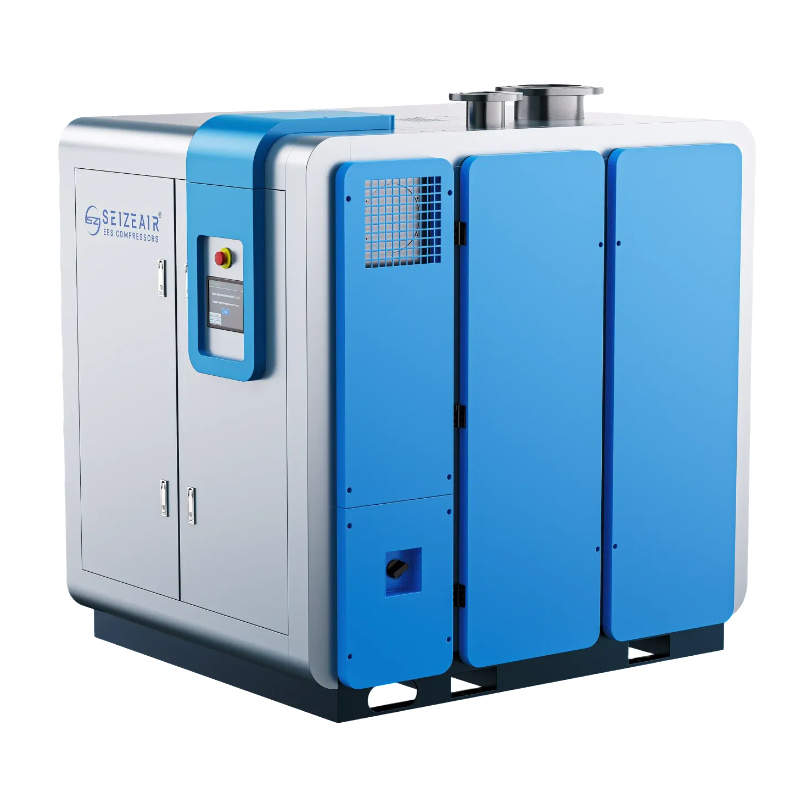


When investing in industrial compressed air systems, the “sticker price” is often the biggest distraction. Most facility managers are torn between the reliable, lower-cost Fixed Speed compressor and the technologically advanced Variable Speed Drive (VSD) compressor.
However, if you are looking at the Return on Investment (ROI), the purchase price is only about 10% of the total lifecycle cost. The real battle for your bottom line happens in energy consumption and maintenance over the next 10 years.
What is a Variable Frequency Compressor and How Does it Work?
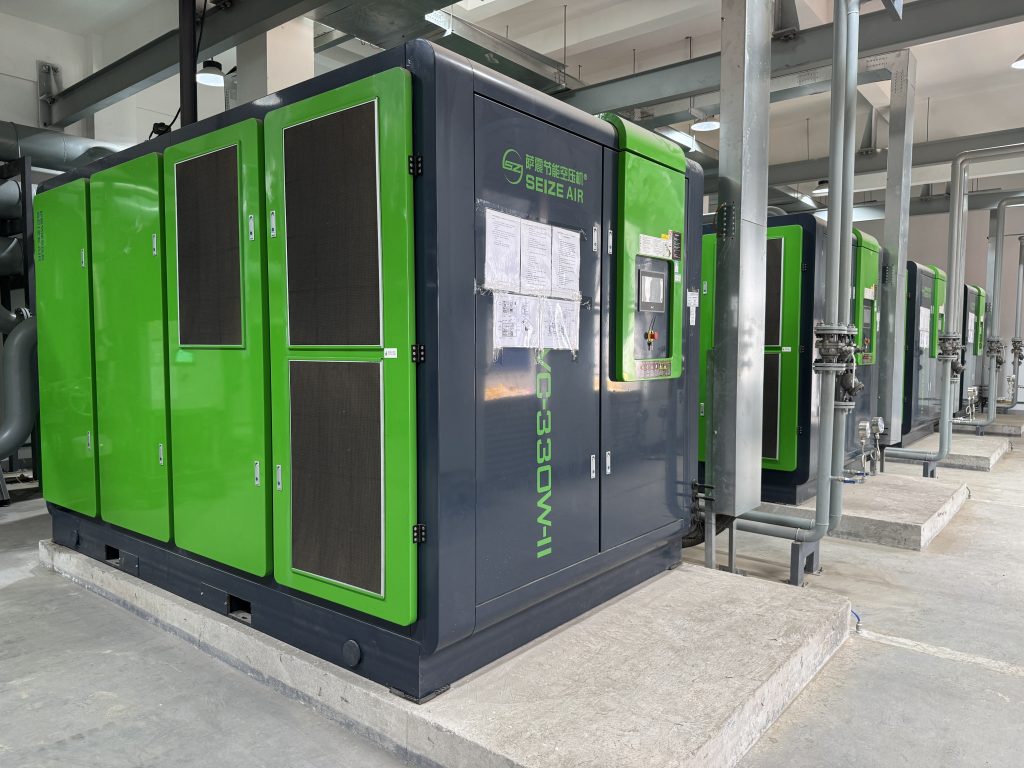
To understand the ROI, we first need to define the mechanics. A variable frequency compressor (commonly known as VSD) uses a specialized drive to control the speed (RPM) of the motor. Instead of running at a constant speed regardless of demand, it speeds up or slows down to match the exact CFM (Cubic Feet per Minute) required by your production line.
The Mechanism of Efficiency
In a fixed-speed setup, the motor runs at 100% capacity. When air demand drops, the compressor “unloads.” It’s still spinning and consuming significant power (often 30-40% of full load) without producing any air. This is essentially paying for electricity to stir the air inside the machine—a phenomenon known as “parasitic loss.”
From a field engineer’s perspective, this isn’t just about power—it’s about thermal stability. A frequency controlled screw compressor eliminates this “idling” waste by adjusting the motor frequency via a VFD (Variable Frequency Drive). Think of it as a car that can actually turn its engine down at a red light instead of redlining the RPMs while the brakes are on. By maintaining a lower operating temperature, you’re not just saving watts; you’re preserving the viscosity of your lubricant and extending the life of your seals.
The Physics of Air Production
When you look at the affinity laws of centrifugal pumps and fans, the power consumption is proportional to the cube of the speed. While screw compressors are positive displacement, the principle of VFD air compressor benefits holds true: dropping the frequency by just 20% can lead to a drastic reduction in internal friction and heat losses. In many real-world scenarios, a variable frequency compressor performs more work per unit of electricity than a fixed-speed unit ever could because it operates within its most efficient aerodynamic range for longer periods.
| Feature | Fixed Speed Compressor | Variable Frequency (VSD) Compressor |
| Motor Speed | Constant (Fixed RPM) | Variable (Adjusts to Demand) |
| Energy Waste | High during “Unload” cycles | Minimal; matches output to demand |
| Start-up Current | High (6-8x Full Load) | Soft Start (Low Amperage) |
| Pressure Stability | Fluctuates between load/unload | Constant (within 0.1 bar) |
| Mechanical Stress | High (Frequent Blow-off valves) | Low (Smooth transitions) |
| Part-load Efficiency | Extremely Poor | Excellent (Linear scaling) |
Why is VSD Energy Saving Significant for ROI?
The primary driver for a faster ROI in VSD systems is energy reduction. In most industrial environments, air demand is rarely constant. Tools start and stop, shifts change, and leaks occur.
The “Hidden Tax” of Unloaded Running
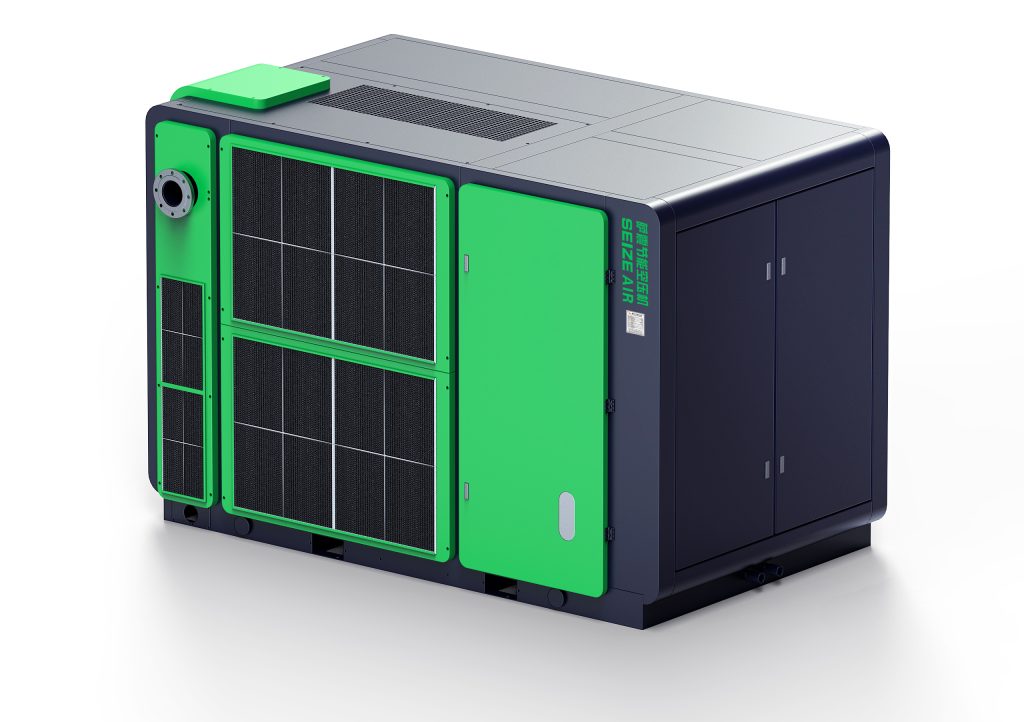
I’ve walked into dozens of plants where the fixed-speed compressor is “running” 24/7, but only “loading” for 4 hours total. The owner thinks, “It’s only a 75kW machine,” but they don’t realize they are paying for 25kW of power all night long just to keep the screws turning without making a single PSI of air. This is what we call “ghost consumption.”
A variable frequency compressor treats air like a utility—like water from a tap.
- Fixed Speed: Consumes high energy even when demand is at 50% because the motor cannot slow down. It just vents excess air.
- VSD: Scales power consumption almost linearly. If you need 50% air, you pay for roughly 50% power.
Case Study Logic
Statistically, if your air demand fluctuates by more than 15%, the VSD starts winning the ROI race. By switching to a high-efficiency model, such as those engineered at Seize Air, many plants see a reduction in energy bills by 35% to 50%. When you consider that energy accounts for nearly 75% of a compressor’s lifetime cost, these savings pay back the price difference of the machine surprisingly quickly. In high-cost energy markets like Europe or Southeast Asia, we aren’t talking years anymore; we are talking months to see a full “premium price” recovery.
Is a VSD Compressor Worth the Extra Cost?
This is the central question for any facility manager: “How much does a VSD compressor cost compared to the savings?” The upfront cost of a variable frequency compressor can be 20% to 50% higher than a fixed-speed unit, but that’s a narrow way to look at CAPEX.
The Break-Even Analysis
Don’t guess your demand—measure it.
- Multiple Shifts with Varying Demand: This is the “Goldilocks” zone. If you have a morning shift that uses 100% and an evening shift that uses 30% for small hand tools, the VSD is a mandatory investment. The ROI is often achieved within 12 to 24 months.
- Constant 24/7 Full Load: If you are running a glass plant or a continuous chemical process where the demand never drops below 95%, a fixed-speed unit might actually be more efficient and cheaper. VSDs have a small (2-3%) energy loss due to the heat generated by the inverter itself. If you’re always at 100%, why pay for a drive you’ll never use?
- The “Soft Start” Financial Bonus: Every time a fixed-speed motor starts, it draws a massive “inrush” current (up to 800% of normal). If your utility company charges “Peak Demand” fees based on your highest 15-minute usage spike, one single startup at 8:00 AM could set your entire month’s electricity rate. VSDs start at zero and ramp up slowly. This energy efficient air solution for factories can save thousands in utility penalties alone, independent of the actual air produced.
Maintenance and Longevity
Does a VSD compressor cost more to maintain? This is a common misconception. While the inverter is an added electronic component, the mechanical “wear and tear” is often lower.
The “Sledgehammer” Effect vs. Smooth Control
Think of a fixed-speed compressor as hitting your piping system with a sledgehammer every time it loads. The pressure jumps, the valves slam, and the hoses flex. Over time, this leads to structural leaks at the joints. And as any system integrator will tell you, a leak is just another “unpaid customer” that you’re paying to feed.
- Reduced Cycling: Fixed-speed units constantly cycle between “Hot” (loading) and “Cooling” (unloading). This thermal cycling creates moisture in the oil—the primary cause of bearing failure. A variable frequency compressor stays at a consistent operating temperature.
- Lower System Pressure: VSDs allow you to run at a tighter pressure band. If you need 7.0 bar at the tool, a fixed-speed system usually has to pump up to 8.0 bar just so it can “coast” down to 7.0 bar before kicking back in.
- The 1-Bar Rule: Reducing system pressure by just 1 bar (14.5 psi) can save 7% in energy consumption. Because a VSD holds pressure steady within 0.1 bar, you can safely set your target lower without risking a production shutdown.
Seize Air optimizes these systems by using permanent magnet motors (iPM), which further increase the ROI by eliminating bearing losses and increasing motor efficiency even at low speeds. Unlike induction motors, iPM motors don’t lose efficiency when they slow down, making them the ultimate pairing for VSD technology.
Comparing Total Cost of Ownership (TCO)
To visualize the ROI, let’s look at a 5-year TCO comparison for a 75kW (100HP) compressor operating 6,000 hours per year in a standard industrial setting.
| Expense Category | Fixed Speed (75kW) | VSD / Variable Frequency (75kW) |
| Purchase Price | $15,000 | $22,000 |
| Annual Energy Cost | $45,000 | $31,500 (30% savings) |
| 5-Year Energy Total | $225,000 | $157,500 |
| Maintenance (5 Years) | $8,000 | $9,500 |
| Total 5-Year Cost | $248,000 | $189,000 |
Net Savings with VSD: $59,000
Time to Recover Premium Price: ~6.5 Months.
From a CFO’s perspective, spending an extra $7,000 to save $59,000 is an internal rate of return (IRR) that beats almost any other factory floor upgrade. When you add in the reduced downtime and the stability of the air supply, the “value” goes far beyond the spreadsheet.
How to Choose the Right Compressor for Your Facility?
Before signing the PO, perform a Data Logging session. Use an ultrasonic leak detector and a power logger to map your air demand for one week. If you skip this step, you’re just guessing with your company’s money.
- Analyze the Duty Cycle: Is your compressor “short cycling” (turning on and off every 2 minutes)? That’s a cry for help—you need a variable frequency compressor immediately to prevent motor burnout.
- The “Base Load” Strategy: Many large plants use a hybrid approach. They use a large Seize Air fixed-speed compressor to handle the “base load” (the minimum amount of air always needed) and a VSD unit to “trim” the fluctuating demand. This provides the ultimate ROI balance—maximum efficiency at the bottom and maximum flexibility at the top.
- Future-Proofing: Is your business growing? A VSD is more forgiving of change. If you add a new CNC machine or a laser cutter next year, the VSD can scale with you. A fixed-speed unit is stuck in its ways—it’s either too big today (wasting energy) or too small tomorrow (causing pressure drops).
Final Verdict
For the vast majority of modern manufacturing—ranging from laser cutting to food packaging—the variable frequency compressor offers a significantly faster ROI.
While the initial investment is higher, the “invisible” savings in energy, stabilized plant pressure, and reduced electrical demand charges make the VSD the superior financial choice. If your goal is long-term profitability and operational stability, investing in a high-performance system like those from Seize Air ensures that your “payback” period starts the moment you hit the start button.