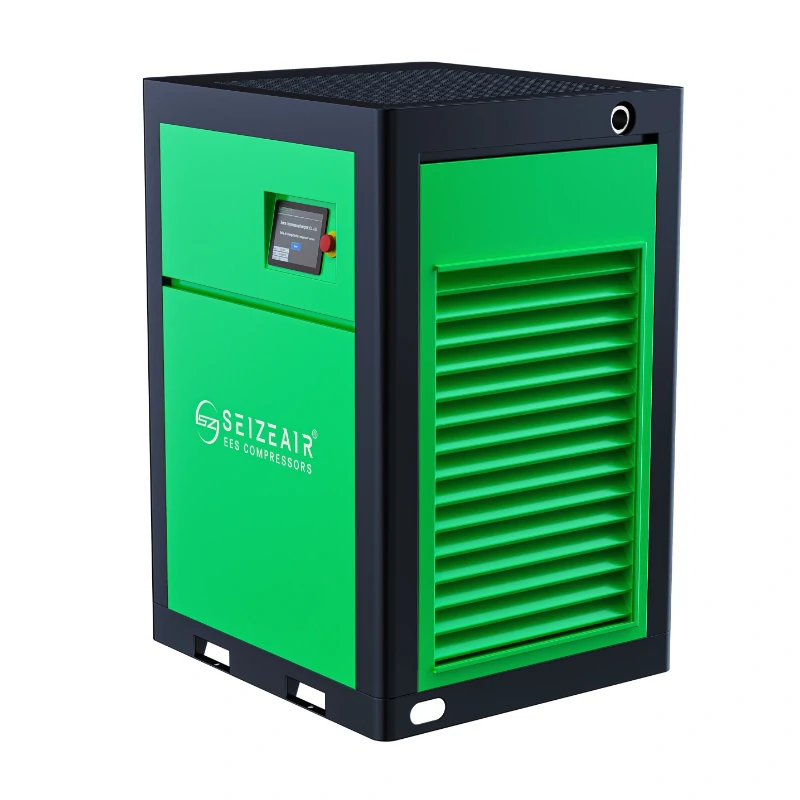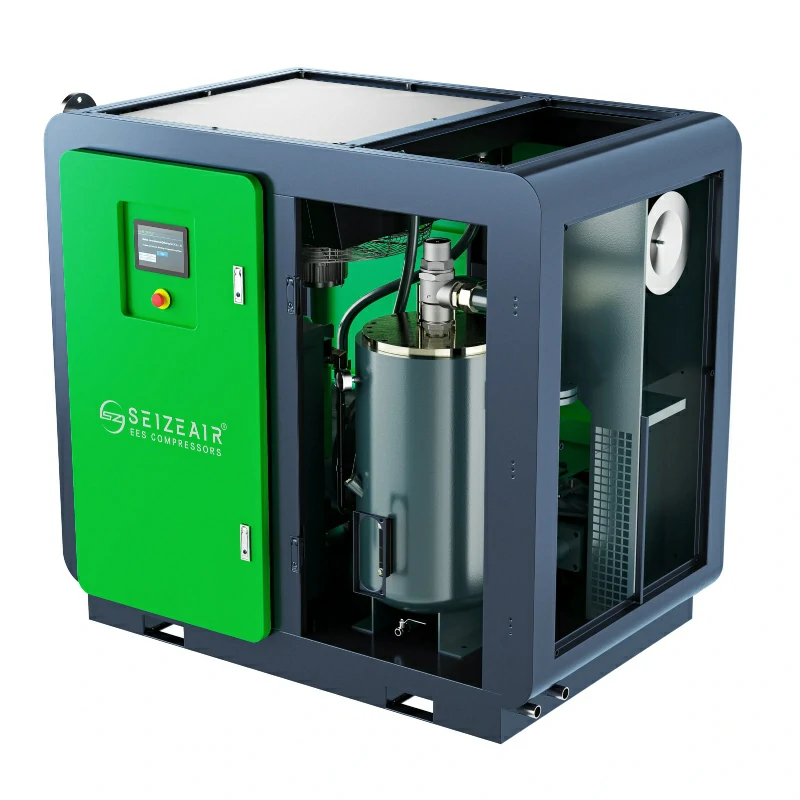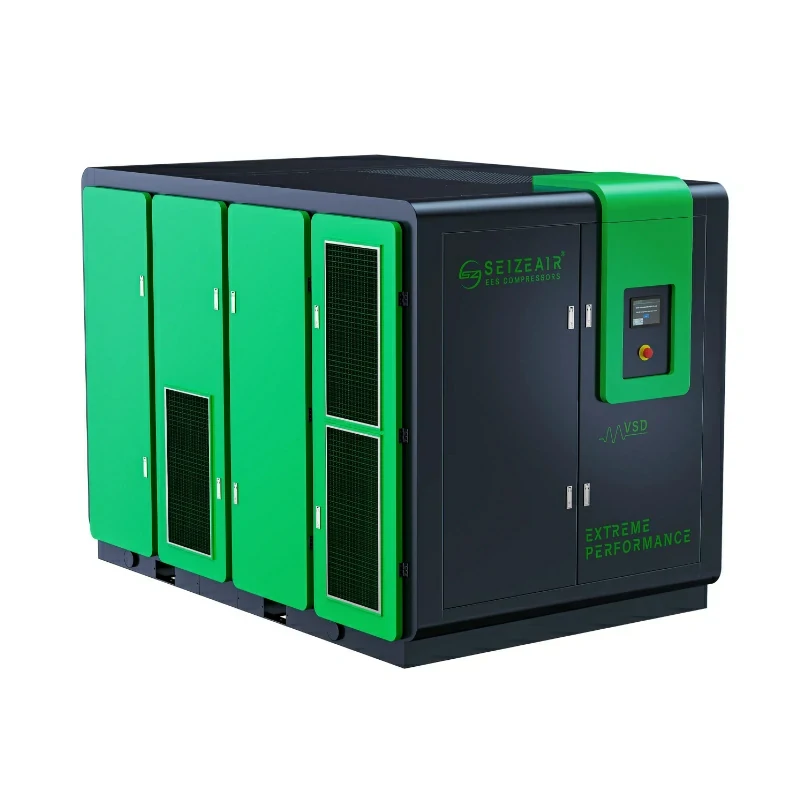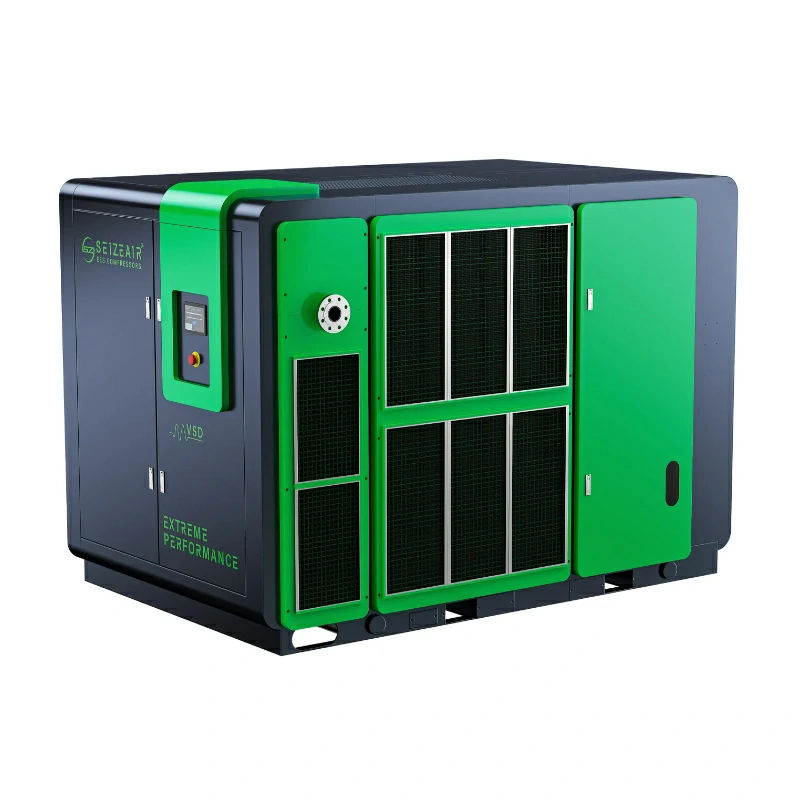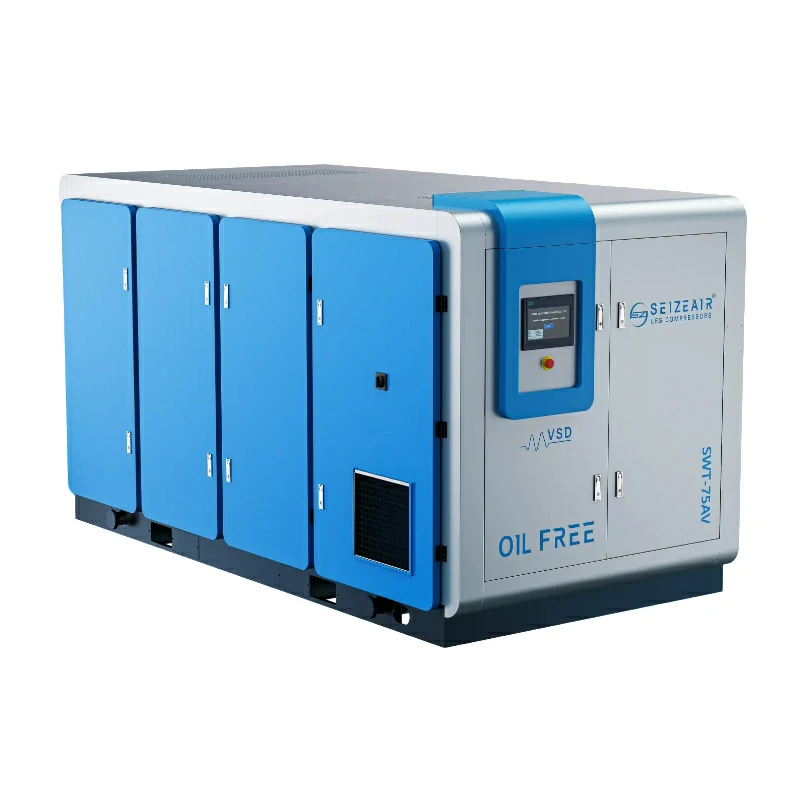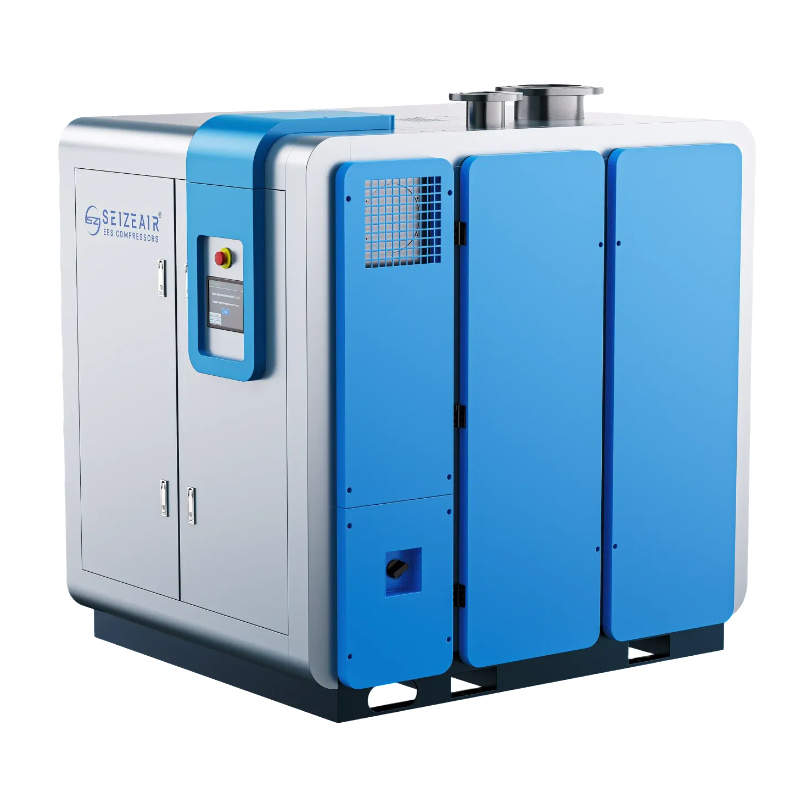


A fixed speed air compressor remains the most economical, rugged, and high-efficiency choice for industrial facilities running continuous 24/7 production, high duty-cycle manufacturing, or base-load plant setups where air demand stays uniform. While Variable Speed Drive (VSD) systems are heavily marketed for fluctuating loads, choosing between constant speed rotary screw units and inverter-driven compressors comes down to your actual CFM profile, thermal operating environment, capital expenditure limits, and total maintenance budget.
What Is a Fixed Speed Air Compressor and How Does It Work?
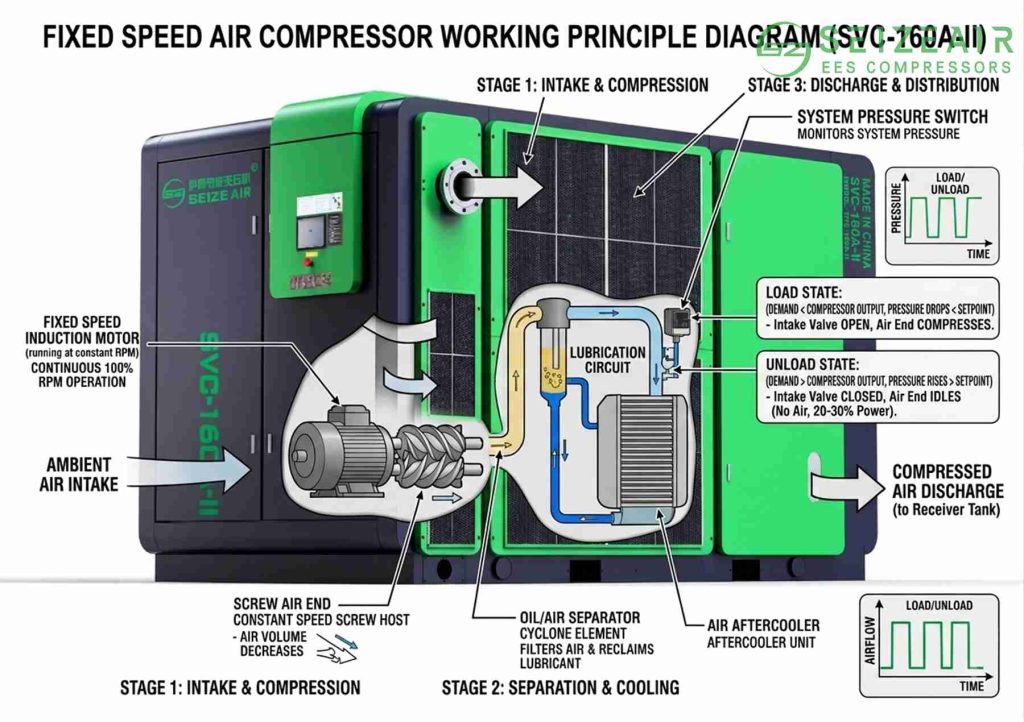
A fixed speed air compressor operates by driving its electric motor at a single, unchanging rotational speed (RPM) whenever the machine is powered on. Regardless of downstream air pressure fluctuations or tool usage variations, the motor maintains a constant shaft speed, translating directly into a steady volume of compressed air delivered at a fixed pressure rating.
To balance output with plant usage without continually stopping and starting the main motor, a fixed speed rotary screw air compressor utilizes a mechanical Load/Unload control system:
[ Air Usage Matches Output ]  --->  RUNS LOADED (Motor at 100% RPM, Intake Valve Open)
                                             │
                                             ▼
[ Pressure Hits Cut-Out ]     --->  RUNS UNLOADED (Motor at 100% RPM, Intake Valve Closed)
                                             │
                                             ▼
[ Idle Timer Expires ]        --->  AUTO-STOP / STANDBY MODE (Motor Off, Controller Active)
- Loaded Operation: When system pressure falls to the cut-in threshold, the inlet valve opens fully. The motor draws rated full-load current (FLA) to deliver maximum rated capacity (CFM or cubic meters per minute) into your air distribution headers.
- Unloaded Operation: When system pressure rises to the cut-out setpoint, the inlet valve closes and internal blowdown valves vent internal sump pressure. The motor continues spinning at 100% RPM to protect motor windings from excessive thermal cycles, consuming approximately 20% to 35% of its rated horsepower while producing zero compressed air output.
- Auto-Stop / Standby Mode: If no air is consumed during a preset idle window (typically adjusted between 2 and 10 minutes depending on motor starter capacity), the electronic controller shuts off the motor completely to prevent unnecessary idle power consumption.
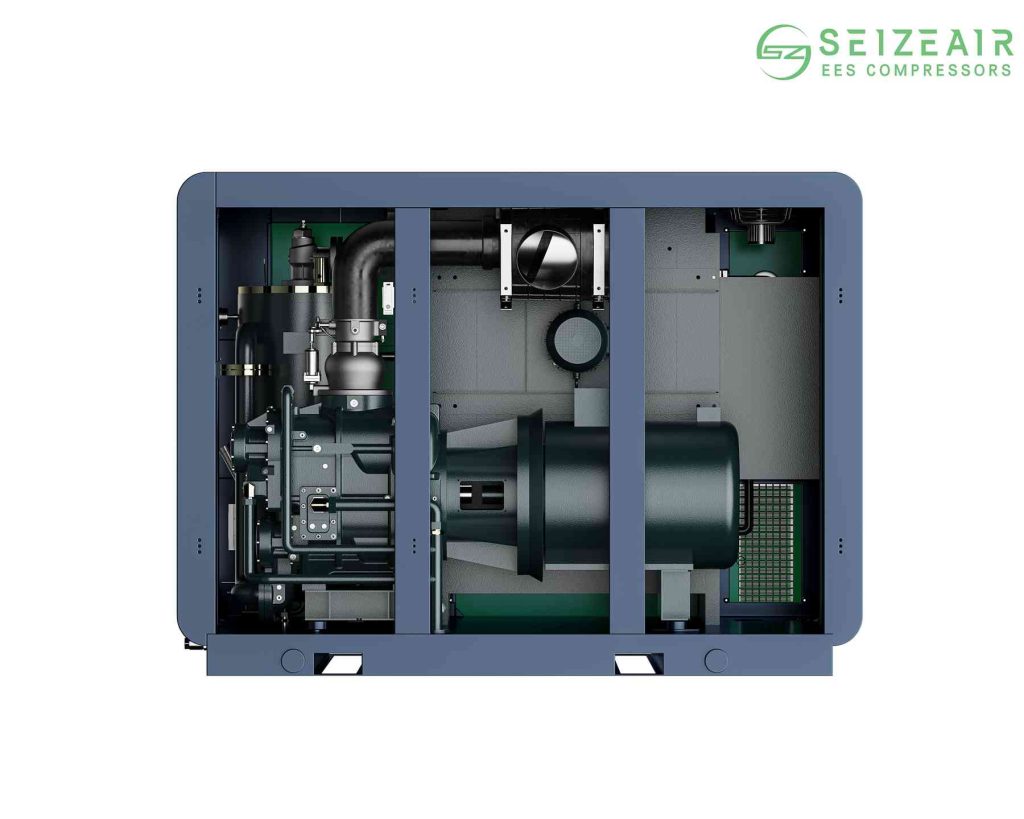
Because this traditional architecture relies on heavy-duty magnetic contactors, standard induction motors, and mechanical valves rather than sensitive microelectronics, standard fixed speed units maintain exceptional mechanical endurance in punishing plant environments.
Fixed Speed vs Variable Speed Air Compressor: What Are the Key Performance Differences?
Evaluating performance differences between constant speed screw compressors and VSD units requires analyzing mechanical losses, electrical conversion efficiencies, and partial-load behaviors across different duty cycles.
| Feature / Metric | Fixed Speed Rotary Screw Compressor | Variable Speed Drive (VSD) Compressor |
| Optimal Demand Profile | Continuous, steady-state air demand (85% – 100% load) | Heavily fluctuating, multi-shift variable loads |
| Full-Load Efficiency | Maximum (Direct drive line power, zero VFD electrical losses) | Slightly lower (2% to 4% VFD heat conversion loss) |
| Initial Purchase Price | Low (Upfront capital investment 30% to 50% lower) | High (Requires drive modules, shaft grounding, filtering) |
| Operating Environment Tolerance | High tolerance to ambient dust, high ambient heat, dirty power | Sensitive to high ambient temperatures, airborne debris, voltage spikes |
| Electrical Complexity | Simple contactors, Star-Delta/DOL starters, low harmonic noise | Complex power electronics, IGBT modules, elevated THD potential |
| Maintenance & Repairs | Low cost, field-serviceable with standard electrical spares | High cost, specialized drive diagnostics, proprietary drive boards |
| Payback Period | Immediate via low initial CapEx on steady loads | 2 to 5 years (Only realized under fluctuating plant demand) |
When operating at 100% duty cycle, a fixed speed compressor eliminates inverter switching losses and thermal dissipation associated with VFD power modules. However, if your plant experiences wild pressure drops and wide flow ranges throughout the shift, a VSD unit will throttle motor RPM to match demand, avoiding unloaded running losses at the expense of higher initial equipment costs and increased electronic complexity.
When Should You Choose a Fixed Speed Air Compressor Over VSD?
Selecting fixed speed technology over VSD is an intentional, high-ROI engineering strategy when operating parameters favor mechanical simplicity and full-speed electrical efficiency.
                  +-------------------------------------------------+
                  |      Plant Air Usage Pattern Evaluation        |
                  +-------------------------------------------------+
                                           |
             +-----------------------------+-----------------------------+
             |                                                           |
   Steady Demand (85%-100%)?                                  Fluctuating Demand?
             |                                                           |
             v                                                           v
+-----------------------------------+                       +-----------------------------------+
|    FIXED SPEED AIR COMPRESSOR     |                       |       VSD AIR COMPRESSOR          |
|  • Peak full-load efficiency      |                       |  • Matches variable flow rates    |
|  • Lowest capital outlay          |                       |  • Eliminates unloaded idling     |
|  • Superior thermal endurance     |                       |  • Higher initial purchase cost   |
+-----------------------------------+                       +-----------------------------------+
1. Your Plant Runs a Continuous, Steady Compressed Air Demand Profile
Facilities operating 24/7 production lines—such as glass container plants, textile weaving mills, plastic blow molding lines, chemical process plants, or continuous packaging lines—consume a uniform volume of air for hours or days without interruption. When plant air demand stays consistently between 85% and 100% of machine output, a VSD compressor offers zero energy savings over a fixed speed rotary screw unit.
At 100% capacity, a constant speed rotary screw compressor directly couples grid power to the air end, operating at maximum motor power factor and peak wire-to-air efficiency.
2. You Are Sizing a Base Load Compressor for Multi-Unit Configurations
In modern industrial compressor rooms equipped with master sequence controllers, running multiple VSD units side-by-side leads to mechanical redundancy and higher operational costs. The standard layout for multi-compressor installations utilizes:
- One or more fixed speed air compressors dedicated strictly to running 100% loaded to satisfy the plant’s constant base load air requirement.
- A single trim VSD air compressor sized to absorb the real-time peak fluctuations and unpredictable pressure drops across the facility.
By running continuous-duty fixed speed units from Seize Air as your base load workhorses, you lock in low equipment purchase costs and peak full-load operating efficiency, allowing the trim unit to handle remaining flow variances.
3. Your Installation Environment Is Unconditioned, Hot, or Extremely Dusty
Variable frequency drives rely on delicate microprocessors, insulated-gate bipolar transistors (IGBTs), power capacitors, and internal cooling fans. In harsh industrial environments—such as steel foundries, cement grinding plants, sawdust-heavy woodworking facilities, or non-climate-controlled factory floors where ambient temperatures exceed 45 degrees C (113 degrees F)—VFD drives are vulnerable to overheating, dirty air filters, and board failures.
A heavy-duty industrial fixed speed compressor uses industrial-grade Star-Delta contactors, heavy-gauge wiring, and sealed induction motors. It easily handles airborne particulates, wide ambient temperature shifts, and humid operating environments where high-tech drives fail prematurely.
4. You Have Strict Initial Capital Expenditure Limits
For facility expansions, newly established workshops, or capital-restricted production plants, the 30% to 50% price premium required for a VSD air compressor can severely stretch your budget. If your load profile indicates a payback horizon longer than 4 to 5 years, investing in a high-efficiency single speed rotary screw unit lets you allocate capital toward revenue-generating processing equipment.
5. Your Plant Operates on Generator Power or Unstable Electrical Grids
Facilities running off-grid on diesel generator power, or plants located in rural areas with poor grid stability, frequently experience line voltage sags, power surges, and phase imbalances. VFD drives are prone to tripping under unstable input voltages and can feed total harmonic distortion (THD) back into sensitive localized electrical grids. Fixed speed motor starters integrate seamlessly with backup generators without requiring expensive harmonic mitigation filters or isolation transformers.
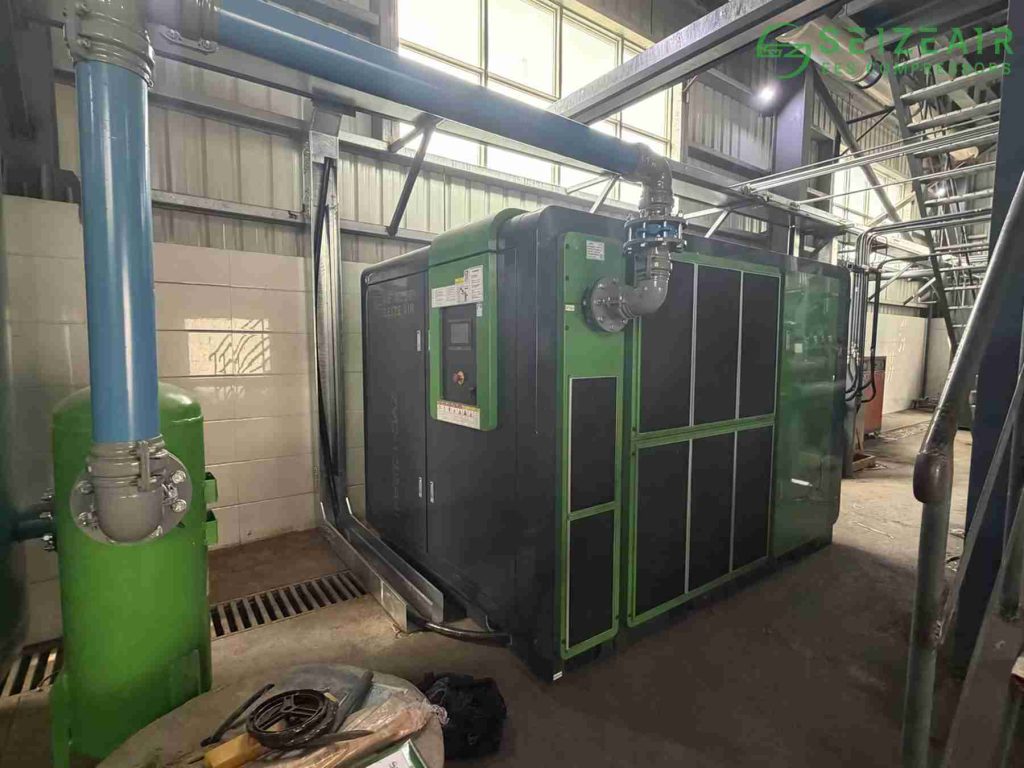
Fixed Speed Compressor Total Cost of Ownership: Initial Price vs Long-Term Power Costs
Understanding the true cost of a fixed speed air compressor requires analyzing lifecycle costs rather than focusing solely on the initial invoice price. Over a typical 10-year service life, energy costs account for roughly 70% to 80% of a compressor’s total cost of ownership, while initial capital expenditure accounts for just 10% to 15%.
Total Cost of Ownership Calculation Formula
TCO = Initial CapEx + Lifetime Energy Costs + Routine Maintenance Costs + Unscheduled Downtime
To compare lifecycle expenses, consider a 75 kW (100 HP) compressor operating 6,000 hours per year at an average power tariff of $0.12 per kWh under different loading profiles:
| 5-Year Financial Metric | Fixed Speed Compressor (100% Continuous Load) | VSD Compressor (100% Continuous Load) | VSD Compressor (60% Variable Load) |
| Initial Equipment Outlay | ~$22,000 | ~$33,000 | ~$33,000 |
| Annual Energy Consumption | ~485,000 kWh | ~498,000 kWh (VFD losses) | ~320,000 kWh |
| 5-Year Electricity Expense | $291,000 | $298,800 | $192,000 |
| 5-Year Maintenance Costs | $12,000 | $16,000 | $16,000 |
| 5-Year Total Cost of Ownership | $325,000 | $347,800 | $241,000 |
Financial Analysis:
- Under Steady 100% Demand: The fixed speed machine delivers a $22,800 net savings over 5 years due to lower upfront capital outlay, lower routine maintenance costs, and higher wire-to-air efficiency at full motor output.
- Under Variable 60% Demand: The VSD unit yields $84,000 in net savings over 5 years, easily justifying its higher initial purchase price by eliminating the energy waste of running unloaded.
Is a Fixed Speed Air Compressor More Reliable Than a VSD Unit?
From an industrial control and electrical component standpoint, yes. System reliability is inversely proportional to electrical complexity. The simpler the power transmission and control circuit, the fewer potential failure points exist within the machine.
+-----------------------------------------------------------------------+
|              Fixed Speed Power Transmission Network                   |
|  [3-Phase Line] ---> [Breaker] ---> [Contactor] ---> [Induction Motor] |
|  (Extremely rugged, heat-resistant, easily field-serviced)            |
+-----------------------------------------------------------------------+

+-----------------------------------------------------------------------+
|                 VSD Power Transmission Network                        |
|  [3-Phase Line] ---> [EMC Filter] ---> [Rectifier] ---> [DC Bus]       |
|                 ---> [Inverter/IGBTs] ---> [Encoders] ---> [Motor]    |
|  (Sensitive to line noise, heat buildup, dust, and electrical spikes) |
+-----------------------------------------------------------------------+
Key factors that give fixed speed machines superior operational uptime include:
- Robust Power Electrics: Fixed speed units use magnetic contactors, thermal overload relays, and standard industrial switches. These heavy-duty components tolerate dust, ambient heat, and minor voltage fluctuations that cause VFD drives to lock up or fault out.
- Simplified On-Site Diagnostics: Plant maintenance personnel and general industrial electricians can quickly troubleshoot standard magnetic contactors, pressure switches, and motor windings using standard multimeters and stock industrial components.
- No Expensive Frequency Inverter Failures: Replacing a blown variable frequency drive on a 100 HP compressor out of warranty can cost upwards of $8,000 to $12,000 in parts alone, whereas replacing a burnt contactor or coil on a fixed speed machine costs a fraction of that amount.
To ensure maximum long-term reliability in demanding 24/7 environments, premium fixed speed rotary screw units from Seize Air are built with oversized air ends, heavy-duty cast iron housings, and direct-drive couplings that eliminate belt slippage and bearing wear.
Can You Retrofit a VFD Drive onto an Existing Fixed Speed Compressor?
When air demand shifts over time, plant managers often ask if they can convert an existing fixed speed rotary screw compressor into a variable speed unit by installing an aftermarket external VFD drive module.
While installing an external drive is technically achievable, retrofitting standard fixed speed air compressors presents significant operational risks if not managed properly:
- Motor Insulation Breakdown: Standard induction motors installed on fixed speed machines may lack inverter-duty insulation ratings (such as Class H wire insulation or NEMA MG1 Part 31 compliance). The sharp voltage spikes (high dV/dt) generated by a VFD can breach standard motor insulation, leading to shorted windings.
- Bearing Fluting and Shaft Currents: VFD power supply waveforms induce parasitic shaft voltages. Without shaft grounding rings or insulated ceramic bearings, electrical currents discharge directly through the motor bearings, causing micro-pitting, fluting, and premature bearing destruction.
- Low-Speed Lubrication and Thermal Hazards: Male and female air end rotors rely on minimum RPM thresholds to maintain proper oil injection, thermal cooling, and seal compression. Slowing down a standard air end below its designed shaft speed can trigger thermal trips, reduced oil pressure, and excessive oil carryover into downstream lines.
If your plant experiences minor air demand changes but you want to avoid a risky VFD retrofit, a safer and more cost-effective upgrade is installing an oversized wet air receiver tank. Adding extra air storage capacity increases the system’s total volumetric buffer, extending unload times, reducing short-cycling frequency, and giving your fixed speed unit longer, stress-free run cycles.
How Do You Correctly Size a Fixed Speed Rotary Screw Compressor?
Sizing a fixed speed air compressor requires calculating your facility’s total CFM requirements, factoring in working pressure losses, and pairing the compressor with adequate air receiver storage to minimize short-cycling losses.
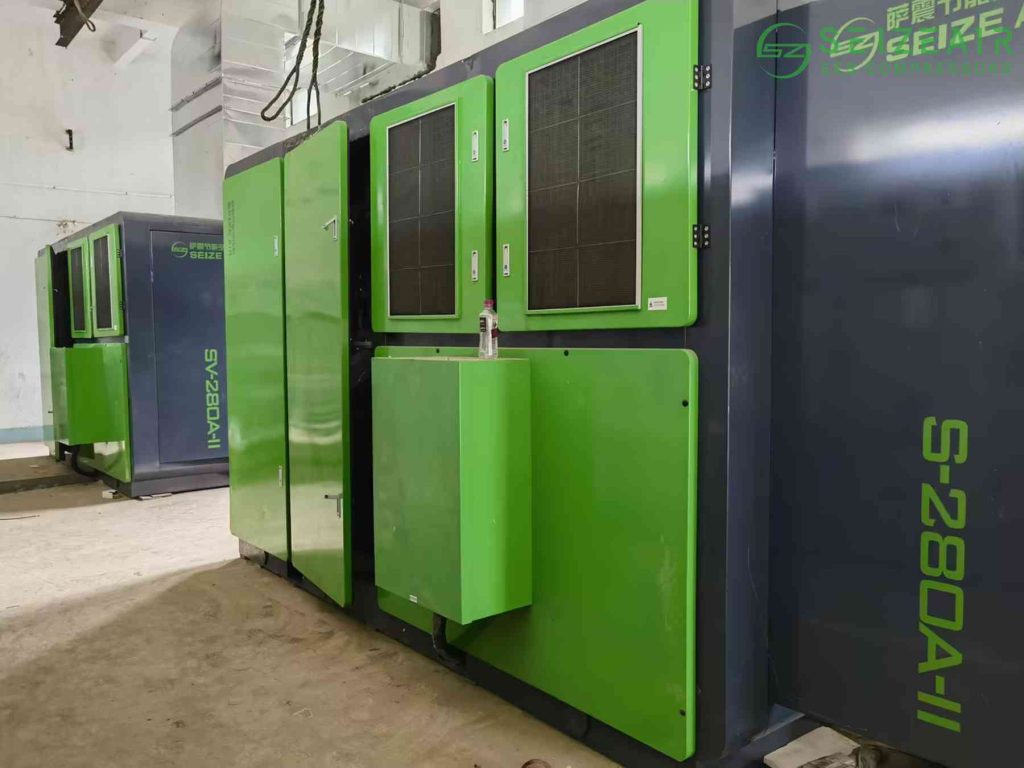
Calculate Total Plant CFM Air Consumption
List every pneumatic tool, automated machine, packaging line, and air cylinder operating during peak production shifts. Sum their individual CFM consumption ratings and apply a diversity factor based on actual simultaneous equipment usage:
Required Air Output (CFM) = (Total Equipment Peak CFM * Diversity Factor) * 1.20
The additional 1.20 multiplier provides a 20% safety margin to accommodate system piping friction, minor tool wear, and future facility expansion.
Establish Total System Operating Pressure
Identify the equipment requiring the highest working pressure on your plant floor (for example, 100 PSI). Then calculate cumulative pressure drops across your air treatment train:
- Main distribution piping friction drop: ~3 to 5 PSI
- Refrigerated air dryer drop: ~3 to 5 PSI
- Coalescing and particulate inline filter drop: ~2 to 3 PSI
Required Compressor Output Pressure = 100 PSI + 5 PSI + 5 PSI + 3 PSI = 113 PSI
In this scenario, select a standard 125 PSI (8.5 bar) compressor model to guarantee the target operating pressure reaches your working equipment.
Size Air Receiver Storage Tanks for Load/Unload Control
Fixed speed air compressors require larger receiver tanks than VSD units to prevent excessive motor start/stop cycles and reduce rapid pressure swings. A proven sizing guideline for load/unload machines is providing 4 to 10 gallons of storage capacity per CFM of compressor output.
Minimum Air Tank Capacity (Gallons) = Compressor Output (CFM) * 4
For heavy-duty industrial setups, choosing robust fixed speed rotary screw units from Seize Air paired with properly sized dry air receiver tanks ensures stable main line pressure, reduces short-cycling wear, and delivers reliable, long-term plant performance.
Frequently Asked Questions
What is the main operational difference between fixed speed and variable speed air compressors?
A fixed speed air compressor runs its motor at one constant RPM whenever powered, using load/unload idling cycles to manage partial air demand. A variable speed (VSD) compressor automatically adjusts motor RPM up or down using an inverter drive to match fluctuating air consumption in real time, maintaining constant main-line pressure.
Why is a fixed speed compressor more energy efficient at 100% continuous load?
At 100% full capacity, a fixed speed compressor routes electrical power directly from the line grid into the motor without intermediate power conversion losses. VSD air compressors experience a 2% to 4% electrical efficiency loss at full speed due to heat dissipation, switching resistance, and harmonic losses within the inverter drive electronics.
How many motor starts per hour are safe for a fixed speed rotary screw compressor?
Standard induction motors utilizing Star-Delta or Direct-On-Line (DOL) starters should generally not exceed 4 to 6 cold starts per hour to protect motor winding insulation from thermal breakdown caused by high inrush current. This is why fixed speed controls utilize timed unload idle cycles rather than stopping the motor instantly when cut-out pressure is reached.
How can I lower energy costs on an existing fixed speed air compressor installation?
You can lower operating expenses on a fixed speed system by:
- Installing larger wet and dry air receiver tanks to extend unload cycles and reduce short-cycling losses.
- Lowering system operating pressure setpoints to match actual plant requirements.
- Locating and repairing distribution line leaks throughout your piping network.
- Installing low-pressure-drop aluminum air piping and replacing clogged inline filter elements regularly.
Optimize Your Plant Air System with Reliable Industrial Solutions
Choosing between a heavy-duty base load fixed speed rotary screw compressor and a variable speed unit depends on your facility’s real-world air demand, thermal environment, capital budget, and uptime requirements. Selecting the right compressor design ensures low maintenance overhead, lower lifecycle costs, and stable plant productivity.
At Seize Air, we engineer durable, energy-efficient fixed speed air compressors designed to withstand demanding industrial duties, high ambient temperatures, and continuous 24/7 operating schedules.
Contact our application engineering team today to audit your plant’s air consumption, review lifecycle cost calculations, and select the ideal compressed air setup for your production lines.
- Email: ningningren09@gmail.com
- WhatsApp: +8618348031303