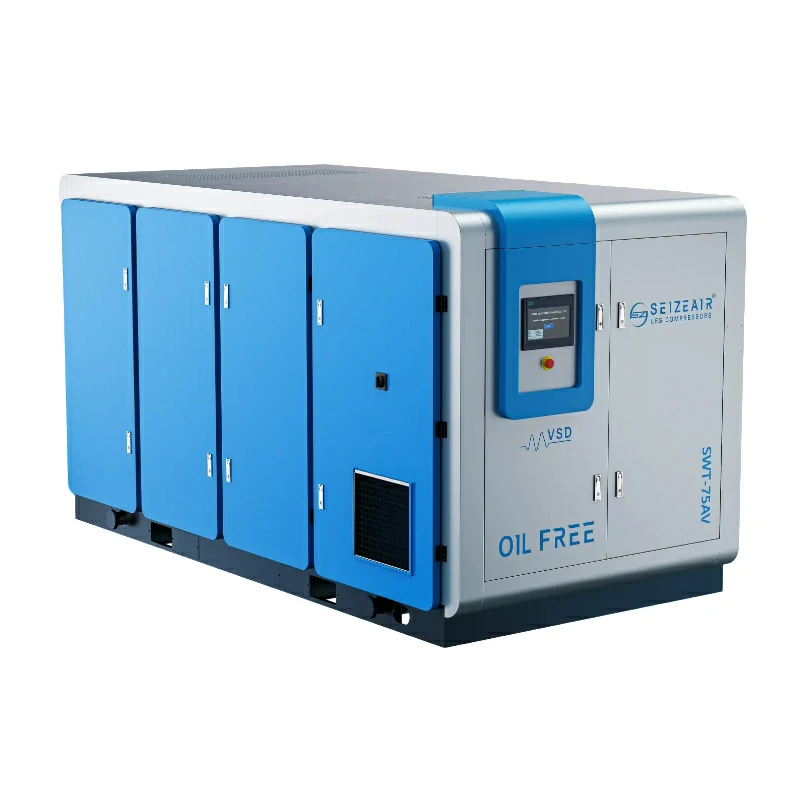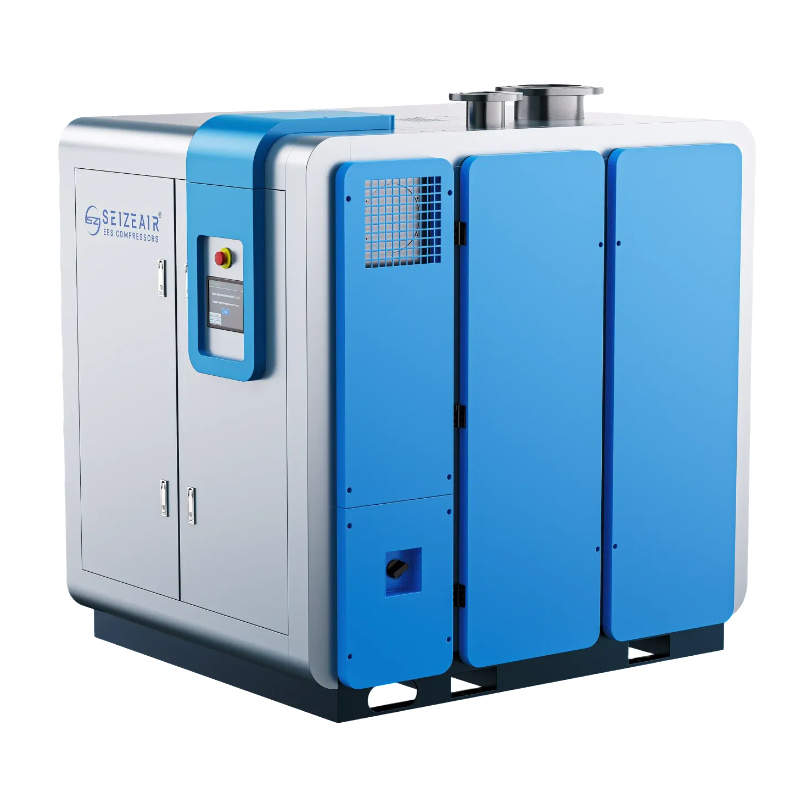


Selecting the right industrial equipment is rarely about finding the “best” machine on the market; it’s about finding the best machine for your specific application. When it comes to a single stage air compressor, the stakes are high. Choosing correctly means streamlined production and low energy bills; choosing poorly leads to overheating, premature wear, and “air hunger” on the factory floor.
In this comprehensive guide, we will break down the mechanics, the selection criteria, and the operational nuances of single-stage units to help you make an informed investment.
What is the actual difference between single stage and two stage air compressors?
To choose wisely, you must first understand the “how” behind the “what.” A single stage air compressor works by drawing filtered air into a cylinder, where it is compressed by a single stroke of a piston and then sent directly to a storage tank.
From a field engineer’s perspective, this simplicity is a double-edged sword. On one hand, you have fewer moving parts—no intercooler, no second-stage high-pressure piston, and simplified valve structures. This makes the single stage reciprocating air compressor a favorite for shops that need reliable air without the maintenance complexity of multi-stage systems. However, the physics of a single stroke are unforgiving. When you compress air from atmospheric pressure to 125 PSI in one go, the temperature spikes significantly.
The Compression Heat Trap: In a single-stage setup, the discharge temperature can easily exceed 150°C if the unit is undersized. This heat doesn’t just stay in the pump; it migrates to the oil, thinning its viscosity and accelerating the carbonization of your valves. This is why “budget” units with aluminum heads often fail within two years of heavy use. If you’re looking for a heavy duty single stage air compressor that survives the summer heat of a packed factory, you must prioritize pumps with massive cooling fins and cast iron heads that act as a heat sink.
Moreover, consider the industrial single stage compressor CFM ratings versus their real-world output. In a single-stage machine, the volumetric efficiency drops as the pressure increases. A pump might move 15 CFM at 40 PSI, but only 10 CFM at 90 PSI. Understanding this “efficiency curve” is the difference between a tool that hums and a tool that stutters.
How much CFM do I need for a single stage air compressor?
In the industrial world, CFM (Cubic Feet per Minute) is king, yet it’s the most manipulated stat in marketing. You’ll see “Displacement CFM” vs. “Delivered CFM” (or FAD – Free Air Delivery).
Expert Warning: Displacement CFM is a theoretical math problem (bore x stroke x RPM). It’s useless for your shop. You need to know the FAD at your specific operating pressure (e.g., 90 PSI).
The Cumulative Load Calculation
A system integrator doesn’t just look at one tool; they look at the “simultaneity factor.” You need to calculate the air consumption of pneumatic tools used at the same time.
- Tool A: 1/2″ Impact Wrench (Requires high burst, low average)
- Tool B: Orbital Sander (Constant draw, high CFM)
- Tool C: Plasma Cutter (Requires dry, stable air)
If you just add them up, you’ll overbuy. If you ignore the duty cycle, you’ll underbuy. The sweet spot for a single stage air compressor for small shop use is usually a calculation where the compressor provides 1.5x the average consumption, but never less than the single largest tool’s continuous requirement.
Professional CFM and Pressure Relationship Table
| Standard PSI | Required CFM (Avg) | Practical Single-Stage Capability | Energy Efficiency (Specific Power) |
| 40 PSI | 12 – 18 CFM | Excellent (High volume, low heat) | Best for HVLP Spraying |
| 90 PSI | 8 – 14 CFM | Standard (The “Sweet Spot”) | Typical Industrial Baseline |
| 125 PSI | 5 – 10 CFM | Peak (Efficiency begins to drop) | Maximum Load for Single-Stage |
| 150 PSI | < 5 CFM | Maximum (Risk of overheating) | Not recommended for 24/7 use |
When evaluating high flow single stage air compressor options, check the bore diameter. A larger bore moving at a slower RPM is always superior to a small bore screaming at high RPM. Slower speeds mean less friction, less heat, and a much quieter workspace.
What is a good duty cycle for a single stage air compressor?
If you are the person signing the checks, you need to understand the “60/40 Rule.” Most stationary single stage air compressors are rated for a 50-60% duty cycle. This means if the motor runs for 10 minutes, it needs to be off for 10 minutes to cool down.
If your production line forces a single-stage unit to run at 100% duty cycle, you aren’t just wearing out the machine; you are burning money. An overheated compressor loses volumetric efficiency, meaning it works harder to produce less air. This leads to a vicious cycle: the hotter it gets, the less air it makes, which makes it run longer, which makes it even hotter.
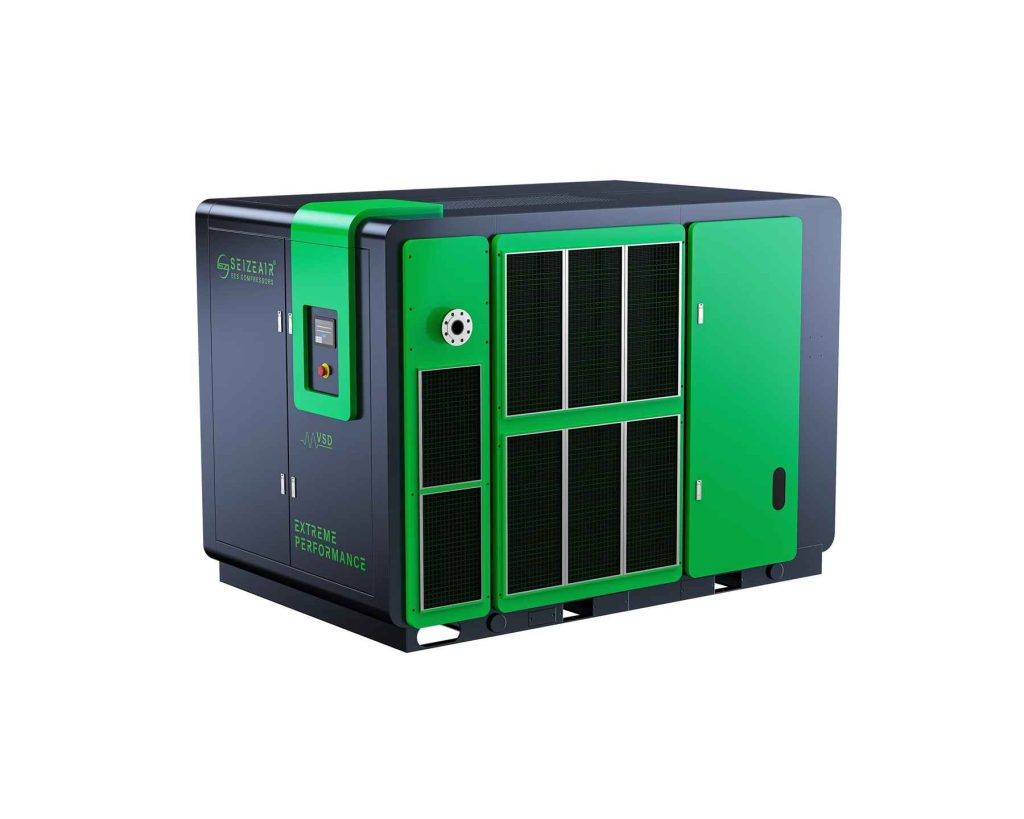
This is where high-efficiency brands like Seize Air enter the conversation. By optimizing the motor-to-pump ratio and using precision-ground valves, these units manage thermal loads far better than generic retail models. This allows for longer “on” times without the catastrophic heat soak that kills cheaper pumps. For a decision-maker, the cost of ownership for air compressors isn’t the sticker price—it’s the downtime and the electricity wasted by a struggling pump.
Furthermore, consider the single stage compressor motor horsepower (HP). Beware of “Peak HP” ratings which are often inflated. Look for “Running HP” or “S1 Duty” ratings. A true 5HP motor on a single-stage pump should be able to sustain 15-18 CFM reliably if the engineering behind the cooling fan is sound.
Does air compressor tank size affect CFM or pressure?
Is a 80 gallon single stage air compressor better than a 30-gallon version? Usually, but not for the reason you think. The tank is an energy capacitor, not an air producer.
The Buffer Effect and Short Cycling:
A larger tank doesn’t give you more “power,” but it prevents “Short Cycling.” Short cycling is when the motor turns on and off 20 times an hour. This kills the motor’s start-capacitors and wastes energy.
- Vertical Tanks: Save precious floor space; ideal for cramped workshops where every square meter counts.
- Horizontal Tanks: Easier to transport and often used in portable air compressors for job sites.
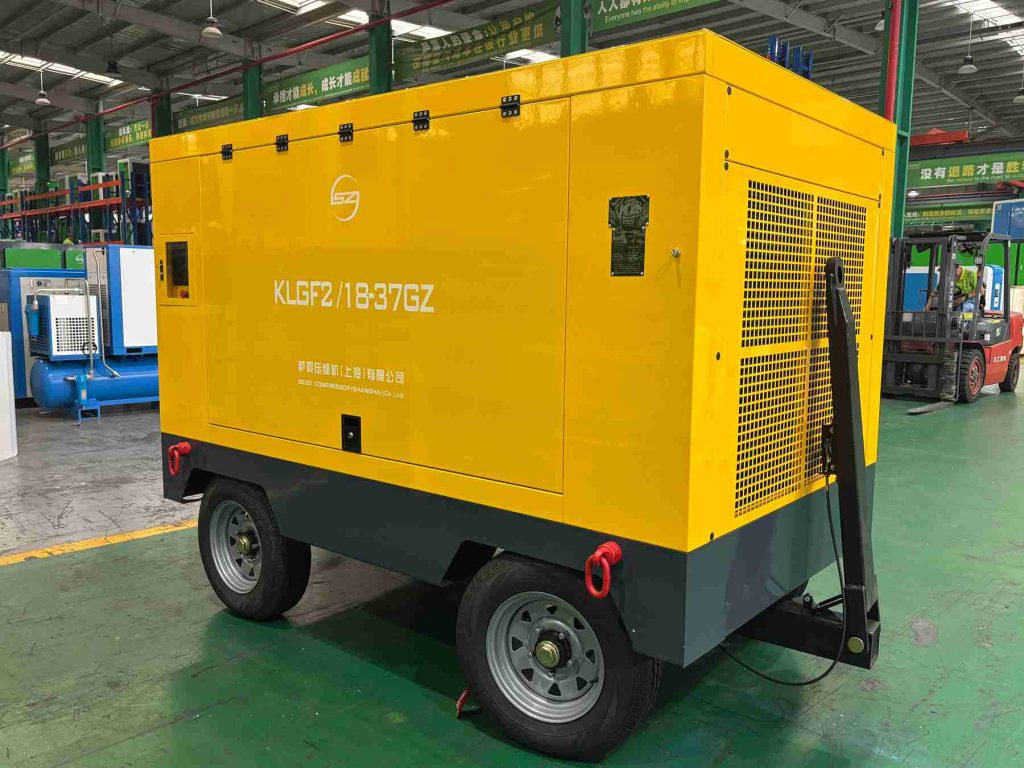
In a system-integrated shop, we often recommend a larger tank for “dirty” air (unfiltered) and a smaller downstream receiver for “clean” air (filtered/dried). This ensures that when you hit a high-demand moment—like starting a sandblaster—the pressure drop doesn’t cause your CNC machines to fault.
Moreover, look at the air compressor tank pressure ratings. A tank rated for 200 PSI but used at 125 PSI provides a larger safety margin and more “stored” CFM. It’s about creating a stable air “bank account” that can handle sudden withdrawals without going into “debt” (pressure drop).
Why is my single stage compressor blowing fuses or running hot?
This is the most common PAA (People Also Ask) query from field operators. From a troubleshooting perspective, these issues are rarely about the pump itself and usually about the air compressor electrical requirements.
The Voltage Drop Headache
Single-stage units, especially those in the 5HP+ range, require a massive “inrush current” to start the piston against backpressure. If you’re using a long extension cord or a shared circuit with other machinery, the motor will hum, overheat, and trip the breaker. Seize Air equipment often utilizes high-torque, low-start-amp motors specifically to mitigate this common job-site headache, ensuring smooth starts even in less-than-ideal electrical conditions.
The Oil-Free vs. Oil-Lubricated Debate
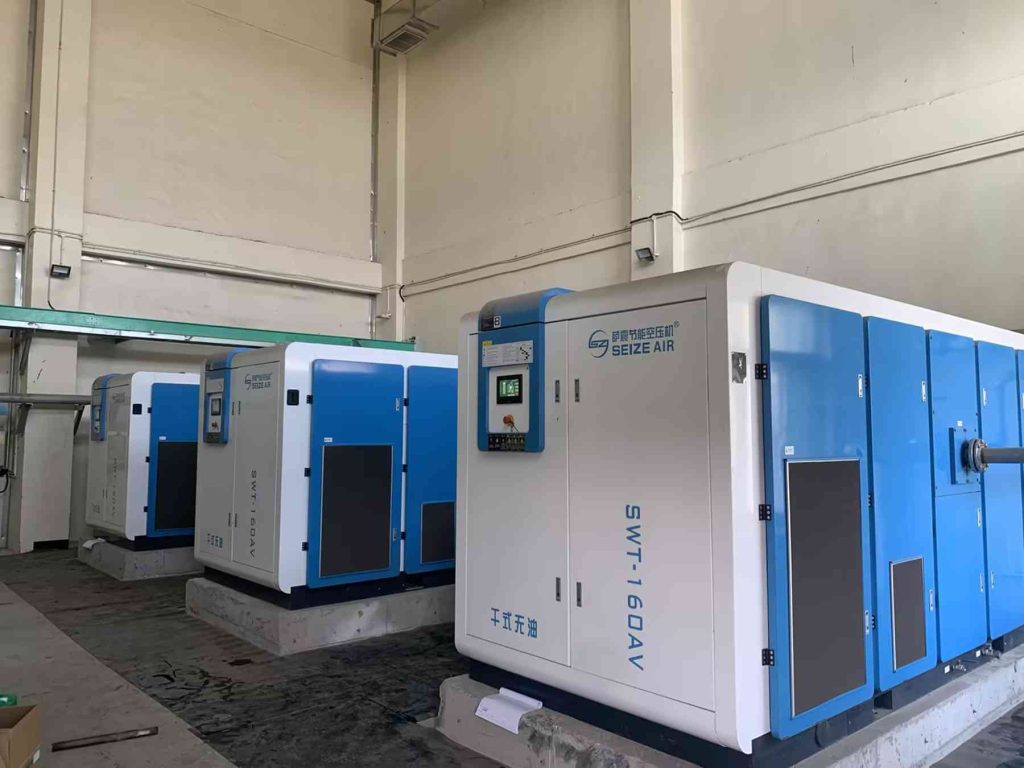
For industrial use, oil lubricated single stage compressors are the only logical choice. Oil-free units use Teflon-coated rings that have a finite lifespan—usually 500 to 2,000 hours. An oil-lubricated cast iron pump, if the oil is changed regularly, can easily surpass 10,000 hours of service. If you are worried about oil in your lines, use a high-quality coalescing filter rather than compromising on the pump’s lifespan.
Technical Durability Matrix
| Component | Budget Tier (Home Use) | Industrial Tier (Seize Air Standards) | Impact on Longevity |
| Cylinder | Aluminum / Sleeve | Solid Cast Iron | 3x Longer Wear Life |
| Valves | Plastic / Thin Steel | Heat-Treated Stainless Steel | Prevents Heat Cracking |
| Bearings | Ball Bearings | Tapered Roller Bearings | Handles Axial Loads Better |
| Drive System | Direct Drive | V-Belt Drive | Lower RPM, Easier Repairs |
How to maintain a single stage air compressor for long life?
I’ve seen $5,000 compressors turned into scrap metal because of a $0.50 problem: Moisture.
When air is compressed, it can’t hold water vapor. That water falls out into the tank. If you don’t drain it daily, the bottom of your tank will rust from the inside out—a literal ticking time bomb. This is the #1 cause of air compressor tank failure. Furthermore, that water moves downstream, ruining your pneumatic solenoids and contaminating your paint.
The Field Engineer’s Maintenance Routine:
- Crankcase Breathers: The pump needs to breathe. If the breather gets clogged with shop dust, pressure builds up in the oil sump and starts blowing out the main seals. It’s a 30-second cleaning job that saves a 4-hour teardown.
- Belt Tensioning: A slipping belt is wasted energy and heat. If you hear a squeal on startup, you’re losing 10% of your efficiency right there.
- Valve Inspection: Listen for a “hissing” when the pump is off. This often indicates a leaking check valve or a reed valve that isn’t seating, forcing the pump to work against its own stored pressure.
Regular maintenance ensures that your single stage air compressor pump replacement costs remain zero for a decade or more. Reliability is built into the design, but it’s maintained through discipline.
Final Verdict
Choosing a single stage air compressor is an exercise in honesty. Be honest about your duty cycle and your CFM needs. If you are a hobbyist, a portable aluminum unit is fine. But if you are running a business, you need a machine designed with industrial DNA.
The market is flooded with “disposable” compressors. However, for those who value long-term ROI and “set-it-and-forget-it” reliability, leaning toward engineered solutions—like the high-efficiency lineups from Seize Air—ensures that your compressed air system remains a silent partner in your success, rather than a constant source of downtime.