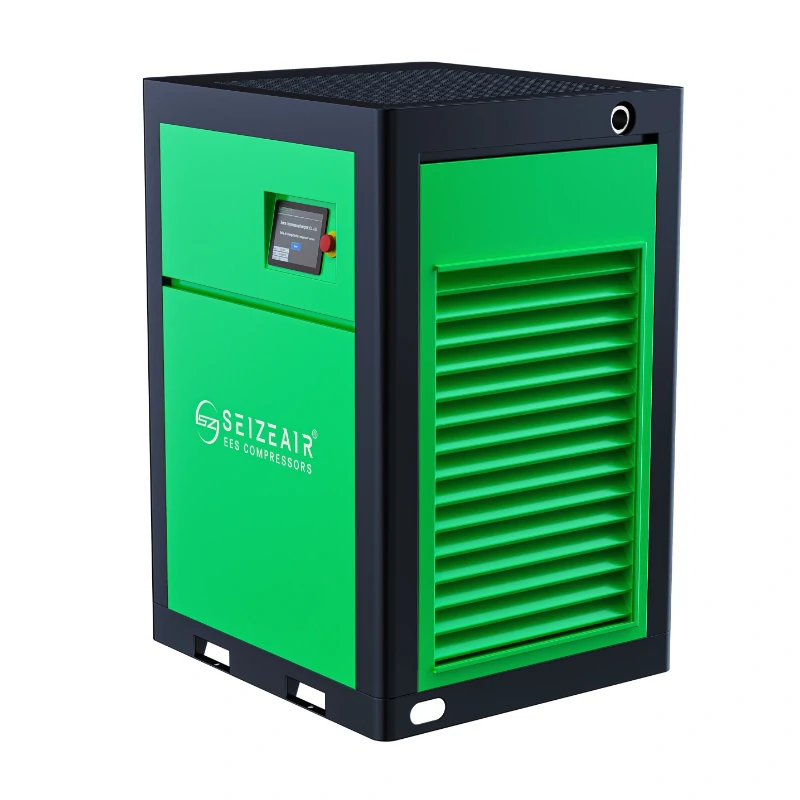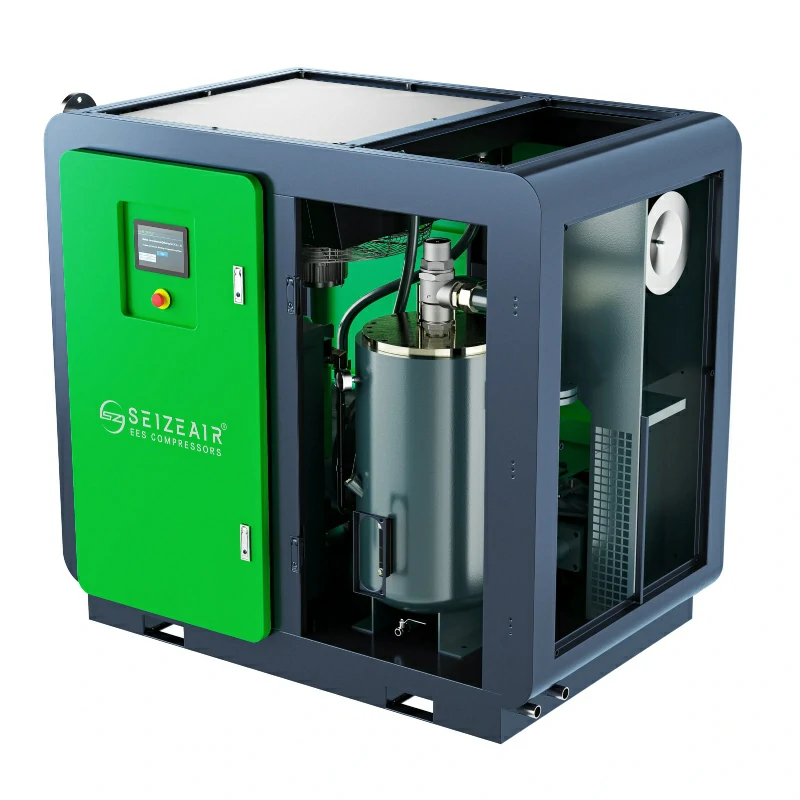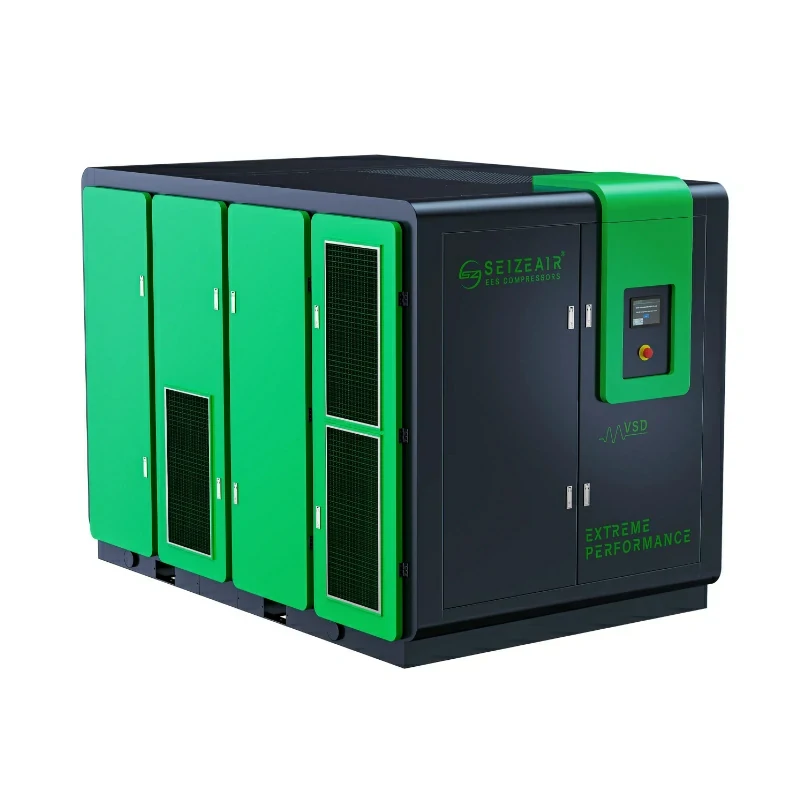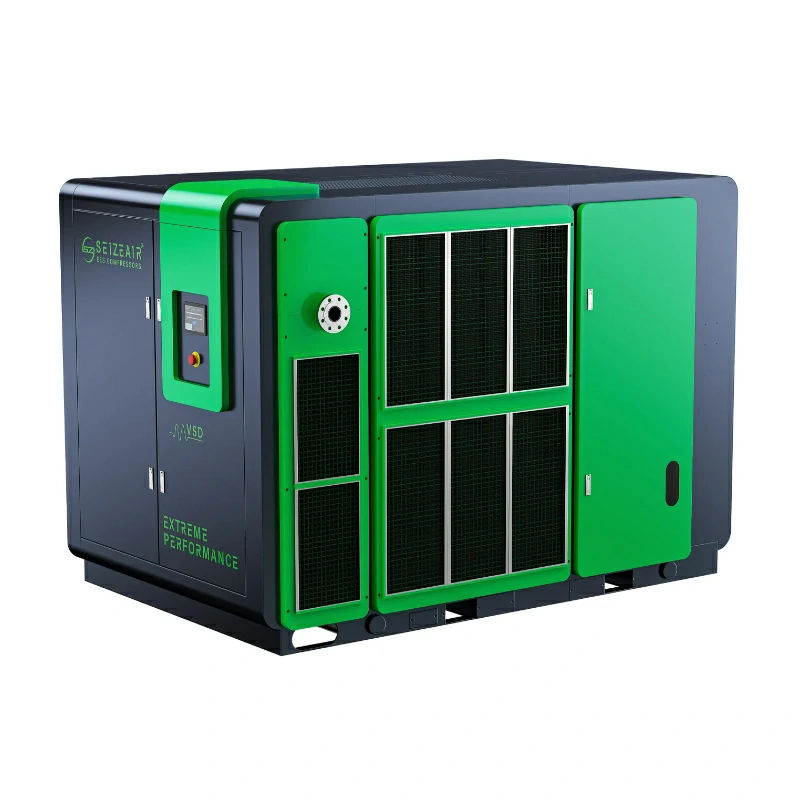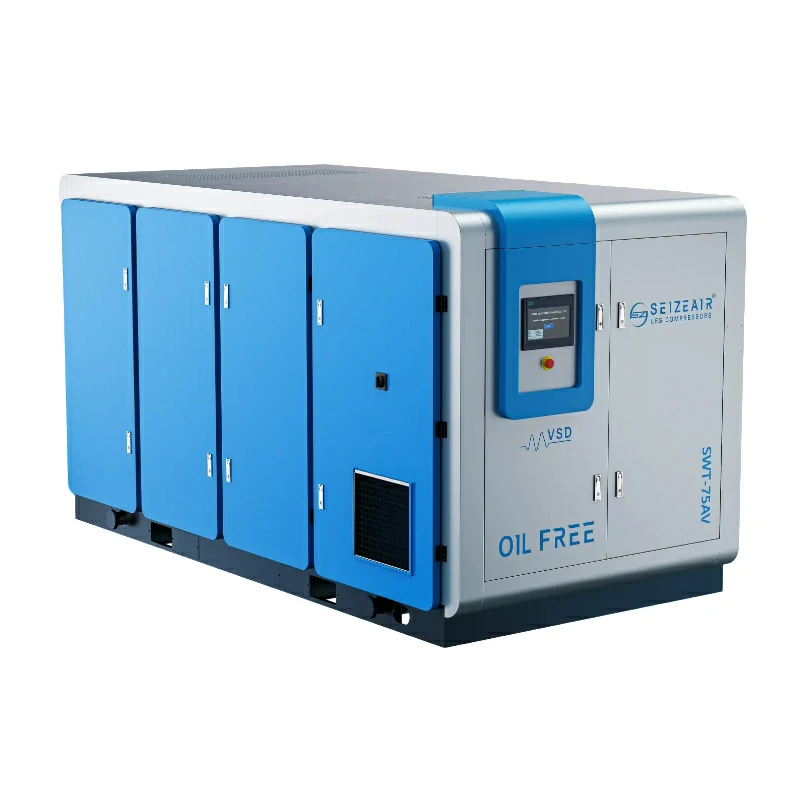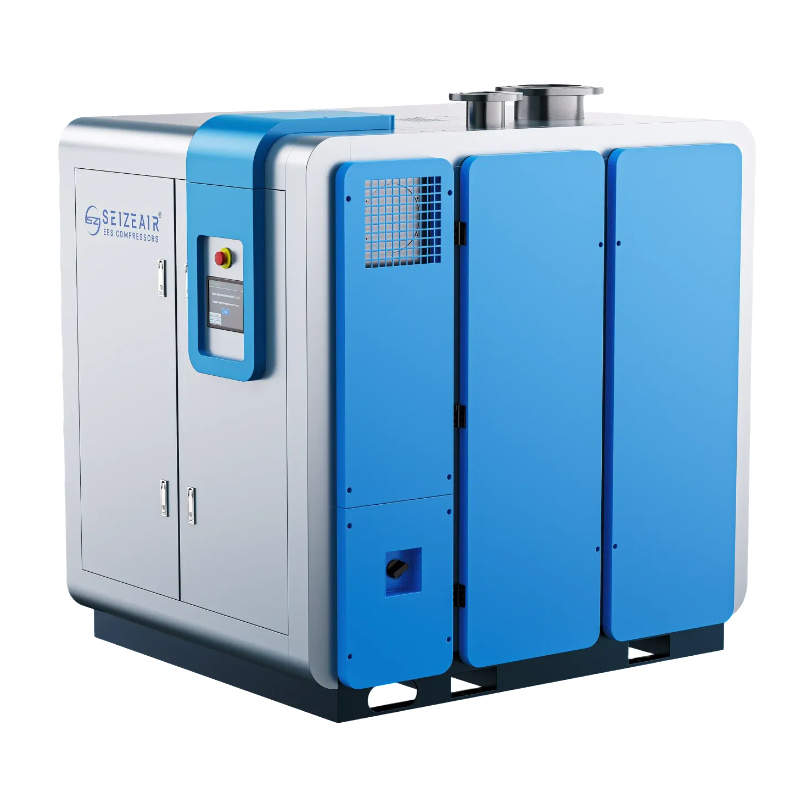


An air compressor for mining is the true powerhouse behind deep-hole drilling rigs, driving down-the-hole (DTH) hammers and flushing heavy rock cuttings out of the borehole to prevent expensive drill bit binding. Because deep mining operations frequently encounter high groundwater columns and abrasive silica dust, choosing a rugged, high-pressure machine is the single most critical decision for maintaining high penetration rates and avoiding catastrophic site downtime.
What are the Main Types of Air Compressor Used in Mining Operations?
Mining environments rely on distinct compressor designs depending on mobility needs and power availability.
For drilling rigs, the heavy duty rotary screw air compressor is the industry standard. Unlike reciprocating (piston) units that need rest periods to avoid overheating, a rotary screw compressor runs continuously at a 100% duty cycle. Inside these units, dual interlocking helical screws trap and compress air seamlessly.
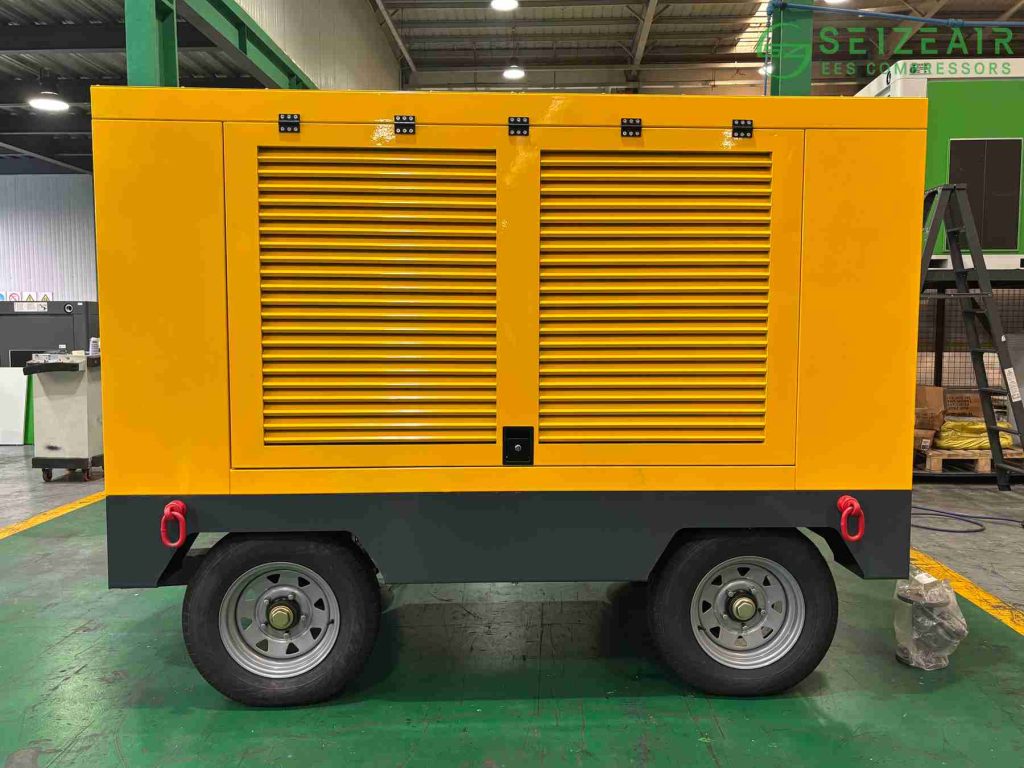
For fixed mining sites with an established electrical grid, a stationary electric compressor for mining offers massive long-term savings. They eliminate diesel fuel logistics and emit zero emissions inside deep pits or underground shafts. However, for remote exploration tracks where infrastructure doesn’t exist, operators default to a portable diesel mining compressor, which can be towed directly across rugged terrain behind a bulldozer or crawler.
How Do You Choose the Right High-Pressure Compressor for a Drilling Rig?
Selecting an air compressor requires matching two main metrics to your drill string physics: air volume, measured in CFM (Cubic Feet per Minute), and air pressure, measured in PSI (Pounds per Square Inch).
To clear rock cuttings effectively, the air rising up the outside of the drill pipe must hit a target “bailing velocity” between 3,000 and 5,000 feet per minute. Site engineers use this formula to calculate the required volume:
Required CFM = (D^2 - d^2) * V / 183
Where:
- D = Diameter of the drilled hole (inches)
- d = Outside diameter of the drill pipe (inches)
- V = Desired bailing velocity (feet per minute)
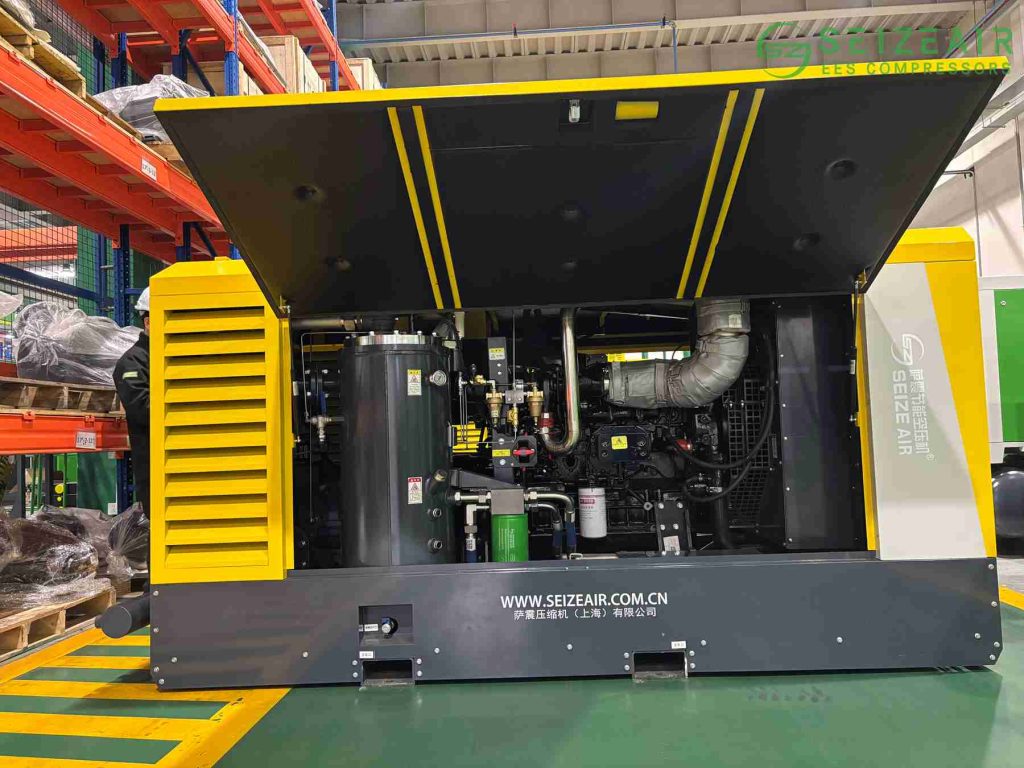
If your borehole hits an underground water vein, you need an exceptionally high pressure air compressor for drilling to overcome the hydrostatic head pressure of the water column. Without enough PSI, water fills the hole, dampens the DTH hammer impacts, and stalls production.
| Hole Diameter (Inches) | Drill Pipe OD (Inches) | Primary Application | Recommended CFM & PSI Range |
| 4.5 to 5.5 | 3.5 | Shallow Quarry / Production | 750 CFM @ 350 PSI |
| 6.0 to 6.5 | 4.5 | Medium Blast-Hole Rig | 1050 CFM @ 350 PSI |
| 6.5 to 7.8 | 5.0 | Deep Open-Pit Mining | 1200 CFM @ 350 PSI |
| 8.5 to 9.0 | 7.0 | Deep Exploration Drilling | 1350 to 1500 CFM @ 500 PSI |
What Causes Compressor Failure in High-Dust Mining Environments?
An open-pit mine is a brutal environment for machinery. Fine, airborne silica dust acts like abrasive sandpaper inside a compressor element, capable of destroying screw rotors within weeks if left unprotected.
To counter this, a reliable air compressor for mining must feature dual-stage heavy-duty air filtration with integrated centrifugal pre-cleaners. These pre-cleaners spin out up to 90% of dust particles before the air ever reaches the primary filter element.
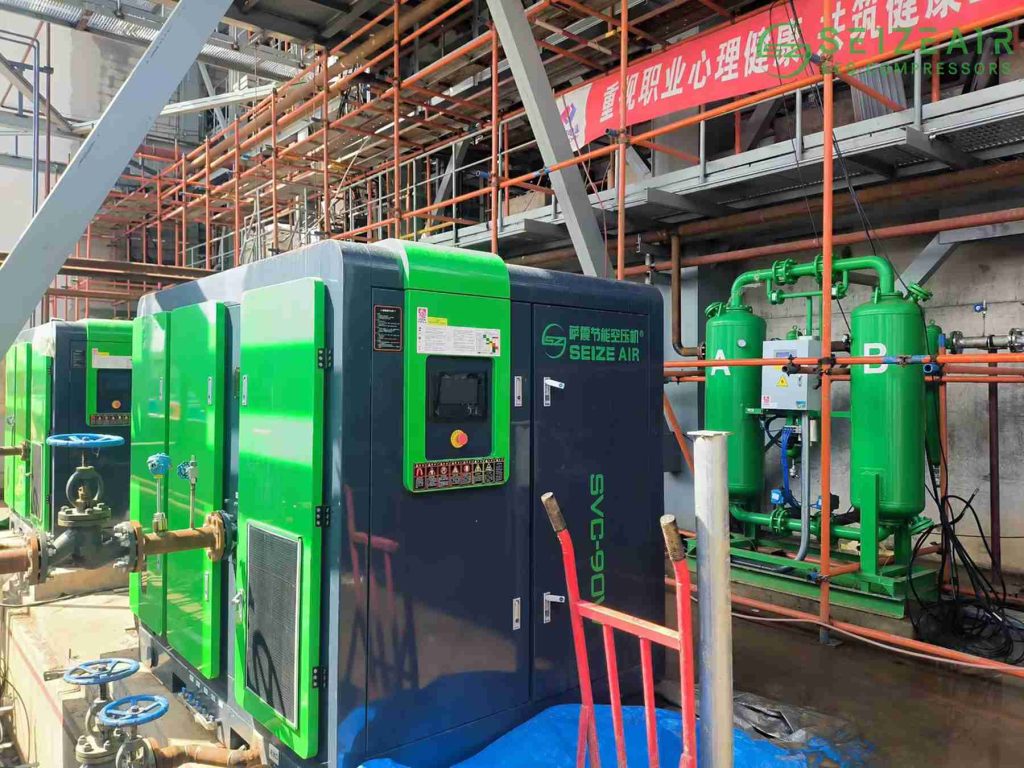
Additionally, continuous high-pressure drilling creates intense thermal stress on the system’s oil. Top-tier manufacturers like Seize Air design their machines with oversized, high-ambient cooling radiators and advanced multi-stage oil separation tanks. This ensures that the air discharged down the hole contains less than 3 ppm (parts per million) of oil mist, protecting your expensive drilling hammers from sticky carbon buildup while keeping internal operating temperatures stable.
How Much Fuel Does a Portable Diesel Mining Compressor Consume?
Fuel consumption accounts for over 70% of the total lifetime cost of running a portable compressor. A traditional fixed-speed compressor runs at full RPM even when the drill rig is idling, wasting thousands of gallons of diesel over a single mining contract.
This massive waste is why operators are shifting toward a variable speed air compressor for mining. A variable speed drive (VSD) system automatically scales the engine RPM and air output up or down to match the exact real-time demand of the drilling cycle. When your crew is busy adding a new drill rod or repositioning the rig between blast patterns, the compressor idles down instantly.
Implementing energy-saving units, such as the specialized VSD models from Seize Air, can cut field fuel expenses by up to 30%. Over thousands of operating hours, these savings directly lower your overall cost-per-foot drilled.
What Maintenance Schedule Keeps an Air Compressor for Mining Running?
To prevent unexpected breakdown costs in remote locations, fleet managers must implement a strict preventative maintenance framework tailored to high-pressure machinery.
- Every Shift (Daily): Verify oil levels in both the compressor reservoir and the driving engine. Blow out dust from air pre-filters and inspect high-pressure hoses for minor leaks.
- Every 250 Hours: Service the engine oil and replace fuel filters, especially when running lower-grade field diesel.
- Every 500 Hours: Install fresh primary air filter elements and change out compressor oil filters to stop internal bypass valves from opening.
- Every 2000 Hours: Clean the internal moisture separators and automatic drain valves to prevent water carryover into the drill string. Perform a comprehensive compressor oil analysis to detect early signs of rotor wear.
Finding the Perfect Compressor for Your Drilling Fleet
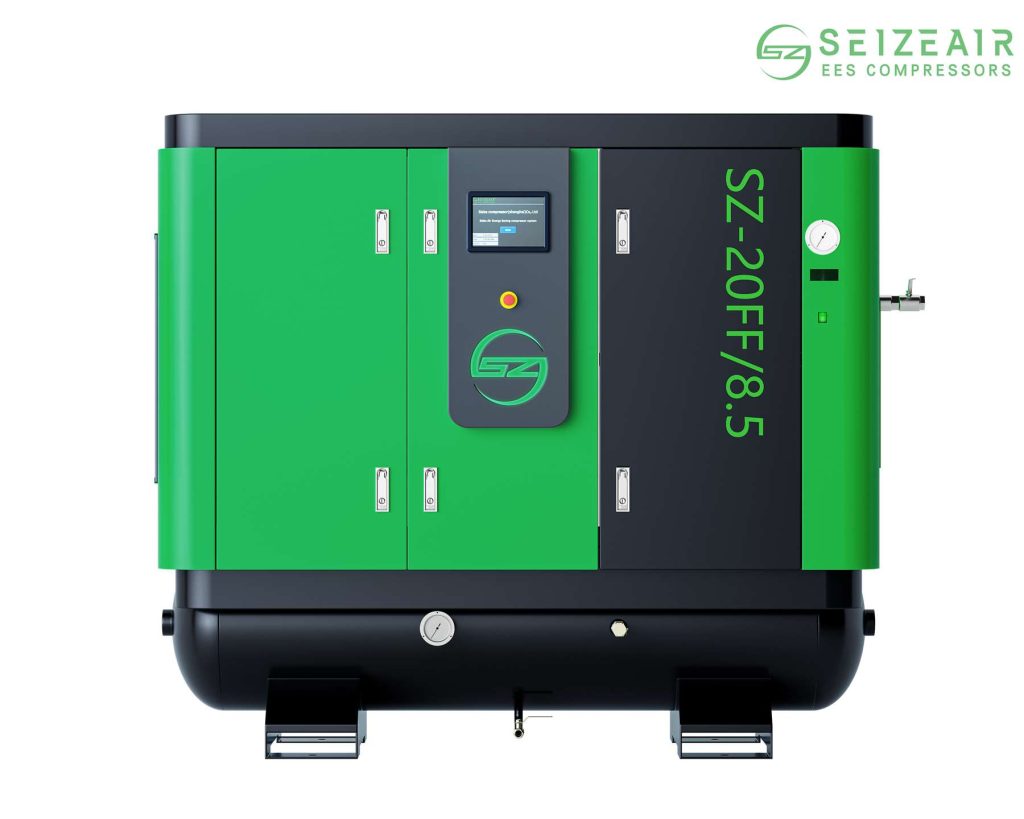
Balancing high bailing velocity with low fuel consumption requires an engineered approach. At Seize Air, we construct rugged, energy-efficient air compressors built specifically to survive the harsh realities of modern mining and deep exploration drilling. We know that if your air stops, your entire operation comes to a costly halt.
Ready to maximize your rig’s penetration rates? Contact our mining application specialists today to discuss your specific borehole dimensions, get tailored performance curves, or request a detailed technical quote. Let’s keep your drilling project moving forward efficiently.