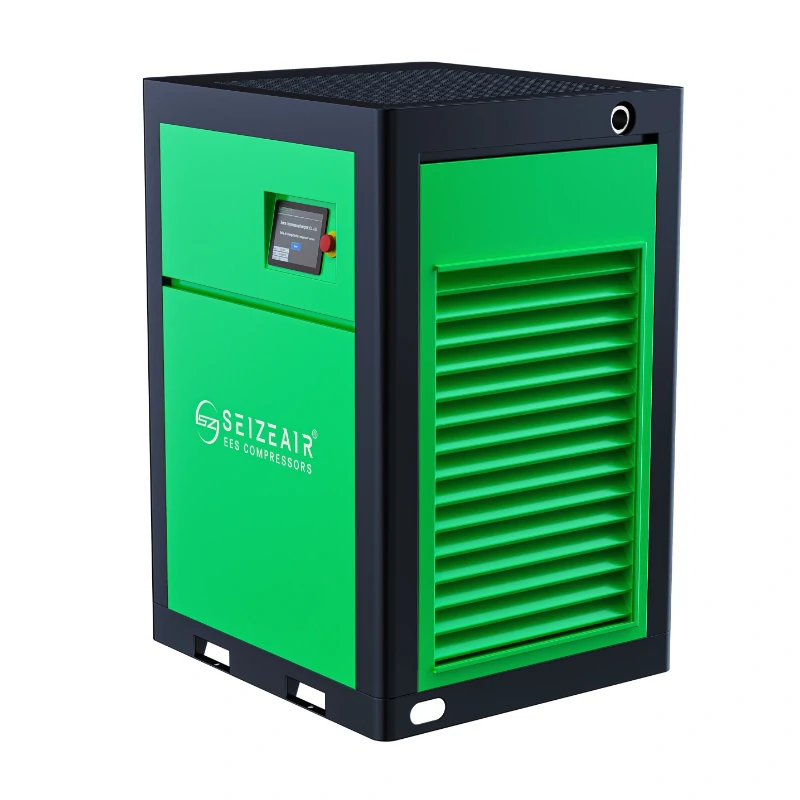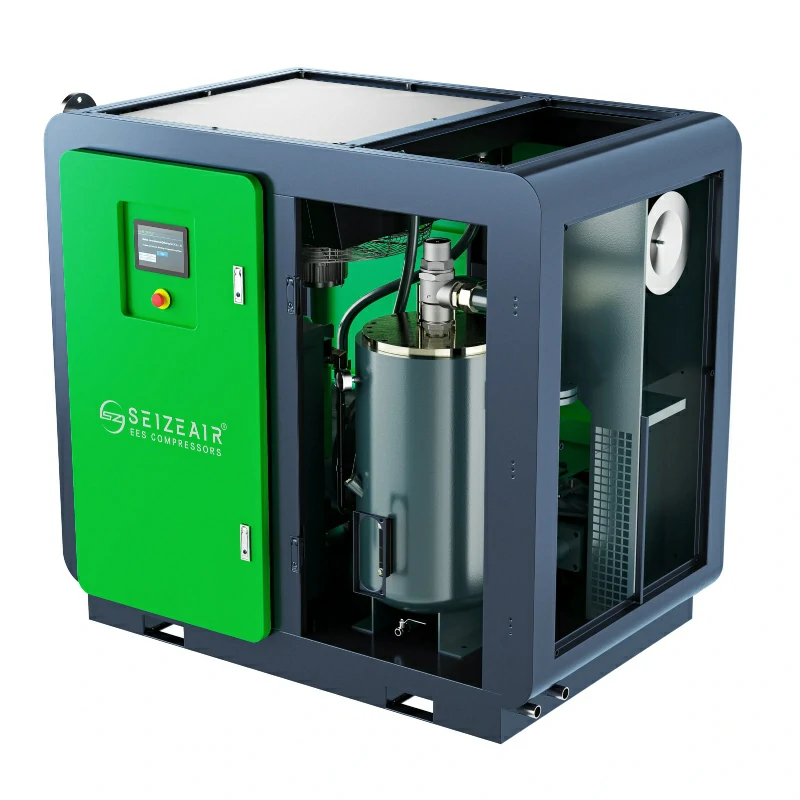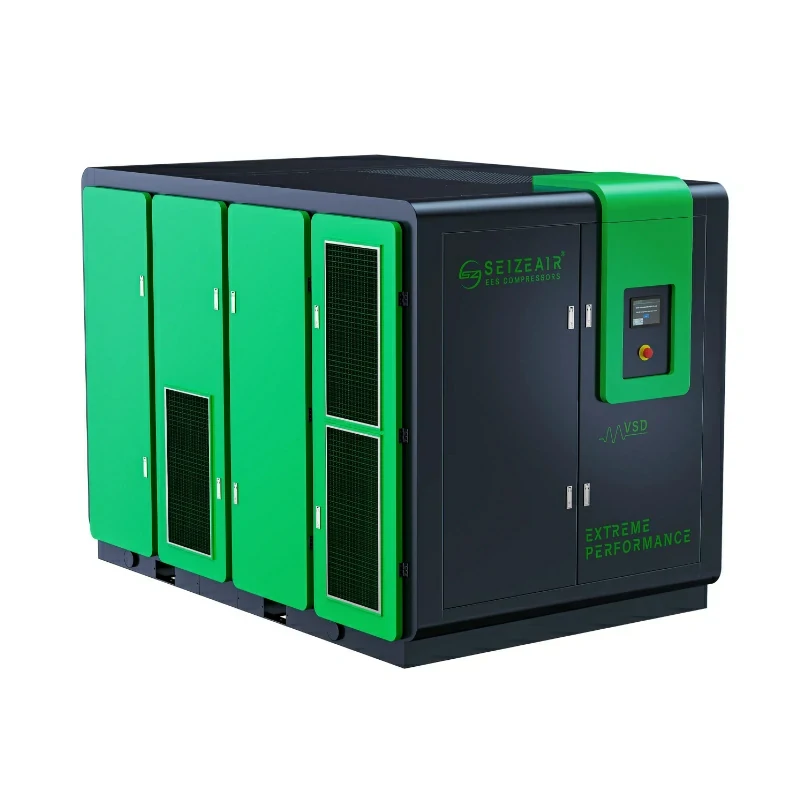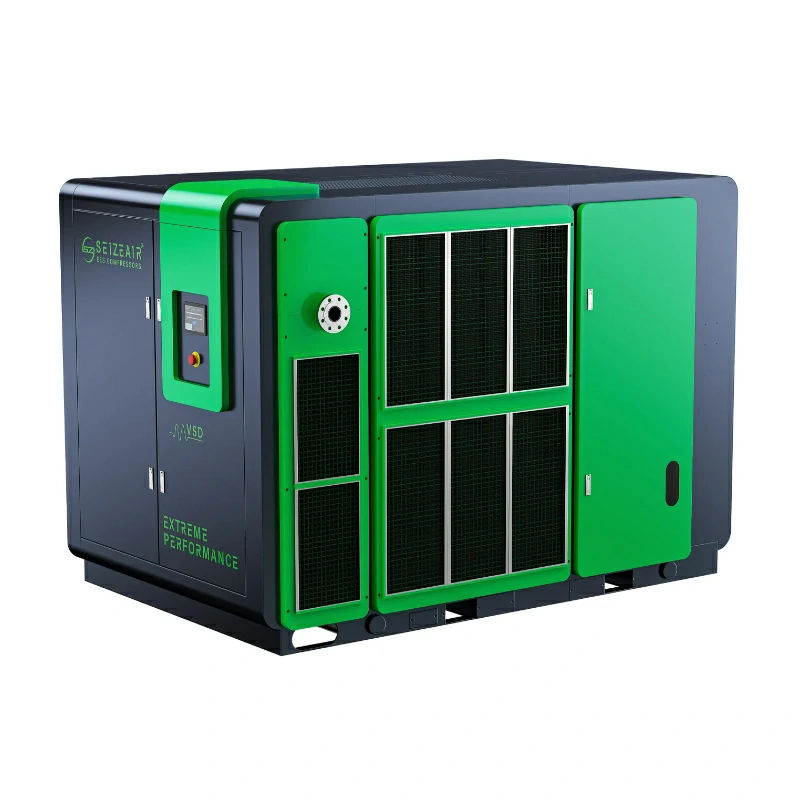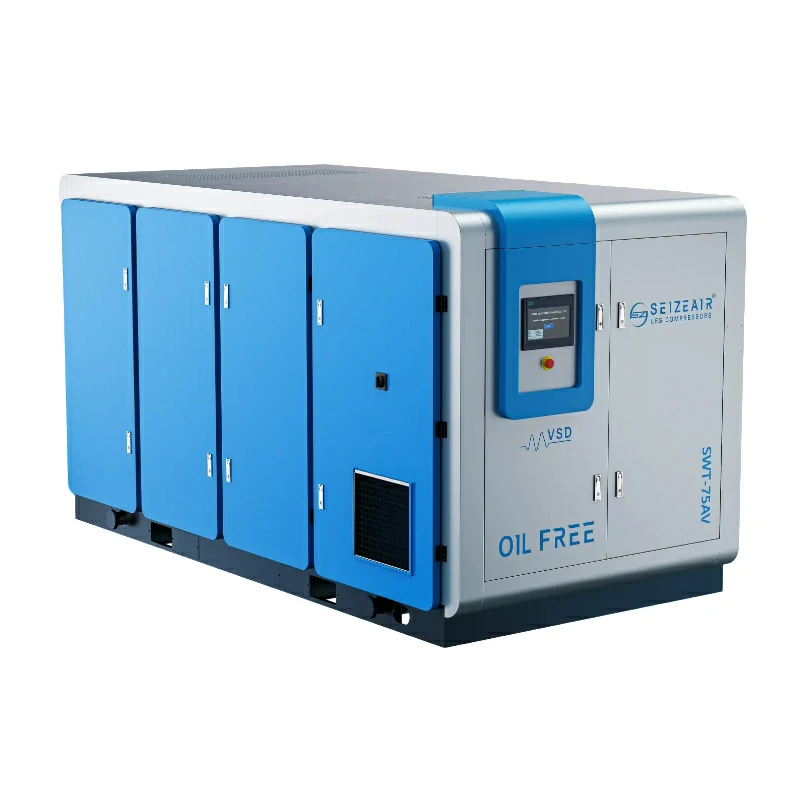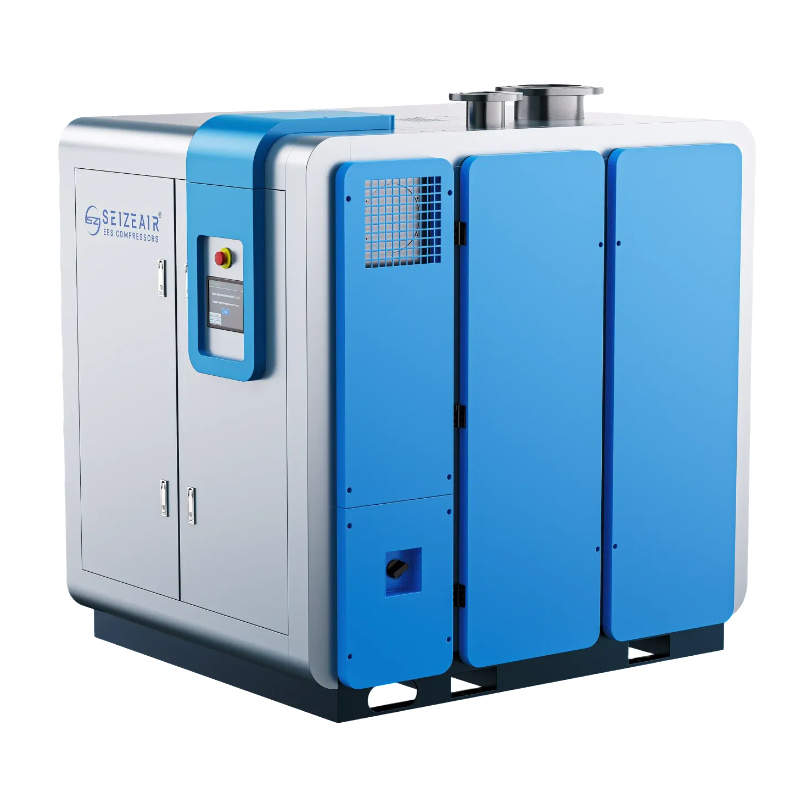


An efficient air compressor machine is vital for modern manufacturing, yet it is often the single biggest driver of industrial energy waste. Compressed air systems account for up to 40% of a plant’s total electricity bill, and nearly 30% of that energy is completely lost to leaks, poor system pressure management, and improper piping design. By systematically identifying efficiency bottlenecks and optimizing your air compressor machine setup, you can immediately slash overhead costs, lower electricity bills, and significantly prolong your equipment’s operating lifespan.
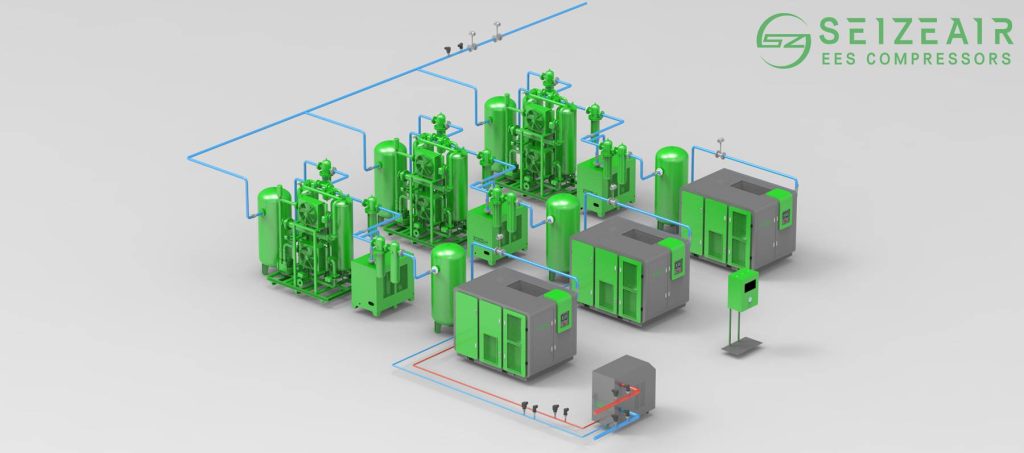
What Causes High Power Consumption in an Air Compressor Machine?
Before making adjustments, it helps to understand the baseline physics of compressed air. Industrial air compressor machines convert only about 10% to 15% of their electrical input into usable kinetic energy. The remaining 85% is lost immediately as radiant heat.
When a system is poorly optimized, this energy efficiency drops even lower. The primary culprits driving up your electricity usage include:
- Running the system at an unnecessarily high line pressure.
- Unchecked system leaks creating artificial demand.
- Severe pressure drops caused by clogged filters and narrow piping networks.
- Operating a fixed-speed motor when plant air demand fluctuates wildly.
How to Calculate Air Compressor Machine Power Consumption?
To understand your true operational costs, you must calculate exactly how much electricity your unit draws. You can measure the real-time kilowatt (kW) draw using a power meter, or estimate it mathematically based on your system’s performance metrics.
The standard calculation formula for power consumption is:
Power (kW) = (CFM * 0.746) / 4.5
For a more precise calculation based on electrical parameters, use the three-phase power formula:
kW = (Volts * Amps * 1.732 * Power Factor) / 1000
| Motor Horsepower (HP) | Average CFM Output at 100 PSI | Estimated Power Draw (kW) | Approximate Cost per 24h Run (at $0.10/kWh) |
| 15 HP | 50 CFM | 11.2 kW | $26.88 |
| 50 HP | 200 CFM | 37.3 kW | $89.52 |
| 100 HP | 400 CFM | 74.6 kW | $179.04 |
Tracking these metrics gives you a baseline to measure your optimization progress. Modern industrial units, such as a premium Seize Air compressor, come equipped with integrated smart controllers that display real-time power metrics automatically, eliminating the guesswork from your energy audits.
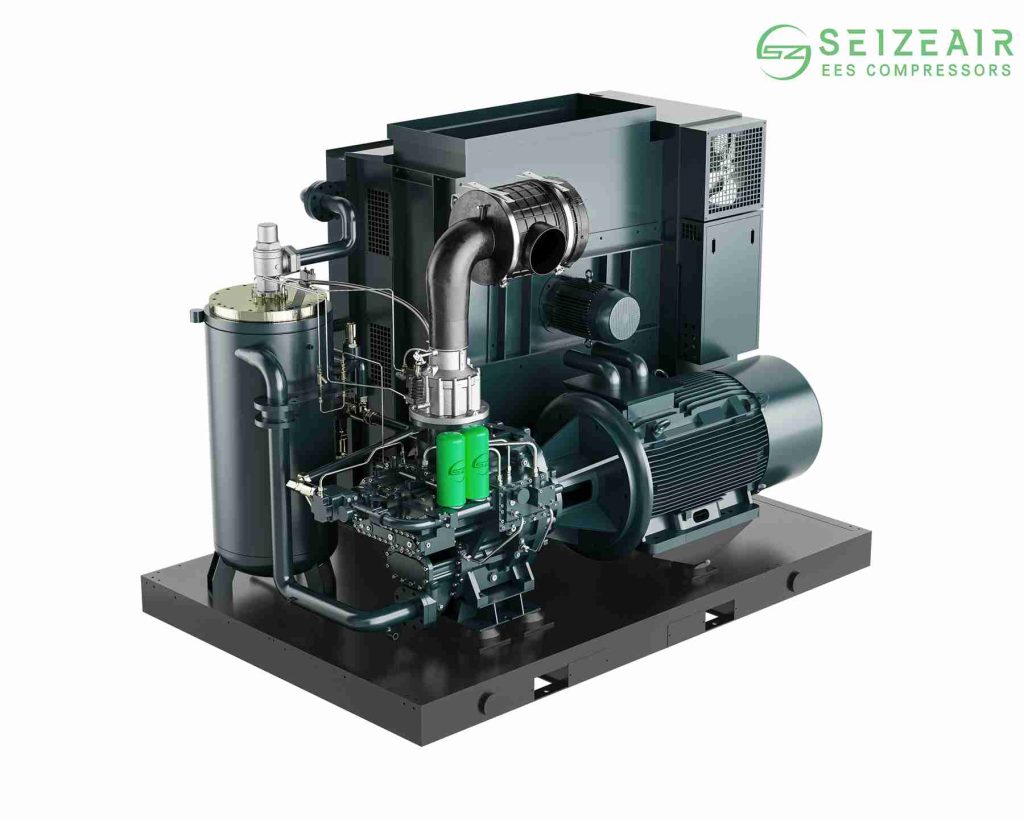
Why Is My Air Compressor Machine Drawing Too Much Current?
If your system’s current draw (amperage) exceeds the limit stated on the motor nameplate, your machine is working against severe mechanical or electrical resistance. High current draw directly increases your power consumption and risks damaging the motor windings.
Common Causes of Excessive Amperage Draw:
- Starting Under Pressure: A faulty unloader valve fails to vent residual air when the motor stops, forcing the compressor to restart against trapped pressure.
- Mechanical Friction: Worn-out main bearings, insufficient oil lubrication, or an overtightened drive belt force the motor to work harder.
- Voltage Fluctuations: If the incoming facility voltage drops below the rated specification, the motor draws more current to compensate and maintain its torque.
What Size Air Compressor Machine Do I Need for Maximum Efficiency?
Installing an incorrectly sized compressor is a guaranteed way to inflate your electricity bills. An oversized compressor cycles on and off too frequently (short-cycling), wasting immense amounts of energy during startup. An undersized unit runs continuously at 100% capacity without rest, causing it to overheat and fail prematurely.
To size your system accurately, calculate your plant’s peak volumetric demand:
- List every air tool and machine on your production floor.
- Sum their required CFM ratings based on their duty cycles.
- Multiply the total by a 1.20 safety margin to account for future plant expansion.
If your production shifts have highly variable air demands, a single fixed-speed unit will always run inefficiently. Upgrading to an intelligent VSD unit from Seize Air allows the motor to match your exact CFM requirements dynamically, ensuring you never pay for unneeded motor cycles.
How to Reduce Compressed Air System Leakage?
Air leaks are the single largest source of ongoing energy waste in manufacturing environments. Because air is invisible and silent in a loud factory, massive leaks often go unnoticed for years.
| Leak Hole Diameter | Air Loss at 100 PSI (CFM) | Estimated Annual Energy Waste (kWh) |
| 1/16″ (1.6 mm) | 6.5 CFM | ~11,000 kWh |
| 1/8″ (3.2 mm) | 26.0 CFM | ~44,000 kWh |
| 1/4″ (6.4 mm) | 104.0 CFM | ~176,000 kWh |
Actionable Steps to Minimize Leaks:
- Ultrasonic Audits: Conduct a quarterly leak audit using an ultrasonic leak detector during a quiet weekend shift. Focus on hose couplings, pipe joints, and FRL (filter-regulator-lubricator) assemblies.
- Isolate Unused Zones: Install automated ball valves to isolate sections of the factory that are not operating during night shifts.
- Upgrade Components: Replace cheap quick-connect couplings with high-quality, zero-leak safety couplers. While high-end Seize Air systems feature exceptional internal sealing, your downstream distribution lines must be actively maintained to preserve those efficiency gains.
What Is the Ideal Operating Pressure for an Industrial Air Compressor?
Operating your system at an excessively high pressure is a costly mistake. Many plant managers set the compressor discharge pressure to 115 PSI when their production machinery only requires 90 PSI at the point of use.
The Energy Rule: For every 2 PSI you reduce your system’s operating pressure, you cut your compressor’s input power consumption by roughly 1%.
By lowering your plant header pressure from 115 PSI to 95 PSI, you instantly secure a 10% reduction in your overall compressed air energy costs.
How to Safely Lower Your System Pressure:
- Find the Critical Machine: Identify the specific piece of equipment that requires the highest minimum pressure to function.
- Step-Down Testing: Gradually lower the main compressor pressure by 2 PSI increments each day until that critical machine shows performance drops, then raise the pressure back up by 3 to 4 PSI to establish a safe buffer zone.
- Point-of-Use Regulators: For machines that require lower pressure, use localized regulators rather than dropping the entire plant’s pressure grid.
Does Regular Maintenance Reduce Air Compressor Electricity Bills?
Neglecting basic preventative maintenance causes your air compressor machine to consume progressively more power over time to deliver the exact same amount of air. Internal restrictions and thermal stress force the motor to work harder than originally engineered.
- Air Inlet Filters: A clogged inlet filter creates a vacuum effect at the intake, forcing the compressor to expend more energy just to pull air into the cylinders or screws. Changing filters regularly saves up to 2% in power.
- Oil-Separator Elements: A fouled separator element creates heavy backpressure within the sump. For every 1 PSI of backpressure caused by a dirty separator, your motor power consumption climbs by 0.5%.
- Heat Exchanger Cleaning: When cooler cores are coated in dust or varnish, the compressor runs hotter. Higher operational temperatures lower the volumetric efficiency of the air end, requiring more motor rotations to compress the same volume of air.
Optimize Your Compressed Air Energy Strategy Today
Minimizing your air compressor machine power consumption does not require a massive capital reinvestment. By methodically addressing system leaks, lowering line pressures to match actual demand, and keeping up with routine filter replacements, you can lock in substantial utility savings within a matter of weeks.
When it comes to long-term infrastructure planning, upgrading your legacy equipment to a smart, high-efficiency Seize Air compressed air system provides the ultimate return on investment, ensuring your facility maintains peak production capacity at the lowest possible kilowatt footprint.
Ready to eliminate energy waste and optimize your facility’s utility spending? Contact our expert application engineering team today to schedule a professional compressed air audit or to get a customized, high-efficiency equipment recommendation built for your exact production volume.