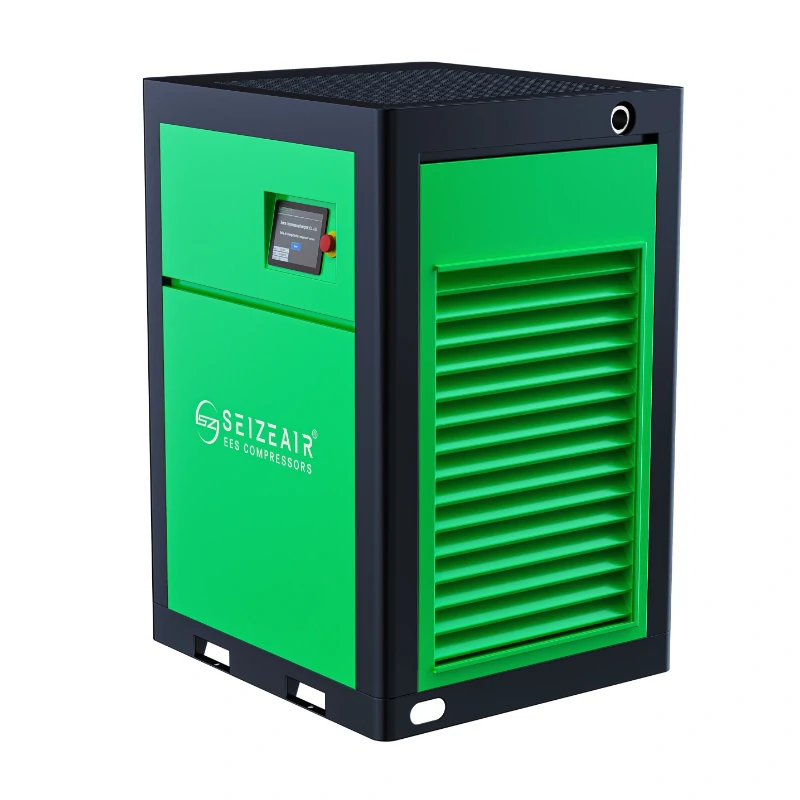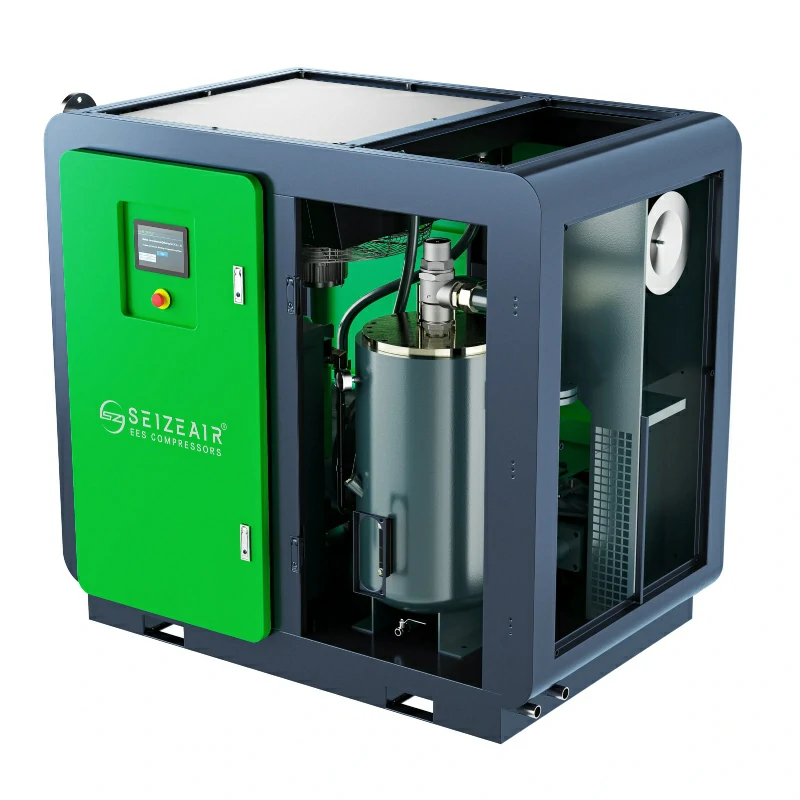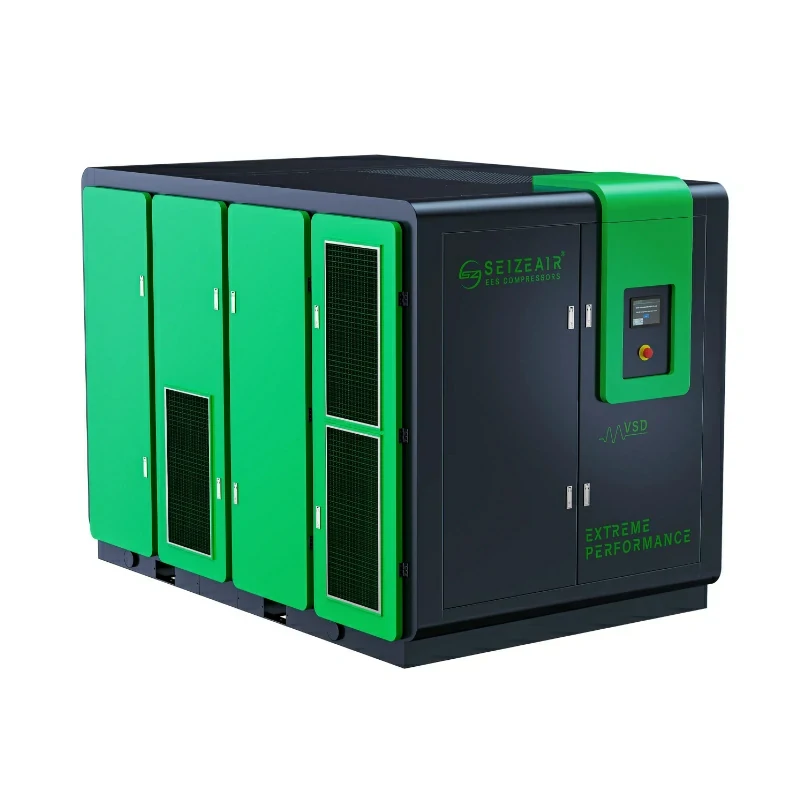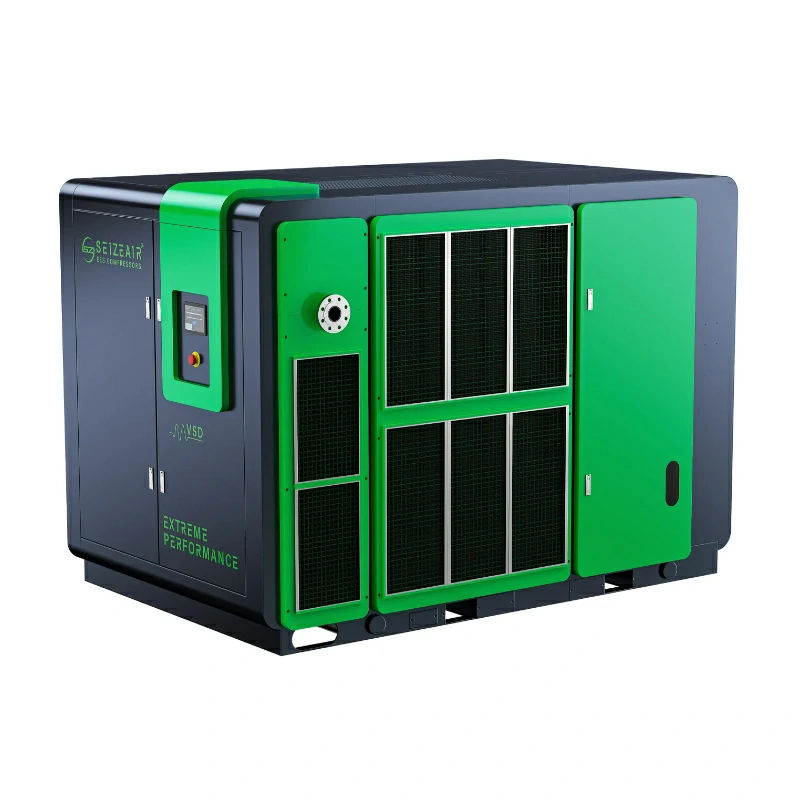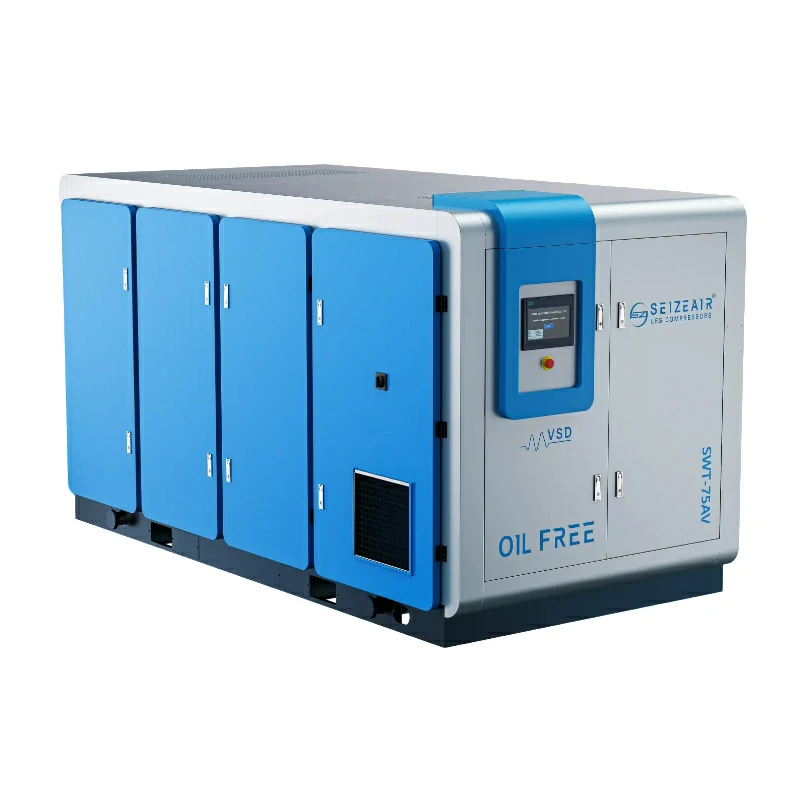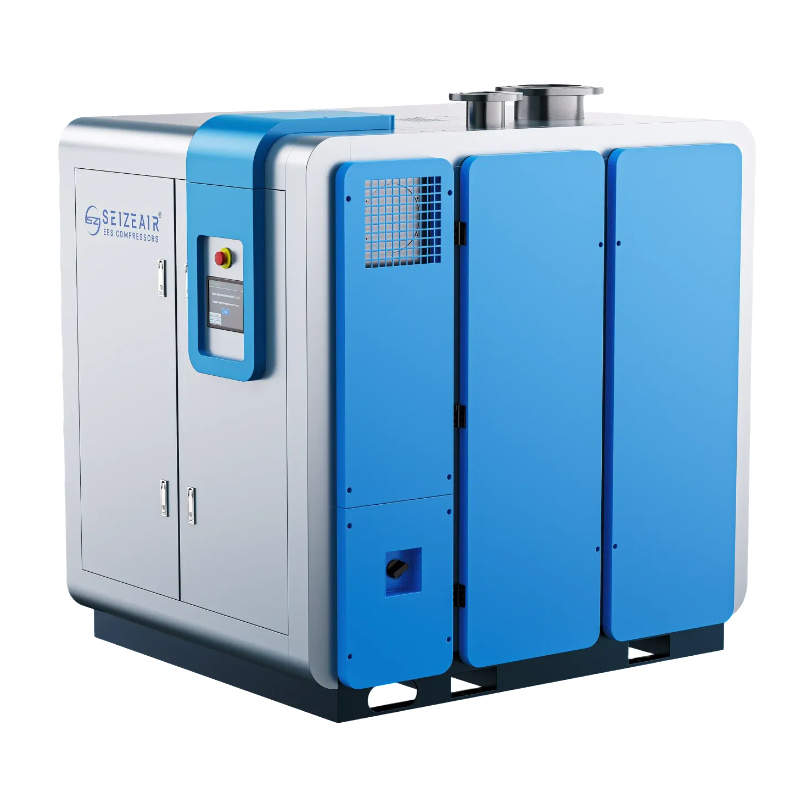


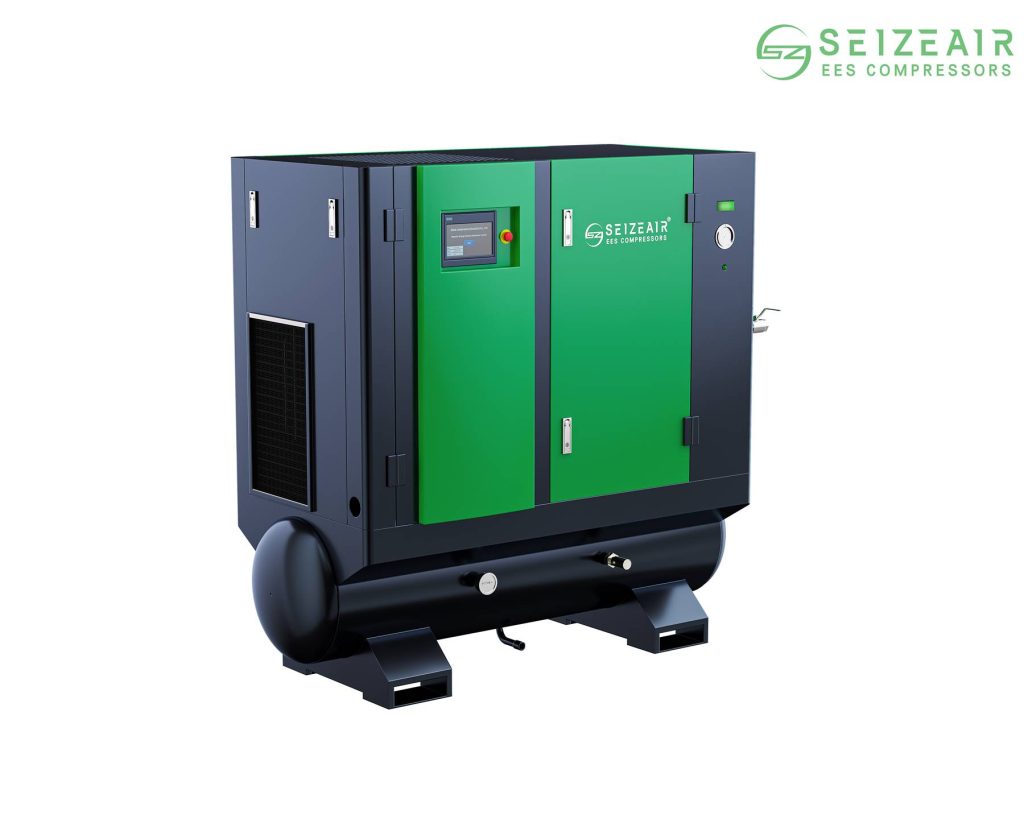
All in one air compressor systems combine a rotary screw compressor, refrigerated dryer, precision filters, and a storage tank into a single, pre-wired cabinet. This compact design eliminates the complex installation, high piping costs, and costly air leaks typical of traditional setups. By optimizing the internal air path, it prevents pressure drops, slashes energy bills, and delivers clean, dry air straight out of the box to protect your tools.
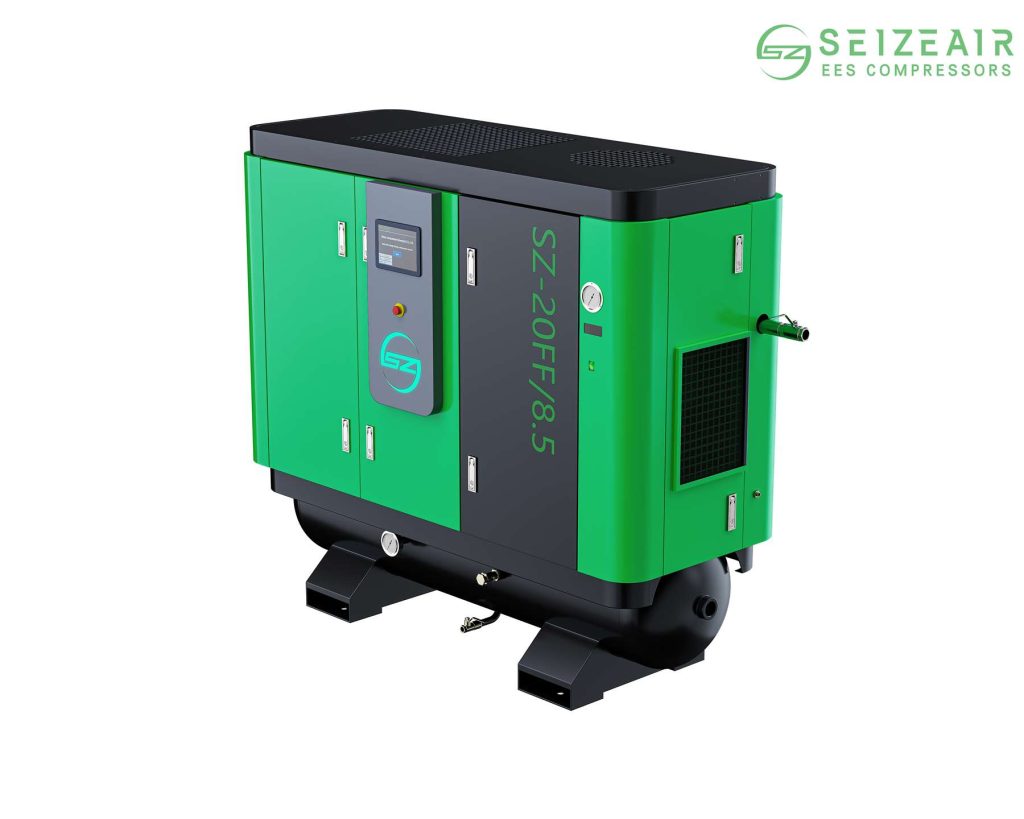
What Is included in an Integrated Screw Compressor Package?
A traditional compressed air setup resembles a decentralized assembly line of mechanical parts. You typically start with a standalone air compressor, which routes raw air through rigid external piping into a separate refrigerated air dryer. From there, the air passes through various inline particulate filters before finally collecting in a massive, floor-mounted receiver tank. Each component operates on its own power source and requires dedicated physical space, creating a complicated footprint with multiple maintenance points.
An integrated screw compressor package combines this entire sequence into one unified engineered enclosure.
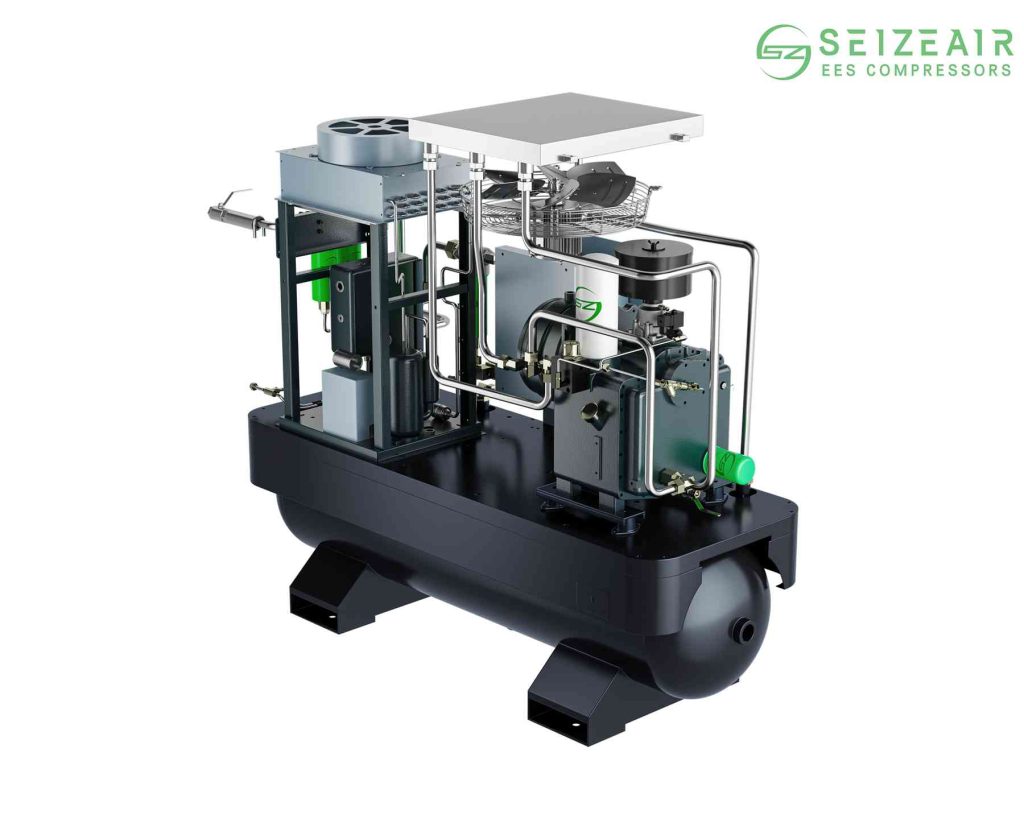
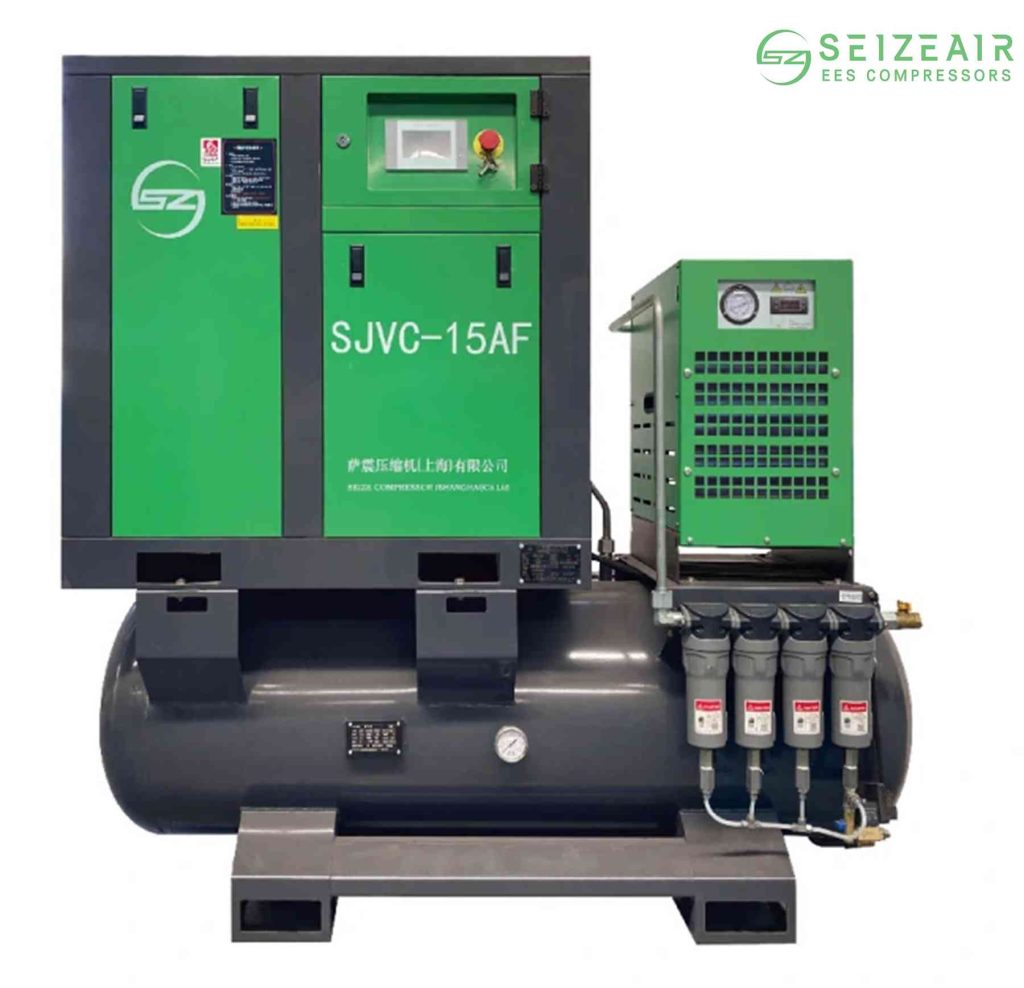
Inside a premium complete system, such as those engineered by Seize Air, all essential components are vertically stacked and balanced. The top portion houses a heavy-duty rotary screw air end and an electric motor equipped with an advanced intake valve and oil-separation system. Directly adjacent or underneath sits an industrial-grade refrigerated air dryer, coupled with high-efficiency coalescing filters. The entire assembly is mounted securely on top of a certified steel air receiver tank. Every internal air line, electrical wire, and condensate drain is connected, sealed, and tested under full working pressure before leaving the factory floor, delivering a true turn-key machine.
How Much Space Can a Rotary Screw Compressor with Built-in Dryer and Tank Save?
Floor space represents highly valuable real estate in automotive body shops, precision CNC machining centers, and manufacturing plants. Conventional modular setups demand a large footprint because you cannot simply push the machines against each other. Industry safety standards require leaving at least two to three feet of clearance around a separate compressor, standalone dryer, and individual storage tank to allow for proper motor ventilation, cooling airflow, and maintenance accessibility. This spreads your air station across a massive area.
An integrated all in one air compressor solves this problem by using smart vertical engineering. By stacking the mechanical components directly over the air receiver tank, the machine utilizes vertical air space rather than consuming precious floor area.
This vertical integration allows a 15 HP (11 kW) complete system to occupy an average footprint of just 8 to 12 square feet, compared to the 25 to 40 square feet required by a fragmented layout. Reclaiming up to 70% of your floor space allows you to install the compressor in tight corners, utility closets, or directly next to your production machinery rather than building a dedicated, isolated compressor room out back.
What Are the Installation Advantages of an Integrated Air Compressor System?
Setting up an old-school modular compressed air station is a complex plumbing and electrical engineering project. You must contract a professional to design and assemble the layout, which involves cutting, threading, and installing metal or aluminum piping between the compressor discharge, the dryer inlets, the filter manifolds, and the final storage tank. Every single joint must be wrapped and tightened perfectly. Furthermore, your electrician must run separate electrical drops, install individual disconnect switches, and wire multiple independent motors for both the compressor and the standalone dryer.
An integrated system completely eliminates this multi-step installation process. Because the internal plumbing, cooling lines, and bypass loops are integrated at the factory, your setup process requires only two straightforward connections:
- Electrical: You run a single main power line to the central electrical control cabinet of the unit. The internal microprocessor automatically distributes power to both the main compressor motor and the integrated refrigerated dryer.
- Pneumatic: You connect a single main discharge air valve directly from the machine’s outlet into your shop’s main air distribution header pipe.
By eliminating hours of outsourced contractor labor, specialized fittings, and complex dual-wiring setups, an all-in-one package cuts your initial installation expenses by hundreds or even thousands of dollars, allowing your facility to become operational the same day the machine arrives.
How Does a Complete Air Compressor Setup Improve Downstream Air Quality?
Raw compressed air coming straight out of a compression chamber is hot, heavily saturated with moisture, and contaminated with airborne dust and vaporized lubricant. If this untreated air flows directly into your production lines, the water will condense inside your piping, leading to rusted internal lines, clogged pneumatic cylinders, sticking valves, and ruined air tools. In applications like automotive painting, sandblasting, plasma cutting, or automated packaging, wet and contaminated air leads directly to fish-eyes in paint coatings, clogged nozzles, and rejected products.
An all-in-one system provides exceptional air purity straight out of the discharge valve because the air purification process is perfectly synchronized with the air generation process.
As hot air leaves the rotary screw air end, it immediately passes through a high-efficiency air-oil separator and an aftercooler to drop the temperature. It then flows directly into the built-in refrigerated air dryer, which chills the air down to approximately 37 degrees Fahrenheit (3 degrees Celsius). This cooling forces moisture to condense into liquid droplets, which are instantly expelled by an integrated automatic drain valve. Finally, the chilled air passes through dual inline coalescing filters to trap solid particulates down to 0.01 microns and remove oil carryover down to 0.003 ppm. Systems built by Seize Air ensure that this entire process happens along an optimized, ultra-short internal flow path, delivering clean, dry, instrument-grade air without causing problematic pressure drops.
Why Is an All-in-One Unit More Energy Efficient Than a Modular System?
A major source of high electrical costs in industrial shops is the phenomenon known as a “hidden pressure drop.” In a traditional modular configuration, compressed air must navigate a maze of external piping, T-joints, 90-degree elbows, isolation valves, and independent filter housings before it ever reaches the main workshop header. Every restriction along this path creates friction, causing a drop in air pressure.
If your external piping and standalone dryer introduce a total pressure drop of 10 to 12 PSI, your compressor must actively work harder—running at 125 PSI just to deliver a working pressure of 113 PSI to your machinery. According to the Compressed Air and Gas Institute (CAGI), every 2 PSI increase in operating pressure requires roughly 1% more electrical input energy at the motor.
An all in one air compressor eliminates these costly efficiency losses. Its internal air path is engineered to be as short and direct as possible, using wide-diameter, factory-formed bent tubes rather than restrictive right-angle fittings. This clean engineering lowers internal pressure drops to less than 2 to 3 PSI.
| Performance Metric | Traditional Piston / Modular Setup | Integrated Rotary Screw System |
| Average Internal Pressure Drop | 8 to 14 PSI (Due to long external pipe runs) | 2 to 3 PSI (Due to short, optimized air path) |
| Air Pipe Leak Points | High (Dozens of threaded joints and valves) | Extremely Low (Minimal, factory-sealed internal joints) |
| Duty Cycle Capacity | 60% to 70% (Requires frequent rest periods) | 100% Continuous (Engineered for non-stop run time) |
| Operational Noise Level | 85 to 95 dB (Deafening, requires isolated room) | 62 to 68 dB (Quiet, suitable for open workspaces) |
| Downstream Tool Protection | Poor (Prone to moisture if dryer cycles mismatch) | Excellent ( Dryer and filters engage automatically) |
Additionally, traditional setups frequently develop small air leaks at the numerous threaded joints between the separate machines. Because an integrated unit minimizes external plumbing connections, it removes the risk of minor leaks going unnoticed behind walls or under floors, ensuring that every kilowatt of power consumed translates directly into usable air volume.
Is an All in One Air Compressor Easy to Maintain for a Small Workshop?
A common point of confusion for workshop owners is whether servicing an integrated machine is overly complicated. In a fragmented system, maintenance is often difficult to track. You must manage separate user manuals, order different filter part numbers from multiple vendors, and monitor completely independent service intervals for the compressor motor and the standalone dryer. It is easy for dryer maintenance or inline filter changes to be forgotten, which eventually compromises your air quality.
With a complete air compressor setup, system maintenance is completely centralized and streamlined.
The smart microprocessor controller mounted on the front panel acts as a single point of truth for the entire machine. It monitors real-time operating temperatures, pressures, and running hours for both the screw compressor and the integrated dryer. When a service interval approaches, the screen displays clear notifications for all necessary consumables simultaneously.
Furthermore, premium integrated enclosures are designed with quick-release access panels. A technician or shop mechanic can remove the service doors and access the air filter, oil filter, oil separator element, and coalescing filter cartridges from a single standing position. This eliminates the need to move heavy equipment or squeeze into tight spaces behind separate machines, cutting down routine maintenance times to under an hour.
What Happens if the Integrated Dryer Needs Repair or Fails?
One of the most frequent questions buyers ask when evaluating an integrated system is: If the built-in refrigerated dryer breaks down or requires a parts replacement, will it shut down my entire factory air supply?
High-quality integrated air systems prevent this issue through smart internal bypass engineering. Manufacturers design the internal pneumatic circuitry with a built-in maintenance bypass valve system. If the refrigerated dryer needs to be powered off for a fan motor replacement, sensor adjustment, or routine cleaning, the operator can simply turn the bypass valve.
This reroutes the compressed air stream directly from the compression chamber into the air receiver tank, bypassing the dryer circuit entirely. While your facility will temporarily receive wet air during the maintenance window (exactly like a traditional setup operating with a broken standalone dryer), your production line does not lose air pressure and can keep running without experiencing unscheduled downtime.
Additionally, because the dryer is safely housed inside the main structural steel canopy, it is shielded from the physical impacts, airborne grinding dust, ambient overspray, and heavy workshop debris that frequently clog and damage standalone units sitting exposed on the shop floor. This protective enclosure naturally extends the working life of the dryer’s condenser coils and electrical components.
How Do I Determine the Right CFM and Tank Size for an Integrated System?
Sizing an integrated rotary screw compressor requires a clear understanding of your facility’s continuous air consumption and peak demands. Unlike piston units that rely on a massive storage tank to buffer uneven air delivery, a rotary screw compressor generates smooth, steady air volume continuously.
To choose the correct machine capacity, follow this step-by-step sizing protocol:
Step 1: Calculate Total Tool Consumption (CFM)
List every pneumatic tool, machine, or workstation that will operate simultaneously during your busiest production hour. Note their individual Cubic Feet per Minute (CFM) consumption ratings at their specified operating pressures.
Total Shop CFM = Tool A (CFM) + Tool B (CFM) + Tool C (CFM)
For example, if you run a CNC milling machine requiring 15 CFM continuously, an impact wrench requiring 10 CFM intermittently, and a blow-off gun requiring 5 CFM, your concurrent demand is 30 CFM.
Step 2: Apply a Safety and Growth Factor
Multiply your total concurrent CFM by a factor of 1.25. This adding of a 25% safety margin ensures your compressor does not run at absolute maximum capacity constantly, and accounts for future tool additions or minor system wear.
Required Compressor CFM = 30 CFM x 1.25 = 37.5 CFM
Step 3: Match the CFM to Motor Horsepower (HP)
Industrial rotary screw air ends generally produce about 3.5 to 4.0 CFM per 1 Horsepower (HP) at standard operating pressures of 115 to 125 PSI.
Estimated Horsepower Need = 37.5 CFM / 4.0 CFM/HP = 9.375 HP
In this scenario, a 10 HP (7.5 kW) all-in-one rotary screw unit would be an ideal fit, as it reliably delivers around 36 to 40 CFM of continuous air.
Step 4: Verify Receiver Tank Volume
Integrated units typically pair the compressor motor size with a matching, engineered air receiver tank base. For general manufacturing and automotive applications, a standard sizing rule is to provide roughly 3 to 4 gallons of tank storage capacity for every 1 CFM of compressor output.
Minimum Tank Gallons = 40 CFM x 3 Gallons/CFM = 120 Gallons
An all-in-one system with a 120-gallon or 500-liter horizontal tank provides an ample storage buffer to handle brief, high-volume spikes in air usage without causing systemic pressure drops across your piping network.
Rotary Screw All-in-One vs. Traditional Piston
Many old-school shops still rely on traditional reciprocating piston compressors because they are familiar. However, when comparing the internal mechanics of a piston pump against a modern rotary screw air end, the differences in durability, wear characteristics, and operating lifespan are significant.
Mechanical Wear and Friction Dynamics
Piston compressors rely on a crankshaft, connecting rods, and pistons moving up and down at high speeds inside cast-iron cylinders. This design creates intense friction, high vibration, and extreme operating temperatures. Over time, the piston rings inevitably wear down, causing the pump to lose efficiency and pass large amounts of liquid oil downstream into your air lines. Because of this mechanical stress, piston pumps have a limited life expectancy before needing a full rebuild.
A rotary screw air end contains two precision-engineered interlocking helical rotors that turn smoothly in a continuous rotational movement. The rotors are flooded with a thin cooling fluid film that prevents the metal surfaces from ever touching each other directly. With zero metal-to-metal contact inside the compression chamber, mechanical wear is nearly non-existent. A premium integrated rotary screw system from Seize Air can run smoothly for tens of thousands of hours, delivering the exact same CFM output on year ten as it did on day one.
Workplace Decibel Levels and Noise Reduction
The hammering movement of an open piston pump creates deafening noise levels, often measuring between 85 and 95 decibels (dB). Prolonged exposure to this noise level requires mandatory hearing protection and forces businesses to isolate the compressor outside or in a far corner of the facility.
Because rotary screw rotors compress air smoothly without physical impacts, they emit a low, steady hum. Housed inside an insulated, sound-dampening acoustic enclosure, an all-in-one rotary screw system operates at sound levels between 62 and 68 dB. This quiet performance allows you to install the machine directly on the shop floor or next to workers without disrupting communication or risking hearing damage.
Moving Your Shop Forward with Integrated Air Technology
Continuing to run an inefficient, fragmented compressed air system can hold your business back by inflating energy costs, occupying valuable shop space, and letting moisture damage your pneumatic tools.
Upgrading to a modern all in one air compressor simplifies your infrastructure into a single, high-efficiency system. By selecting an integrated configuration, you eliminate complex installation steps, reduce internal pressure drops, lower your utility costs, and ensure your production line receives clean, dry, instrument-grade air every day. For businesses seeking maximum uptime, smooth operation, and long-term mechanical reliability, making the switch to an advanced engineered platform like the Seize Air integrated series is a highly effective way to future-proof your workshop.
Ready to Upgrade to an All-in-One System?
Stop dealing with the high maintenance, loud noise, and constant moisture issues of an outdated air compressor configuration. Whether you need an expert to calculate your shop’s exact CFM requirements, help sizing an integrated rotary screw unit for your facility, or a direct quote on an upgrade, our team of industrial engineers is ready to assist you.
Contact us today to receive a tailored system consultation, request an obligation-free quote, or find the ideal plug-and-play air solution built to keep your production running smoothly.