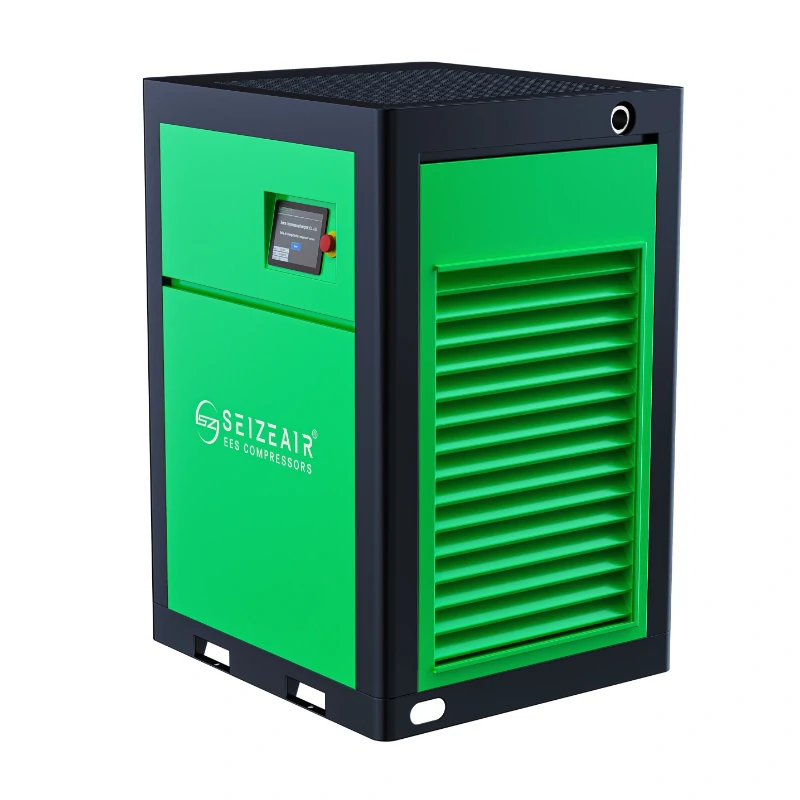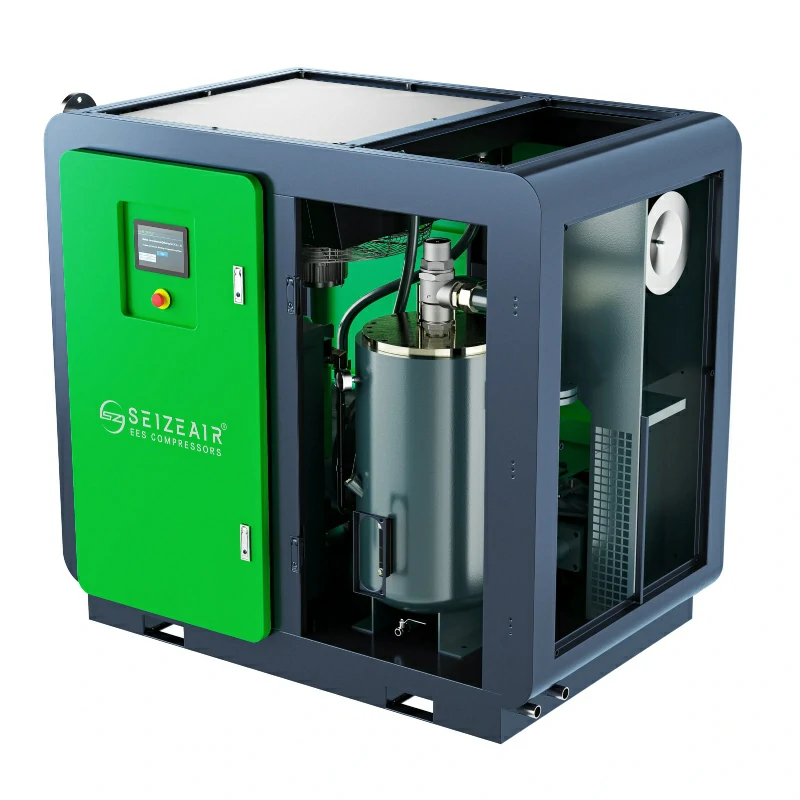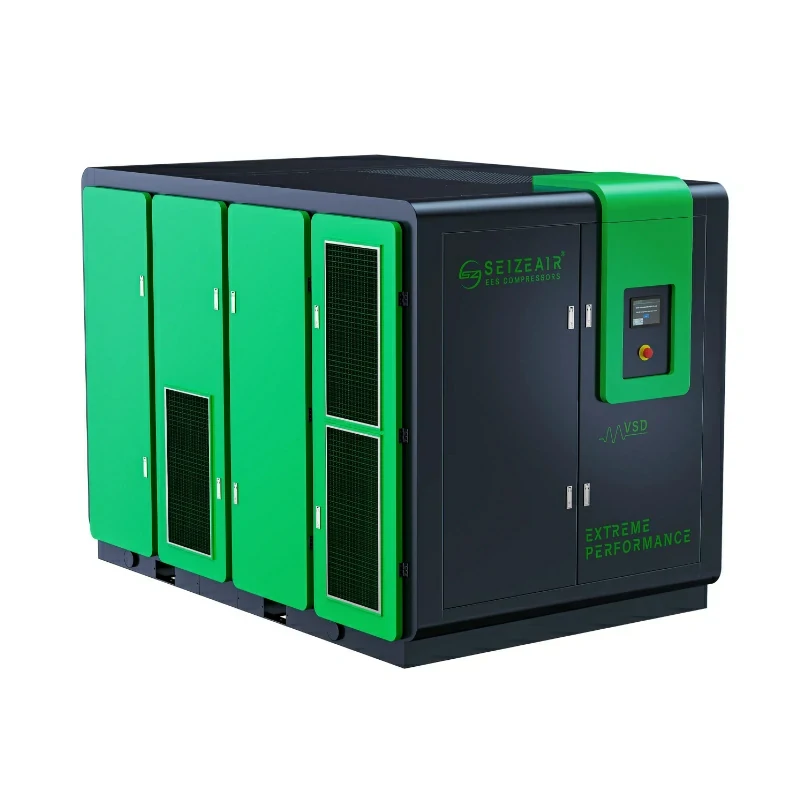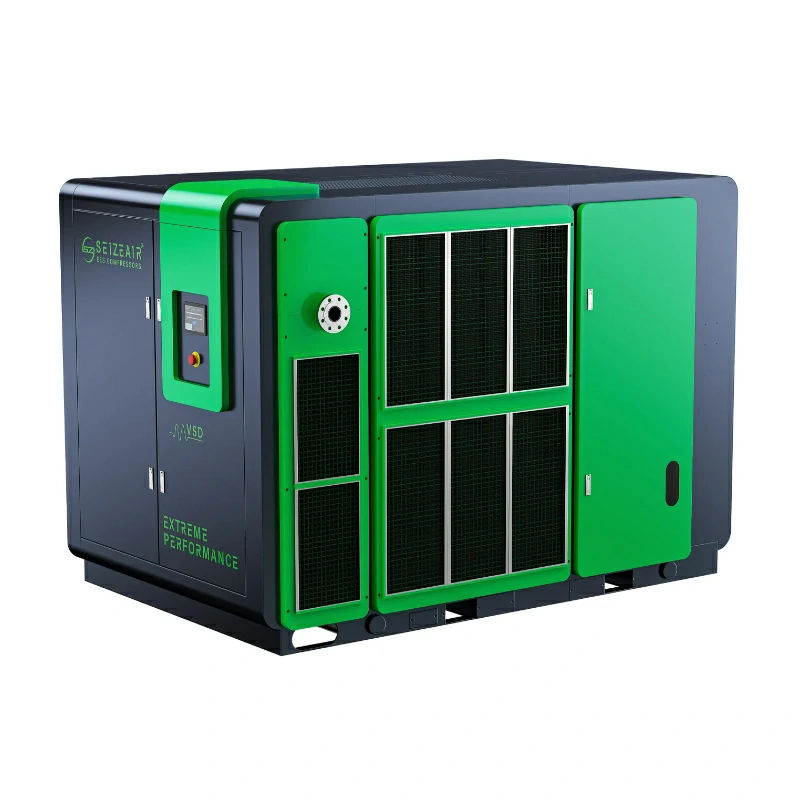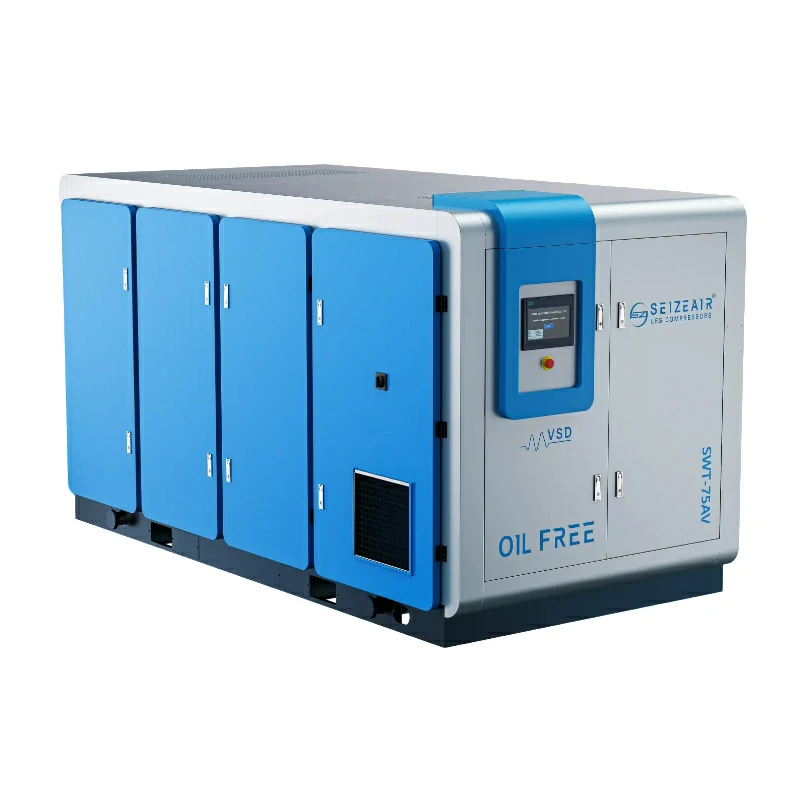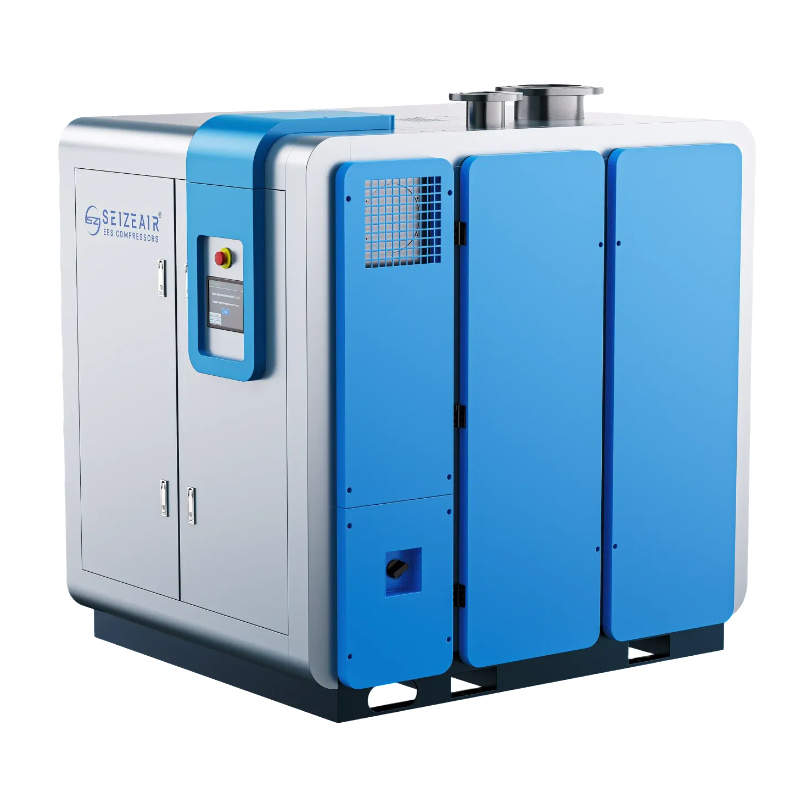


An electric industrial air compressor running hot triggers thermal overload shutdowns, accelerates oil degradation, and risks permanent motor insulation failure. Protecting your continuous-duty three-phase air compressor or heavy-duty variable speed drive rotary screw compressor requires identifying ambient airflow restrictions, maintaining thermal valves, and enforcing strict fluid maintenance before heat stops your production line.
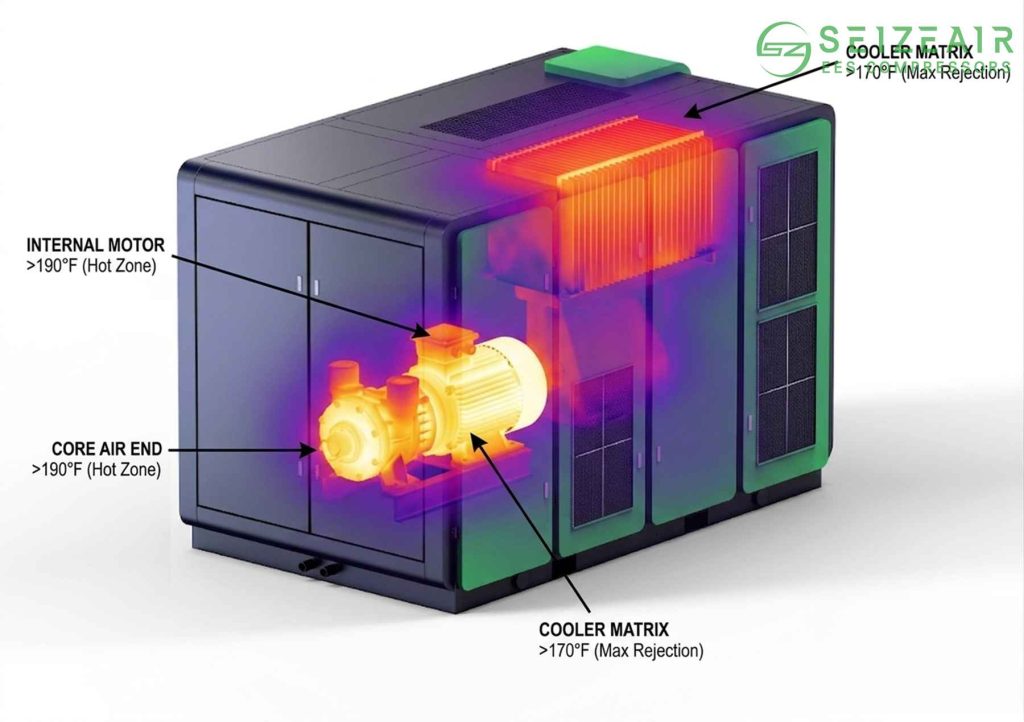
What Is the Normal Operating Temperature of an Electric Industrial Air Compressor?
Benchmarking baseline thermal performance allows plant engineers to catch minor temperature spikes before thermal cutout switches trip. Operating an electric industrial air compressor outside its rated thermal window causes rapid mechanical wear and oil breakdown.
| Compressor Type | Ideal Operating Range | Thermal Overload / Shutdown Warning |
| Oil-Injected Rotary Screw | 175°F – 195°F (80°C – 90°C) | 225°F – 235°F (107°C – 113°C) |
| Oil-Free Rotary Screw | 300°F – 350°F (149°C – 176°C) | > 380°F (193°C) |
| Reciprocating / Piston | 250°F – 350°F (121°C – 176°C) | > 400°F (204°C) |
Why Does Compression Produce So Much Heat?
Air compression obeys fundamental thermodynamic principles. According to the Ideal Gas Law (PV = nRT), decreasing air volume while increasing pressure releases mechanical work directly as thermal energy.
Work Input = Heat Generated + Pressure Potential Energy
In a high-pressure electric motor drive air compressor, nearly 80% to 90% of the electrical energy drawn by the motor converts into thermal energy. Without continuous lubricant injection and forced-air cooling, male and female rotors expand faster than the housing bore, causing catastrophic air end rotor lockup within minutes.
When evaluating system efficiency, choosing robust equipment like a Seize Air heavy-duty electric air compressor ensures high-capacity cooling packages that stabilize internal temperatures even during full-load duty cycles.
Why Is My Electric Industrial Air Compressor Overheating?
Pinpointing thermal failure points allows maintenance teams to fix minor air supply issues before heat ruins internal seals, bearings, and motor windings.
       +-------------------------------------------------------+
       |           PRIMARY OVERHEATING CONTRIBUTORS            |
       +-------------------------------------------------------+
                                   |
       +---------------------------+---------------------------+
       |                           |                           |
[ Vent & Environment ]     [ Fluid & Oil System ]     [ Mechanical & Electrical ]
  - High Ambient Temp (>104°F) - Low Oil Levels           - Worn Thermal Valve
  - Restricted Airflow         - Varnish / Sludge          - Clogged Separator
  - Dirty Heat Exchangers      - Wrong Oil Viscosity       - Electrical Unbalance
1. Inadequate Room Ventilation and Ambient Heat Traps
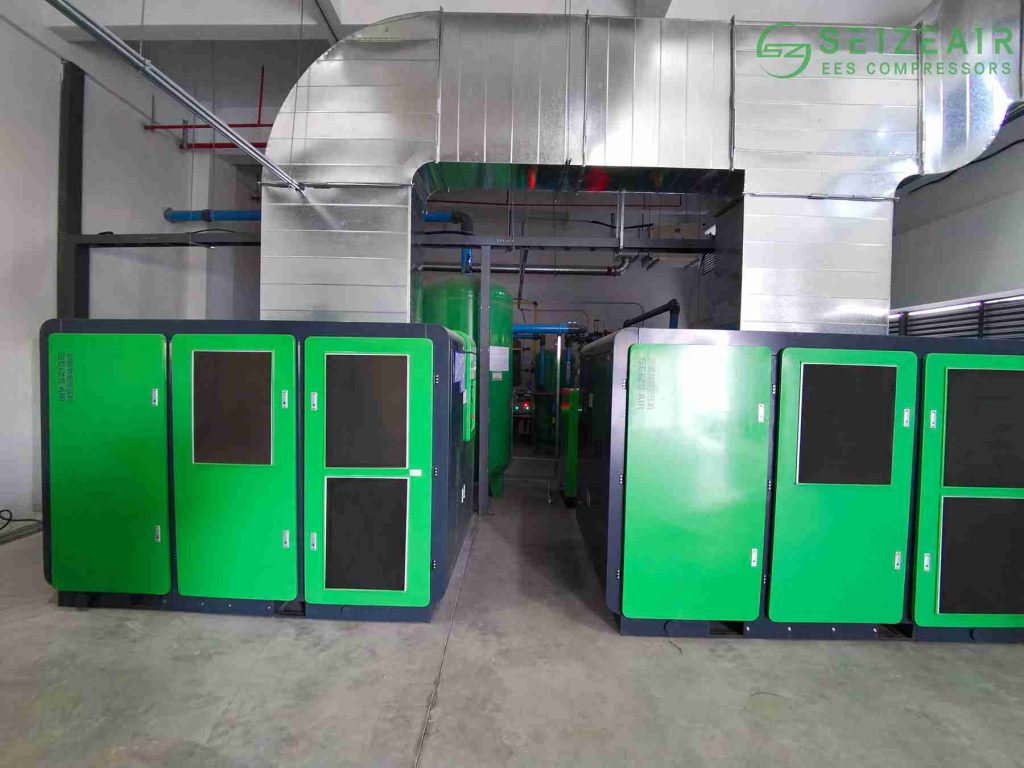
Installing a continuous-duty three-phase air compressor inside a compact, unventilated mechanical room creates a heat loop. If room exhaust louvers are undersized or intake ducts share space with warm plant exhaust, ambient room temperatures quickly exceed 104°F (40°C). Air-cooled oil coolers lose the temperature differential needed to strip heat from circulating fluid, forcing the system into high discharge shutdown.
2. Clogged Aftercooler Fins and Radiator Blockages
Plant environments with airborne debris, oil mist, or particulate matter coat the external aluminum fins of combination oil coolers and air-cooled aftercoolers. This accumulation acts as a thermal blanket. Dust seals off the narrow air gaps between cooling tubes, cutting fan airflow by up to 60% and causing sudden high discharge temperature warnings on the controller.
3. Lubricant Thermal Degradation and Low Fluid Levels
In an oil-injected screw package, synthetic fluid serves as coolant, seal, and lubricant.
- Low Oil Level: Drops fluid retention time in the separator tank. Fluid cycles through the rotors too quickly without sufficient residence time in the radiator to release heat.
- Varnished/Oxidized Oil: Heat breaks down base stocks, forming sticky carbon sludge. Sludge blocks internal cooling passages and coats cooler tube walls, reducing heat transfer coefficients drastically.
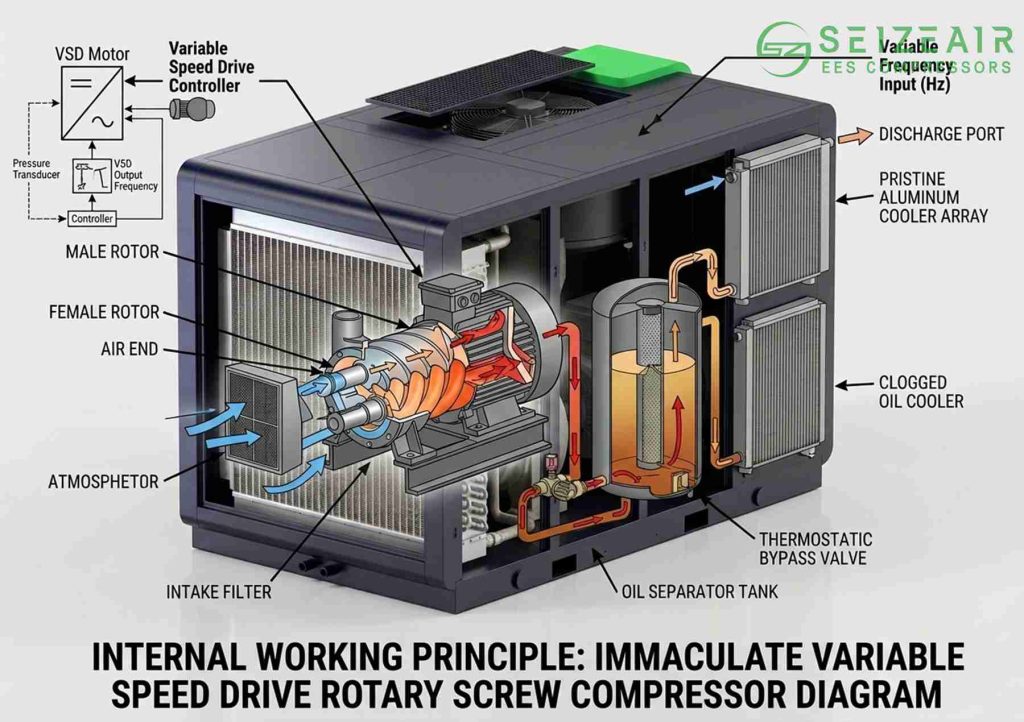
4. Malfunctioning Thermostatic Bypass Valve
The thermostatic valve routes fluid based on temperature. Cold fluid bypasses the cooler to warm up quickly and prevent condensation; hot fluid passes through the cooler. If the internal wax element degrades or binds, fluid bypasses the radiator continuously, sending hot oil back into the compression chamber.
5. Restricted Air Intake and Heavy Separator Backpressure
A clogged intake filter forces the air end to work against a high vacuum, raising the compression ratio and generating extra discharge heat. Similarly, a saturated oil separator element causes high differential pressure. The drive motor draws excess amperage to force compressed air through the plugged separator, radiating heat straight into the air end frame and bearings.
How to Troubleshoot High Discharge Temperature
Use this structured troubleshooting guide to diagnose elevated operating temperatures on your electric industrial air compressor step by step.
| Failure Symptom | Likely Root Cause | Immediate Action Step |
| Sudden thermal shutdown during peak afternoon hours | High room ambient temp / Poor exhaust ducting | Open room louvers, start auxiliary exhaust fans, verify duct air velocity. |
| High oil temp display, but cooler outlet air feels cold | Thermostatic bypass valve stuck open | Remove and inspect thermostatic element; check for binding or scale buildup. |
| System runs hot only when operating fully loaded | Clogged oil separator / High differential pressure | Check differential pressure gauge across oil separator; replace element if > 10 PSI. |
| High noise level + rapid foam buildup in sight glass | Fluid aeration / Moisture contamination | Inspect sump oil level; drain condensed water; flush and refill with OEM synthetic lubricant. |
| Slow thermal recovery post-shutdown | External dust blockages on cooler radiator matrix | Isolate power; blow out radiator matrix using reverse low-pressure air or mild cleaning agent. |
How to Prevent Your Industrial Air Compressor from Overheating
Eliminating thermal trips requires optimizing room airflow, using high-grade fluids, and selecting well-engineered equipment built for severe working conditions.
Facility Design & Ventilation ──┐
                               ├──> Stable Operating Temperature (< 195°F)
Routine Mechanical Care   ──────┘
1. Optimize Mechanical Room Airflow and Duct Layouts
Proper ductwork prevents hot air recirculation.
- Positive Air Supply: Install dedicated intake louvers lower in the room to draw cooler floor-level air across the compressor package.
- Duct Directing: Mount exhaust ducting with booster fans directly over the cooler discharge flange to push hot radiator exhaust outside the building.
- Service Clearances: Maintain at least 3 to 4 feet of open clearance around every cabinet panel so fan intake paths remain completely unblocked.
2. Upgrade to High-Performance Synthetic Lubricants
Standard mineral fluids break down under sustained temperatures above 180°F. Upgrading to full synthetic ISO VG 32 or ISO VG 46 PAO (Polyalphaolefin) or Polyalkylene Glycol (PAG) lubricants improves heat transfer and prevents varnish accumulation. Synthetic fluids maintain viscosity stability, protecting rotor bearings up to 230°F while offering 8,000-hour service intervals.
If you operate in hot climates or harsh factory environments, choosing an engineered unit from Seize Air gives you an edge. Their systems feature oversized aluminum bar-and-plate coolers and smart fan logic that adjust automatically to prevent thermal spikes before they interrupt production.
3. Maintain Heat Exchanger Arrays and Radiator Cores
Clean cooling arrays every 500 to 1,000 operating hours. Shut down the unit, lock out power, and blow dry compressed air (30-40 PSI) from the inside out through the cooler fins. For oily dust, spray a non-corrosive aluminum-safe cleaner, let it penetrate, and wash down with low-pressure warm water.
How Much Heat Does Your Compressor Reject?
Properly sizing room exhaust fans, supply louvers, and ductwork requires calculating total heat rejection from your electric industrial air compressor package.
Heat Rejection Formula
For air-cooled rotary screw compressor systems:
Heat Rejection (BTU/hr) = Motor Horsepower (HP) x 2545 x Heat Factor (1.0 to 1.1)
For a 100 HP continuous-duty electric compressor running under full load:
Heat Rejection = 100 HP x 2545 x 1.05 = 267,225 BTU/hr
Required Ventilation Airflow Formula
To keep room temperature rise within a manageable 10°F (5.5°C) above outside ambient air:
Required Ventilation Airflow (CFM) = Heat Rejection (BTU/hr) / (1.08 x Target Temperature Rise in °F)
Applying the 100 HP example above:
Required Ventilation Airflow = 267,225 / (1.08 x 10) = 24,743 CFM
Without an exhaust fan capable of moving approximately 25,000 CFM out of the room, heat builds up rapidly, causing thermal trip shutdowns.
Preventive Maintenance Schedule to Eliminate Overheating Risks
Adhering to a scheduled preventive maintenance protocol protects your heavy-duty variable speed drive rotary screw compressor from heat-related downtime.
| Frequency | Target Inspection Area | Specific Maintenance Action |
| Daily / Shift | Fluid Level & Control Panel | Inspect oil sight glass level prior to start; record discharge temp and pressure readings. |
| Weekly | Cooler Matrix & Intake Filters | Check cooler fins for dirt buildup; inspect intake filter differential indicator. |
| Monthly | Electrical Drive & Thermal Valve | Check line voltage balance under load; verify thermal valve opening performance. |
| Every 2,000 Hours | Oil Analysis & Inline Filters | Take oil sample for TAN and viscosity testing; replace fluid filter and air intake element. |
| Every 4,000-8,000 Hours | Separator Core & System Flush | Replace internal oil separator core; perform complete oil system flush if varnish is detected. |
Integrated thermal monitoring systems, like those built into premium Seize Air packages, continuously monitor air end temperatures, motor winding thermistors, and cooler performance—giving maintenance teams early warnings long before thermal shutdown limits are reached.
Frequently Asked Questions
What temperature is too hot for an air compressor?
For an oil-injected rotary screw electric industrial air compressor, operating temperatures above 215°F (101°C) indicate a thermal defect. Automatic protective shutdowns trigger between 225°F and 235°F (107°C to 113°C). For heavy-duty reciprocating units, air discharge temperatures crossing 380°F (193°C) risk auto-igniting oil vapor residue inside piping.
Can running an air compressor hot burn out the motor?
Yes. Excessive heat generated in the compression chamber transfers down the main drive shaft into the motor bearings and stator core. Excess heat breaks down bearing grease and degrades electrical insulation. For every 10°C (18°F) rise above a motor’s rated Class F or Class H insulation limit, operating lifespan drops by half.
Why does my continuous-duty rotary screw compressor overheat only in summer?
Summer increases ambient intake air temperatures and relative humidity. Hotter incoming air reduces the temperature differential across cooling fins, while humid air deposits extra water into compressor oil. Water reduces oil film strength and thermal conductivity, causing rapid thermal spikes during hot afternoon peak production hours.
How does oil viscosity affect compressor operating temperature?
Using fluid that is too thick creates mechanical drag and fluid friction, raising power consumption and thermal load. Conversely, thin or thermal-degraded fluid loses film strength, causing metal-to-metal contact between screw rotors. This generates intense friction heat right at the compression air end.
Keep Your Industrial Compressed Air Systems Running Cool
Excessive heat causes thermal trips, destroys synthetic lubricants, and shortens the lifespan of your electric industrial air compressor. Designing adequate ventilation, running premium lubricants, and inspecting heat exchangers regularly keeps your air system cool and operating reliably under high demand.
If high operating temperatures or frequent thermal shutdowns are disrupting your plant, contact the application specialists at Seize Air today. Our team can evaluate your equipment, design custom ducting layouts, and supply high-efficiency electric air compressor systems built to perform reliably in demanding factory conditions.