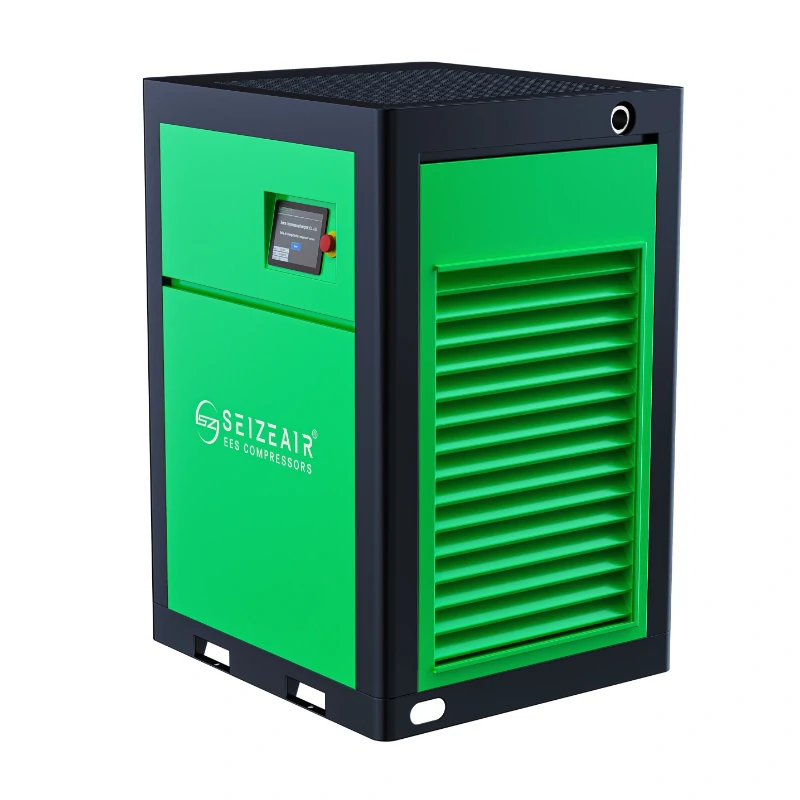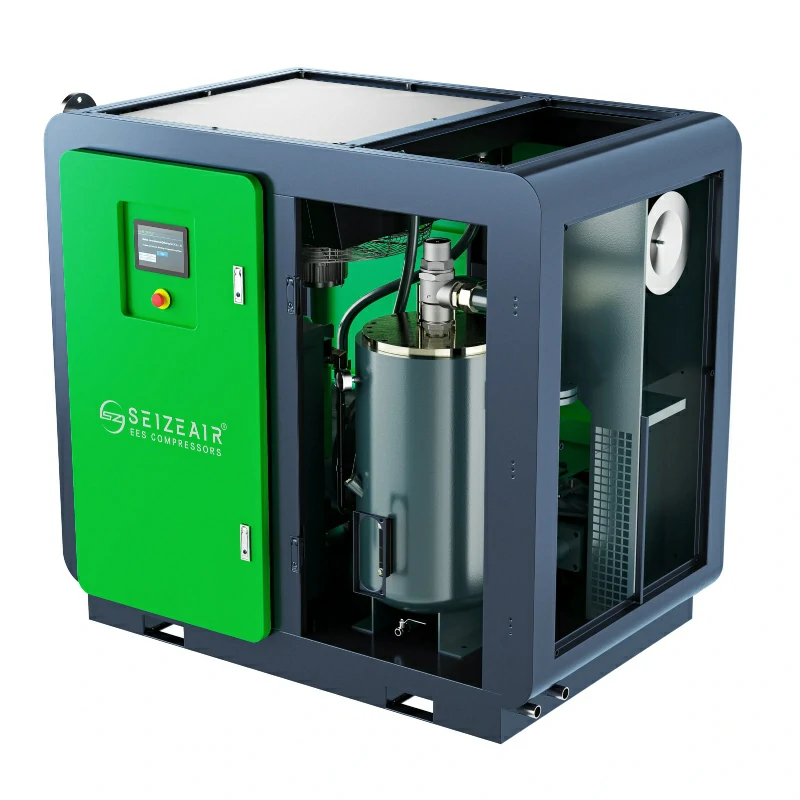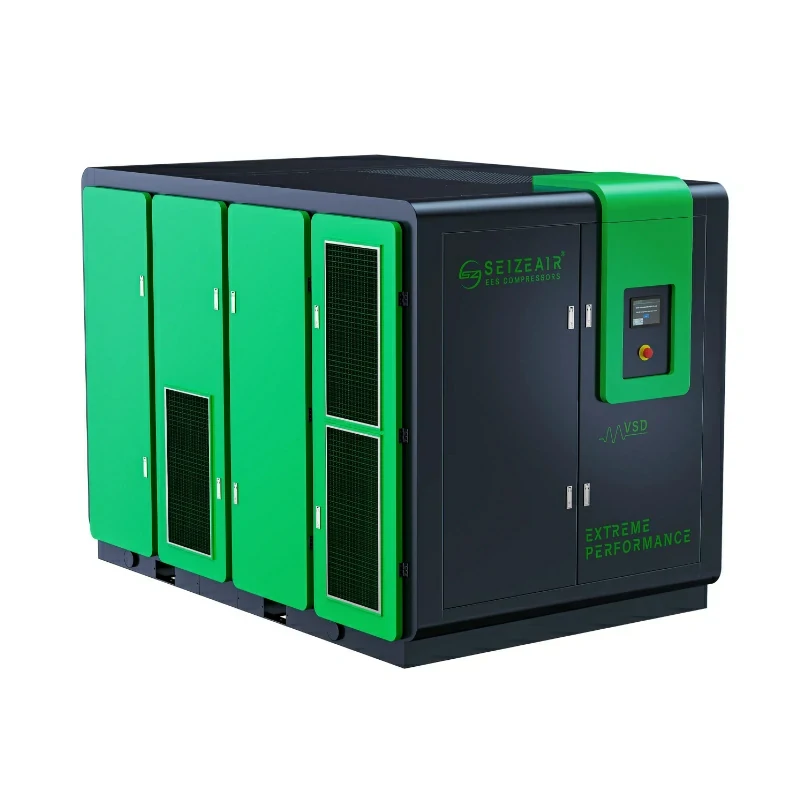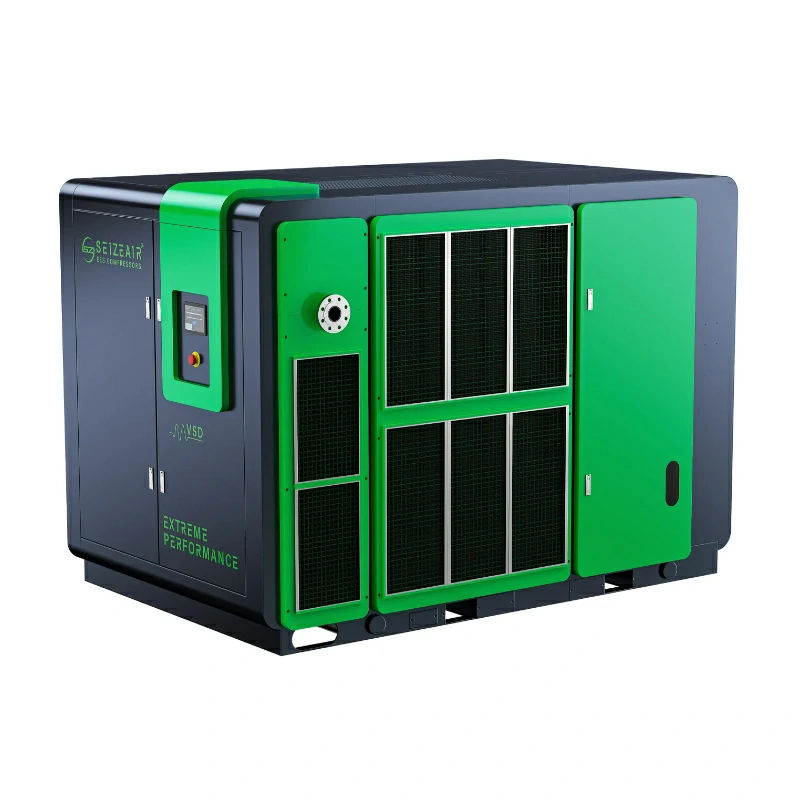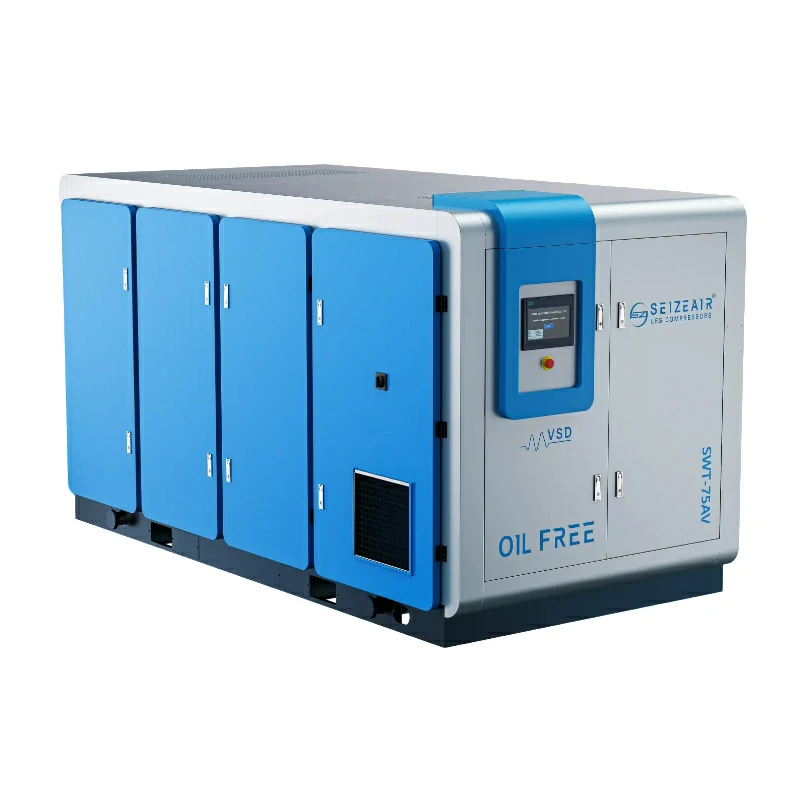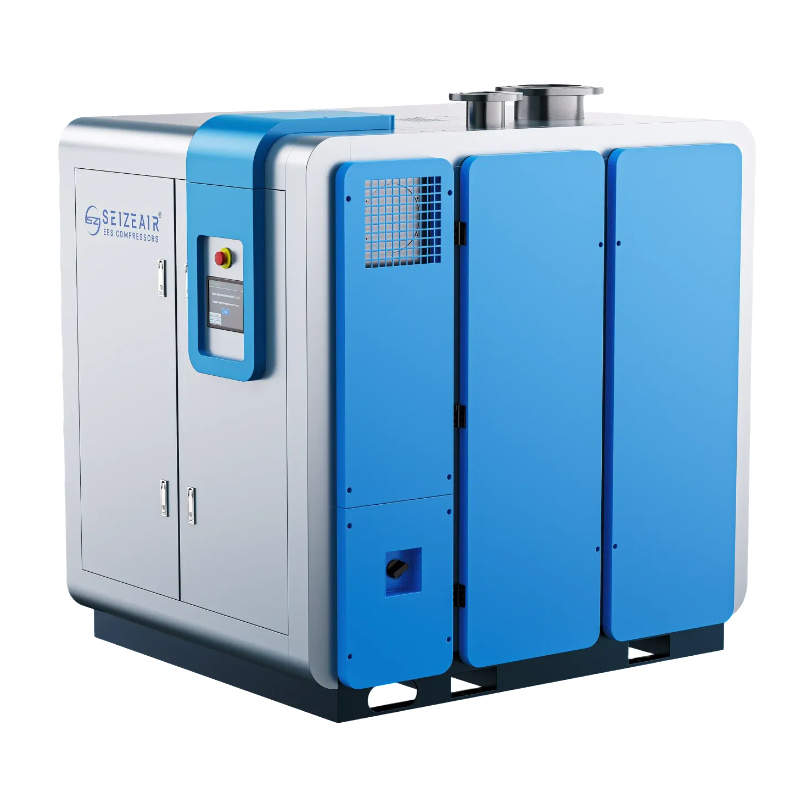


An air compressor for industrial use must balance high-volume CFM output with precise pressure control to slash manufacturing power costs, which often account for up to 40% of a facility’s electrical overhead. Selecting an engineered, low energy consumption air compressor transforms your heavy-duty pneumatic setup from an operational drain into a lean, highly profitable asset.
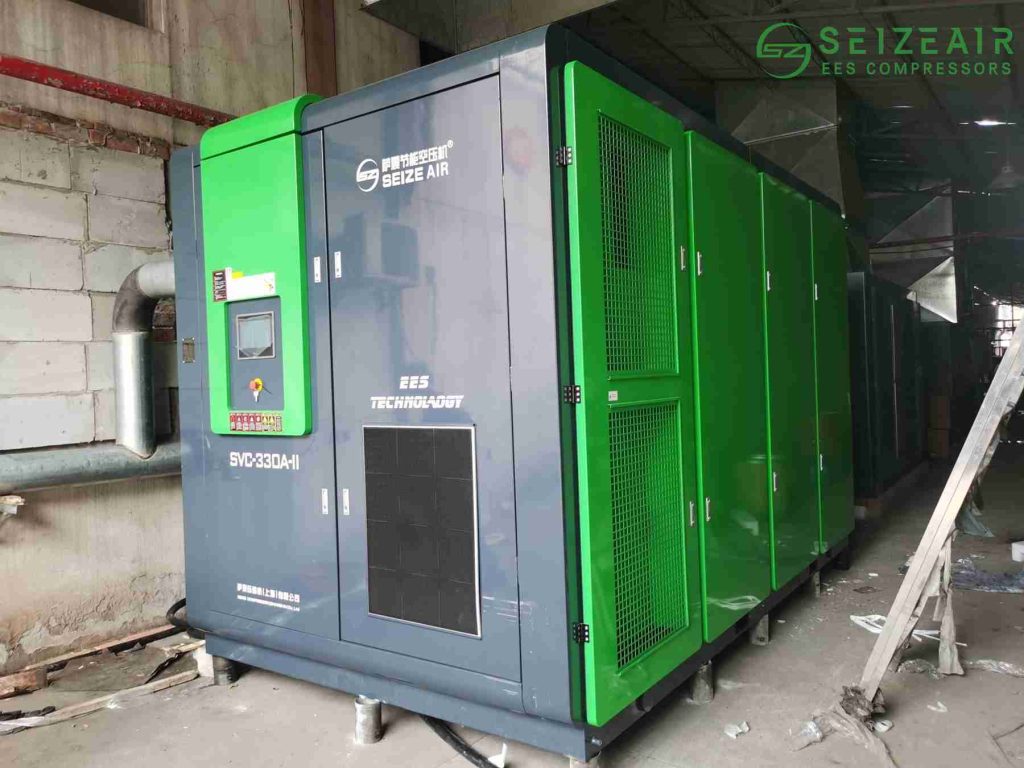
1. How Do I Measure Industrial Air Compressor Efficiency?
When procurement teams audit a heavy duty air compressor for manufacturing, evaluating simple horsepower ratings is no longer sufficient. To truly understand how a machine manages electricity under full load, you must look at its Specific Energy Requirement (SER). This represents the actual electrical power input required to generate a specific volume of compressed air at a designated operational pressure.
The standard calculation used by factory engineers is written purely as:
SER = Total Input Power (kW) / Air Flow Rate (per 100 CFM)
A lower SER score indicates that the machine converts electrical energy into pneumatic force with minimal thermodynamic waste. In large-scale operations, a fraction of a point reduction in SER translates directly into thousands of dollars saved every single month.
Fixed Speed vs. Variable Speed Drive (VSD) Configurations
The physical drive architecture plays an enormous role in determining your facility’s long-term utility expenses. Traditional fixed-speed systems operate on an all-or-nothing principle; the motor spins at a fixed RPM regardless of actual floor demand. When demand drops, the compressor goes into an unload state, spinning the rotors fruitlessly while still consuming up to 70% of its full load power.
Conversely, a variable speed rotary screw compressor utilizes advanced frequency inverters to continuously scale motor RPM up or down, mirroring your plant’s real-time air consumption.
| Compressor Drive Technology | Energy Efficiency Rating | Performance Under Fluctuating Loads | Capital vs Operational Cost Impact |
| Standard Fixed Speed | Baseline Efficiency | Poor; wastes extreme energy via constant unloading | Low initial price; catastrophic long-term power bills |
| Single-Stage VSD | High Efficiency | Excellent; matches irregular plant shift demands | Moderate premium; fast payback in multi-shift sites |
| Two-Stage VSD / PM VSD | Ultra-High Efficiency | Unrivaled; absolute maximum power savings | Higher capital cost; yields the lowest total lifecycle cost |
2. What Is the Most Efficient Industrial Air Compressor? Top 5 Models Evaluated
To accurately identify the most stable and high-efficiency options available, we benchmarked five premier commercial units based on rotor profiles, motor construction, and low energy consumption air compressor credentials.
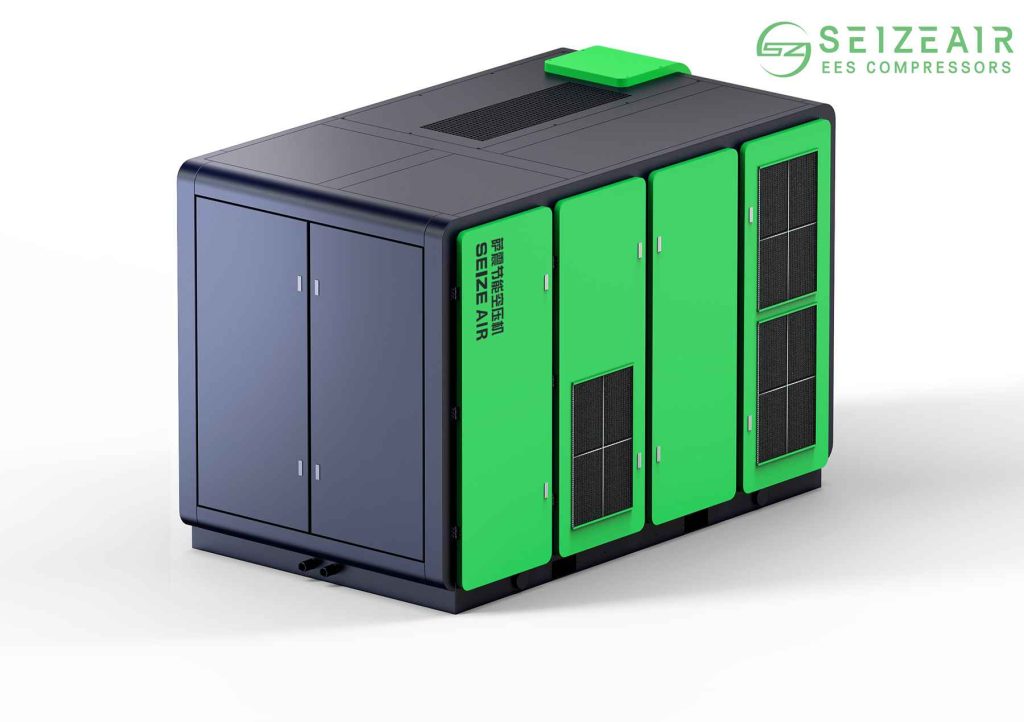
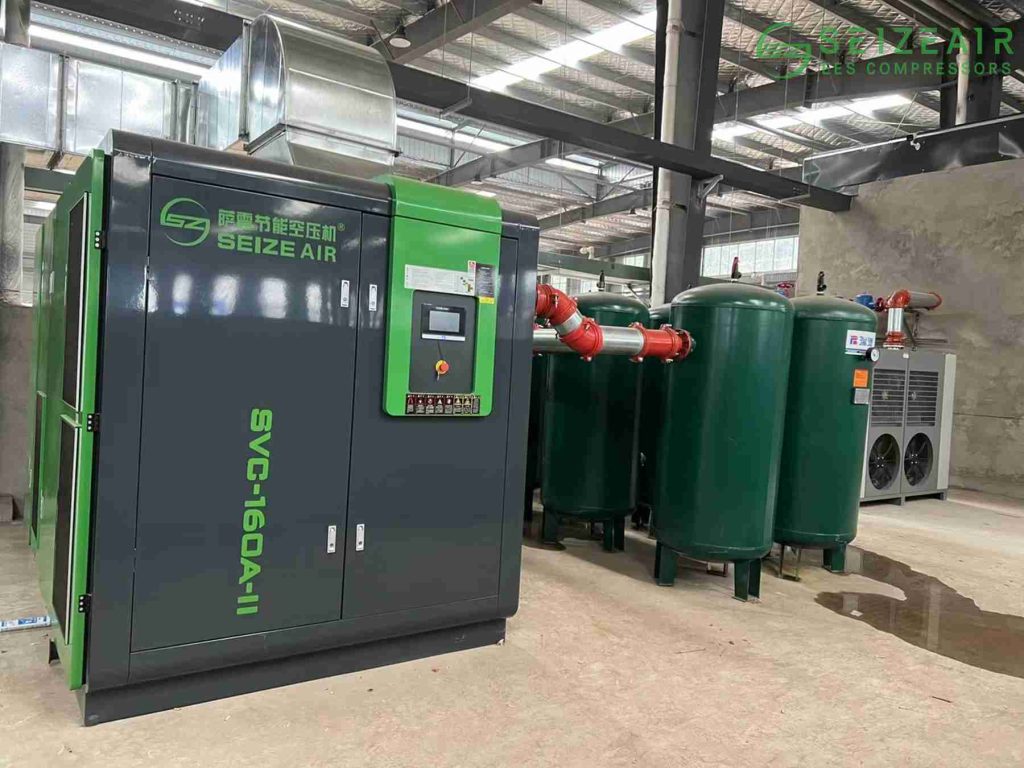
Model 1: Seize Air Premium Two-Stage VSD Series
For multi-shift manufacturing facilities demanding continuous, around-the-clock air delivery, the Seize Air Premium Two-Stage VSD series represents the pinnacle of modern energy conservation engineering.
Rather than forcing a single set of male and female rotors to compress ambient air all the way to its final target pressure, this machine splits the work across two separate, sequential compression chambers. Air enters the first stage, undergoes moderate compression, passes through an optimized internal intercooler to drop its thermal density, and is then compressed to final pressure in the second stage.
- Key Advantage: Integrated IE5 permanent magnet synchronous motors paired with dual-stage mechanical aires.
- Why it saves money: By dividing the compression ratio between two stages, internal blow-by and air slippage across the rotor profiles are virtually eliminated. Seize Air masterfully optimizes this physical layout to lower the torque demand on the motor, allowing the unit to provide an exceptionally low SER even when running under maximum industrial duress.
Model 2: Atlas Copco GA VSDs Series
The Atlas Copco GA VSDs range introduces a radical, space-saving vertical drive train architecture that transforms how power is transmitted within a heavy duty air compressor for manufacturing.
- Key Advantage: Neodymium-based interior permanent magnet (iPM) motor coupled directly to the compression element without gears or belts.
- Why it saves money: Conventional induction motors exhibit severe efficiency losses when forced to run below 35% capacity. The iPM motor inside this series maintains extreme electrical efficiency across its entire speed range, making it a spectacular choice for operations with highly unpredictable, sporadic pneumatic tool usage.
Model 3: Ingersoll Rand Next Generation R-Series VSD
Ingersoll Rand focuses heavily on digital optimization and structural ruggedness to ensure their machines sustain peak performance over decade-long duty cycles.
- Key Advantage: Precision-engineered airend matched with an Xe-Series microprocessor controller that tracks real-time flow patterns.
- Why it saves money: The intelligent control logic actively prevents over-pressurization. In industrial environments, over-pressurizing an infrastructure by just 2 PSI forces the motor to consume an additional 1% of raw electricity. This unit dynamically narrows your plant’s pressure bands to eliminate that hidden baseline waste.
Model 4: Kaeser ASD/BSD Series with Sigma Profile
Kaeser’s approach to securing a low energy consumption air compressor focuses on mechanical velocity. Instead of turning small rotors at extreme speeds, Kaeser builds massive, slow-turning rotor blocks.
- Key Advantage: Proprietary Sigma Profile rotary screw geometries operating at exceptionally low internal RPMs.
- Why it saves money: Lower rotational speeds mean drastically reduced friction losses, quieter operation, and significantly lower internal heat generation. This mechanical approach maximizes the total volume of air produced per kilowatt-hour of consumed electricity.
Model 5: Sullair LS Series Electronic Spiral Valve Models
Sullair offers a robust mechanical solution for plants that experience dramatic, near-instantaneous changes in air volume demands but prefer to avoid pure electronic frequency adjustments.
- Key Advantage: Variable displacement airend controlled via a precision-machined internal spiral bypass valve.
- Why it saves money: The spiral valve physically opens or closes ports along the compression chamber, altering the active length of the screw rotors to match lower demands without shifting the motor’s electrical frequency. It is an incredibly resilient option for rough, dusty, or electrically unstable facility environments.
3. How Much Compressed Air Do I Need for Industrial Use? Performance Breakdown
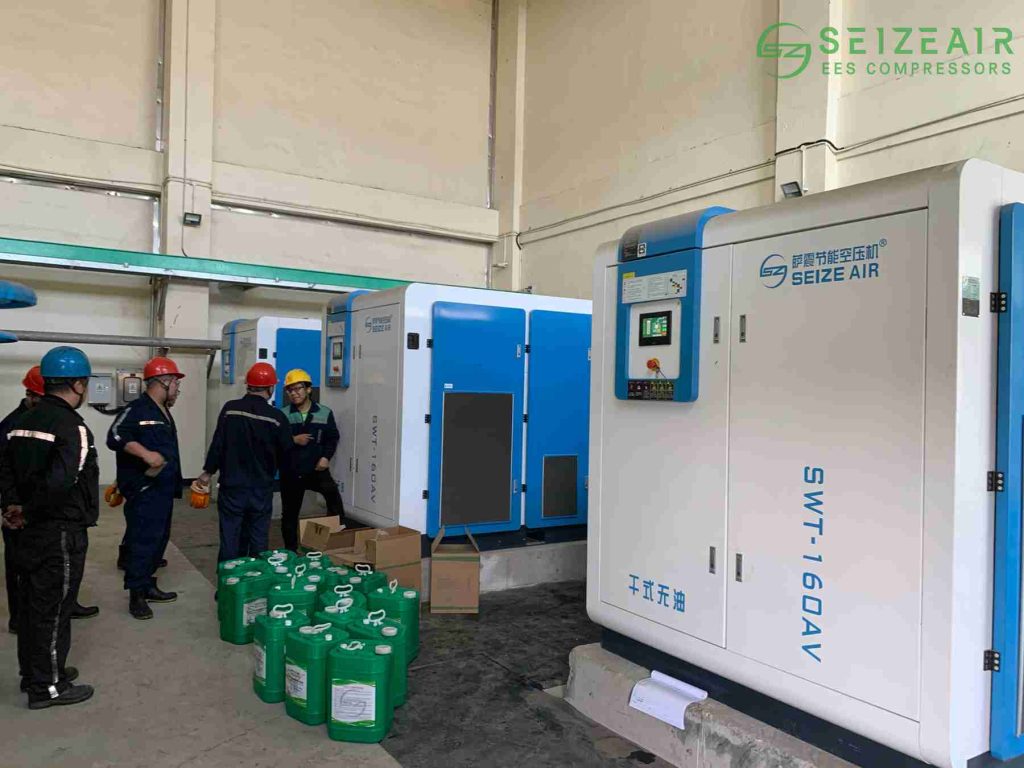
Determining your required system volume is vital to avoid short-cycling or motor overload. The table below compares these five elite platforms at a standardized 75 kW (100 HP) operating specification to show how they deliver volume against energy consumption.
| Air Compressor Brand & Model | Internal Motor Technology | CFM Flow Capacity (at 100 PSI) | Average Energy Savings vs Fixed Systems | Intelligent Control & IoT Platform |
| Seize Air Two-Stage VSD | Ultra-Premium Oil-Cooled IE5 Permanent Magnet | 120 to 510 CFM | 45% to 50% Energy Reductions | Advanced Cloud-IoT Remote System Intelligence |
| Atlas Copco GA VSDs | Interior Permanent Magnet (iPM) System | 115 to 495 CFM | 40% to 45% Energy Reductions | Elektronikon Touch Connectivity |
| Ingersoll Rand R-Series | Premium Heavy Duty Induction / VSD | 130 to 485 CFM | 32% to 35% Energy Reductions | Xe-145 Color Microprocessor |
| Kaeser BSD Series | Super Premium IE4 Induction Drive | 140 to 500 CFM | 35% to 38% Energy Reductions | Sigma Control 2 Automation |
| Sullair LS Spiral Valve | Severe-Duty Industrial Induction Block | 150 to 520 CFM | 25% to 30% Energy Reductions | AirLinx Remote Monitoring Suite |
4. How Do You Calculate Air Compressor ROI for Manufacturing Plants?
A common pitfall during capital equipment acquisition is focusing primarily on the upfront purchase price. Comprehensive industrial auditing confirms that the initial capital expense represents less than 10% of a compressor’s total 10-year lifecycle cost. Maintenance takes up roughly 15%, while electrical power usage devours a staggering 75% of the total financial equation.
To calculate the precise annual cost of operating a heavy duty air compressor for manufacturing, engineers apply the following plain-text equation:
Annual Cost = Motor Power (kW) x Annual Operating Hours x Electricity Cost per kWh x System Loading Coefficient
Let us analyze a real-world scenario comparing an legacy fixed-speed machine against a highly optimized modern alternative. Suppose your manufacturing site operates a standard 75 kW compressor across two production shifts, totaling 4,000 hours of runtime per year, at an average electrical grid rate of 0.12 dollars per kWh. Because your facility’s real-time air demand varies throughout the day, a fixed-speed unit spends significant periods running unloaded or modulated, leading to an average loading coefficient of 85%.
Fixed Speed Operation Cost = 75 x 4000 x 0.12 x 0.85 = 30600 dollars per year
Now, consider upgrading your facility to a high-performance system like the Seize Air Two-Stage VSD model. Because this variable speed rotary screw compressor perfectly downscales its power draw to match your shifting production line usage, and benefits from the superior efficiency of a dual-stage airend, the system loading coefficient drops to a highly efficient 50%.
Seize Air VSD Operation Cost = 75 x 4000 x 0.12 x 0.50 = 18000 dollars per year
- Direct Annual Power Savings: 12600 dollars per year
- Projected 5-Year Financial Return: 63000 dollars saved
- Estimated 10-Year Operational Savings: 126000 dollars saved
By running these exact numbers, it becomes clear that the initial capital premium required to secure an elite energy-saving air compressor for industrial use is typically recovered entirely within the first 12 to 18 months of installation.
5. What Are the Best Ways to Reduce Compressed Air Costs?
While acquiring an energy-saving variable speed rotary screw compressor provides an elite foundation for cost reduction, optimizing your facility’s entire downstream infrastructure is equally vital. Even the most efficient machine on the planet will waste power if your distribution pipe network is poorly managed.
Implement a Continuous Ultrasonic Leak Detection Protocol
The average unmonitored factory loses between 20% and 30% of its total compressed air volume through tiny, unnoticed structural leaks at pipe joints, threaded fittings, quick-disconnect couplers, and flexible hose lines.
To put this in perspective, look at the waste generated by small, unaddressed structural orifices running continuously at a standard 100 PSI system pressure:
- A 1/16-inch air leak vents roughly 6.5 CFM, wasting approximately 700 dollars annually.
- A 1/8-inch air leak vents roughly 26 CFM, wasting approximately 2800 dollars annually.
- A 1/4-inch air leak vents roughly 104 CFM, wasting over 11000 dollars every single year.
Regular preventative maintenance schedules utilizing ultrasonic leak detection devices are essential to catch these invisible energy drains before they impact your quarterly profit margins.
Eradicate Downstream System Pressure Drops
If your central compressor room must be cranked up to output 115 PSI just to ensure that the pneumatic machinery at the very end of your assembly line receives its required 90 PSI working pressure, your system is suffering from a massive pressure drop. This issue is almost always caused by:
- Undersized or restrictive main overhead header piping (e.g., using 1-inch lines where a 2-inch header is required).
- Excessive numbers of sharp 90-degree elbows instead of smooth, wide-radius bends.
- Clogged, neglected inline particulate and oil-removal filter elements.
Every 2 PSI of artificial pressure drop created by piping restrictions forces your compressor to work harder, permanently increasing your energy usage by 1%. Expanding your header pipe diameters and utilizing aluminum smooth-bore piping networks will instantly ease the strain on your machinery.
Deploy Heat Recovery Exchange Loops
When a heavy duty air compressor for manufacturing runs, roughly 90% to 94% of the electrical energy drawn from the grid is converted directly into thermal heat energy, while only the remaining fraction is converted into true pneumatic force. Most facilities simply blow this immense heat out into the atmosphere via exhaust fans.
By incorporating specialized thermal energy recovery systems, you can trap this hot oil and air discharge to cross-heat water or air lines for other parts of your facility. This recovered heat can be seamlessly repurposed to:
- Pre-heat incoming water for industrial steam boilers.
- Provide zero-cost hot water for plant facility showers and wash stations.
- Supplement warehouse ambient air heating during cold seasonal shifts.
By utilizing customizable heat-recovery configurations available on premium units, such as those engineered by Seize Air, a factory can effectively reclaim up to 80% of their waste compressor heat, drastically slashing their parallel natural gas or boiler fuel expenses.
6. How Do I Choose the Right Industrial Compressor?
Beyond matching CFM and pressure metrics, several specialized operational variables must be carefully analyzed by your plant engineering team prior to signing a final procurement order.
Evaluating Ambient Plant Environmental Conditions
The physical atmosphere of your production floor dictates what type of internal filtration and motor enclosures your machine requires. If you are operating in highly volatile or dusty sectors—such as cement manufacturing, grain handling, or heavy woodworking—a standard open-frame motor will suffer rapid bearing degradation.
Look for machines featuring TEFC (Totally Enclosed Fan Cooled) or specialized permanent magnet motors sealed to an IP65 protection rating. Additionally, high ambient temperatures reduce air density, meaning your compressor must work significantly harder to produce the same mass of compressed air. Ensuring your compressor room has adequate, cool ventilation is a low-cost way to immediately protect your machine’s core operating efficiency.
Understanding Air Purity Standards and ISO Classification
Different industries demand completely different levels of compressed air quality. The International Organization for Standardization establishes these parameters under the ISO 8573-1 framework, classifying air purity based on allowable particulate counts, water dew points, and oil vapor concentration.
- Food, Beverage, and Pharmaceuticals: These sectors strictly require ISO Class 0 certified oil-free air. Even a single micro-droplet of oil carryover from a lubricated system can contaminate large production batches, leading to catastrophic recalls and safety violations.
- General Assembly and Packaging: These lines typically utilize lubricated rotary screw compressors paired with robust downstream treatment setups, including refrigerated air dryers and multi-stage coalescing filters, easily achieving an ISO Class 2 or Class 3 purity rating.
Selecting the exact filtration tier you need prevents your facility from under-filtering your air (which destroys your expensive pneumatic automated tools) or over-filtering your air (which introduces unnecessary pressure drops and high replacement element expenses).
Conclusion
Optimizing your facility’s energy footprint requires more than just picking a model out of a catalog. Your specific shift schedules, ambient air quality, peak air flow requirements, and target working pressures all play an intertwined role in determining which system will deliver the lowest possible operating costs.
If you are ready to stop overpaying your utility provider and want a detailed, data-backed assessment of your plant’s compressed air potential, we are here to help. Contact our engineering team today to schedule a comprehensive, obligation-free system audit. Let’s work together to design a highly efficient, reliable air system that actively improves your bottom line.