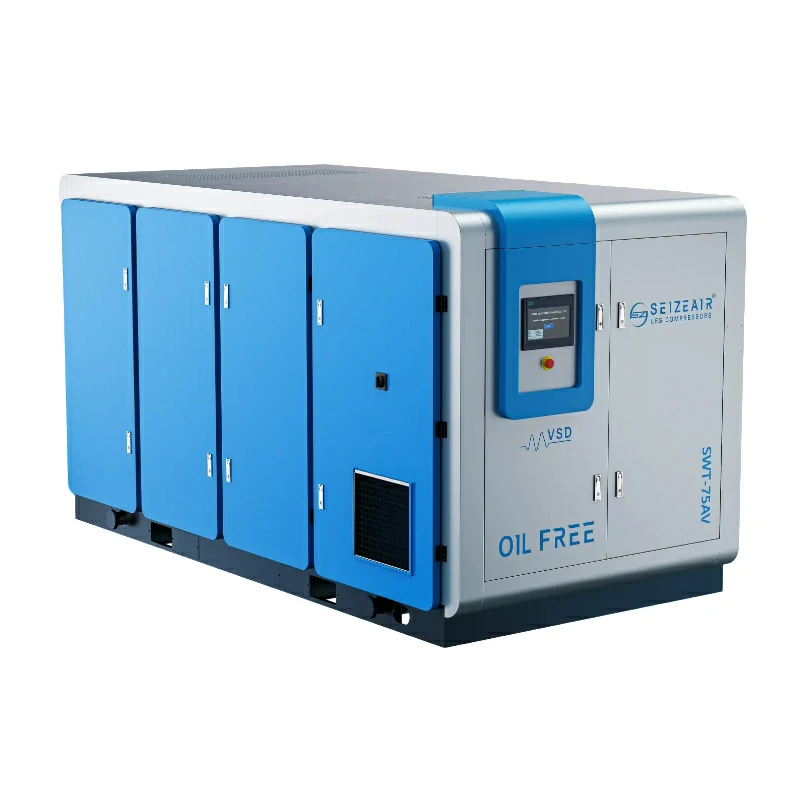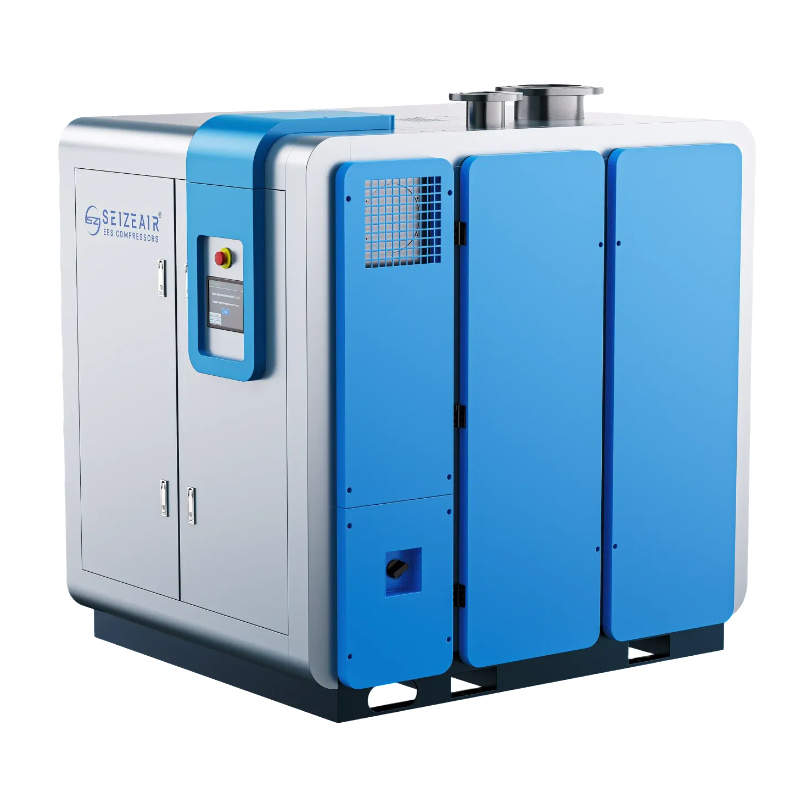


Finding the best heavy duty industrial air compressor for 24/7 operation requires balancing continuous-duty thermal endurance, air delivery volume, and lifetime energy efficiency to ensure zero unplanned factory downtime.
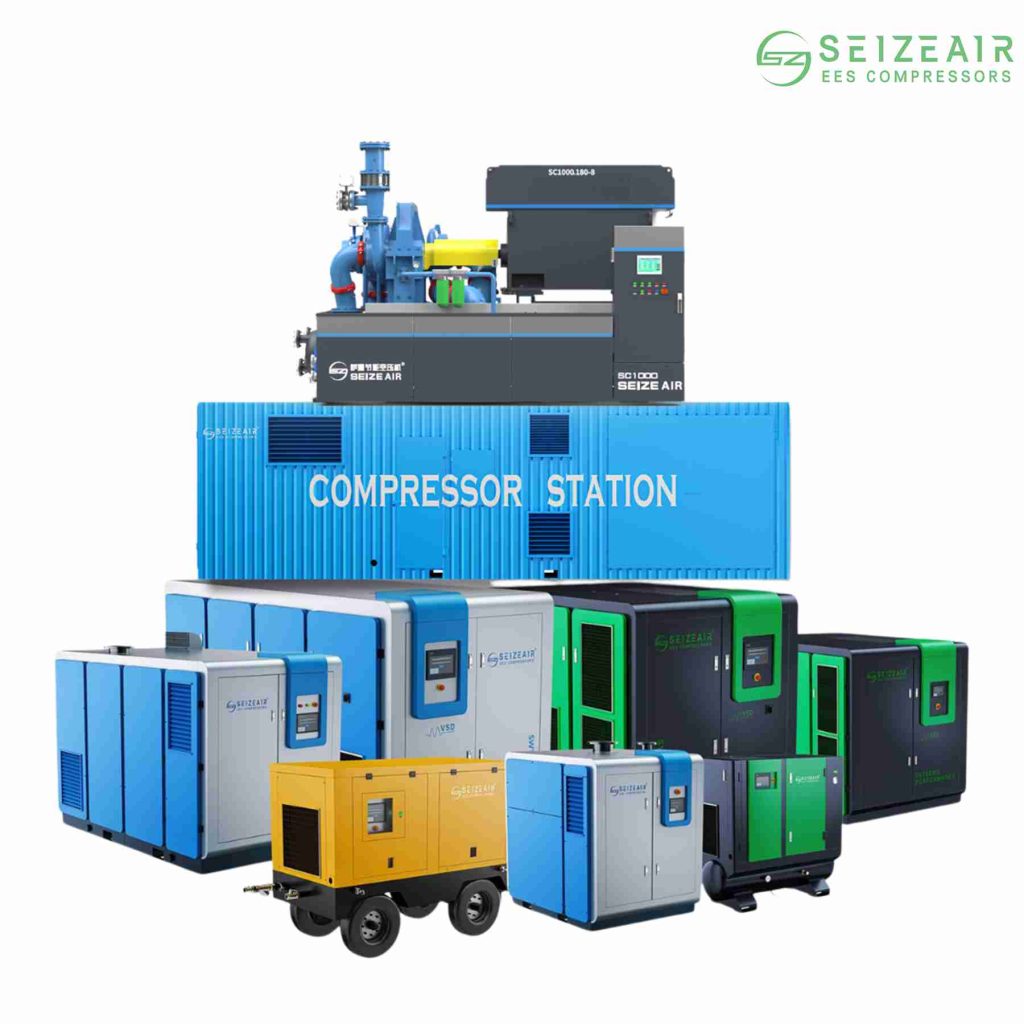
What Makes an Air Compressor Suitable for Continuous 24/7 Operation?
Operating a heavy duty industrial air compressor round-the-clock places continuous mechanical and thermal stress on the air end, electric motor, and lubrication system. Standard commercial units overheat, short-cycle, or trigger thermal overloads under uninterrupted factory loads. To run 24 hours a day without failure, an air system must be engineered from the ground up for continuous thermal management and mechanical longevity.
100% Duty Cycle vs Intermittent Duty Ratings
Duty cycle represents the proportion of time a compressor can operate within a given period without overheating. Intermittent units rated at 60% or 75% duty cycle require regular idle periods to dissipate heat from the pump and motor windings.
For non-stop manufacturing, a continuous duty air compressor for manufacturing must deliver a true 100% duty cycle rating. Rotary screw and centrifugal platforms maintain operational equilibrium, allowing them to compress air at continuous peak capacity for weeks or months without stopping.
Thermal Dissipation and Advanced Cooling Architectures
Compression generates heat. In continuous heavy-duty compression, internal oil and air temperatures routinely exceed 180F (82C). Without adequate heat dissipation, heat degrades lubricants, cooks shaft seals, and causes thermal shutdowns.
- Heavy-Duty Air-Cooled Aftercoolers: Utilize oversized aluminum block heat exchangers and high-static pressure axial fans capable of operating in ambient temperatures up to 115F (46C).
- Water-Cooled Shell and Tube Systems: Maintain tight thermal tolerances in hot, enclosed plant environments by transferring heat directly to closed-loop cooling towers.
- Thermostatic Bypass Valves: Regulate oil temperature to keep lubricant above the dew point—preventing water condensation from diluting the oil reservoir—while directing excess heat away from the air end.
Component Durability and Material Standards
The structural integrity of a continuous-run compressor relies on industrial-grade metallurgy and heavy-duty electric motors:
- Asymmetric Rotor Profiles: Machined from high-grade forged steel, housing heavy-duty tapered roller bearings engineered for L10 bearing life ratings exceeding 100,000 operational hours.
- TEFC IP55 Motors: Totally Enclosed Fan Cooled motors with Class F or Class H insulation prevent fine industrial dust, moisture, and debris from contaminating motor windings.
- Triple-Stage Air-Oil Separation: Multi-layer coalescing separators reduce oil aerosol carryover to less than 3 ppm, keeping downstream lines clean while retaining expensive synthetic fluid.
Key Types of Heavy Duty Industrial Air Compressors for Non-Stop Running
Selecting the correct compressor configuration depends on required total airflow (CFM), working pressure (PSI), duty profile, and air purity standards.
                                  +------------------------------------+
                                  | Industrial Air Compressor Selection|
                                  +------------------------------------+
                                                    |
             +--------------------------------------+--------------------------------------+
             |                                                                             |
  [ Continuous Constant Air Demand ]                                            [ Variable Multi-Shift Demand ]
             |                                                                             |
             v                                                                             v
   Fixed-Speed Rotary Screw                                                      VFD Rotary Screw Compressor
   - 100% Continuous Duty Cycle                                                  - Matched Motor Output
   - Maximum Efficiency at Full Load                                             - Eliminates Unloaded Power Waste
1. Oil-Injected Rotary Screw Air Compressors
Oil-injected rotary screw compressors serve as the standard continuous power source for medium-to-large industrial facilities. Male and female helical rotors mesh without metallic contact, using synthetic oil to seal, cool, and lubricate the compression chamber.
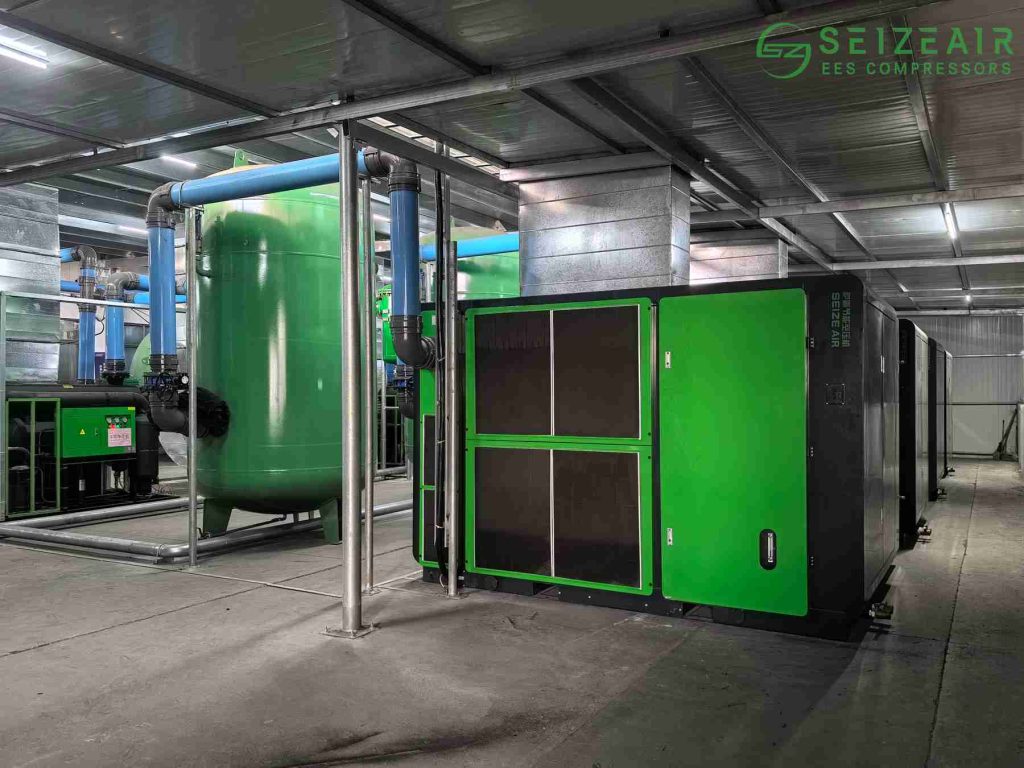
- Primary Applications: Automotive assembly, metal fabrication, plastics extrusion, and general heavy manufacturing.
- Key Strengths: Continuous pulse-free airflow, low vibration, long maintenance intervals, and consistent thermal stability during multi-shift operations.
2. Variable Frequency Drive (VFD) Rotary Screw Compressors
Plant air consumption fluctuates throughout the day. A fixed-speed compressor running unloaded continues to consume up to 35% of its full-load electricity while delivering no air. A variable frequency drive rotary screw compressor adjusts motor RPM directly in response to system pressure drops, matching air delivery to actual demand.
- Primary Applications: Facilities with multi-shift variations, batch processing, or fluctuating tool usage.
- Key Strengths: Eliminates current surges during startup and cuts annual electrical costs by 30% to 50% compared to modulating or load/no-load control schemes.
3. Oil-Free Rotary Screw and Centrifugal Compressors
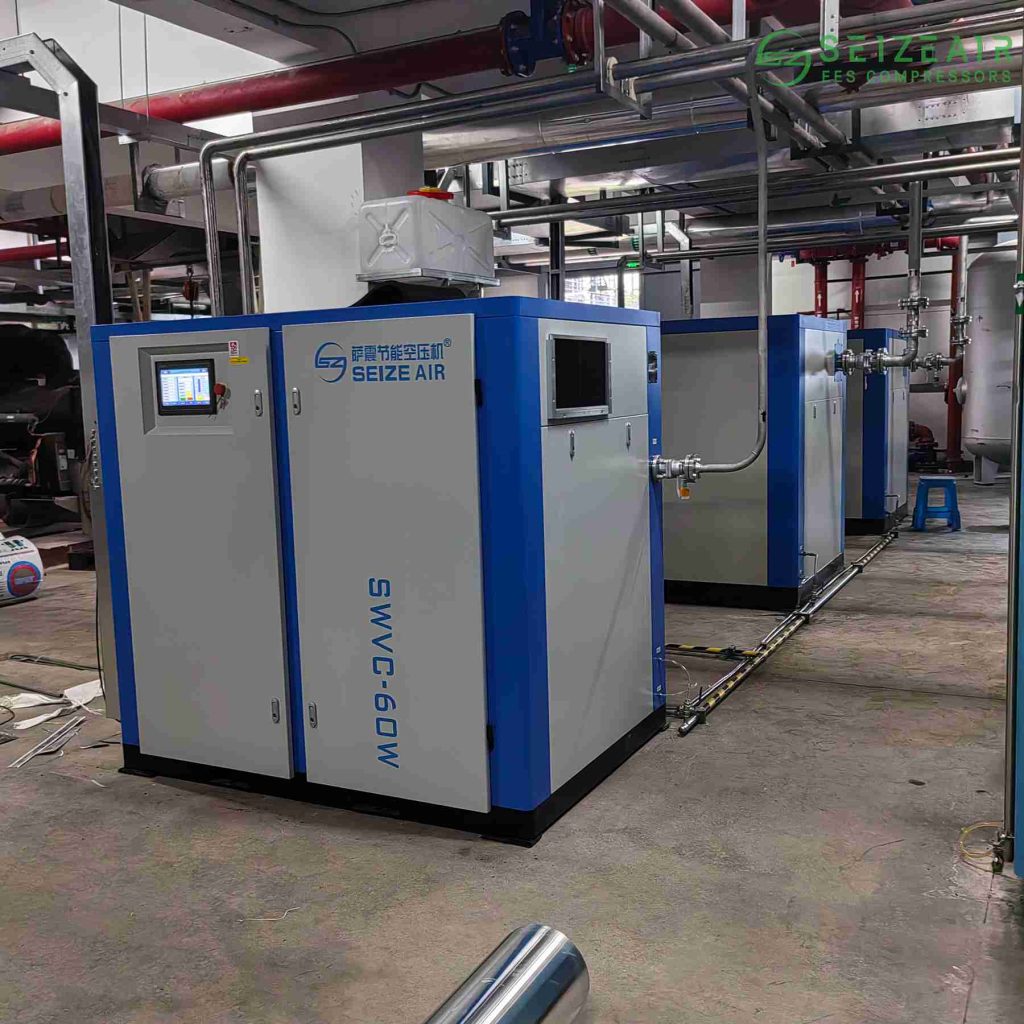
When process air comes into direct contact with sensitive products, oil contamination can lead to entire batch rejections or process line shutdowns. Oil-free screw machines use timing gears to prevent rotor contact, while centrifugal units compress air dynamically through high-speed impellers.
- Primary Applications: Pharmaceuticals, food and beverage processing, high-tech electronics, and chemical plants requiring ISO 8573-1 Class 0 oil-free air.
- Key Strengths: 100% oil-free air delivery, eliminating oil carryover risks and reducing downstream filter replacement needs.
4. Heavy-Duty Industrial Reciprocating (Piston) Compressors
Multi-stage cast-iron reciprocating compressors utilize heavy crankshafts, connecting rods, and finned cylinders to compress air incrementally across multiple stages.
- Primary Applications: High-pressure requirements (175 PSI to 500+ PSI), localized work centers, and heavy equipment maintenance bays.
- Key Strengths: Robust high-pressure performance at lower initial purchase costs, though higher vibration and mechanical wear require structured maintenance routines.
Rotary Screw vs Piston vs Centrifugal for 24/7 Industrial Use
| Operational Metric | Heavy Duty Rotary Screw Compressor | Cast-Iron Industrial Piston | Centrifugal Dynamic Compressor |
| Duty Cycle Rating | 100% Continuous Duty | 60% to 100% (High-Duty Cast Iron) | 100% Continuous Duty |
| Airflow Capacity (CFM) | 15 CFM to 2,500+ CFM | 5 CFM to 120 CFM | 1,500 CFM to 25,000+ CFM |
| Working Pressure (PSI) | 100 PSI to 217 PSI | 90 PSI to 175+ PSI (Up to 500 PSI) | 50 PSI to 150+ PSI |
| Sound Level Range | Quiet (62 dBA to 75 dBA) | Loud (78 dBA to 88 dBA) | Moderate (75 dBA to 85 dBA) |
| Maintenance Interval | 4,000 to 8,000 Operating Hours | 500 to 1,000 Operating Hours | 8,000 to 16,000 Operating Hours |
| Ideal Operational Environment | 24/7 Manufacturing Plants | Intermittent High Pressure / Small Workshops | Massive Petrochemical & Glass Plants |
How to Calculate the Right Size for Continuous Industrial Air Demand
Installing an undersized air compressor causes pressure drop at end-use equipment, causing production equipment to stall. Oversizing a fixed-speed machine leads to excessive unloaded power consumption and short-cycling, which degrades lubricant quality through moisture accumulation.
Step 1: Calculate Total System Air Consumption (CFM)
List every air-consuming device operating during peak production shifts. Factor in equipment load factors and allow a 20% to 25% safety margin for system pressure drops, piping friction, and future plant additions.
Total CFM Required = (Sum of Concurrent Pneumatic Tool CFM) * 1.25
Step 2: Determine Working System Pressure (PSI)
Identify the machine or tool requiring the highest operating pressure. Your compressor station must deliver this pressure at the discharge valve, plus account for pressure drops across filters, air dryers, and long piping runs (typically 10 PSI to 15 PSI drop across the distribution loop).
Step 3: Calculate Annual Operating Electrical Costs
Over a 10-year operating horizon, electrical power represents the primary expense of running an air system continuous duty. Calculate expected power consumption with the following standard engineering formula:
Annual Power Cost = [(BHP * 0.746) / Motor Efficiency] * Operating Hours * Electricity Rate
For example, running a 100 HP continuous duty air compressor for manufacturing (drawing 110 Brake Horsepower, 95% motor efficiency) 24 hours a day, 365 days a year (8,760 hours) at $0.12 per kWh:
kW Draw = (110 * 0.746) / 0.95 = 86.38 kW
Annual Energy Expense = 86.38 kW * 8,760 Hours * $0.12/kWh = $90,802.66 per year
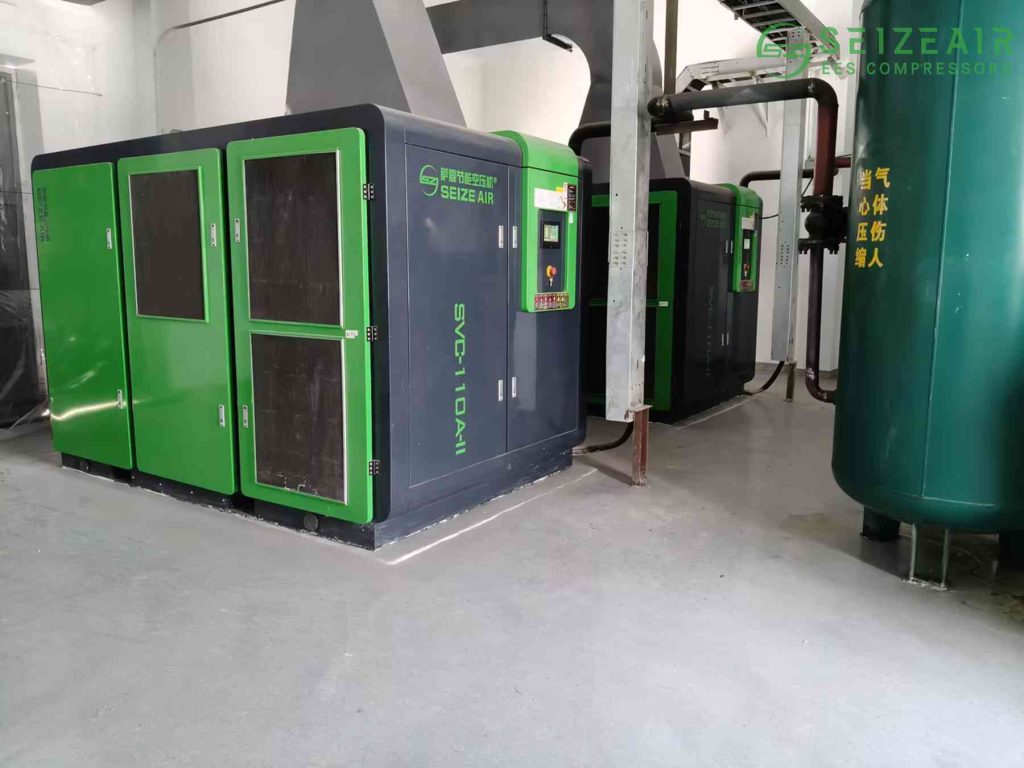
When evaluating system efficiency, equipment engineered by Seize Air incorporates two-stage air ends and ultra-efficient permanent magnet motors, reducing annual kilowatt consumption under continuous manufacturing loads.
Essential Features to Look for in a 24/7 Heavy-Duty Air Compressor
Advanced PLC Controllers and Remote IoT Integration
Modern continuous-duty air compressors rely on microprocessors to monitor system stability. Essential controller functions include:
- Automatic Load/Unload and Auto-Stop Parameters: Prevents unnecessary motor cycling during brief low-demand periods.
- Real-Time Sensor Diagnostics: Tracks discharge pressure, oil temperature, interstage pressure, and differential filter pressure drops.
- IoT Remote Telemetry: Sends automated alerts to maintenance teams via email or mobile app before warning states turn into thermal shutoffs.
Integrated Air Treatment Systems
Moisture, vaporized oil, and atmospheric dust harm pneumatic valves, rotomolding units, and automated assembly equipment. A high-efficiency system setup requires integrated air treatment:
- Refrigerated Compressed Air Dryers: Maintains a stable dew point of 37F to 40F (3C to 4C) for standard dry air applications.
- Desiccant Air Dryers: Delivers pressure dew points down to -40F or -70F (-40C to -56C) for outdoor winter piping or sensitive processes.
- High-Efficiency Coalescing Filters: Traps oil particulates down to 0.01 micron and solid contaminants down to 0.01 mg/m3.
Variable Speed Drives (VFD) and Soft-Start Inverters
Direct-on-line (DOL) motor starters subject internal electrical panels to current spikes up to 600% of nominal running current. VFD soft-start systems accelerate the motor gradually, protecting internal electrical circuits and eliminating utility peak-demand charges.
Total Cost of Ownership (TCO) Breakdown for Industrial Air Systems
Focusing solely on purchase price can lead to higher long-term operating costs. Energy consumption accounts for the majority of a continuous compressor’s lifetime expense.
10-Year TCO Breakdown for 24/7 Continuous Operation
===================================================
Electrical Power Costs           : 73%  [##############################]
Initial Capital Equipment        : 12%  [#####]
Routine Maintenance & Filters    : 10%  [####]
Piping & Installation Setup      :  5%  [##]
Choosing high-efficiency air compressors from manufacturers like Seize Air helps lower annual energy costs through high-efficiency motor options and optimized air end rotor profiles.
Preventative Maintenance Checklist for Continuous 24/7 Compressor Performance
To avoid unexpected operational downtime, maintain a structured preventative maintenance protocol for continuous-duty air systems.
Daily Maintenance Steps
- Check oil level in the sight glass while running at temperature.
- Verify automatic condensate drain valves function properly on receivers and dryers.
- Review control panel readouts for differential pressure warnings or elevated discharge temperatures.
Weekly Maintenance Steps
- Inspect and clean cabinet intake filter pads to maintain cooling airflow.
- Inspect compressed air headers and quick-drop lines for system leaks.
- Check condensate oil-water separators to ensure compliant disposal.
Monthly Maintenance Steps
- Inspect main air intake filter elements; replace if differential pressure exceeds acceptable limits.
- Clean external fins on oil coolers and aftercoolers using compressed air or soft wash.
- Inspect drive couplings, belt tension, and motor electrical terminal connections.
Quarterly and Annual Service Milestones
- Every 2,000 Hours: Change air intake filter elements and oil filter cartridges.
- Every 4,000 Hours: Take lubricant samples for laboratory oil analysis; change synthetic fluid if needed.
- Every 8,000 Hours: Replace air-oil separator cartridges, minimum pressure check valves, and thermostatic valve elements.
Common Failures in Continuous Duty Compressors and How to Avoid Them
1. High Discharge Temperature Trips
- Root Causes: Clogged oil cooler fins, low synthetic fluid levels, failed thermostatic valves, or high ambient compressor room temperatures.
- Prevention: Maintain a minimum 3-foot clearance around heat exchangers, clean cooler matrixes regularly, and ensure adequate ducting or exhaust fans for ventilation.
2. Excessive Oil Contamination in Downstream Lines
- Root Causes: Saturated air-oil separator elements, oil sump overfilling, or running below minimum design operating pressure.
- Prevention: Replace separator cartridges according to service intervals, maintain correct fluid sight glass levels, and install minimum pressure check valves.
3. Rapid Motor Cycling and Unloaded Energy Loss
- Root Causes: Undersized air receiver storage, restricted distribution piping, or tight controller pressure band settings.
- Prevention: Install a wet storage tank upstream of the air dryer (1 gallon to 2 gallons per CFM capacity) and widen controller pressure bands or implement a VFD setup.
Engineering rotary systems with heavy-duty cooling matrices and low internal pressure drop components, Seize Air manufactures continuous duty air compressors designed to operate reliably without high-temperature trips or line pressure loss.
Frequently Asked Questions
Can a rotary screw air compressor run 24 hours a day continuously?
Yes, industrial rotary screw air compressors are designed for 100% continuous duty cycles. They operate most efficiently under steady thermal conditions, maintaining consistent internal oil temperatures that prevent condensation buildup in the oil sump.
What is the difference between 100% duty cycle and continuous duty?
100% duty cycle means the air compressor pump can deliver full rated CFM continuously without requiring cool-down periods. Continuous duty indicates that the motor, air end, cooling system, and electrical controls are designed to operate 24/7 under sustained full load without premature component wear.
How do I size a variable frequency drive air compressor for changing shift demands?
Size the VFD compressor so its maximum CFM capacity meets your peak production demand, while its minimum turn-down CFM covers your lowest shift or off-hours maintenance baseline. This ensures the unit operates within its optimal efficiency range at all times.
How often should synthetic oil be changed in a 24/7 industrial compressor?
Under continuous 24/7 operation (8,760 hours per year), premium synthetic compressor fluid should generally be changed every 4,000 to 8,000 operating hours. Perform regular oil sampling to track fluid degradation, oxidation, and total acid numbers (TAN) based on ambient conditions.
Why does my heavy duty industrial air compressor overheat during summer months?
Overheating usually results from dirty heat exchangers, restricted air intake filters, inadequate compressor room exhaust ventilation, or low oil levels. Ambient temperatures rising above 100F (38C) require clean cooling fins and proper ducting to maintain heat exchange efficiency.
Get in Touch for Custom Continuous Air System Solutions
Selecting the ideal heavy duty industrial air compressor for 24/7 operation requires careful analysis of continuous air demand, thermal performance, and energy efficiency. Whether upgrading an existing plant network or outfitting a new facility, choosing the right compressor technology helps maintain continuous production uptime while managing long-term operating costs.
At Seize Air, we specialize in high-efficiency, continuous-duty rotary screw compressors built to withstand heavy manufacturing environments. Our engineering team provides complete support—from air system audit calculations to full equipment installation and maintenance guidance.
Contact our industrial compressed air specialists today to request a custom proposal, air audit, or equipment quotation for your facility:
- Company: SEIZE COMPRESSOR (SHANGHAI) CO., LTD
- Address: No. 188 Jinliu Road, Jinshan Industrial Zone, Jinshan District, Shanghai, China
- Phone / WhatsApp: +8618348031303