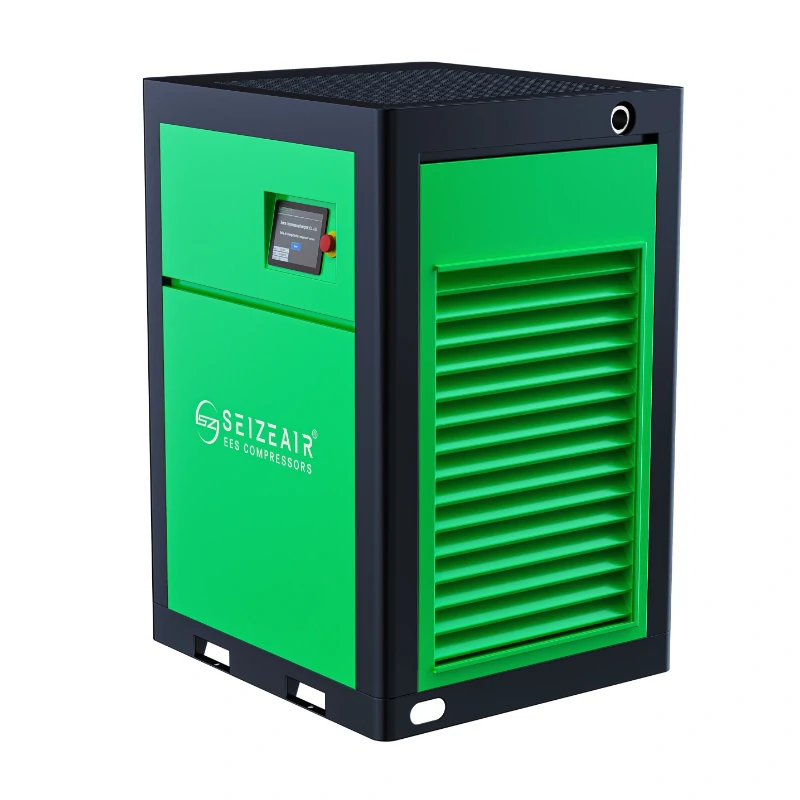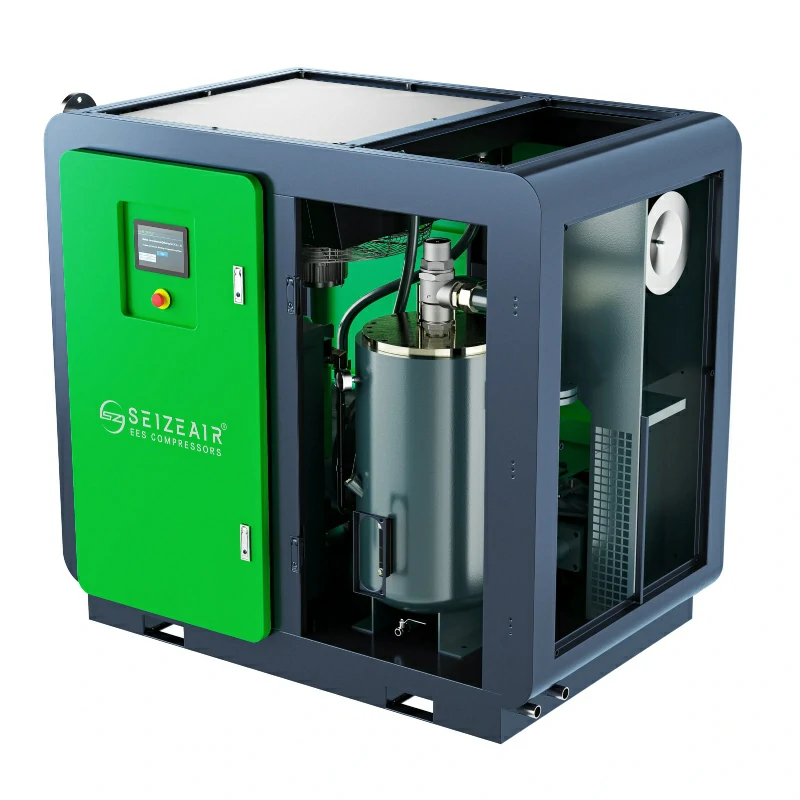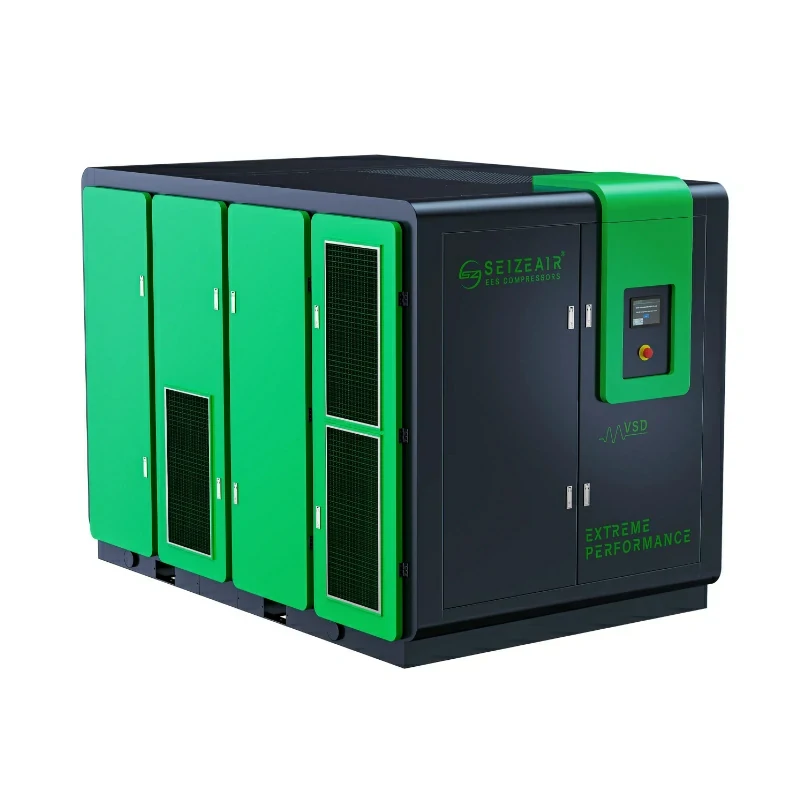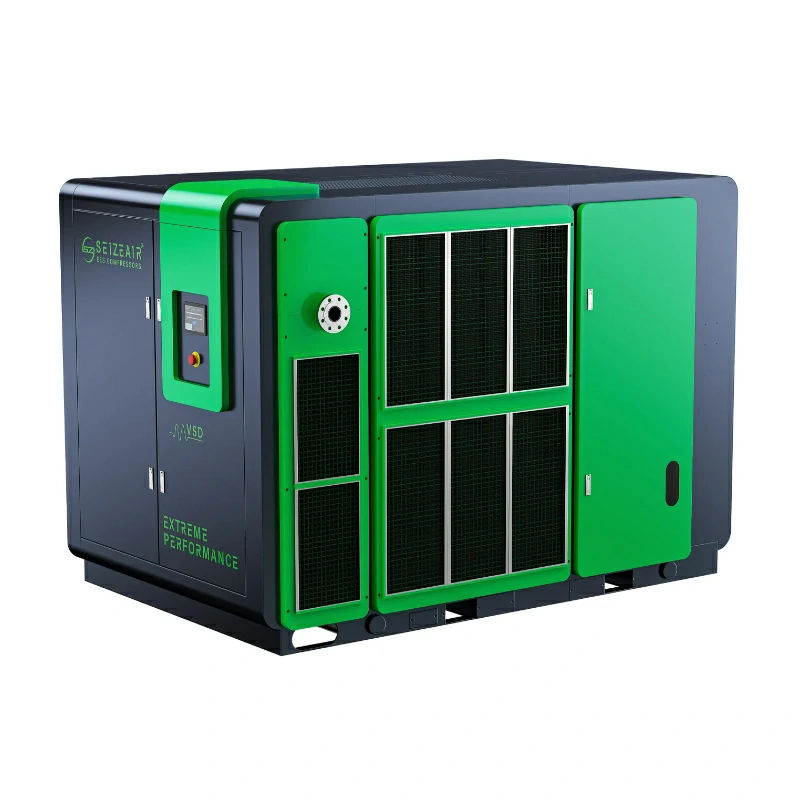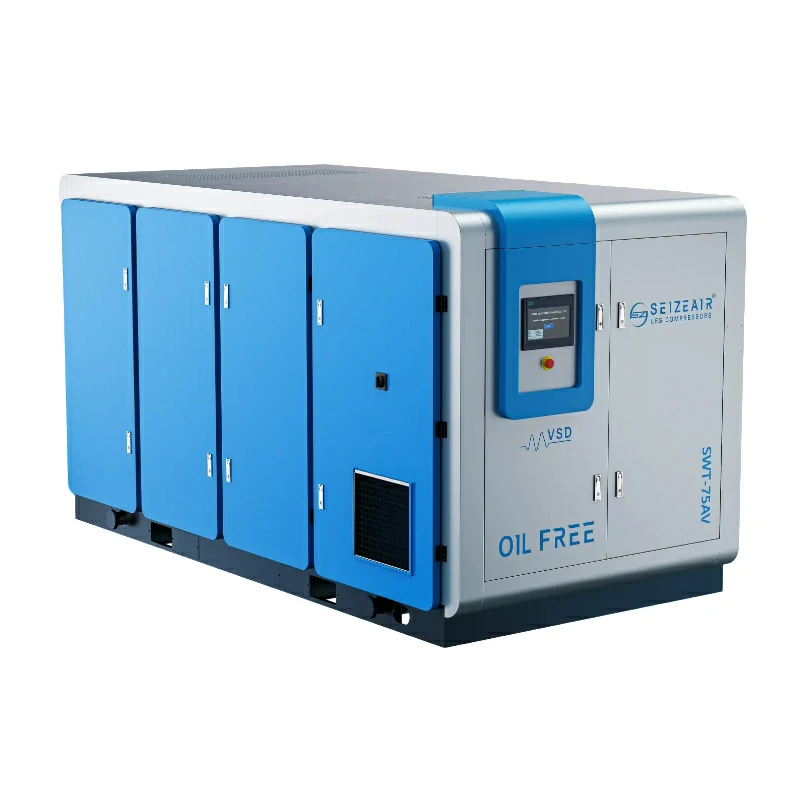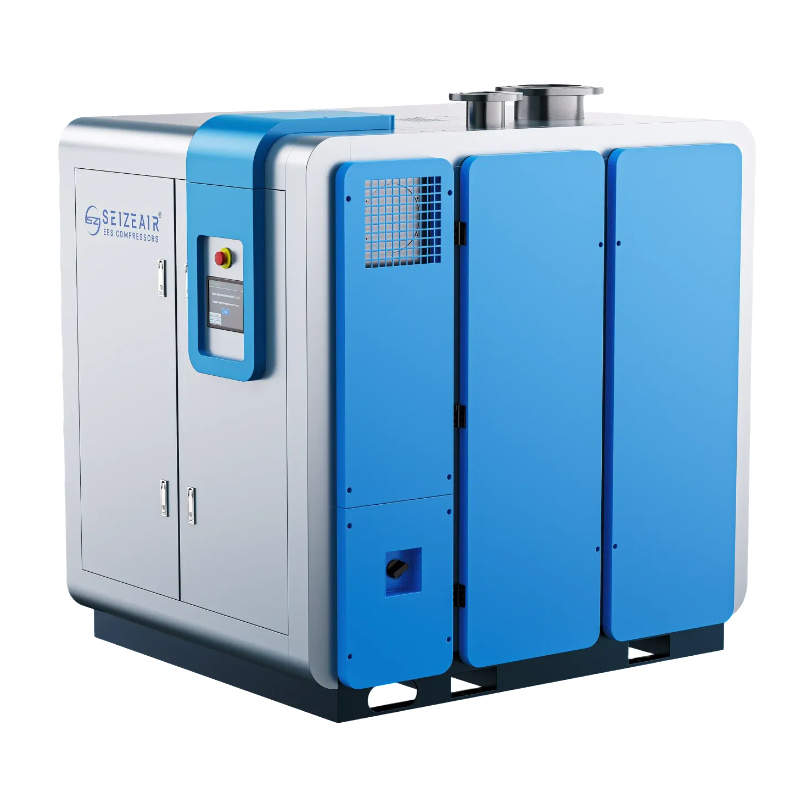


An air compressor for steel industry has to do far more than move air — it has to survive furnace heat, abrasive dust, round-the-clock shifts and brutal demand spikes across blast furnaces, rolling mills and pneumatic lines. This guide breaks down the compressor types, pressure and airflow figures, oil-free requirements and energy math that steel plants actually run on, so you can spec a system that keeps production moving instead of stalling it.
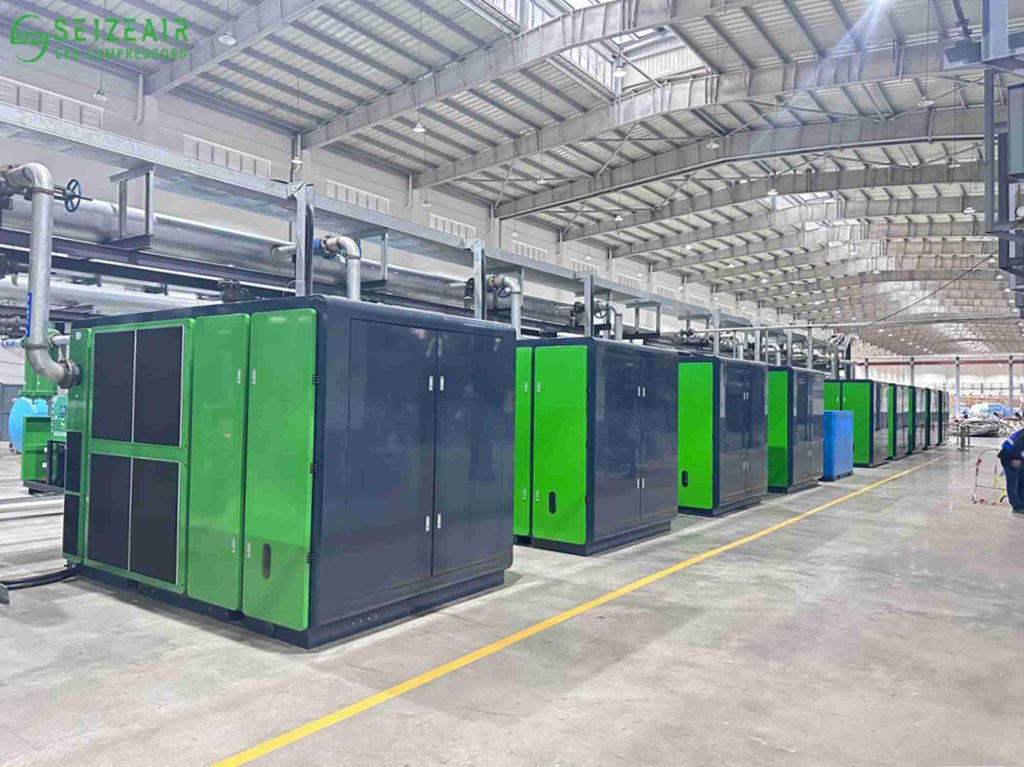
Why Steel Plants Rely on Compressed Air Every Single Shift
If you walk a steel mill, you quickly realise compressed air is the invisible utility holding the whole operation together. It is not a backup system — it is load-bearing infrastructure. From furnace instrumentation to descaling and valve actuation, the plant stops the moment the air stops.
The catch is that a steel environment is hostile to rotating equipment. Ambient temperatures near casting lines routinely sit well above 40 degrees C, the air carries iron oxide and carbon dust, and the load profile swings hard when a new batch hits the rolls. A consumer-grade unit would cook its bearings inside a week. That is why the conversation about an air compressor for steel industry always circles back to duty rating, cooling method and service access before anyone talks about price.
| Steel plant process | What compressed air does | Typical pressure band |
|---|---|---|
| Blast furnace instrumentation | Pneumatic controls, purge air, sampling | 6 to 9 bar |
| Descaling & cooling spray | Atomised water, nozzle clearing | 7 to 12 bar |
| Rolling mill pneumatic tools | Impact wrenches, scalers, chipping | 6 to 10 bar |
| Valve & damper actuation | Open/close control across the line | 5 to 8 bar |
| Dust collection & pneumatic conveying | Bag filter pulse, material transport | 4 to 7 bar |
| Lab & instrument air | Analysis, calibration, sample prep | Class 0, 7 to 10 bar |
For a broader look at plant-scale equipment selection, our guide on large air compressors for industrial plants covers the trade-offs at the megawatt scale.
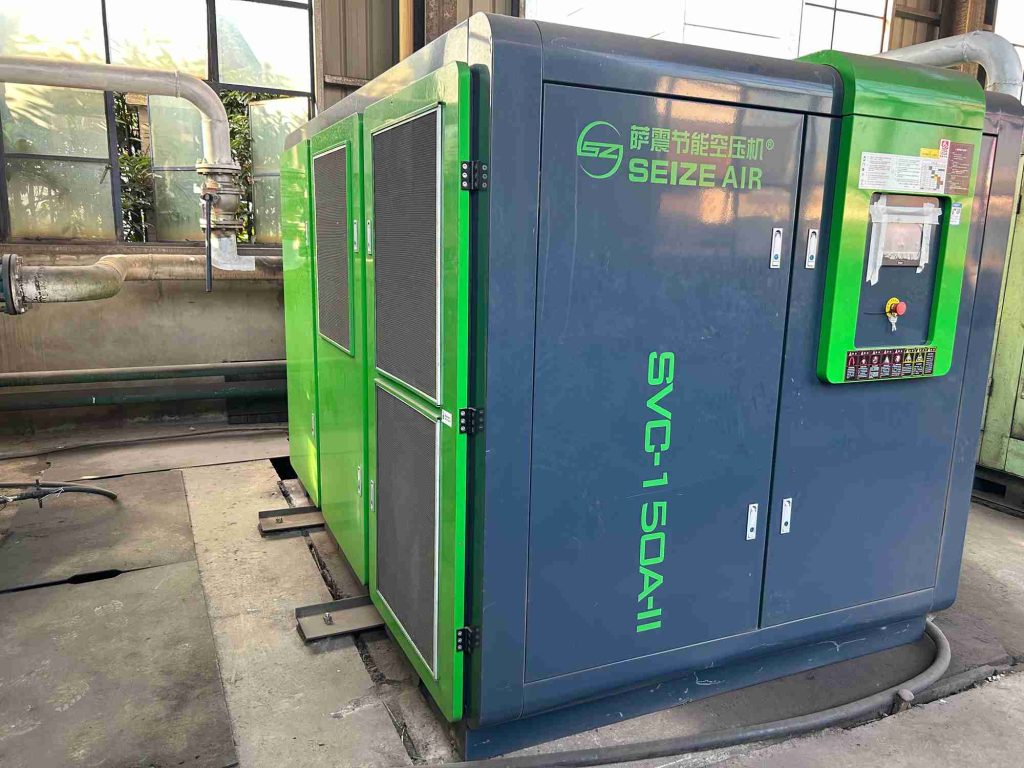
What Type of Air Compressor Is Used in the Steel Industry?
This is the first question every plant engineer asks, and the honest answer is “usually more than one.” Steel sites almost always run a primary trim-and-base system plus satellite units for isolated loads. The four families you will meet:
- Oil-injected screw compressors — the workhorse. Robust, efficient in the 30 to 400 kW band, easy to maintain, and happy with dirty intake if you fit decent filtration. Most steel plants lean on screw machines for the bulk of general plant air.
- Centrifugal compressors — oil-free by design, enormous flow, superb at steady base load above roughly 500 kW. They hate turndown, so they suit the constant background demand rather than spiky tool loads.
- Reciprocating (piston) compressors — still found on legacy lines and niche high-pressure injection, but they vibrate, need more service and rarely make sense for new steel-plant builds.
- Oil-free screw and centrifugal units — reserved for instrument air and any line where oil carryover would contaminate product or analysis.
| Compressor type | Best fit in a steel plant | Oil-free? | Sweet spot |
|---|---|---|---|
| Oil-injected screw | General plant air, tools, dust systems | No (needs filtration) | 30 to 400 kW |
| Centrifugal | Base load, instrument air, big flow | Yes | 500 kW and up |
| Reciprocating | Legacy lines, spot high-pressure | Optional | Under 75 kW |
| Oil-free screw | Instrument & lab air | Yes | 15 to 250 kW |
Screw Compressor vs Centrifugal Compressor for a Steel Mill
The centrifugal air compressor vs screw compressor debate is the one that actually splits steel-plant planners. There is no universal winner — only the right mix for your load shape.
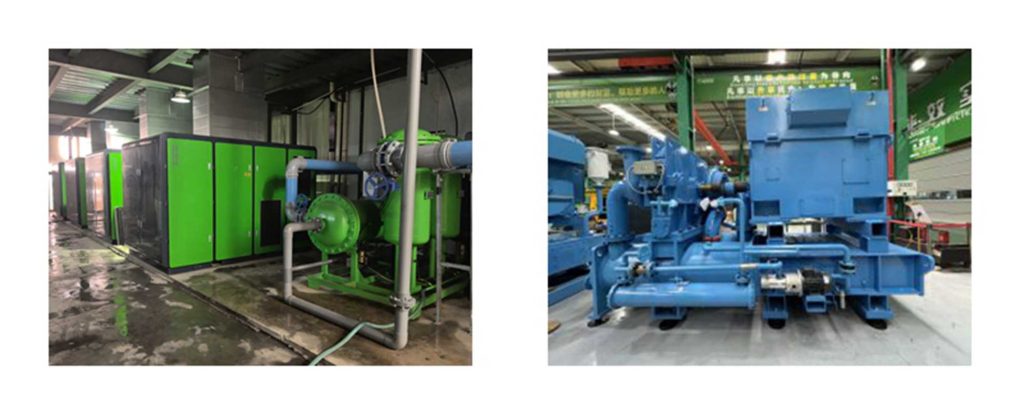
A screw machine throttles and modulates beautifully. When the rolling schedule dips, a variable-speed screw backs right off and saves the energy. A centrifugal machine is a marathon runner: staggeringly efficient at full tilt, but it surges and loses efficiency if you choke its flow. The smartest steel plants pair them — centrifugal carrying the steady base, screw trimming the peaks.
A simplified picture of how air flows once it leaves the machine:
[ Intake ] --> [ Compressor ] --> [ Aftercooler ] --> [ Dryer ]
                                                       |
                                                       v
[ Receiver tank ] --> [ Main header ] --> [ Branch lines to furnace / mill / lab ]
                                                       |
                                          [ Drain traps + filters at each drop ]
Notice the receiver and the dryer sit before the header. On a steel site the aftercooler and refrigerant or desiccant dryer are not optional extras — they are what keep condensate and rust out of your pneumatic valves.

How Much Pressure and Airflow Does a Steel Plant Actually Need?
People love to over-spec pressure “just in case,” then leak it away at every poorly sealed coupling. Most steel processes run happily at 7 to 9 bar at the point of use. The real lever is flow, measured in cubic feet per minute (CFM) or cubic metres per minute (m3/min).
To size flow you add up every tool and process that runs at once, then apply a duty margin because steel loads are spiky:
Required CFM = Sum of simultaneous tool CFM x 1.25 to 1.4 (demand margin)
Required m3/min = Required CFM / 35.3
Motor power kW = (Flow m3/min x Pressure bar) / (60 x Overall efficiency)
A single impact wrench might pull 40 CFM, a descaling line several hundred, and a bag-house pulse system its own steady draw. Add them on the worst-case shift and you see why a high volume air compressor is the norm rather than the exception.
| Plant section | Typical flow demand | Pressure at use |
|---|---|---|
| Small fabrication / service bay | 200 to 600 CFM | 6 to 9 bar |
| Mid rolling mill | 800 to 2,000 CFM | 7 to 10 bar |
| Integrated blast-to-roll plant | 3,000 to 10,000+ CFM | 7 to 12 bar |
| Instrument & lab air (separate) | 50 to 300 CFM | 7 to 10 bar, oil-free |
Oil-Free or Oil-Lubricated: Which Is Right for Steel Manufacturing?
The short version: most of the plant can run on oil-injected screw air with good filtration, but instrument and lab air must be oil-free. Mixing them on one header is a classic mistake — a single oily surge wrecks analysers and jams precision valves.
Best practice is a dedicated oil-free loop for instrumentation and a filtered oil-injected loop for everything else. Our deep dive on oil-free vs oil-lubricated industrial air compressors walks through the contamination risks and the ISO 8573-1 air-quality classes if you need to justify the spend to procurement.
Choosing the Right Size: What Size Air Compressor Do You Need for a Steel Mill?
“What size” is really three questions: how much flow, at what pressure, with how much spare. Undersize and you starve the mill during peak; oversize and you bleed money on part-load inefficiency and standby units.
A practical approach is to log your actual demand for two full weeks across all shifts, then size to the 95th-percentile flow with one rotating standby. The full method lives in our industrial air compressor sizing guide, but the headline rule holds: match the machine to the load shape, not to the nameplate of your biggest single tool.
| Logged peak demand | Recommended installed flow | Configuration |
|---|---|---|
| Up to 800 CFM | 1,000 CFM | 1 running + 1 standby screw |
| 800 to 2,500 CFM | Peak x 1.25 | 2 screw + 1 standby |
| 2,500 to 6,000 CFM | Peak x 1.2 | Centrifugal base + screw trim |
| Over 6,000 CFM | Engineered mix | Centrifugal + screw + VSD trim |
Continuous Duty and Heavy Loads: Why Uptime Matters More Than Price
In steel, a compressor failure is not an inconvenience — it is a cascade. A stopped air system can freeze a furnace, stall a caster and idle an entire shift of people. That is why duty rating beats sticker price every time.
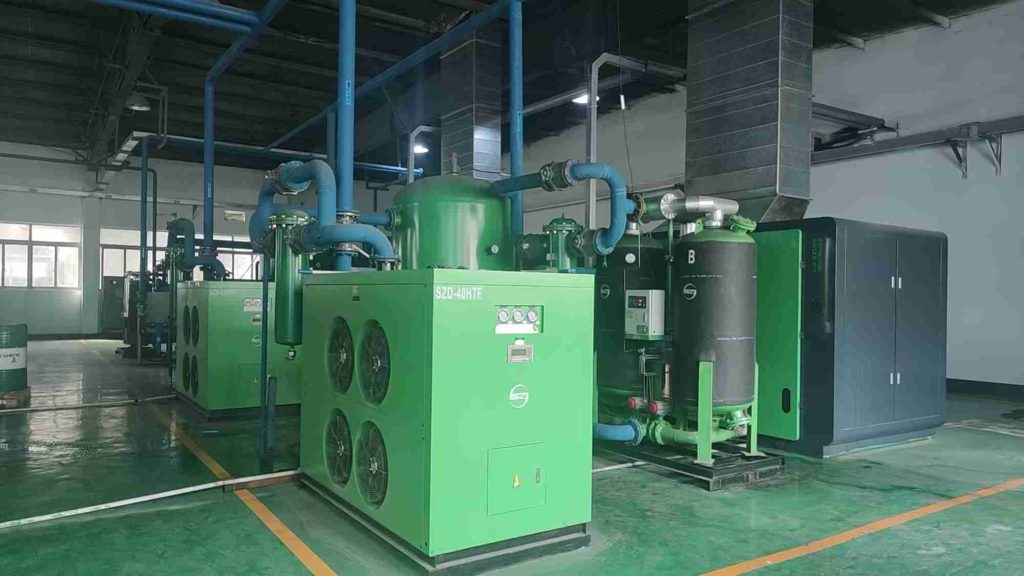
You want a heavy duty industrial air compressor with a service factor of at least 1.15, direct or precision-coupled drive, and components rated for the local ambient. Look for continuous (S1) duty motors, generous cooler surface area, and remote monitoring so you catch a rising bearing temperature before it becomes a seized rotor.
Energy Consumption and Operating Cost of Air Compressors in Steel Plants
Here is the part finance cares about: the purchase price of an air compressor for steel industry is maybe 10 to 15 percent of its lifetime cost. The other 85 percent is electricity. A small efficiency gain compounds enormously over a decade of 24/7 running.
Two levers dominate. First, variable-speed drive on trim machines kills the part-load penalty. Second, fixing leaks — a typical plant loses 20 to 30 percent of its air to unseen leaks. The payback on a leak audit is often measured in weeks.
The lifetime cost picture, in plain terms:
Annual energy cost = Motor kW x Load hours x Electricity rate x (1 / Motor efficiency)
Ten-year compressor cost = Purchase + (Annual energy cost x 10) – Energy savings from VSD and leak control
Simple payback of VSD upgrade = Extra capital / Annual energy saved
| Improvement | Typical saving | Payback |
|---|---|---|
| Leak audit & repair | 15 to 30 percent of air use | Weeks to months |
| VSD on trim machines | 20 to 35 percent on part-load | 1 to 3 years |
| Heat recovery to process water | Up to 70 percent of input heat | 1 to 2 years |
| Optimised pressure setpoint | 3 to 5 percent per bar dropped | Immediate |
Seize Air builds permanent-magnet variable-frequency screw units specifically for this kind of continuous, part-load-heavy steel duty, and the energy math above is exactly where they pay for themselves.
Matching the Compressor to Specific Steel Processes
Not every process wants the same air. Blast furnace instrumentation needs clean, steady, oil-free air at modest flow. A rolling mill wants high, stable pressure for descaling nozzles. A bag-house wants low-pressure pulse air in huge volume. Treating them all the same is how plants end up with three oversized machines doing the job of two right-sized ones.
When a line needs injection or high-pressure testing, a dedicated high pressure air compressor on its own loop avoids forcing the whole plant to 12 bar just to serve one nozzle. Segmenting the network by pressure tier is one of the cheapest reliability wins available.
Maintenance, Spare Parts and After-Sales for Steel Plant Compressors
Duty cycle is brutal, so the maintenance plan is the product. You want standardised consumables, local spare-part stock, and a service partner who understands that “next Tuesday” is not acceptable when the caster is down. Filter elements, separators, belts or couplings, and coolant should be on a fixed interval, not a reactive one.
A sensible steel-plant schedule looks like this:
| Item | Interval | Why it matters here |
|---|---|---|
| Intake filter | 1 to 3 months | Dust loads are severe near furnaces |
| Oil & separator | 4,000 to 8,000 hours | Protects rotors and air quality |
| Cooler cleaning | 6 months | High ambient kills cooling margin |
| Vibration & temp check | Monthly remote | Catches bearing wear early |
| Full overhaul | 40,000 to 60,000 hours | Keeps the asset in service for decades |
How to Choose a Reliable Compressor Partner for the Steel Industry
The machine is half the decision; the partner is the other half. You are buying ten to twenty years of uptime, spare parts and engineering support. Ask for reference steel plants, proof of duty rating, local service coverage, and a load-study before anyone quotes a machine. A supplier who sizes from a spreadsheet instead of your logged demand is a supplier to avoid.
Seize Air, for instance, pairs permanent-magnet screw and centrifugal machines with overseas service points and a load-based selection process, which is the model that tends to survive contact with a real steel schedule. Match the vendor’s track record to your process, not to their brochure.
Conclusion
Specifying the right air compressor for steel industry comes down to load shape, pressure tiers and duty rating — not the biggest number on the spec sheet. Size to logged demand, split oil-free instrument air from plant air, pair centrifugal base load with screw trim, and protect uptime with a real maintenance plan. Do that, and the compressor disappears into the background where it belongs: quietly keeping the whole mill running.
If you are scoping a new line or replacing aging units, reach out through our contact us page and our engineering team will size a system around your actual load profile, duty cycle and ambient conditions.