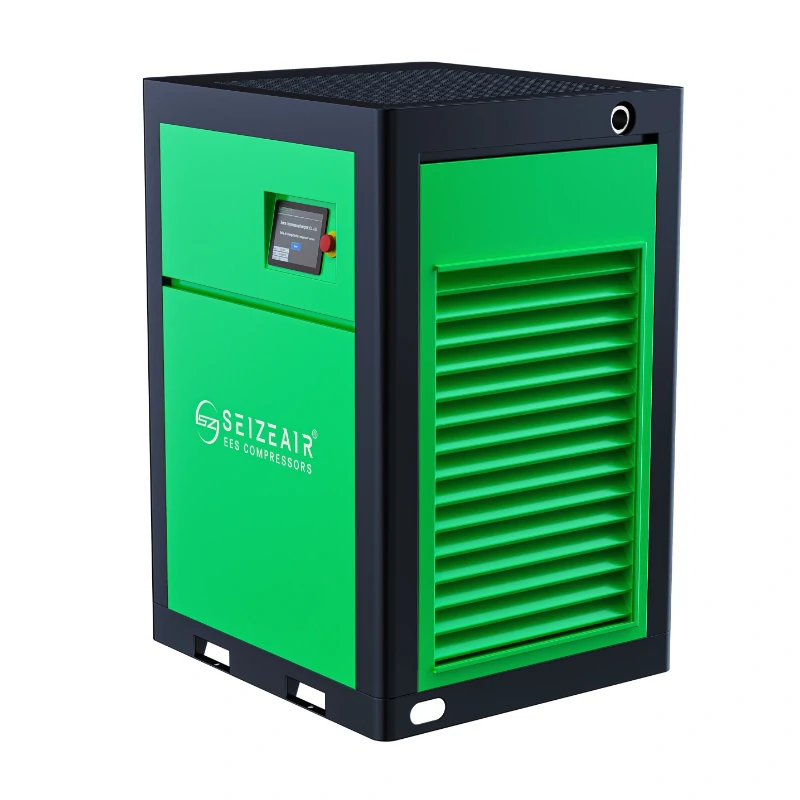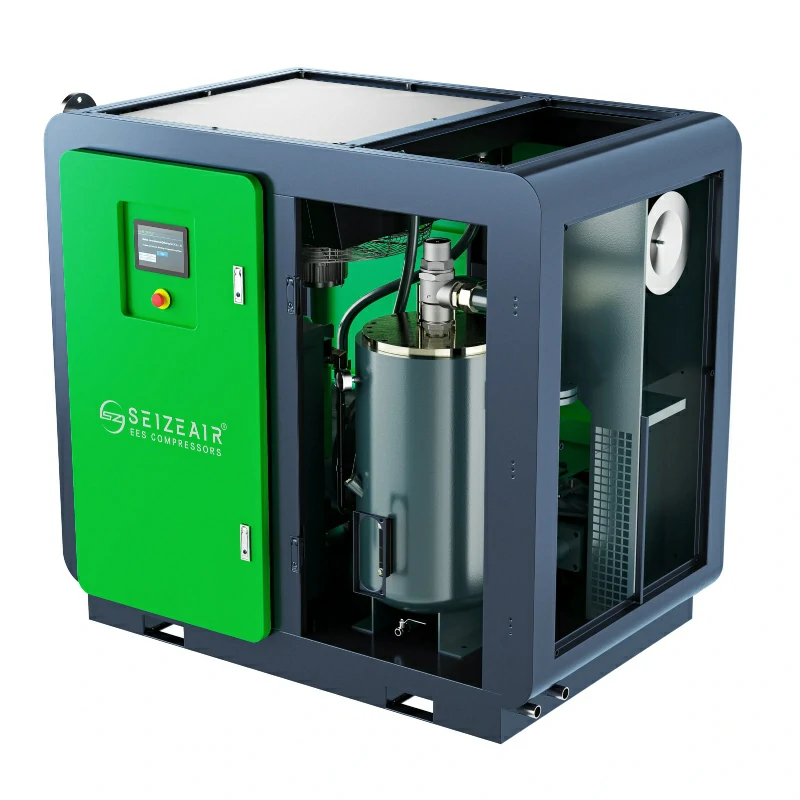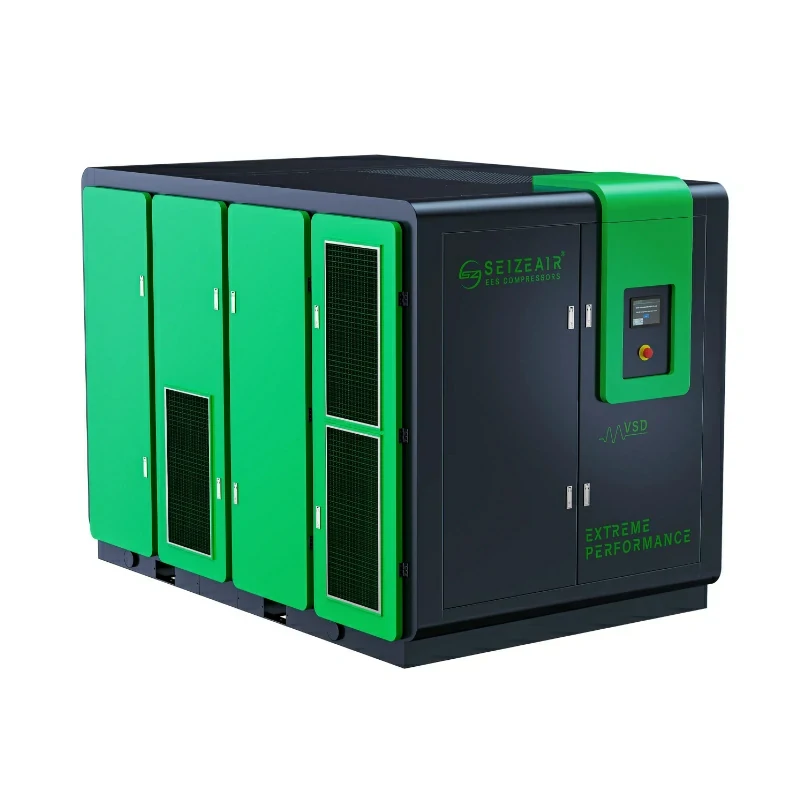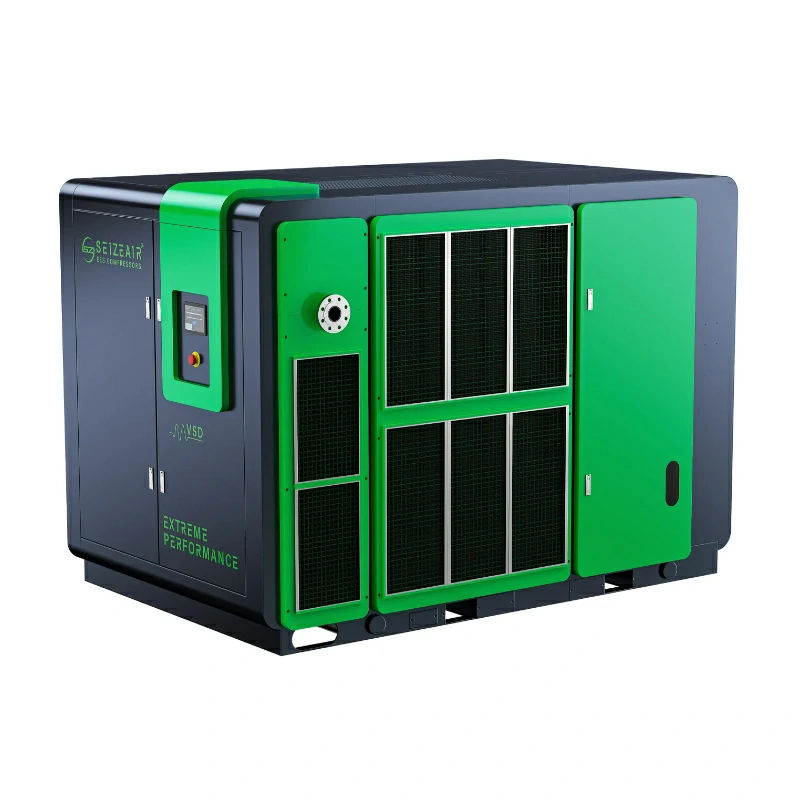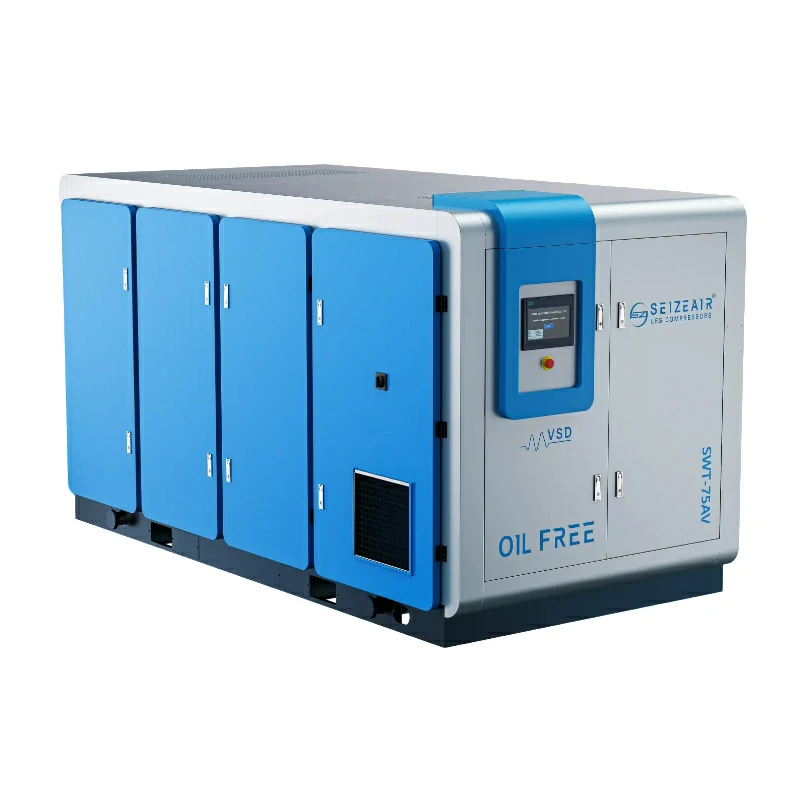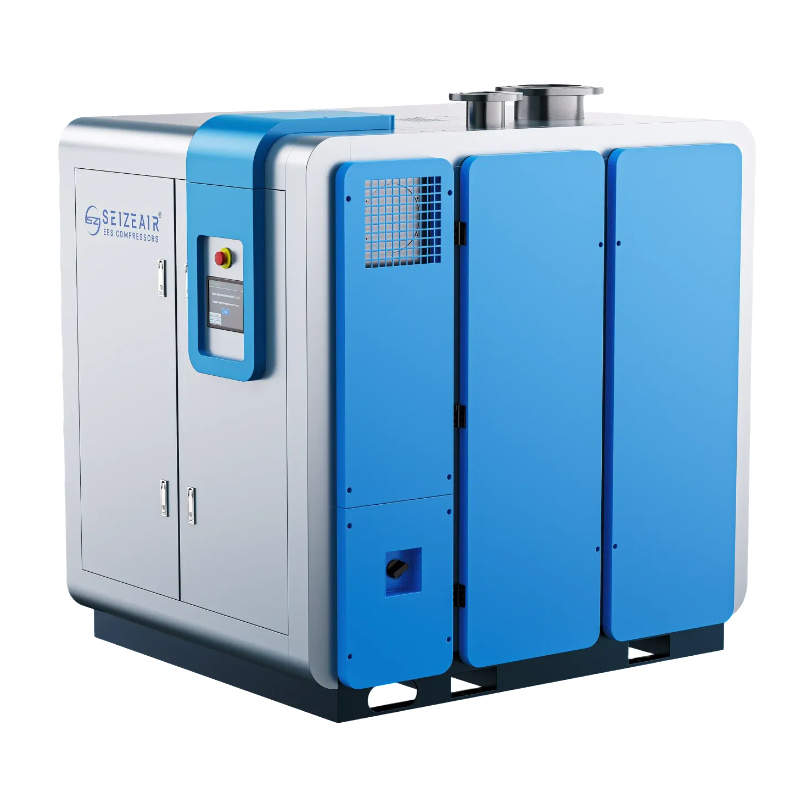


A permanent magnet air compressor is an energy-saving compressed air system that pairs a permanent magnet synchronous motor with a variable-frequency drive to deliver air on demand. Unlike a fixed-speed unit that runs at one speed and burns power during unloaded cycles, this design trims motor speed to match real-time air demand, cutting electricity use by roughly 15–50% across most industrial loads. Below we break down how it works, where it beats a conventional machine, and exactly what to check before you buy.
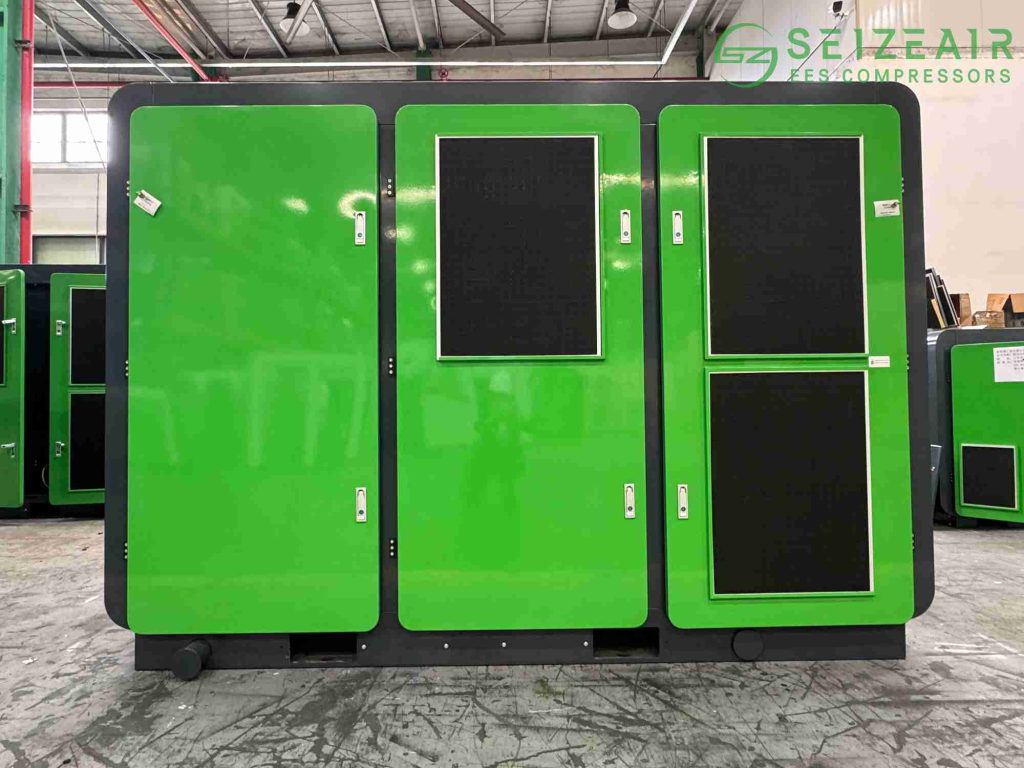
What Is a Permanent Magnet Air Compressor?
At its simplest, a permanent magnet air compressor is a compressor whose main drive motor uses rare-earth magnets baked into the rotor instead of wound coils that need an external electric current to make a magnetic field. Because the magnetic field is always there, the motor does not waste energy exciting itself. Couple that motor with a frequency converter and you get a machine that slows down when the factory needs less air and speeds up only when demand rises.
The most common build you will meet in the field is the permanent magnet screw air compressor, where the PM motor drives a rotary screw element. You will also see the terms permanent magnet variable frequency air compressor and permanent magnet variable speed air compressor used interchangeably; they describe the same motor-plus-inverter idea, just stressing different parts of the system.
| Aspect | Permanent Magnet Air Compressor | Conventional Fixed-Speed Unit |
|---|---|---|
| Drive motor | Permanent magnet synchronous motor (PMSM) | Asynchronous induction motor |
| Speed control | Continuous, 0–100% via inverter | Single fixed speed, on/off cycling |
| Excitation loss | None (rotor is magnetised) | Present (needs magnetising current) |
| Best fit | Fluctuating, partial-load demand | Steady, full-load demand |
How Does a Permanent Magnet Air Compressor Work?
The short version: electricity turns the PM motor, the motor turns the screw element, the screw squeezes air, and a smart controller keeps the whole chain running only as hard as the plant actually needs. The clever part is that “only as hard as needed” is handled by varying the motor speed rather than by stopping and starting.
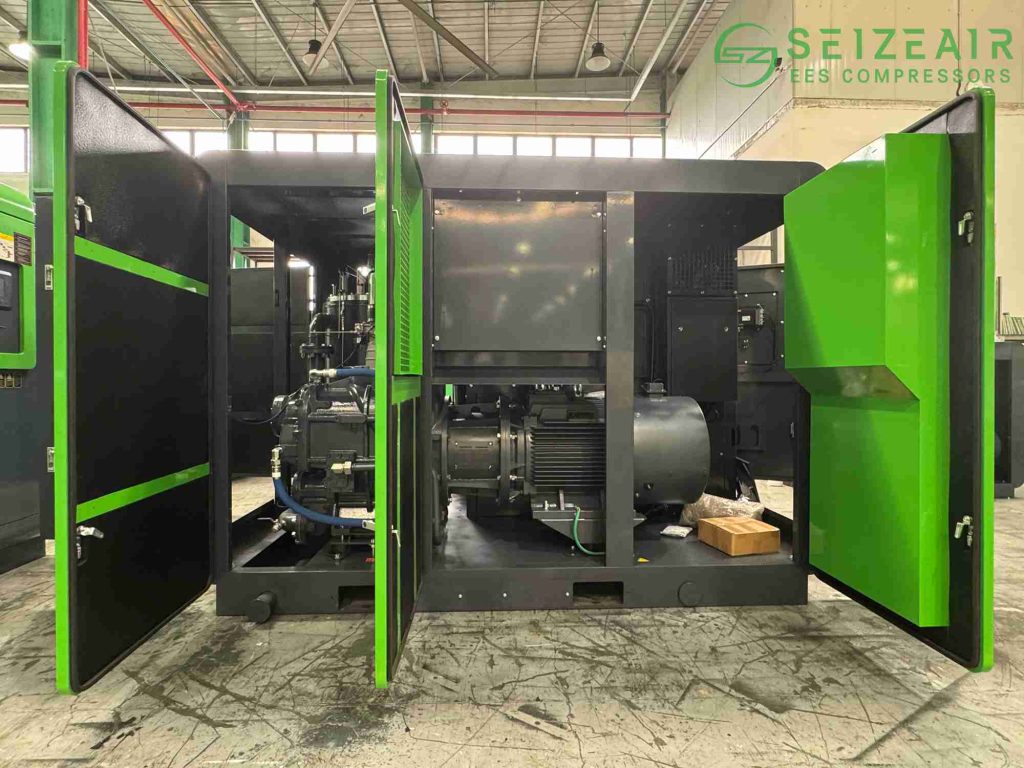
Step by step, here is the air and power path:
Raw air intake
|
PM synchronous motor + VSD controller –> Screw element (oil injected)
| |
| Compression (volume shrinks, pressure rises)
| |
Air-oil mixture –> Separator –> Aftercooler –> Refrigerated / desiccant dryer
| |
Air receiver –> Plant air line
| Stage | What happens | Why it matters |
|---|---|---|
| 1. Intake | Filtered ambient air drawn into the screw housing | Clean inlet protects rotors and air quality |
| 2. Drive | PM motor spins the male rotor; the female rotor follows through meshing | No belt, no coupling slip, less loss |
| 3. Compression | Rotors trap air in a shrinking cavity, raising pressure to 7–13 bar | Oil seals gaps and carries away heat |
| 4. Separation | Air-oil mix passes through a separator; oil returns, air continues | Keeps oil carryover low (often <3 ppm) |
| 5. Treatment | Aftercooler plus dryer drops temperature and dew point | Prevents condensation in the line |
| 6. Storage | Receiver tank buffers demand spikes | Smooths load, protects the VSD loop |
Throughout all of this, the variable-frequency drive reads system pressure and nudges motor speed up or down several times per second. That closed loop is what lets a permanent magnet air compressor hold pressure inside a tight band instead of bouncing between a high and low setpoint the way a load-unload machine does.
What Makes the Permanent Magnet Synchronous Motor Different?
The motor is the heart of the story, so it is worth a moment. In a standard induction motor, the rotor has to draw current from the stator to build its own magnetic field; that takes energy and creates heat even before any air is compressed. A permanent magnet synchronous motor skips that step. Neodymium-iron-boron magnets in the rotor hold a strong, stable field on their own.
Two practical consequences follow. First, efficiency stays high even at low speed. A good PM motor still sits above 92% efficiency at 1,500 rpm and barely drops off at partial load, whereas an asynchronous motor’s curve falls away quickly once you leave full speed. Second, the motor can be directly coupled to the screw element. No belt, no pulley, no coupling to slip or wear. Fewer parts means fewer failure points and a shorter service list.
This is also where the “permanent magnet frequency conversion air compressor” wording comes from in some markets — frequency conversion is just another way of saying the inverter changes the supply frequency to change speed.
Permanent Magnet vs Fixed-Speed Air Compressor
This is the comparison most buyers actually care about, because it decides the payback. A fixed-speed (or power-frequency) compressor runs flat out whenever it is on, then switches off or unloads when the tank is full. That load-unload habit is where the money leaks: an unloaded asynchronous motor can still draw 30–50% of full-load power just to sit there spinning.
A permanent magnet air compressor removes the unload waste almost entirely. When demand drops, the motor simply slows; at very low demand it can drop into a sleep state and draw almost nothing. The table below puts the two side by side on the numbers that show up on your electricity bill.
| Metric | Permanent Magnet VSD | Fixed-Speed (IE2/IE3) |
|---|---|---|
| Motor type | PM synchronous (IE4/IE5 class) | Asynchronous induction |
| Control | Closed-loop VSD, 0–100% | Load / unload cycling |
| Pressure stability | ±0.01–0.02 MPa (±0.1–0.2 bar) | ±0.1–0.2 MPa (±1–2 bar) |
| Start current | ≤1.2 × rated (soft start) | 5–7 × rated (surge) |
| Partial-load efficiency | Stays high (no no-load loss) | Drops sharply |
| Typical energy saving | 15–50% vs fixed speed | Baseline |
| Noise at low load | 60–70 dB(A) | 75–85 dB(A) |
| Maintenance | ~30% lower (fewer wear parts) | Higher over life |
If you want the full breakdown, our guide on variable speed vs fixed speed air compressors covers the trade-offs in detail, including when a cheaper fixed-speed unit is still the right call.
Permanent Magnet vs VSD: Are They the Same Thing?
Not quite, and the distinction trips up a lot of buyers. “VSD” (variable speed drive) describes the control method — an inverter changing motor speed. “Permanent magnet” describes the motor construction. You can have a VSD compressor with an ordinary induction motor, and you can (rarely) have a PM motor on a fixed-speed drive. The magic combination for savings is a PM motor and a VSD together, which is why you will often see the label PM VSD air compressor. The PM motor removes internal loss; the VSD removes the unload loss. Stack them and you get the deep savings.
How Much Energy Does a Permanent Magnet Air Compressor Save?
The honest answer is “it depends on your load profile,” but we can put numbers on it. The metric the industry uses is specific power, written in plain form as:
Specific power SP (kW per m3/min) = Rated motor power (kW) / Free air delivery (m3/min)
Annual electricity cost ($) = SP (kW·h per m3) × FAD (m3/min) × running hours per year × electricity price ($ per kW·h)
Annual saving vs fixed speed ($) = (SP_fixed − SP_pm) × FAD × hours × price
As a rule of thumb worth memorising: every extra 1 bar of system pressure raises compressor energy use by about 7%. Because a PM VSD holds pressure tightly, you can often run the whole system 0.5–1 bar lower than a fixed-speed setup and bank that saving for free.
| Scenario | Fixed-Speed SP (kW·h/m3) | PM VSD SP (kW·h/m3) | Yearly saving* (USD) |
|---|---|---|---|
| 10 m3/min @ 0.8 MPa, 8 h × 300 d, $0.10/kW·h | 7.0 | 5.2 | ~15,400 |
| 20 m3/min @ 0.7 MPa, 24 h × 300 d, $0.12/kW·h | 6.8 | 5.0 | ~124,400 |
| 6 m3/min @ 0.8 MPa, 12 h × 250 d, $0.15/kW·h | 7.2 | 5.4 | ~9,700 |
*Savings are illustrative, based on typical specific-power figures for oil-injected rotary screw units. Actual results depend on your duty cycle, inlet conditions, and local tariff. For a deeper teardown, see our article on the permanent magnet screw compressor working principle.
Key Advantages at a Glance
| Benefit | What you get |
|---|---|
| Lower energy bill | 15–50% saving versus fixed speed, strongest on variable demand |
| Stable pressure | Tight band protects pneumatic tools and product quality |
| Quieter plant | Low-speed running drops noise to 60–70 dB(A) |
| Longer life | Direct drive and soft start cut mechanical wear; 8–10 year core life is common |
| Smaller footprint | Compact PM motor, often an all-in-one skid |
Are There Disadvantages?
Yes, and a good supplier will tell you upfront. The two real ones are cost and care.
| Risk | Detail | How it is managed |
|---|---|---|
| Higher purchase price | PM + VSD units cost more upfront than fixed-speed | Payback usually 1–3 years on variable demand |
| Inverter service | The drive module needs periodic checks | Sealed, cooled enclosures; 5-year module life typical |
| Demagnetisation | Extreme heat or a severe short can weaken magnets | Temperature-guarded drive, proper sizing, quality magnets |
| Magnets vs repair | Rotor is less field-serviceable than a standard one | Factory-backed exchange program |
On the demagnetisation worry specifically: modern neodymium magnets rated for compressor duty lose negligible field under normal operating temperatures (well below ~80–100 °C rotor surface). Failures almost always trace back to a drive fault or chronic overload, not the magnet itself. Size the unit correctly and it is a non-issue.
Where Permanent Magnet Compressors Pay Off Most
The saving scales with how uneven your air demand is. If your line pulls full flow all day, a fixed-speed machine is already near its best; the PM VSD wins where demand swings. That is why you find them first in:
- Automotive and metal plants with robotic, paint, and pneumatic tool loads
- Food and beverage packaging lines with periodic surges
- Textile mills running air-jet looms
- Pharmaceutical and electronics cleanrooms needing stable, clean air
- Any site with time-of-use electricity pricing, where trimming peak draw matters
For high-pressure duties a two-stage screw compressor stacks two compression steps to hit 12–13 bar efficiently, and your choice between an oil-injected vs oil-free compressor depends on the air purity your process needs.
How to Choose the Right Permanent Magnet Air Compressor
Sizing is where savings are won or lost. Oversize and the unit idles; undersize and it never catches up. Start from your actual cubic-metre-per-minute demand and your required pressure, then add a realistic duty cycle.
| Factor | What to pin down | Why it changes the spec |
|---|---|---|
| Free air delivery | Measured m3/min at the tools, not nameplate | Drives motor kW directly |
| Working pressure | Bar needed at the furthest point | Each 1 bar ≈ 7% more energy |
| Duty cycle | % of time near full load | Low average load favours PM VSD |
| Air purity | Oil class required (ISO 8573-1) | Decides oil-free vs oil-injected |
| Supply | 3-phase voltage and frequency | Affects drive config |
| Environment | Dust, heat, altitude | Changes cooling and filtration |
A standard industrial screw compressor still uses an asynchronous motor, so the PM version is the upgrade path once you have measured a variable load. To avoid guesswork, work with a reliable industrial air compressor supplier who can size the unit to your load profile rather than to a catalogue number.
Permanent Magnet Air Compressor Price and Payback
List price varies widely by power and configuration, but the question that matters is total cost of ownership. A PM VSD unit can cost 20–50% more than a fixed-speed equivalent of the same flow, yet hand back that premium through lower power draw.
| Power class | Typical extra upfront vs fixed speed | Common payback on variable load |
|---|---|---|
| 7.5–22 kW | +20–30% | 1.5–3 years |
| 37–75 kW | +25–40% | 1–2 years |
| 90–250 kW | +30–50% | <18 months |
The bigger the machine and the messier the demand, the faster it pays for itself. At 90 kW and up on a fluctuating line, payback inside a year is normal rather than exceptional.
Maintenance Tips for a Long Life
Good news: a PM VSD is lighter to maintain than the unit it replaces. Keep these habits and the core will run for a decade:
- Follow the separator and filter hours, not the calendar — oil-injected elements often run to 8,000 hours.
- Keep the inverter cabinet cool and dust-free; it is the most sensitive part.
- Log pressure and power monthly so a drifting specific power shows up early.
- Let the soft-start and sleep features do their job; do not bypass them.
Conclusion
A permanent magnet air compressor earns its place wherever air demand moves. By dropping excitation loss and unload loss at the same time, it turns a fixed cost into one that tracks production — quieter, steadier, and usually cheaper within two years. Seize Air’s oil-injected permanent magnet range is built for exactly these duty cycles, and the engineering team has deployed them across automotive, food, and textiles lines worldwide.
If you are weighing a fixed-speed replacement or a first upgrade, the fastest next step is to contact our team for a load-based quote and a written payback estimate tailored to your plant.